


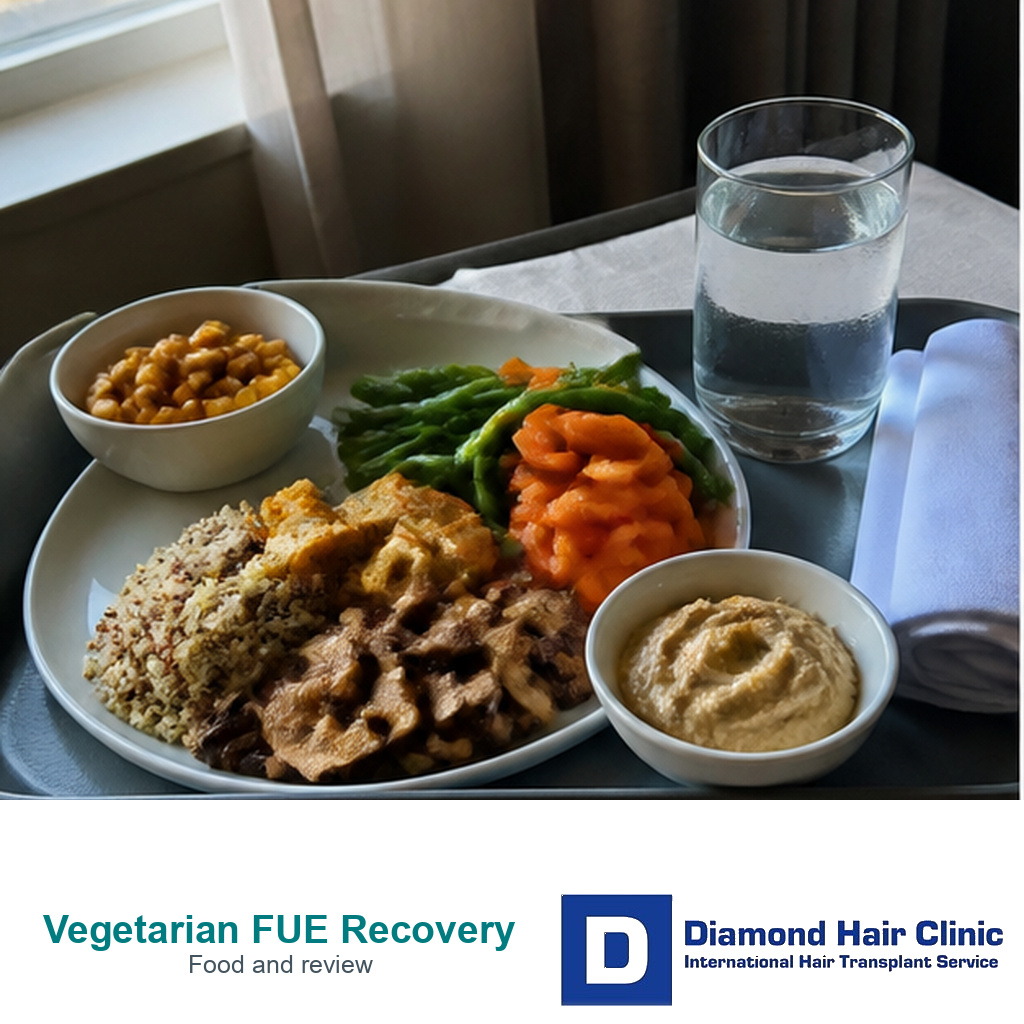
Vegetarian or Vegan FUE Recovery Planning
If you avoid animal foods, grafts do not need meat. Recovery depends on whether you can eat enough, drink enough, tolerate your prescribed medicines, and make B12, iron, ferritin, zinc, vitamin D, and supplement use visible before surgery.
A vegetarian or vegan diet is not something I blame. What matters is what is actually happening with your meals, energy, blood work, travel food, and medicines. A patient who eats steady meals, has no unresolved deficiency, and follows the clinic plan is very different from a patient who is barely eating, taking new supplement stacks, or arriving with anemia symptoms that nobody reviewed.
The plan should stay simple. Keep food normal and adequate. Use plant protein as food support, not graft medicine. Tell the clinic what you take. Symptoms, fasting, limited travel food, deficiency history, or lab concerns move the diet from preference into medical planning.
The diet label is not the surgical risk by itself
A vegetarian or vegan diet does not make FUE recovery unsafe by itself. The concern is poor intake, strict restriction, vomiting, dehydration, missed medicines, known deficiency, or a supplement habit that has not been discussed before surgery.
I look at the practical details first. Can you eat normal meals during the first days? Do you tolerate your usual foods when you travel? Are you already low in B12, iron, ferritin, vitamin D, or zinc? Do you take herbal products, hair formulas, large dose vitamins, omega products, or protein powders? Those answers tell me more than the word vegetarian or vegan by itself.
Recovery meals after a hair transplant should still be simple and familiar. Here, I am looking at the extra layer for a patient who avoids animal foods and wants a clear recovery plan without fear, food promises, or a strict diet experiment.
Plan the first days around food you can tolerate
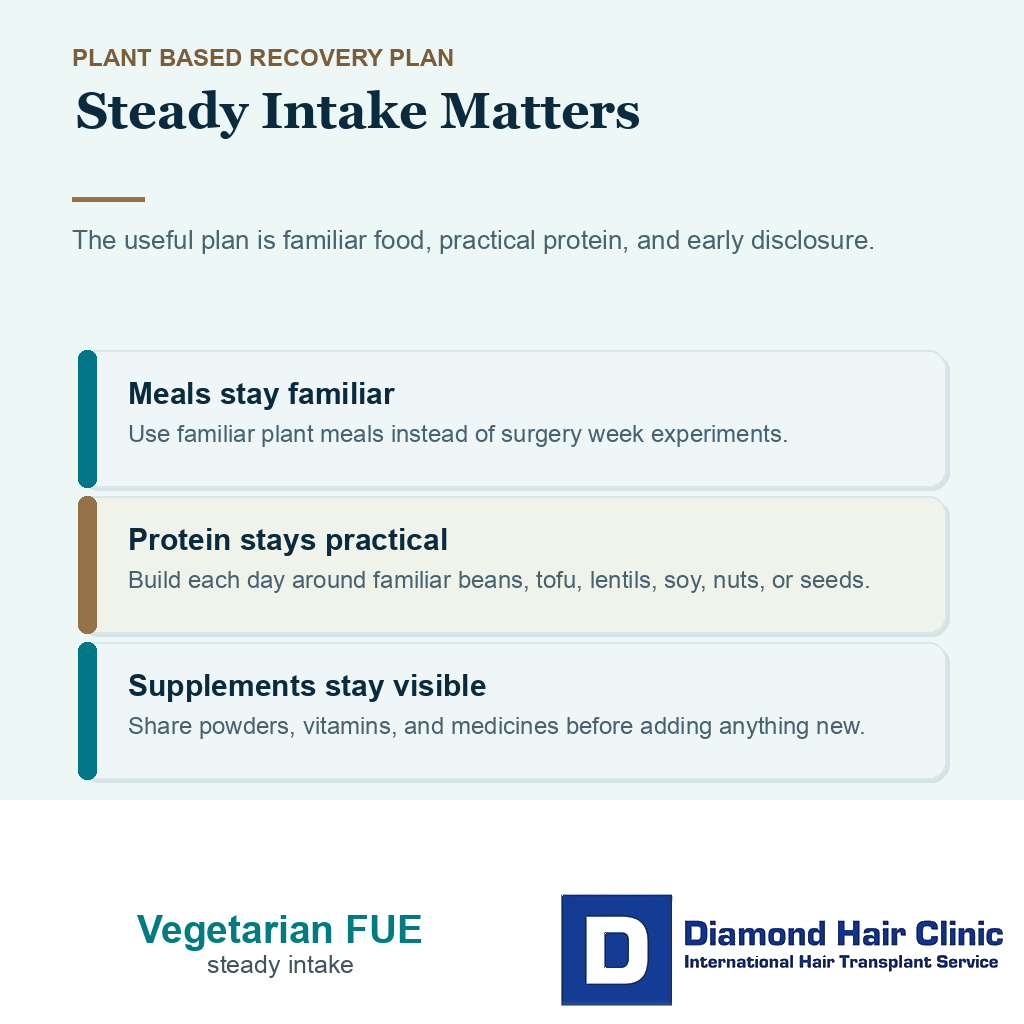
The first recovery days after FUE are not the time to prove discipline. They are the time to make healing easier for the body. For a vegetarian or vegan patient, that usually means simple meals that are easy to repeat, easy to digest, and easy to find near the hotel or at home.
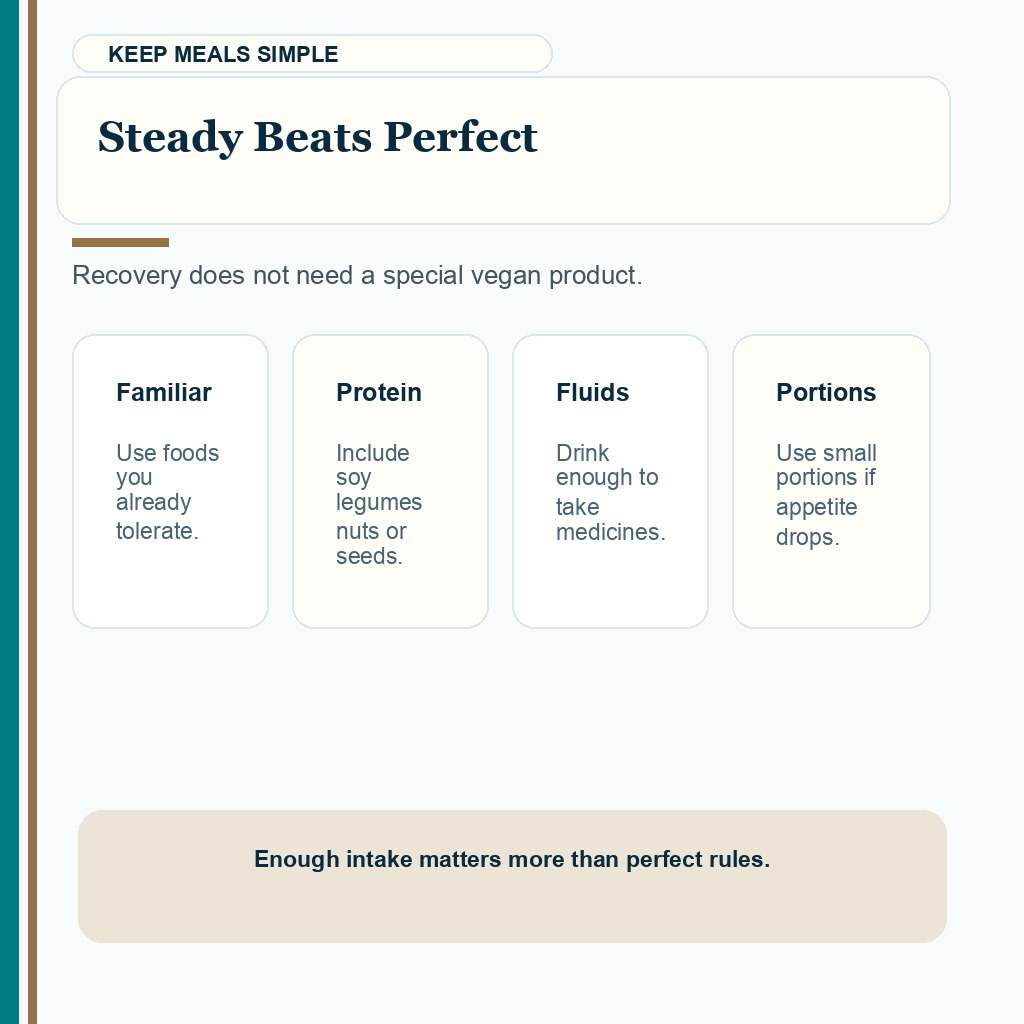
A useful plate might include beans, lentils, tofu, chickpeas, soy yogurt, nuts, seeds, whole grains, vegetables, fruit, and enough fluids. The exact food is less important than the pattern. Do not build the day around coffee, bread, sweets, and long gaps between meals. Do not skip meals because travel is inconvenient. Do not wait until you feel weak before taking intake seriously.
Before travel, tell the coordinator if vegetarian or vegan food needs to be arranged around the surgery day, hotel arrival, or first wash day. Do not rely on finding the perfect meal while tired, swollen, or taking tablets. A plain familiar option near the hotel is often more useful than a restaurant that looks ideal but is hard to reach.
If appetite is low, smaller meals can be easier than one large plate. A familiar protein drink may help some patients when food intake is poor, but it should stay in the category of food support. If a prescribed tablet is easier to tolerate with food, keep one bland familiar option ready and follow the clinic’s instructions for medications after a hair transplant instead of skipping the dose or improvising.
One imperfect travel meal will not decide the result. The bigger problem is several days of poor intake, dehydration, or new supplements the clinic has not reviewed.
Protein is support, not growth medicine
Protein supports tissue repair. That is the reason I want enough of it during recovery. But more protein does not make a poorly planned operation safe, and no vegan food or powder can guarantee graft survival. Surgical planning, graft handling, aftercare technique, and avoiding trauma still matter more than any single food.
Plant protein can be practical. Lentils, beans, tofu, soy foods, hummus, nuts, seeds, and mixed meals can all help. A plain soy, pea, or mixed plant protein powder can be reasonable when it is used like food and the patient already tolerates it. If you are unsure about labels, compare the product with plain plant protein powder after a hair transplant before changing anything around surgery.
A new powder with stimulants, herbs, large vitamin doses, or many ingredients introduced just before surgery makes recovery harder to judge. Recovery is easier when the diet is familiar. Plain protein food, a simple protein powder, and a hair growth supplement are not the same decision. If something is new, bring it into the review rather than quietly adding it.

B12, iron, ferritin, and zinc need the right level of attention
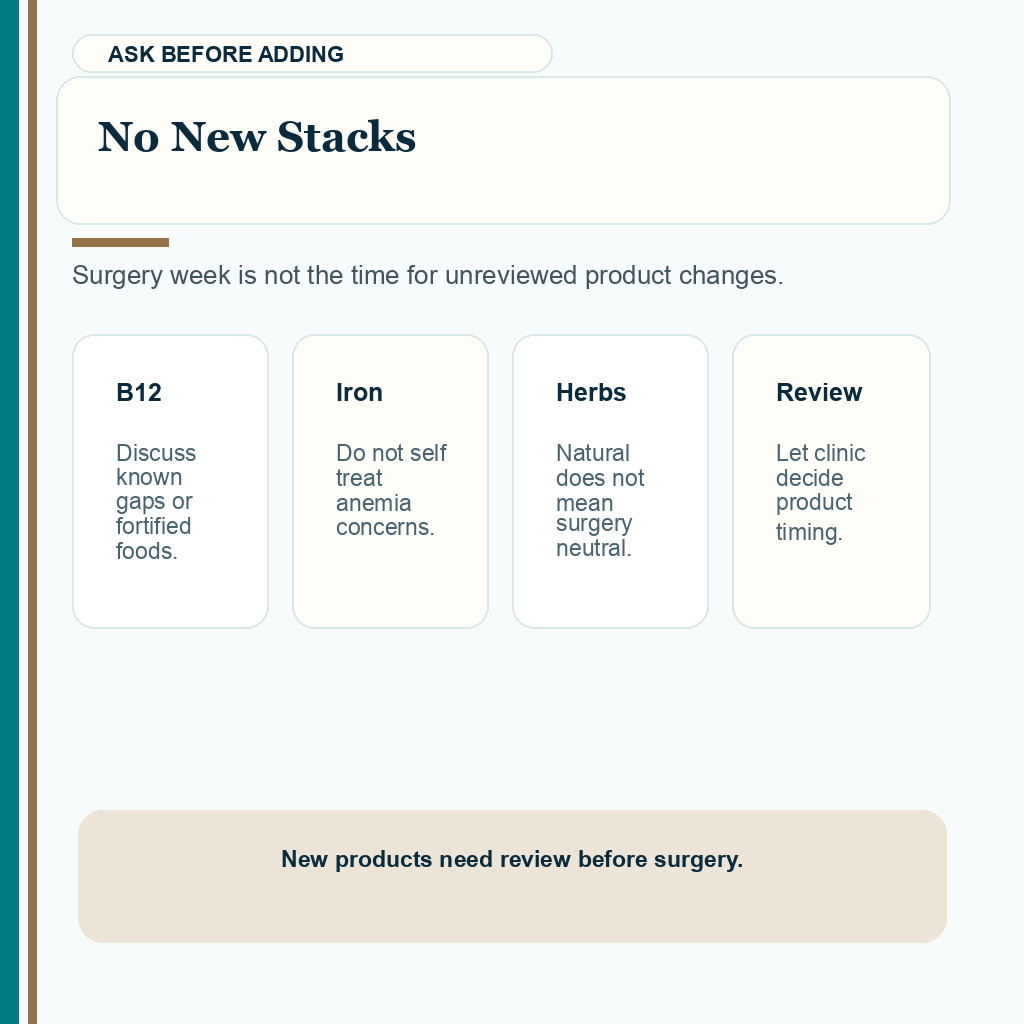
Some vegetarian and vegan patients are well organized with B12, iron, ferritin, zinc, vitamin D, and general nutrition. Others are not sure. Do not add three new bottles because you are nervous. Make the risk visible early enough for review.
B12 deserves attention in strict vegan eating because ordinary plant foods do not naturally provide reliable B12 unless they are fortified or a supplement is used. Iron deserves attention because plant iron is absorbed differently, and low ferritin or anemia can matter for energy, shedding context, and surgical readiness. Zinc is part of normal healing biology, but that does not mean large dose zinc is a recovery shortcut.
If you already know you have low B12, low ferritin or anemia before a hair transplant, unusual fatigue, dizziness, heavy menstrual bleeding, digestive disease, bariatric surgery history, recent major weight loss, or heavy shedding before surgery, do not treat it as a small diet detail. Blood test review before surgery may be needed, and the treating doctor should decide what to correct.
I separate routine vitamins after a hair transplant from a known deficiency before travel. Here, the rule is more modest. Do not hide a known deficiency, and do not treat yourself around surgery because a forum or product label made the plan sound easy.
Tell the clinic about supplements before surgery
Many vegetarian or vegan patients take supplements. B12, iron, vitamin D, zinc, omega products, vegan collagen boosters, protein powders, herbal products, sleep aids, hair formulas, and general multivitamins can all appear harmless because they are not prescription medicines. That assumption can be risky around surgery.
The clinic should know the product name, dose, reason for use, and last use. Some products can affect bleeding risk, blood pressure, heart rate, anesthesia response, stomach tolerance, or medication interactions. A vegan capsule is still a supplement. The capsule source does not answer whether the ingredients, dose, timing, and combinations fit surgery.
Your complete supplement list before surgery should include powders, herbal products, algae or fish oil capsules, vitamin E, turmeric, garlic, ginkgo, ginseng, saw palmetto, bromelain, arnica, hair formulas, fat burners, stimulant workout products, and anything prescribed by another doctor. Then wait for case-specific instructions instead of guessing.
Travel meals should make recovery quieter
International patients often plan the surgery carefully but leave food to chance. For vegetarian or vegan patients, that can create stress during the exact days when recovery should be quiet. The hotel does not need to become a nutrition project, but it should not leave you searching for every meal while tired, swollen, or trying to follow washing and medicine instructions.
Before travel, think about repeatable options. A nearby restaurant with simple legumes or tofu, a familiar supermarket, packaged snacks, soy yogurt if available, nuts, fruit, water, and plain foods you already tolerate can make the first days easier. If the clinic provides hotel guidance, ask what is realistic nearby. A hair transplant trip is still surgery, so you are not trying to plan the perfect food tour. You are trying to keep recovery steady.
Write down two reliable meal options before travel, because surgery week is a poor time to discover that your usual foods are hard to find or hard to tolerate.
Food availability and food tolerance are not always the same. A meal can be vegan and still be too spicy, greasy, unfamiliar, or difficult to reach while you are tired. If you develop repeated vomiting, diarrhea, fever, or cannot keep fluids or medicines down, the issue is no longer a vegan meal plan. It can become food poisoning and the hair transplant schedule, so do not keep pushing meals or tablets without review.
Separate your usual diet from crash dieting
Vegetarian or vegan eating can be stable and adequate. Crash dieting is different. A very low calorie plan, sudden restriction, fasting without planning, appetite suppression, or using surgery week as a weight loss reset can make recovery harder to interpret.
Separate ethics, habit, culture, and medical restriction from dieting behavior. If you normally eat vegetarian or vegan and you can keep intake steady, we plan around that. If you are thinking of switching to vegetarian or vegan eating because you want better hair growth, the first recovery week is not the time to test the change. Wait until early healing is stable, then change the diet in a way you can actually sustain.
Religious fasting, intermittent fasting, fasting for weight loss, low appetite, and missed hotel meals are not the same problem. If the plan could mean dehydration, missed tablets, or very long gaps without food in the early healing period, fasting after a hair transplant becomes the relevant question, not a simple diet preference. If the restriction is mainly about weight loss or a sudden calorie cut, treat it as dieting during hair transplant recovery instead.
Vegetarian and Vegan Recovery Intake Planner
Use the planner to separate vegetarian, strict vegan, low appetite, known deficiency, and new diet change questions from each other. The question is not whether the meal has a vegetarian or vegan label. The question is whether intake, protein, supplements, symptoms, and medicine tolerance are organized enough for recovery.
Vegetarian
Use familiar meals with enough protein and fluids. Eggs or dairy may be part of your usual diet, but they are not required for every patient.
- Keep meals easy to repeat.
- Avoid sudden calorie restriction.
- Tell the clinic about powders or vitamins.
Strict vegan
The plan should make B12, iron, ferritin, zinc, and supplement use visible without turning them into fear.
- Use familiar plant protein.
- Bring supplement names and doses.
- Ask for review if deficiency is known.
Low appetite
If appetite is low, the problem is total intake and medicine tolerance, not whether the meal is plant-based.
- Try smaller familiar meals.
- Keep fluids steady.
- Contact the clinic if intake keeps failing.
Known deficiency
Anemia, low ferritin, low B12, major weight loss, or unexplained fatigue need review before surgery is treated as routine.
- Do not guess from symptoms alone.
- Share recent tests if you have them.
- Let the proper doctor guide correction.
Know when poor intake needs review
Most diet questions are practical. Some are not. Contact the clinic or seek medical review if you have dizziness, fainting, repeated vomiting, dehydration, inability to take prescribed medicine, fever, severe pain, spreading redness, pus, cloudy drainage, repeated bleeding, or symptoms that worsen instead of settling.
If the concern is mainly fluids, weakness, heat, vomiting, or diarrhea, start with water and electrolytes after FUE before making the issue about diet. If the concern is a surgical wound sign, do not let a nutrition plan distract from medical review.
Do not wait for the perfect meal before asking for help. Recovery is not a test of willpower. If you cannot eat, drink, or take medicine safely, that matters more than whether the diet is vegan, vegetarian, or mixed.
Protein and routine matter more than a perfect diet
A vegetarian or vegan diet can work well after FUE when the basics are visible early. I want to know the usual meals, protein sources, supplements, recent bloodwork, and any food issue that could make tablets or calories difficult in the first days.
The aim is steady intake, not a special recovery menu. Lentils, beans, tofu, eggs or dairy when used, fortified foods, and familiar meals are easier to manage than sudden changes. If travel makes meals uncertain, plan simple protein options before surgery instead of trying a new supplement stack during recovery. Deficiency history, fasting, vomiting, diarrhea, and poor medicine tolerance need to be documented before travel.
When those details are clear, diet becomes part of recovery without taking over the operation. The patient eats predictably, the clinic knows what might need support, and early healing is not complicated by avoidable nutrition surprises.
Read this review excerpt
First wash completed and visual instructions given to my daughter.