


Fan or AC Use Needs Indirect Airflow
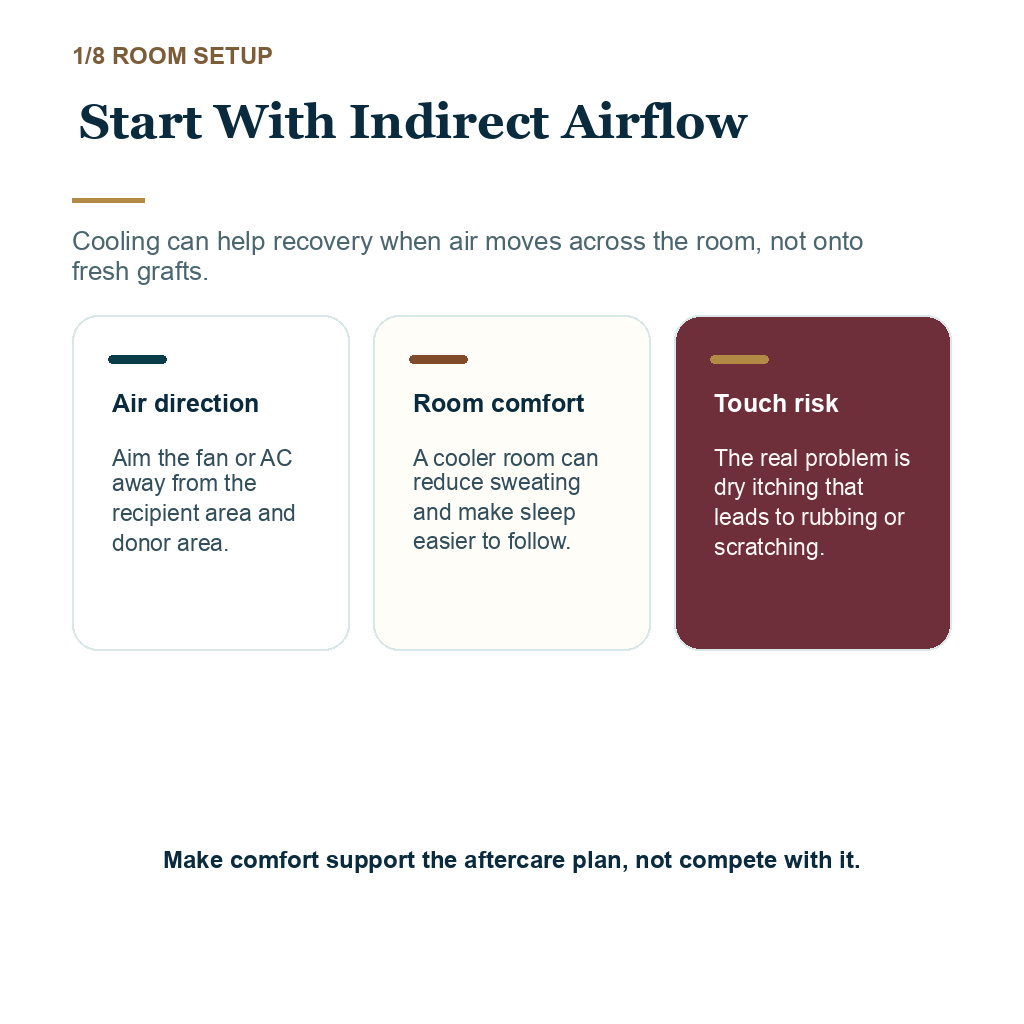
A fan or air conditioner can stay on after a hair transplant. The important distinction is where the air lands. Normal circulation around the room does not normally dislodge grafts, but a dry stream aimed at the recipient area can increase tightness and itching. Risk comes from the rubbing, scratching, and product changes that can follow direct dry air.
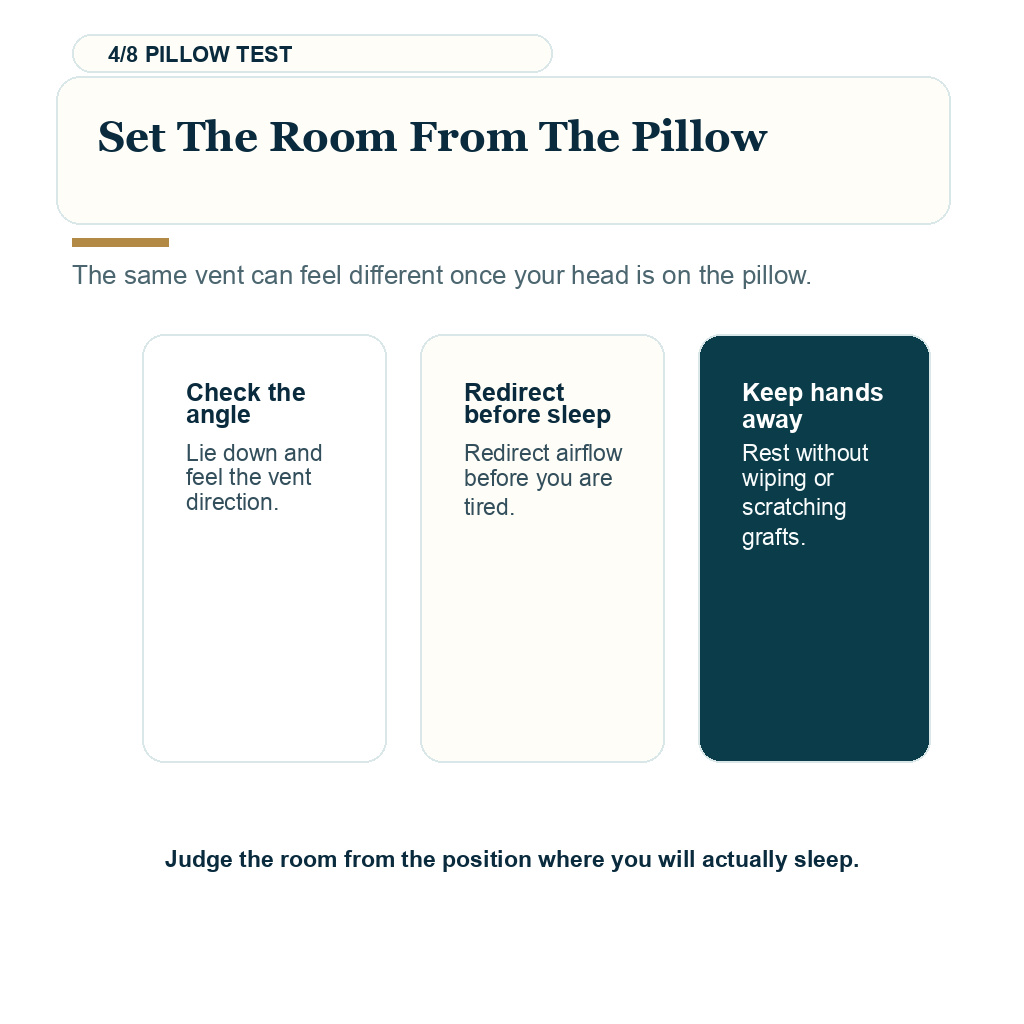
This usually becomes a practical issue in the hotel room. The room is warm, the scalp feels tight, and the vent or fan is close to the bed. Cooling may make sleep easier and reduce sweating. Lie in the position you will actually use and feel where the air crosses the bed. A vent that seems harmless while you are standing can point straight at the scalp once your head is on the pillow.
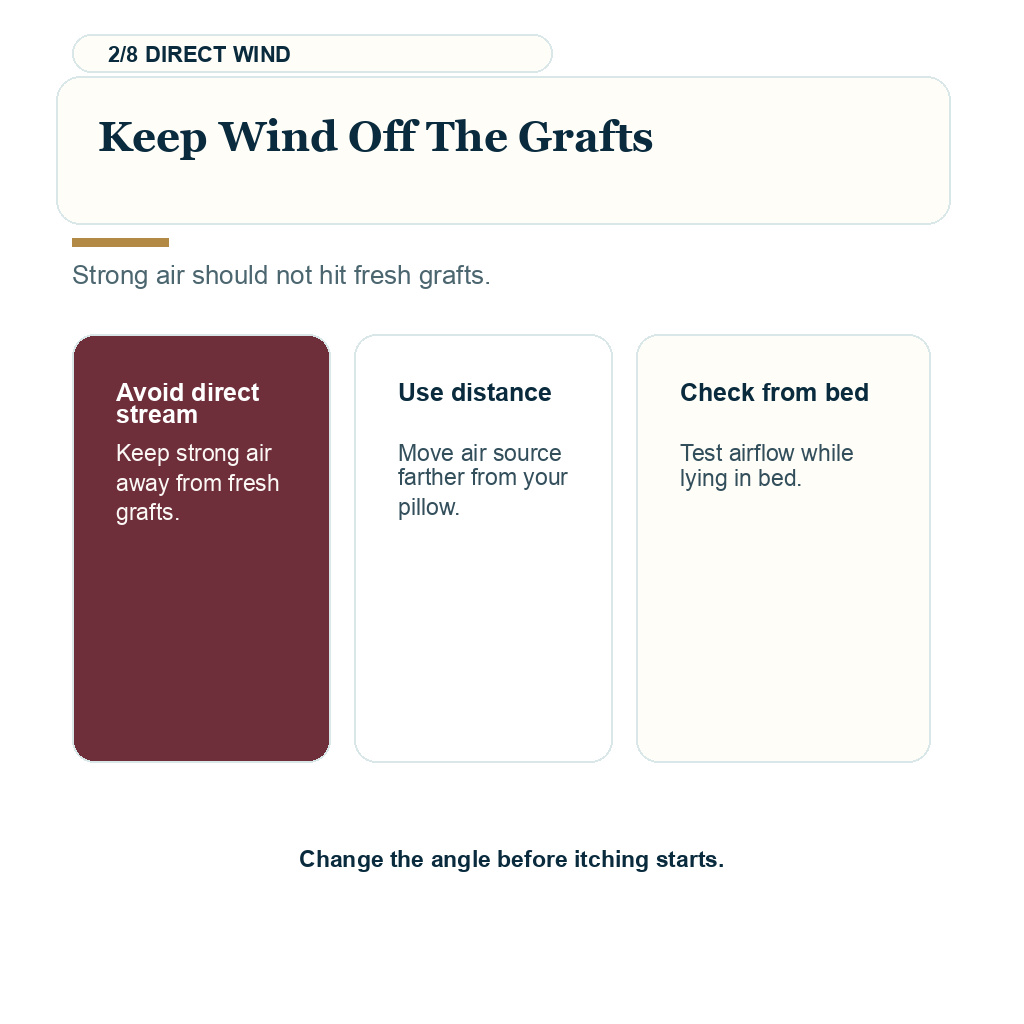
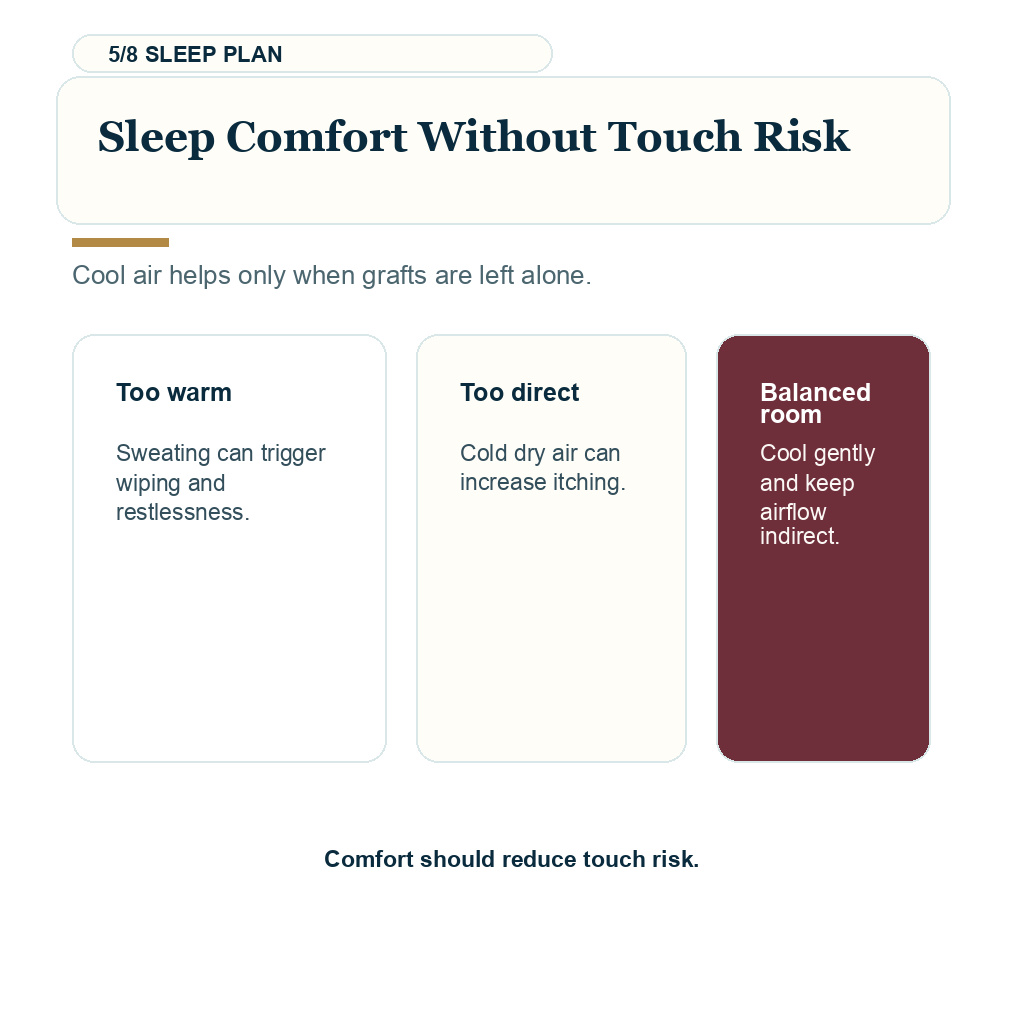
Cool the room, but keep the air indirect. Do not aim a fan, AC vent, or cold air stream straight at the recipient area. If the scalp becomes very dry, itchy, painful, wet, bleeding, or visibly more inflamed, adjust the room and contact your clinic instead of guessing.
Set the room first, then check the scalp after resting in it. If the airflow makes the skin feel tight, dusty, or itchy, move the fan or vent before adding sprays, oils, or extra washing.
Airflow itself does not remove grafts
Ordinary room air does not pull grafts out of the scalp. A graft is placed inside a small recipient channel, and the early risk is mainly physical contact such as rubbing, scratching, pressure, picking scabs, forceful washing, or hitting the head. A moving stream of air is not the same as a hand, towel, pillow, fingernail, or brush touching the recipient area.
Direct airflow can still make recovery more uncomfortable. Strong dry air across fresh grafts can dry crusts faster, make the scalp feel tighter, and increase the urge to touch the area. The real risk is often the hand that follows the itch, not the air by itself.
I separate airflow from contact. A cool room is different from a cold stream hitting the grafts for hours. Air conditioning will not destroy grafts in ordinary room settings, but dry air can still push you toward scratching, rubbing, or cleaning the scalp too aggressively, especially during the first week.
Why the first nights need more care
Tiredness, swelling, and itching make accidental movement more likely during the first nights. I therefore judge the room by whether it lets you rest without touching the recipient area. This is part of ordinary hair transplant recovery instructions, not a separate ritual.
If you are following the broader sleep after hair transplant plan, this reasoning also applies to airflow. Sleep on the back if instructed, protect the recipient area from pillow contact, and avoid anything that makes you scratch while half asleep. A cool room can support that. Direct dry airflow can work against it.
The first night after a hair transplant is not the time to experiment with extreme settings. A moderate temperature, indirect airflow, clean bedding, and enough comfort can help you sleep without constantly checking the scalp.
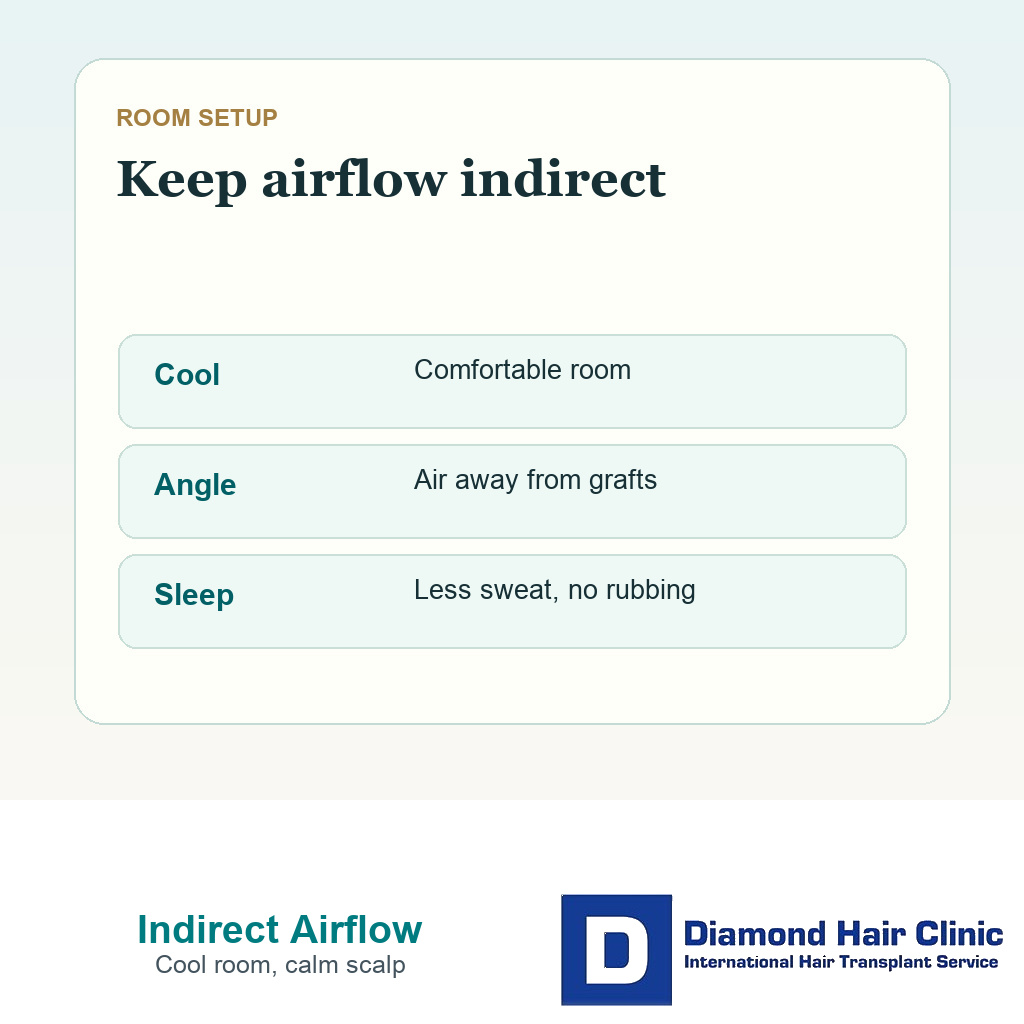
Keep the room comfortable, but do not aim strong air directly across the grafted area.
Test where the air lands from the pillow
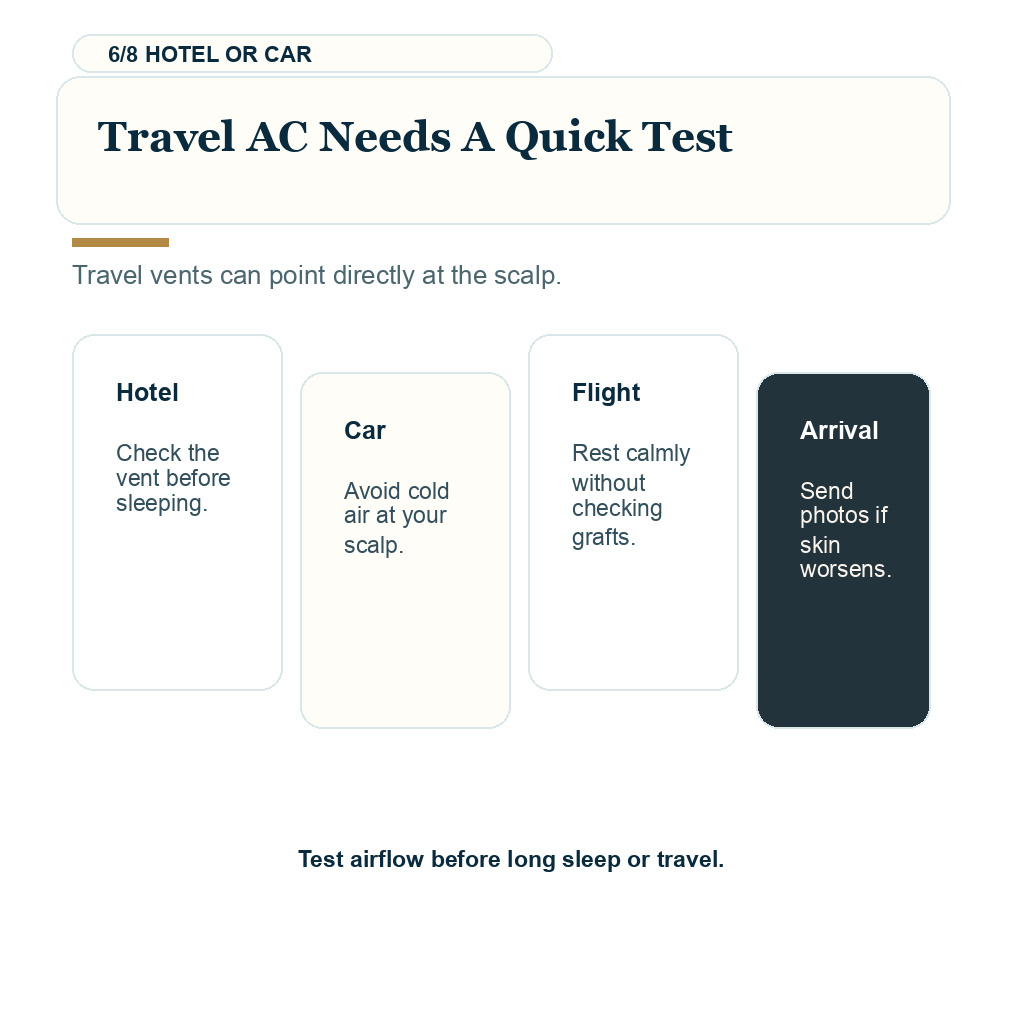
An overhead vent can miss you while you stand and strike the recipient area once you lie down. Redirect it if possible. Put a portable fan across the room or face it toward a wall, and clean visible dust before use. If you feel a steady stream over the grafts from the pillow, change the angle.
Set the room first, then lie down and check where the air actually lands. If the stream hits the grafts, dries your eyes, or makes you keep moving the pillow, change the angle before trying to sleep.
Keep strong vents away from the face and scalp, and do not point a bedside fan at the forehead or crown. A setting that feels pleasant for a minute may become drying after several hours. Finish the adjustment before sleep so you are not reaching across the bed or checking the scalp while half awake.
Room comfort is useful only if it helps you leave the grafts alone. If the cool air reduces sweating and helps you sleep, it is doing something helpful. If it makes the scalp so dry that you keep touching, misting, checking, or scratching, the setup needs to change.
Do not turn saline into a response to every dry sensation
If your clinic prescribed saline spray after hair transplant, follow the timing and amount you were given. A dry room does not justify spraying more often or adding another product without advice.
For a dry room, redirect the vent, lower the fan speed, or move the bed. Do not compensate with unapproved oils, creams, perfumes, antiseptics, or home mixtures. A humidifier, if used, should be clean, away from the head, and never aimed as visible mist at the recipient area.
If the scalp feels unusually painful, looks wet, has thick discharge, bleeds, or develops spreading redness, that is no longer a small dry room concern. Ask for review and follow your clinic’s instructions.
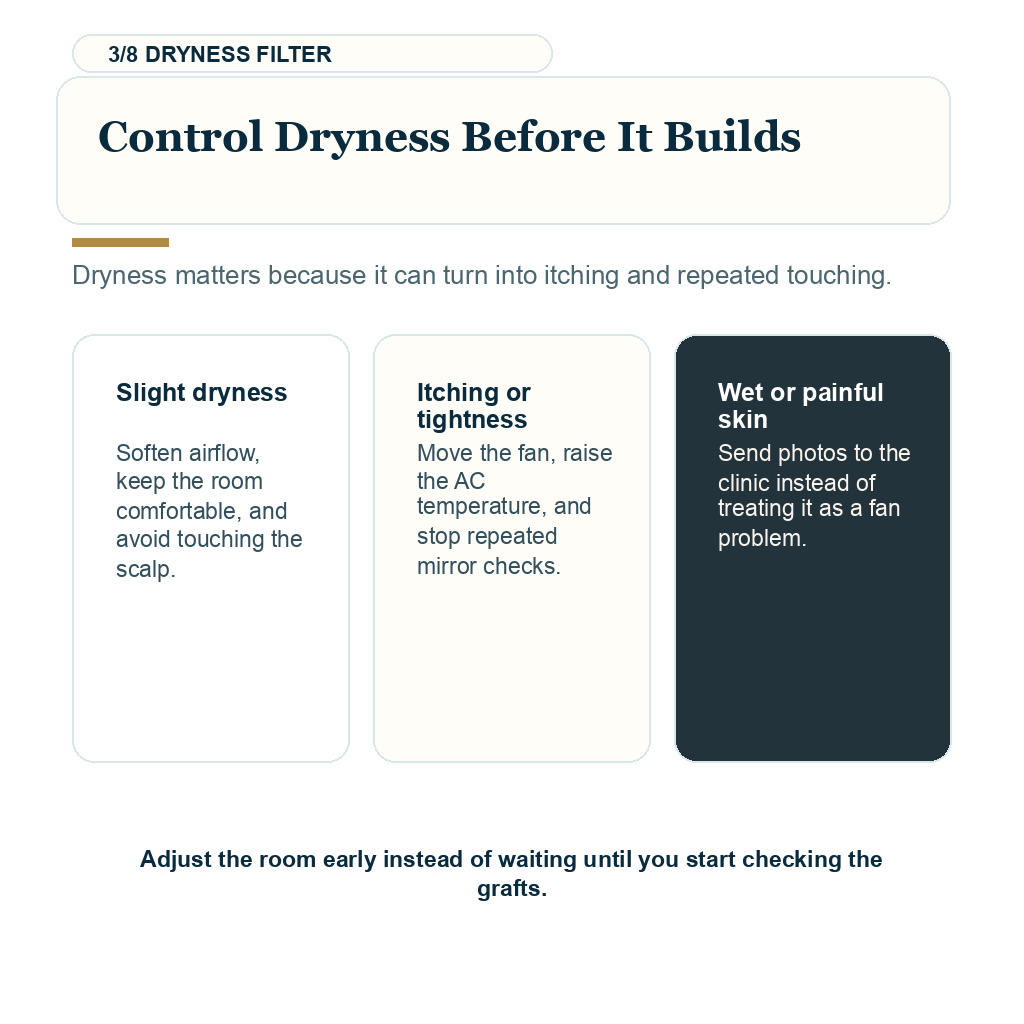
Dryness matters when it changes your behaviour
Crust formation and superficial nerve irritation can already cause itching after FUE, and dry air may make it sharper at night. White flakes or a tight surface can be part of dry scalp after hair transplant. They are not evidence that ordinary airflow damaged the grafts.
Reduce the trigger and continue the prescribed wash or spray routine. A worsening pattern needs review. With itching after hair transplant, I separate expected healing itch from changes that need clinical review.
Itching can happen during healing. Scratching is the part to avoid. If air conditioning makes you itch more, move the airflow away from your head before the night becomes a cycle of dryness, scratching, guilt, and checking. Do not test the crusts with a fingernail just to see if the dryness is serious. That test creates the contact we are trying to avoid.
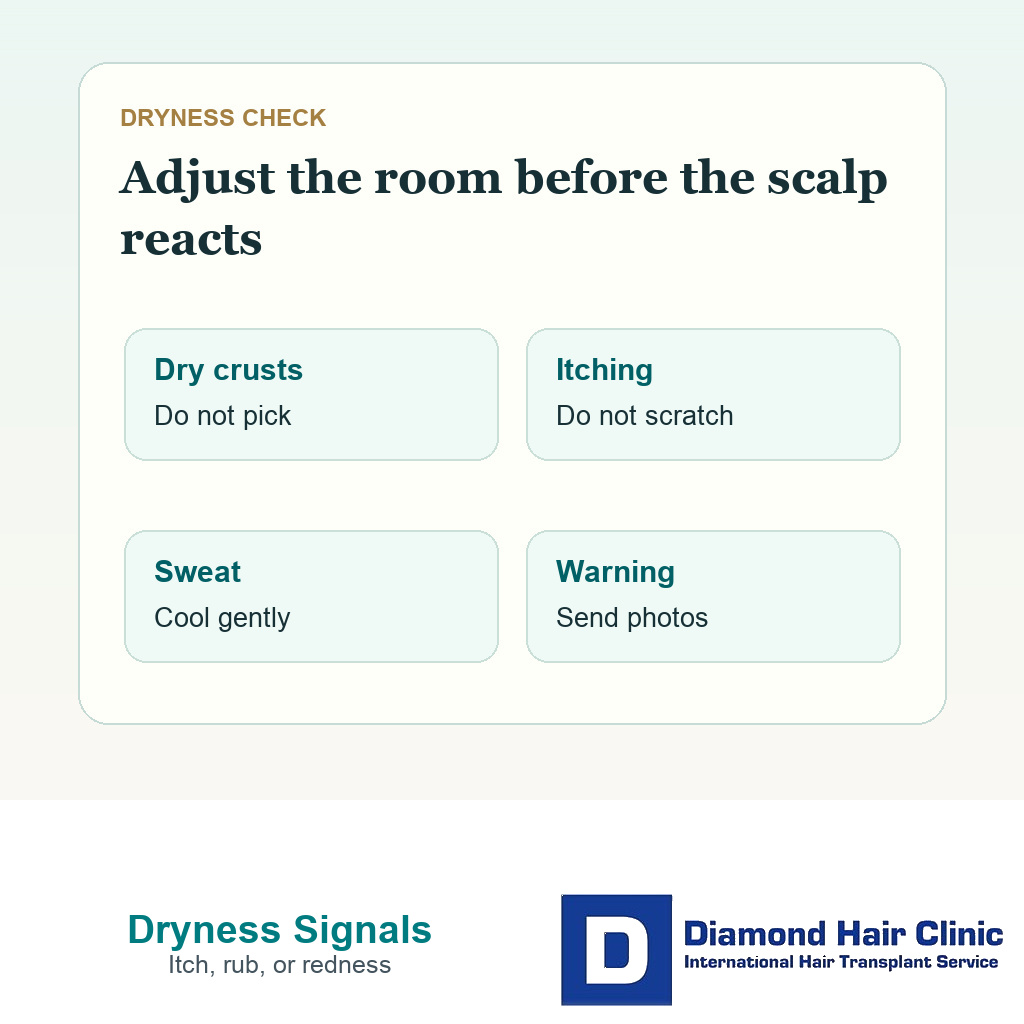
Dryness matters because it can lead to scratching, rubbing, and unnecessary product use.
Moderate AC can be better than sweating
A cool room is often better than heavy sweating, especially during the first days. Sweat is not the main danger. Wiping, rubbing, scratching, or wearing tight headwear to feel cleaner creates more risk than the moisture alone. Do not cover the recipient area with a towel, cap, or pillow edge just to block the air, because pressure and friction can become a bigger problem than the airflow.
With sweating after hair transplant, a few drops of sweat while resting is different from exercise heat, beach heat, towel wiping, or repeated scalp contact. Air conditioning can help reduce sweat, but it should not blast the grafts.
Moderate cooling is better than a hot room. Keep the temperature comfortable enough that you are not sweating through the night. Then keep the airflow gentle enough that the recipient area does not become dry, tight, and irritated.
Steps to take if the hotel room is very dry
Hotel rooms can feel dry because of air conditioning, heating, sealed windows, or long travel. This is one reason I like patients to think about the room before they are exhausted. The Istanbul arrival checklist helps with arrival preparation. After surgery, room setup deserves the same early attention.
If the room is dry, keep water nearby, follow the clinic’s spray or wash routine, and avoid sleeping directly under airflow. If the hotel has adjustable vents, use them. If the fan is movable, move it. If the air feels cold on your scalp or wakes you with itching, it is probably too direct. Check this while lying down, and ask the hotel to redirect the vent or help move the bed if the airflow cannot be controlled safely.
At Diamond Hair Clinic, the hotel and transfer flow is organized around the medical schedule, but the room still needs practical use. The hotel accommodation gives you a place to rest after the procedure. The first nights still need to stay controlled and clean.
Airflow never replaces the washing plan
Airflow does not replace washing. A clean scalp recovery is guided by the clinic’s wash timing, not by trying to dry the scalp with air. If you have not started washing yet, do not use a fan or hair dryer to dry or loosen crusts. If you have started washing, pat dry as instructed, avoid rubbing, and let normal room air do the rest without aiming a stream at the grafts.
With hair washing after hair transplant, timing, pressure, and scab handling matter. Direct fan air should not become a tool for forcing crusts to dry or detach. Scabs should settle through the wash plan, not through picking or aggressive drying.
If crusts are still attached after the expected period, ask the clinic instead of using heat, strong air, oils, or repeated friction. A small delay in scab clearance is easier to manage than irritation created by trying to force the process.
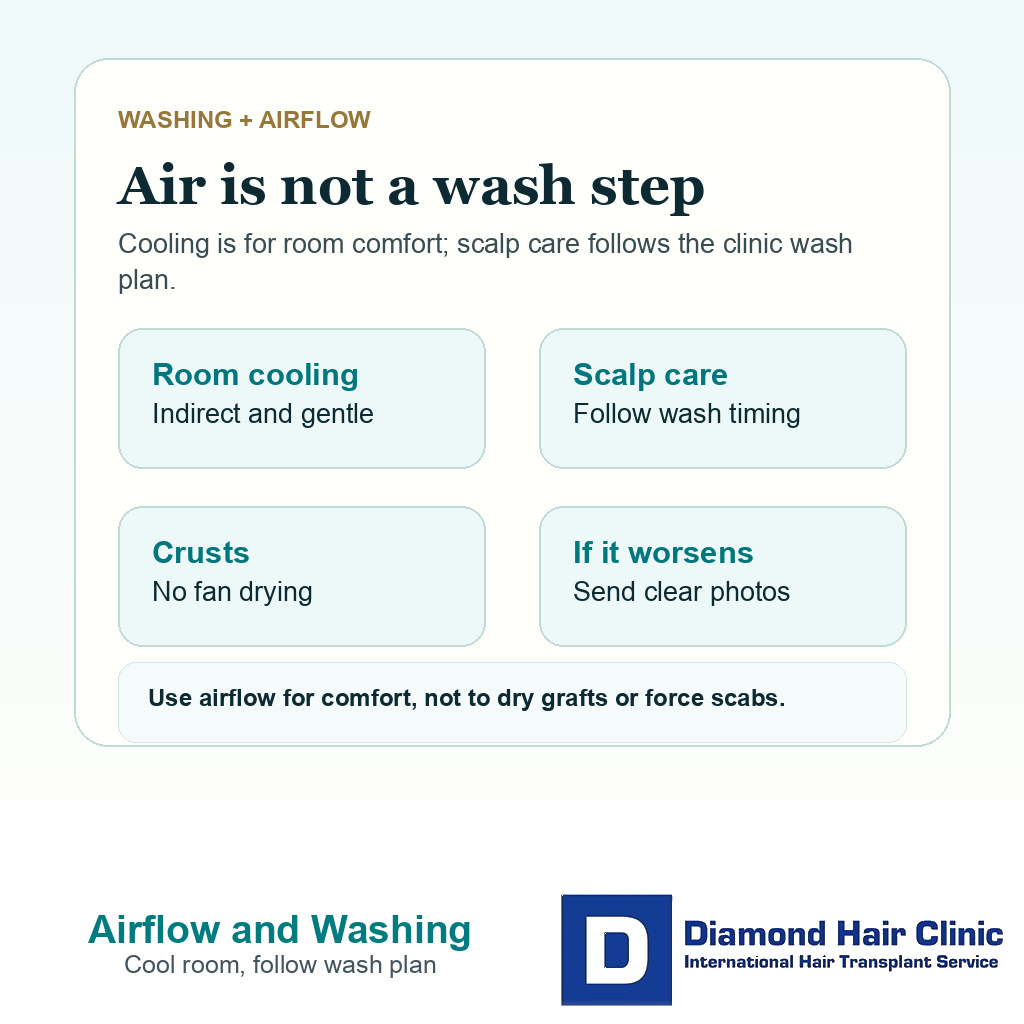
Airflow can make the room comfortable, but it should not be used to dry grafts, force scabs, or replace the clinic wash plan.
Warning signs that need photo review
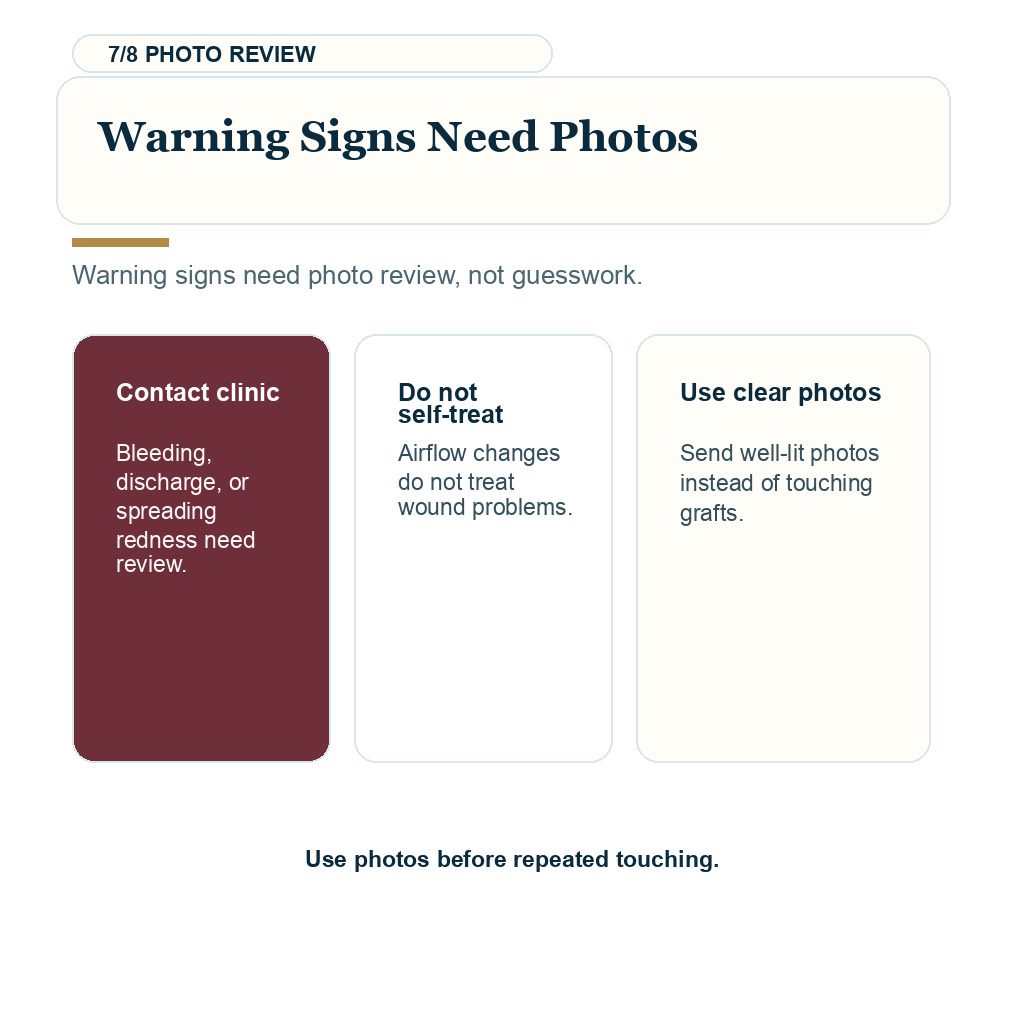
Contact the clinic when airflow is part of a bigger change, especially increasing redness, heat, swelling, pain, pus or cloudy yellow fluid, bad smell, fresh bleeding, black tissue, fever, or a clear open area. These are not ordinary dry room complaints. They need review with photos and medical context, especially if the change continues after the direct air has been moved away.
When you cannot tell whether what you see is a scab, pimple, irritation, or infection, compare it with redness, scabs, and pimples after hair transplant, then send photos if the pattern is worsening. A clear photo is more useful than repeated touching.
Do not treat a warning sign by changing the fan setting alone. Adjusting airflow helps comfort. It does not treat infection, bleeding, necrosis, allergy, or a healing problem that needs direct review.
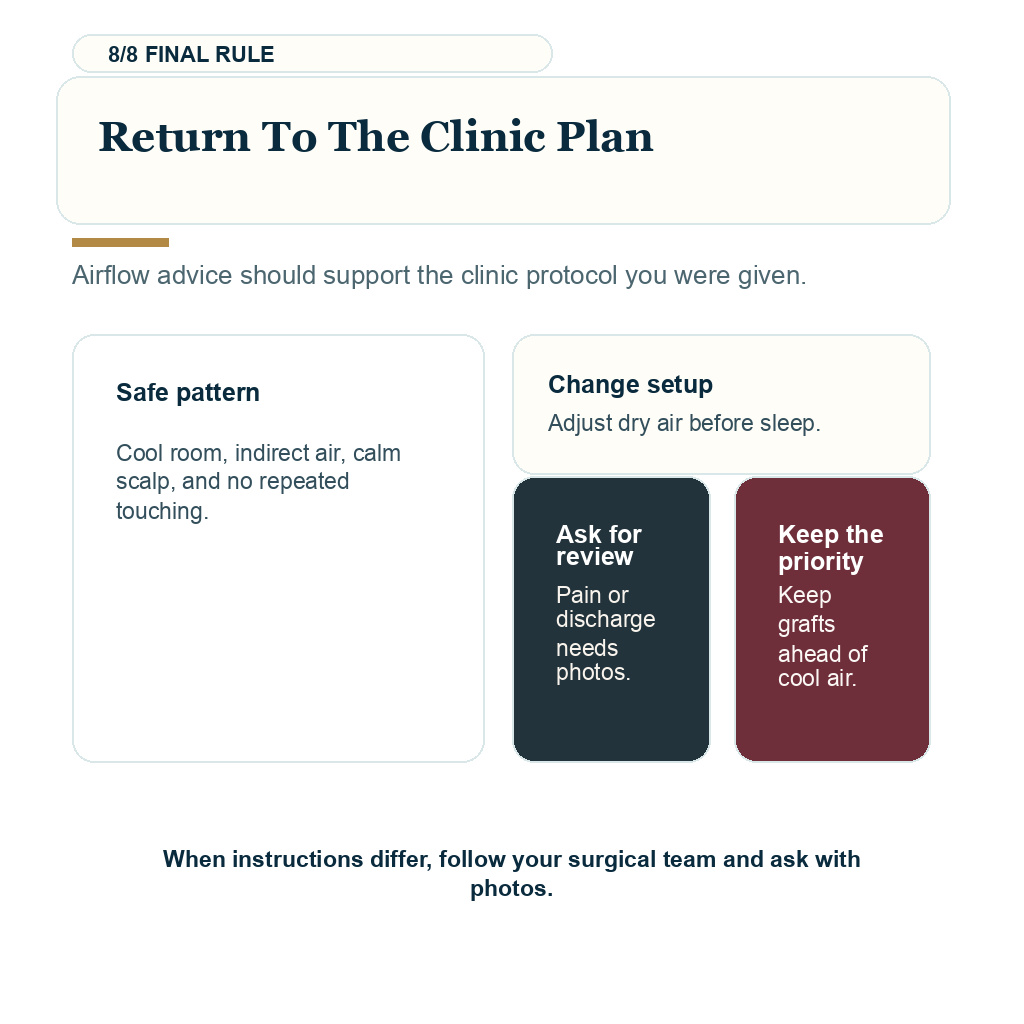
Use the 8 fan and air conditioning slides below to keep airflow indirect, reduce dryness, and know when to send photos for review. Swipe sideways, use the arrows, or choose a number below the image.
Set the room once, then leave the grafts alone
There is no benefit in enduring a hot room after FUE. Use enough cooling to sleep comfortably, but redirect any stream that crosses the recipient area. Once the temperature and angle are settled, leave the grafts alone.
Mild dryness without bleeding, increasing pain, spreading redness, or discharge usually calls for a room adjustment and continuation of the prescribed recovery routine. Waking while scratching or repeatedly checking the scalp is a sign to redirect the fan or soften the AC before the next night.
A fan or air conditioner is an ordinary part of recovery when it improves sleep without drying the recipient area or prompting rubbing, scratching, picking, or unnecessary product use.
The guidance on dust, wind, and pollution after FUE explains why wind carrying debris or prompting rubbing needs more caution than clean indoor airflow.
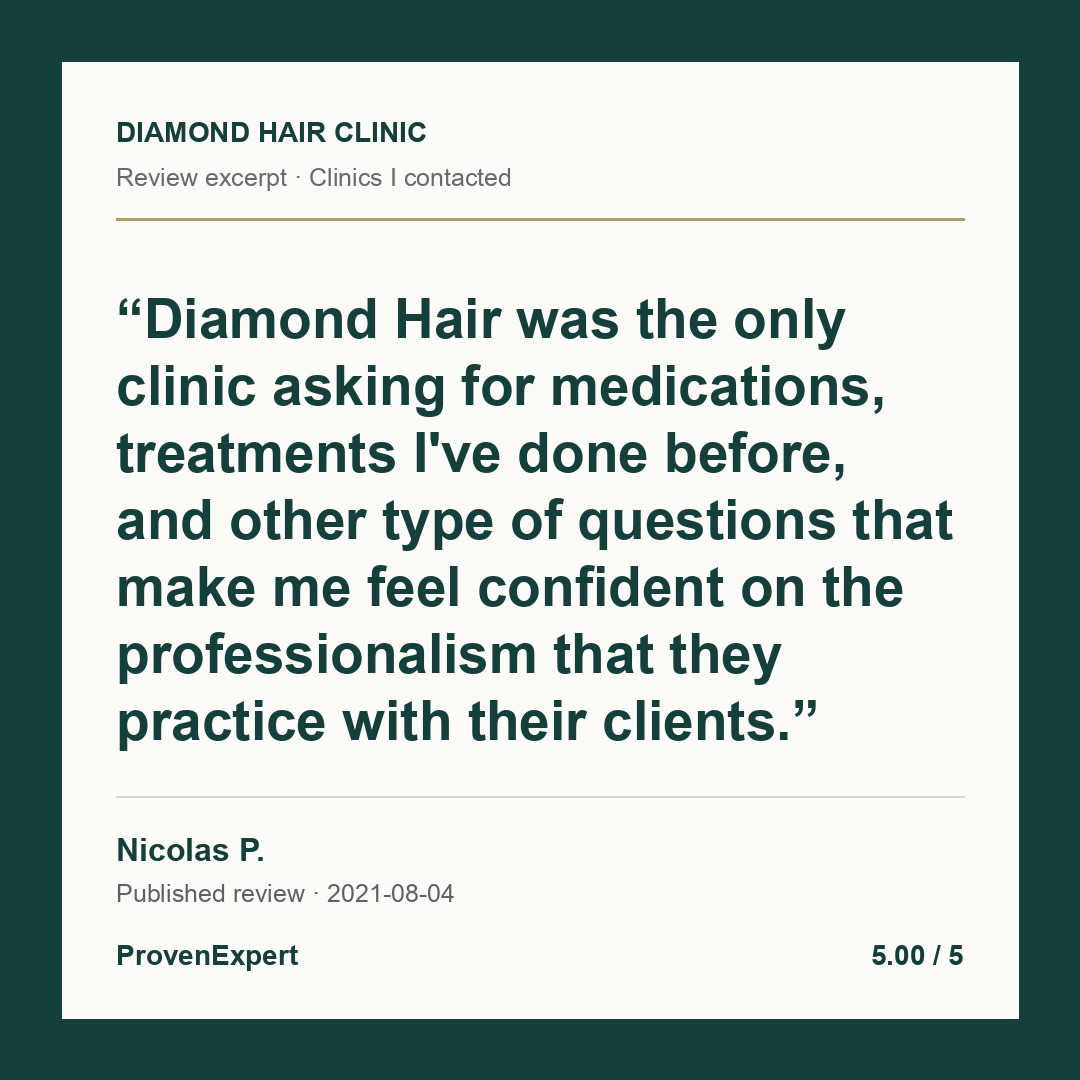
Read this review excerpt
Diamond Hair was the only clinic asking for medications, treatments I've done before, and other type of questions that make me feel confident on the professionalism that they practice with their clients.