


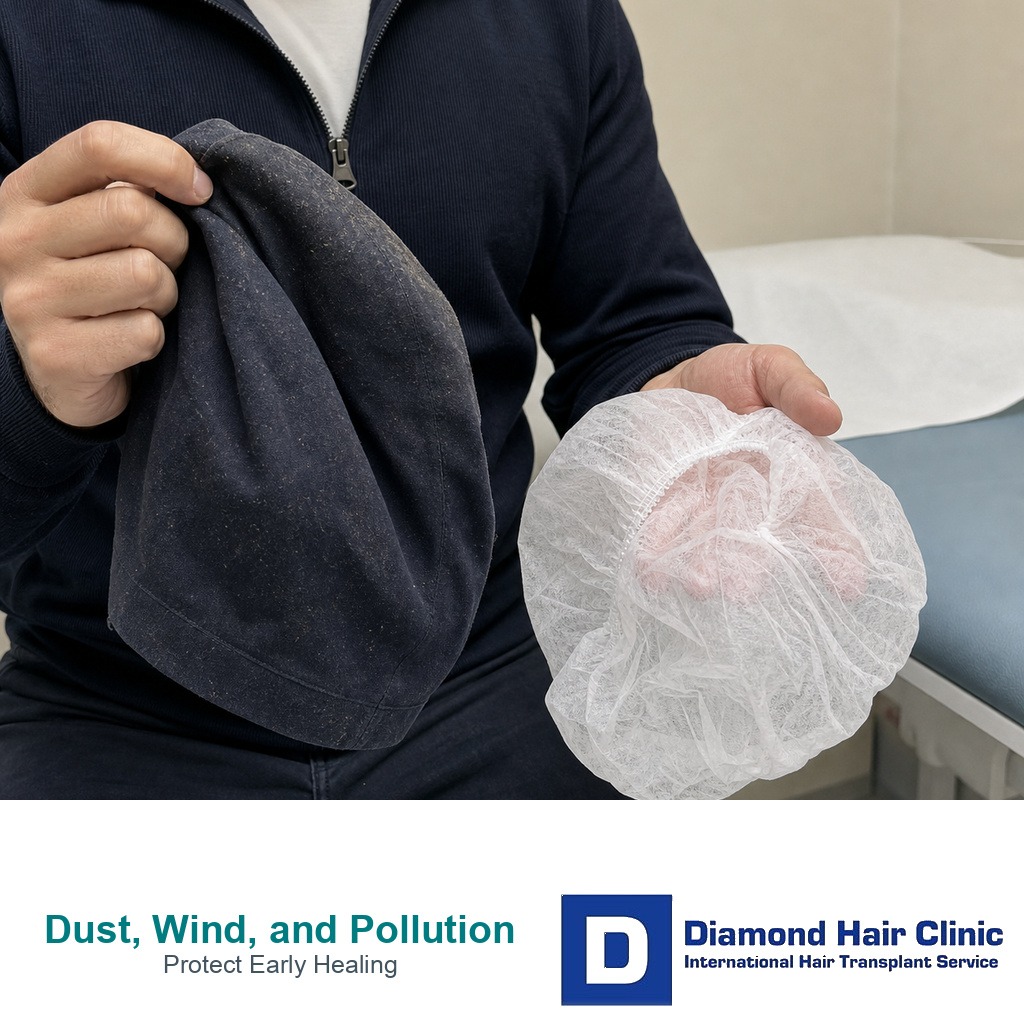
Dust, Wind, and Pollution During Early FUE Healing
After FUE, a short walk in normal city air is not the same risk as a dusty work site, motorcycle wind, a tight hat, or repeated touching of the grafts. For a worried message about dust, wind, or pollution, I first ask what actually happened. Was there rubbing, stuck debris, sweat, pressure from a cover, bleeding, or increasing redness?
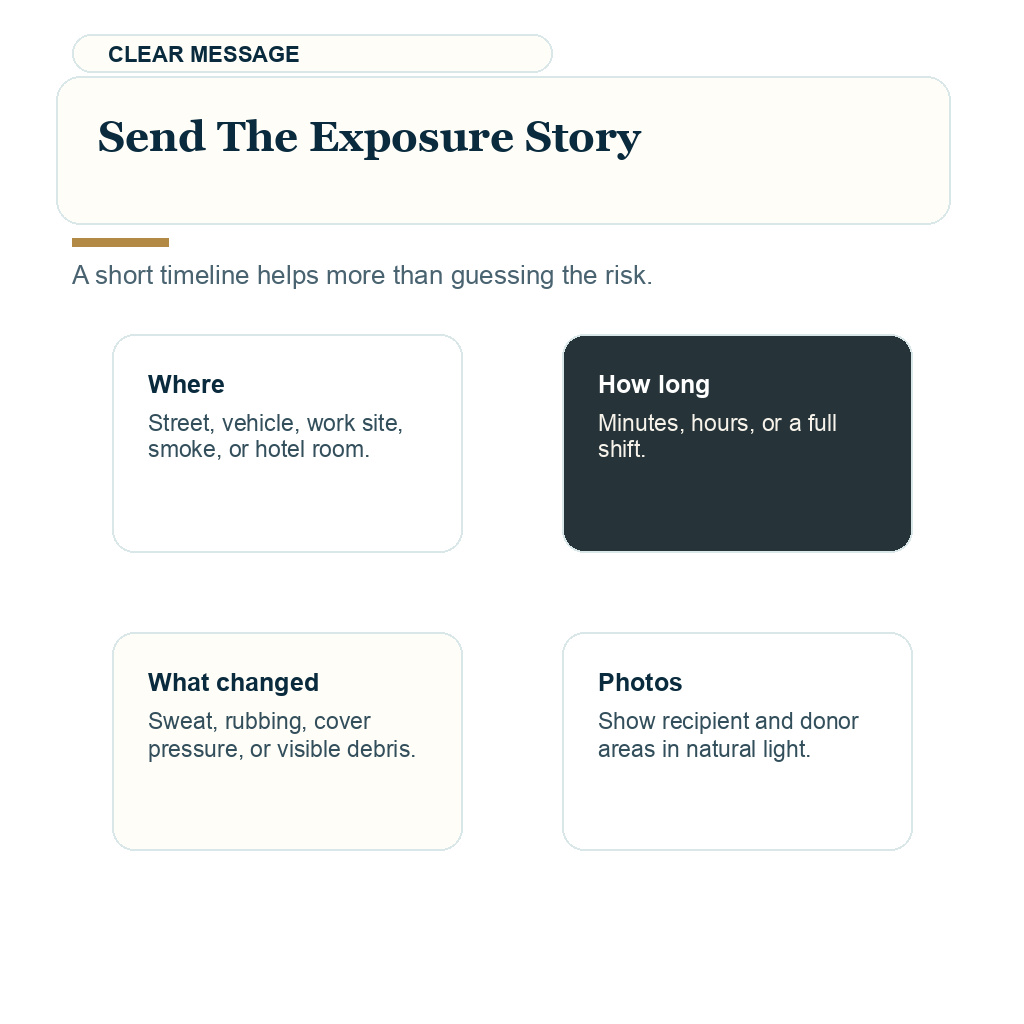
Describe the actual route in your message. A short walk from the hotel door to the car is not the same as waiting outside with luggage while wind, sweat, and touching happen together.
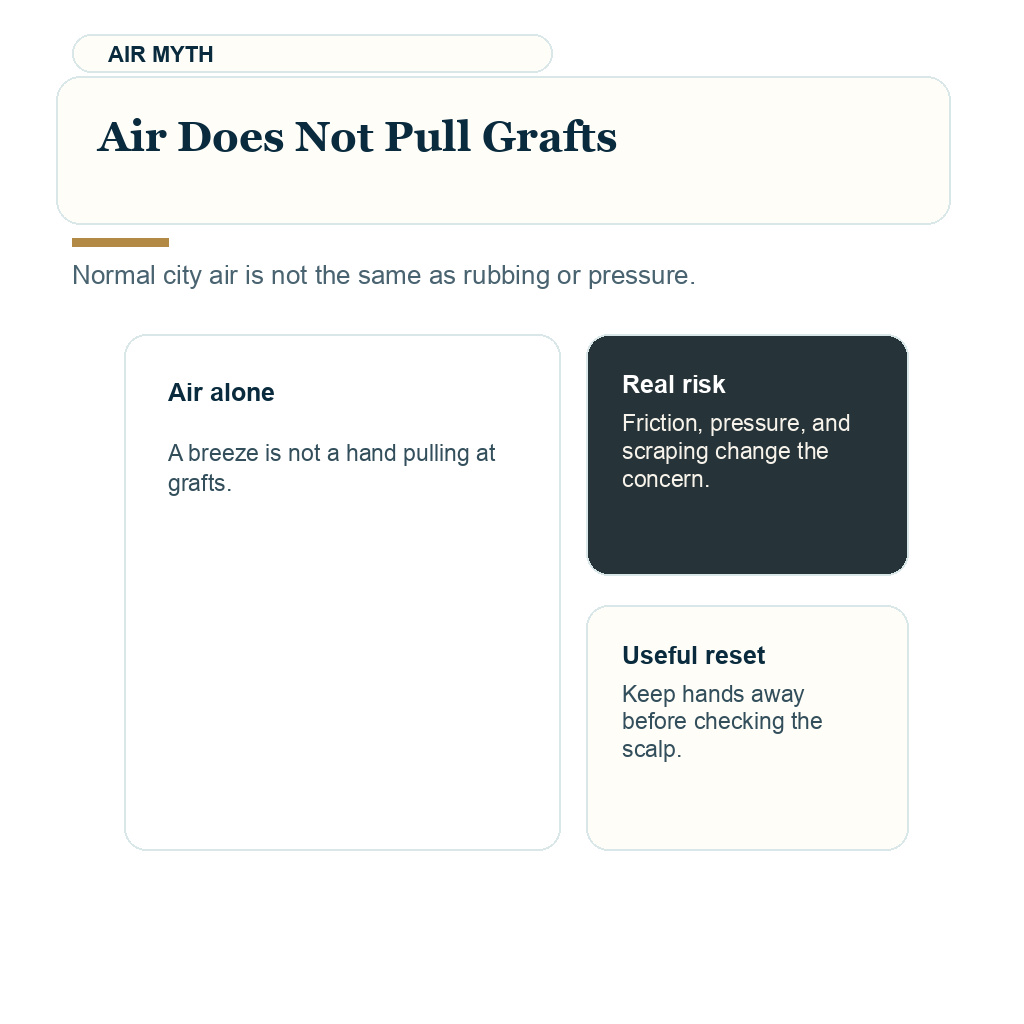
The first rule is simple. Protect fresh grafts from trauma first, then contamination. Ordinary air movement does not normally pull grafts out by itself. Trouble usually starts when wind, dust, sweat, or discomfort makes the patient rub, scratch, press fabric onto the scalp, or delay reporting a real warning sign.
The real risk is trauma first
In the first days after FUE, the recipient area is healing through thousands of tiny openings. The grafts should not be rubbed, scraped, hit, squeezed, or dragged by fabric. Early instructions around sleep, washing, hats, exercise, and travel all protect the same thing. Pressure and friction need to stay away from the grafted skin.
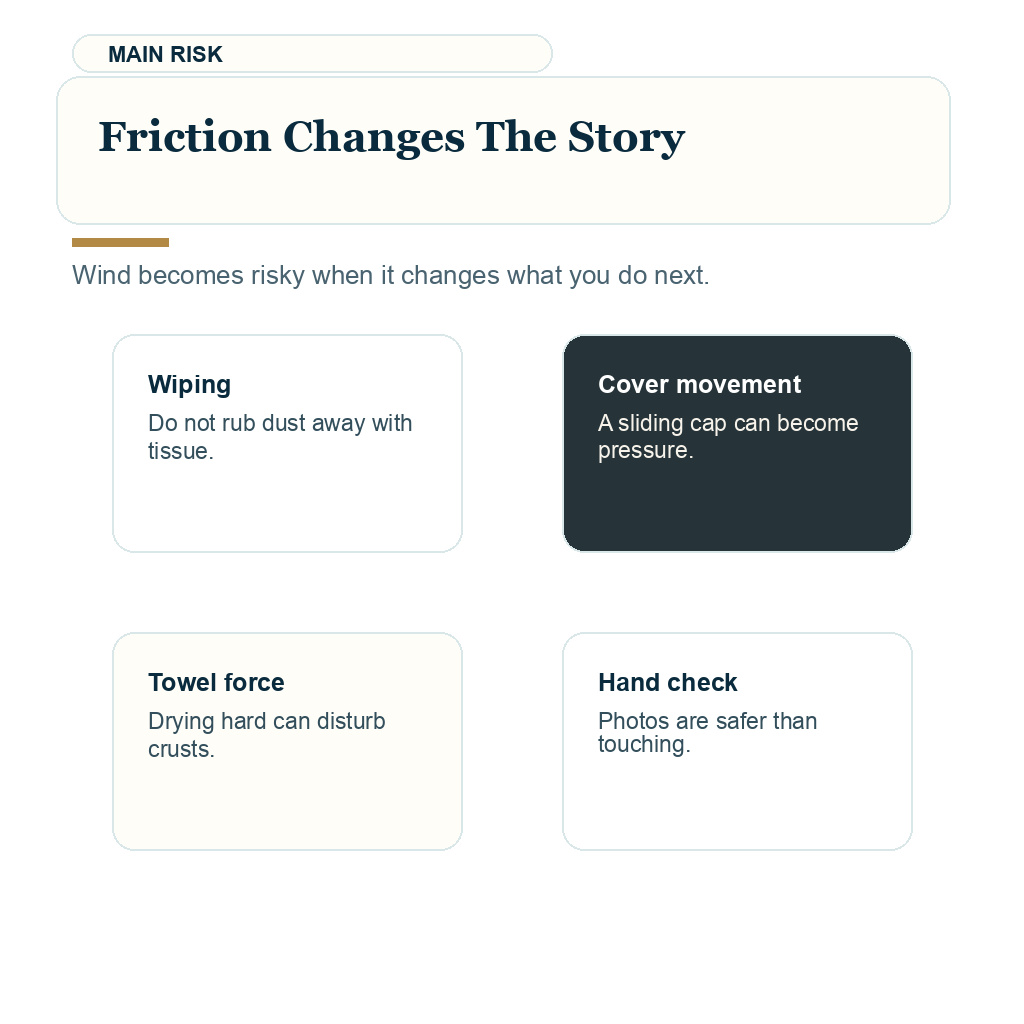
The timing explained in when hair transplant grafts are secure matters here. Many patients imagine the danger as air touching the scalp. I am more concerned about the hand that wipes dust away, the towel used too strongly, the cap that moves back and forth, or the helmet that presses on the recipient area.
If you feel dust or wind on the scalp, do not test the grafts with your fingers. Do not scratch. Do not rub the area with tissue. Follow the washing and spray protocol you were given. If something looks different, take clear photos before you try to clean or inspect it again.
Wind by itself is not the main threat
Patients often worry after a windy airport transfer or a walk near traffic. A normal breeze across the scalp is not a pulling force that removes grafts. The concern is what happens around that wind. Strong wind can dry the skin, push dust toward the grafts, make the eyes water, or make the patient keep adjusting a hat or hood.
I do not ask patients to hide indoors in fear. I ask them to keep outdoor movement short, avoid exposed windy rides, avoid motorcycle or scooter travel, and use a clean loose cover only if the clinic has allowed it. If the cover touches or slides over the grafts, the risk has changed from wind to pressure and friction.
Room airflow has a similar logic. Fan or AC use after hair transplant is usually safer when the air moves indirectly. Moving air in the room is different from a cold stream aimed at the grafted skin all night.
Dust and pollution matter most while the skin is open
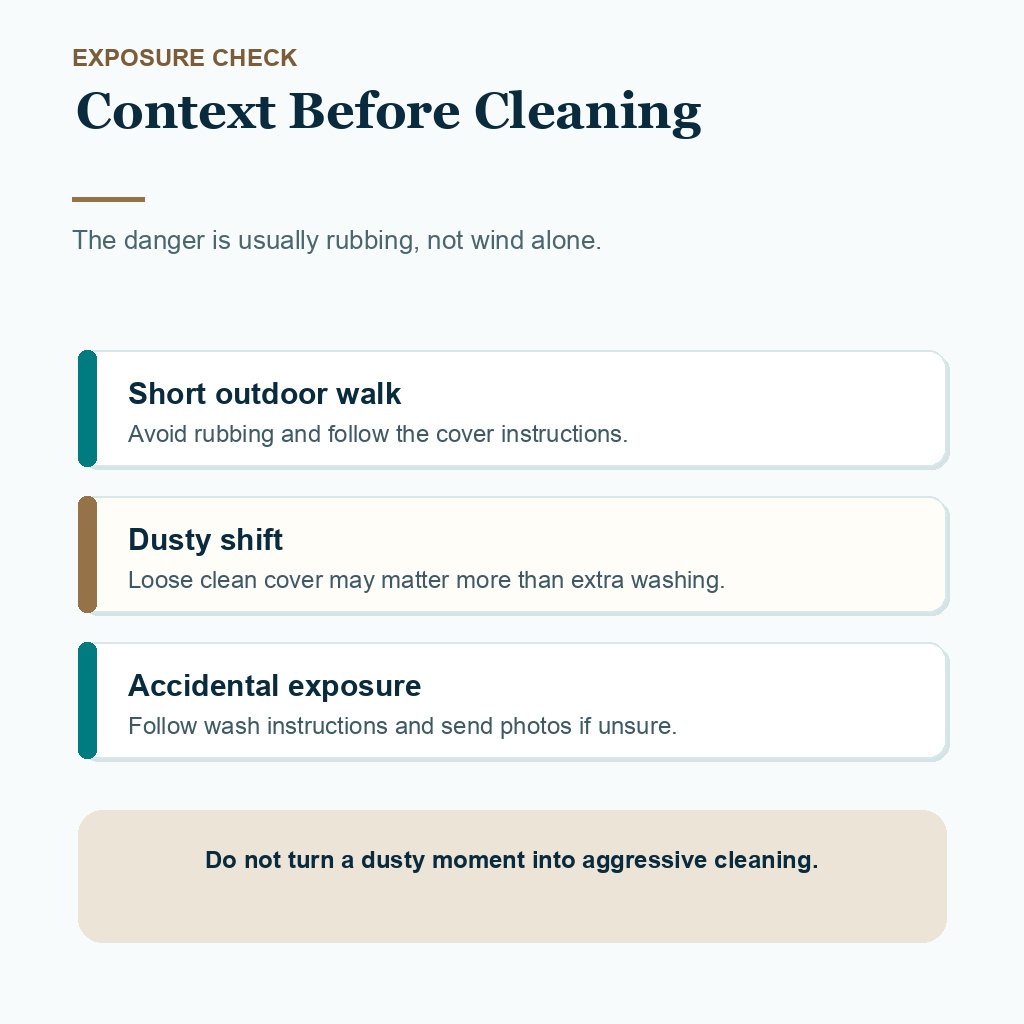
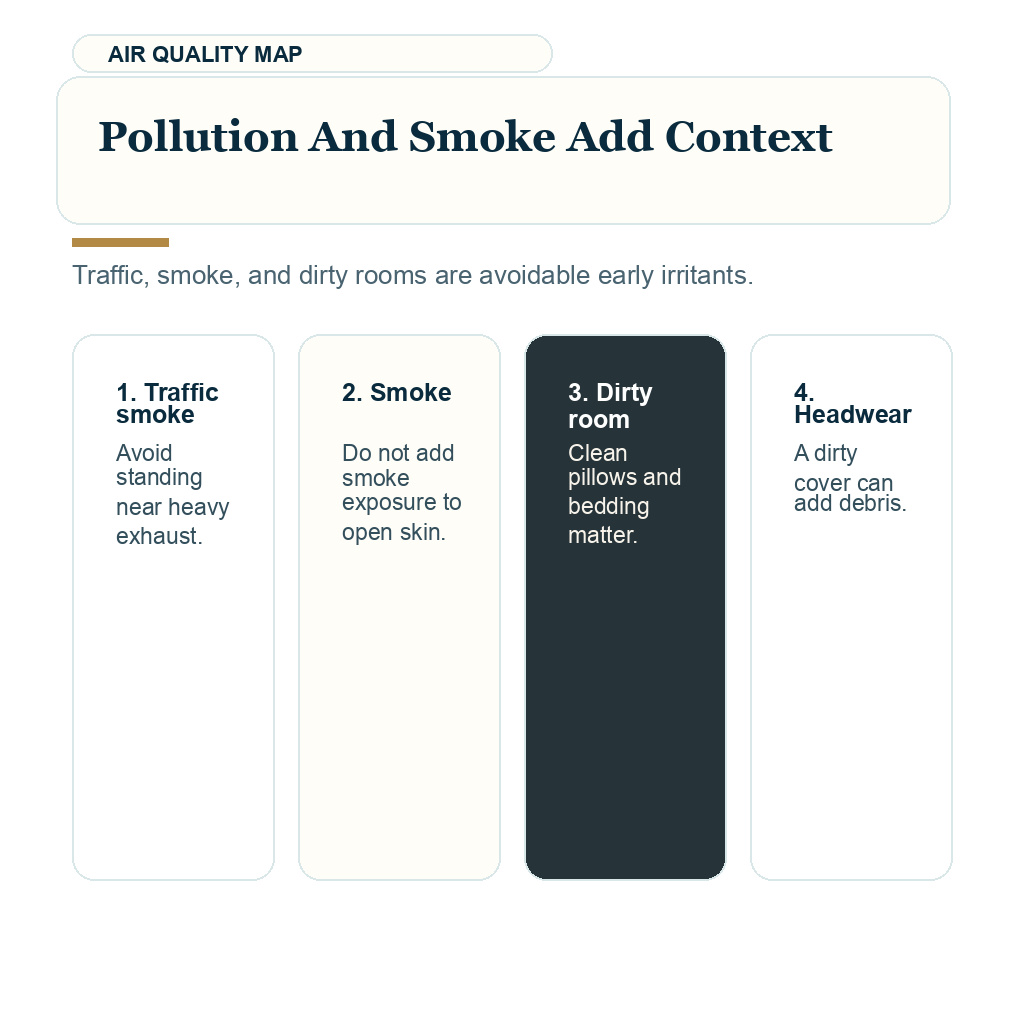
Dust and pollution do not ruin a transplant just by touching the air around the scalp. But early FUE is still early wound healing. Dusty air, construction debris, heavy traffic pollution, smoke, dirty pillowcases, and unwashed hats are avoidable exposures while the skin is open and sensitive.
That does not mean a patient in Istanbul should fear the city. It means the first days should be planned carefully. Hotel transfers, short outdoor walks, and clinic visits are different from standing for hours in a dusty warehouse, riding behind traffic with wind hitting the scalp, or returning to a construction site before the skin has settled.
Hair transplant aftercare becomes practical in ordinary details. Clean hands, clean bedding, loose clothing, correct washing timing, and no improvised products matter more than dramatic restrictions that the patient cannot follow.
Short outdoor movement is different from a dusty shift
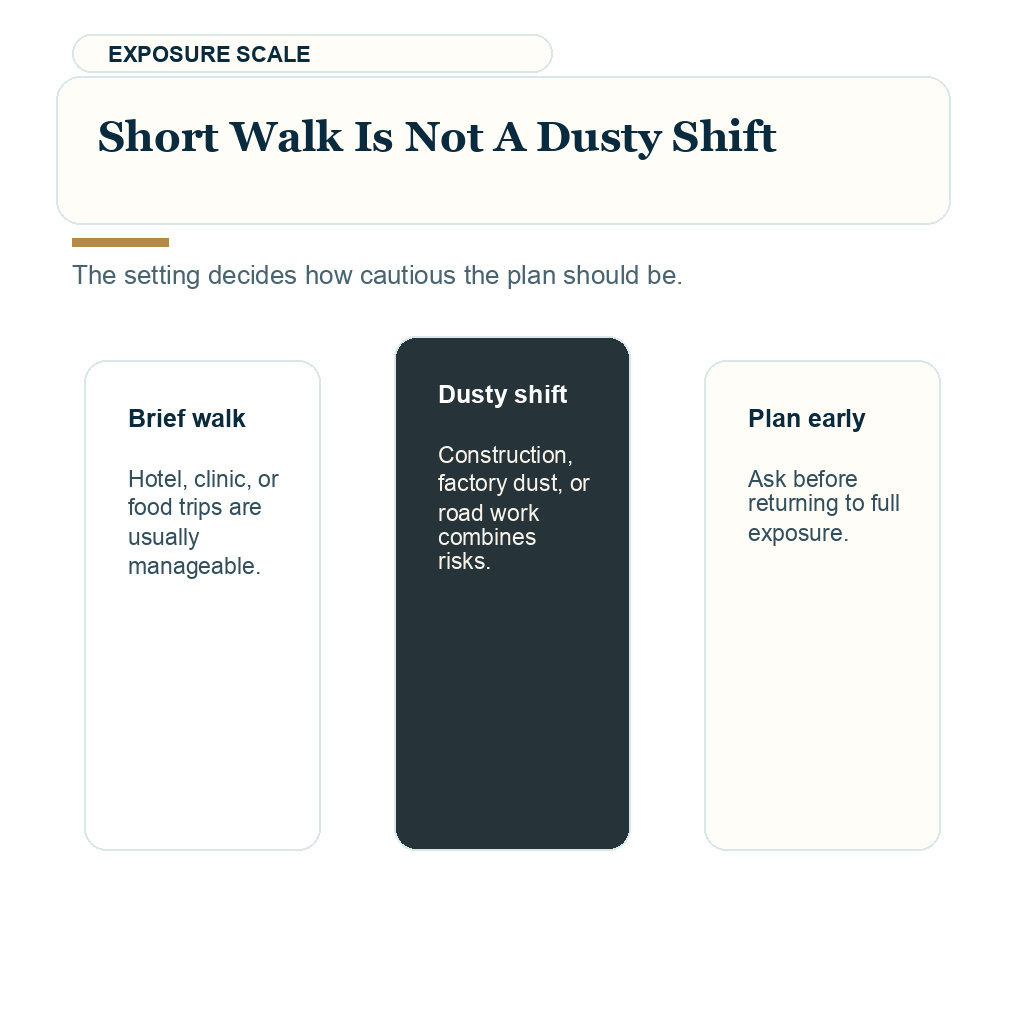
A patient leaving the clinic, going to the hotel, visiting the clinic for washing, or walking briefly for food is not living inside a sterile room. That kind of normal movement can be managed with simple protection and common sense.
A dusty shift is different. Construction work after hair transplant, factory dust, road dust, outdoor heat, heavy sweating, dirty headwear, bending, lifting, and towel wiping combine several risks at once. Physical work after hair transplant covers staged return to work. This article stays narrower and focuses on the environmental exposure part of the decision.
If your job has dust, smoke, heat, or wind exposure, tell the clinic before surgery. The better plan may be modified duty, remote work, a longer break, or a delayed return to full exposure. It should not be decided the night before you go back.
Paint, solvents, or adhesives call for a more specific return plan. Direct scalp contact is only one part of the decision. Ventilation, heat, sweat, and any respirator, hood, or helmet required for the job may change when the shift is practical. Tell the clinic which products you use and what protective equipment the job requires instead of treating a loose cap as the whole solution.
A dusty helmet liner or shared hard hat is different from open air. If protective gear touches the recipient area or makes you sweat and wipe, the job needs a timing change, not a tighter cover.
Clean cover, loose fit, no rubbing
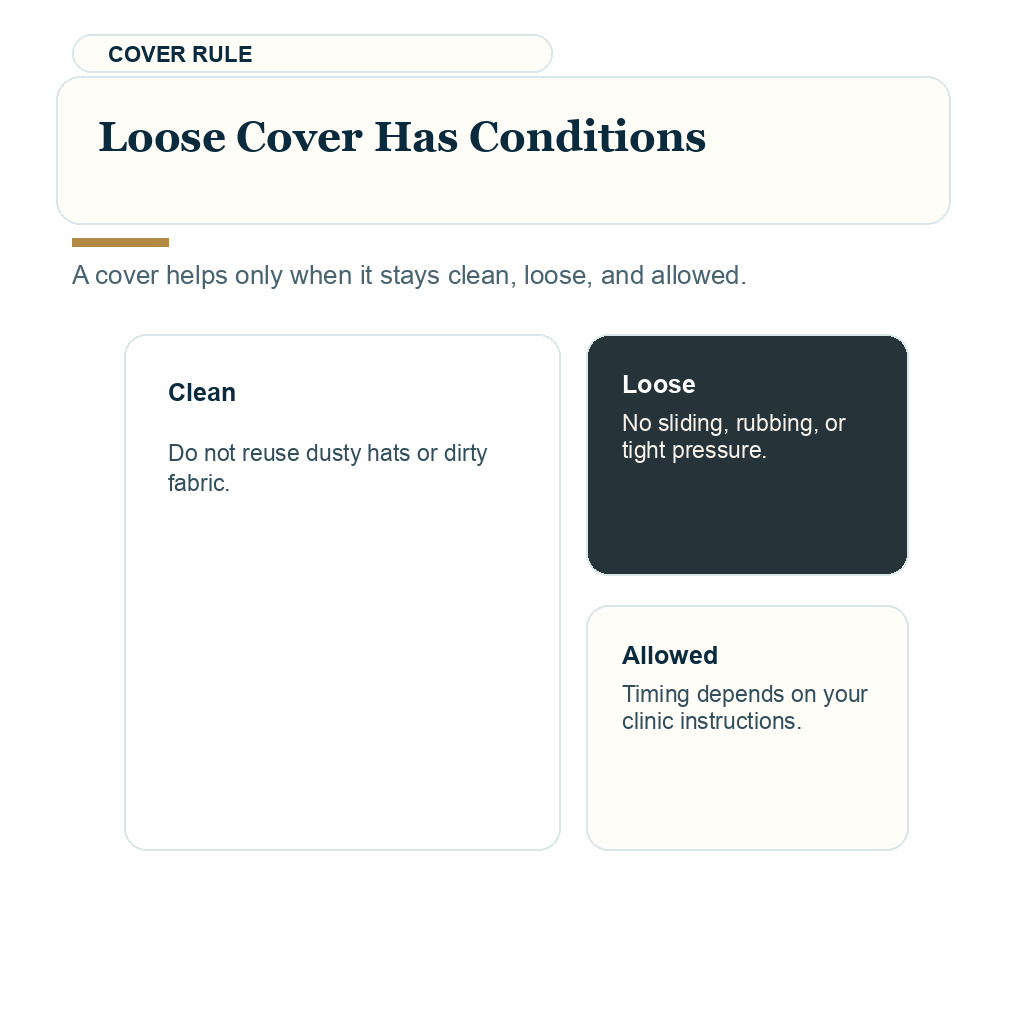
Patients sometimes ask whether a hat, hood, scarf, bandana, surgical cap, or work hairnet after FUE protects from dust. A clean loose cover can help in some situations, but only if it does not press on or slide across the grafts. A clean cover only helps when it stays loose. A dirty or tight cover can be worse than no cover because it adds friction and contamination.
I separate cover from pressure. If you are deciding when and how to cover the scalp, wearing a hat after hair transplant gives the headwear timing. A loose, clean cover approved by your clinic for a short transfer is a different situation from a hard hat, helmet, tight beanie, or cap worn for many hours.
Do not use a cover to justify exposure that should be delayed. If dust is heavy enough that you would need to keep touching, adjusting, sweating under, or wiping around the cover, the plan is probably not safe enough yet.
What to do after accidental exposure?
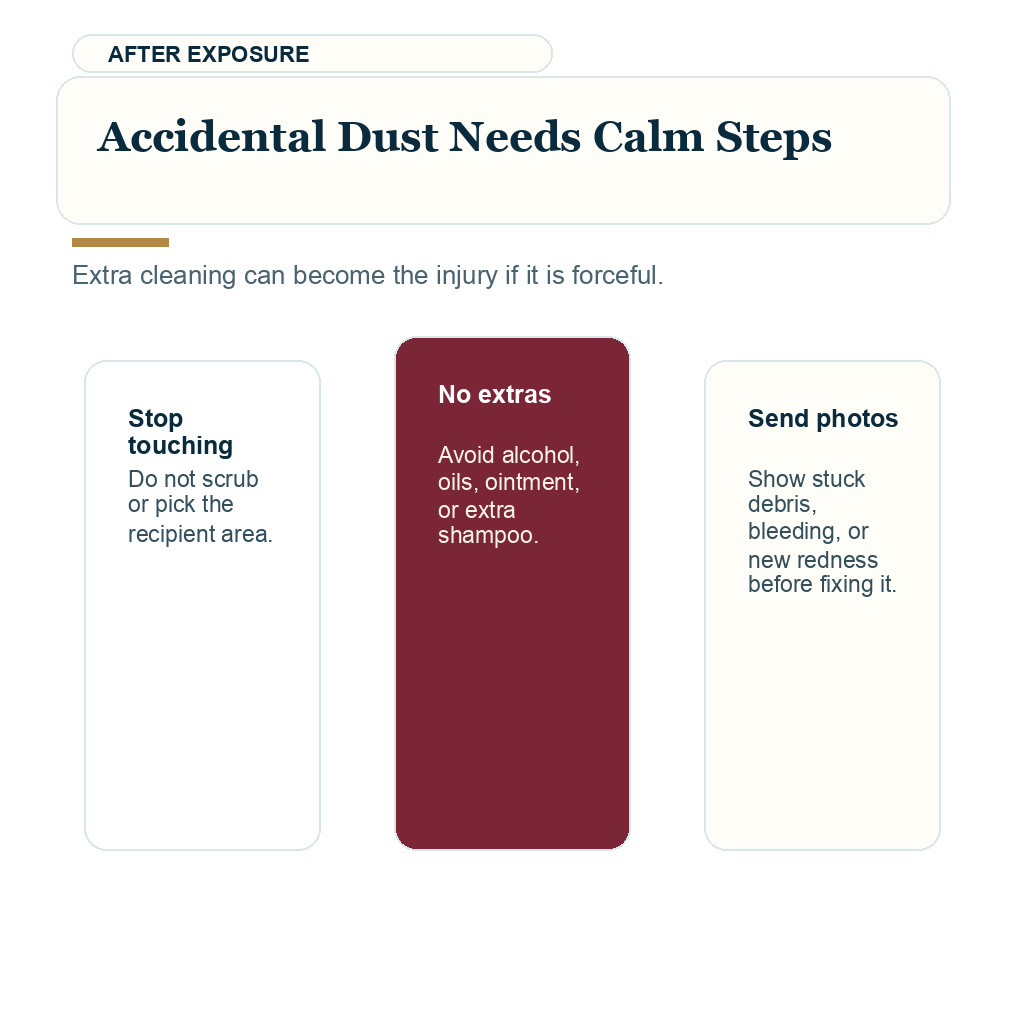
If wind or dust reached the scalp, stop and keep your hands away from the grafts. Do not scrub the recipient area. Loose dust on the surface is different from debris stuck in crusts or bleeding skin. Do not pour alcohol, antiseptic, oil, antibiotic ointment, or extra shampoo onto the grafts unless your clinic tells you to. Too much cleaning can become its own trauma.
Use the washing timing you were given. Gentle technique matters more than force, which is why how to wash hair after hair transplant belongs in this decision. If the exposure happened before your first wash or if you see bleeding, open skin, stuck debris, pus, or increasing redness, leave the area alone and get the photos reviewed before trying to fix it yourself.
A single dusty moment often needs observation and correct aftercare. A long exposure with sweat, rubbing, pressure from a cover, or visible debris may need clinic review. I want to know what touched the scalp, but also whether you rubbed, wiped, sweated heavily, or changed the skin afterward.
Dust and wind exposure checks
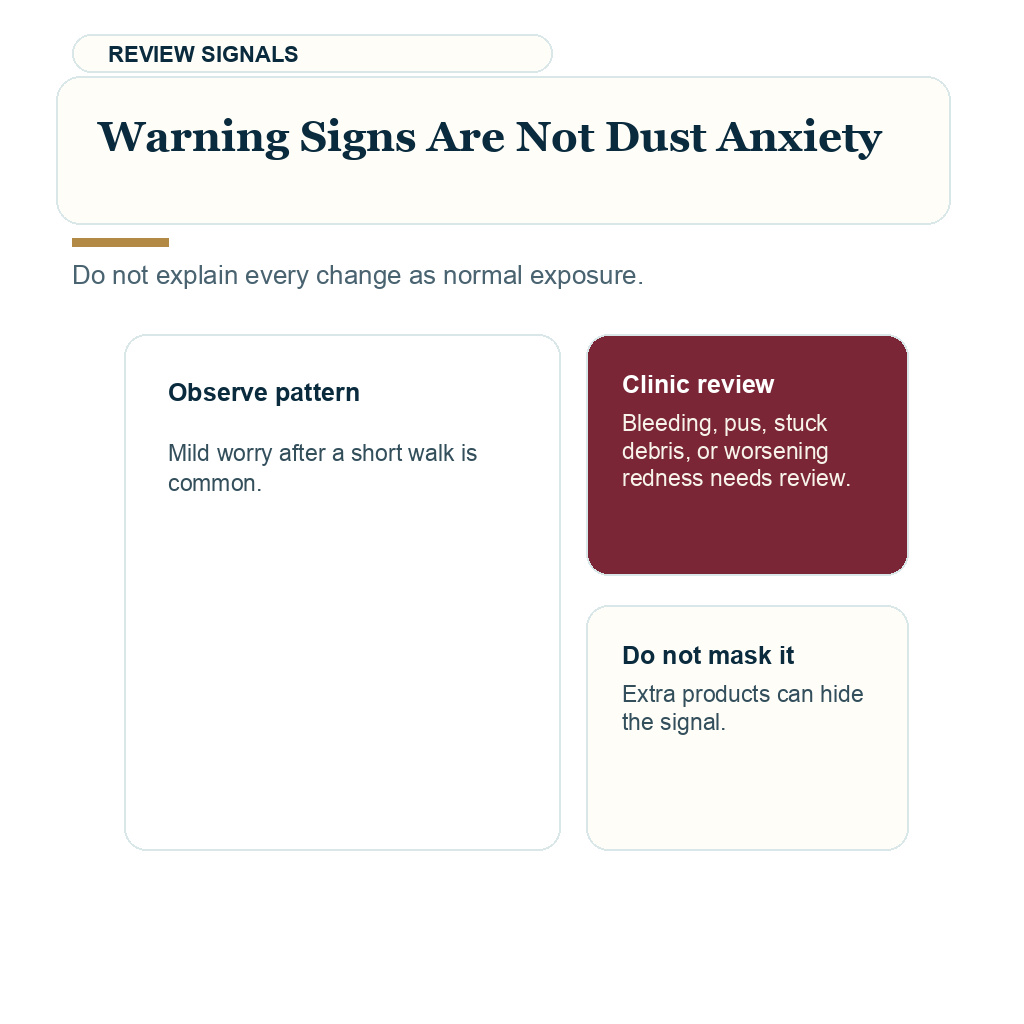
These 9 dust, wind, and pollution recovery slides separate normal air, friction, dusty work, loose covers, accidental exposure, sweat, smoke, warning signs, and the message to send the clinic. Swipe sideways or use an arrow one slide at a time.
Exposure cleanup route map
Which dust or wind exposure needs action?
Dust, wind, and pollution are not equal after FUE. The decision depends on timing, visible particles, rubbing, sweat, and symptoms afterward.
Brief clean wind
Brief clean wind on the scalp is usually a protection and wash timing issue when there is no visible dirt, no rubbing, and no new symptom.
Keep your hands away and wait for the next scheduled wash. If you rubbed the recipient area while checking it, send a photo rather than inspecting again.
Visible dust
Visible dust, sand, or debris changes the question from exposure to cleaning technique.
Do not pick or scrape. Follow the wash steps and send a photo if particles seem stuck, especially if cleaning causes bleeding, pain, open skin, or crust disruption.
Pollution commute
Traffic fumes, city air, or a short outdoor journey are different from dirt pressed into the grafts or direct trauma.
Protect the area from touching and continue the normal wash plan. Worsening redness, discharge, swelling, or fever needs medical review.
Sweaty dusty work
A dusty workplace, construction area, windy street, or heavy sweat situation creates more concern because exposure repeats and rubbing becomes more likely.
Step away from the exposure, avoid tight covers, and ask whether work needs to pause if the area feels irritated, wet, painful, or visibly dirty again.
Warning signs
Pain, spreading redness, discharge, bleeding, fever, worsening swelling, or an open area after exposure is not only a dust or wind question.
Contact the clinic with photos taken in good light and a short symptom history, then follow direct medical advice. Do not scrub, pick, or add products while waiting for review.
When to contact the clinic?
Contact the clinic after environmental exposure when the story includes more than simple air contact. Include photos taken in good light and explain any fresh bleeding, direct scratch, strong bump, stuck debris, open skin, increasing pain, spreading redness, heat, pus, bad smell, fever, or swelling that becomes worse instead of settling.
The warning signs are similar to other wound concerns, but the early transplant setting has one extra problem. Patients may either become frightened by harmless sensations or ignore changes because they are embarrassed. Neither response helps. Share clear pictures in natural light and explain the timing, what happened, and what you did afterward.
If the exposure happened very early, first night after hair transplant is the closer recovery decision. The first 24 to 48 hours need strict protection from sleep pressure, rubbing, and unnecessary product use.
How does this connect with work, hats, sweat, and travel?
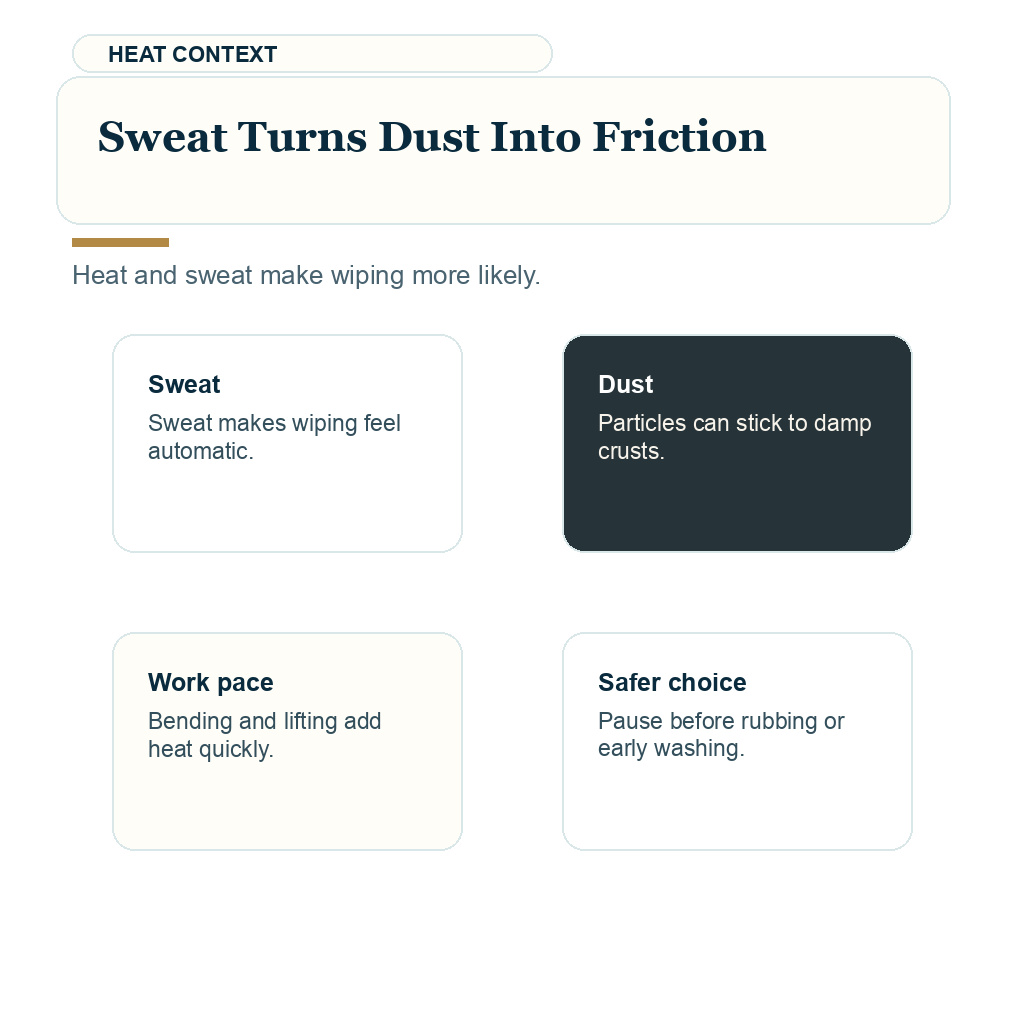
Environmental exposure is rarely alone. The patient who works outside may also sweat heavily. The patient who rides a motorcycle may also use a tight helmet. The patient walking in heavy traffic may also touch the scalp often because it feels dry or itchy.
Nearby recovery topics matter because environmental exposure rarely comes alone. Sweating after hair transplant can lead to wiping and irritation. Helmet use after hair transplant matters because pressure changes the risk. Flying after hair transplant matters when airport transfers, luggage, sleep, and outdoor movement happen close together.
Sun and heat can also change the plan. If you are outside because of travel, work, or sightseeing, read sun after hair transplant with this one. The scalp needs protection, but the method must not create pressure or friction over the grafts.
My practical rule after FUE
Right after surgery, I do not ask patients to fear every breeze. I ask them to respect that the scalp is healing. A clean, low friction environment is better than a dusty, sweaty place where the scalp is touched often.
If you can make the exposure shorter, cleaner, cooler, and less physical, do that. If the exposure requires tight headwear, repeated wiping, heavy sweating, dust clouds, smoke, or hours outside, slow the return down and ask the clinic.
A controlled plan is better than a dramatic one. Protect the grafts from pressure and rubbing, keep hygiene simple, wash only as instructed, and report warning signs early. That is how dust, wind, and pollution become manageable after FUE.
Read this review excerpt
Upon arriving home, I sent 4 photos (of each side of head) after every washing process to doctor for checking where I was given personal advice for how to take care of my healing head.