Construction Work Needs Dust and Helmet Planning
Construction work can be possible after FUE, but a dusty site is not desk work. If the recipient or donor area is still open, crusted, bleeding, painful, swollen, or becoming more red, full site work needs to wait until the clinic reviews the scalp. Many patients need at least 10 to 14 days before even considering dirty work, and long hard hat shifts often need closer to 3 to 4 weeks when heat, sweat, pressure, and rubbing cannot be controlled.
I decide by the scalp and the real job, not only by the date. A quick clean site visit is not the same as cutting, drilling, carrying materials, sweating, and wearing a hard hat through a full shift. The plan has to protect skin closure, washing, helmet fit, and the ability to stop if warning signs appear.
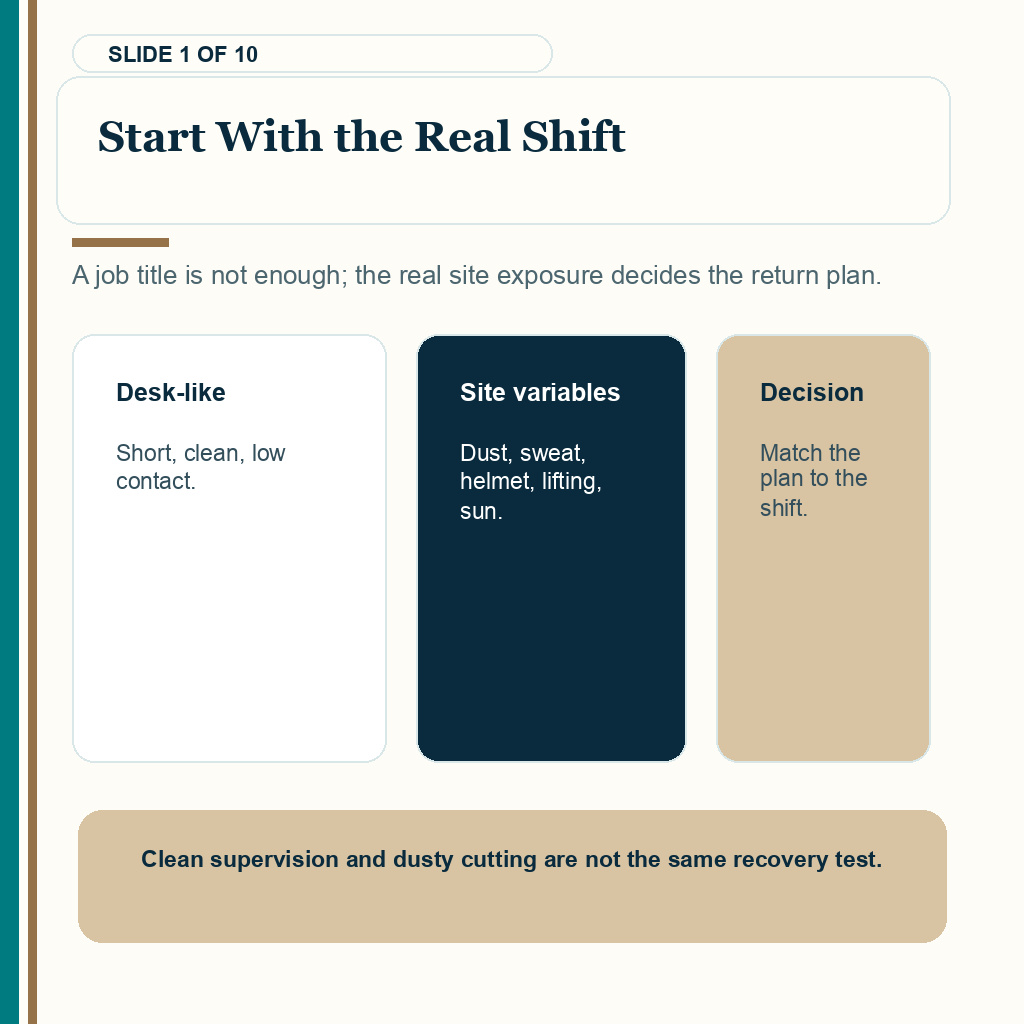
A return plan should be based on the actual duties, not only the calendar. Carrying materials, cutting, dust, sun, sweat, helmet time, and a clean office visit all create different recovery risks.
Before returning, write the shift as tasks rather than a job title. Dust, heat, sparks, helmet liners, sunscreen, dirty gloves, and the chance of bumping the head each need their own clearance.
For sunscreen specifically, the question is timing and skin closure, not only SPF. Use the sunscreen after hair transplant guide before putting product under dust, sweat, dirty gloves, or helmet padding.
Construction work is different from desk work
A quiet office exposes the scalp to much less risk than a building site. Construction work can mean concrete dust, sawdust, insulation fibers, sweat, helmets, head movement, sun, wind, dirty hands, and long hours without a clean place to wash. That combination is why I separate this question from normal work advice.
The first week after FUE is mostly about controlled healing. Washing, sleeping position, swelling, crusts, and avoiding rubbing are more important than proving toughness at work. The general hair transplant aftercare plan gives the base rules, but construction work adds exposure that aftercare instructions cannot ignore. For demanding jobs outside a building site, I use the broader physical work after hair transplant return plan.
The job environment matters as much as the job title. A supervisor walking a clean site for one hour is not the same as a worker cutting, drilling, sweating, and wearing a hard hat all day. The safer question is what your scalp will actually experience during the shift.
Closed skin comes before dust exposure
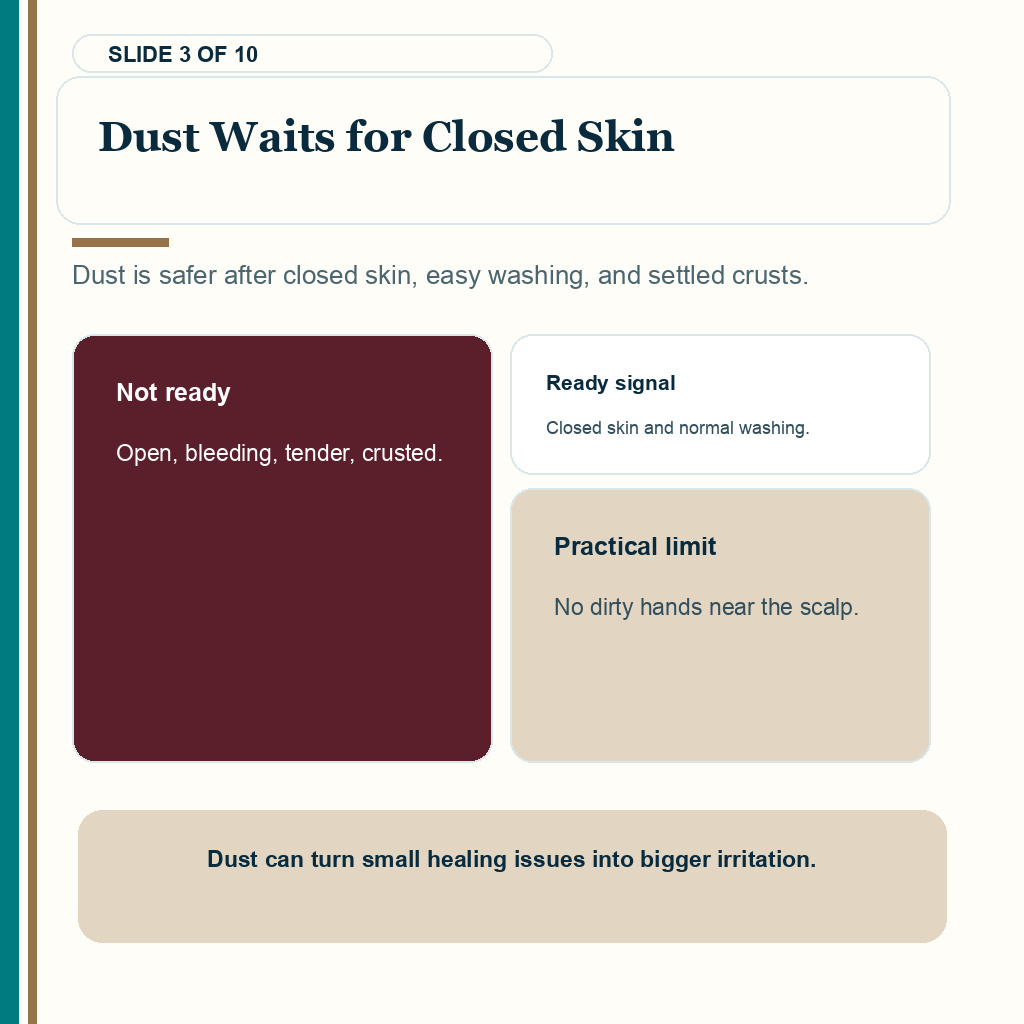
Yes. Dust after FUE is not only a cosmetic problem in early recovery. It can stick to crusts, irritate the donor area, collect under a helmet, and make scratching more tempting. If the scalp is still tender, oozing, bleeding, or difficult to wash, I do not send someone into a dirty worksite unless there is no realistic alternative and the duties can be modified carefully.
The timing varies because healing is not identical in every scalp. Some patients look clean earlier. Some have thicker crusting, more redness, donor sensitivity, or small pimples. Redness, scabs, and pimples after hair transplant need judgment by direction of healing, not one frightening close photo.
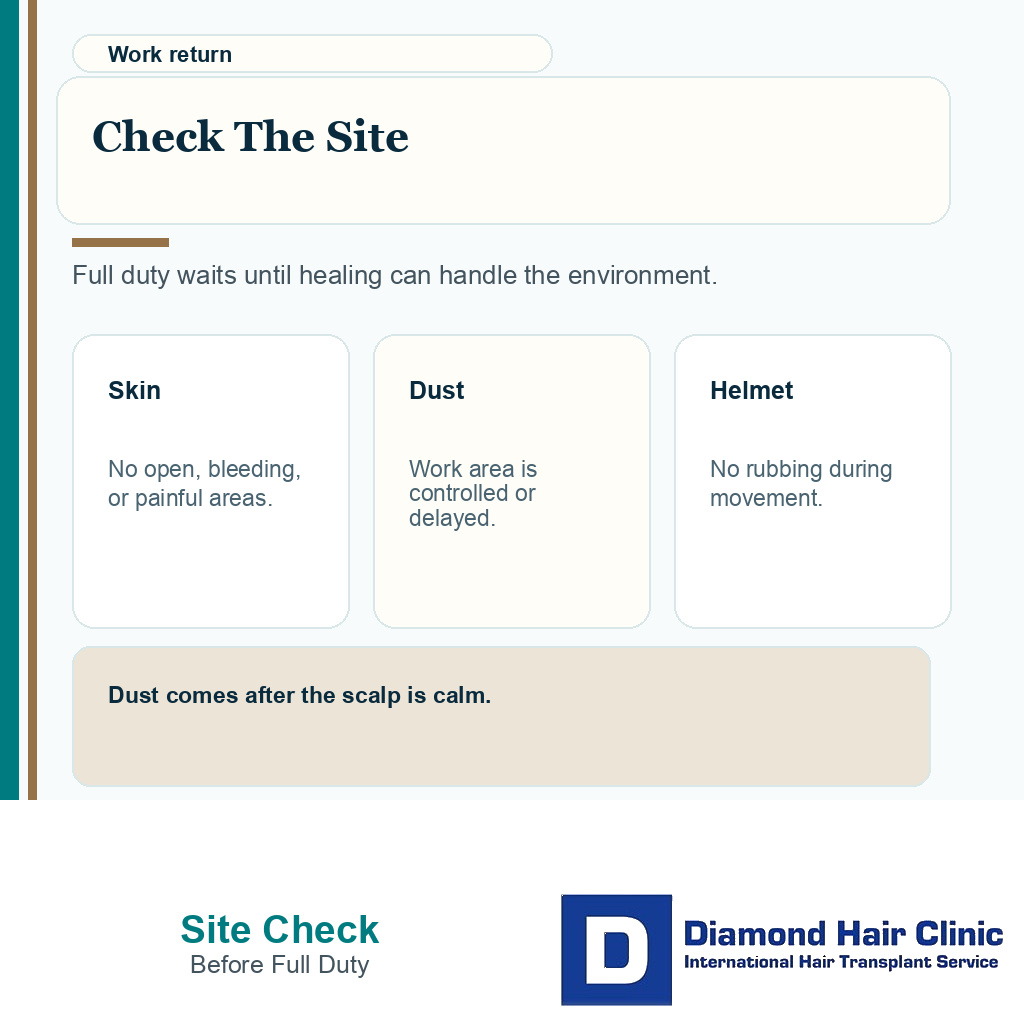
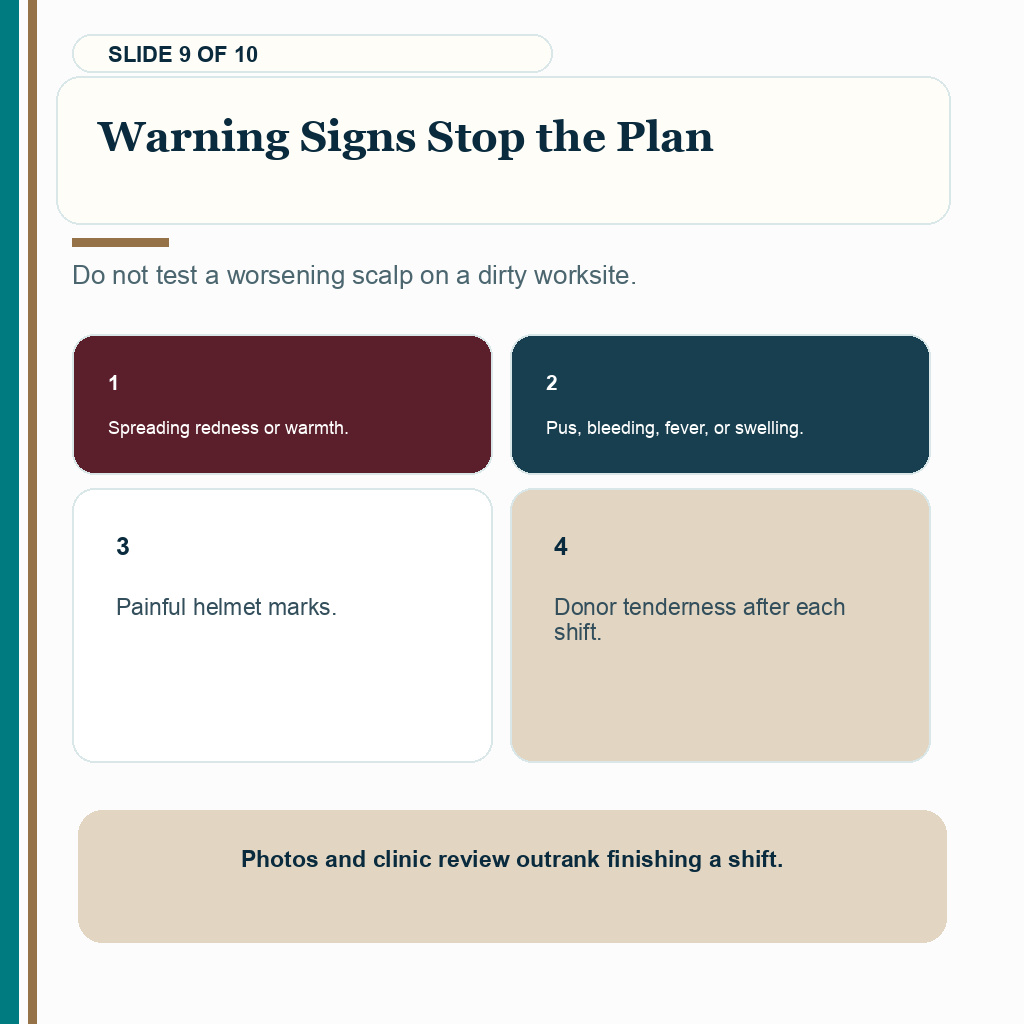
If pustules, spreading redness, warmth, increasing pain, drainage, or worsening swelling appear, the work plan changes. At that point the concern is not only returning to work. It may be folliculitis after hair transplant or another scalp problem that needs review.
Hard hats need a real fit test after FUE
A hard hat creates three problems after FUE. It can press on the recipient or donor area, rub during movement, and trap heat or sweat under the shell. Even when grafts are more secure, repeated friction for a full workday can still irritate healing skin. I do not approve a helmet shift only because a certain number of days has passed.
If your scalp is still numb, pay particular attention to clearance beneath beams and to movement of the helmet straps. Required head protection must remain in place.
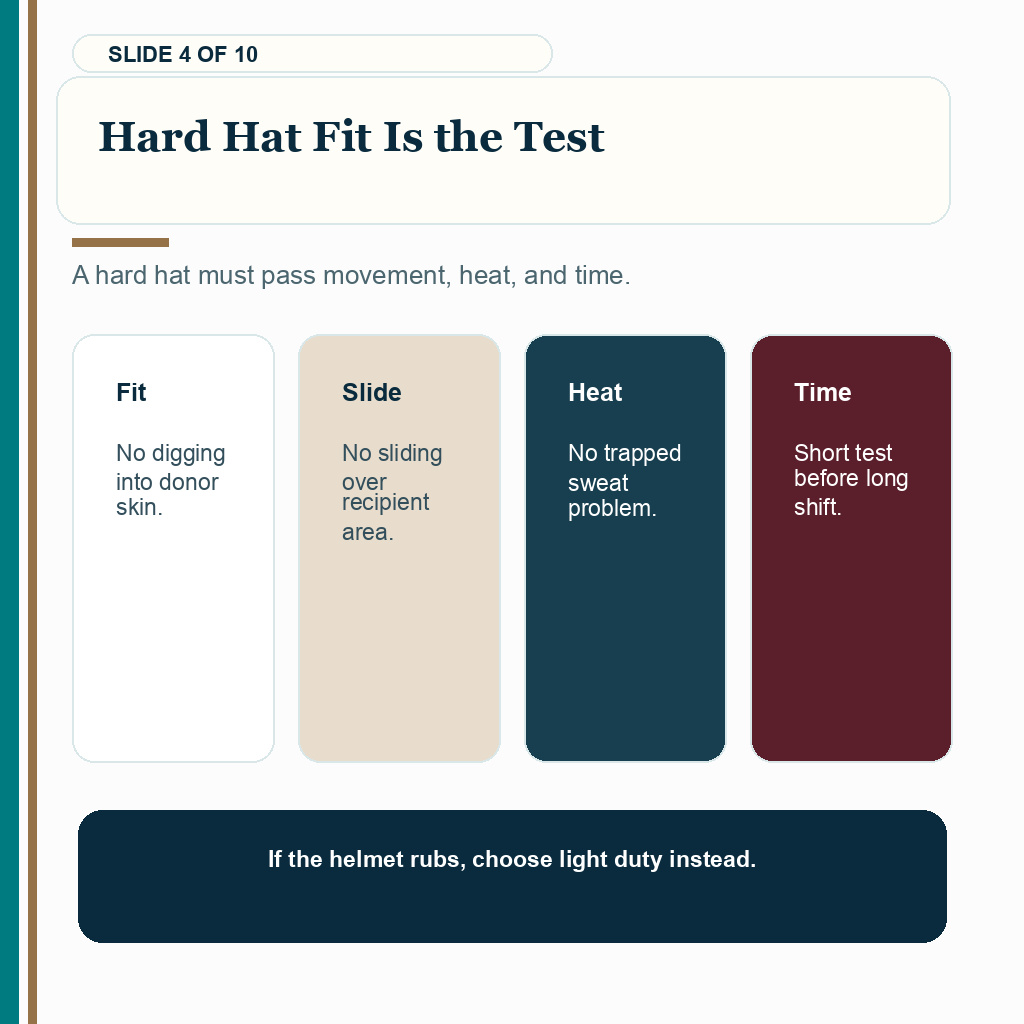
Before a long shift, check the helmet while standing, bending, and moving the head. It must not slide across the recipient area, dig into the donor area, or push against tender skin. A clean disposable liner or clean soft layer may help some patients, but it must not create extra pressure. The dedicated guide to a helmet after hair transplant goes deeper into pressure timing and fit.
A normal hat is not the same as a safety helmet. A loose clean cap used briefly for coverage is different from a hard hat worn for hours under site conditions. If the concern is ordinary covering rather than protective equipment, the timing for a hat after hair transplant follows separate logic.
Do not remove required protective equipment just to protect the transplant. If the site requires a hard hat and your scalp cannot tolerate it, the conservative plan is modified duty or time away, not working unprotected. Comfort is also not enough if the helmet rubs after movement, heat, and time.
Sweat is only one part of the worksite risk
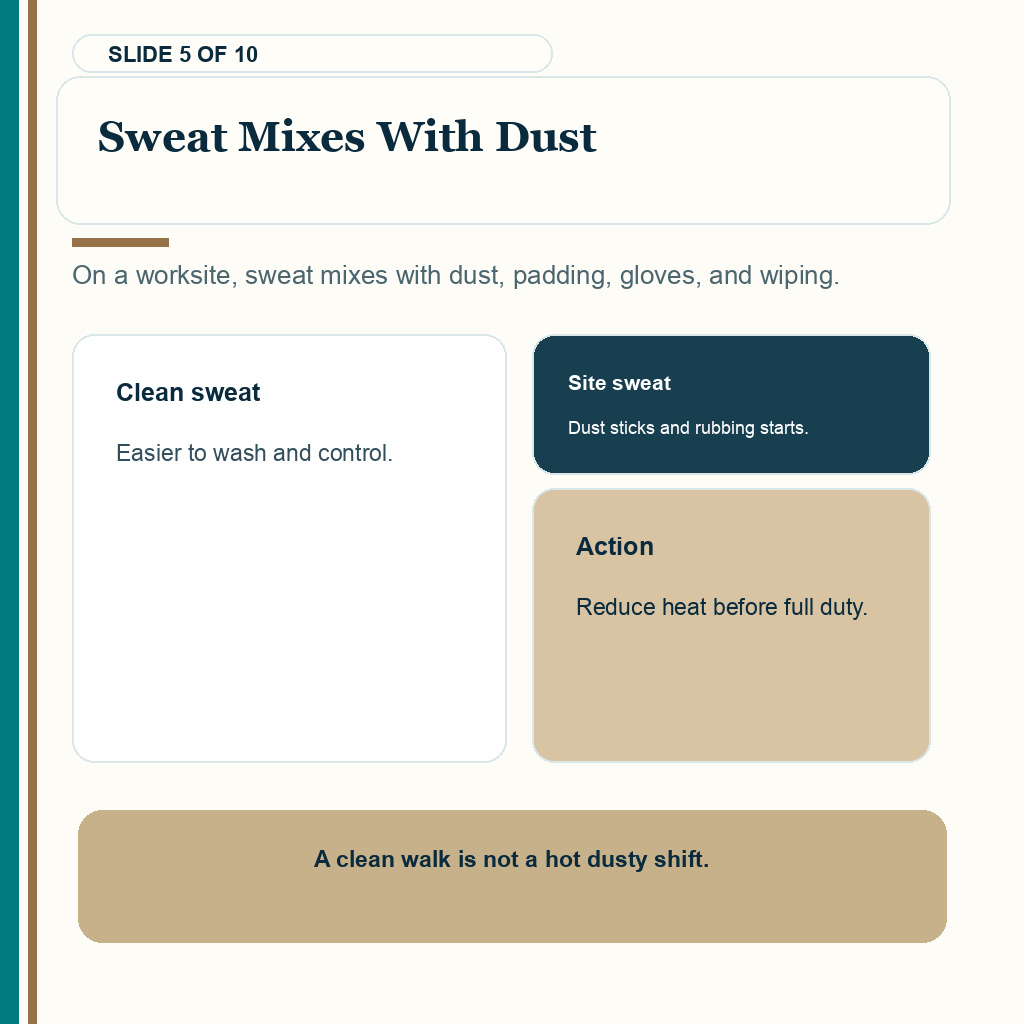
No. Heavy labor raises body temperature and increases sweating, but sweat alone is not the whole issue. On a worksite, sweat often mixes with dust, dirty gloves, sunscreen, helmet padding, and repeated wiping. That is different from light walking in a clean place.
Early sweating after hair transplant needs control because heat can make the scalp harder to manage. For construction work, I ask two more questions. Can you avoid heavy lifting and overheating? Can the scalp be kept clean without rubbing or scratching? If the answer is no, full duty is usually too early.
Exercise rules also help, but work is less flexible than the gym. You can stop a workout when the scalp feels hot. You may not be able to stop a work shift so easily. Timing for exercise after hair transplant is useful background, but construction work needs a stricter plan when the environment is dusty or hot.
Build the first return as a reversible trial. If the shift cannot be shortened, moved to clean duty, or stopped when the helmet starts rubbing, it is not light duty for FUE recovery.
Light duty can bridge the return to construction work
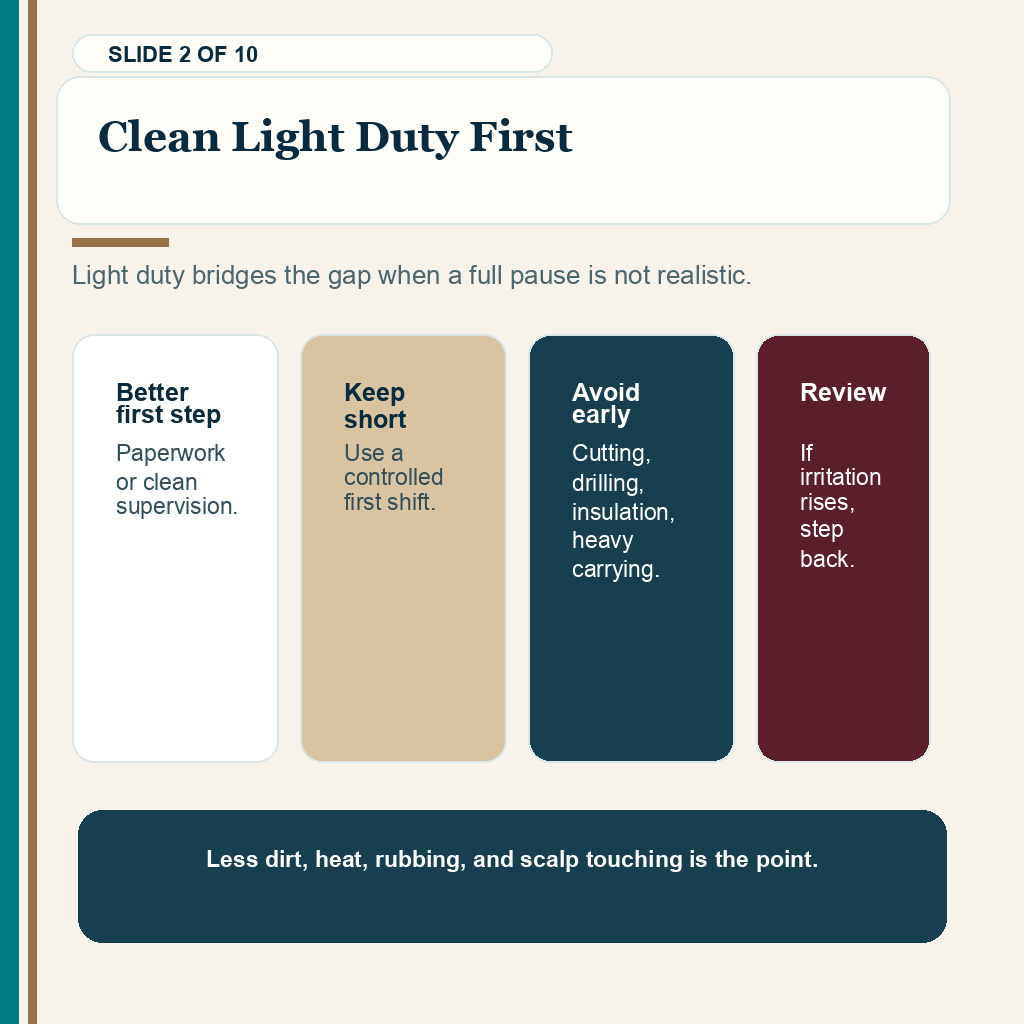
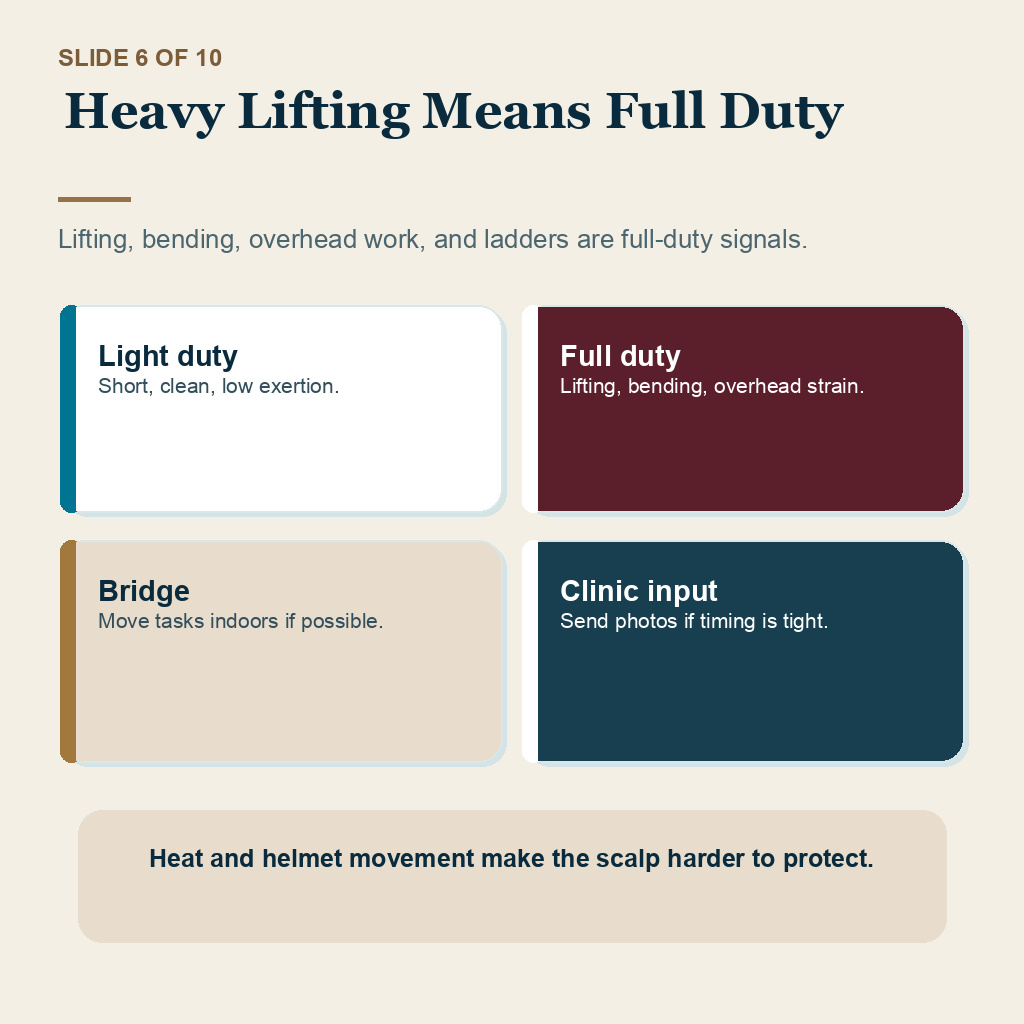
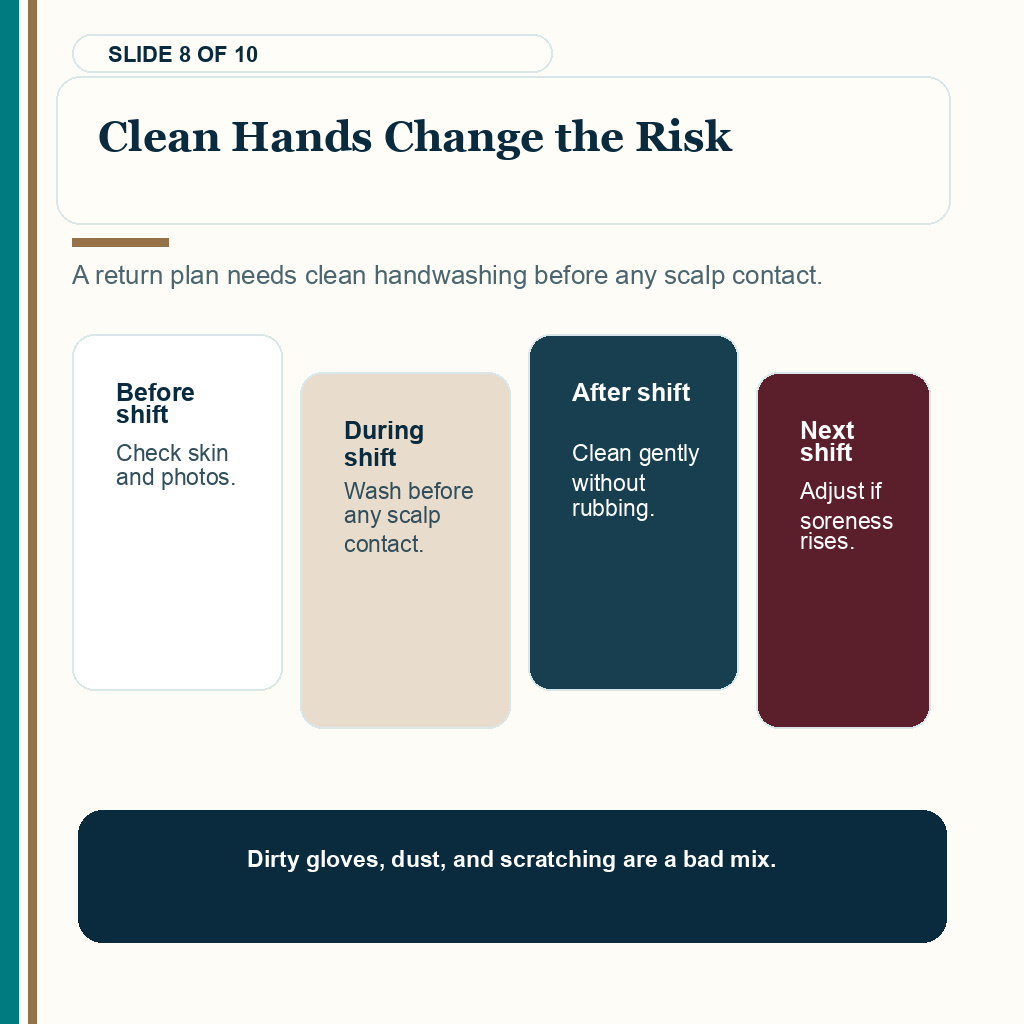
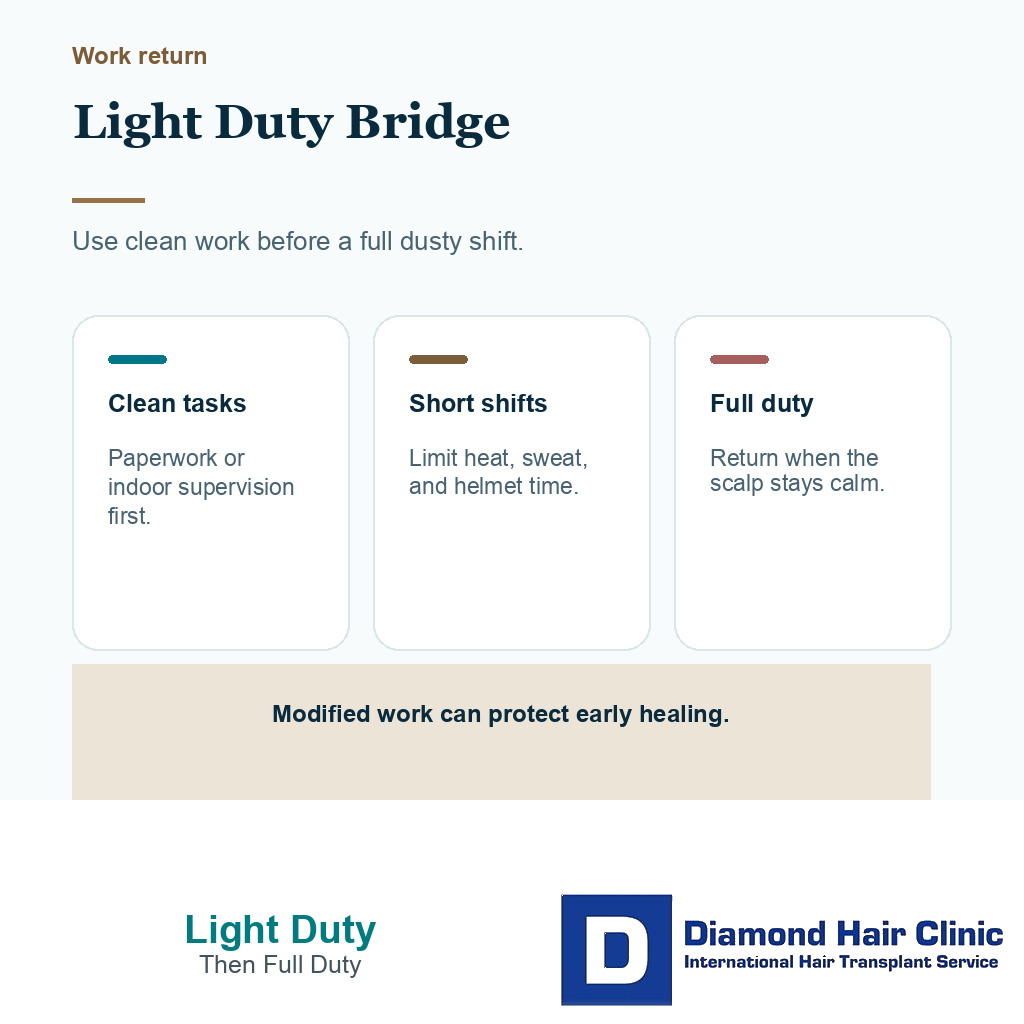
Often, yes. When someone cannot take enough time off, I look for light duty before full duty. That can mean paperwork, indoor supervision, clean storage tasks, short site checks, no helmet periods when safety rules allow, no heavy lifting, and a clean place to wash hands before touching the scalp. The point is to reduce friction, dirt, heat, and exertion while the skin finishes closing.
Light duty also makes the return more realistic. A worker who says he is back on site may still need limits. The employer does not need private medical details, but the restriction can be practical. No dusty cutting, no heavy lifting, no long helmet wear, no direct sun, and no dirty hands near the scalp until cleared.
If the job is public facing, there may also be a social concern. Redness, short hair, or scabs may be visible before the scalp is ready for full exposure. Public facing work after hair transplant is more about appearance and social exposure. Construction work adds physical risk, not only how the scalp looks.
If you must return early
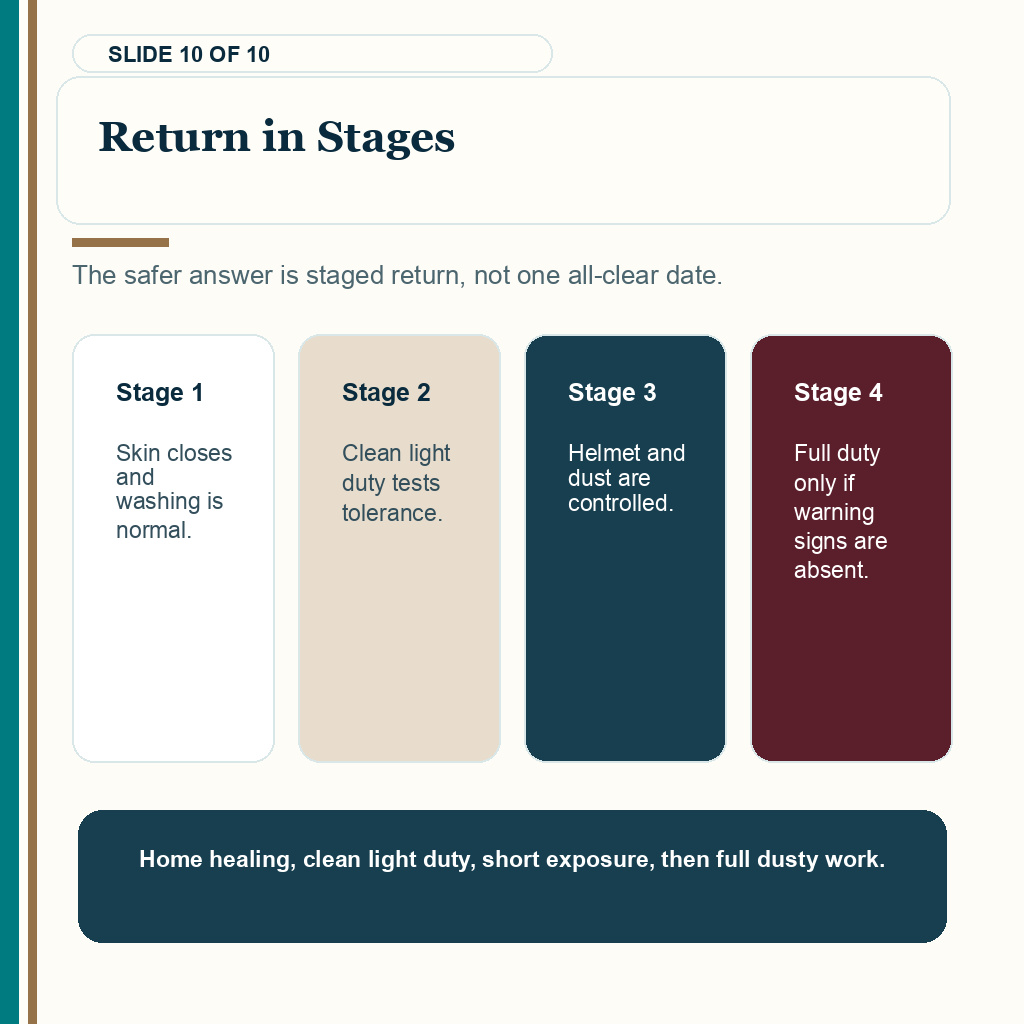
Financial pressure is real. When an early return cannot be avoided, the plan needs to reduce risk rather than pretend the risk is gone. A short, clean, controlled return is better than a full dusty shift with lifting, heat, and a tight helmet.
Before returning early, the work plan should be realistic. Indoor duties, shorter first shifts, delayed heavy tasks, less direct sun, and hard hat use all matter when safety rules require head protection. If safety rules require a hard hat all day, the scalp needs to be ready for that reality, not for the best version of the job.
Sun exposure is another part of outdoor work. A healing scalp can be more sensitive, and a shaved or thin area is easier to burn. Early sun after hair transplant needs shade and sensible covering, but the covering still has to avoid pressure and rubbing in the early phase.
These 10 construction return slides separate real shift demands, clean light duty, dust exposure, hard hat fit, sweat, heavy lifting, outdoor sun, clean hand access, warning signs, and the staged return rule. Swipe sideways, use the arrows one slide at a time, or choose a number below the image.

Read this review excerpt
Every single one of my questions was answered and they made sure I had all the details I needed to make an informed decision.