


Hairnet Fit Depends on Pressure, Sweat, and Shift Length
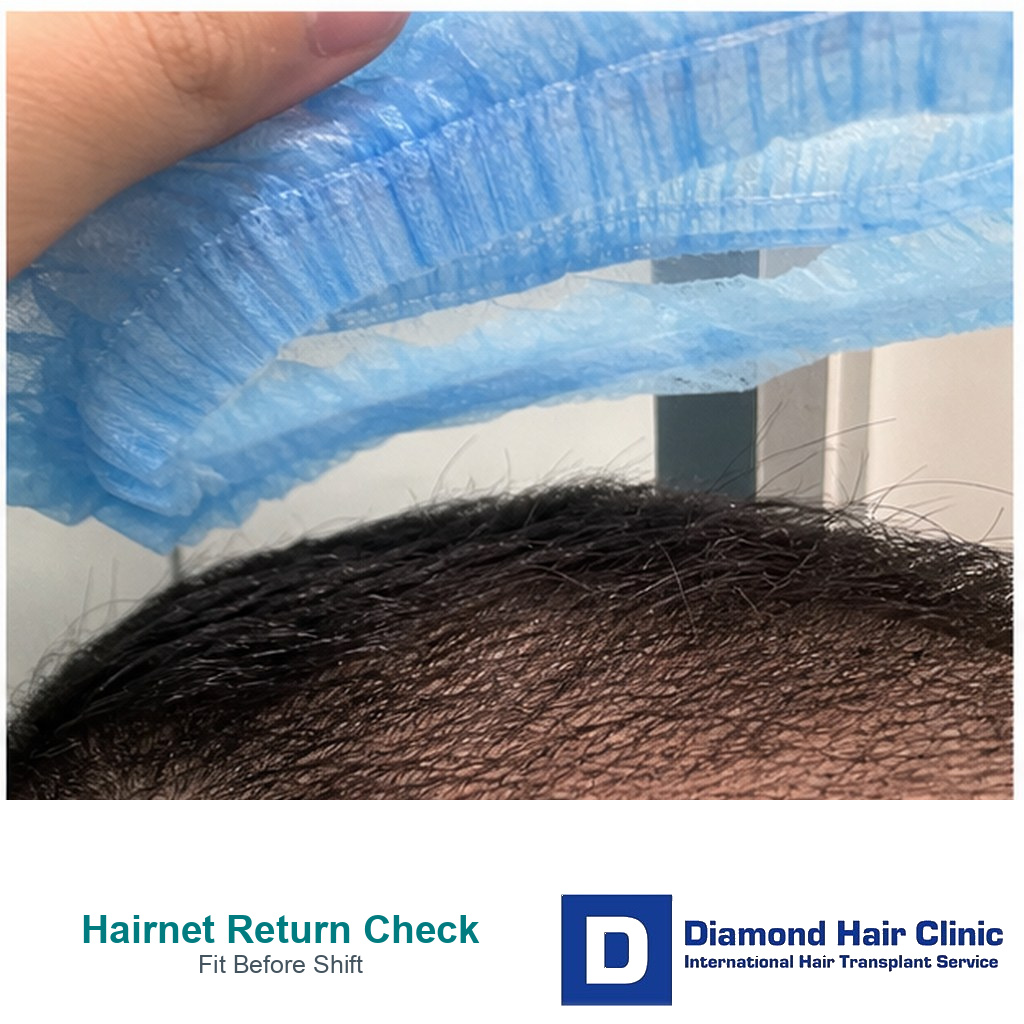
If your job requires a hairnet, scrub cap, kitchen cap, or hygiene work cap after FUE, the answer is not only the day number. I first look at where the cover sits, whether it can be lifted off without dragging across the recipient area, and what happens during the whole shift.
A loose clean cover at home is different from eight hours of heat, sweat, dust, bending, and repeated adjustment at work. In the earliest days, time off or a written work accommodation usually protects the grafts better than forcing a required cover onto fresh surgery.
If a cover is used, it should stay clean, stay away from the grafted area, and come off without friction. A short fit check matters, but it does not replace the real test of the shift itself.
A required hairnet is different from a casual hat
A casual hat can usually wait. A work hairnet often cannot, because the workplace may require it for food safety, patient care, laboratory hygiene, or uniform compliance. That pressure is why patients try to return too early, even when the scalp would benefit from more quiet recovery time.
Loose timing and no graft pressure matter with hats after a hair transplant, but a required hairnet is a narrower problem. You are not only trying to hide the surgery. You may have a job rule that requires a head cover.
A hairnet also behaves differently from a structured cap. The mesh may collapse onto short transplanted shafts. The elastic edge can move while you bend or reach. A scrub cap can feel soft but still tighten along one pressure line. These details matter more than the name of the cover or the day number alone.
The contact line matters most in the first days
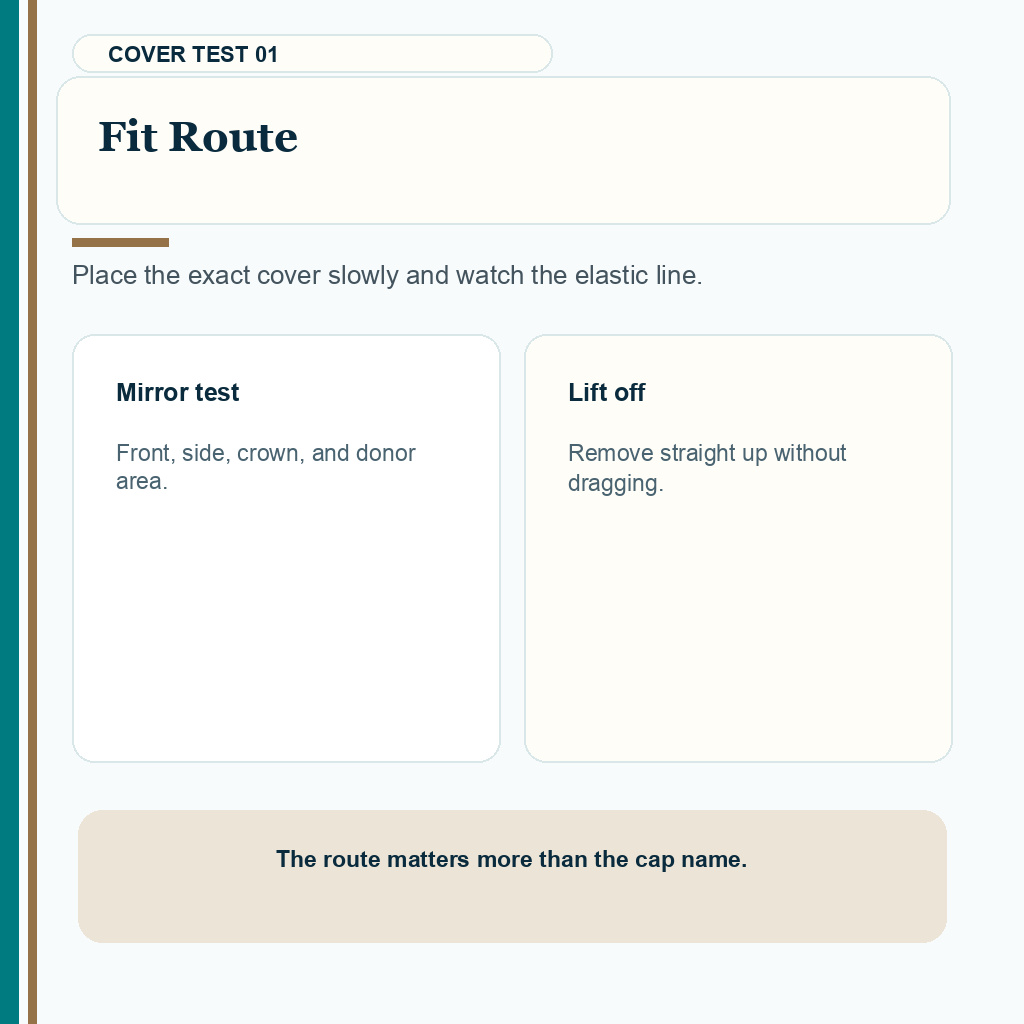
Put the exact cover on slowly in front of a mirror before you consider a real shift. Do not judge it while rushing. Look where the elastic, seam, tie, or folded edge sits. If it crosses the hairline, temples, crown, or any grafted zone, that is a warning against early return.
The recipient area is not a place to test friction in the first days. Single-hair grafts at the hairline are placed for softness and natural direction. Double- and triple-hair grafts are placed where density is needed. None of them benefit from a fabric edge being pulled across the skin.
The donor area is different. Light contact there is usually less risky for graft displacement, but tight, dirty, or sweaty fabric can still irritate healing extraction points. I do not judge donor area contact and recipient area friction as the same problem.
The broader timing question of when grafts become secure helps patients understand why the first stretch after surgery deserves more protection than later recovery.
Shift length changes the pressure decision
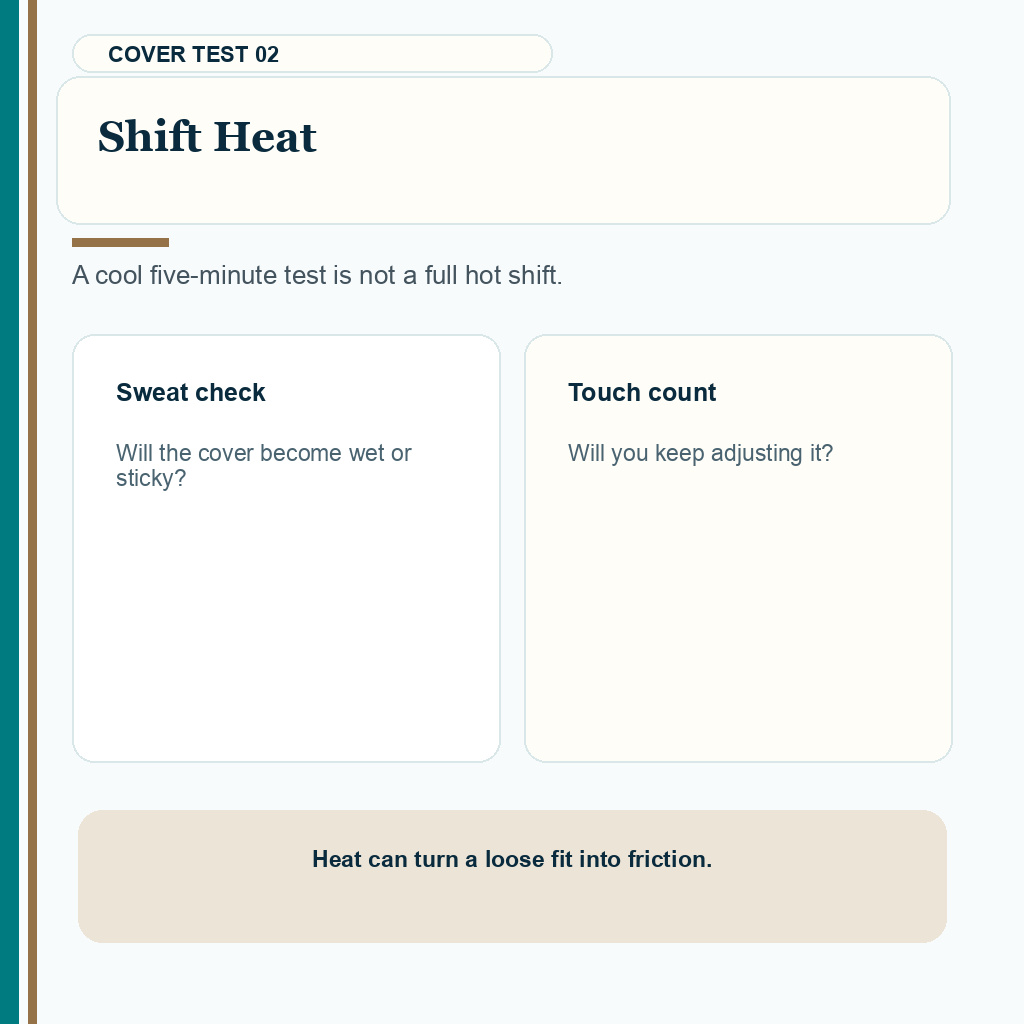
A cover that feels acceptable for a few minutes can become a different problem after a full shift. Heat builds. Sweat makes fabric stick. The elastic moves when you look down, lift boxes, lean over a counter, or adjust your uniform. The risk is often repeated small friction, not one dramatic accident.
A hairnet that feels light in your hand can still become a problem during a long shift. Test the elastic line, sweat, and repeated adjustment pattern before assuming it is safer than a hat. The top may feel roomy while the elastic, tie, or seam still rubs once the shift starts.
Plan breaks before the shift begins. A cover that is safe for the first hour can become risky if sweat makes you keep fixing the same edge without a clean place to stop and reset.
For that reason, hairnet timing belongs inside a real time off work recovery plan. A patient with a desk job and no required head cover may return earlier than a patient who has to keep a cap on through a long, hot shift.
If your employer allows short duty, cooler tasks, remote work, or a temporary role away from food preparation or clinical rooms, that can protect the grafts better than searching for a perfect hairnet.
Sweat makes a loose cover less predictable
Sweat itself is not the only issue. The bigger issue is the behavior it triggers. A sweating patient touches the cap more, pulls the edge forward, wipes the forehead, or tries to scratch under the fabric. Those repeated movements can disturb the grafted area even if the cover looked loose at the start.
Heavy sweating after a hair transplant needs a staged return. With hairnet work, the fabric can trap heat close to healing skin, so move to cooler tasks and a lighter workload before you test the hairnet for a full shift.
If the job is hot, rushed, or physically active, I usually plan more time off or light duty instead of pretending that a breathable cover removes the problem.
Clean fabric is only one part of the decision
A clean disposable cover is better than an old cap pulled from a locker. A clean spare is useful if the first cover becomes wet or dirty. But clean fabric can still rub. Hygiene does not cancel pressure.
This difference is important in food service, healthcare, laboratories, and production work. The workplace needs hair control, but your surgical recovery needs low friction. A good plan respects both sides instead of treating one as an excuse to ignore the other.
If dust, grease, steam, wind, or pollution are part of the workplace, dust and wind during early FUE healing become part of the same decision. A cover can reduce exposure, but it can also trap debris or sweat against skin that is not ready.
Work cap pressure needs a simple fit test
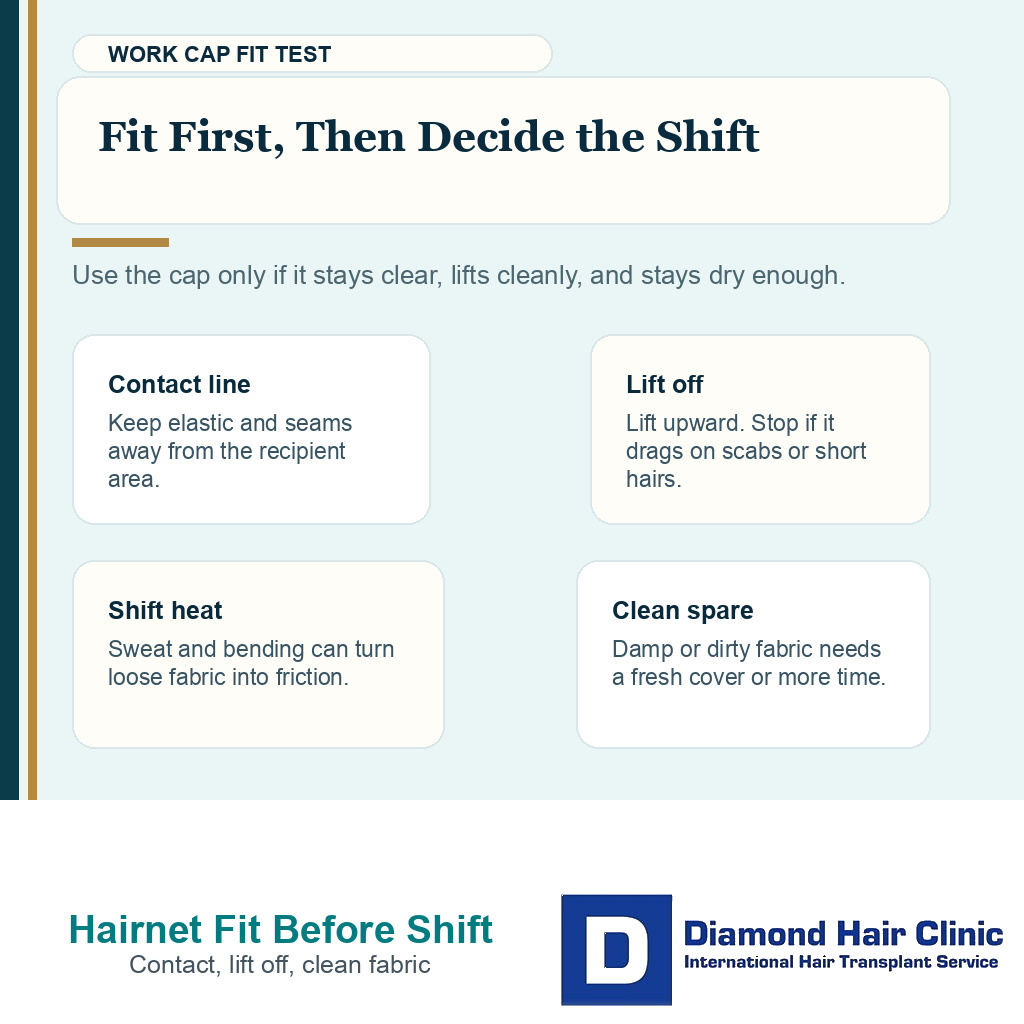
Run through the sorter below before you commit to a shift. It does not replace your clinic’s instructions. It helps you separate fit, pressure, heat, cleanliness, and accommodation before the first workday back.
Work cap pressure sorter
Use this sorter before you return to a shift that requires a hairnet, scrub cap, or hygiene cap. The answer changes when the cover floats, rubs, heats the scalp, or cannot be modified.
Cover floats above grafts
The loose crown of the cover sits away from the recipient area and does not catch scabs or short shafts.
A short, cool shift with little movement is still different from a full busy day.
Use only if your clinic has cleared the timing and you can lift the cover straight off without dragging.
Ask for accommodation before the first shift
Do not wait until the morning of your first shift to negotiate the cover. If a hairnet or cap cannot avoid the recipient area, ask for a temporary written accommodation, a different cover style, light duty, or a delayed return. Some workplaces can move you away from direct food handling, operating rooms, clean rooms, or public facing counters for a short period.
A workplace that bans hats can still require a hygiene cover, so the approved option needs to be clear before the first shift. A clean disposable cap that sits away from the grafts is a different problem from an elastic hairnet that squeezes the hairline for hours.
For work approval, send the clinic the same details your employer sees. Include the cover type, elastic route, shift length, heat, sweat, bending, and whether breaks or a looser approved cover are allowed.
Respect the work rule and the healing scalp at the same time. In physical work after a hair transplant, the job description matters more than the job title, and that planning view applies here.
For construction, kitchens, industrial sites, or outdoor work, the required cover may be only one part of the return plan. Dust, helmets, sweat, bending, and dirty hands can add more risk than the hairnet alone, so construction work after a hair transplant is worth reviewing if your shift includes those wider hazards.
Test the cover before a real shift
Start with clean hands and a clean cover. Place it slowly without brushing the grafts. Check the front, sides, crown, and donor area. Move your head as you would at work. Bend forward. Look down. Reach up. If the cap slides, catches, tightens, or needs repeated adjustment, the shift is not ready.
Remove it by lifting straight up, not by dragging the edge backward over the recipient area. If removal catches scabs or short shafts, stop using that cover and ask the clinic for review. The home test is useful because it shows whether the cover behaves differently once you move like you would at work.

Public visibility is not the same as a hygiene rule
Some patients want a cover because they do not want clients, coworkers, or customers to notice the transplant. That is a different problem from a cap required for hygiene. Concealment can sometimes wait. A workplace rule may need a formal plan.
If your main worry is being seen, public facing work after a hair transplant may help you plan conversations, camera meetings, and visibility. If your job demands a cap for safety or hygiene, the fit and shift conditions come first.
A cover should not become a way to pretend the surgery is invisible. The scalp still has to heal, and the job still has to be realistic.
The cover stops being the main problem when symptoms change
A hairnet shift after FUE is ready when the cover stays off the grafted area, the elastic line does not cross the recipient area, the fabric is clean, the shift does not create heavy sweat or repeated adjustment, and the clinic agrees that the timing is reasonable.
If one of those points fails, do not pull the cap tighter or hope the grafts tolerate it. Ask for accommodation, shorten the shift, choose a different cover route, or delay return. The first successful shift is not the earliest one you can get through. It is the first one that respects the job rule without making the head cover the main threat to healing.

Read this review excerpt
Every single one of my questions was answered and they made sure I had all the details I needed to make an informed decision.