
YOU ARE ONLY THREE STEPS AWAY YOUR NEW HAIR
Contact step for a hair transplant consultation in Turkey

Click for Consultation

Appointment step for a hair transplant consultation in Turkey

Book Your Hair Transplant

Full hair result illustration for hair transplant planning

 Enjoy Your New Hair

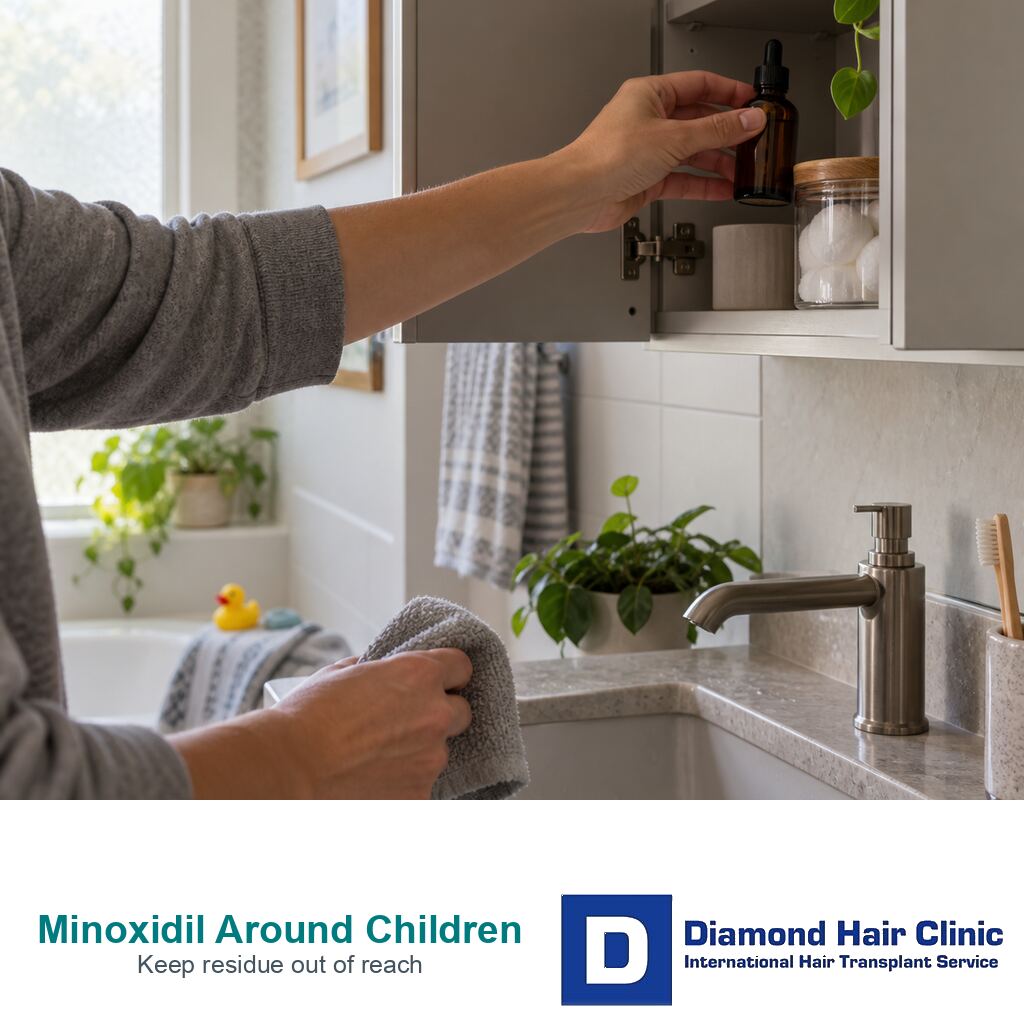
Adult hand securing a topical minoxidil bottle in a high bathroom cabinet away from child items

Topical Minoxidil Safety Around Babies and Young Children

If you use topical minoxidil and care for a baby or young child, the medicine needs its own household routine. The concern is not limited to a child opening the bottle. Product information warns about contact with a caregiver’s treated area, and limited case reports describe possible transfer through close contact or shared fabrics.

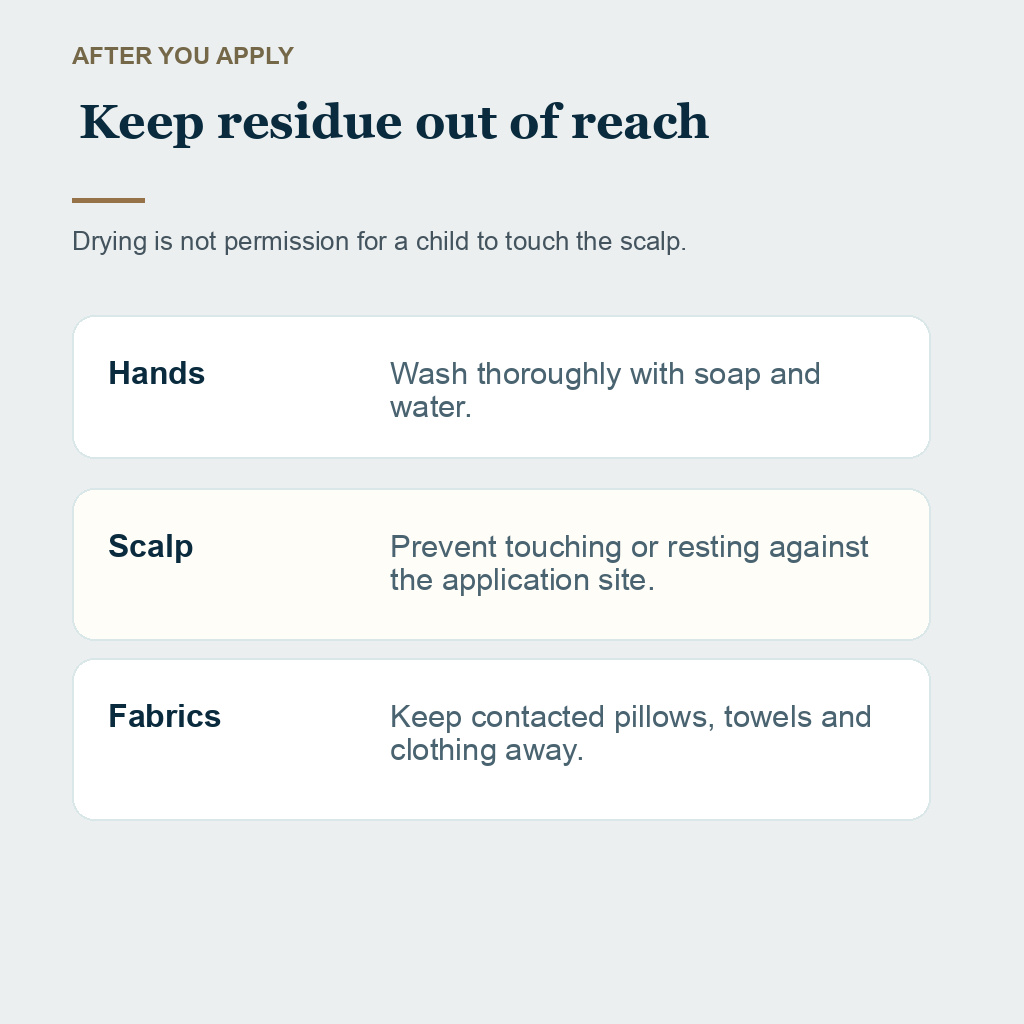
Keep children away from the treated scalp, wash your hands after every application and store the product securely out of reach. Pillows, towels and clothing that have contacted the product also need to stay away from your child.

Drying instructions tell you how to use your product. They do not establish when a baby can safely touch the treated scalp. If your child may have swallowed minoxidil, get urgent medical or poison service advice immediately, even if they appear well.

These precautions concern a child coming into contact with an adult’s medicine. They do not make minoxidil suitable for children or settle whether a parent should use it during pregnancy or breastfeeding.

Exposure can happen without opening the bottle

Topical minoxidil is applied to adult scalp skin, yet contact can extend beyond the moment of application. A hand can touch the treated scalp and then a child. A baby can rest against a caregiver’s head. Limited case reports also describe shared fabrics as a possible route, although they cannot quantify the risk from any one pillowcase, towel or item of clothing.

Published reports describe excessive hair growth in infants and children after indirect contact with a caregiver’s topical minoxidil. Product information also warns caregivers to avoid contact between children and minoxidil application sites. These reports do not tell us how often transfer happens in every household, but they are enough to take the route seriously.

Drying is not a complete household rule

Follow your product’s drying instructions before lying on a pillow. That instruction does not mean a baby can then touch the treated scalp safely.

I cannot give you a universal waiting time that makes close contact safe. Keep children away from the application site even when the product feels dry.

Foam still contains minoxidil and carries the same warning about children touching application sites. Changing from liquid to foam does not remove the need to wash your hands or keep the product and contacted items away from a child.

Build the routine around hands, scalp, fabrics and storage

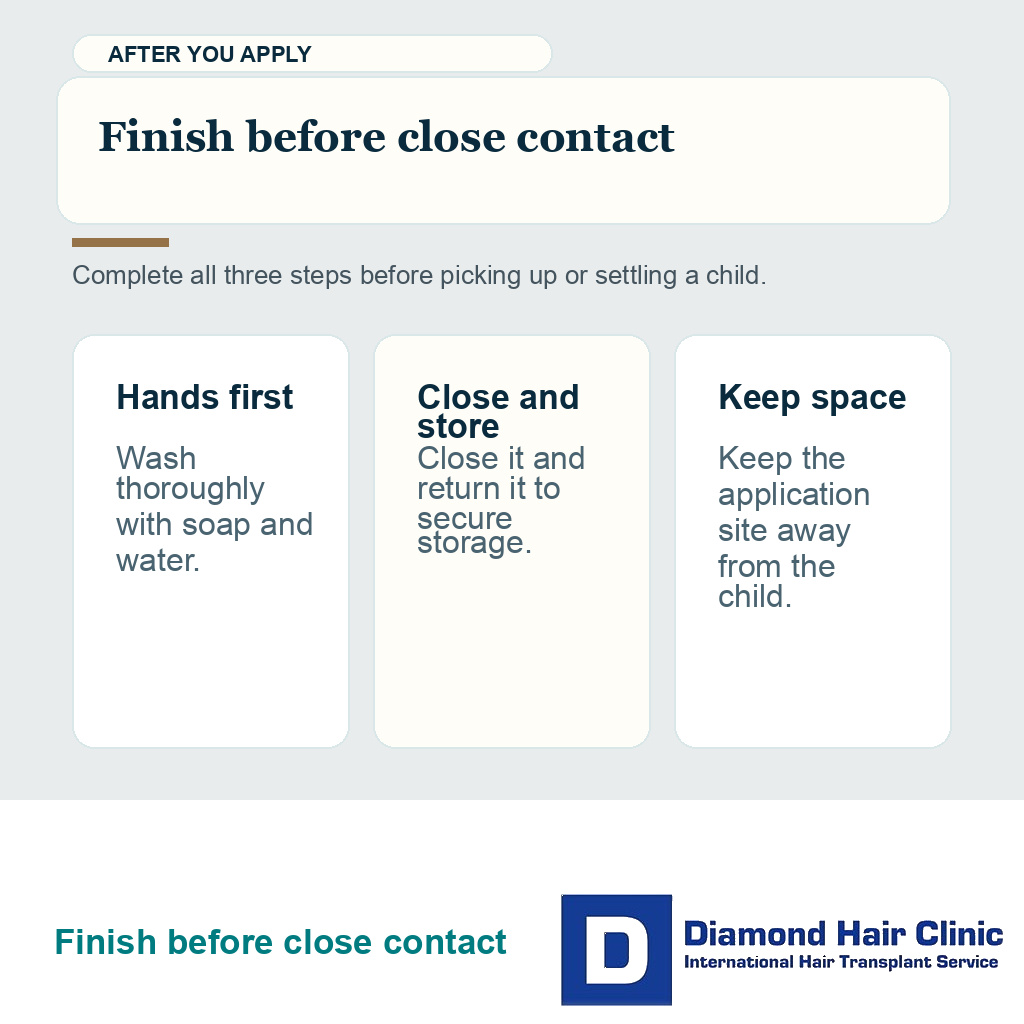
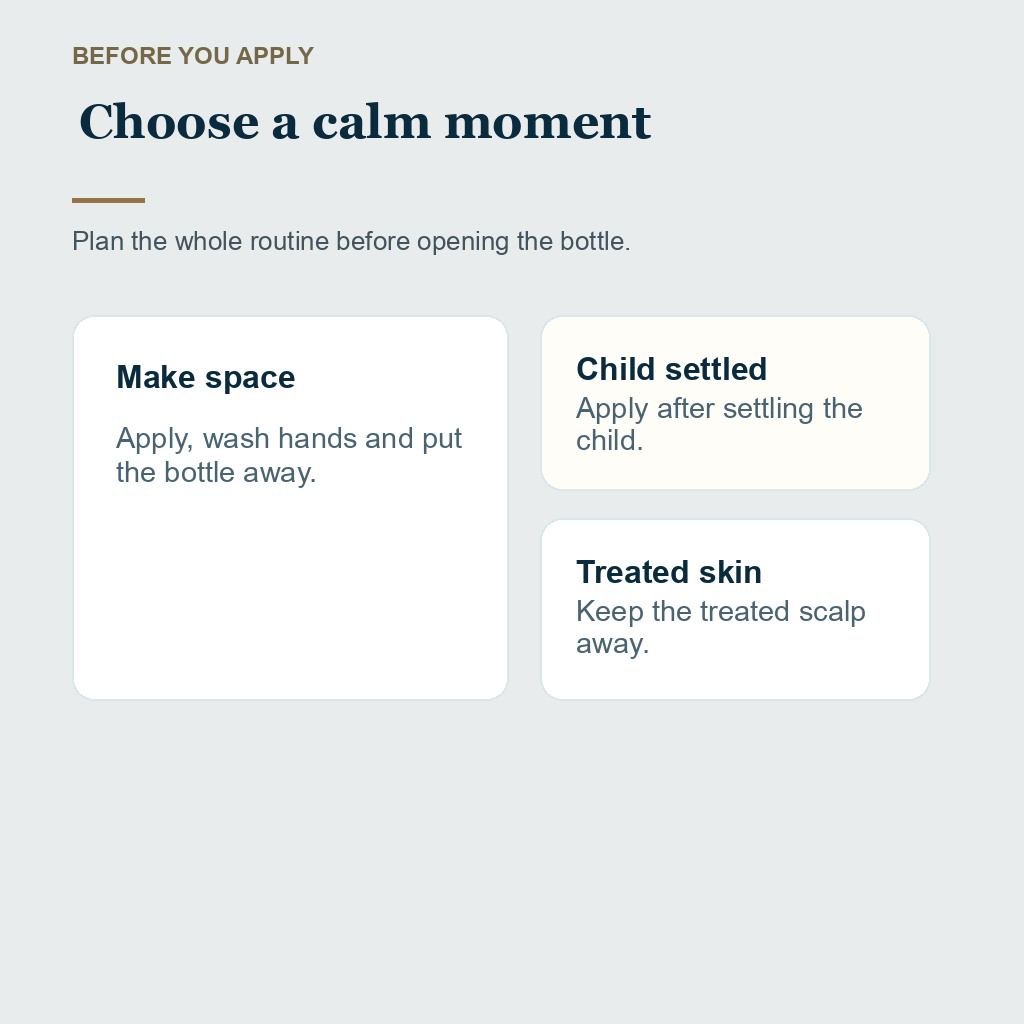
Choose an application time and place that let you finish without immediately lifting, feeding or settling a child. Apply the amount directed by your product or prescriber to the intended scalp area, then wash your hands thoroughly with soap and water. Keep your child from touching or resting against the treated scalp.

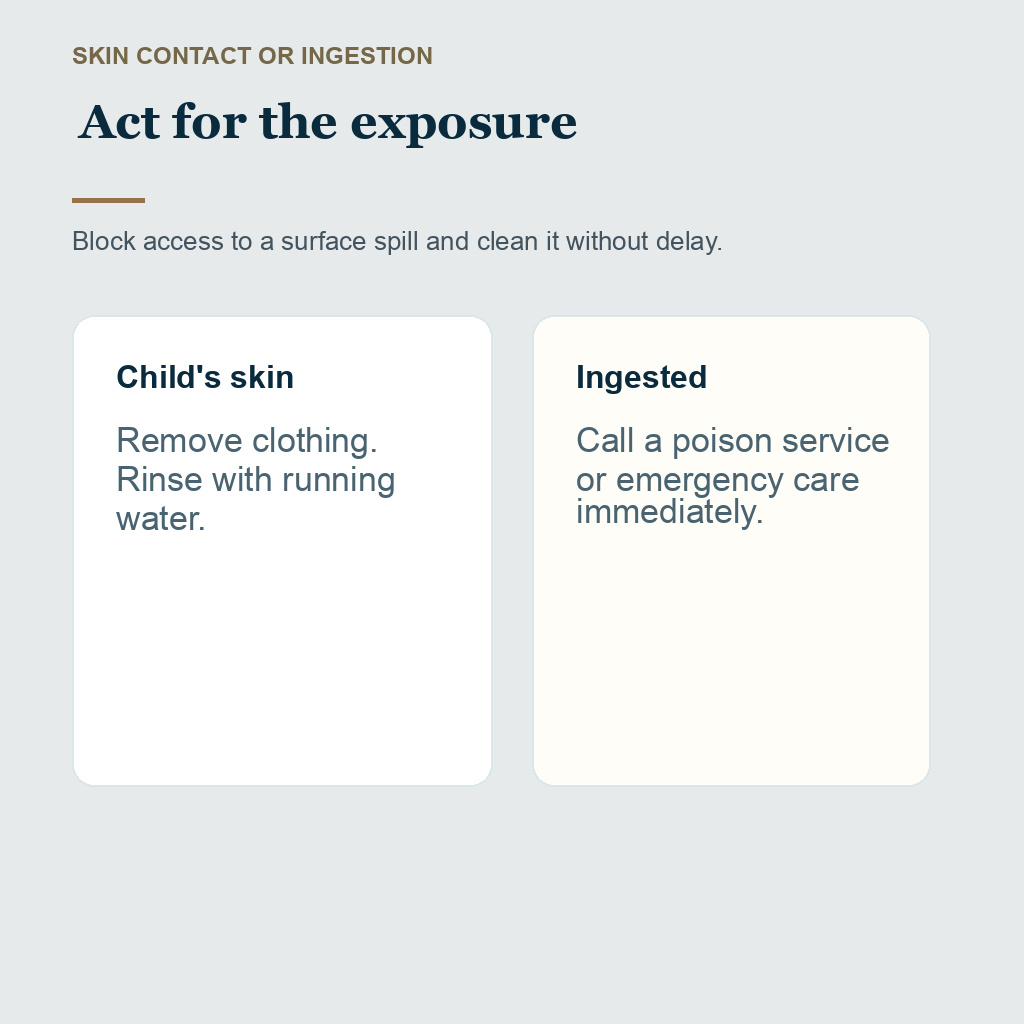
Put the closed bottle, used tissues and application tools away before returning to other tasks. Keep them away from toys, feeding items and changing supplies, preferably in a locked or high cabinet. Clean any spill without delay while keeping children away from it.

If you use minoxidil after a hair transplant, the timing of your scalp treatment still has to follow your own postoperative plan. Household pressure is not a reason to apply earlier than advised or to improvise around healing grafts.

Three step card to wash hands, close and store minoxidil, and keep treated skin away from a child

Plan for the way babies actually make contact

Babies and toddlers do not keep a polite distance from an adult’s head. They grab hair, touch faces, sleep against shoulders and move between beds, sofas and changing spaces. A routine has to work during those ordinary moments, not only while you stand at the mirror.

Do not share a pillow, towel or head covering that may carry minoxidil. If product gets onto clothing or bedding, keep the item away from your child while you clean it according to its fabric instructions. The available evidence does not establish a household laundry method that guarantees no transfer, so preventing contamination is more useful than trying to calculate a safe amount afterward.

Caregiving can also affect the timing of a procedure. Planning for childcare after a hair transplant includes lifting, sleep and accidental contact with grafts. Minoxidil residue is a different problem, but both routines need to be realistic before treatment begins.

CHOOSE THE CONTACT POINT

The next action depends on what reached the child

Select the closest situation. The map separates daily prevention from first aid and urgent help.

Apply the directed amount, wash your hands with soap and water, put the product away and keep the child from touching the treated scalp. There is no waiting time that guarantees safe contact.

Unexpected extra hair after possible contact needs medical assessment. Prevent further contact and tell the child’s clinician about the product.

Unexpected hair growth in a child deserves medical review

Excessive or unusual hair growth can have more than one cause. When it appears in a baby or child who may have had contact with topical minoxidil, tell the child’s clinician about the possible exposure. Include who in the household uses the product, where it is applied and how close contact or shared fabrics could have occurred.

Prevent further contact while the child’s clinician checks what is causing the hair growth. Do not put minoxidil on the child. Hair growth alone cannot confirm the cause, so the clinician needs the exposure history and an examination.

The extra hair has improved after exposure ended in reported cases, but I cannot promise the same course or timing for an individual child. A timely medical assessment should not wait for it to disappear.

Swallowing, eye contact and symptoms need a faster response

If a child may have swallowed minoxidil, get urgent medical or poison service advice immediately, even if the child appears well. Follow the product label and the instructions you receive. Do not induce vomiting unless a medical professional or poison specialist tells you to.

If minoxidil spills onto your child’s skin, remove contaminated clothing and rinse the area without delay with running water. Contact a poison service or clinician for advice about the exposure.

For eye exposure, start rinsing immediately with clean, lukewarm running water for 15 to 20 minutes and obtain medical advice. Remove contact lenses if this is easy to do, but do not delay rinsing. Call your local emergency number immediately if the child collapses, has difficulty breathing, has a seizure or cannot be woken. Have the product container or label available if possible, but do not delay getting help to find or photograph it.

These events are different from noticing possible transfer over time. Suspected swallowing or acute symptoms need urgent guidance. Unexpected hair growth needs a timely clinical assessment and a careful review of the household contact route.

Pregnancy and breastfeeding are separate from child contact

A parent may be asking whether a baby can touch a treated scalp and whether the parent should use minoxidil during pregnancy or breastfeeding. Solving the transfer routine does not answer the second question.

If you are pregnant, planning pregnancy or breastfeeding, discuss your own minoxidil use with the clinician responsible for your care. Pregnancy and hair transplant planning also needs coordinated medication and procedure decisions rather than a simple household precaution.

Tablets are not a simple household workaround

It can sound convenient to replace the topical product with a tablet so there is nothing on the scalp. Oral minoxidil is a systemic medicine with its own suitability, dose and monitoring questions. It is not a casual substitute for a difficult household routine.

If your current routine cannot reliably prevent contact, speak with the prescriber. The sensible options might include changing application time, pausing treatment, choosing another plan or reviewing whether minoxidil is still needed. The right answer depends on your health, the reason for treatment and the child’s pattern of close contact.

Stopping minoxidil can affect the hair benefit you have maintained, so that decision deserves a proper discussion. Stopping minoxidil before hair transplantation should be tied to a clear clinical reason rather than a general rule.

If another caregiver shares the home, make sure they know where the product is stored and what to do after a spill or suspected exposure. A routine that repeatedly breaks down is a reason to review the treatment plan, not to relax the precautions.