AI Can Shortlist Hair Transplant Clinics, but It Cannot Choose Your Surgeon
AI can help you collect names, organize clinic information, and prepare better questions before a hair transplant consultation. I would not use it to choose the surgeon for you. A confident AI answer cannot examine your donor area, judge the long-term donor reserve, design a natural hairline, verify who performs which surgical steps, or take responsibility if your recovery changes after you travel.
Use AI as a research assistant, not as the person choosing your surgeon. Let it make the clinic list easier to read, then compare each clinic against proof you can verify directly. That proof includes surgeon involvement in hair transplant, donor planning, hairline reasoning, consent, reviews, and aftercare responsibility.
AI is useful at the research stage, not the decision stage
The strongest use of AI is sorting noise. You can ask it to summarize clinic websites, group questions, compare claims, and point out missing information. That can save time when you are overwhelmed by rankings, packages, social posts, and before and after images.
The weakness is that AI often sounds certain even when it is working from incomplete or outdated information. It may mix marketing pages, old reviews, forum opinions, and clinic claims without knowing what happened inside the operating room. It cannot tell you whether the same surgeon who appears in the marketing will examine your donor area, design your hairline, supervise graft handling, and own the plan.
I still use choosing the best hair transplant clinic in Turkey as a human decision framework. AI can help you apply that framework. It cannot become the framework.
A shortlist is not proof of surgeon involvement
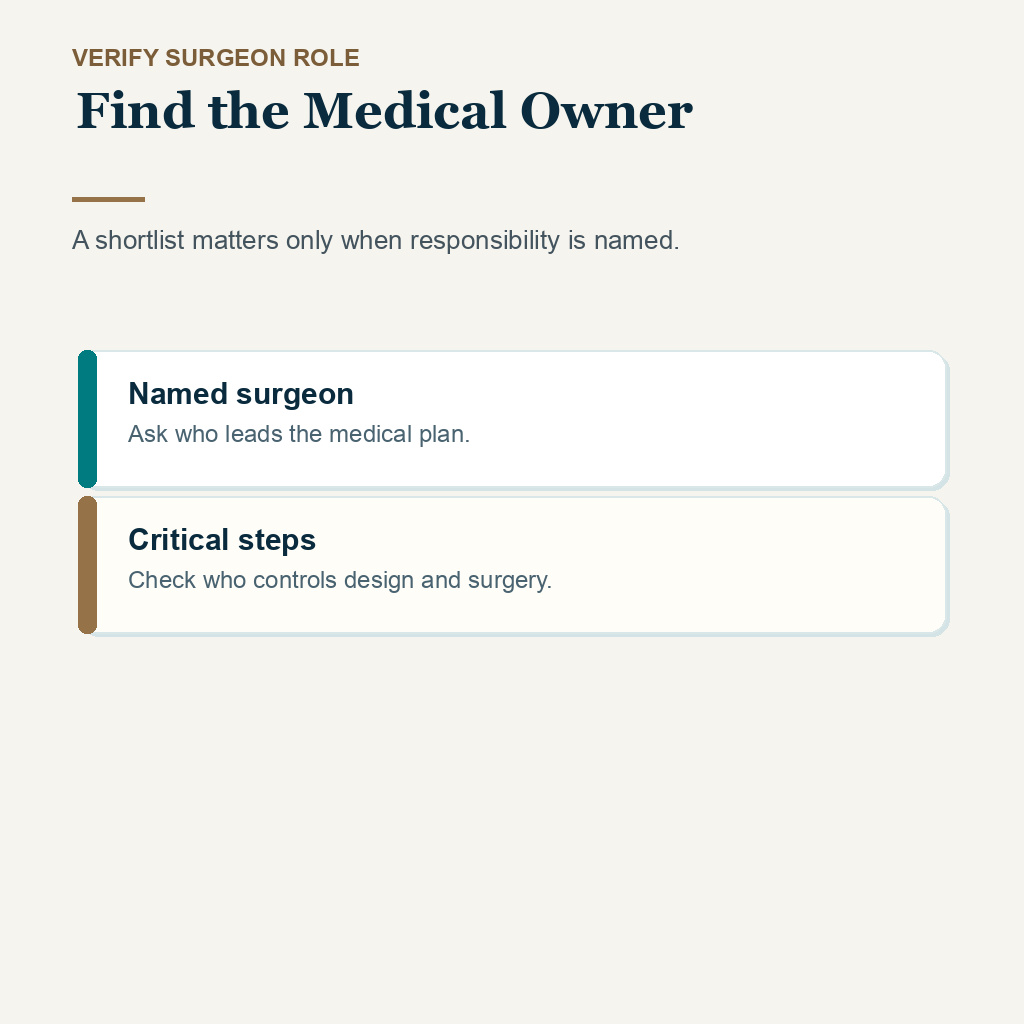
A clinic shortlist only tells you which names reached the page. It does not tell you who will make the surgical decisions. Before I trust a clinic comparison, I need to see who evaluates the donor area, who designs the hairline, who decides the graft number, who performs or directly controls the critical surgical steps, and who answers if the plan should change.
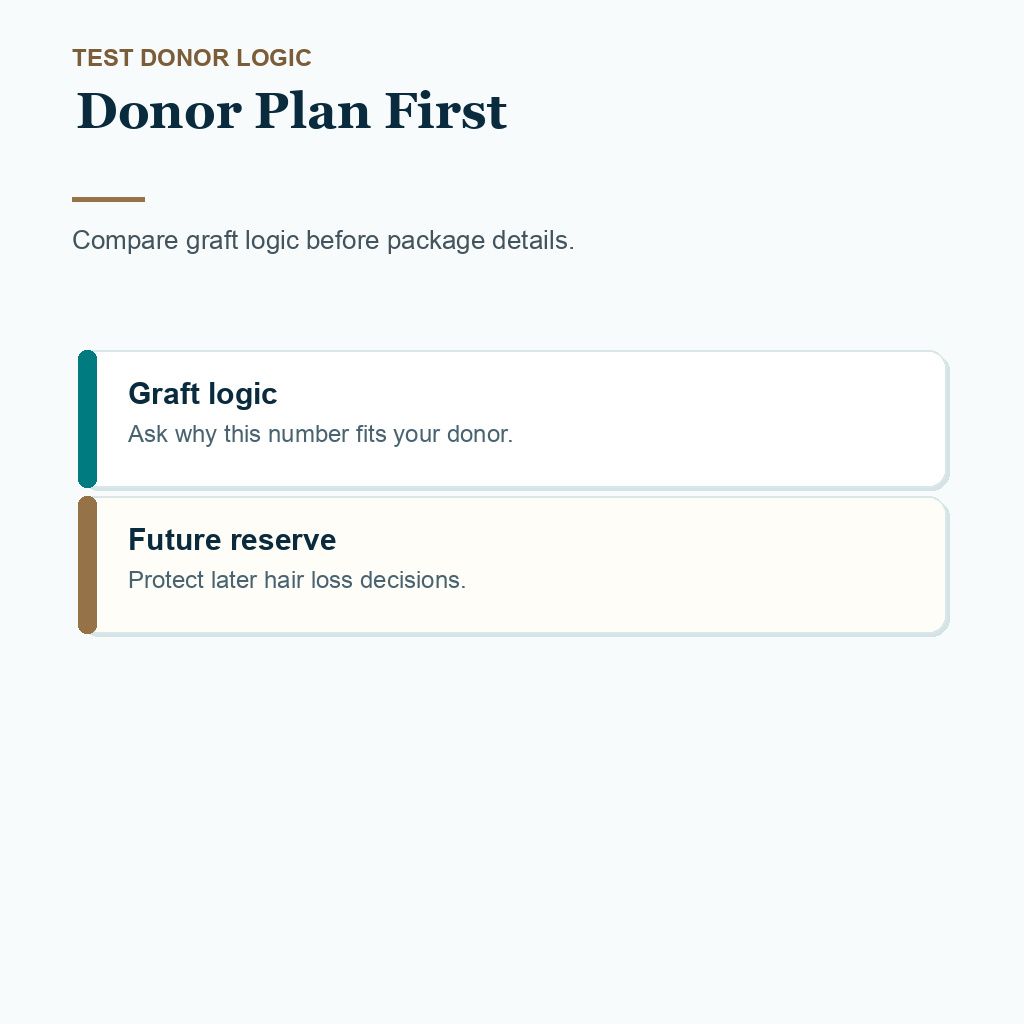
The reason is simple. Hair transplant surgery is not only a booking service. The donor area is limited. The hairline has to age naturally. The number of grafts must protect future reserve. A high ranking, a polished website, or an AI made summary cannot replace that judgement.
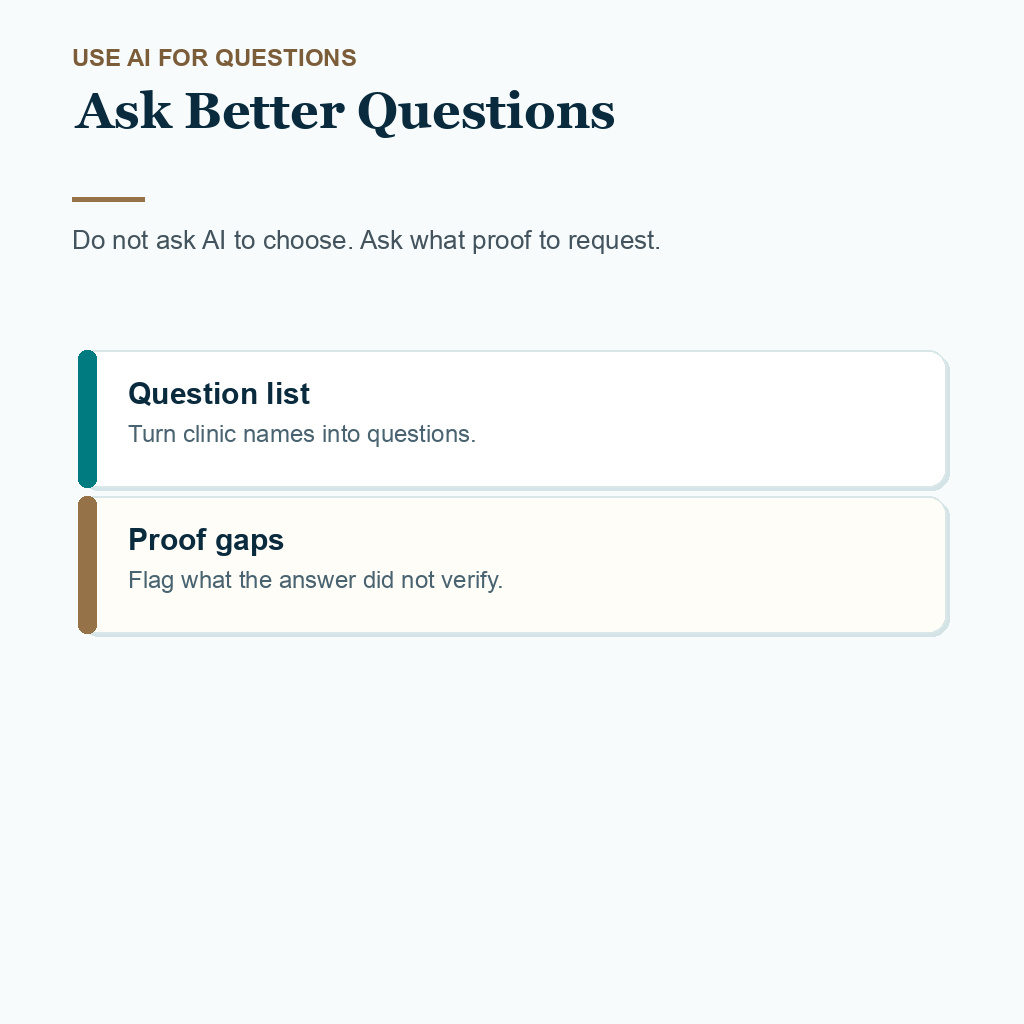
When AI gives you a recommendation, ask it to convert the answer into questions. Then send those questions to the clinic. If the reply stays vague about the surgeon’s role, that is a useful finding, not a small detail.
I would also separate the first answer from the second answer. The first answer is the AI list with names, locations, repeated review themes, and claims that appear on clinic websites. The second answer must come from the clinic itself. Who replies, how specific the reply is, whether the surgeon’s role is named, and whether the donor plan is explained all matter more than the original list. If the clinic cannot move from marketing language to case specific planning language, the shortlist has not become safer.
Proof AI cannot verify for you
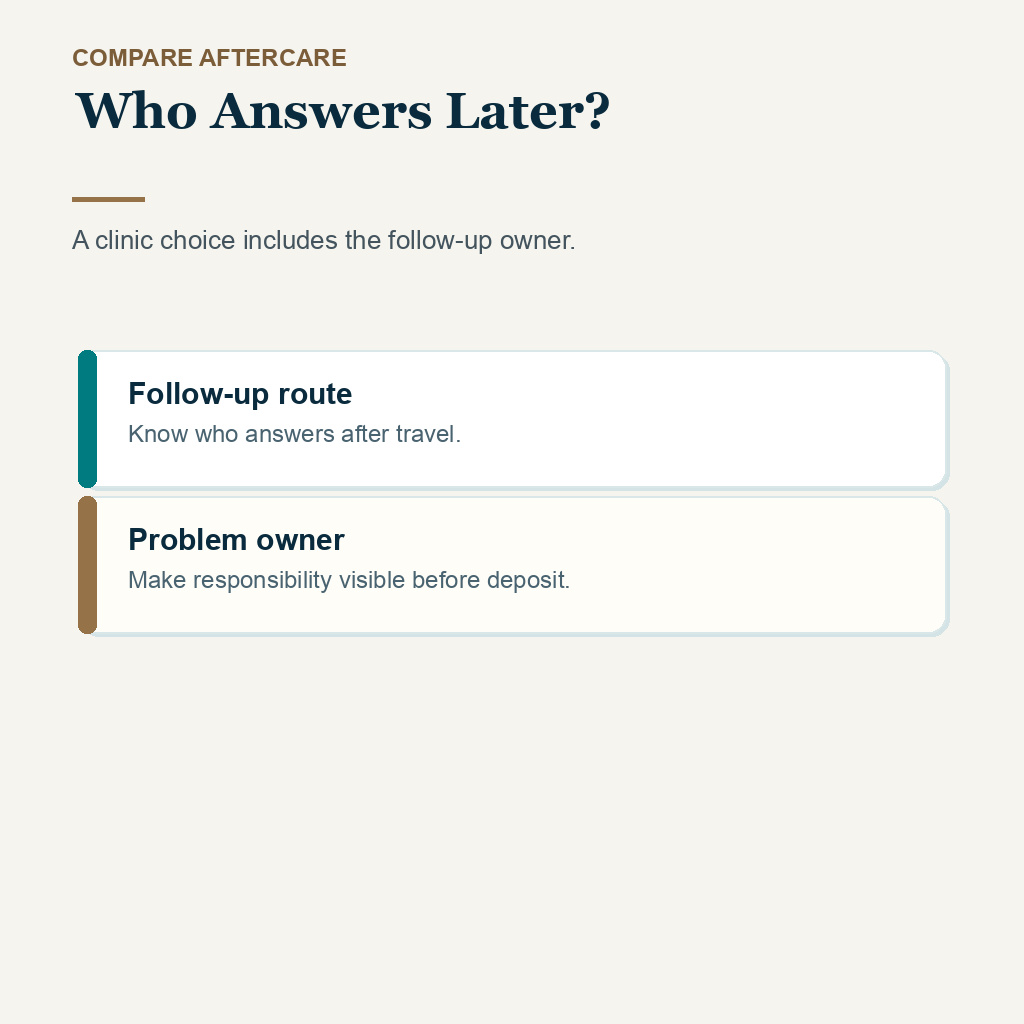
The first proof layer is the surgeon’s role. The second is the donor plan. The third is the hairline design. The fourth is responsibility after surgery. These are not decorative details. They are the difference between a clinic that can explain the medical plan and a clinic that only sells a package.
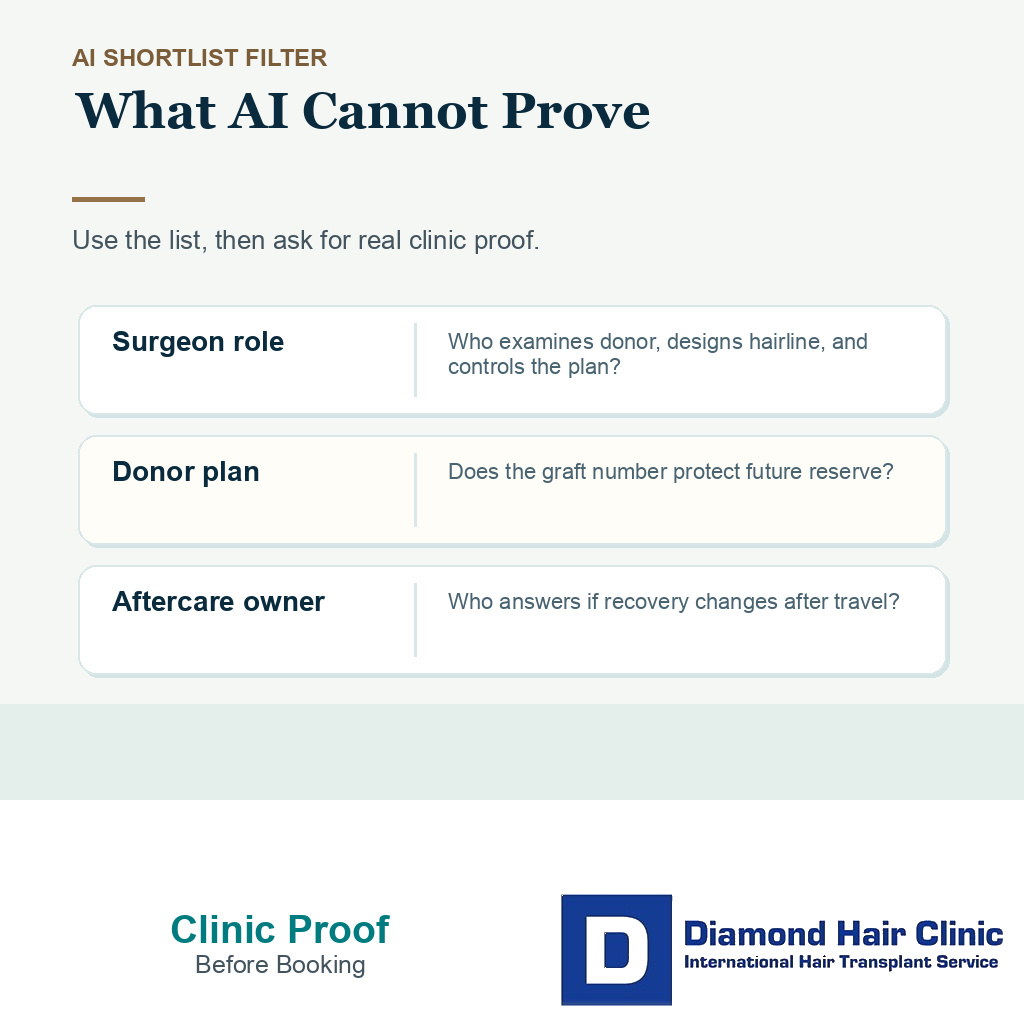
Use those categories before you judge price, location, or convenience. If a clinic cannot explain who owns the plan, how the donor reserve is protected, why the hairline fits your face and future hair loss, and who follows you after travel, the AI shortlist is still unfinished.
Use the proof filter before you book
The filter below is not a scoring system. It is a way to slow down a confident answer and ask what proof is actually present. The difference between an AI summary and a surgeon-led plan is the difference between information and responsibility.
Proof before booking
Move from AI confidence to real booking proof
- 1AI summary onlyNot enough proof
- 2Reviews and photosUseful but incomplete
- 3Surgeon role proofStronger signal
- 4Full plan and follow-upReady to compare
Not enough proof
Use it to organize the list, but do not treat the answer as a clinic decision.
Responsibility question Ask the clinic for surgeon role, donor plan, hairline plan, consent, and aftercare details.
Useful but incomplete
Photos and reviews can show signals, but they cannot prove who planned the case or whether the donor was protected.
Pattern review Compare patterns, then request a surgeon-led explanation.
Stronger signal
A named surgeon, examination route, hairline design responsibility, and donor planning role make the shortlist more serious.
Deposit question Check whether that responsibility is written before deposit or travel.
Ready to compare
The strongest comparison shows surgeon role, donor reserve logic, hairline reasoning, consent clarity, and aftercare owner.
Shortlist filter Compare clinics on proof, not on AI confidence.
Reviews and photos still need clinical filtering
Reviews can help you detect patterns, but they are not medical proof. A group of happy reviews may tell you that a clinic communicates well. It does not prove that the donor area was protected, that the hairline will still look natural in ten years, or that the surgeon controlled the parts of the procedure that matter.
Photos are also easy to overread. Lighting, angle, hair length, styling, wetness, and the time after surgery can change what you think you are seeing. That limit also applies to AI hair transplant simulation and AI advice on early FUE recovery photos. An image can organize questions, but it cannot finish the diagnosis or the surgical plan.
Use hair transplant reviews in Turkey to look for consistency, not as a substitute for the consultation. If the reviews and photos look impressive but the clinic cannot explain donor reserve, surgical roles, and aftercare, the proof is incomplete.
Use AI to prepare better consultation questions
The best request is not “Which clinic should I choose?” A better request asks, “What should I ask each clinic before I decide?” That shifts AI from judge to assistant. It can help you organize questions about surgeon involvement, donor planning, hairline design, graft number, anesthesia, graft handling, consent, and aftercare.
A useful format is to ask AI for a simple comparison sheet, then leave blank spaces for the clinic’s own answers. Use rows such as surgeon role, donor examination, graft number reasoning, hairline design, consent discussion, recovery contact, and unanswered questions. Do not let AI fill those blanks from assumptions. The value is in seeing which clinic gives a clear answer and which clinic stays general.