


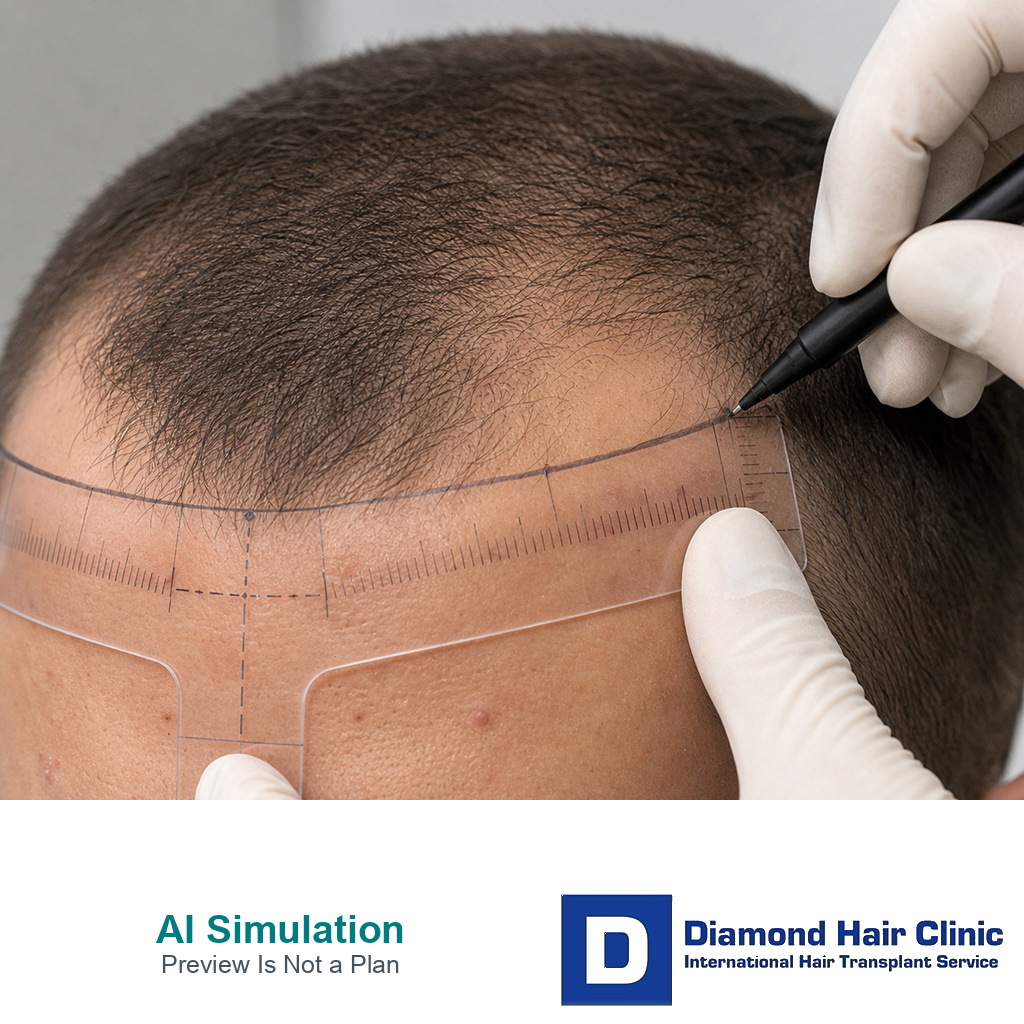
AI Hair Transplant Simulation Needs Surgical Context
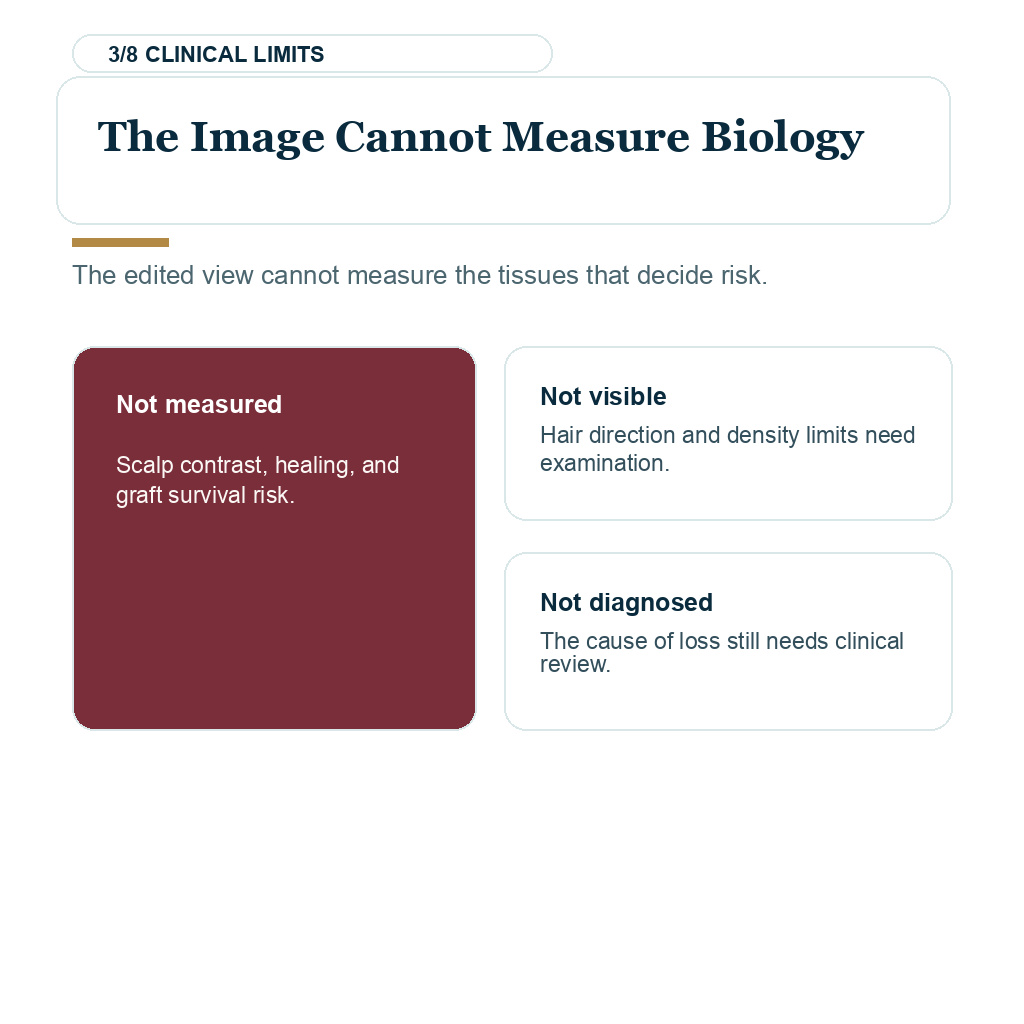
An AI hair transplant simulation can help you describe the look you like, but it cannot predict your real result or decide the surgical plan. It cannot measure donor reserve, hair caliber, miniaturization, scalp contrast, graft survival risk, hair direction, diagnosis, or future hair loss. Those details decide whether the picture is realistic.
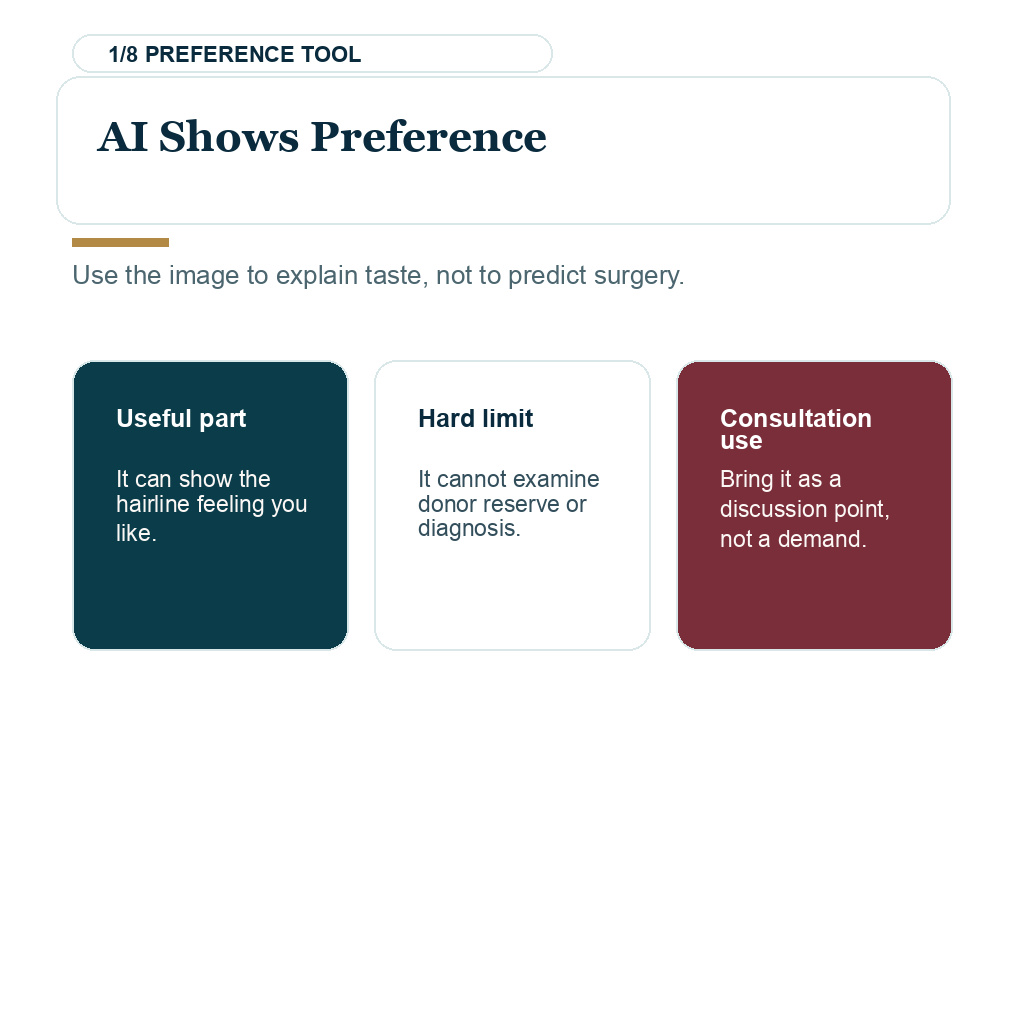
I do not reject an AI preview in consultation. I ask what part of the image matters to you. Maybe it is the hairline height, the temple shape, the fuller frontal frame, or the feeling of seeing your face with hair again. Then I separate that wish from the surgical facts. The image may be emotionally useful. The donor area still decides what can be done safely.
Treat the preview as a preference sketch. Bring it to consultation to show the hairline shape you like, then let donor supply, hair caliber, and future loss decide what can be built safely.
Before uploading face or scalp photos to any simulator, know whether the image is stored, shared, or used to generate clinic leads.
Before uploading face or scalp photos to any simulator, know whether the image is stored, shared, or used to generate clinic leads.
Lead capture changes how a simulator should be trusted. A tool that needs face photos and contact details may be useful for preference sharing, but it should not make the user feel committed to the hairline it generated.
Simulation proof check
Can this AI image survive a real surgical plan?
Use this before trusting a preview, comparing clinics, or asking for a graft number from an edited image. The picture is useful only when the clinical facts still hold.
An AI image can add density anywhere. Surgery cannot. The plan must show how many grafts can be removed safely and what that leaves for future hair loss. The same limit applies when AI compares clinics. An AI clinic shortlist cannot replace a surgeon-led donor and hairline assessment.
If the image needs grafts the donor cannot safely provide, the preview should change before the surgical plan does.
AI preview can describe preference, not prediction
An AI simulation can help you explain a preference that is hard to describe in words. You may want a softer hairline, a stronger frontal frame, or a way to see whether surgery feels worth the cost, travel, downtime, and anxiety.
The useful part is communication, not prediction. A visual preference gives me a starting point for discussion. It can also reveal a mismatch early. If the preview shows a very low juvenile hairline, closed temples, and full crown coverage, I can explain why that may consume too many grafts or age poorly. That caution also applies when people compare themselves with edited clinic images, which is why I also ask readers to judge hair transplant before and after photos carefully.
The risk begins when the preview feels more objective than it is. A clean image can make a surgical result look simple. Hair transplantation is not image editing. The hair must come from somewhere, survive handling, be placed at the correct angle, and still look natural as native hair continues to change. If the tool gives graft numbers or clinic advice, treat that output as a question to bring to the surgeon, not as a measurement. Separate the outputs before trusting them. A hairstyle overlay shows a visual preference, a surface map estimates area, and a donor examination addresses surgical limits that neither image can establish. The broader AI hair transplant planning limits still apply.
If the simulated hairline makes surgery feel easier to accept, pause on the donor tradeoff behind that image, not only the way it frames the face.
Preview feels convincing
Hair changes the face quickly. When you see a stronger frame in a generated image, the emotional reaction can be immediate. That is understandable. Hair loss affects identity, photos, dating, work confidence, and the way you read your own face in the mirror.
A simulation often hides the hardest parts. It does not show the graft count needed to create that density. It does not show whether the donor can tolerate that count. It does not show whether the temples need single hair grafts, careful direction, and age suitable irregularity. It also does not show whether the same hairline will still make sense at age 45 or 55 if native hair behind it keeps thinning.
The preview cannot become the promise. At Diamond Hair Clinic, a hairline conversation starts with the face, but it cannot end there. I also look at the donor area, family pattern, current medication plan, hair caliber, curl, contrast between hair and skin, and how much future surgery you may be willing or able to accept.
Limits a simulation cannot measure
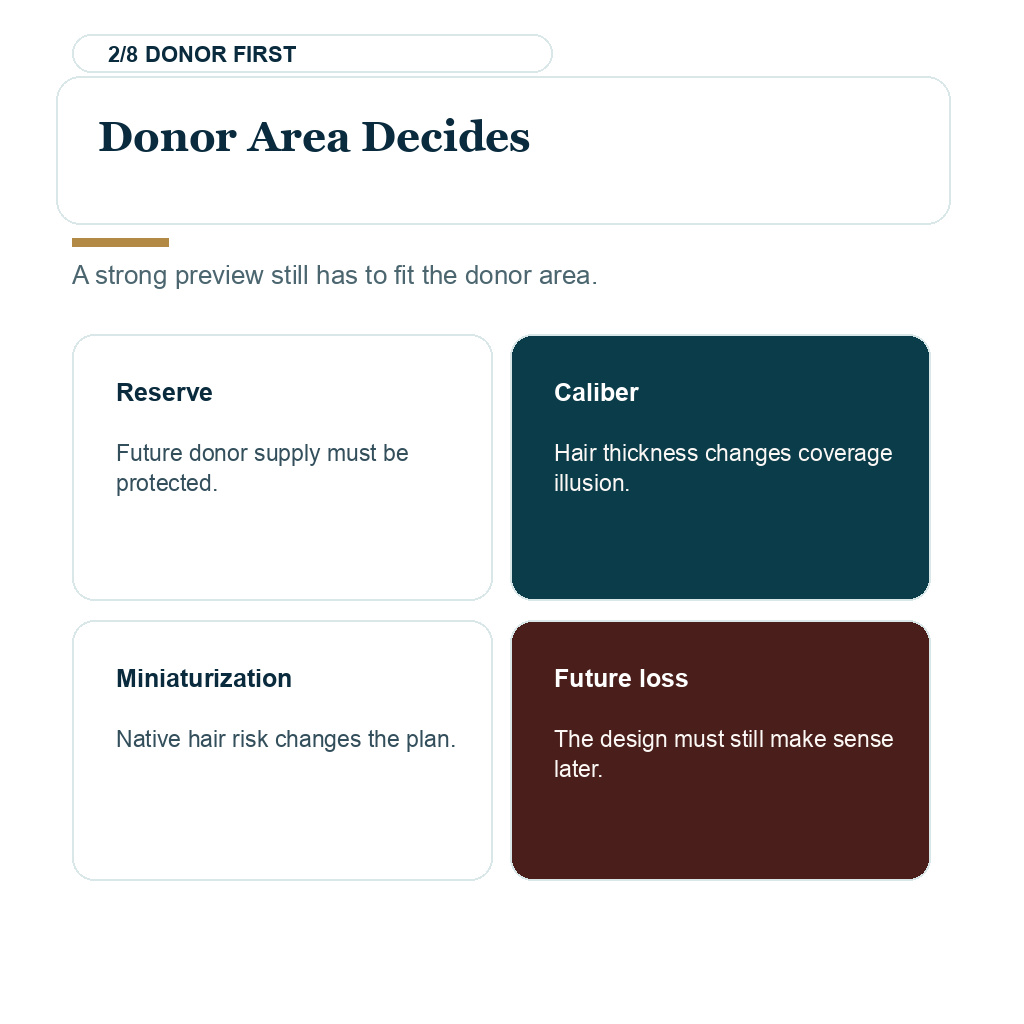
The first missing measurement is donor reserve. A preview can add hair wherever the face looks better. Surgery cannot. Every graft used in the frontal hairline, mid scalp, or crown comes from the same limited reserve. The future question is not only whether a look can be created. It is what the choice leaves for later. That is why lifetime graft planning matters.

The second missing measurement is hair behavior. A digital image can paint hair in a smooth direction. Real grafts have follicle groupings, exit angles, curl, caliber, and color contrast. If the angle is wrong, or if placement creates a repeated line, the hairline can look lifted, pluggy, or artificial even when the number of grafts seems acceptable. A concern such as graft rows after FUE cannot be judged from a smooth generated preview.
The third missing measurement is diagnosis. You may have diffuse thinning, retrograde thinning, scarring alopecia, unstable medication history, or a crown pattern that needs a very different plan from the image. A digital result that ignores the diagnosis can push you toward the wrong surgery.
Graft numbers need clinical measurement
Some simulations invite you to imagine different graft counts. That can sound helpful, but the number can mislead if it is based on appearance alone. A 2,500 graft result in one person may not match 2,500 grafts in another because hair thickness, curl, color contrast, recipient area size, and existing miniaturized hair all change the visual effect.
When I calculate graft numbers, I do not start from the prettiest image. I measure the area, estimate the density that can be placed safely, decide where single hair grafts are needed, protect the donor, and decide what should remain for future hair loss. That clinical process is explained in more detail on the page about how a surgeon calculates graft number.
A preview can also encourage the wrong comparison. You may ask why one clinic says 2,000 grafts and another says 5,000. Sometimes the difference is legitimate because the clinics are planning different zones. Sometimes it means one plan is more aggressive than the donor can support. A graft count without a mapped area, hairline design, donor assessment, and future hair loss plan is incomplete.
Hairline design is surgical work, not digital drawing
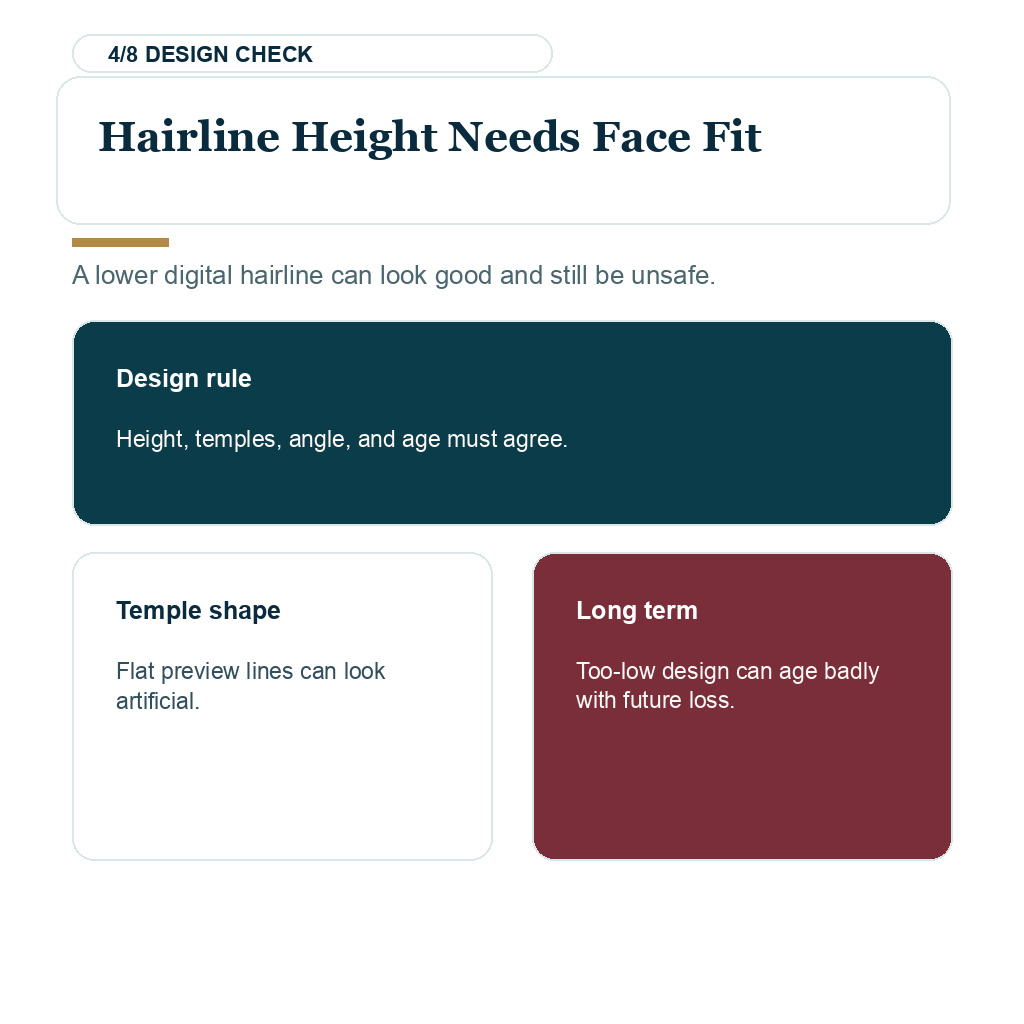
A digital hairline can be perfectly smooth. A natural hairline is not. It needs irregularity, correct height, soft transition, single hair grafts in the front, and direction that follows the face and native hair pattern. The surgical design needs the same detail described in hairline design, not only a nice outline.
This becomes especially important around the temples. Closing the temples too strongly can make the face look edited rather than restored. Lowering the hairline too far can create a heavy frame that the donor cannot support later. In a young person, the preview may look exciting today and still be a poor future decision. A hairline that looks dramatic in a simulation can become expensive to maintain in real life.
Bring preferences, not fixed demands. A preferred look helps the discussion. A demand based on one AI image can block the clinical judgment that protects the result.
Using an AI image in consultation
Bring the image if it helps you speak clearly, but do not send only the generated result image. The clinical material matters more. Send front, top, both sides, temples, and back donor photos in good light. If possible, include wet and dry hair views, current medication history, age, family pattern, previous procedures, and the haircut length you want to wear. That is much more useful than one polished preview. That discipline also matters when a plan is made from consultation photos.

If you use an app, keep private data minimal. A face and scalp photo can identify you. Use the smallest image that explains the hairline question, and do not upload passport pages, flight details, addresses, invoices, full medical records, or clinic documents unless there is a clear medical reason to share them with the clinic.
When I review an AI image with you, I ask what part of the preview you actually like, what would still matter if the hairline had to be slightly higher, whether you are prepared to protect the donor, and whether you would still accept the plan if the crown or temples needed to wait. Those questions move the discussion from appearance to planning. They also make it clearer when a second opinion before hair transplant is useful.
Warning signs when the preview creates pressure
Use more caution when the preview shows a very low hairline, closed temples, dense crown, and thick frontal result all at the same time. That combination may look attractive, but it can require more grafts than the donor can responsibly give. It may also ignore future hair loss behind the transplanted area.
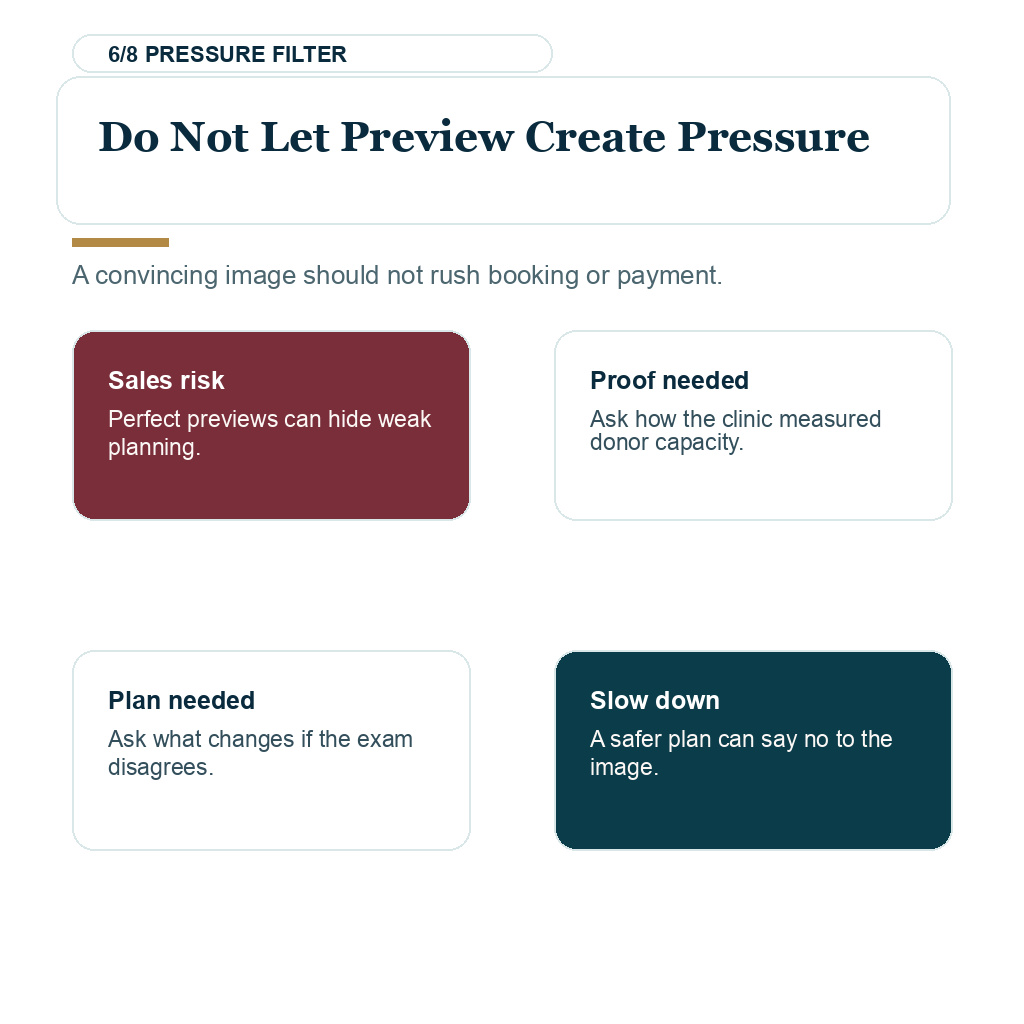
Slow down if a clinic uses the preview to pressure a quick booking, sell a fixed package, or promise a result before examining the donor. A photo can support communication, but it cannot replace medical review. If the conversation moves quickly from an image to a deposit, revisit the warning signs described in hair transplant booking pressure.
Be more careful if the preview makes you compare your future result with a result that is not from a similar patient. Hair type, skin tone, curl, donor density, Norwood pattern, and age all change what is realistic. Comparing hair transplant results in patients like you is more useful than chasing one perfect generated face.
Checks before trusting the plan
A plan has to survive more than one view. The front hairline matters, but the donor photo, crown photo, side profile, hair caliber, and future hair loss discussion matter too. I also want to know who designs the hairline, who makes the recipient area incisions, who extracts the grafts, and how the team protects graft quality during the day. Surgeon involvement in hair transplant is part of the plan, not an extra detail.
I also look for surgical discipline. If the plan uses every possible graft to match a preview, it may leave no room for future thinning. If the plan ignores the crown because the front view looks impressive, you may feel disappointed later. If the plan lowers the hairline because the image looks youthful, the result may not age well. The right use of a preview is to start a precise conversation, not to end the decision.
Social media can make this harder because edited results and perfect angles train the eye to expect more density than surgery can always provide. If you are comparing previews, read about social media hair transplant results before trusting any one image too much.
These 8 slides separate image preference from donor limits, biological limits, hairline design, graft numbers, booking pressure, consultation use, and the final clinical check.



Clinical facts stay above the image
An AI hair transplant simulation can be helpful if it gives you language. It becomes risky when it gives you certainty. Use the image to say that this is the direction you like. Do not use it to decide graft numbers, donor limits, hairline height, crown coverage, or whether surgery is medically appropriate.
A generated image should be allowed to change during consultation. If donor supply, age, temple direction, or future thinning makes the preview unsafe, the safer design changes the picture instead of forcing surgery toward it.
When I plan a hair transplant, I want you to feel heard, but I also need to protect you from a result that looks strong only in one edited view. The real plan has to work with your donor area, future hair loss, face shape, hair direction, recovery expectations, and future donor reserve. If the preview and the clinical facts disagree, I trust the clinical facts.

Read this review excerpt
Every single one of my questions was answered and they made sure I had all the details I needed to make an informed decision.