


Best Hair Transplant Clinic in Turkey Means Surgical Fit
If you are searching for the best hair transplant clinic in Turkey, I do not start with a ranking. I first ask whether the clinic can show who makes the medical decisions that protect your donor area, hairline, graft number, and follow-up. AI can help organize your research, but the final comparison still has to prove who examines the donor area, designs the hairline, and takes responsibility for the plan.
Best for advertising and best for your case are not the same thing. A clinic can look convincing from abroad and still be the wrong surgical environment for you if it cannot explain why the plan fits your hair loss pattern, donor capacity, future loss risk, and expectations.
The word best only becomes meaningful when the clinical method and surgeon responsibility are visible. Without that method, it is just a label.
The best clinic claim needs medical evidence
People often begin with lists, rankings, package prices, social media results, and hair transplant reviews in Turkey. I understand why. Turkey has many hair transplant clinics, and from another country it can be hard to see which clinic is medically serious and which clinic is mainly good at presentation.
Look for the limits a clinic is willing to explain, not only the results it wants to show. A clinic that can say no, delay surgery, or lower a graft number may be protecting your donor area rather than avoiding the case.
My first test is practical. Can the clinic make the important medical decisions visible before you travel? In my case review before an international patient travels, those decisions include donor capacity, hairline position, recipient area priority, graft number, whether the crown should wait, whether medication belongs in the plan first, and whether surgery should be refused or postponed. I use the same filter in Turkey hair transplant without the sales lens when a patient is trying to separate a medical plan from a polished offer.
A shortlist is stronger when every clinic is asked the same donor, hairline, surgeon role, aftercare, and cost questions in writing. Otherwise the clinic with the fastest reply can look better than the clinic with the clearest surgical responsibility. A shortlist becomes easier to judge after you remove clinics that cannot show who reviews your donor area, hairline design, and graft plan.
Once several clinics look credible, I would stop adding names and write down what still cannot be verified. Put each requirement beside the evidence that supports it. If comparable cases are missing, leave that point open rather than letting reputation, price, or a long waiting list decide it for you.
A directory listing is a lead, not a verdict. Appearing on a recommendation list does not replace licensing, named surgical roles, or recent comparable cases. A dated explanation from both the directory and the clinic matters when a surgeon disappears from the list. The change tells you to investigate, but it does not tell you why it happened. The decision should still rest on evidence you can verify independently.
For the wider process of choosing clinics, I explain how to choose a hair transplant clinic in Turkey. Here, I am testing the word best itself. A clinic deserves trust only when the medical reasoning is stronger than the sales promise. If the clinic behaves like a high-volume sales system, the red flags of Turkish hair mills matter more than the ranking label.
Evaluate the donor area before sales talk
Donor supply is the lifetime budget of the operation. It is not an unlimited source, and it should not be treated like a simple number in a package. Someone with strong donor hair, limited frontal loss, and realistic expectations may have a very different plan from someone with diffuse thinning, donor miniaturization, previous surgery, or an expanding crown.
Before I trust a plan, I need to know who evaluated the donor area. Was it the surgeon who will be responsible for the surgery? Was the evaluation based only on a few photos, or did the clinic explain density, hair caliber, miniaturization risk, safe extraction area, and future reserve?
The plan should say where the donor limit is. It should also explain why taking more grafts may damage you later. A person with a weak donor area needs a different conversation from someone with a strong and stable donor.
Surgeon involvement must be visible before booking
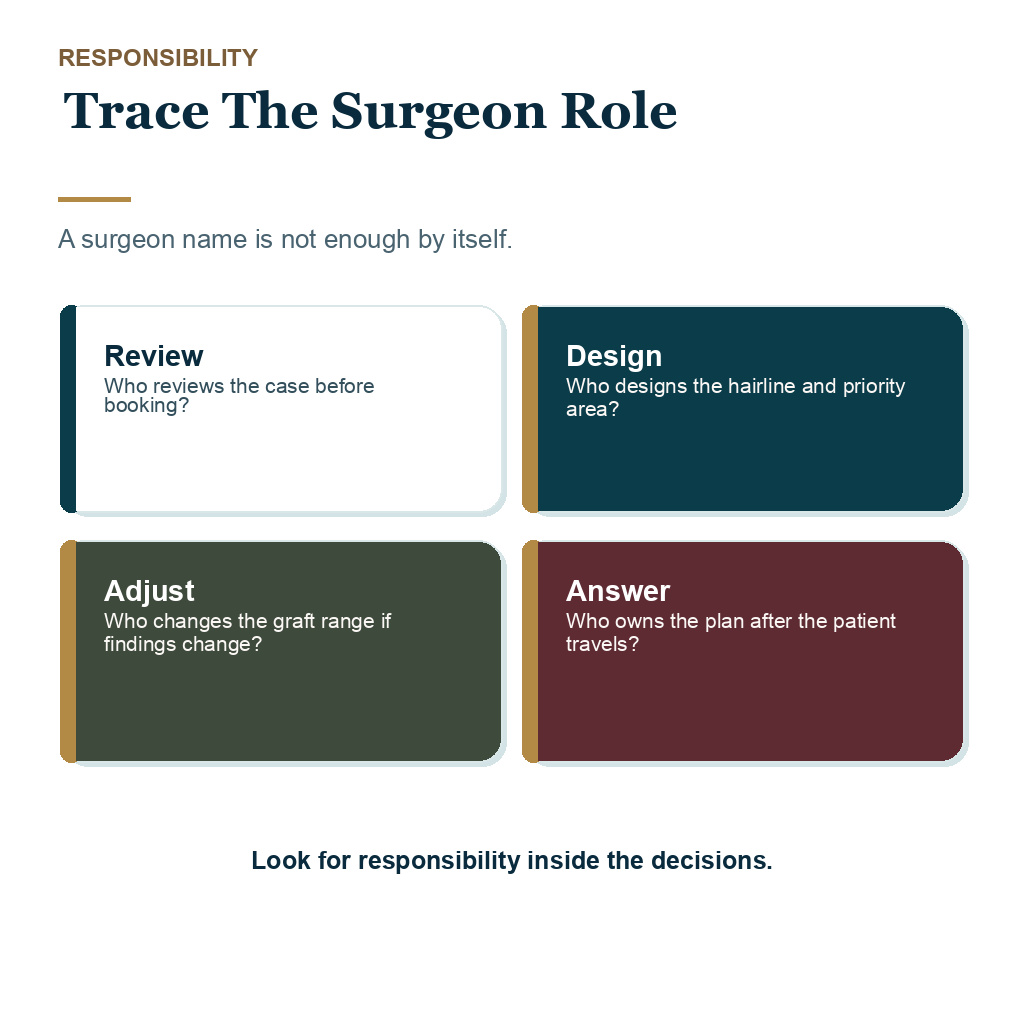
A surgical team is normal in hair transplantation. Unclear responsibility is not. Before surgery, case review, hairline design, surgical planning, medically critical steps, and the answer if the plan changes all need to be clear.
Surgeon involvement has to show up in the decisions that carry risk, not only in a name on a website. Hairline design, donor planning, recipient area planning, graft number adjustment, anesthesia awareness, and refusal decisions should not feel anonymous. You also need to know who performs each part of the hair transplant surgery, because communication support and surgical responsibility are not the same thing.
A clinic is easier to trust when the doctor’s responsibility can be traced through the plan. Surgeon involvement in hair transplant surgery matters before booking, not only on the operation day. Many people notice this difference only after they compare several clinics.
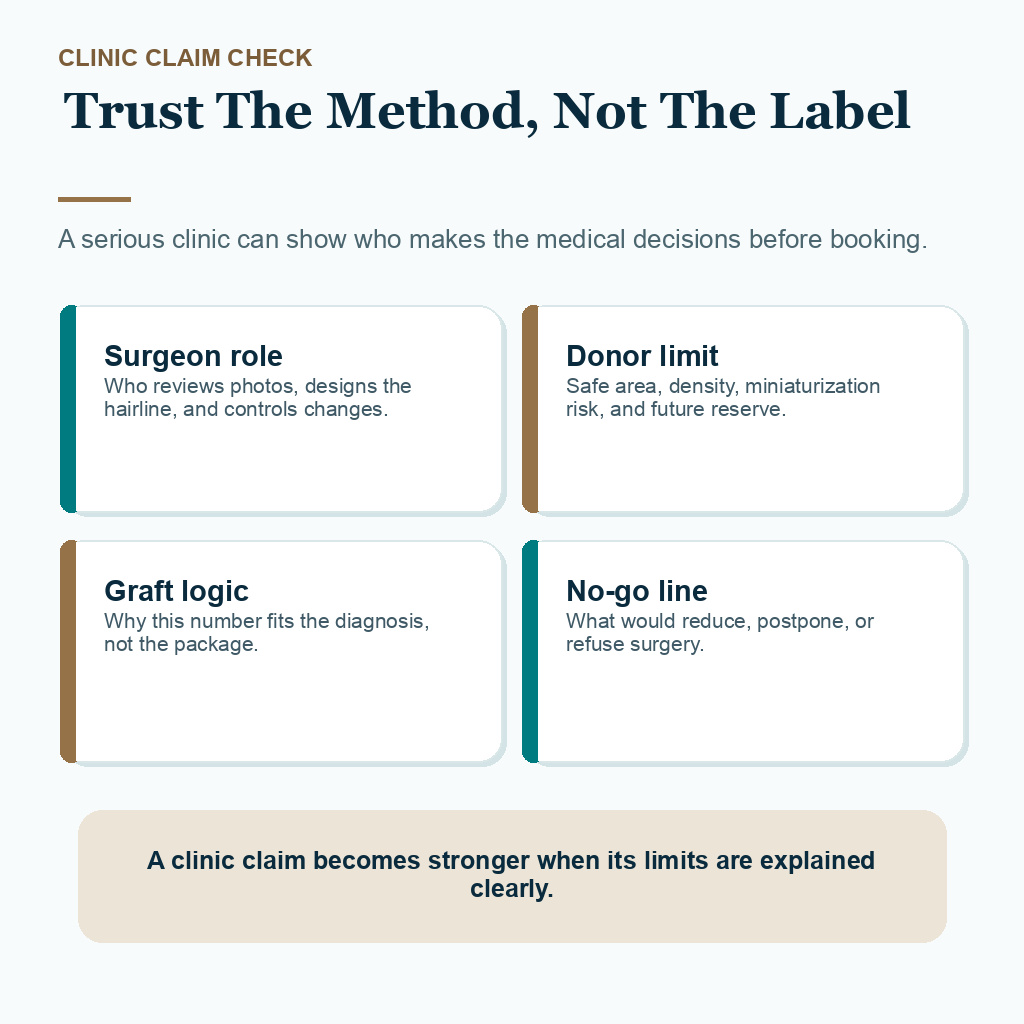
A clinic claim becomes easier to trust when responsibility, donor limits, and graft number logic can be explained clearly.

Read this review excerpt
“The assistant communicated quickly with me, provided me with great information, but never felt like they were trying to convince me to choose them.”
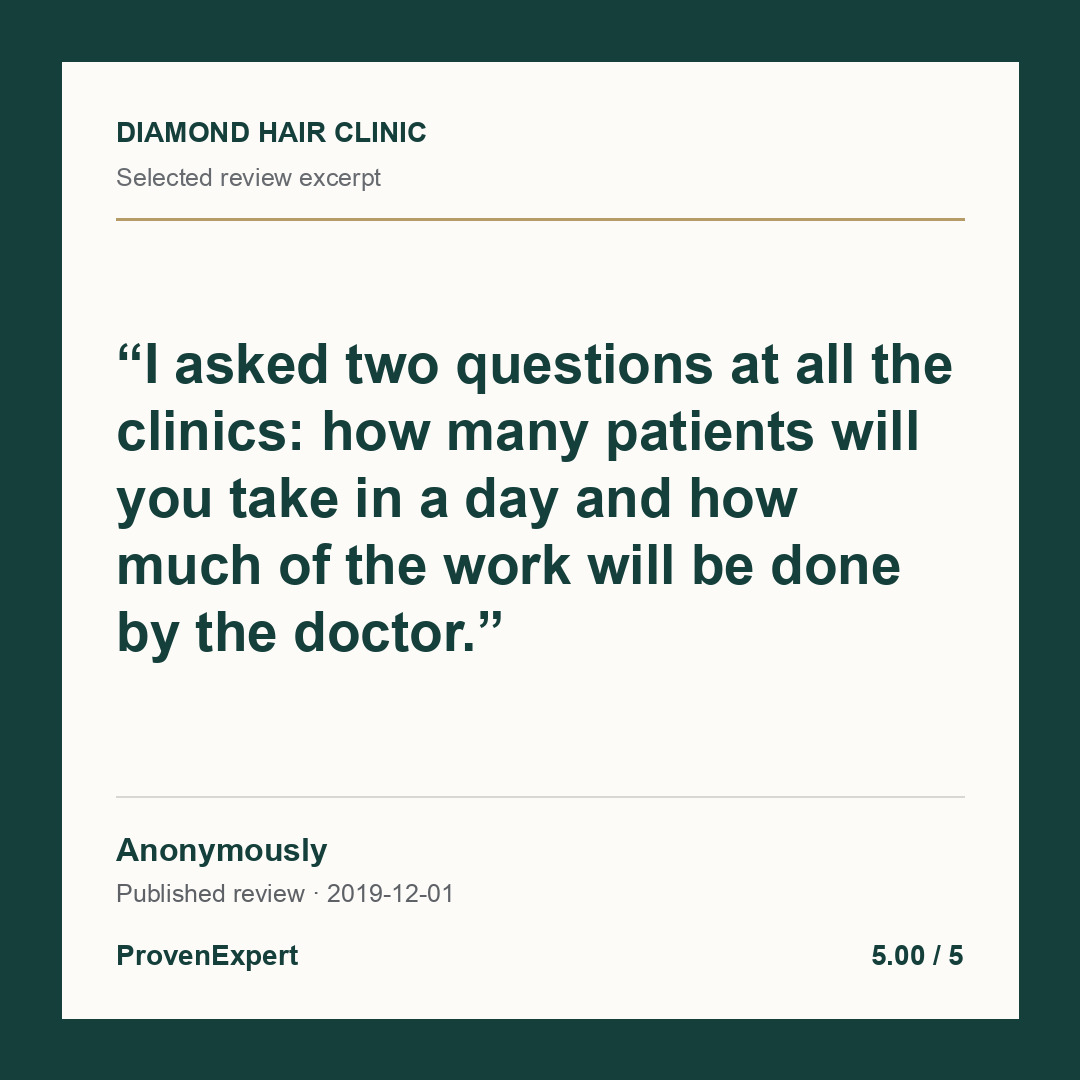
Read this review excerpt
I asked two questions at all the clinics: how many patients will you take in a day and how much of the work will be done by the doctor.
A higher graft number is not proof of a stronger clinic
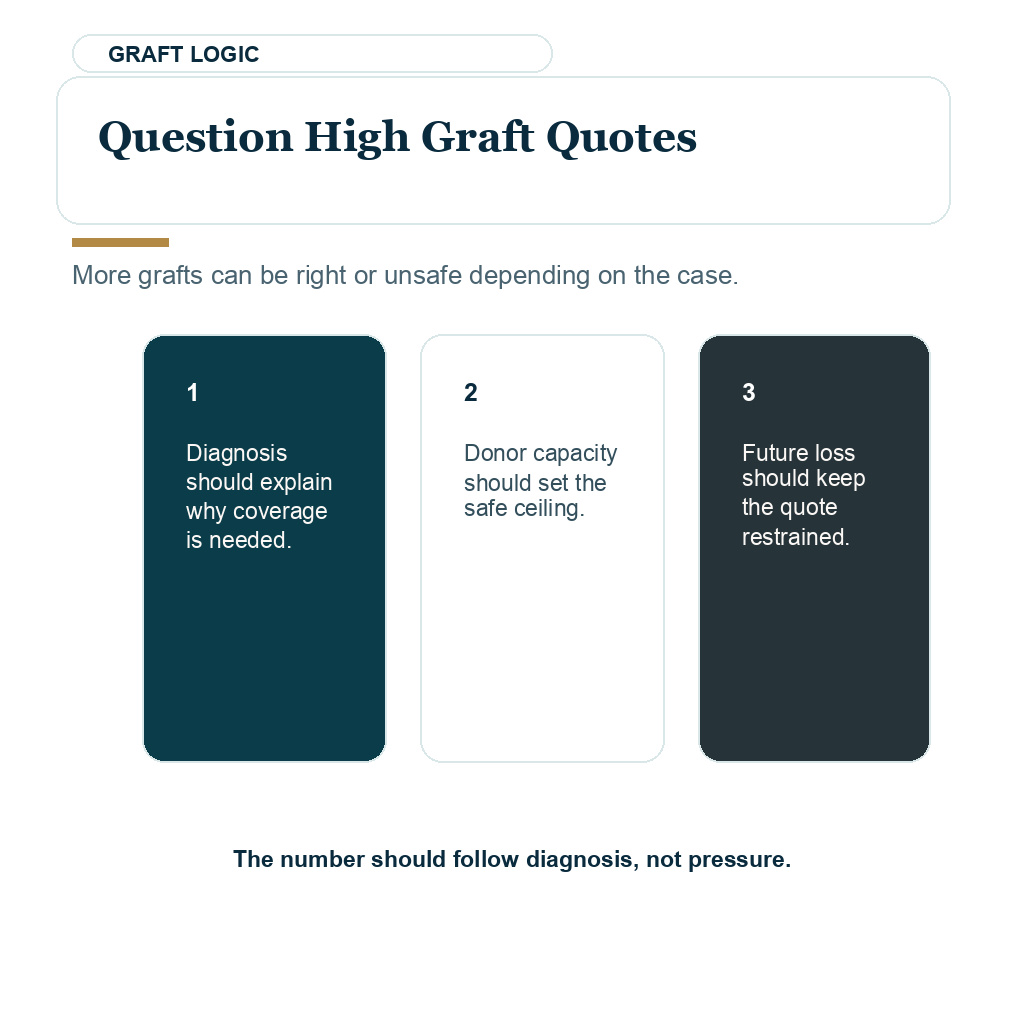
A larger graft number can sound like better value. Sometimes a larger session is appropriate. Sometimes it is the first warning sign that the plan is being sold harder than it is being judged.
The graft number has to follow the diagnosis and the donor capacity. It should not be chosen because you want maximum change in one trip, or because another clinic promised a higher number. A 4500 graft plan can be reasonable in one case and unsafe in another. A 2500 graft plan can be moderate in one case and still too aggressive in another.
The number only helps when donor safety survives the calculation. I want to know how many grafts can be removed without weakening the donor, creating patchiness, wasting future reserve, or chasing coverage that will not look stable with time. A high quote needs to be checked against surgeon graft calculations and the reasons graft numbers differ between clinics.
Hairline design shows long-term judgment
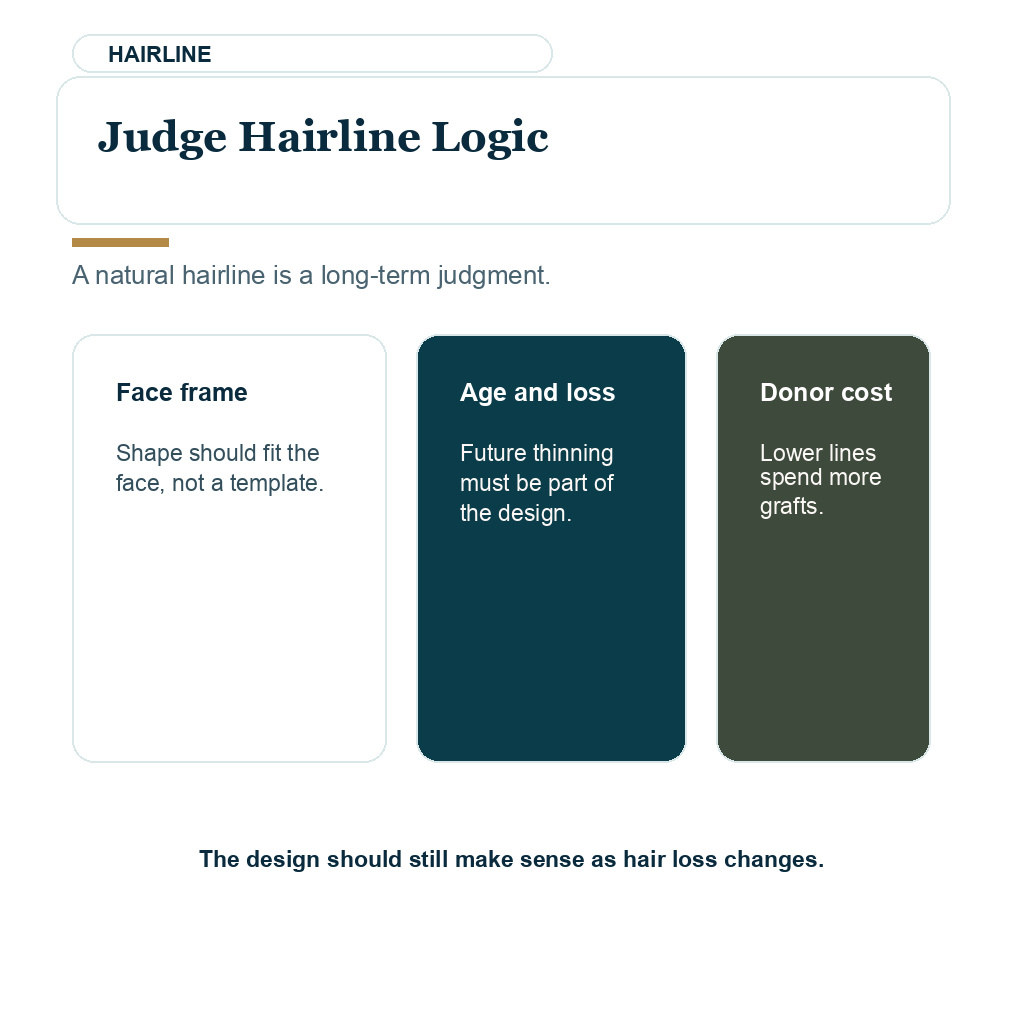
A natural hairline is not only a shape drawn on the forehead. It is a medical decision about age, facial structure, graft supply, hair caliber, future thinning, and how the result will look when you are older.
A clinic that lowers every hairline aggressively may look attractive in early photos. The same plan can become a problem years later if hair loss continues behind it or if the donor supply cannot support future work. A mature, slightly higher, softer hairline may be the more responsible design even when the first request is for something lower.
A clinic that explains why a hairline should not be lowered may be protecting you more than a clinic that agrees quickly. The safer design is often the one that protects you from a result that ages badly. For me, hairline design in hair transplant surgery deserves its own judgment for exactly that reason.
Photos and reviews need clinical context
Photos and reviews are useful, but they are not enough. Hair length, lighting, styling, wet or dry hair, camera distance, follow-up month, donor condition, and the original hair loss pattern can change how a result appears. Review numbers can also be shaped by timing, sponsorship, pressure, or short comments that describe hotel service more than surgical planning. A strong clinic should not ask you to trust a photograph or a star rating without explaining the case behind it.
My comments on Reddit remain linked to their original discussions, which lets you judge the reasoning in context instead of treating one sentence as proof.
When I look at a result, I want to know the pattern, donor limit, graft number, target area, what was left untreated, what was not promised, and why the result should be interpreted carefully. A frontal result does not prove crown coverage. A styled photo does not prove density in harsher light. A dramatic change does not prove that the same plan would be safe for you.
Beard or eyebrow results may show experience with those areas. For a hairline or crown procedure, look for comparable scalp cases.
The hair transplant case reasoning library was created for that missing explanation. A real case page should teach you how the decision was made, not only show an attractive transformation.
Refusal or postponement can protect the patient
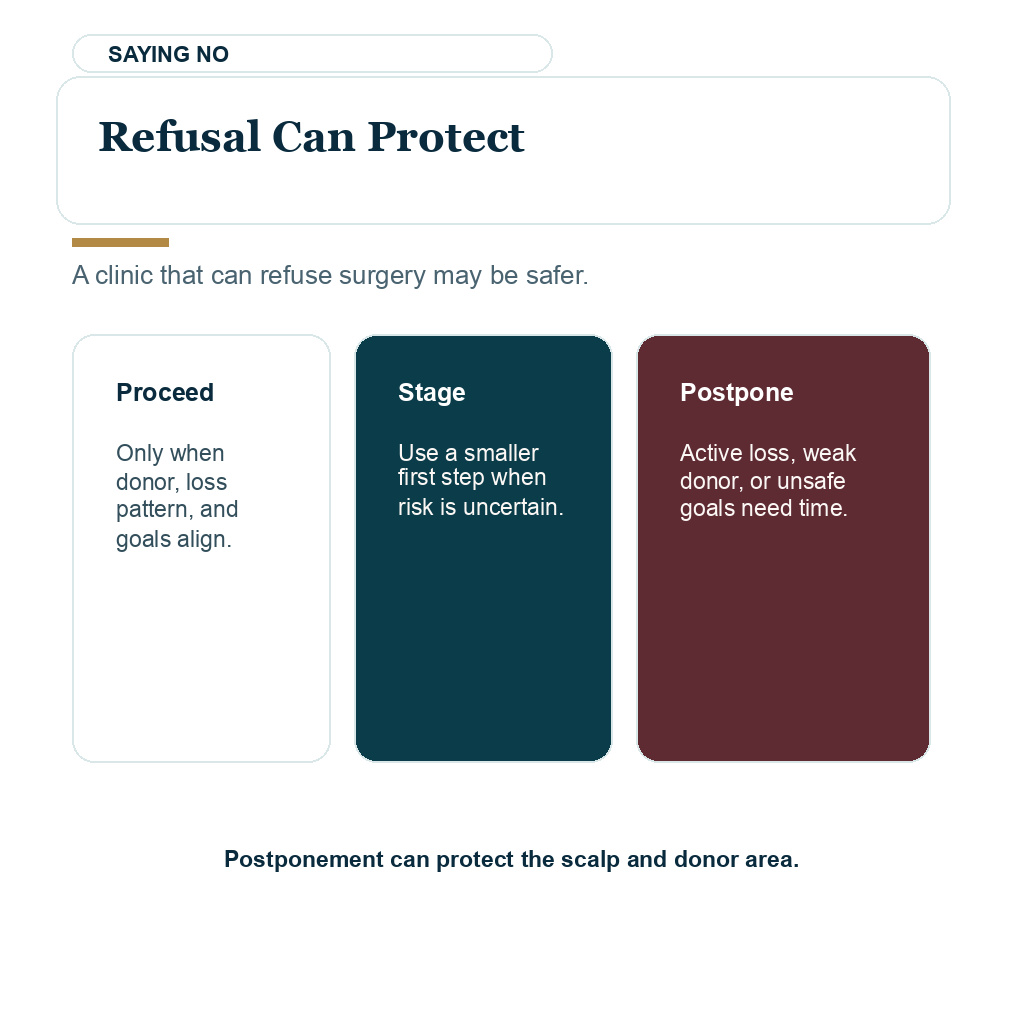
A clinic that says yes to every case is not safer because it is positive. Some people should wait. Some should use medication first. Some should reduce the plan. Some should avoid surgery because the donor supply, diagnosis, age, expectations, or repair risk makes the operation unwise.
I consider refusal part of medical responsibility. It is not a failure to operate on fewer people when the alternative is a result that may harm them later. Unstable hair loss, unclear diffuse thinning, poor donor quality, active scalp disease, or unrealistic density expectations can all make the medically responsible answer different from the answer you hoped to hear.
A clinic that can explain why surgery is not the right decision may be showing more trustworthiness than a clinic that accepts the case immediately. The reasons I may decline hair transplant surgery are often the same reasons to pause before choosing a clinic.
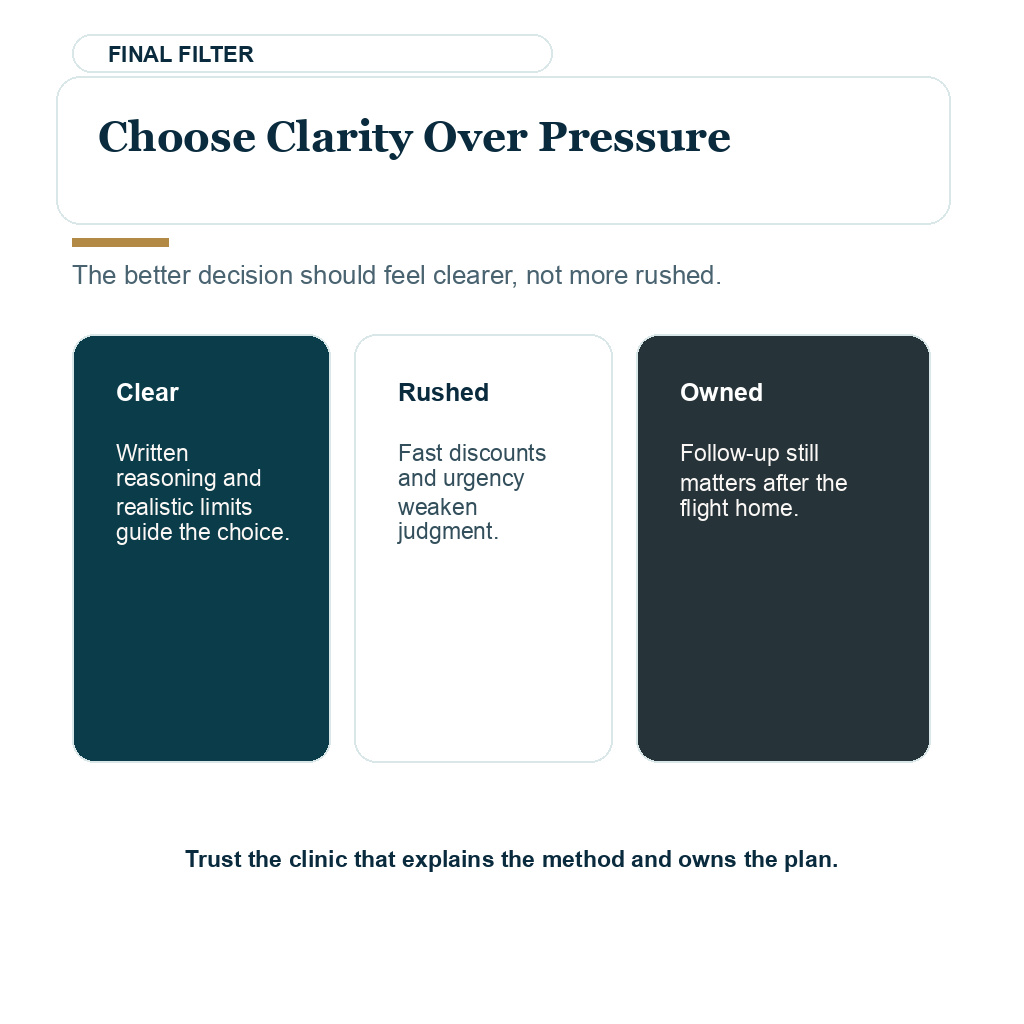
The 10 clinic comparison slides below keep the test practical. They separate surgical fit, surgeon role, donor limits, graft number logic, hairline judgment, photo context, refusal signals, written clarity before travel, clinic limit comparison, and pressure control. Use the arrows one slide at a time.
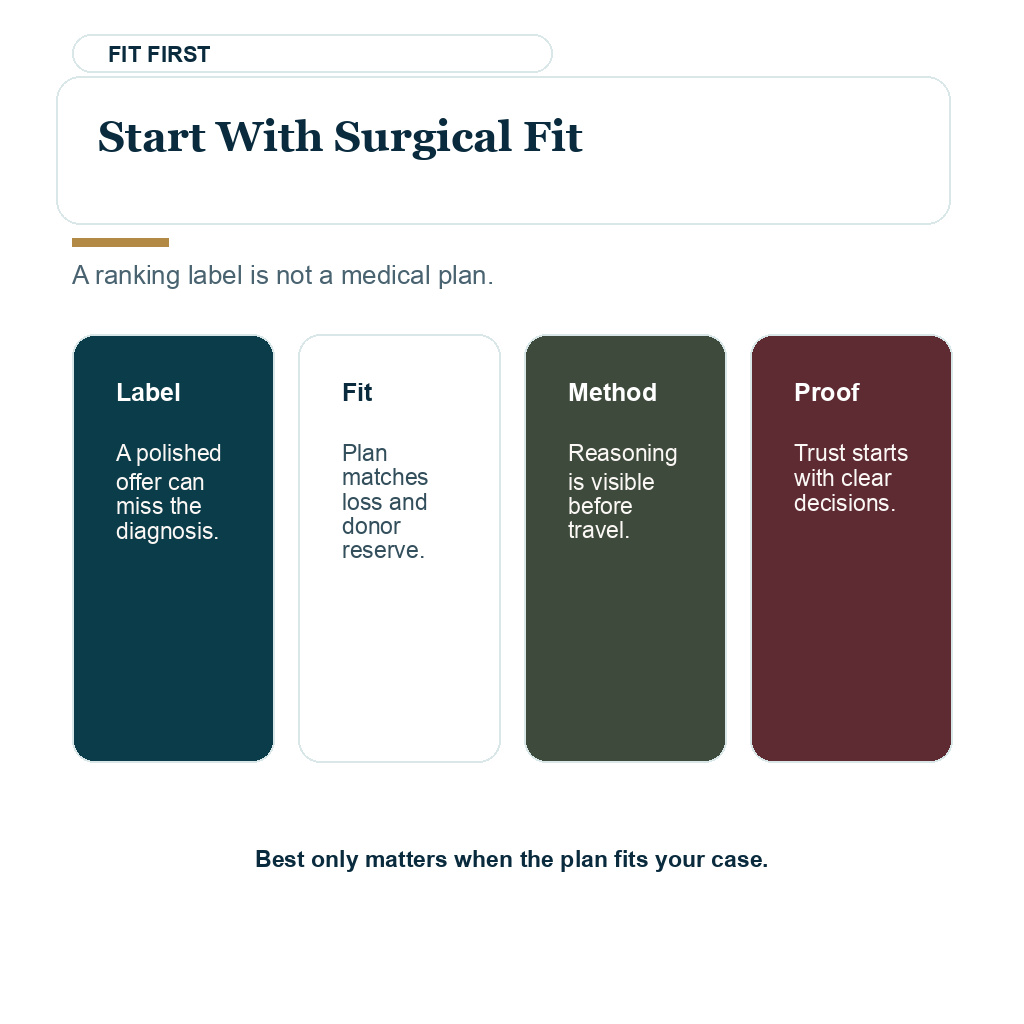




Written clarity matters before international travel
International patients carry an extra risk because the decision is made before they reach Istanbul. You may send photos, receive a plan, buy a flight, organize hotel dates, and arrive with only a short window for surgery. That makes clarity before travel more important, not less important.
Before committing to a clinic, you need to understand who reviewed the case, what the proposed graft range means, which area is the priority, what may change after examination in Istanbul, what aftercare contact is available from abroad, and what happens if recovery concerns appear after flying home. Those practical questions connect with planning from photos, medical changes after booking, and recovery concerns after flying home.
Payment should not become the first serious step in the medical decision. The safer order is medical clarity first, then travel and scheduling. In my own clinic, we do not require a deposit or prepayment to reserve a surgery date on my schedule. Confirmed flight details are enough for scheduling, because the medical plan needs to be settled before money becomes the pressure point. Before you commit to any clinic, the written record should cover the surgeon role, graft range, what happens if the plan changes, aftercare route, payment terms, refund limits, and rescheduling terms. If you are comparing clinics from another country, recognize hair transplant booking pressure and understand deposit timing before booking.
If two clinics look convincing, compare the limits
When two clinics both look convincing online, compare the answers that reveal clinical thinking. Who personally evaluates the donor? Who designs the hairline? Who decides the graft number? What is the maximum safe plan and why? What would make the surgeon reduce the plan on surgery day? What would make the surgeon say no?
The limits matter as much as the promise. Which area will not be treated? What density should not be promised? What future loss risk remains? What can the photos show, and what can they not prove? What aftercare support is available if you are already back home?
A surgeon does not have to offer every procedure. A focused practice should still explain when a different approach or referral may better fit your case.
The better clinic is not the one that gives the most attractive answer fastest. It is the one that can explain the medically controlled answer clearly, including the parts you may not want to hear.
The better clinic keeps responsibility after travel
For an international patient, clinic choice does not end at the airport transfer, surgery date, or first wash. The better clinic can explain who reviews recovery photos after the patient goes home, which concerns need local medical care, and how the follow-up advice connects to the original surgical plan.
The same early photo can mean different things in different cases. A planned low-density crown, a staged frontal case, a weak donor reserve, a repair case, and a straightforward hairline case should not receive the same generic answer after surgery.
When I compare clinics, I want the aftercare route to be as traceable as the graft number and hairline design. If the follow-up responsibility is vague, the clinic choice decision is still incomplete.

Read this review excerpt
Perhaps the best part was the meticulous pre-op meeting I had with Dr. Demircioglu going over exactly what he was going to do and precisely how to design my new hairline and why.

Read this review excerpt
Every week I share my new head photos with directly Dr.Mehmet Demircioglu by whatsapp and he comments about my advance.
Real quality shows in the consultation
Price and date matter, but they should sit behind the medical reasoning. A proper consultation explains donor limits, hairline design, graft number reasoning, who performs the surgical steps, the realistic boundary of the result, and the findings that could change the offer.
That is the standard I use when someone asks for the best hair transplant clinic in Turkey. A ranking, discount, large graft number, or dramatic gallery is not enough. The consultation has to show clinical judgment while there is still time to walk away.
If those points remain vague, get another opinion before committing to surgery. The right clinic should make the risk, responsibility, and expected result easier to understand, not harder under sales pressure.