


- Written by Dr. Mehmet Demircioglu
- Estimated Reading Time 8 Minutes
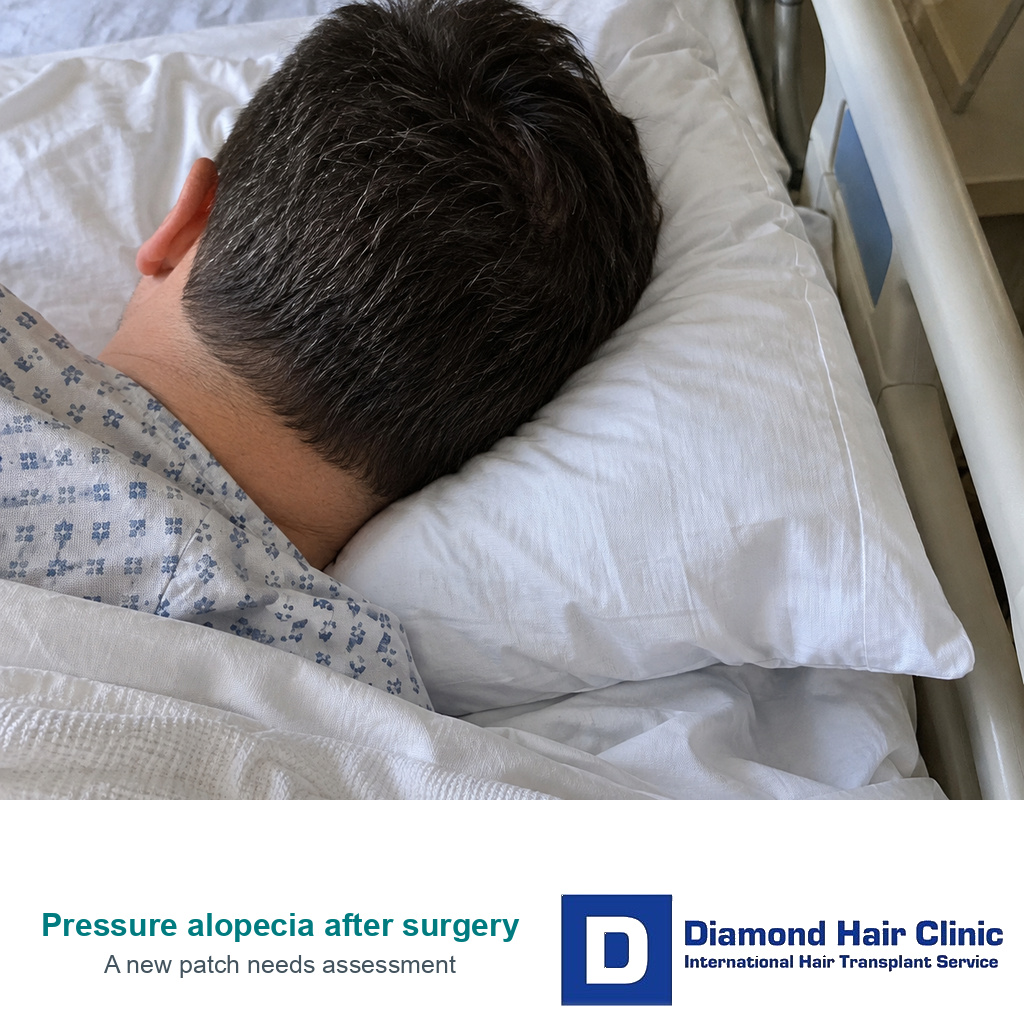
Pressure Alopecia After Surgery or Immobilization
If you notice one bare patch on your scalp after a long operation or a period when you could not move freely, have the area examined. Sustained pressure can sometimes injure scalp tissue and cause localized hair loss. Some affected areas regrow over the following months, while deeper injury can leave a permanent scar.
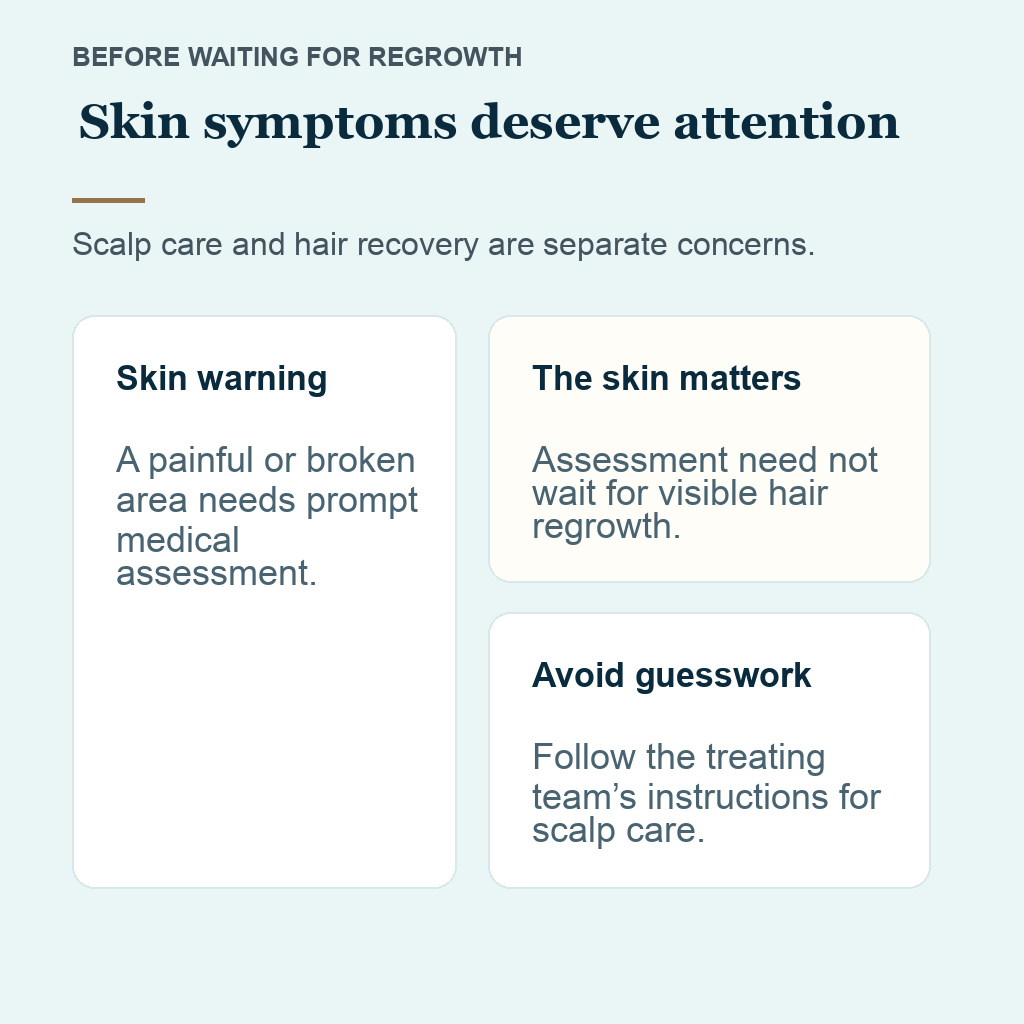
The skin beneath the missing hair needs attention too. A painful or broken area needs medical assessment without delay.
The name for this possible cause is pressure alopecia. Finding that name can help you explain what has happened, but it does not confirm your diagnosis or tell you how much hair will grow back.
An aftercare neck pillow is not the same as the prolonged, unrelieved scalp pressure described in this condition. A difficult night using one does not diagnose pressure alopecia. If you develop a painful, broken, or persistent bare patch after any procedure, arrange an examination instead of deciding the cause from the pillow alone.
Pressure can affect the skin beneath the hair
When the same part of the scalp remains under pressure for a prolonged period, blood flow to the tissue can be reduced. This can injure the hair follicles and, in more severe cases, the skin around them. The hair loss is therefore related to an injury in a particular area of the scalp.
The back of the head is a recognized location, particularly after lying in one position during a long operation or prolonged immobilization. Still, a patch in that location is only part of the history. Its position alone cannot establish the cause.
It is understandable to connect the loss to the anesthetic because you first noticed it after surgery. Pressure alopecia describes damage associated with sustained pressure. It does not, by itself, mean that an anesthetic drug damaged your hair.
The length of an operation is relevant to the assessment, but there is no single number of hours that lets me predict permanent loss in an individual. A prolonged procedure and a bald patch also do not establish how or why the injury happened.
The patch may appear after you leave hospital
Visible hair loss can become apparent within the first several weeks after the operation or period of immobilization. You may have been concentrating on the rest of your recovery and only notice the patch when washing or styling your hair.
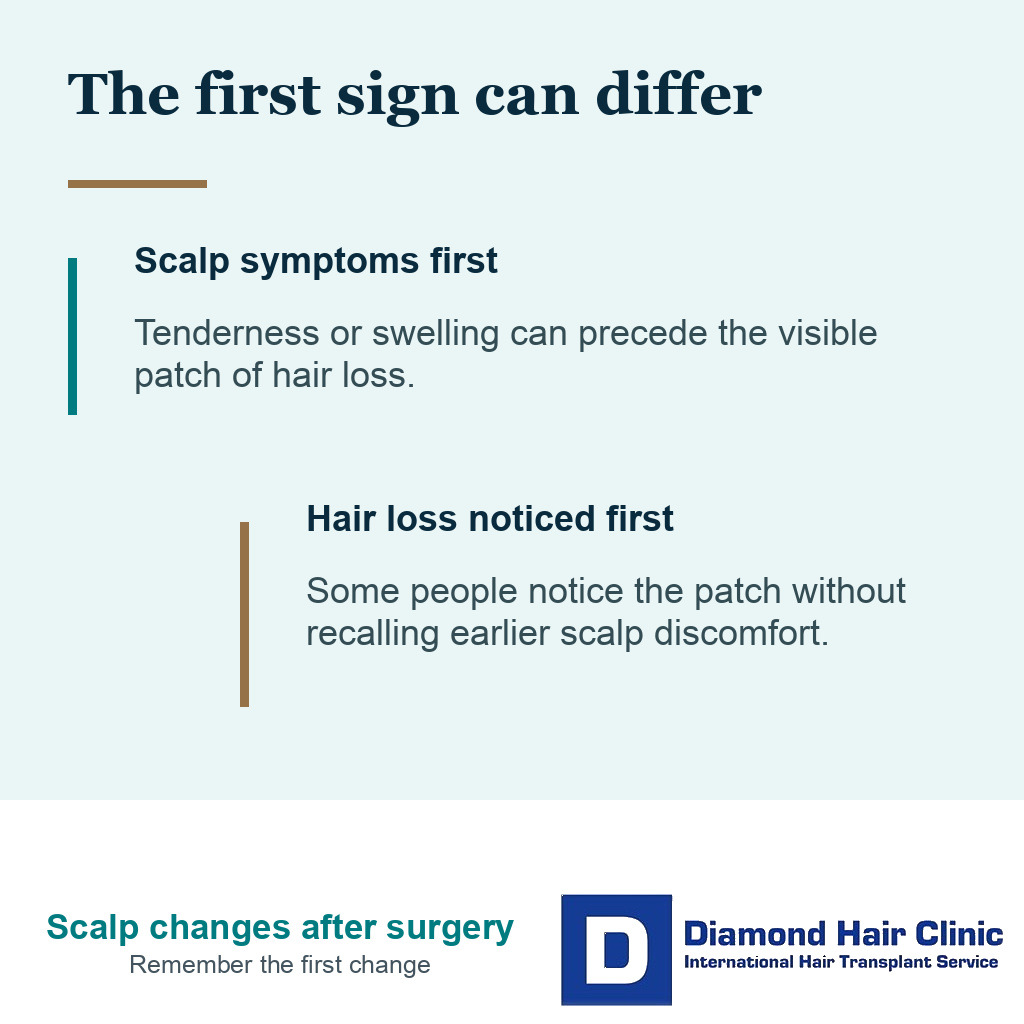
Some people recall tenderness, swelling, redness, crusting or an open sore before they see the hair loss. Others notice the missing hair first. The absence of remembered pain does not rule pressure alopecia out, and the presence of soreness does not confirm it.
The sequence is useful to your clinician. An area that was sore before the hair fell out tells a different story from a patch with no known skin symptoms. If a relative noticed it first, their description may help you put that sequence together.
Bring the date of the operation or hospital stay and an approximate date when the scalp symptoms and hair loss began. Approximate dates are useful if you do not remember the exact day. Explain what you noticed and what you were told at the time.
Surgery can also trigger telogen effluvium, where increased shedding is spread across the scalp. It often becomes noticeable around two to four months after the trigger. That differs from an injury caused by pressure on one area of the scalp.
A single bare patch therefore deserves its own explanation, even if you have been told that surgery can cause temporary shedding. Timing and distribution help the clinician interpret what happened. They are clues to assess alongside the scalp examination, rather than a way to diagnose yourself from the calendar.
A sore scalp should not wait for regrowth
Contact the team treating you or a clinician who can examine the scalp promptly if the area is painful, ulcerated or continuing to break down. Describe the skin changes as well as the hair loss, including whether the symptoms began before the patch appeared.
Treatment depends on the findings in your scalp. An open sore should not be treated as a routine hair loss problem. Once the area has been assessed, follow-up can address both skin healing and the return of hair.
The examination needs more than a photograph
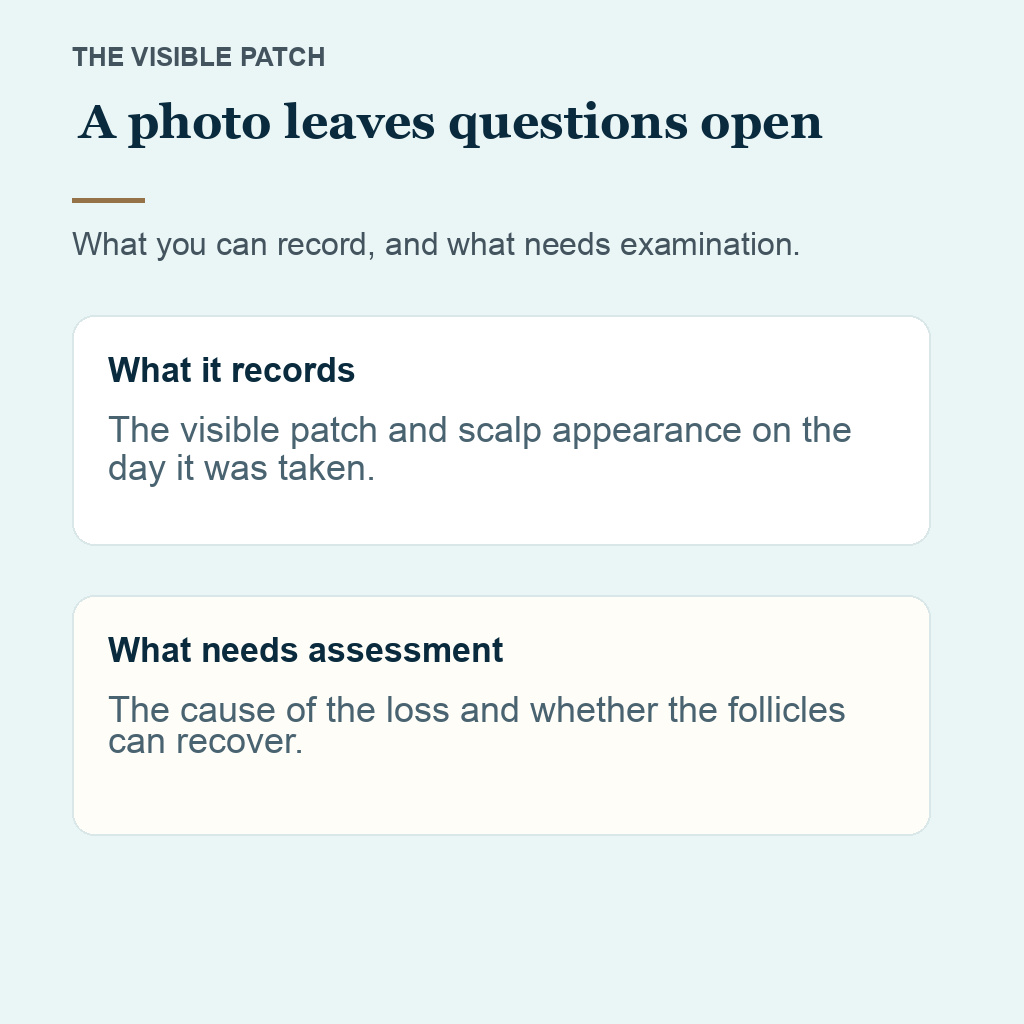
A photograph can show where the patch is and how much scalp is visible. It cannot reliably tell us whether pressure caused the loss, whether the follicles will recover, or whether the area has scarred.
To establish a diagnosis of the hair loss, the clinician needs the history of the operation or immobilization, the symptoms you experienced and an examination of the scalp. Trichoscopy, which allows a closer view of the scalp and hairs, may help. Its findings have to be interpreted alongside the rest of the examination because features can overlap between different causes of hair loss.
Alopecia areata is one diagnosis a clinician may need to distinguish from pressure alopecia. It can have a different course, so advice about its scalp signs or recovery may not apply to your patch.
If you already have photographs from the period after your operation, bring them to the appointment. They may help show the sequence of skin changes and hair loss.
For later comparisons, keep the lighting, distance, camera angle and hair position as similar as possible. Include enough of the surrounding scalp to show where the patch sits. Different camera angles can change how much scalp you see between the hairs.
PREPARING FOR AN EXAMINATION
Put the scalp changes in order
Choose the closest description in each row. The notes help you explain the history. They do not identify the cause of hair loss.
Hospital episode
When the story began
Detail to bring
Bring the operation or admission date and any discharge information.
What remains open
The event gives context. It does not establish the cause of the patch.
First scalp change
What you remember first
Detail to bring
Describe any tenderness, swelling or skin change you remember before the hair loss.
What remains open
That sequence belongs in the history. It cannot confirm a diagnosis.
Change since then
What happened afterward
Detail to bring
Say what is uncertain rather than guessing when the patch appeared or changed.
What remains open
An examination and follow-up can help the clinician judge the scalp.
Your history notes
Dates and discharge information · Earlier discomfort and when hair loss appeared · The timing or changes that remain uncertain
For the examination
The clinician can use this history alongside the scalp examination and discuss useful follow-up.
Care should not wait for hair regrowth. Arrange prompt medical assessment of painful or broken skin.
Will the hair grow back?
Hair can recover after pressure alopecia, and recovery may take months. Permanent scarring with loss of follicles is also documented. The outcome depends on what happened to the tissue beneath the patch.
That uncertainty is difficult when the patch is visible every day. For a newly noticed patch, I would be cautious about predicting complete regrowth or permanent loss before examining the scalp.
During follow-up, the condition of the skin and any return of hair help the clinician judge what is happening. There is no guaranteed month by which your patch should be filled.
If the patch persists, the follow-up should address that directly. You should understand whether your clinician is observing possible recovery, investigating another cause, or assessing suspected scarring. Those are different reasons for follow-up, with different implications for the hair.
If a transplant is being considered while you are still recovering from the original operation, the timing of a hair transplant after major surgery needs a separate medical review. The scalp assessment does not establish that you are ready for another procedure. I would coordinate that decision with the team treating you, without assuming that one fixed gap between operations suits everyone.
Use the arrows or swipe through these 3 slides to see what a visible patch can and cannot tell you.
Pressure reduction belongs with the treating team
Reducing sustained pressure on the scalp is a consideration for the operating or hospital team. The approach has to fit the procedure and your medical condition. Some situations limit how safely the head or body can be moved.
Do not change a medically required position on your own. If you are awake and the scalp feels sore, tell the team. They can assess the pressure and decide what adjustments are compatible with your treatment.
A turning schedule or a particular pillow cannot be prescribed responsibly from a general article. If you have had a previous scalp pressure injury and face another operation or period of immobilization, include that history when the team plans your positioning.
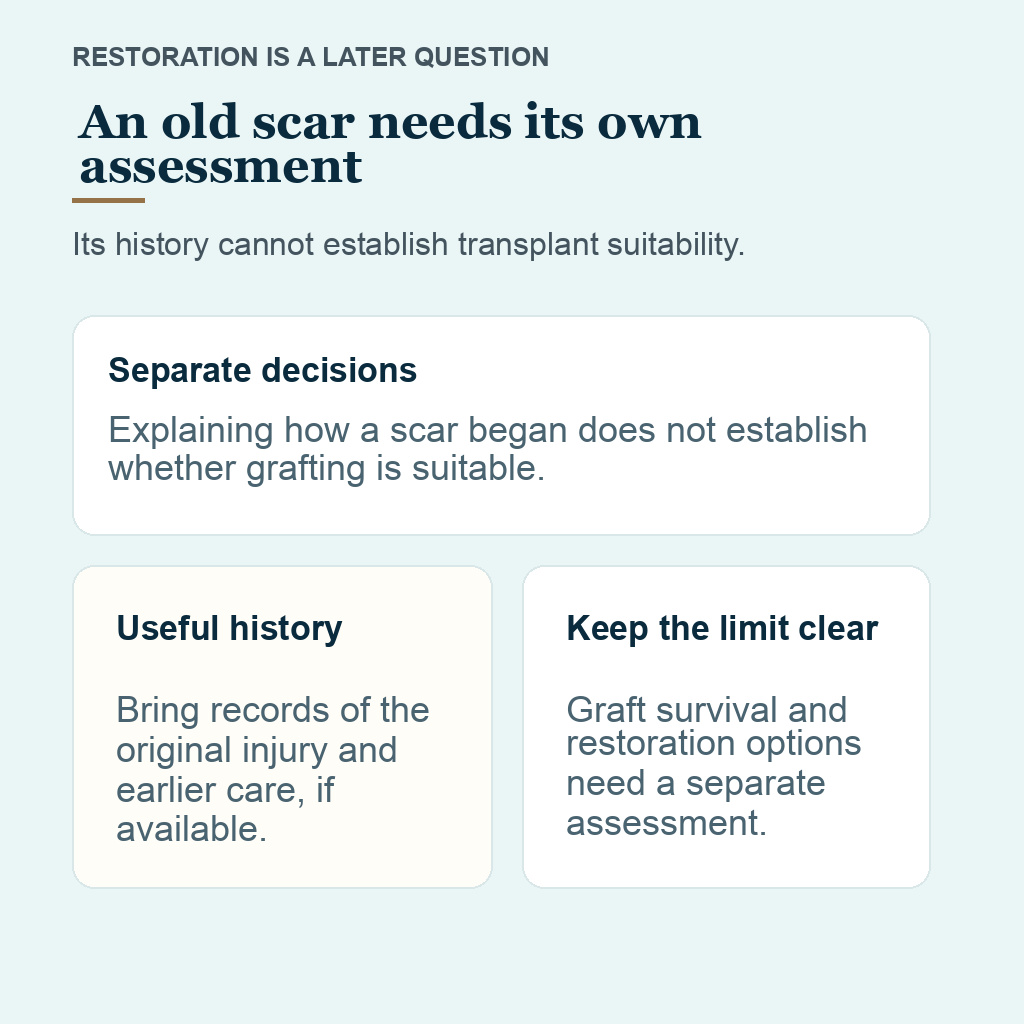
An old pressure scar needs a separate restoration assessment
You may be reading this long after the original injury, with a persistent patch that has already been described as a scar. Your concern is then different from that of someone who has just noticed hair loss after leaving hospital.
Knowing that pressure caused the original injury does not establish whether hair transplantation into scar tissue is appropriate for you. The area needs a separate assessment. If you have already had an operation to reduce or revise it, that history belongs in the restoration consultation.
I would not give a graft estimate or a promise of growth from the empty patch alone. First, the assessment needs to establish what tissue remains and whether a restoration procedure should be considered at all. An old scar deserves that individual judgment, even when its original cause seems clear.

Read this review excerpt
Every single one of my questions was answered and they made sure I had all the details I needed to make an informed decision.