Mature Hairline or Receding Hairline Before FUE
A small change at the temples can feel much larger than it looks, especially when old photos seem to show a lower hairline. I see this question often in younger men who are not sure whether their hairline has simply matured or whether recession has started. The answer matters because FUE uses permanent donor hair and cannot answer every anxious mirror check.
Proof of stability has to come before a graft number, especially when wet hair, harsh bathroom light, or old photos make a small temple change feel bigger than it is. I need to know whether the hairline shape is stable, whether the hairs at the edge are miniaturizing, how old the patient is, what the family pattern looks like, and whether the requested design would still look natural years later.
A mature hairline is not a failed hairline
Many adult male hairlines sit a little higher than the teenage hairline. The corners may open slightly, the center may look less rounded, and styling may change. That alone does not prove a patient needs surgery. A stable adult hairline can be completely normal if the density behind it is strong and the shape has not been moving quickly.
For broader background, receding hairline stages can help name the pattern, but naming a stage is still not the same as choosing surgery.
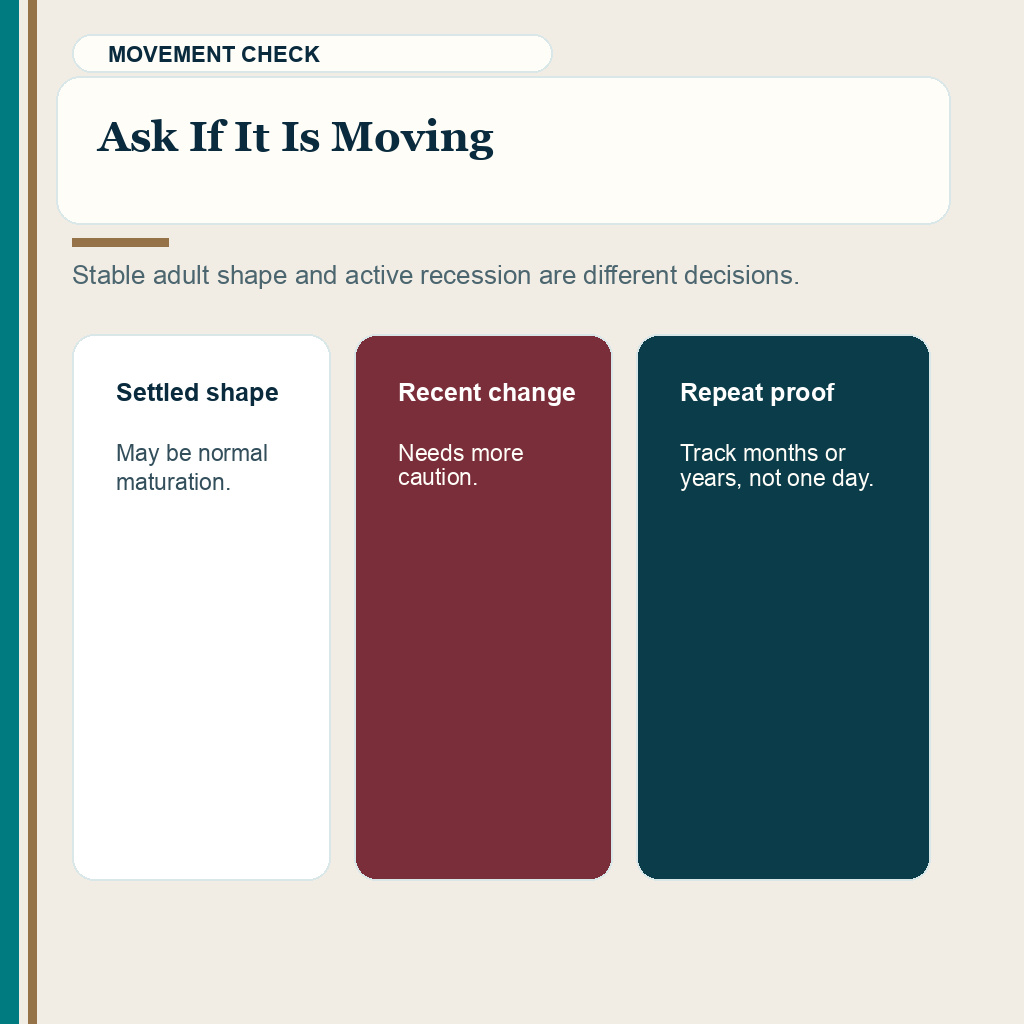
Progressive recession behaves differently. The corners keep moving, the frontal edge loses caliber, and the transition zone becomes weaker. The practical difference is that a mature hairline has settled into an adult shape, while active recession is still changing the plan. The surgical question then shifts. It is not only where to place grafts. It is whether the native hair around the future grafts may keep thinning after surgery.
Careful comparison protects the patient at this point. I compare old photos, current close photos, scalp examination, family history, and the patient’s age before treating the hairline as a surgical problem.
Old photos are useful only when the angle is fair
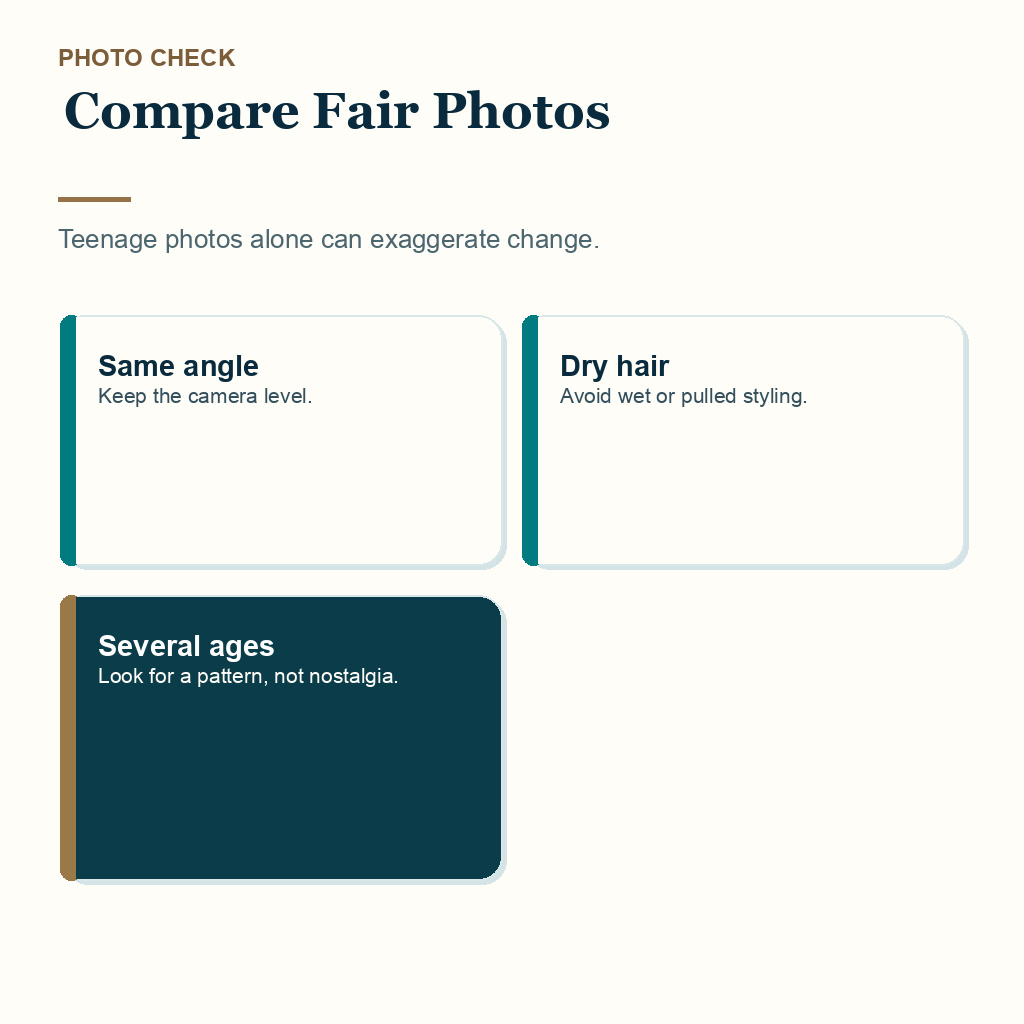
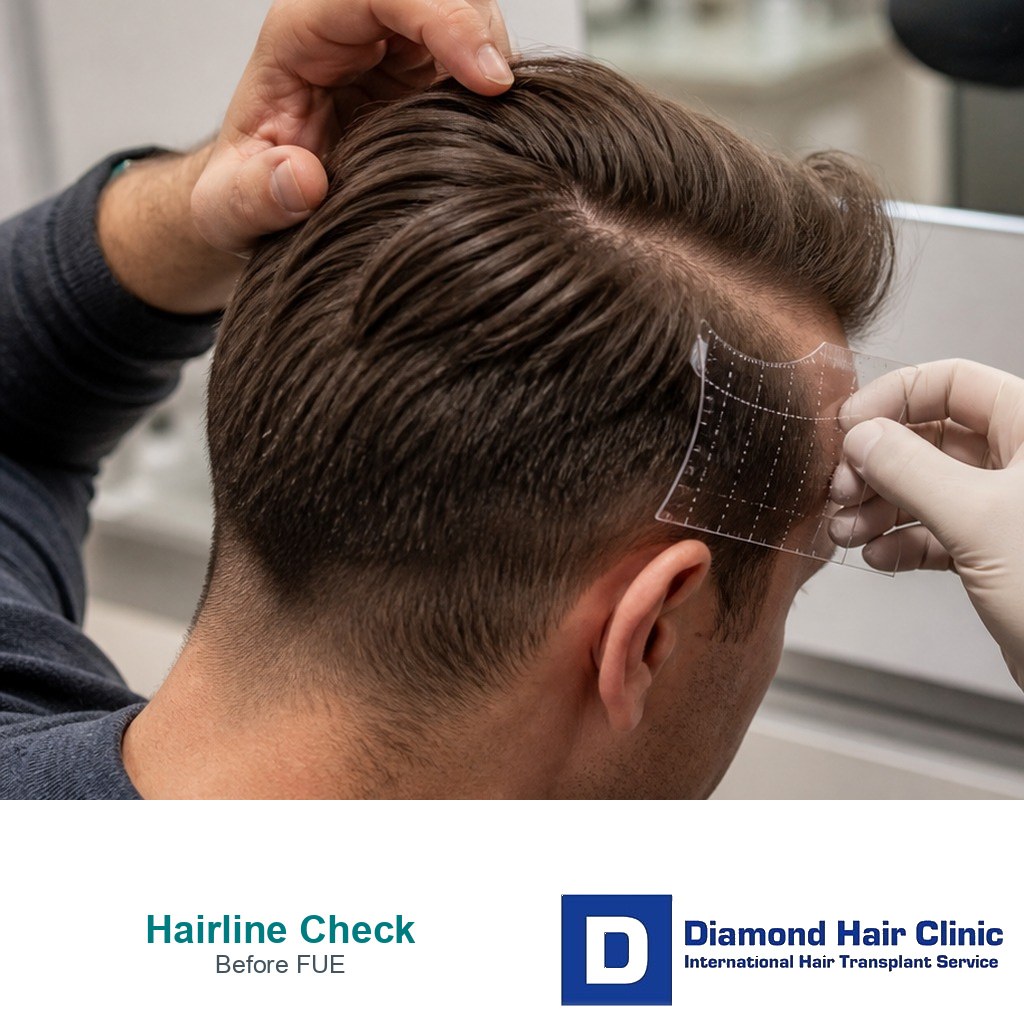
Old photos help, but they can also mislead. A photo from age 16 with thick styling, different lighting, and a different camera angle will make almost any adult hairline look worse. I ask for photos that show the front and temples clearly, preferably from several ages, without wet hair or aggressive styling.
If useful older photos do not exist, start a baseline now. Keep the hair dry and repeat the same front and corner views with similar lighting, distance, and head position. That gives future comparisons more value than a daily mirror check from memory.
A difference from teenage photos does not prove recession. Most adult hairlines sit differently than they did in the teenage years, so I review whether the change is stable or progressive. If the same shape appears across several recent years, surgery may be unnecessary, or the design should stay modest.
Height alone is a weak clue. The better comparison is whether the corners, temples, and front edge are moving together or whether one area is changing faster than the rest.
Recent movement makes me more cautious. A low, dense transplant into an unstable pattern can look tempting on surgery day and still become the wrong long-term plan.

The edge hairs tell me more than the outline
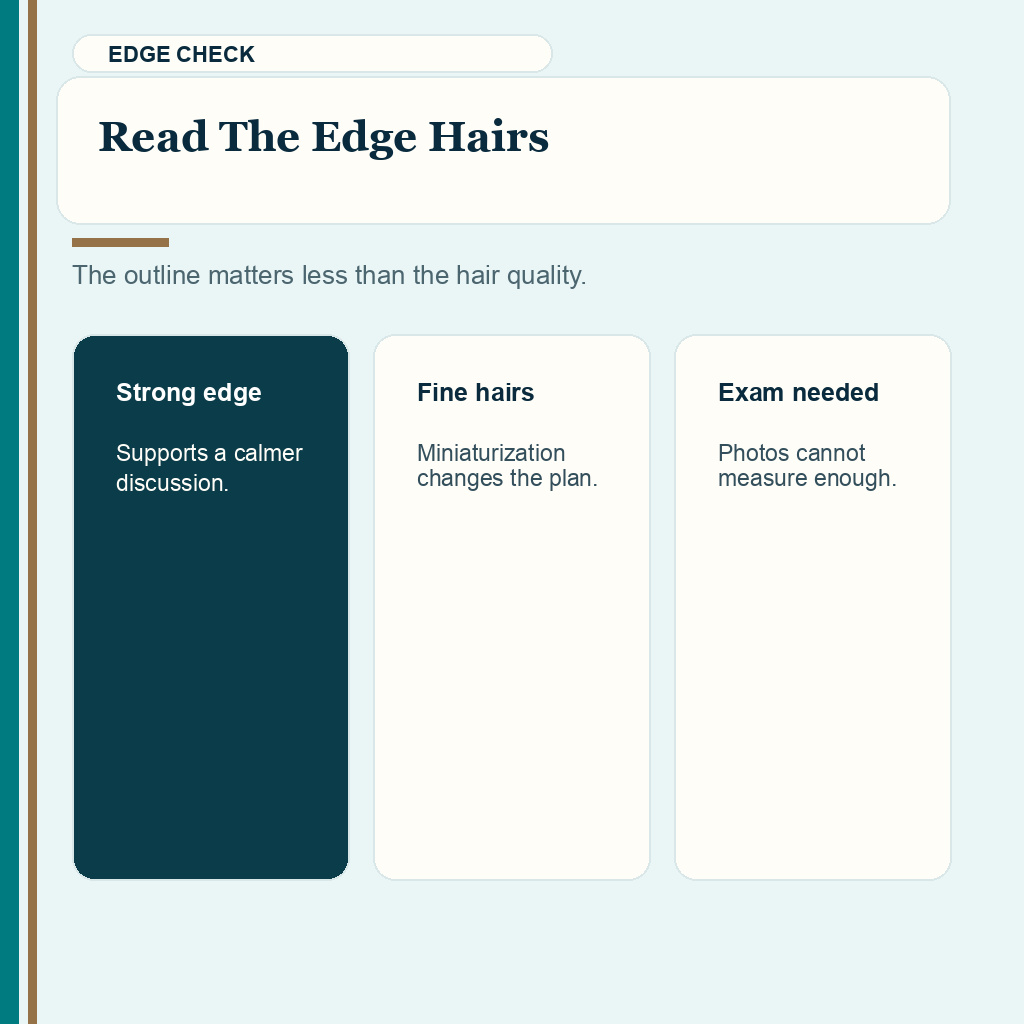
A hairline outline can look similar in two patients while the biology is different. One patient may have strong terminal hairs at the edge. Another may have miniaturized hairs that are getting thinner each year. The second patient needs a different discussion because native hair loss may continue behind the transplanted edge.
During examination, I look at caliber, density, miniaturization, and the transition from strong hair to weaker hair. The edge quality matters as much as the drawn line. If the frontal edge is losing strength, I may need medical stabilization first, a higher or softer placement, or more observation before surgery.
This is also why I do not judge a hairline only from a social media photo. A camera can show shape, but it cannot measure miniaturization well enough to decide a safe lifetime plan.
Online opinions can tell you whether the corners look noticeable to other people. They cannot show whether edge hairs are miniaturizing, whether the shape has changed across several years, or whether donor grafts should be used now.
A low hairline can age badly if the pattern keeps moving
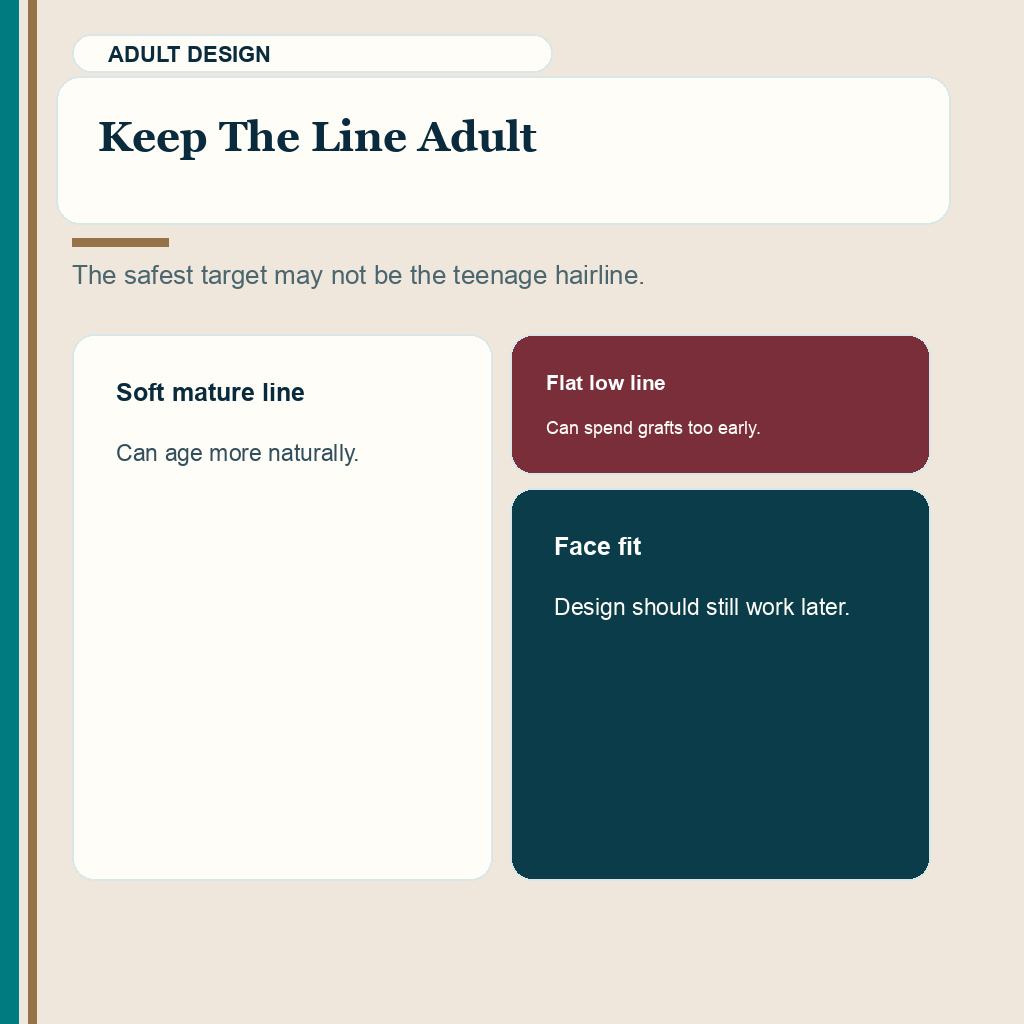
Patients often ask for the hairline they had as a teenager. I understand the wish, but the teenage line is not always the correct adult surgical target. If the design is too low or too flat, it can consume donor hair while leaving too little reserve for the midscalp, crown, or future recession.
Natural hairline design in hair transplant has to respect facial proportions and long-term planning, not only the line a patient prefers in one photo. In early cases, careful planning is often the protective part of the surgery. Sometimes that means accepting an adult hairline instead of recreating a teenage one.
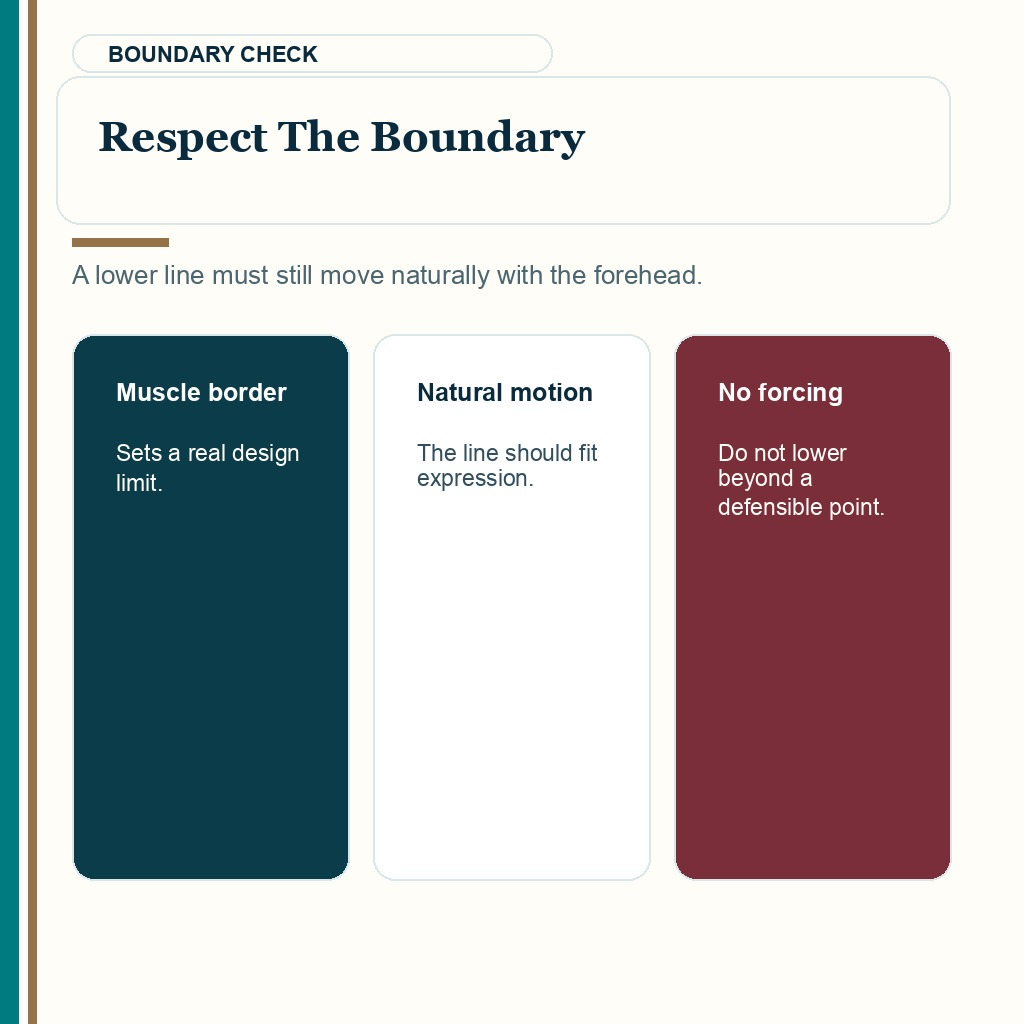
I also check the forehead muscle boundary before lowering a hairline, because where hairline lowering should stop with FUE affects whether the line moves naturally when the forehead moves.
Stability checks before early FUE
Look for movement before lowering the line
A practical stability lens
A mature hairline and early recession can look similar in one photo. I separate them by looking for movement over time, miniaturization at the edge, the forehead boundary, and how much donor reserve the patient may need later.
Norwood 2 is not one automatic decision
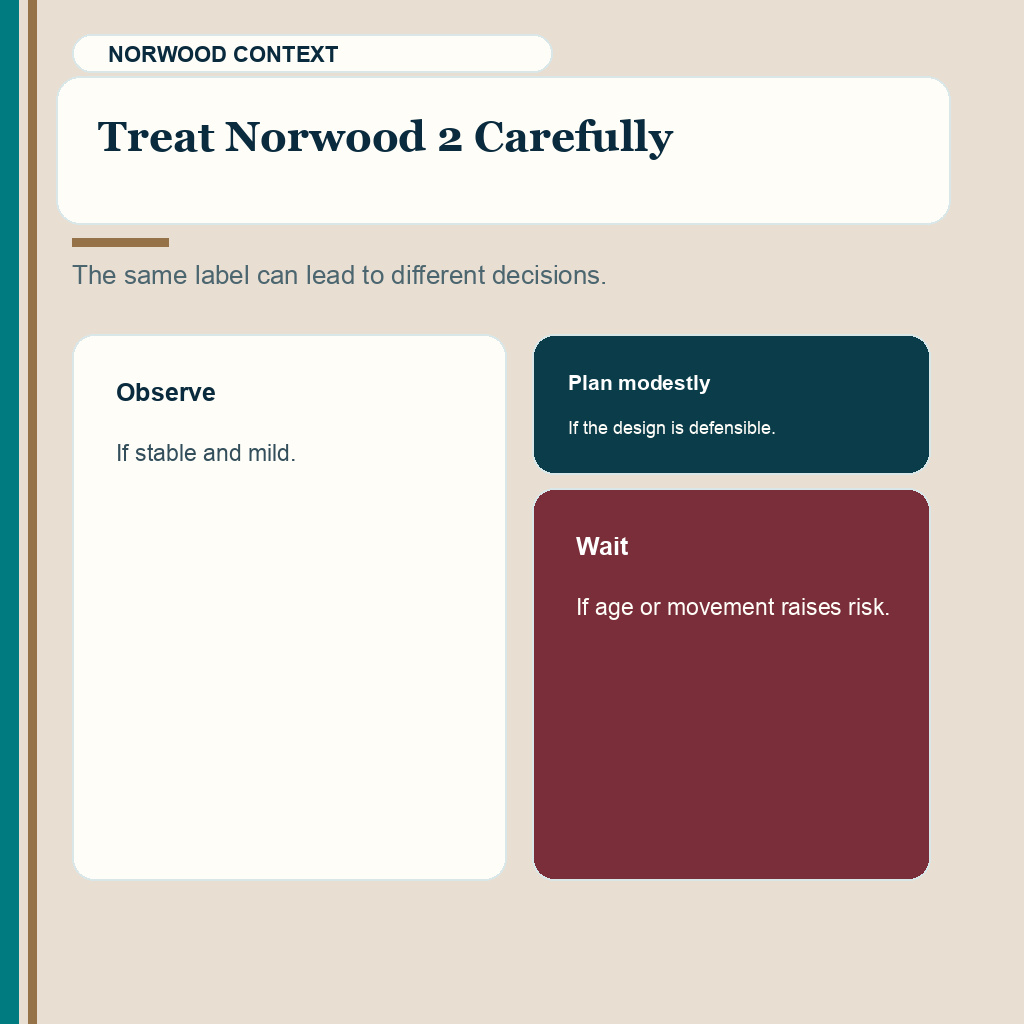
A patient with a Norwood 2 pattern may be a good candidate, a borderline candidate, or someone who should wait. Age, density, donor strength, medication tolerance, family history, and expectations all change the answer. The label alone does not decide surgery. The same is true when the label is androgenetic alopecia before FUE. The name of the pattern still has to be tested against stability, age, donor reserve, and native hair risk.
The label is only a starting point. A man who calls the same corners a mature hairline, a Norwood two pattern, or recession may still need the same review with older photos, edge miniaturization, family pattern, and whether the line is still moving.
Before I treat a Norwood 2 hair transplant plan as a surgical case, I first decide whether the pattern looks stable or whether active hair loss is still moving.
If the patient is very young and the corners are changing each year, I do not rush to create a dense permanent line. A smaller adult design may protect the patient better than a dramatic early result.
Temple points should not be added casually
Temple points can frame the face, but they are unforgiving when they are placed too aggressively. A patient may think the temple point is part of a simple corner fix, yet it has its own direction, angle, density, and future loss risk.
Temple point restoration with hair transplant surgery needs its own judgment. A mature hairline may not need temple point work at all. Progressive recession may need a staged plan rather than one broad frontal rebuild.
Weak temple points need the same stability check. If the whole pattern is progressing, adding them too early can create a transplanted frame that no longer matches the rest of the hair over time.
Medication discussion may come before surgery
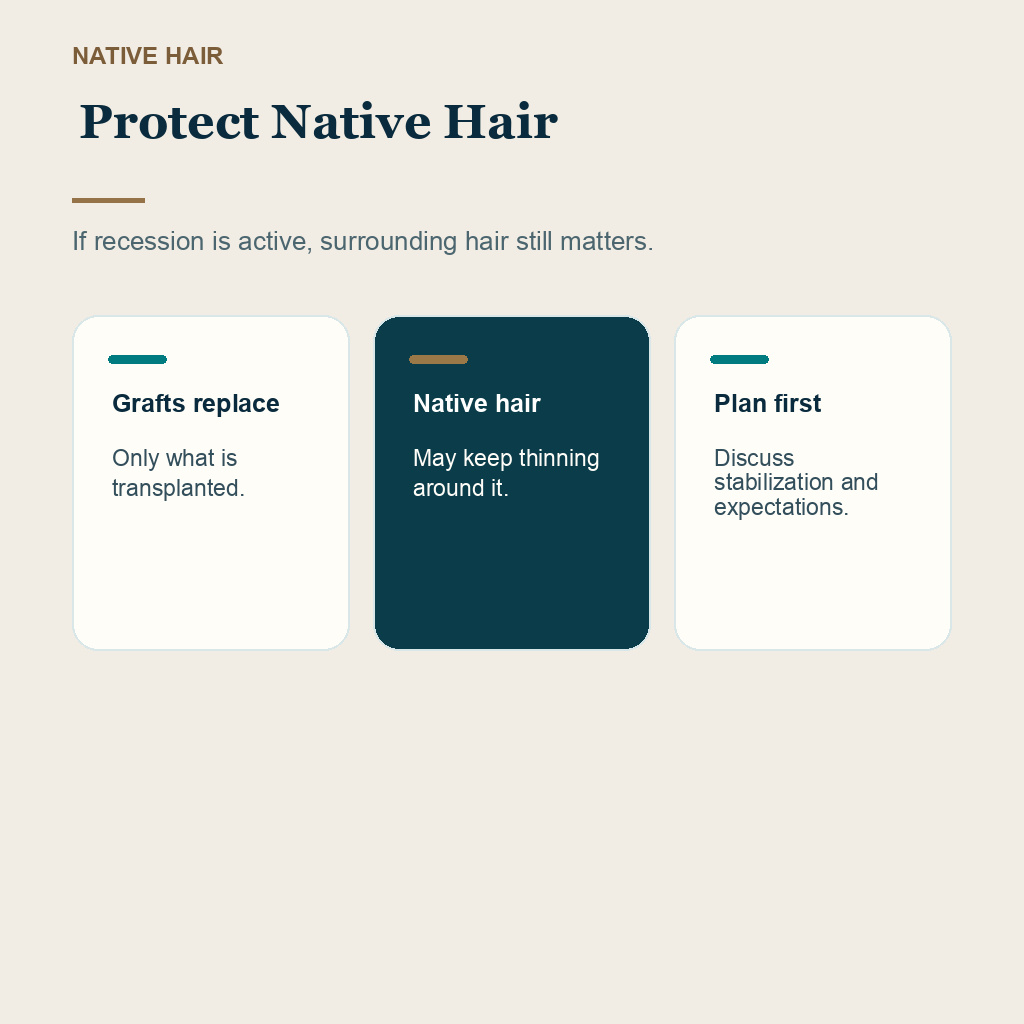
Some patients do not want medication. Some cannot tolerate it. Others have never had a proper discussion about it. I do not force a standard answer, but native hair protection is part of early hairline planning because the grafts only replace what I place. They do not stop the surrounding hair from thinning.
If a patient wants surgery but prefers not to rely on medication, hair transplant without finasteride helps frame the tradeoff between a more modest design and the risk of future native hair loss.
In a patient with a stable mature hairline, medication may not be central. In a patient with active recession, the native hair plan becomes much more important.
The donor area decides how ambitious the plan can be
Early hairline surgery can seem small, but it still spends donor hair. If the donor area is strong and the long-term pattern is mild, a modest refinement may be reasonable. If the donor is limited, miniaturizing, or likely to be needed for future crown and midscalp loss, the design should be smaller.
Donor miniaturization before hair transplant applies even when the visible concern is only the temples. For a young patient, spending a lifetime resource just to recreate a teenage line can be a poor trade.
Donor reserve is part of the hairline design. A natural result is not only a soft front edge. I do not want to spend grafts at the front in a way that leaves no answer for future midscalp or crown loss.
Situations where waiting protects the donor
I advise waiting when the patient is very young, old photos show recent movement, miniaturization is active, the requested line is too low, or the donor budget does not support future loss. Waiting does not mean ignoring the concern. It means collecting enough evidence to avoid a permanent mistake.
Sometimes repeat photos after several months are enough. Sometimes it is a medical discussion about native hair protection. Sometimes the best answer is a smaller design that softens the corners without chasing the teenage hairline.
Do not lower a hairline just because anxiety is loud. Lower it only when the pattern, donor supply, and facial boundary make the design defensible years later.
Map the pattern before spending grafts
A mature hairline and a receding hairline can look similar in a mirror, but they are not the same surgical decision. A stable adult shape with strong edge hairs may need observation or a modest refinement. Recent movement, active miniaturization, a very young age, or a low requested line changes the discussion because the donor area must still serve future needs.
For me, the central question is whether I can defend this hairline when the patient is older and the donor area has to serve future needs. If I cannot defend it, I map the hairline, take follow-up photos, and allow time before surgery. That is not delay for its own sake. It is how I avoid spending permanent grafts on a pattern that has not declared itself yet.
The 10 slides below turn the mature versus receding question into a practical review sequence before any early hairline FUE decision. Swipe sideways, use the arrows for one slide at a time, or choose a number below the image.

Read this review excerpt
We also had a levelled conversation about my hairline and results I could expect based on my donor density area.