Temporal Triangular Alopecia and the Lifelong Temple Patch
A small temple patch that has stayed much the same since childhood may be temporal triangular alopecia, often shortened to TTA. A diagnosis should come before any transplant plan. Several causes of patchy hair loss can look similar, and a triangular outline alone does not identify this condition. A dermatologist can usually assess the pattern and tiny hairs with a close examination.
For an adult with confirmed TTA, leaving the patch alone is a reasonable option. If it limits the way you wear your hair, a transplant may offer cosmetic improvement. The evidence is limited, however, and there is no dependable success percentage for an individual patch.
The decision involves more than filling the visible gap. Hair selected for the temple needs to suit the fine surrounding hair, and taking grafts leaves marks in the donor area. The rest of your hairline also deserves attention, even when the patch itself has been stable.
A temple patch that never filled in
You may have arranged your hair around the same spot for years without knowing what caused it. Perhaps a shorter cut makes it obvious, while longer hair covers it completely. That history is useful, but it should be considered alongside the appearance of the scalp rather than used as a diagnosis by itself.
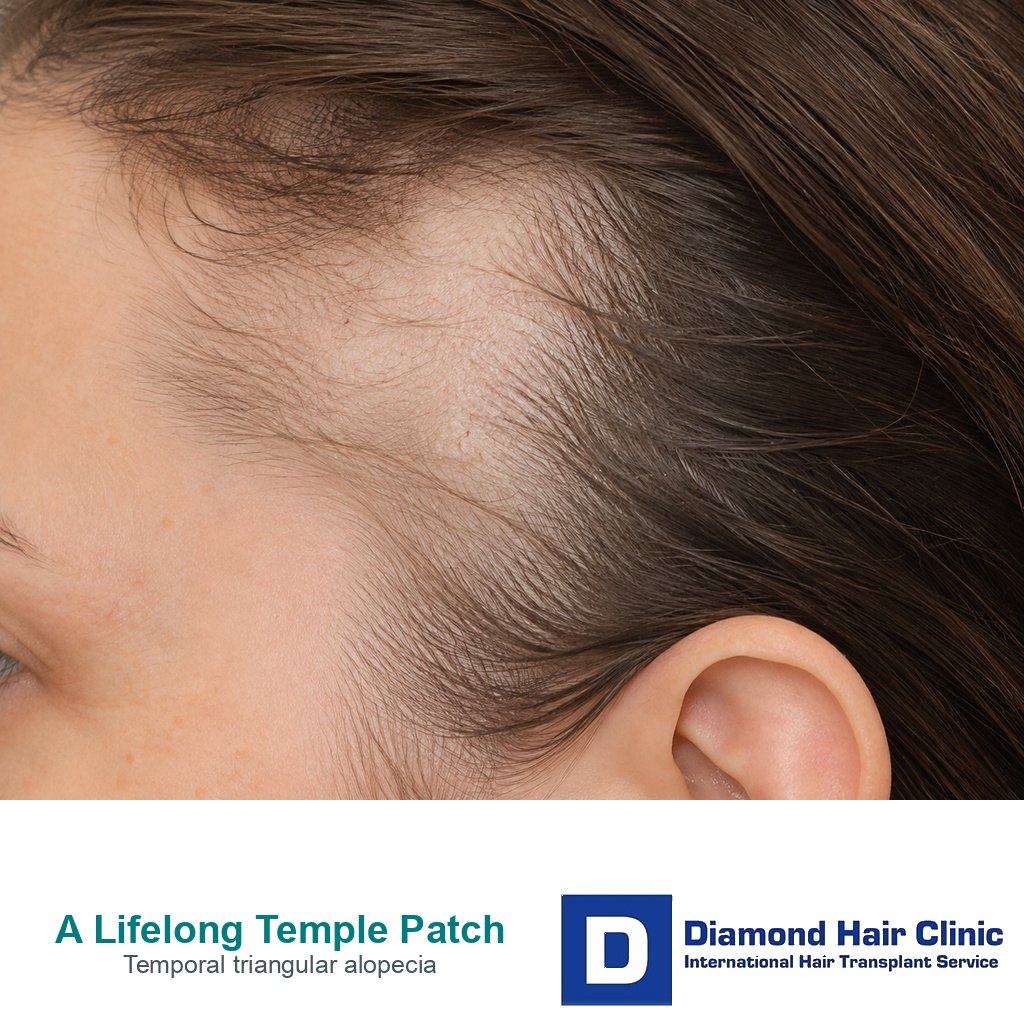
TTA describes a localized area where much of the hair remains very fine. It is a form of hair loss without scarring. The patch is usually near the temple and may be on one side or both. Despite the name, its outline can be oval or rounded rather than a neat triangle. Tiny hairs may remain within it, so it can look sparse rather than completely bare.
The alternative name, congenital triangular alopecia, can be confusing. Many people first notice the patch in childhood, and some have it from birth. Cases first appearing in adulthood are also described. You do not need to remember a bald patch in a newborn photograph for TTA to be considered. Equally, a new area of loss should not be called lifelong simply because its outline resembles a picture.
Confirming the diagnosis
A useful examination starts with when the patch appeared and whether its size, symptoms or surrounding hair have changed. Older photographs can help establish that history. Previous treatment and any pulling hairstyles, scalp injury or operation also matter. The cause of hair loss determines whether surgery belongs in the discussion at all.
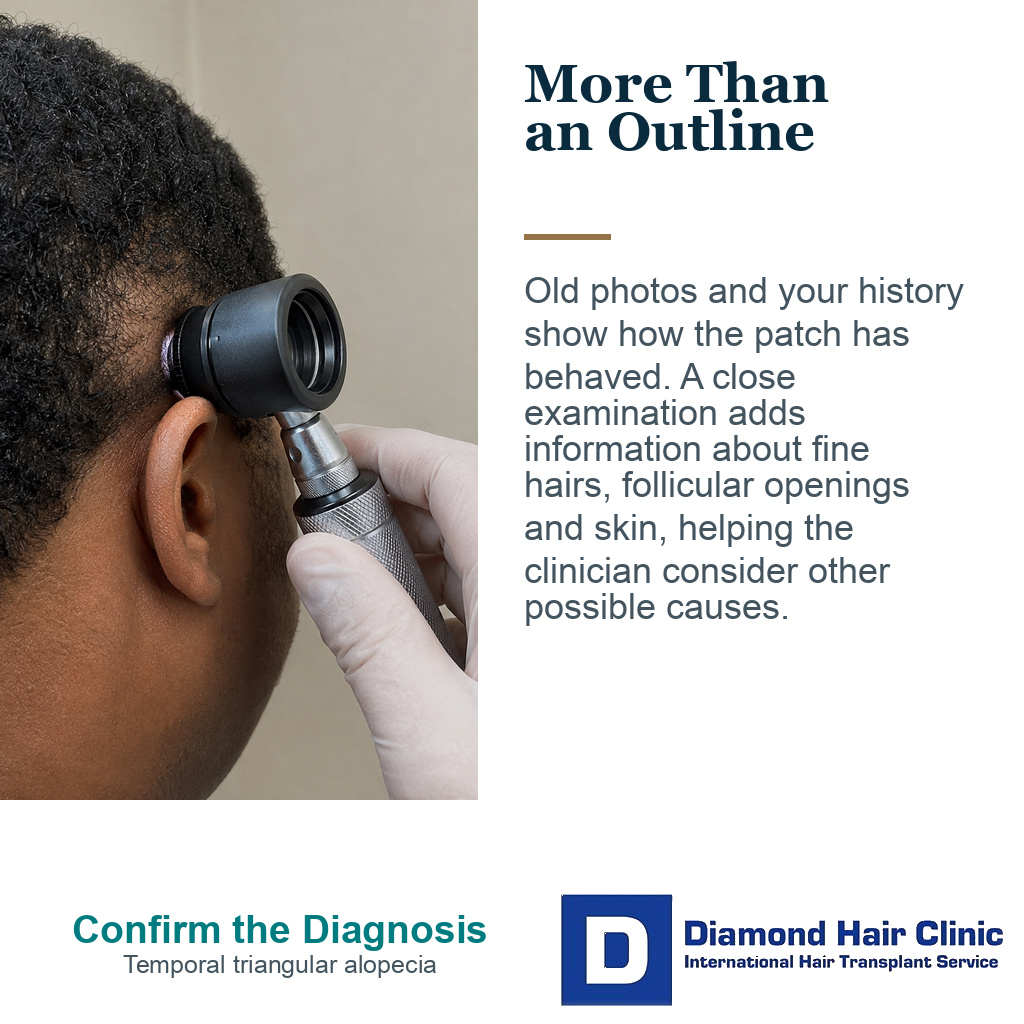
Dermoscopy, also called trichoscopy when examining hair, lets the dermatologist inspect details that ordinary photographs cannot show reliably. In a typical TTA patch, fine hairs and preserved follicular openings help support the diagnosis. The clinician also looks for features pointing elsewhere. Alopecia areata can cause localized patches too, but it has a different course and treatment approach.
Spreading hair loss, soreness, redness or scale need reassessment. Those changes should not be dismissed because the area was once called TTA. Poor response to a previous treatment is worth discussing, but it does not prove a different diagnosis or justify stopping prescribed treatment on your own.
A scalp biopsy is generally unnecessary when the history and examination are typical. It may become useful when the findings remain uncertain or another condition is suspected. I would settle that uncertainty before discussing a graft number. A photograph of an apparently small patch cannot show everything that matters for that decision.
Treatment is optional
Confirmed TTA usually remains stable, and treatment is not medically necessary simply because the patch is visible. Leaving it alone, changing a parting or keeping enough surrounding length for coverage may suit you. The cosmetic concern still deserves to be taken seriously if it affects the haircut you want. Choosing no procedure should be an informed preference, not a dismissal of that concern.
Topical minoxidil has produced improvement in a few published TTA cases, but the positive reports in a recent review involved children. They do not establish a dependable response in adults or show how well any improvement would last after stopping. It is something to discuss with a dermatologist, not a guaranteed alternative to surgery. Treatment for a separate pattern of thinning elsewhere should also be distinguished from treatment aimed at this particular patch.
Hair transplantation has been described with cosmetic improvement in small reports and a case series. These accounts support considering surgery for selected adults, but they do not establish a reliable success rate or prove one harvesting method is superior for TTA. Photographs of successful cases can help illustrate what was attempted. They cannot show how every person with this condition would do.
Removing a small patch surgically has also been used, but excision replaces the area with a scar and can affect nearby skin and hair. It is not a default shortcut. If the area has already been excised or injured, planning may involve transplanting into scar tissue rather than treating an untouched TTA patch.
Any transplant uses a limited supply of hair from the donor area. Poor growth, an unsatisfactory appearance, scarring and infection remain possible even when the area being treated is small. A proposed graft count should follow examination of the patch and donor hair. The name of the condition cannot supply that number.
Hair direction matters at the temple
At the temple, hair is exposed in profile and often lies close to the skin. A thick hair growing at an unsuitable angle can attract attention even if it covers a gap. My aim would be a gradual transition that fits the hair beside it. This makes hair thickness, direction and the outline of the correction as relevant as density.
Fine single hairs can help soften a visible edge. The surgeon needs to compare the available donor hair with the local temple hair and follow its direction as it changes across the area. Hair from elsewhere on the scalp cannot be assumed to behave exactly like the delicate hairs at the temple. A small patch can therefore require careful design rather than simply a small version of a frontal transplant.
Filling a localized patch and reshaping the temple points are different goals. You may be happy with your existing sideburn and temple outline. Making the sparse area less conspicuous does not require advancing the whole temple or lowering the front hairline. The proposed drawing should make the intended extent clear.
Perfect left and right symmetry is not a necessary target either. Natural temples can differ slightly in shape and direction. Extending the work onto a side that does not bother you adds donor use and surgical change. That needs its own reason rather than being included simply to make a drawing symmetrical.
The surrounding hair can still change
A stable TTA patch does not guarantee a stable hairline around it. An adult can have this localized condition and also develop an unrelated pattern of hair loss. That possibility does not mean everyone will recede, but it matters when deciding where transplanted hair should join the existing hair.
If the surrounding native hair becomes thinner, a dense or overextended correction can look more separate from it. The assessment should therefore include the rest of the scalp and donor area, not just the patch that brought you to the appointment. The possibility of further hair loss after a transplant affects the design even when the original patch has never enlarged.
Looking separately at the patch, its edge and the surrounding hair helps explain why a stable diagnosis can still lead to a modest surgical plan.
The haircut you actually want to wear
Your preferred haircut can change how you weigh surgery. If longer hair already covers the patch comfortably, a procedure may offer less benefit than a close photograph suggests. If you want to expose that side of your head, the direction and texture of the added hair become particularly noticeable. That everyday view belongs in the consultation.
Very short hair raises another issue at the back and sides. FUE removes individual follicular units through small skin openings, which heal with small scars. It avoids the single strip scar associated with FUT, but FUE is not scarless. A plan aimed at freeing you from concealing one patch should account for how you feel about possible donor marks.
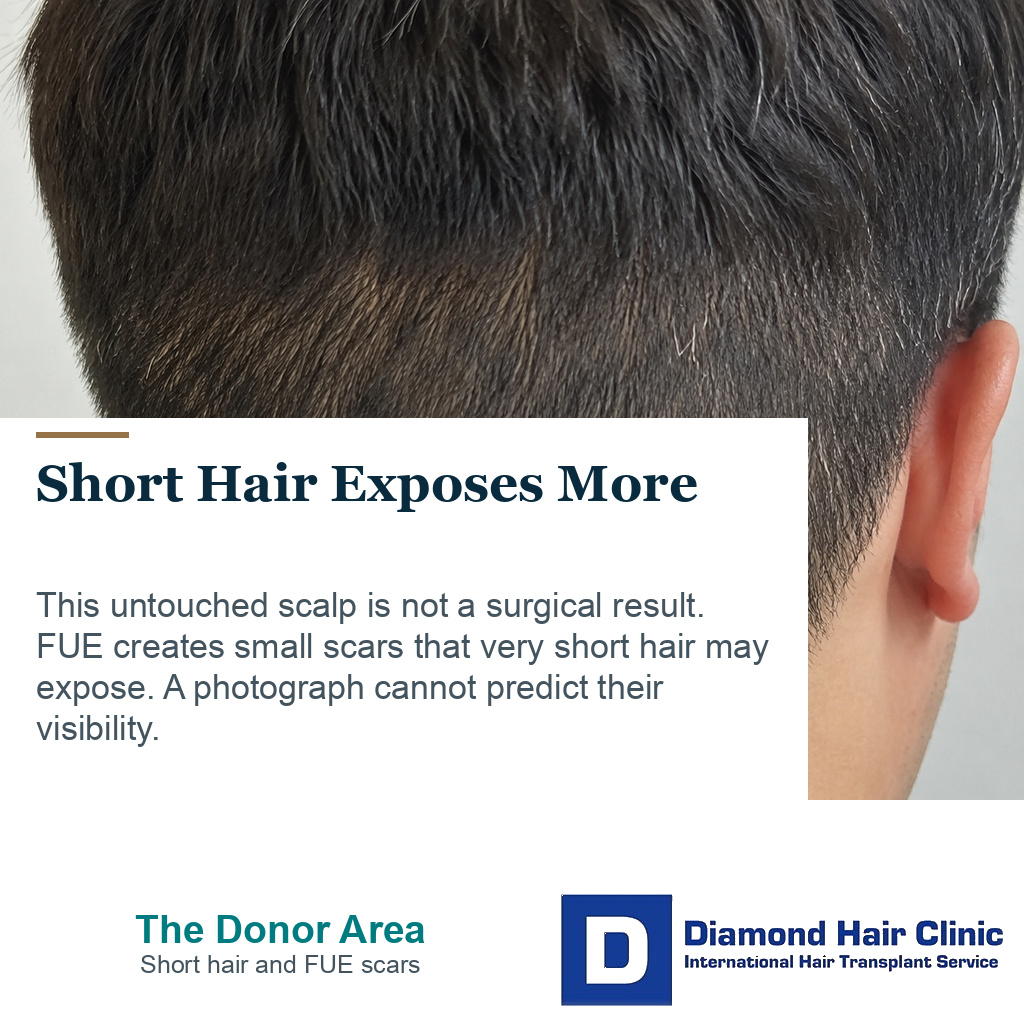
There is no single clipper setting that can promise invisible scars for everyone. Hair thickness, skin contrast, healing and the pattern of extraction influence donor appearance with a short haircut. Discuss the length you actually want to wear, including the option of close shaving, before deciding that FUE will solve the styling problem.
Use the arrows to view all 4 slides.