One Aftercare Plan Is Safer Than Mixed Hair Transplant Advice
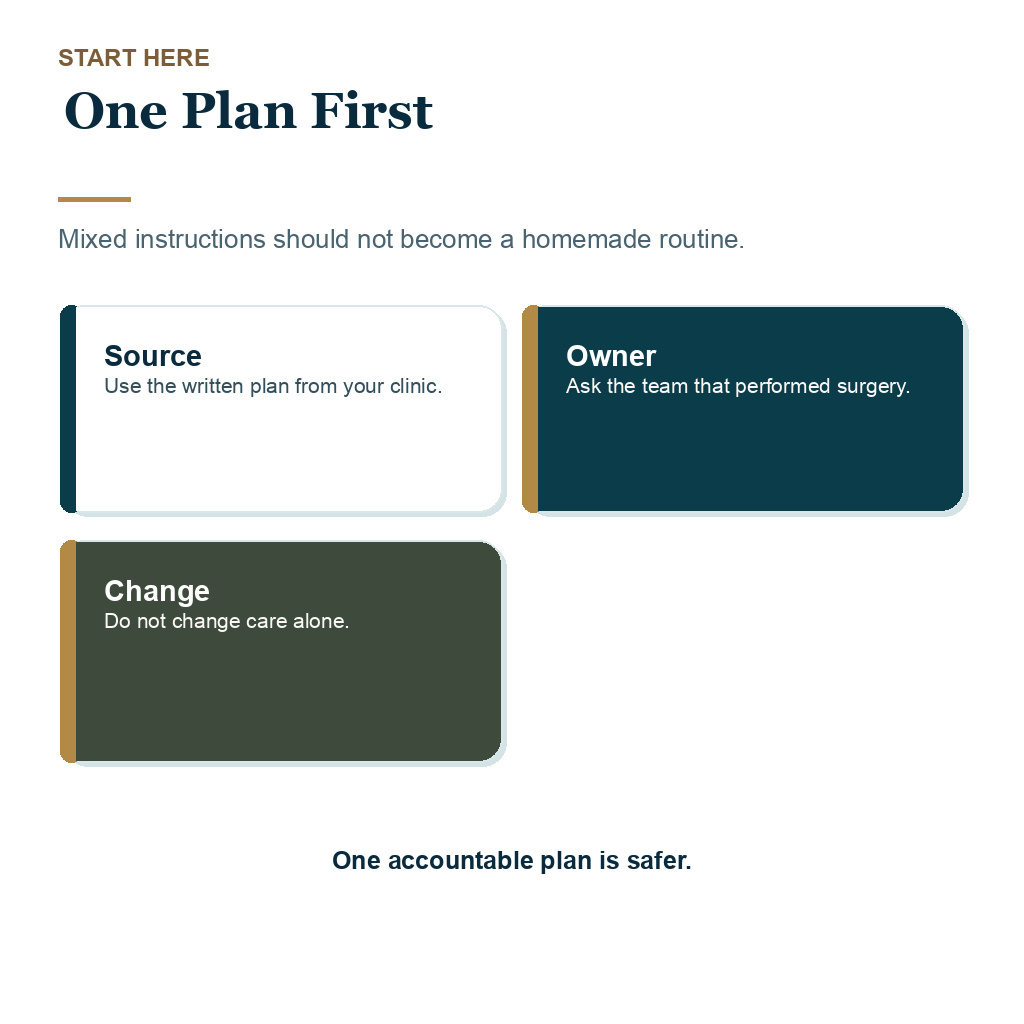
When two aftercare instructions conflict, pause before changing anything. Keep the written plan from the clinic that operated on you as the base, then clarify the exact step that is unclear, whether it is washing, saline spray, scab care, medicine, sleeping position, sweating, hats, or travel. If the conflict starts with AI or online advice about recovery photos, do not change the care step until the clinic has the timing and symptom context. Mixed advice can make a careful patient more anxious, but building your own hybrid routine creates the real risk.
Different clinics can give different instructions because the surgery, graft handling, skin condition, medicines, and review system are not always the same. The danger is not asking a question. The danger is copying one confident instruction from elsewhere into your case without knowing why it belongs there.
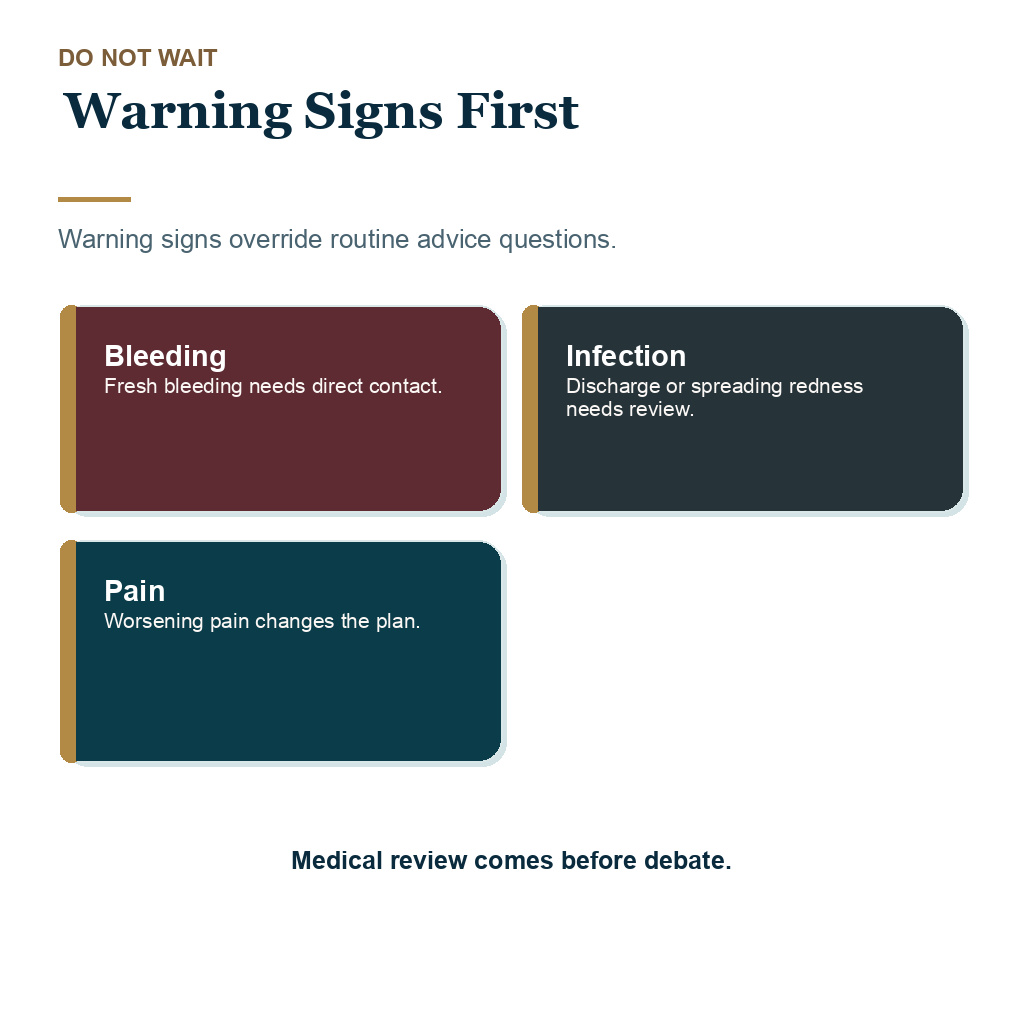
First separate routine aftercare confusion from warning signs. A question about spray frequency or washing pressure can usually be clarified with the clinic that operated on you. Fever, worsening pain, spreading hot redness, discharge, repeated vomiting, fainting, chest symptoms, breathing difficulty, allergy symptoms, or heavy bleeding should not wait while you compare protocols.
If the conflict involves medicine prescribed by another doctor, slow down even more. A heart tablet, blood thinner, diabetes medicine, antibiotic, or allergy treatment should not be stopped because a generic hair transplant routine says something different. Ask the hair transplant team and the prescribing doctor to reconcile the plan.
The operating surgeon aftercare plan should come first
The plan written for your operation comes first because it is tied to the extraction pattern, recipient area work, graft handling, medicines used, and how the clinic wants to review you during the first days.
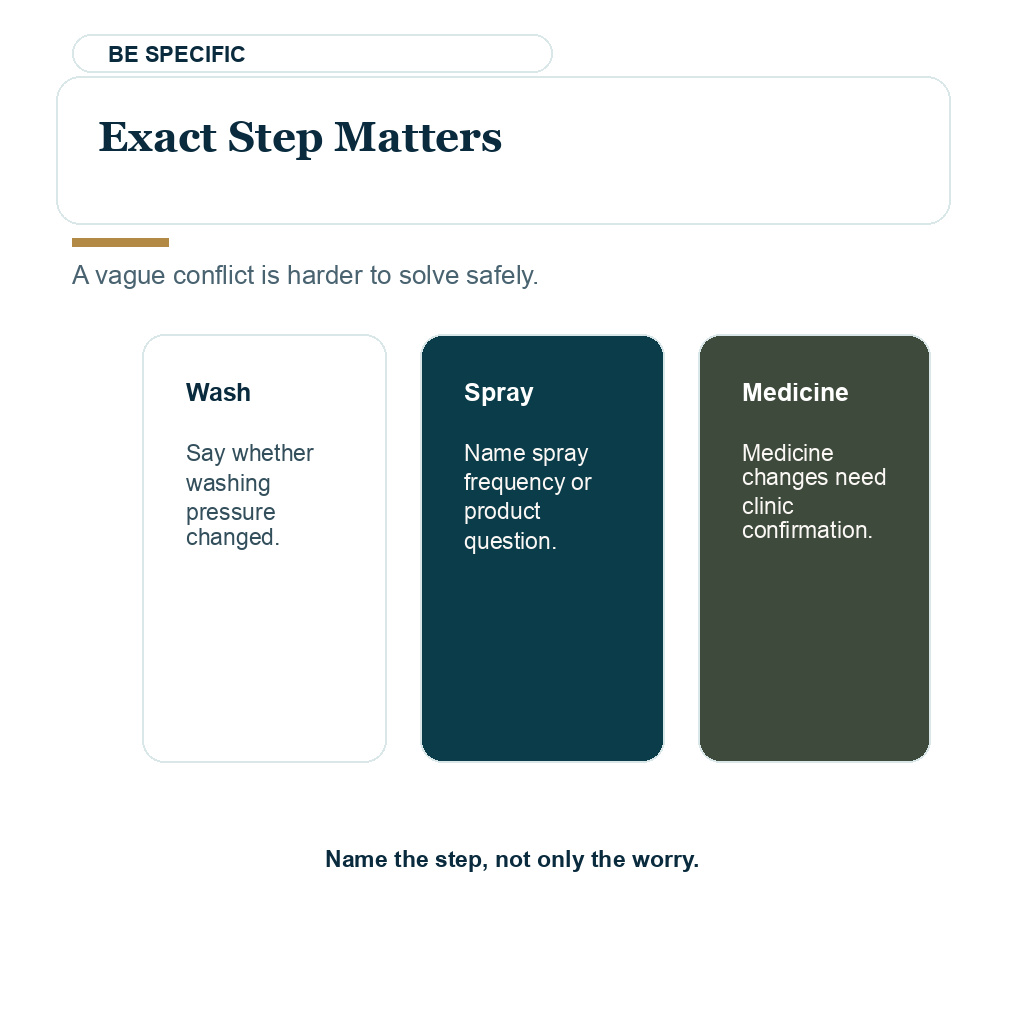
That does not make every written sheet perfect. A short line such as wash gently can still be unclear. Do not borrow another clinic’s routine at that moment. Ask the team that operated on you to explain the exact action, pressure, timing, or product.
If two people from the same clinic give different aftercare instructions, do not guess which person outranks the other or blend both versions. The team needs to reconcile the conflict in one written answer that names the exact action, the day after surgery, and whether it reflects the plan set by the operating surgeon. Keep the disputed change on hold while that answer is pending. Worsening symptoms need the clinic’s urgent contact route or local medical care.
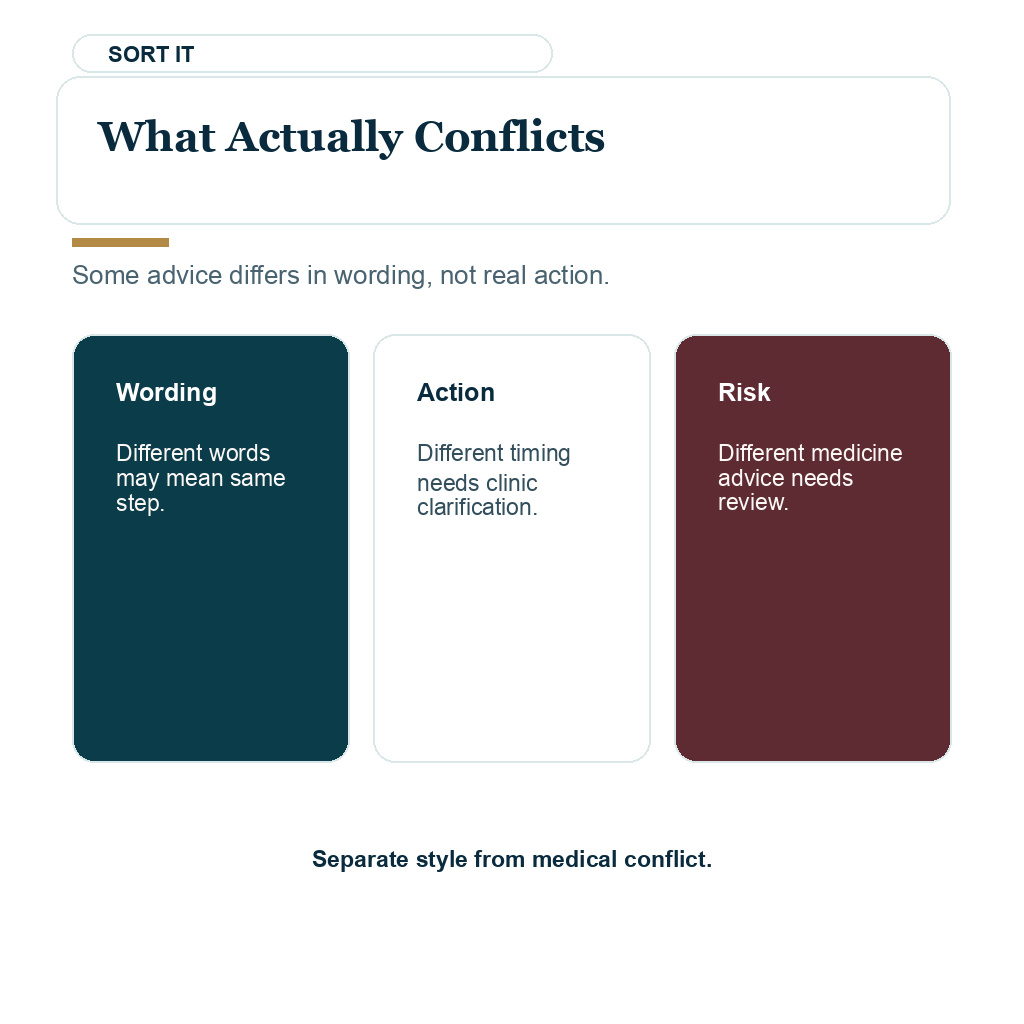
A translation conflict should be reduced to the exact action. Dab, rinse, massage, soak, and leave it alone are very different instructions on a healing scalp.
When the confusing word is pressure, translation alone is not enough. Spreading foam, touching scabs lightly, moving the scalp skin, and massage are different actions on a healing graft area.
My general hair transplant aftercare guide can help you understand the recovery priorities, but it should stay in the background. The plan for your own surgery comes first when a specific step is unclear.
Two clinics can give different aftercare instructions
Different washing instructions can make a patient worried when one clinic washes on one day, another waits longer, and a recovered patient describes a third routine. That difference can be real without making all plans interchangeable.
Technique, graft density, skin sensitivity, bleeding tendency, medicine history, travel timing, and the clinic’s review schedule can all change the instruction. A clinic that sees you the next day may guide the first wash differently from a clinic that reviews you remotely. Irritation, heavy crusting, or medicine side effects can also change the answer.
Saline is a good example. Some plans use frequent spray, some use it more selectively, and some do not rely on it in the same way. If spray frequency is the only confusing point, saline spray after hair transplant gives useful background, but your own protocol should still decide the timing.
The aftercare steps that cause the most confusion
The common conflicts are practical ones, especially washing pressure, saline spray, scab softening, pain medicine, antibiotics, sweating, sleeping, hats, and travel home. These details sound small until a patient has fresh grafts and two confident instructions in front of him.
The strictest instruction can still be wrong for the stage you are in. A firmer wash, extra product, or longer avoidance can each create a different problem. When the conflict is about washing pressure, timing, or touch, washing after hair transplant can help you ask a more precise question about water, fingertip pressure, and scab removal.
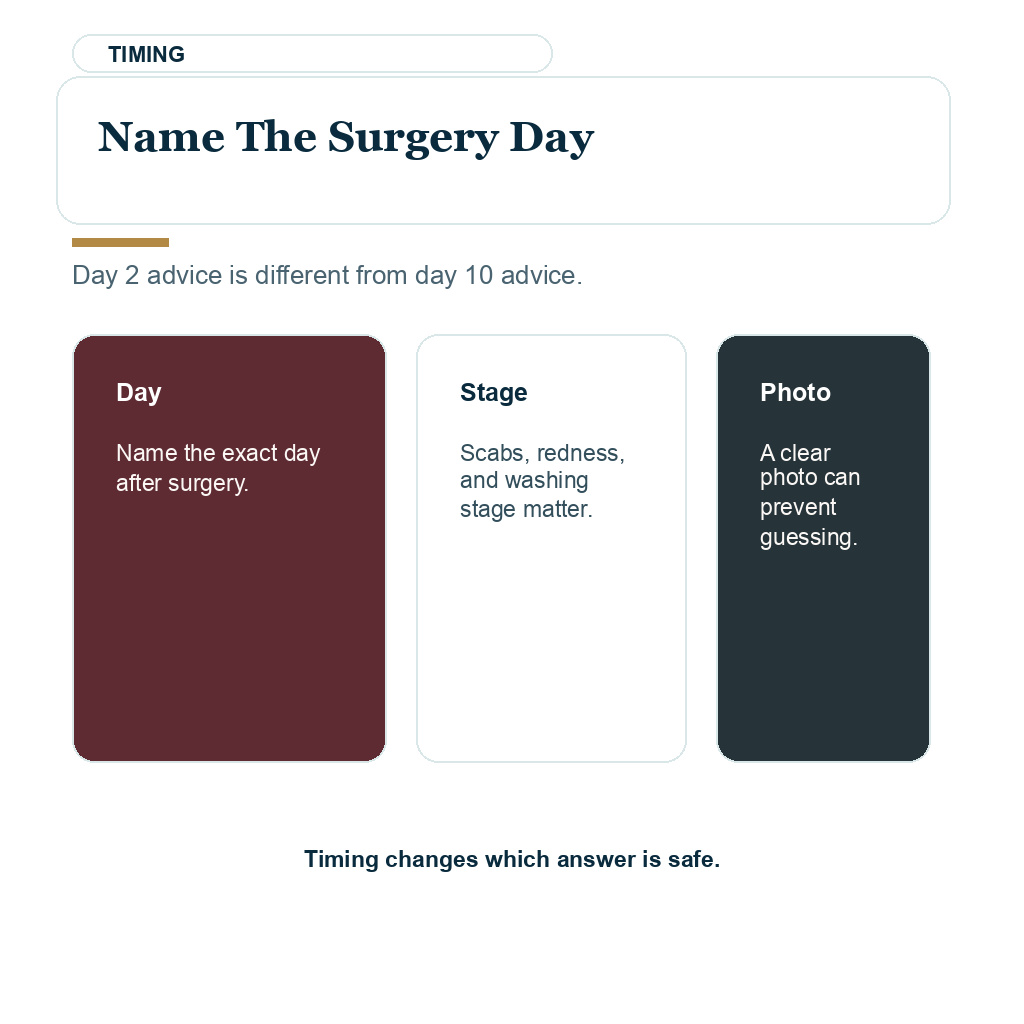
That matters with scabs because two instructions can pull in different directions. One says to leave a cracked crust alone, another sounds like cleaning harder will help it come off. Do not choose the stronger step by yourself. Send the timing, one wider photo, and the exact wash instruction, then wait for an answer for your case before changing pressure.
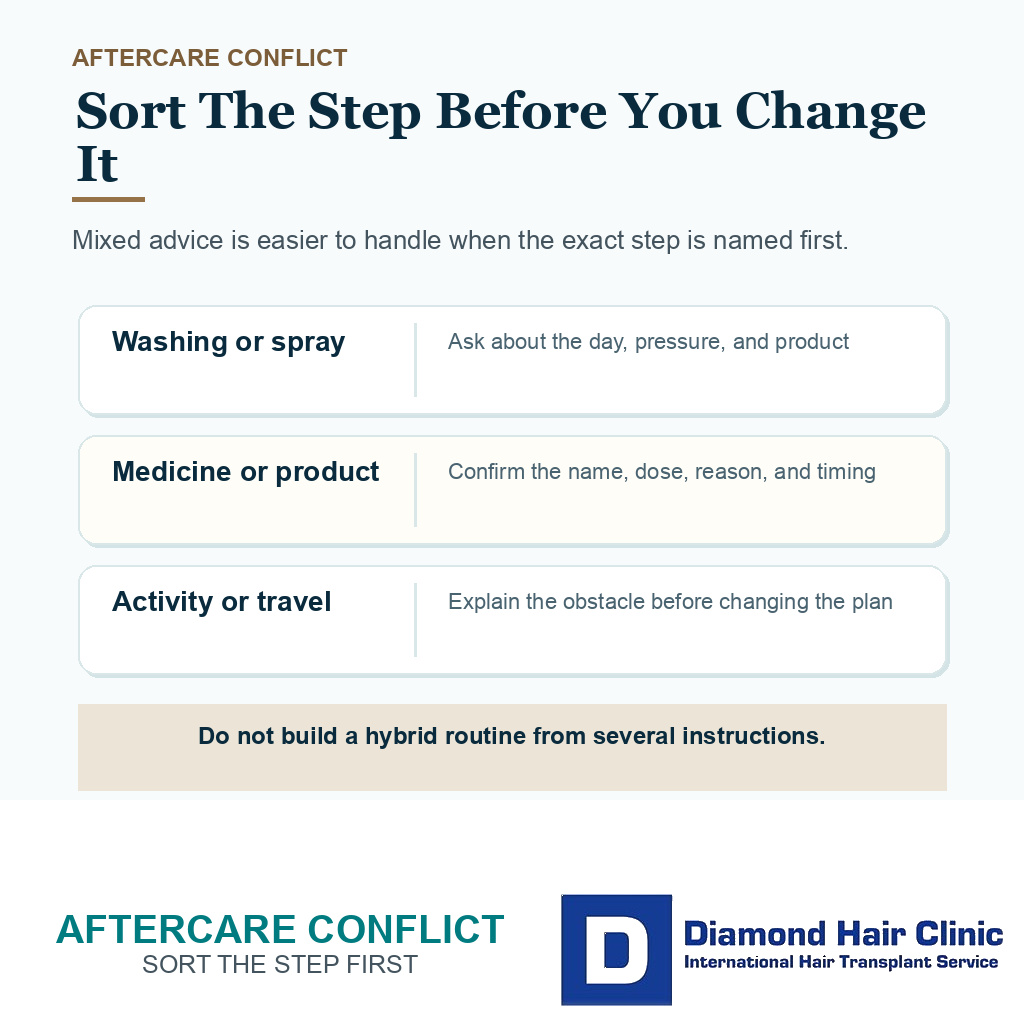
The common scab conflict sounds simple when one instruction says the crusts must be gone by a certain day and another says never touch them. When aftercare advice conflicts, sort the exact step first instead of mixing routines. How long to soften, how much fingertip contact is allowed, what product belongs on the scalp, and what signs would make the clinic review the photos before the next wash all matter more than winning an argument between protocols.
Medicine conflicts need a different level of caution. Do not stop, add, or replace tablets because another patient had a different list or because a translated sheet sounds incomplete. Pain relief should follow a medically reviewed plan, as I explain in painkillers after hair transplant. Antibiotics also need medical review, especially if side effects, allergy history, stomach symptoms, or other medicines are involved. If your conflict is about antibiotic timing or tolerance, read antibiotics after hair transplant and ask before changing the medicine plan.
Hybrid routines create new risks
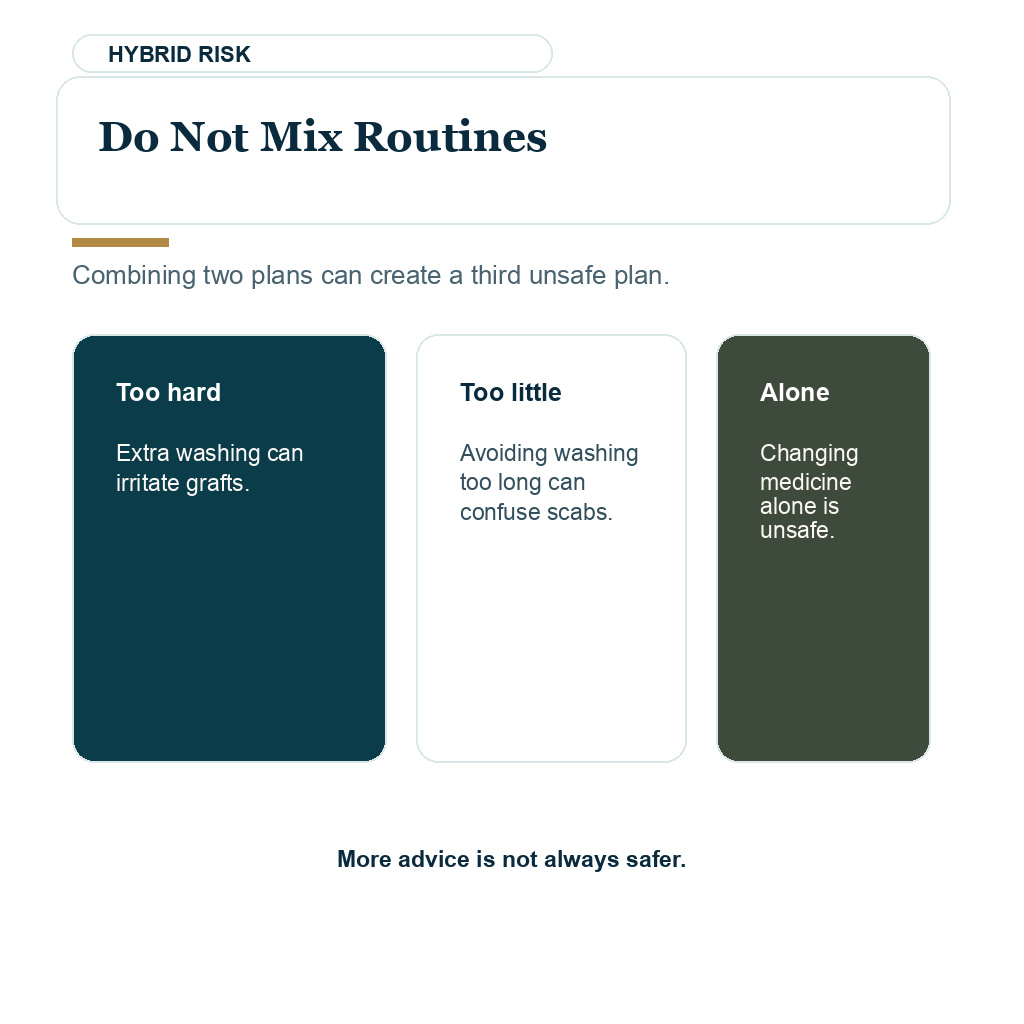
A hybrid routine can feel logical. You take the strict washing rule from one place, the product list from another, the medicine timing from a third, and the sleep advice from someone who recovered well. Those pieces were never designed to work together.
One coherent plan is safer than several confident fragments. A stronger wash can disturb scabs too early. A product can irritate skin that was not ready for it. A medicine change can affect bleeding, swelling, stomach tolerance, or allergy risk. Extra caution can also create problems if fear makes you avoid washing long after the clinic wanted steady cleaning.
Sweating and sleep show the same pattern. If you are comparing advice about heat, gym activity, or work, the specific guidance in sweating after hair transplant helps separate light sweating from heat, wiping, and gym training. If the conflict is about pillows, neck position, or turning in bed, use how to sleep after hair transplant to separate accidental movement from repeated pressure.
Sort two conflicting instructions before changing routine
When a patient sends me two or three conflicting routines, I do not start by choosing the one that sounds strictest. I first ask where each instruction came from and whether it was written for this surgery. The answer changes when the conflict is a vague clinic line, a medicine question, outside advice, or a travel workaround.
Instruction conflict priority board
Use this board when two instructions disagree. Do not mix routines. First identify where the instruction came from and what action would actually change.
It reflects the technique, graft handling, medicine instructions, and review system used on you.
A stronger wash, extra product, or different medicine may be wrong even if it helped someone else.
If one sentence feels vague, ask about that exact step before changing the routine.
Conflicting advice can become a clinic warning sign
Some differences are normal. A short written plan can still be enough when the patient has direct review access and the steps are clear. But some conflicts tell me the clinic’s communication may not be safe enough.
I become more concerned when there is no written plan, no clear review route, no explanation for medicines, poor translation of essential steps, instructions that change without a reason, or advice that ignores a known medical condition. You should not be left guessing about tablets, washing pressure, infection signs, or what to do if something changes after flying home.
Vague instructions become more serious when symptoms change. Fever, increasing pain, spreading redness, discharge, fresh bleeding, open wounds, repeated vomiting, fainting, chest symptoms, breathing difficulty, allergy symptoms, or heavy bleeding should not be handled by comparing routines online. Those situations need the clinic or local medical care, depending on severity and access.
Clarify an unclear step before you act
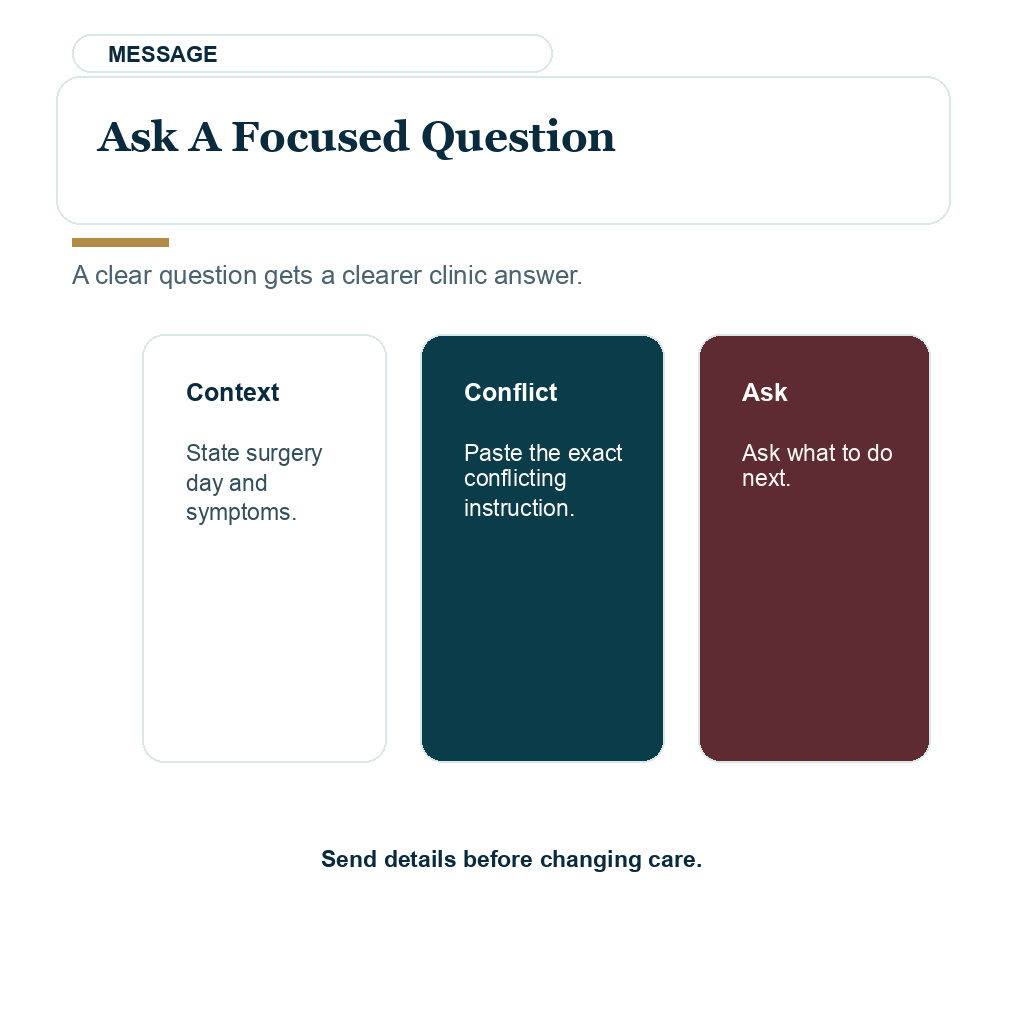
A useful message is short and specific. Do not send a long collection of screenshots and ask which routine is best. Send the exact step that worries you, the day after surgery, what was done, the medicine or product name if relevant, and the symptom or obstacle that changes the answer. If you are travelling, changing hotels, or flying soon, say that too.
A useful message has a simple shape. Say the day after surgery, the exact instruction that confused you, the outside advice that conflicts with it, the product or medicine name if relevant, and the decision you need before you act. For example, day three, first wash, my sheet says wash gently, another routine says massage scabs, should I pour water only or use fingertip pressure today? That gives the clinic a real decision to answer.
If the clinic is slow to respond and the issue is not urgent, keep the plan you already received as the base. Do not add products, increase pressure, change tablets, or start a new routine while you wait. If warning signs are present, do not wait for a routine message reply.
If the question is part of a broader recovery concern, hair transplant follow-up after surgery can help you choose the details that matter for remote review. You are not trying to prove that another routine is wrong. You are trying to make your own plan clear enough to follow.
These 8 aftercare conflict slides separate the written plan, surgery day timing, the exact unclear step, what actually conflicts, warning signs, hybrid routine risk, the focused message to send, and the final one plan rule. Swipe sideways, use the arrows one slide at a time, or choose a dot below the image.