- Written by Dr.Mehmet Demircioglu
- Estimated Reading Time 11 Minutes
FUE vs. DHI Hair Transplant
FUE (Follicular Unit Extraction) and DHI (Direct Hair Implantation) are advanced hair transplantation techniques widely used in modern hair restoration practices. Both methods involve extracting hair follicles from a donor area and implanting them into thinning or balding areas. However, they differ in their approaches and specifics, impacting their suitability for different cases.
Key Takeaways
- Both FUE and DHI do not require general anesthesia, and both are performed under local anesthesia.
- Multiple factors determine the appropriate hair transplant technique between DHI and FUE, and the results achieved depend on their careful consideration.
- The major determining factors are the patient’s hair loss classification according to the Hamilton-Norwood Scale, the size of a balding area, and available donor capacity, and and quantity of the donor hair.
- Hair transplantation is an intensely personal journey that requires careful consideration to ensure the best outcomes. Focusing on what methods will uniquely meet your specific requirements, rather than placing all of your trust in flashy ads and marketing tricks, is critical.
- No FUE or DHI guarantees superior results compared to the others. Look into your options closely and ensure you select the right one.
FUE vs. DHI: What’s The Comparison Of Hair Transplant Stages?
1- Extraction Stage
The extraction of hair grafts from the patient donor area is the same method in both FUE and DHI: Micro-Motor Extraction or Manual Punch Extraction. So, the extraction way is not a characteristic point.
In both FUE (Follicular Unit Extraction) and DHI (Direct Hair Implantation) hair transplantation techniques, the initial step of extracting hair grafts from the donor area is the same, primarily employing either Micro-Motor Extraction or Manual Punch Extraction.
Micro-Motor Extraction: This method uses a specialized device with a rotating circular blade. The blade size can be adjusted to match the size of the follicular units, typically ranging from 0.6mm to 1.0mm. This precision minimizes trauma to the scalp and ensures the integrity of the extracted grafts. The micro-motor’s speed and efficiency are beneficial in harvesting a large number of grafts in a shorter period, which is particularly advantageous in extensive hair transplantation sessions.
Manual Punch Extraction: Contrasting the micro-motor, manual punch extraction relies on the surgeon’s skill and tactile feedback. It involves using a handheld tool with a circular blade to isolate individual follicular units. This method offers high precision and is often preferred for its ability to provide a more controlled extraction process, reducing the risk of transection (cutting through) of the hair follicles.
2- Incision Stage
FUE requires surgical incisions to prepare the recipient area for extracted hair graft implantation (placement). This step is not necessary with DHI.
Follicular Unit Extraction (FUE) Incision Stage
Preparation of the Recipient Site: In FUE, the incision stage is a critical step where small, circular incisions are made in the recipient area. This is done using specialized instruments to create sites for the placement of hair grafts.
Technique Specifics: The size and depth of each incision are meticulously calculated to match the size of the extracted follicular units, ensuring a natural-looking density and hair growth pattern.
Skill and Precision Required: The surgeon’s expertise is paramount in avoiding damage to existing hair follicles and ensuring optimal angles and direction of hair growth.
Post-Operative Healing: These incisions typically heal over a few days, forming tiny scabs that fall off, leaving minimal scarring.
Direct Hair Implantation (DHI) Incision Stage
No Separate Incision Stage: DHI, unlike FUE, integrates the extraction and implantation processes. It doesn’t require a separate incision stage to prepare the recipient area.
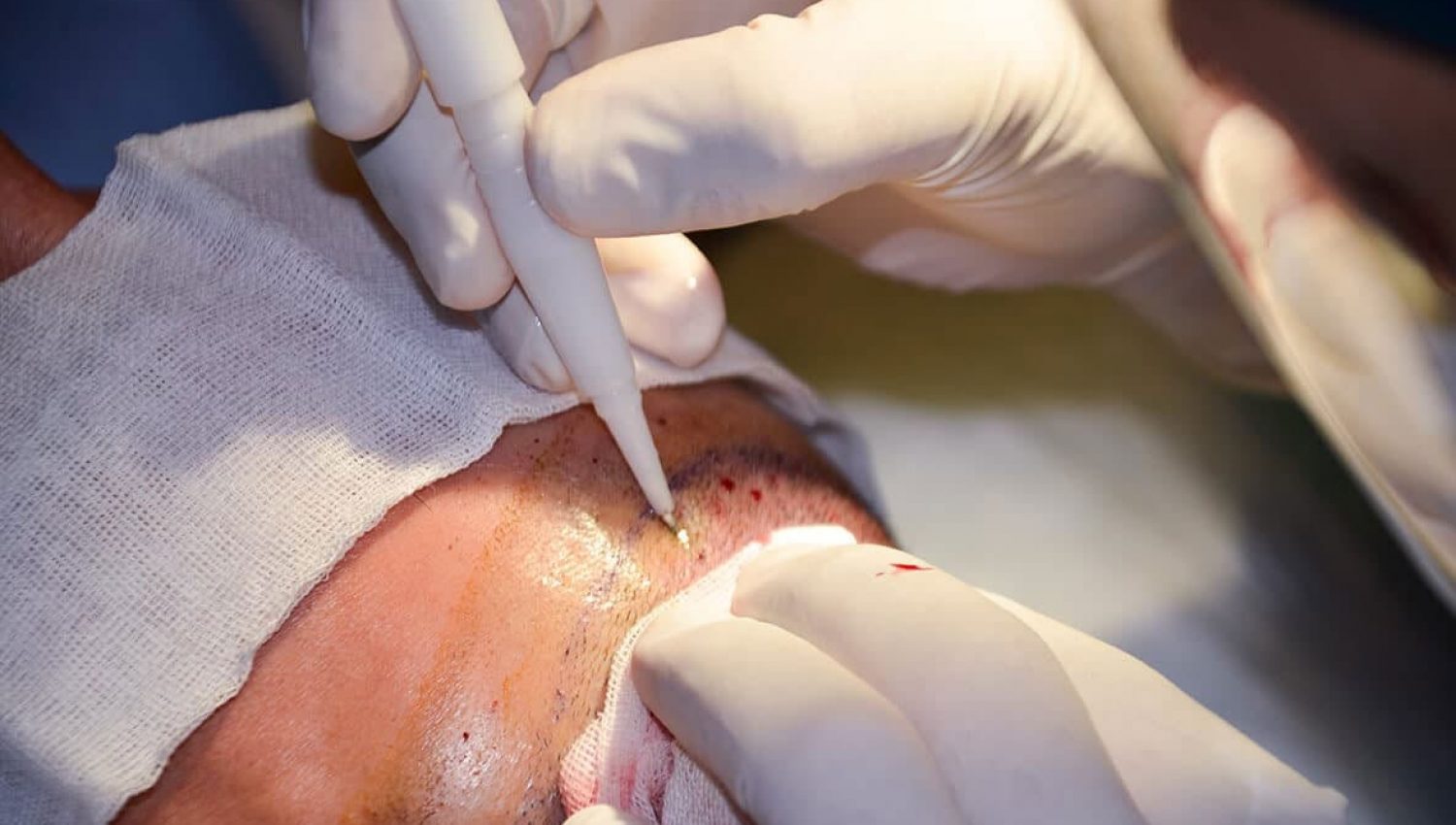
The Use of a Choi Pen: A specialized instrument called the Choi Pen is used in DHI. This pen-like tool allows for the simultaneous creation of a recipient site and the placement of the hair graft in a single step.
3- Implantation Stage
In the implantation stage of hair transplantation, the Follicular Unit Extraction (FUE) and Direct Hair Implantation (DHI) methods exhibit distinct techniques and tools, impacting the procedure’s efficiency, outcome, and patient experience. In FUE, surgeons manually implant the extracted grafts using medical tweezers. This approach demands high precision and skill, allowing the surgeon to control each graft’s placement and angle meticulously. This manual process can influence the surgery’s duration and the overall density and natural appearance of the hairline.
Conversely, DHI utilizes a specialized instrument known as the Choi Pen. This pen-like device enables simultaneous extraction and implantation of hair follicles. The Choi-Pen offers a more streamlined procedure, potentially reducing surgery time and trauma to the scalp.
DHI vs. FUE: What Are The Pros and Cons?
- FUE (Follicular Unit Extraction) technique is more effective for covering larger areas of the scalp in hair transplantation surgery. In contrast, DHI (Direct Hair Implantation) tends to provide higher hair density in cases of mild baldness, particularly in Norwood stages 1-2.
- FUE is generally the preferred method for individuals with more advanced hair loss (Norwood stages 3-6). This is because DHI often requires multiple sessions to adequately cover bald areas, making FUE more efficient in these cases.
- In cases of severe balding, FUE stands out as it allows for the extraction of a larger number of hair grafts in a single session. This capability of FUE results in enhanced coverage, both in terms of density and area, and often yields more natural-looking outcomes.
- The introduction of the Sapphire blade has further advanced FUE (Sapphire FUE). This technology enables more precise incisions, enhancing the natural appearance of the hair restoration.
- DHI is notable for using the Choi pen, a specialized tool that implants grafts directly into the scalp without pre-made incisions. This contrasts with FUE, where incisions are required at the recipient site. The Choi pen’s less invasive nature has made DHI hair transplant appealing for those seeking a minimally invasive hair restoration procedure.
- For FUE, complete head shaving is necessary, which may be inconvenient for some patients, particularly women. In DHI, only the donor area requires shaving, offering a more discreet solution for women addressing hair loss without significantly altering their hairstyle.
- FUE is a complex hair transplant technique that demands high surgical skill and precision, particularly in making intricate incisions in the recipient’s scalp. The technique’s success hinges on the surgeon’s ability to perform precise, minimally invasive incisions for follicle placement, which affects both the health of the transplanted hair and the cosmetic result. Surgeons and their teams undergo extensive training to master FUE, involving a deep understanding of scalp anatomy, proficiency in specialized tools, and developing an aesthetic sense for hairline design. This training often includes attending workshops and learning from experienced practitioners in various countries. Additionally, keeping up-to-date with the latest technologies and advancements, such as Sapphire FUE, is essential for ensuring high-quality care in hair restoration.
- Compared to DHI, the technique used in FUE affords the surgeon enhanced control over the depth, angulation, and direction of the implanted hair grafts, which is crucial for achieving superior aesthetic outcomes. This precise control in FUE is particularly important in designing natural-looking hairlines and in areas requiring meticulous detail, such as the temples and crown. Conversely, this level of control is notably absent in the DHI method, where a specialized implanter pen is used. Many experienced surgeons today view this as a significant limitation of DHI, especially in cases requiring high-density transplantation and complex hair growth patterns. This distinction in control between the two methods is a critical consideration for surgeons when determining the most suitable technique for each patient’s unique hair restoration needs.
- DHI method typically offers a slightly faster recovery process than the traditional FUE technique. This is mainly due to the minimally invasive nature of DHI, which results in less bleeding during the procedure. However, advancements in FUE hair transplantation technology have led to the development of the Sapphire FUE method, a refined and updated version of the traditional FUE. Sapphire FUE incorporates specialized instruments with sapphire blades, allowing for more precise incisions and reduced trauma to the scalp. This innovation minimizes bleeding and accelerates the healing process, effectively bridging the gap in recovery time between DHI and FUE. Consequently, the faster recovery advantage once held by DHI is now competently matched by the Sapphire FUE method.
DHI vs. FUE: Which Is Better For Designing a Natural Hairline?
- FUE is significantly better than DHI in designing the hairline more naturally. The Choi pen used in DHI limits the designer’s ability to customize the hairline. Hair transplant surgeons use an artistic approach that adds zigzags and micro-macro irregularities to make a hairline look as natural as possible. FUE tends to allow a doctor to be more artistic and precise when designing the hairline, thus creating a more natural look than with DHI using the Choi pen.
- In DHI, the Choi-Pen is thicker, and implant grafts are straighter, which reduces the effectiveness of zigzag patterns used for added naturalism. However, FUE allows the surgeon to make incisions at the desired angle and insert the grafts accordingly for increased control over the hairline’s shape. This enhanced control is crucial as it lets the surgeon mimic the natural growth patterns of hair, respecting the unique characteristics of each patient’s scalp and hair type. Furthermore, FUE’s flexibility in graft placement ensures a more refined and subtle hairline, avoiding the ‘pluggy’ or artificial look often associated with less advanced techniques.
DHI vs. FUE: How Many Grafts Can Be Transplanted?
In a standard DHI session, a dedicated surgical team led by a trained surgeon typically transplants about 2,500 to 3,000 hair grafts. DHI is characterized by the use of the Choi Pen, which extends the duration of the procedure per graft. FUE method is recognized for its capacity to handle a higher volume of grafts, approximately 4,500 to 5,000 grafts, within a single session, making it a viable option for patients seeking more extensive hair restoration.
DHI vs. FUE: Which Is Better For Hair Graft Survival?
- The FUE hair transplant technique offers a higher hair graft survival rate than DHI, thanks to the lack of trauma inflicted on extracted grafts during implantation. With FUE, hair grafts are carefully placed into the scalp without going through an additional Choi Pen step in between, which is mandated by the DHI process.
- Furthermore, if an inexperienced technician carries out the DHI procedure, the risk of further graft damage increases drastically due to its complexity. FUE would be the obvious choice for anyone wishing to minimize trauma and maximize success rates for their hair transplant procedure.
Is There a Risk of Scarring with DHI or FUE?
- Both options are relatively low risk for scarring. In DHI, the patient’s donor area is shaved, eliminating any visible linear scars from the extraction procedure. With FUE, follicular units are gently extracted from the donor site with a small-sized punch tool (0.6-1.0 mm diameter), resulting in tiny circular scabs that heal quickly with no lasting scars.
- With proper care following both procedures, minimal or no noticeable scarring should be left after healing.
- That being said, it’s essential to work with an experienced doctor so they can advise you on how best to care for your scalp and the following treatment to minimize the risks of scarring.
Are There Any Side Effects Associated With DHI or FUE?
- Generally, both methods are safe, and people experience no major issues beyond mild discomfort. Allergic reactions to the anesthesia used during surgery are also possible, though infrequent.
- The unique risk of DHI is called follicular transection, which occurs when clumps of follicles are damaged due to improper handling during implantation. There can be a noticeable difference in results if too many follicles suffer damage.
- With both procedures, some minor swelling and sensitivity may remain but should generally fade within a few weeks.
DHI vs. FUE: What Is The Difference In Price?
When comparing DHI and FUE hair transplantation costs, that can vary greatly depending on many factors. It is difficult to pinpoint which method may be more expensive overall due to the individualized nature of each procedure. Patients will have different needs regarding required hair grafts, surgeon experience, clinic fees, etc.
Contact Diamond Hair Clinic!
- Diamond Hair Clinic is a modern clinic that only offers hair transplant surgery in Turkey. It is located in Istanbul and was founded by Dr. Mehmet Demircioglu.
- The clinic uses the latest technology, which is the Sapphire FUE method. It allows for a quicker recovery time. Diamond Hair Clinic is one of the leading clinics in Istanbul and provides excellent results.
- Contact us now to book a free consultation!
I went to turkey last year and got a DHI procedure. The DHI cost more yet I still came out with a failed transplant. This is because they use their less experienced staff to do the DHI's because it's an easier method to perform than an FUE. So this guy didn't even account for the direction of my hair. When he started I even questioned it because the dude was positioned behind me and it felt like he was implanting my top hairs at an upright angle when I know the top of my head grows forward. He told me he's going with the direction of my hair and i just figured he's the surgeon, he knows what he's talking about. Boy am I pissed. I'm a year in and all of my implanted hair is shooting straight up with no angle. Don't go to XXX clinic in Turkey for a DHI. It is a scam.
A Review From a Patient Who Underwent DHI Method Hair Transplant in Turkey