


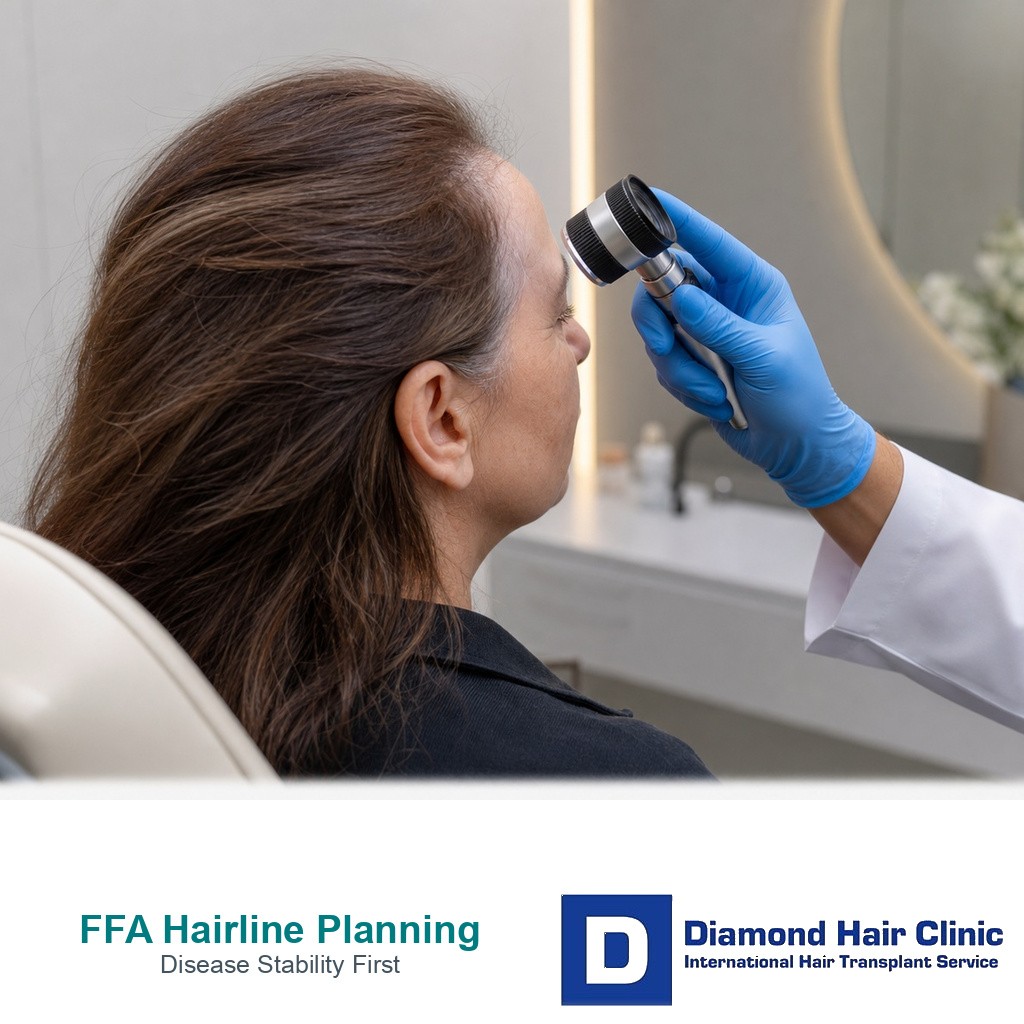
Frontal Fibrosing Alopecia Changes Hairline Transplant Planning
If frontal fibrosing alopecia is suspected, I do not start with graft numbers. I first need to know whether the diagnosis is clear and whether inflammation is quiet enough to support transplanted grafts. Active FFA usually means the transplant should wait. This is not only a question of where hair can be placed. The skin and the disease behavior can decide whether grafts are likely to survive.
FFA can look like ordinary recession, but it behaves differently because it is a scarring alopecia that can move across the frontal hairline, temples, sideburns, and eyebrows. For that reason, I do not treat every high forehead or temple change as a standard hairline design problem. A low, dense, youthful line can be the wrong answer when the skin itself is still active. The first job is not to fill the line. The first job is to understand whether the disease is controlled enough to plan safely.
That does not mean every patient with FFA is permanently excluded from surgery. It means the order is different. If the diagnosis is uncertain, the disease is active, the donor is weak, or the requested design is too aggressive, delaying or saying no is the more protective answer.
FFA is different from ordinary recession
Ordinary androgenetic hair loss usually follows a more predictable pattern. It may thin through the temples, crown, or middle scalp, and the planning discussion often turns to density, age, future loss, and donor reserve. Frontal fibrosing alopecia is different. It is a scarring process, so recipient skin and future disease activity matter as much as the number of grafts.
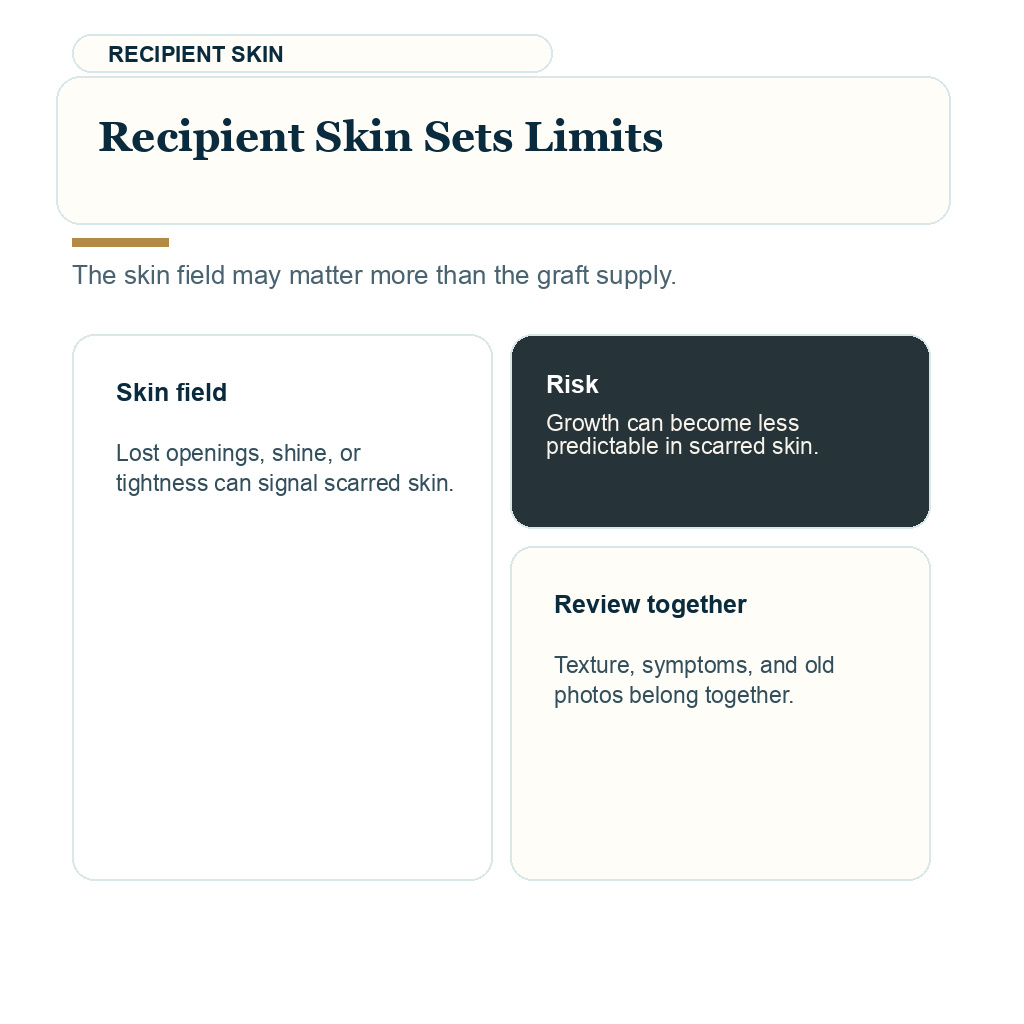
A patient may see a higher hairline and assume the answer is the same as a standard receding hairline. Sometimes that is true. Sometimes a smooth shiny band, loss of follicular openings, redness, scale, itching, burning, isolated hairs at the old edge, eyebrow loss, or sideburn thinning points in a different direction. In darker skin, redness can be less obvious in photos, so symptoms, texture, and old pictures matter even more. Those details must be checked before a transplant plan is offered.
Broader signs than FFA alone need the wider scarring alopecia and lichen planopilaris before hair transplant review. On this page, I am looking at the frontotemporal pattern of FFA and the way it changes hairline, temple, sideburn, and eyebrow transplant judgment.
Consultation clues that should slow the plan
The clues are not always dramatic. The pattern may show a banded movement of the hairline, loss of small fine hairs at the edge, smooth or pale skin where follicles used to be, loss of visible follicular openings, redness or scale around remaining hairs, itching, burning, eyebrow thinning, and sideburn loss. A patient may also describe months of slow movement rather than a single sudden shed.
Keep a short timeline of symptoms and treatment response with the photos. A picture can show the hairline edge, but it cannot show when itching, burning, redness, or eyebrow thinning flared or settled.
Eyebrow and sideburn changes should be named even if the main worry is the hairline. In FFA, those smaller changes can keep the plan from becoming a standard low hairline design.
These clues do not diagnose FFA by themselves. They tell me the case should slow down. If the patient has been told it is simple female pattern loss, menopause related thinning, traction, or mature hairline change, I still check whether the story fits. The distinction matters because planning a female hairline hair transplant into active scarring alopecia can waste donor grafts and create disappointment.
There are other lookalikes too. Traction can affect the front and temples, and traction alopecia transplant planning has its own rules. Alopecia areata can also confuse the picture, and alopecia areata and hair transplant should stay in the differential when patchy or unpredictable loss is part of the history.
Diagnosis and disease activity come before design
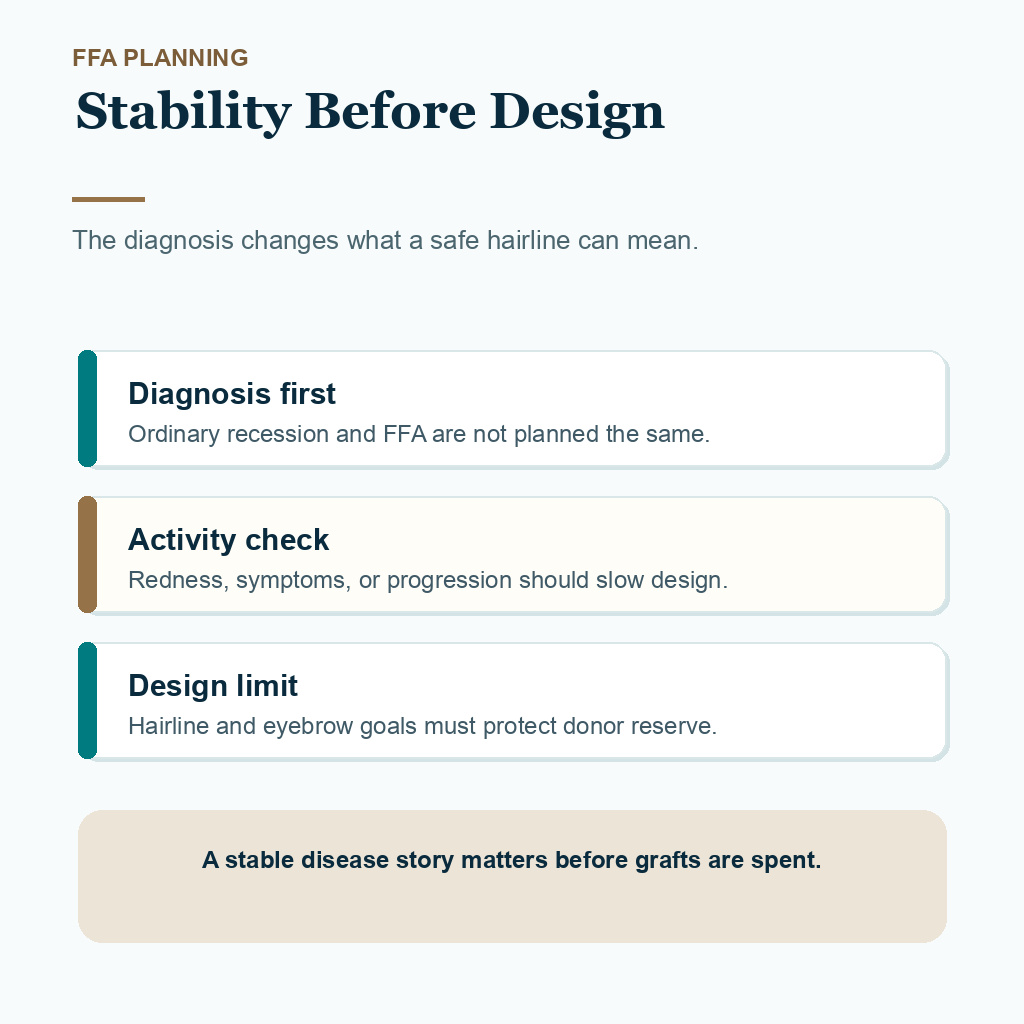
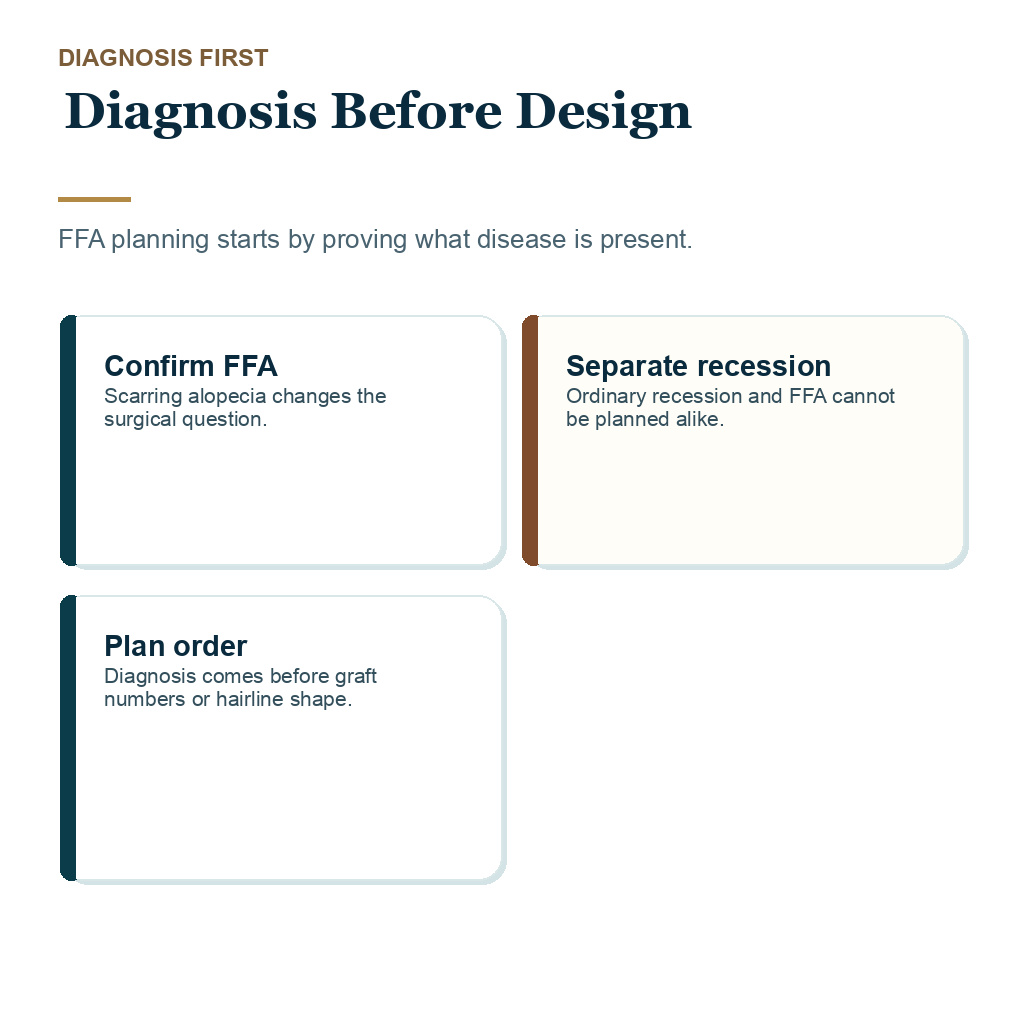
Before I discuss lowering the hairline, the diagnosis and activity pattern have to be clear. A dermatologist may use clinical examination, dermoscopy or trichoscopy, scalp biopsy before hair transplant when the diagnosis is uncertain, photographs over time, and response to treatment. A transplant surgeon should not replace that disease control step with a confident hairline drawing.
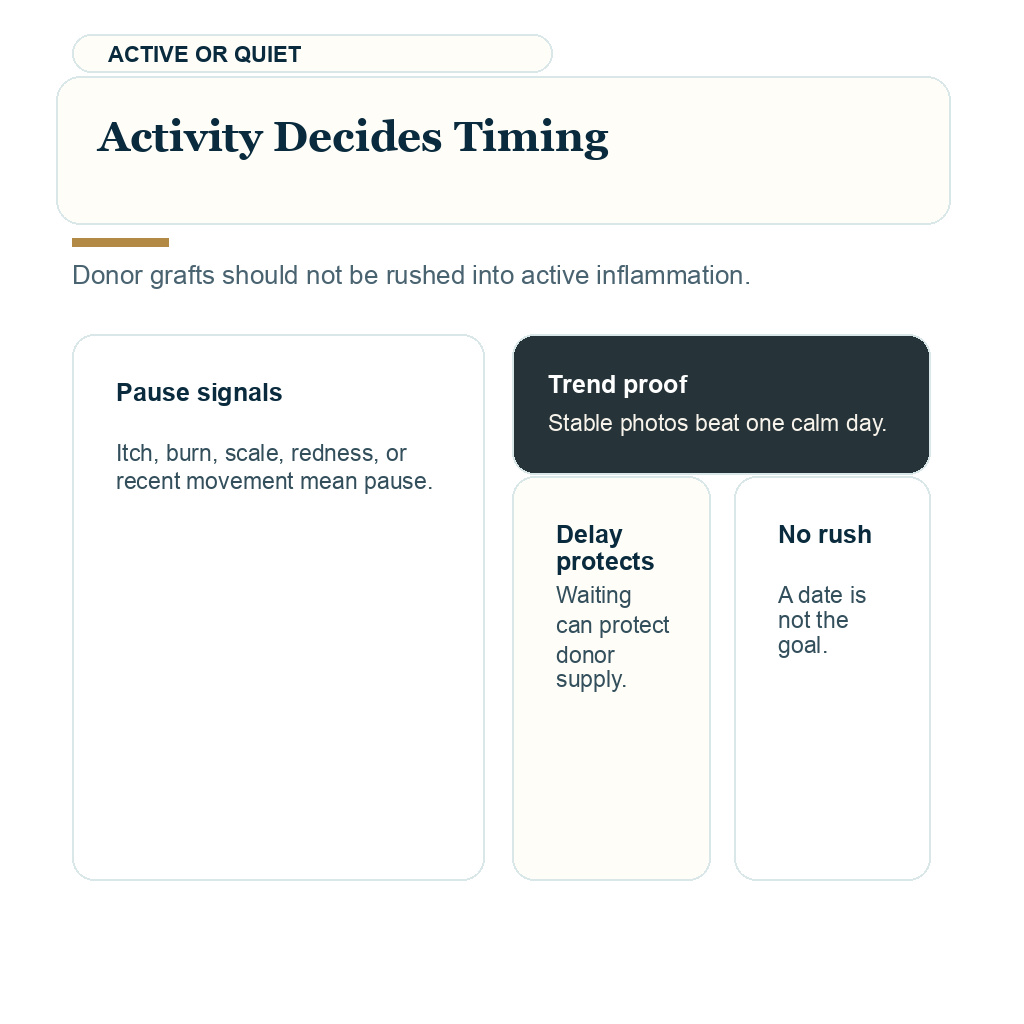
Activity is the key word. Redness around follicles, itching, burning, scale, progressive recession, eyebrow or sideburn loss that is still moving, or changing photos can mean the plan is not ready. Treatment may help some patients, and it may need to continue under the dermatologist after surgery, but treatment is not a guarantee that transplanted grafts will be safe forever.
Active disease makes me postpone surgery, ask for dermatology input, and protect the donor area. Waiting can feel like lost time, but operating into an unstable inflammatory field can lose limited donor grafts and still leave the hairline unstable.
If the patient has already had treatment, I still need to know what changed after treatment. Less itching, less inflamed skin, stable measurements, and matching photos over time are more useful than one reassuring sentence.
Stable disease needs clear evidence before transplant
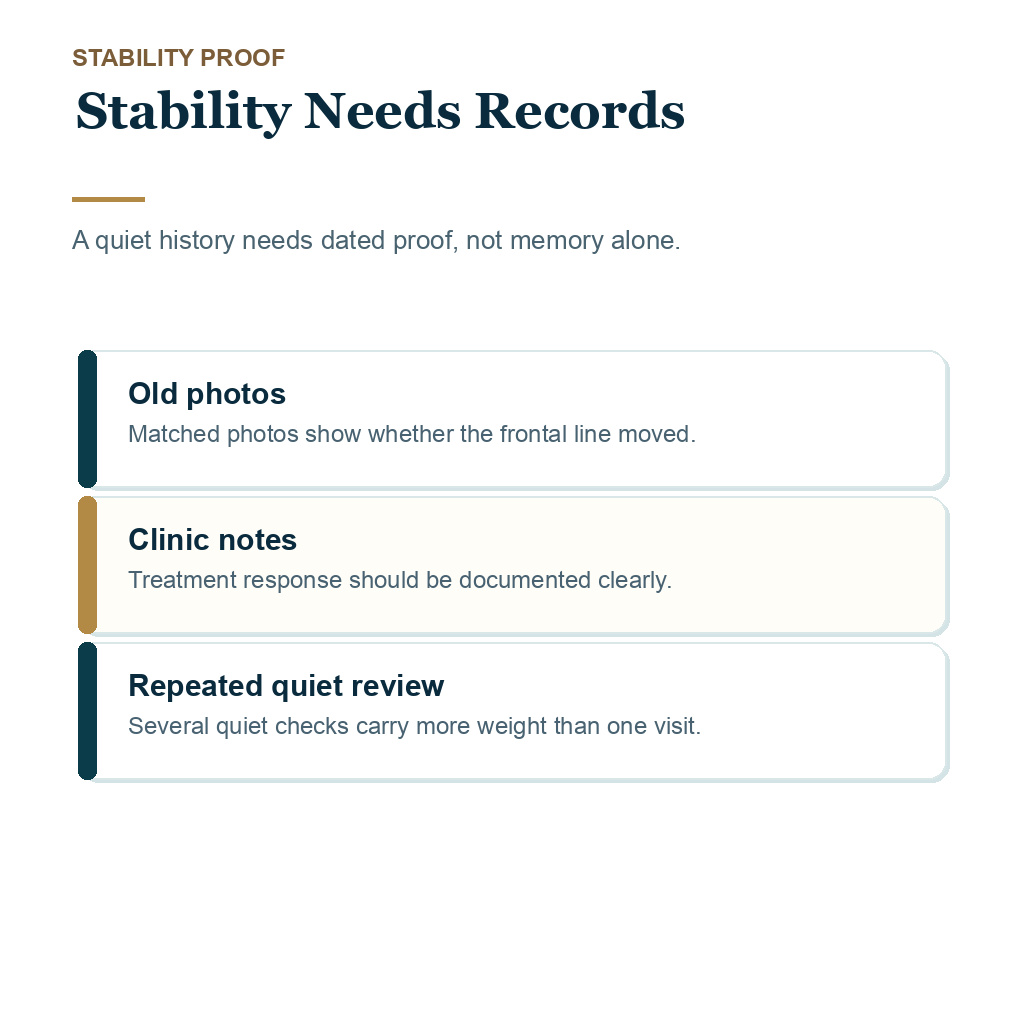
Stability should not be a vague reassurance. For planning, I need evidence that the hairline has not kept moving, symptoms are quiet, skin signs have settled, photos are consistent, and the dermatologist agrees that the disease is controlled enough to discuss surgery. The exact timeline is case-specific. One quiet appointment is not the same as controlled disease. Repeated dermatology reviews, dated photos, trichoscopy notes, and symptom history are stronger than memory alone.
Some cases may still be poor candidates even after treatment. The skin may be too scarred, the loss may be too extensive, the donor area may not have enough safe reserve, or the patient may need a design that a transplant cannot deliver responsibly. A no, not yet, or smaller plan is not a dismissal of the cosmetic concern. It means the biology of the condition must outrank the wish for a lower line.
A stable diagnosis also changes expectation. A good early result does not prove that FFA can never reactivate later, especially in hairline or eyebrow areas that already showed disease. A smaller staged plan can reduce the amount of donor grafts at risk, but it cannot erase the disease history. I explain that the transplant is being planned inside that history, not outside it.
After surgery, keep the same photo angles and symptom record used before it. New burning, itching, scale, redness around follicles, eyebrow loss, sideburn change, or renewed movement of the edge should go back to the dermatologist. Do not assume every later change is ordinary transplant shedding.
Hairline and eyebrow design need more restraint
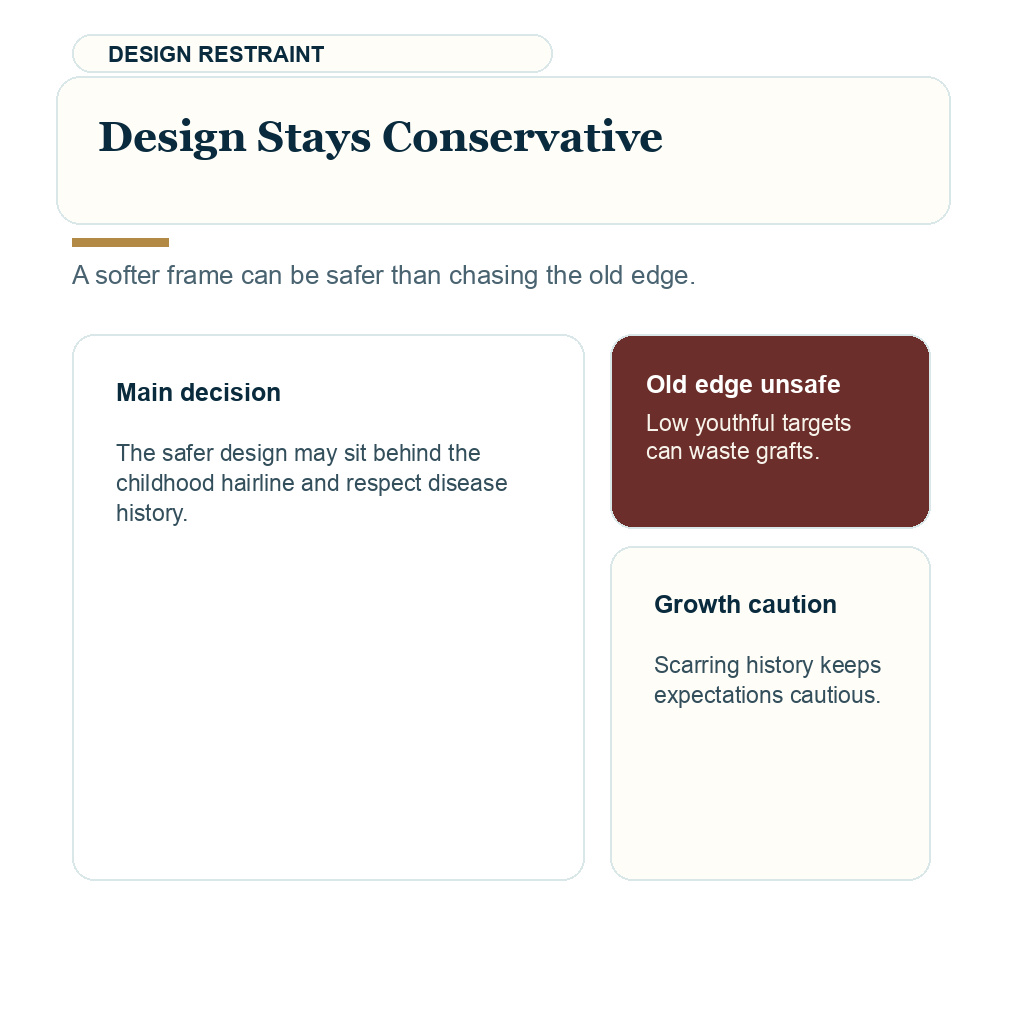
FFA often creates a high, exposed frontotemporal line. It is tempting to rebuild a low youthful hairline. I usually plan with more caution. A safer design may soften the frame rather than chase a very low edge. My guide to hairline design in hair transplant explains why shape, age, donor reserve, and future risk have to work together.
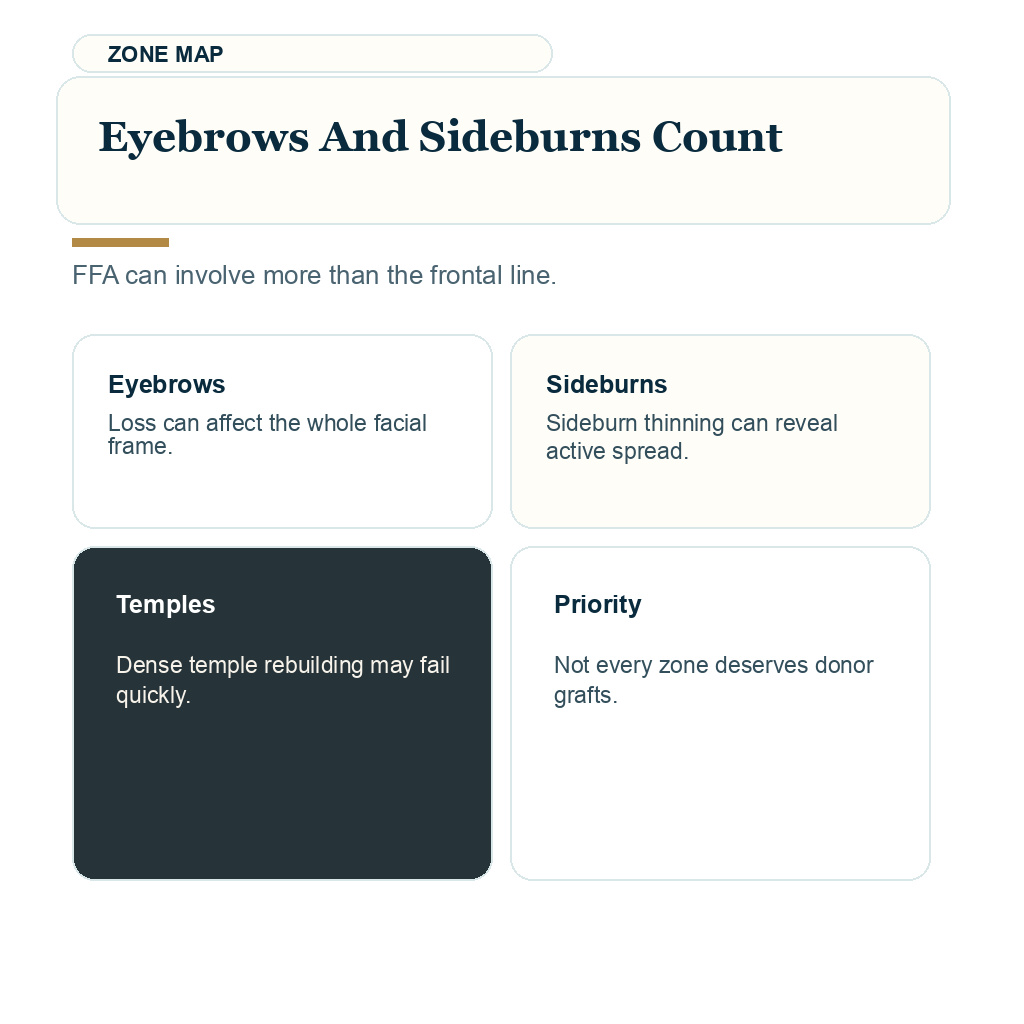
Eyebrows need separate judgment. FFA can involve the eyebrows before or alongside the hairline, but an eyebrow transplant should not be treated as a shortcut around active disease. Even if the transplanted brow hairs grow at first, long-term stability can still depend on FFA remaining quiet. If eyebrow loss is still moving, the discussion again returns to diagnosis, activity, and stability before design.
Temples and sideburns need the same restraint. These areas shape the face, but they also expose mistakes quickly. Dense packing, aggressive lowering, or rebuilding a juvenile edge can be risky when the disease history is not settled, because the plan has to survive years of possible change, not only one post-operative photo. If a facelift or another operation around the temples is also being planned, the dermatologist, facial surgeon, and hair transplant surgeon need to review the same map. They should agree on disease activity, incision location, sideburn position, and the order of procedures before either operation changes the frontotemporal area.
FFA checks before graft planning
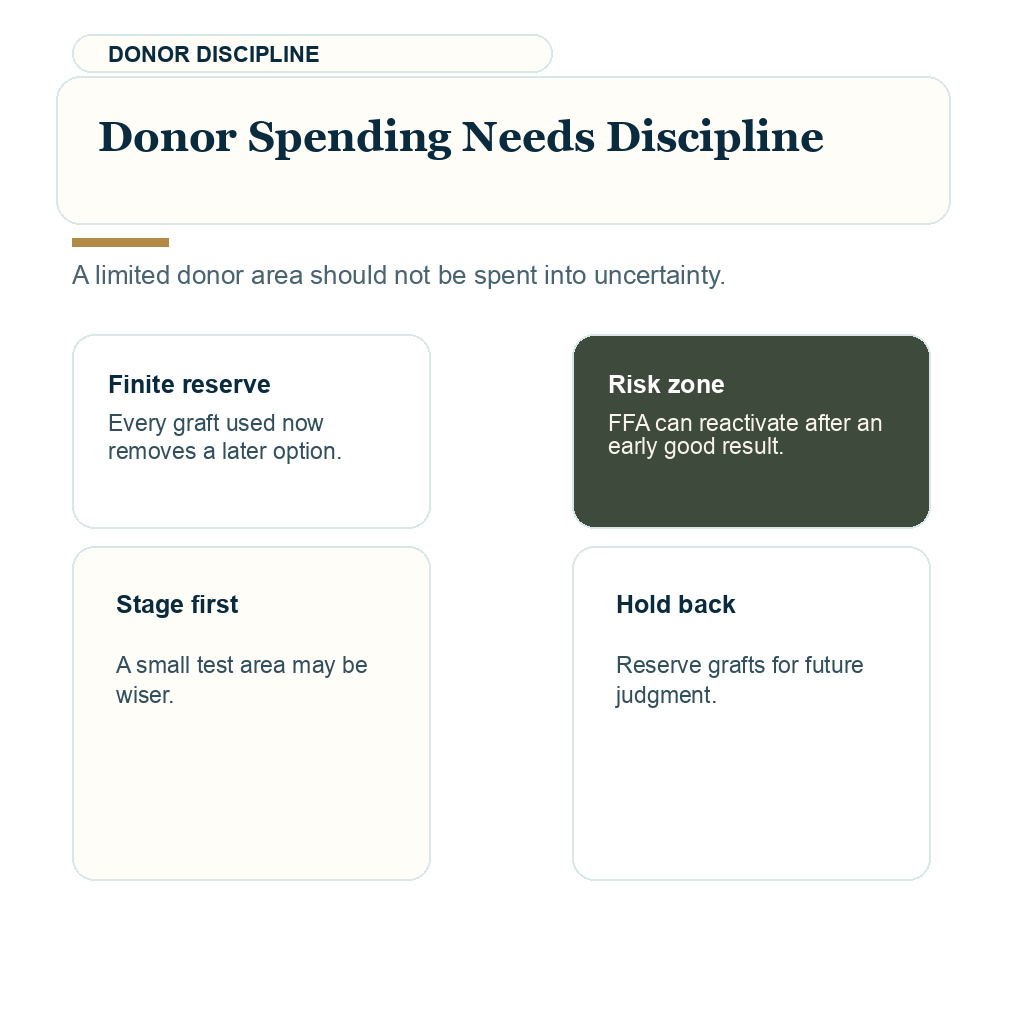
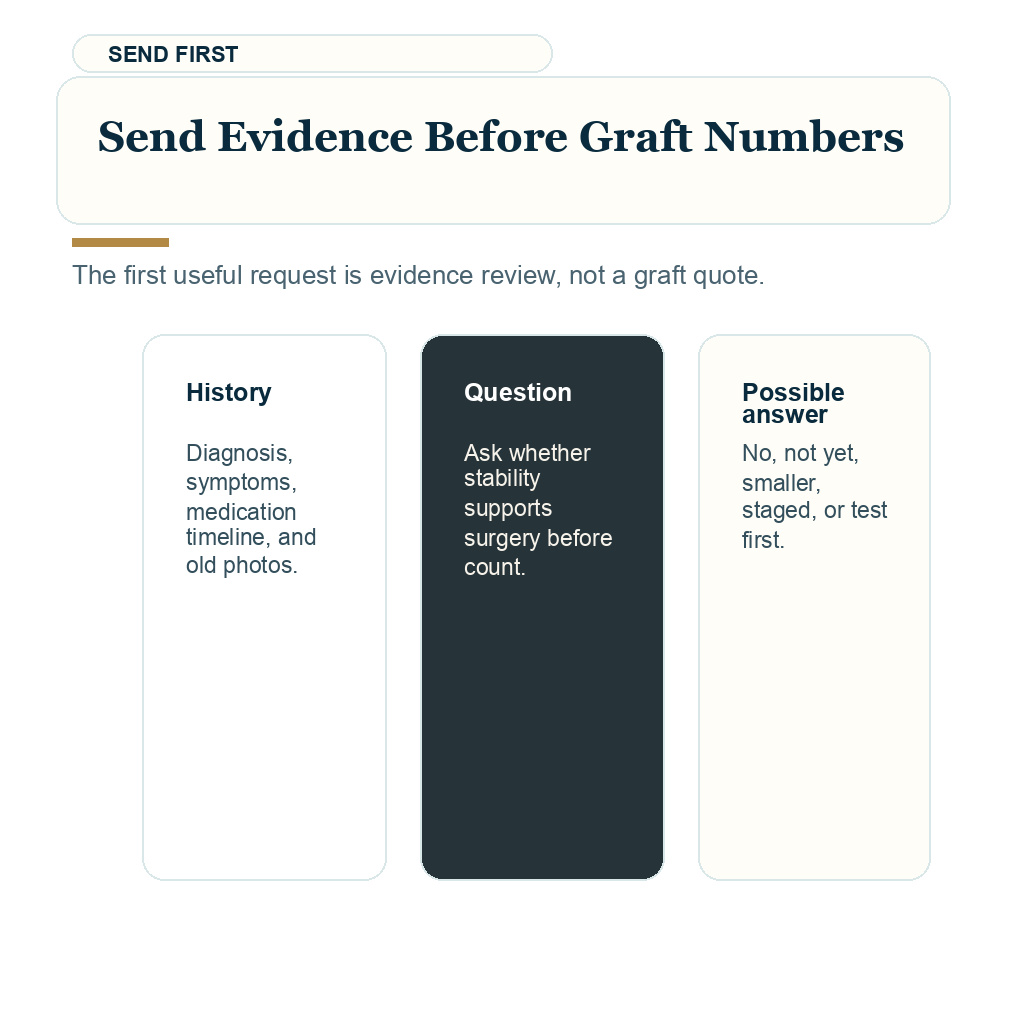
These 9 FFA planning slides separate diagnosis, disease activity, stability proof, recipient skin, conservative design, eyebrows and sideburns, donor spending, treatment coordination, and the evidence to send before graft numbers. Swipe sideways, use an arrow one slide at a time, or choose a number below the image.

Donor protection changes the answer
Donor grafts are limited. In a routine cosmetic case, the main donor decision is how many grafts can be moved while preserving future options. In FFA, recipient skin stability also has to justify spending those grafts.
I do not promise density from a photo. I review the diagnosis, history, medication plan, current skin signs, and pattern of change over time before density is planned. If the case is accepted, I may still prefer a staged plan or a smaller first session, especially when long-term stability is uncertain. The plan should leave donor reserve for future change instead of spending grafts on a hairline the disease history may not support.
Patients sometimes compare FFA to a simple mature hairline versus receding hairline question. That comparison can be useful only when scarring disease has been ruled out. If FFA is still on the table, the case belongs in a more cautious lane.
Questions that matter before I accept the case
I ask when the hairline first moved, whether the change is still continuing, whether the eyebrows or sideburns are involved, whether there is itching or burning, what a dermatologist has diagnosed, whether biopsy or trichoscopy was done, and what treatment has been used. I also ask for old photos because the speed and pattern of change are often clearer than memory.
Changes beyond the hairline also matter. Loss of body hair or small facial bumps called papules can occur with FFA, although neither finding establishes the diagnosis.
I need close photos of the hairline, temples, eyebrows, sideburns, donor area, and any red or smooth patches. Old photos with the hair pulled back in a similar way are often more useful than one perfect current image. If the patient has used topical steroids, medicine to reduce inflammation, hydroxychloroquine, dutasteride, finasteride, minoxidil, or other treatments, I need the exact names and dates. Medication history helps show whether the disease is controlled or simply undocumented.
If the case reaches surgery discussion, I still explain that transplant does not cure FFA. It can only place grafts into a carefully chosen plan after disease activity is controlled. That is a different conversation from selling a dense new line.
Accept FFA transplant only after stability and donor limits are clear
Frontal fibrosing alopecia does not make every transplant impossible by itself, but it changes the order of decisions. Diagnosis first. Disease activity control second. Limited design third. Surgery only if the case still makes sense after those steps. If one step is weak, I slow the plan before spending donor grafts into uncertainty.
If your hairline, temples, sideburns, or eyebrows are changing and FFA has been mentioned, send the diagnosis, treatment timeline, symptom history, and old photos before asking for graft numbers. A careful no or a delayed plan can be the more protective answer when the disease is not quiet. A smaller design or a small test session is not a substitute for disease control. The point is not only to create a hairline. It is to protect you and the donor area over time.

Read this review excerpt
We also had a levelled conversation about my hairline and results I could expect based on my donor density area.