



Testosterone Therapy Changes Hair Transplant Planning
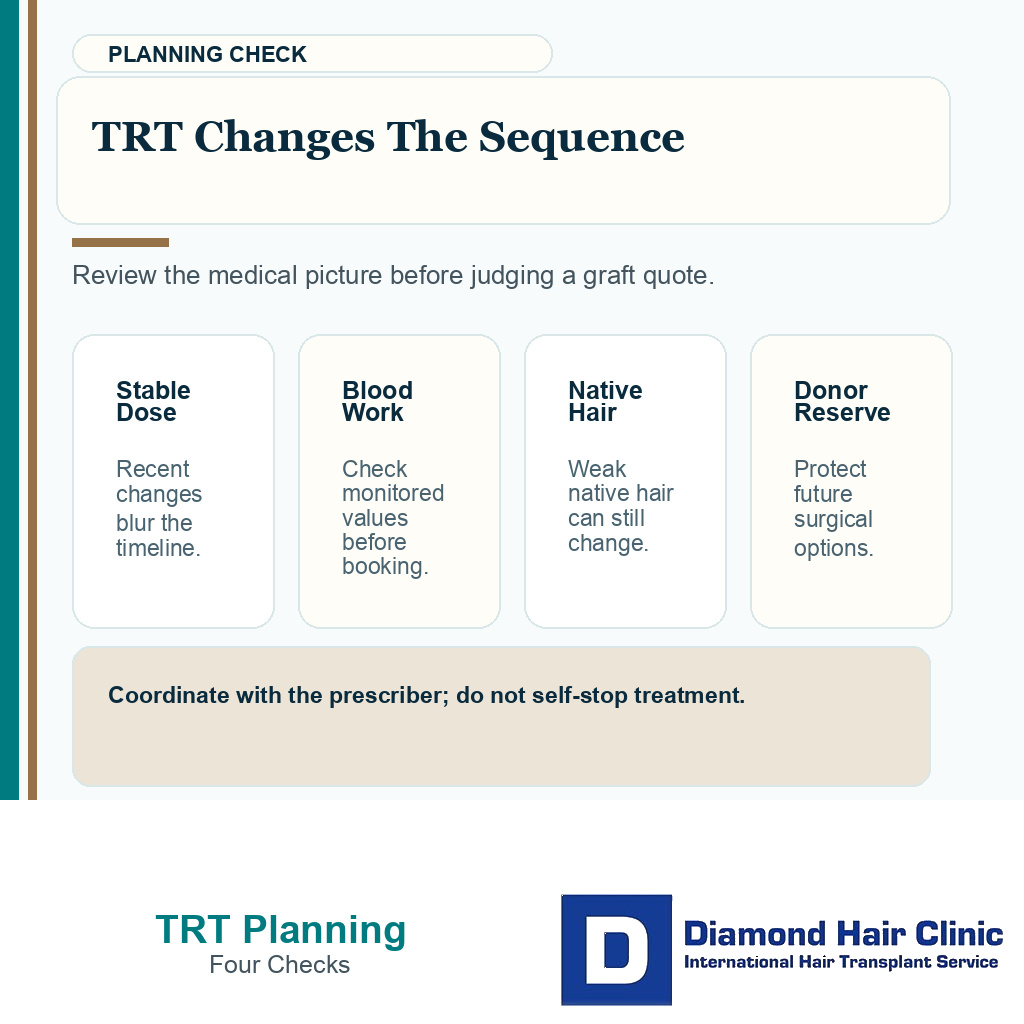
Prescribed testosterone therapy can still fit around a hair transplant. Do not stop it on your own just to book surgery. What matters first is whether the treatment is supervised, whether recent blood work is acceptable, whether the hair loss pattern is stable enough to plan around, and whether the donor reserve can support a design that still makes sense if native hair changes later. The prescription is not the same as a bodybuilding cycle, but androgens, DHT sensitivity, native hair miniaturization, and surgical timing still affect the long-term result.
I am not the doctor who manages the hormone treatment. That belongs with the prescribing doctor. My role is to plan surgery around the real situation. Bring the latest plan from that doctor instead of adjusting the testosterone dose yourself before travel. For planning, the dose, route, start date, recent dose changes, blood values, blood pressure history, and hairline design all matter, especially if more native hair may thin later. That same planning logic applies when clomiphene or hCG is part of the hormone review before FUE, because the surgical team needs the real medicine history before dates are fixed.
The first question is not graft survival
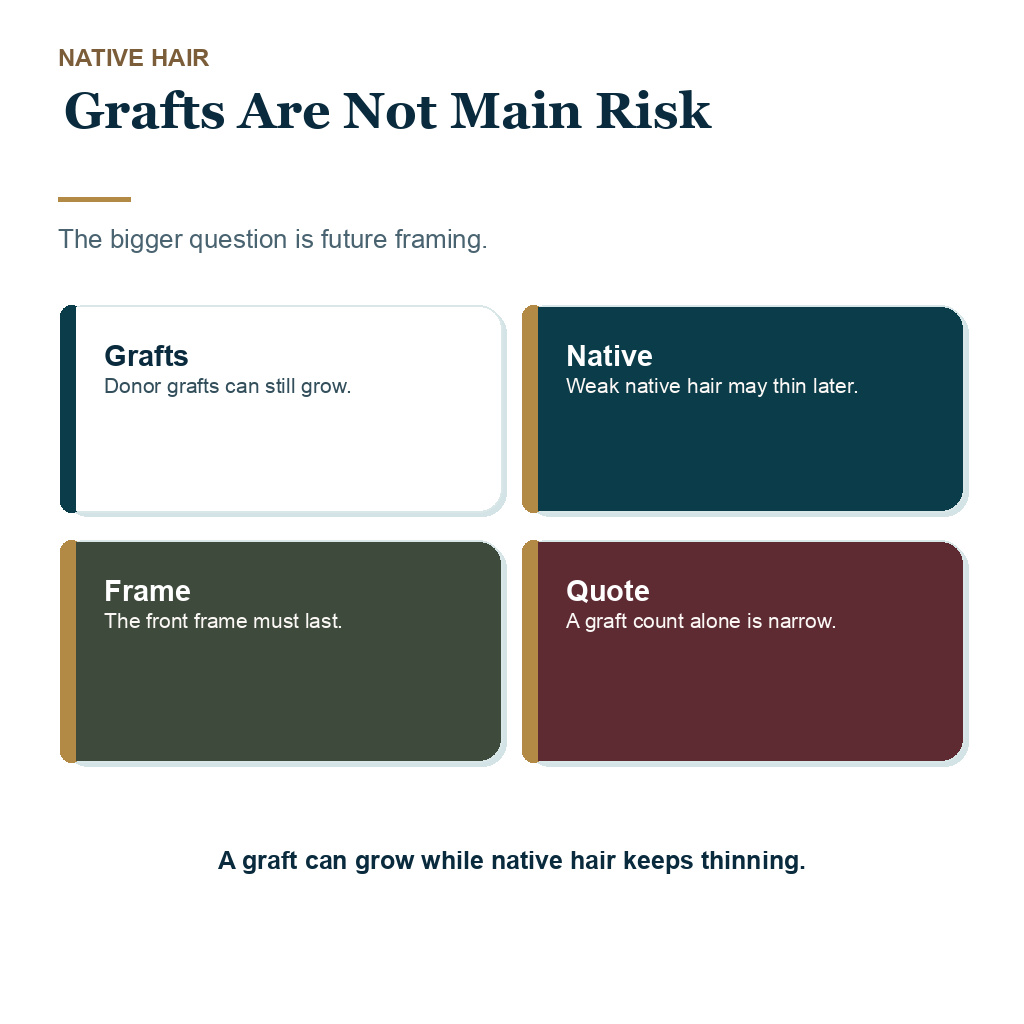
Many patients first ask whether testosterone will ruin the grafts. In a standard male pattern hair transplant, the stronger donor follicles are selected because they are usually less sensitive to miniaturization than weak hair in the front and crown. That does not make the rest of the scalp immune. The main concern is not that every graft suddenly dies. The more realistic risk is that transplanted grafts grow, but the native hair around them keeps thinning while the patient expected one operation to freeze the whole picture.
I separate graft growth from the future frame. A graft can grow, but the result can still look thinner if surrounding native hair continues to miniaturize. That is one reason a hair transplant result can look thin even when graft survival was not the only problem. For a patient using testosterone, the plan before surgery must allow for future loss instead of focusing only on the first twelve months of growth.
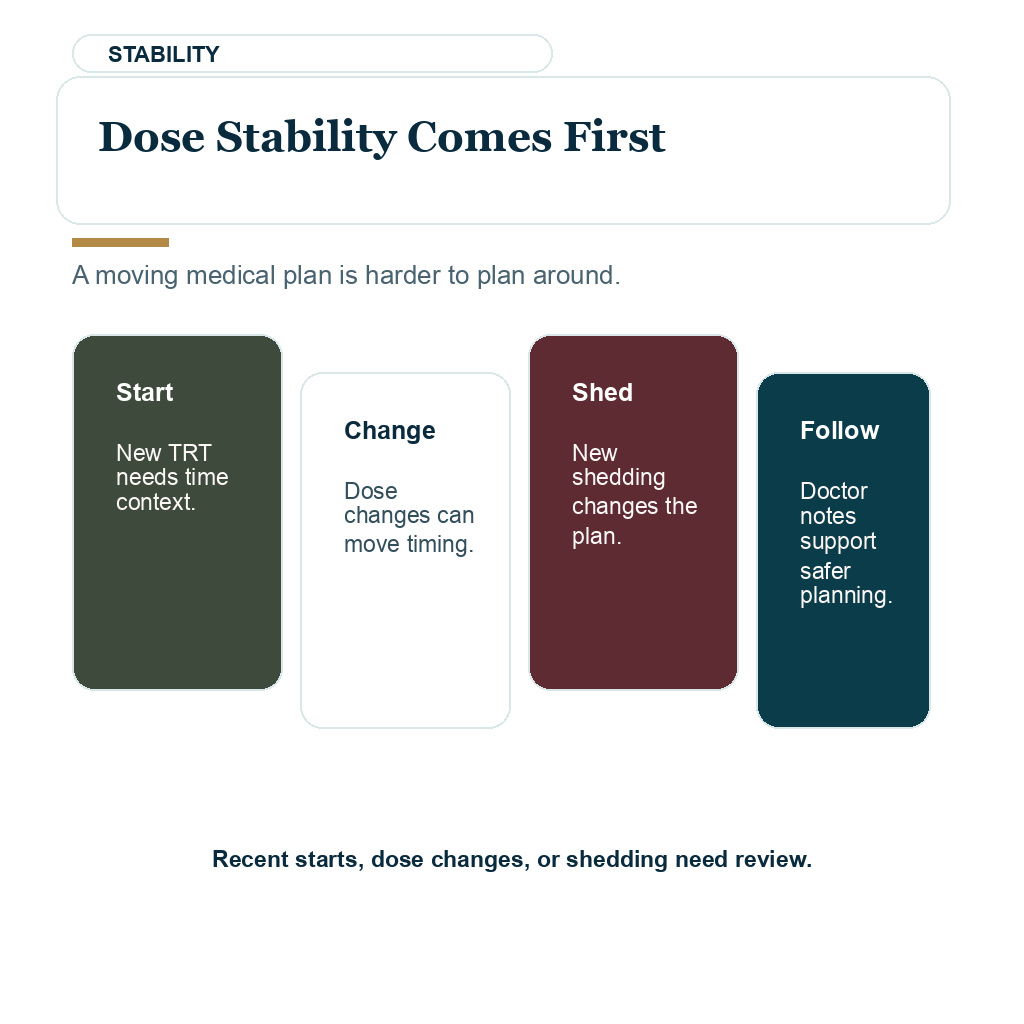
If a patient has recently started testosterone, changed the route or dose, or noticed faster shedding, I want that timeline before density planning. I also ask whether the hair loss was already moving before treatment began. Shedding is not a diagnosis by itself. It is a signal to compare photos, examine miniaturization, and avoid trusting a graft quote built on an unstable moment.
Prescribed TRT is different from a steroid cycle
Prescribed testosterone replacement therapy is usually meant to bring a medically low level into a supervised range. Anabolic steroid cycles are different in dose, pattern, and risk. I keep that distinction clear because patients can receive bad advice when every androgen exposure is treated as the same situation. A supervised replacement dose should not be discussed in the same way as anabolic steroids around FUE surgery, where cycle pattern, dose, training, blood pressure, acne, and recovery behavior can change the risk picture.
The difference still does not remove the need for caution. A prescribed medication can be appropriate and still relevant to surgery. The details that matter are who prescribed it, why it was started, how long the dose and route have been stable, whether blood values are monitored, and whether side effects could affect healing, anesthesia planning, or surgery day safety.
The practical move is neither panic nor silence. It is coordination. If the prescribing doctor wants therapy continued, I work around that plan. If the doctor wants a dose change, pause, fertility review, or blood work correction, the timing should be clear before the hair transplant date is chosen.
DHT sensitivity is the native hair issue
Testosterone can be converted in the body into DHT. Male pattern hair loss is not simply about having a high testosterone number. The stronger issue is whether genetically sensitive follicles are reacting to androgens over time. One patient can use prescribed testosterone and stay stable. Another can notice faster miniaturization if the underlying pattern is active.
Ordinary lifting, prescribed TRT, and steroid cycles need separate labels. I cover the ordinary gym question separately in weight training and hair loss around a hair transplant, because the native hair risk is not the same in each situation.
My examination includes the donor, hairline, central scalp, crown, and miniaturized hair that still remains. I also ask whether the patient is using, avoiding, or considering finasteride or dutasteride. The choice is personal and must be medically appropriate, but the surgical plan should not pretend the question does not exist. The question of a hair transplant without finasteride becomes relevant when a patient cannot or does not want to use a DHT blocker, because the design needs more cautious assumptions.
I also avoid making medication sound like a magic shield. A DHT blocker can help some patients preserve native hair, but it does not turn a weak donor into a strong one, and it does not justify a reckless hairline. For patients concerned about sexual side effects, mood, or fatherhood, the discussion should happen before surgery rather than under pressure after a problem appears. When fatherhood is part of the near future, fertility questions around finasteride or dutasteride need a clear discussion before the design is finalized.
Blood work can change surgery timing
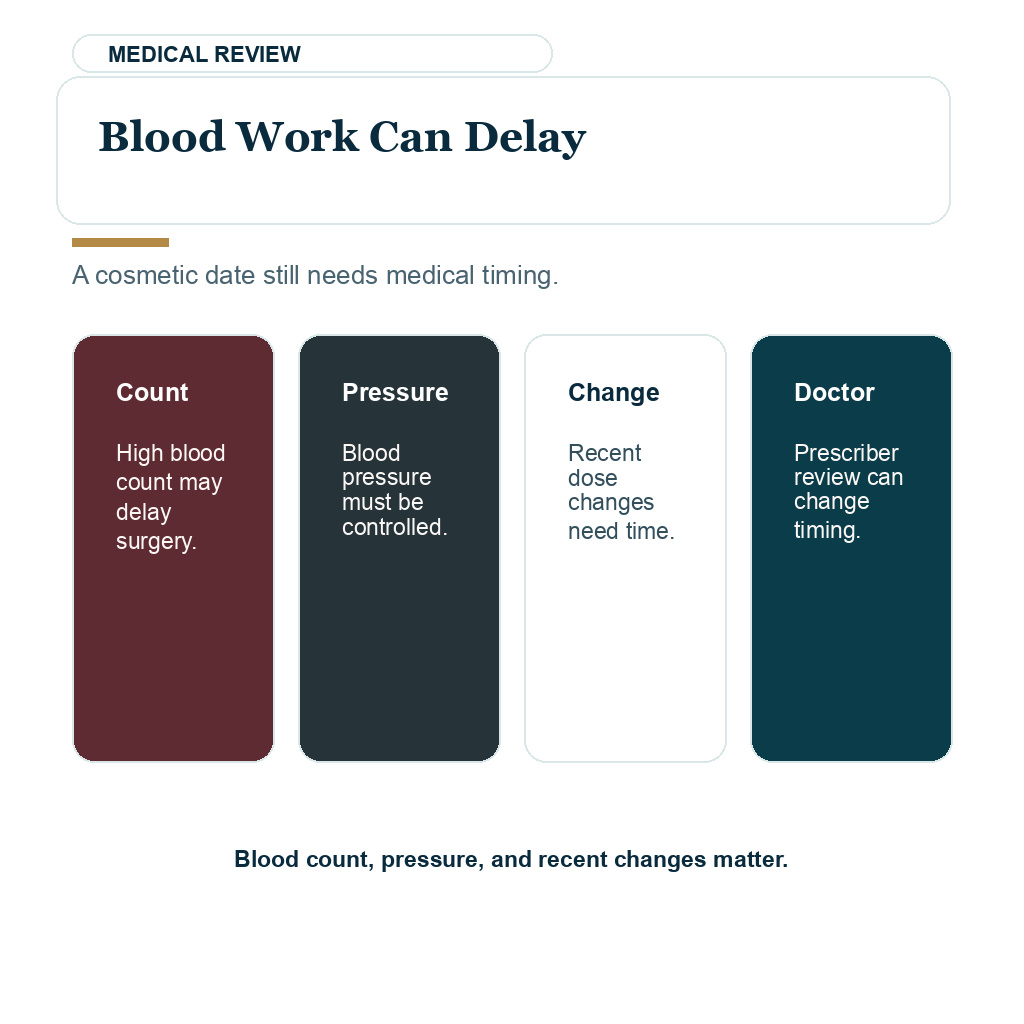
A hair transplant is usually done under local anesthesia, but it is still a medical procedure. Testosterone therapy may require monitoring of hematocrit, hemoglobin, blood pressure, prostate risk where relevant, and other patient-specific values. I do not use those numbers to manage the hormone treatment. I use them to decide whether surgery day is sensible and whether the patient needs the prescribing doctor to review something first.
For example, if a patient has an elevated hematocrit, uncontrolled blood pressure, or a recent medication change, I may slow the plan down until the medical team has reviewed it. That is not a cosmetic delay. It is part of making the procedure predictable. Medicines and supplements that affect bleeding, swelling, or recovery belong in the same review, including blood thinners before a hair transplant.
A stable prescription history is easier to plan around than a recent experiment. If the dose has changed several times, if symptoms are not controlled, or if recent labs are missing, the hair transplant calendar should not be treated as separate from the medical calendar.
Medical stability and hair stability can move at different speeds. A prescription may be steady while the hairline or crown is still changing.
Stopping or continuing testosterone only makes sense when the reason is clear. I look at recent blood work, blood pressure, acne or scalp inflammation, dose changes, and whether the hair loss pattern has been stable. That explanation helps the prescribing doctor and the surgical team plan from the same facts.
Hair loss stability matters more than the label
The label TRT does not tell me whether surgery is a good idea. Stability tells me more. I check for changes in shedding, crown expansion, central scalp thinning, and requests for a low hairline while the pattern is still active. A stable patient on prescribed testosterone may be easier to plan than a patient with no prescription but fast untreated hair loss.
This matters especially for younger patients. If the frontal loss is advancing and the crown is already changing, a dense low hairline can spend grafts before we know where the loss pattern is going. That is one way donor area overharvesting risk begins. Testosterone therapy does not change the basic rule. The donor must last longer than the first operation.
When stability is uncertain, I may recommend a more cautious hairline, a staged approach, medication discussion with the prescribing doctor or dermatologist, better photography, or waiting until the pattern is clearer. Waiting can be frustrating, but it is sometimes the most surgical answer.
The hairline should not depend on perfect future control
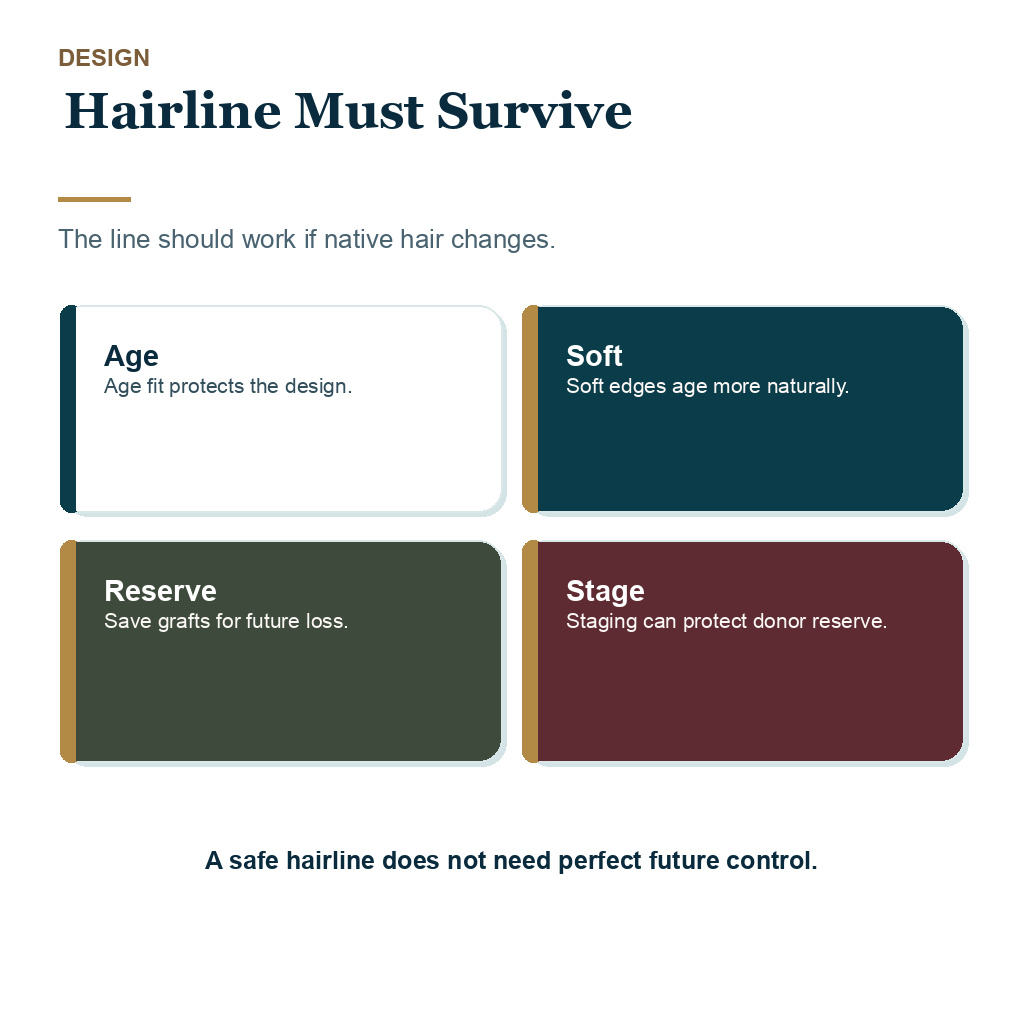
A hairline designed for a patient on testosterone therapy should still make sense if native hair thins later. That means the line should be age appropriate, soft, and built from the real donor reserve. It should not assume that every medication will work forever or that the patient will never need more grafts.
In practice, this often means resisting the lowest requested line. I may build a stronger frontal frame while preserving options for the central scalp and crown. I may also leave the crown for later if the donor reserve is better spent in the front. The principles of hairline design in hair transplant surgery matter here because the hairline has to age with the patient, not only impress in a first photo.
Patients sometimes feel that medication should allow a more aggressive design. I do not see it that way. Medication can support the plan when it is appropriate and tolerated. It should not be used as permission to ignore donor mathematics.
A TRT plan needs two kinds of stability
Check medical stability and hair loss stability before trusting the quote
What has to be stable before I trust a graft quote?
Testosterone therapy does not answer the hair transplant plan by itself. I first separate medical stability from hair loss stability. A patient can have a stable prescription but still be losing native hair quickly. Another patient can have a quiet hair loss pattern but blood work that needs review before surgery day.
Medication choices need medical context
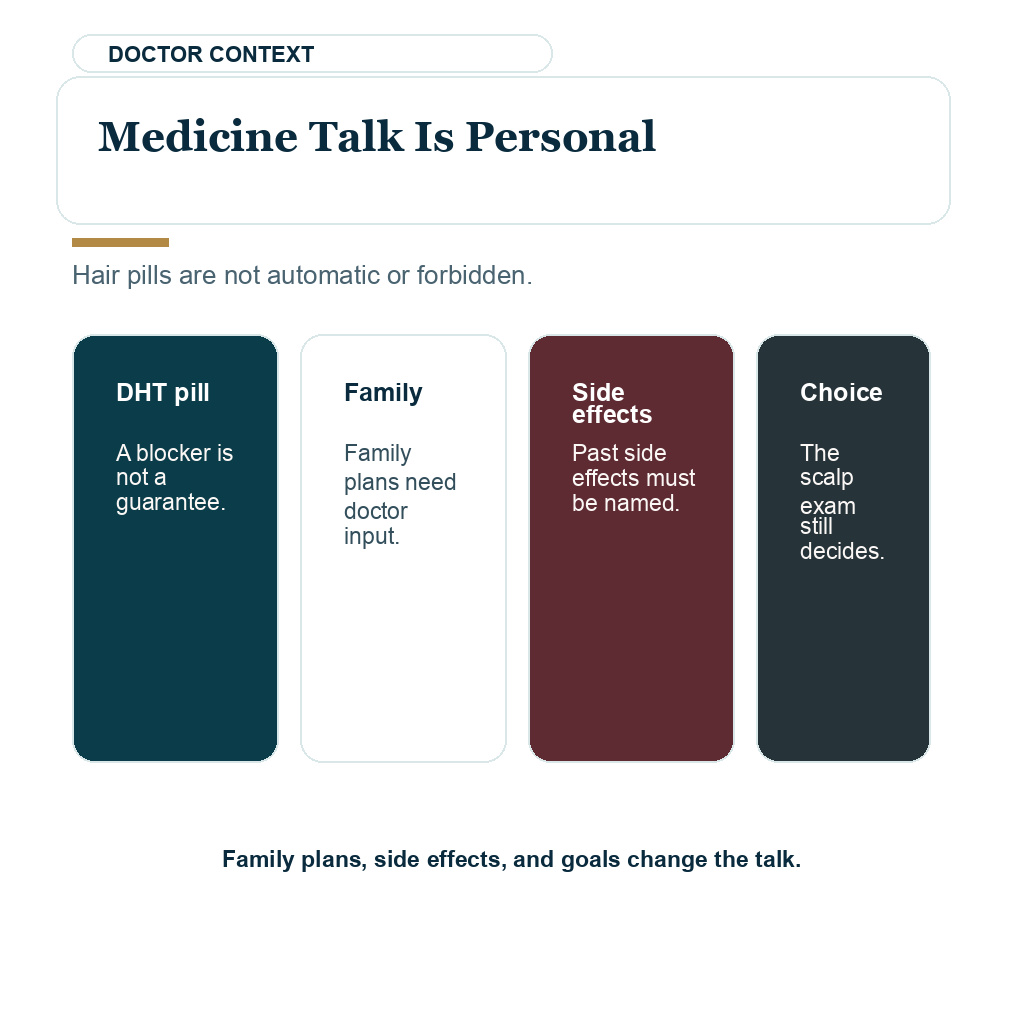
Some patients on testosterone ask whether finasteride or dutasteride is mandatory before surgery. I do not treat medication as a punishment for using testosterone, and I do not treat it as a guarantee. The decision depends on age, fertility plans, side effects, miniaturization, crown risk, donor strength, and how stable the testosterone treatment has been.
Finasteride or dutasteride may help protect vulnerable native hair in selected patients. They do not guarantee a transplant result, and they are not suitable for everyone. Someone planning a family, with previous side effects, or with a strong preference to avoid them may still be a surgical candidate, but the hairline and density plan needs more caution. Finasteride before and after a hair transplant is mainly a timing decision, and that timing should be clear before the surgical design is finalized.
If someone is already taking a DHT blocker while using prescribed testosterone, I still check the scalp. The prescription labels matter less than the miniaturization I can see.
Crown planning needs extra caution
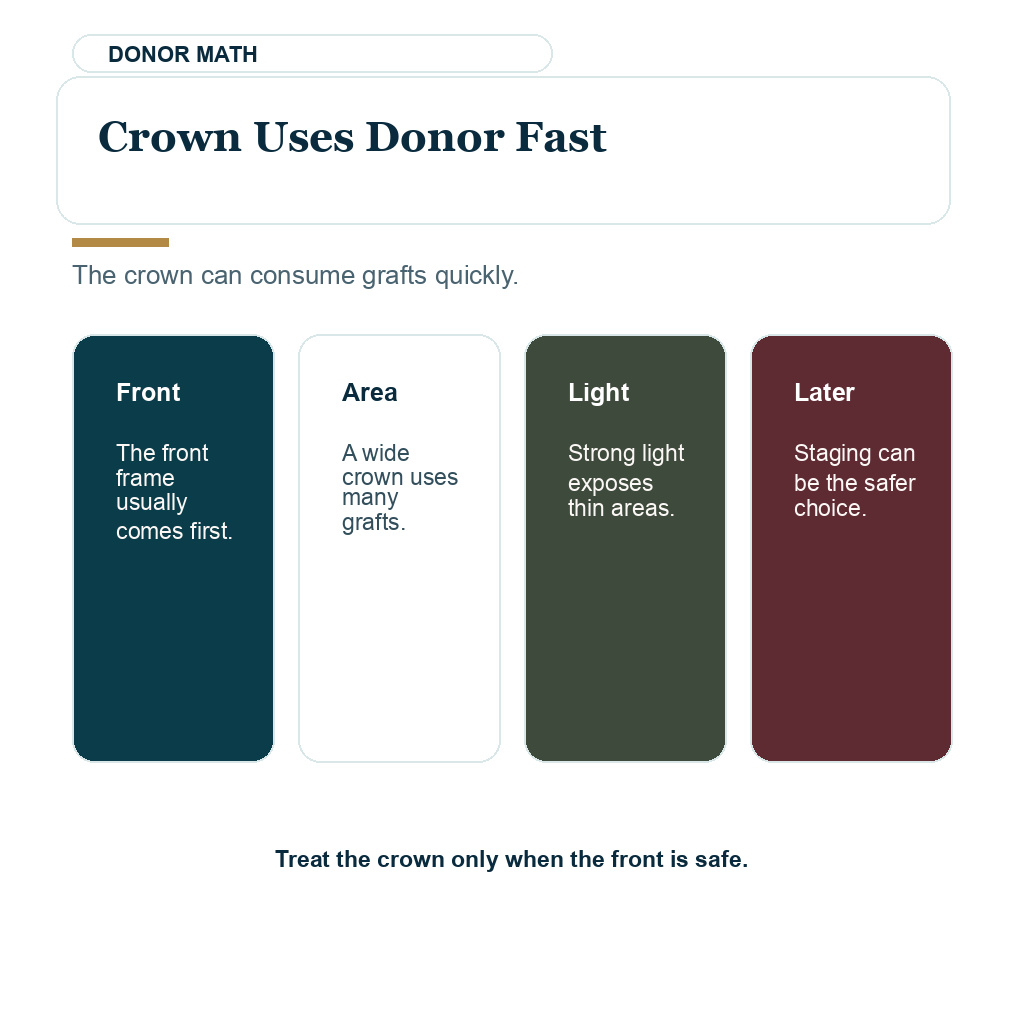
The crown is where one session can spend donor hair quickly. It has a circular pattern, a wide surface, and strong light exposure. If native crown hair is still miniaturizing, dense crown work can consume grafts while the front remains underprotected. For that reason, crown requests often need more donor discipline than frontal framing.
A crown can be treated when the donor is strong, the front is planned safely, and the expectations are realistic. It can also be staged. In some patients, it should wait until medication stability and loss progression are better understood. A crown hair transplant is not only a graft count problem.
The crown decision is a long-term donor decision. Testosterone therapy does not change that. It only makes the stability conversation more important before grafts are spent.




Questions I ask before planning surgery
Before I plan surgery for a patient using testosterone therapy, I need the treatment start date, reason for treatment, dose, route, recent dose changes, prescriber, recent CBC or hematocrit, blood pressure history, and any follow-up notes. I also ask whether shedding changed after treatment began. If fatherhood is planned soon, the TRT and DHT blocker discussion should be handled with the prescribing doctor or urologist before the hairline is finalized. Minoxidil, finasteride, dutasteride, supplements, blood pressure medicine, and anything that affects bleeding also belong in the same review.
I also ask for clear photos from the front, temples, central scalp, crown, donor area, and both sides. Short videos can be useful because they show density in ordinary movement. I compare those photos with the patient’s age, family history, donor quality, and desired hairline. When comparison photos are used, hair transplant results from hair like yours should match hair traits and loss pattern, not only graft number.
This is not paperwork for its own sake. It prevents a narrow graft quote from replacing a surgical plan.
Delay or redesign triggers
I delay or redesign the plan when the testosterone dose is new, the route has recently changed, blood work is missing, shedding has accelerated, or the requested hairline would only look safe if native hair never changed. I also reconsider timing when the crown demand is too large for the donor reserve or when the medication conversation is still unclear.
Delay does not always mean the patient is unsuitable. It may mean the prescriber needs to review blood values, the dose or route needs time to stabilize, or the scalp needs several months of photos before the pattern is trusted. A shedding change alone does not diagnose the problem, but it tells me not to rush the design until the pattern is clearer. It may also mean the first operation should focus on a durable frontal frame instead of spreading grafts too thinly.
The plan has to survive imperfect assumptions. It should still make sense if the patient changes testosterone dose later, stops a hair loss medication, or loses more native hair behind the transplant. If the design only works under perfect assumptions, it is not durable enough.
Testosterone therapy should be clear before grafts are spent
Testosterone therapy by itself does not rule out a hair transplant, but it should never be hidden or treated as a side note. It changes the questions I ask before surgery because native hair stability, medical monitoring, medication tolerance, and donor reserve all belong in the same plan.
The best path is simple. Keep the prescribing doctor involved. Bring recent blood work if you have it. Say clearly whether the dose, route of treatment, shedding, blood pressure, or medication tolerance has changed. Let the hairline design reflect the donor area and future risk, not only the result you want in the first year.
When the medical plan and the hair loss pattern are both understandable, surgery can be planned more responsibly. When they are not, waiting is not hesitation. It is how I protect the donor area and avoid a design that only works under perfect conditions.

Read this review excerpt
He was very thorough in every little detail and I never felt pressure to do anything I wasn’t sure of.