


Drawbacks of DHI
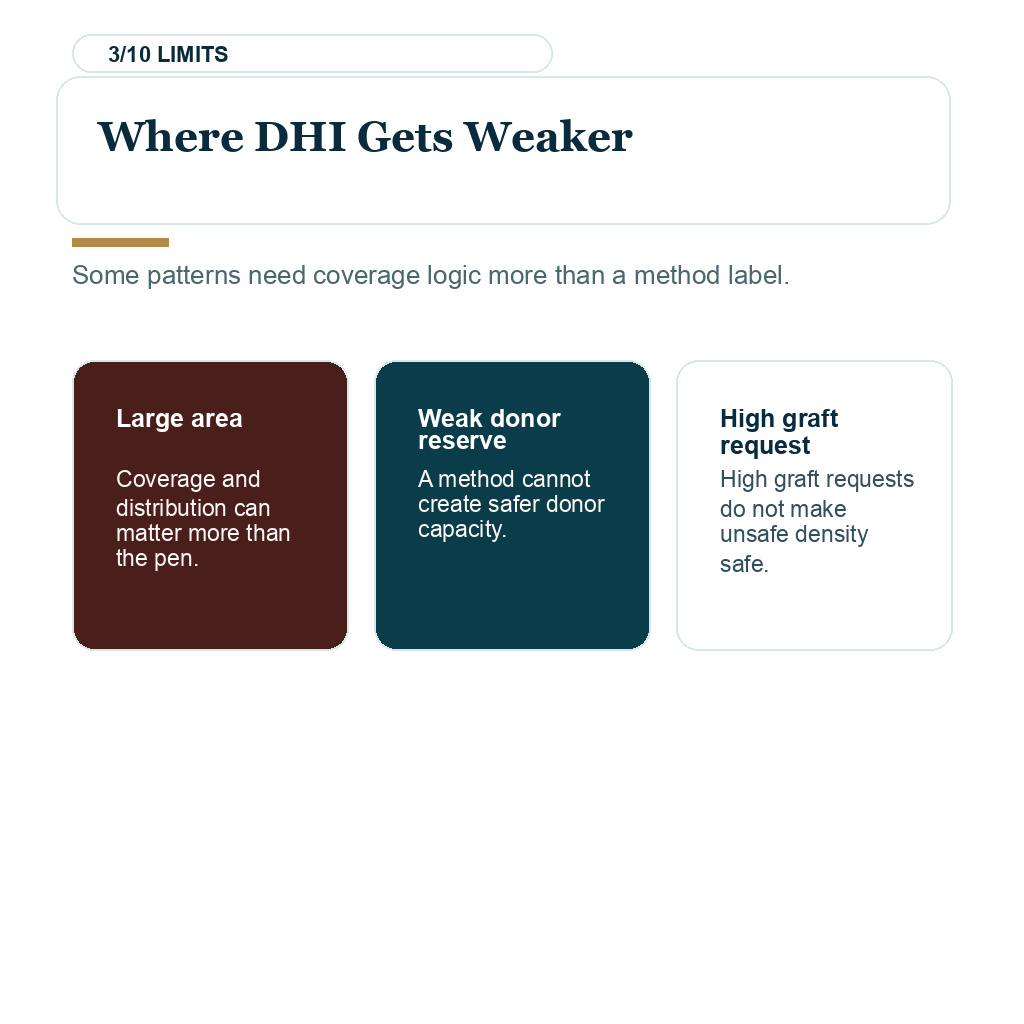
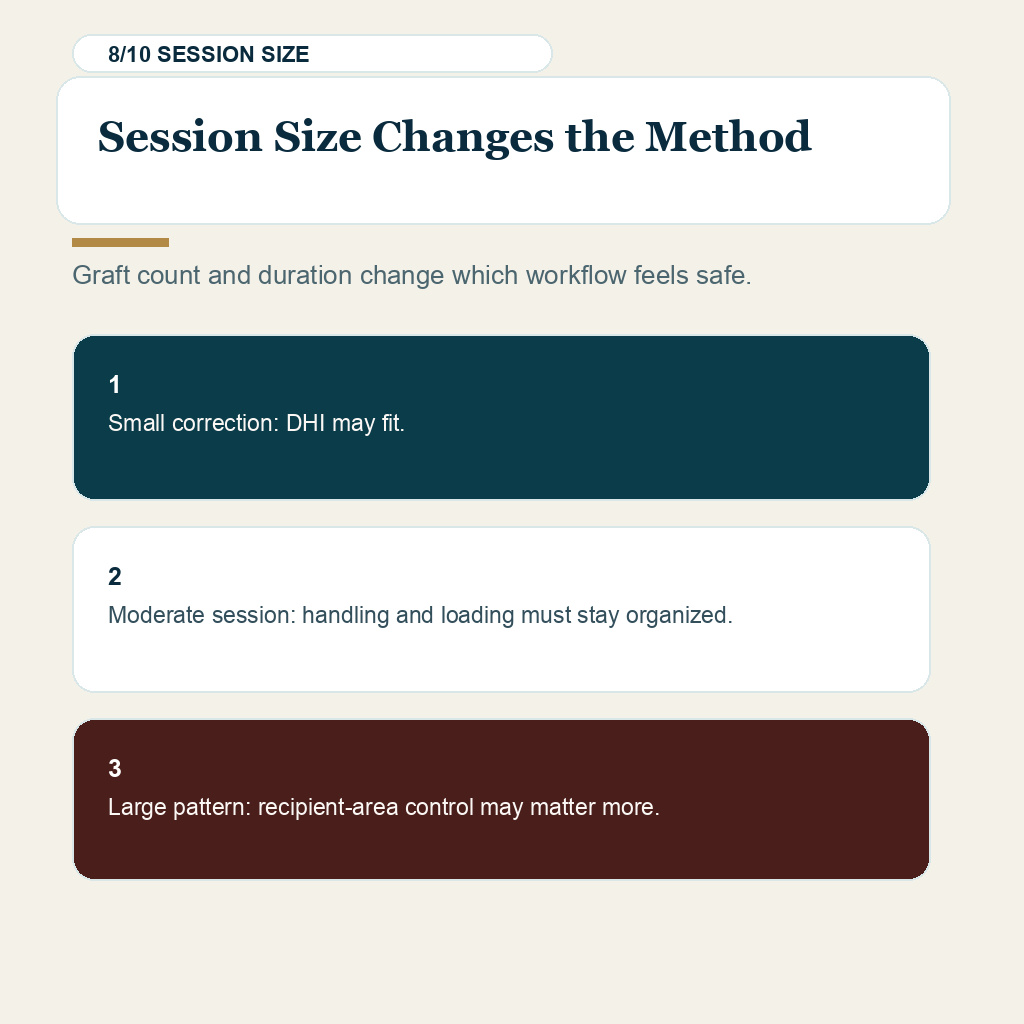
DHI can be slower and more demanding when many grafts are needed. Larger bald areas often require thousands of grafts, and the implanter workflow can become time consuming.
DHI can also be used as a marketing tool by clinics that want to reduce surgeon involvement. In some high-volume clinic models, DHI is presented as premium while critical decisions are still handled without enough doctor responsibility.
The method name alone should not reassure a patient. Red flags of Turkish hair transplant clinics matter more than method branding.
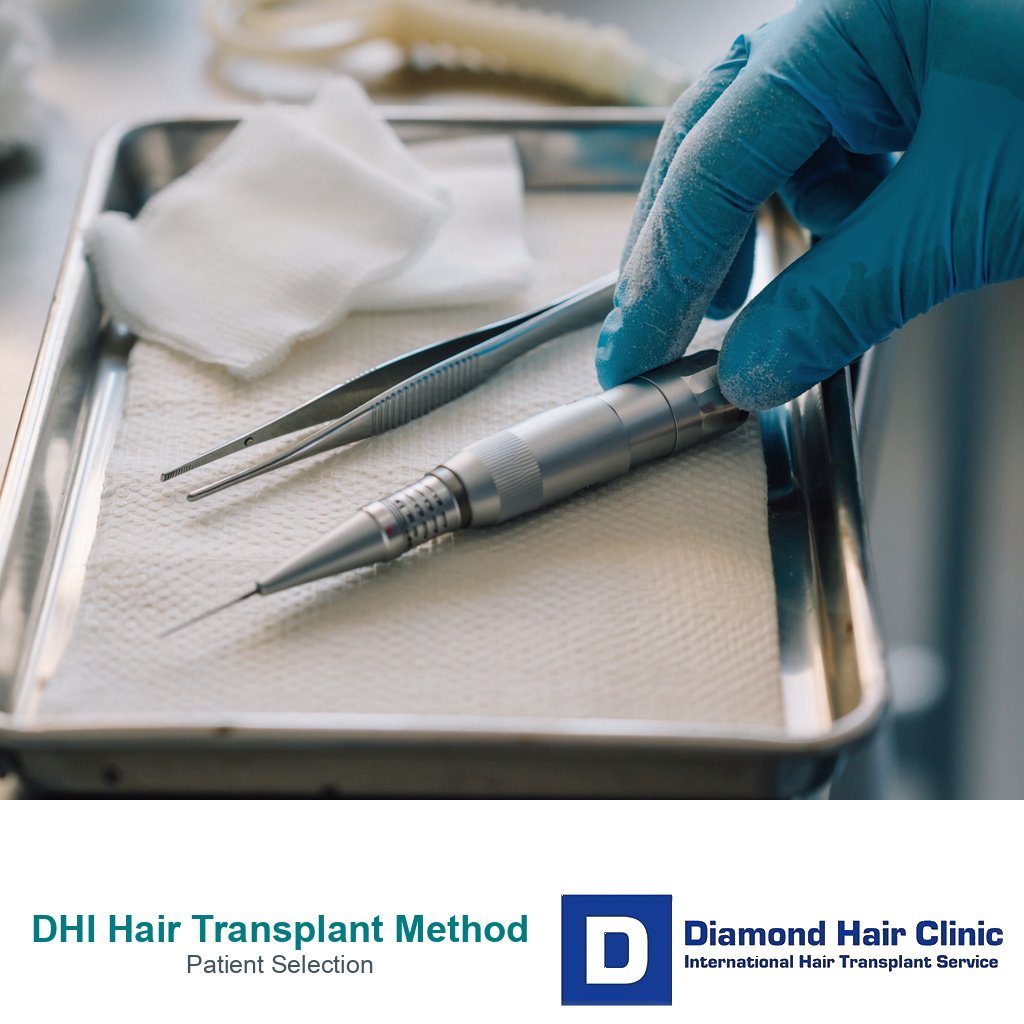
Choi implanter pen graft handling
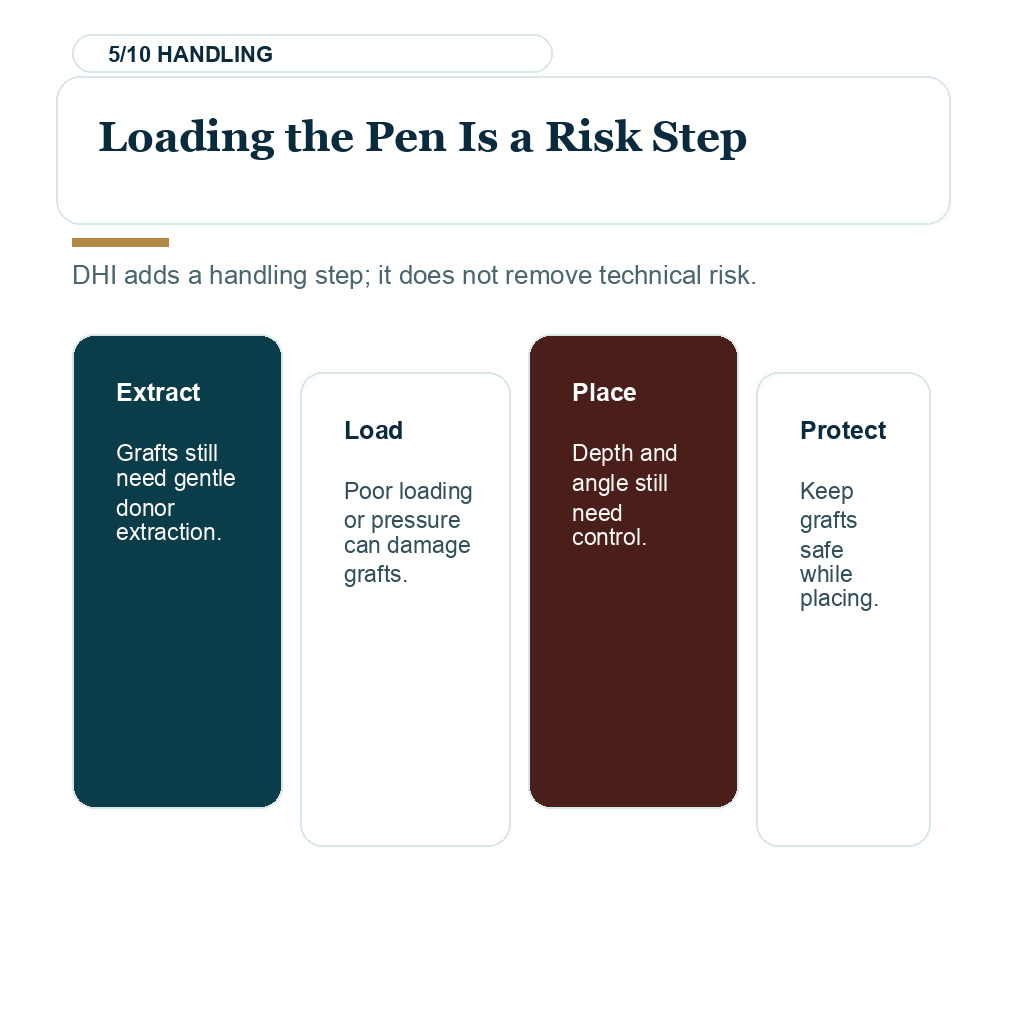
Grafts can be damaged if the Choi implanter is used poorly. The risk is not the pen by itself. The risk is poor graft loading, excessive pressure, wrong angle, wrong depth, rough handling, or an inexperienced team.
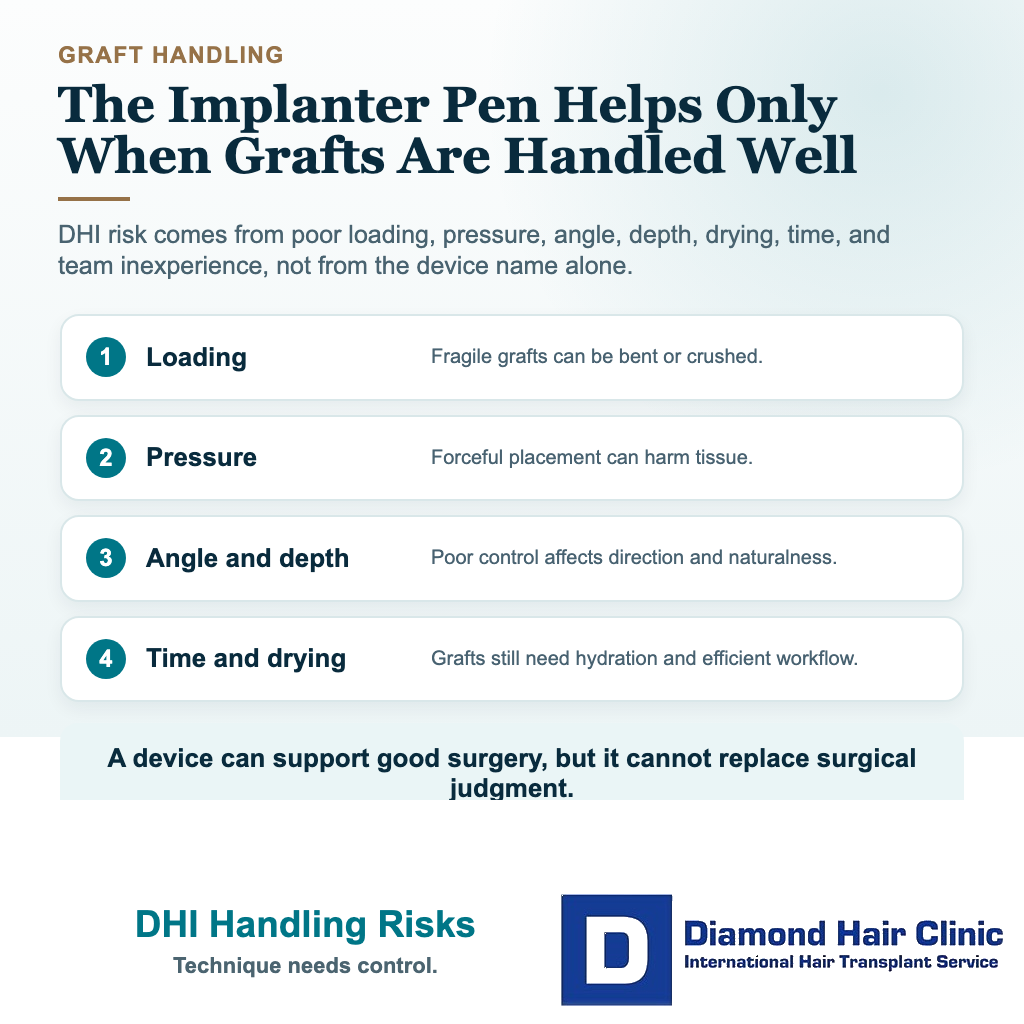
The graft is living tissue. It can be crushed, bent, dehydrated, or placed in a way that affects growth direction. DHI should be performed by a team that understands both graft biology and recipient area design.

A device can support good surgery. It cannot replace surgical judgment.
Shaving and DHI
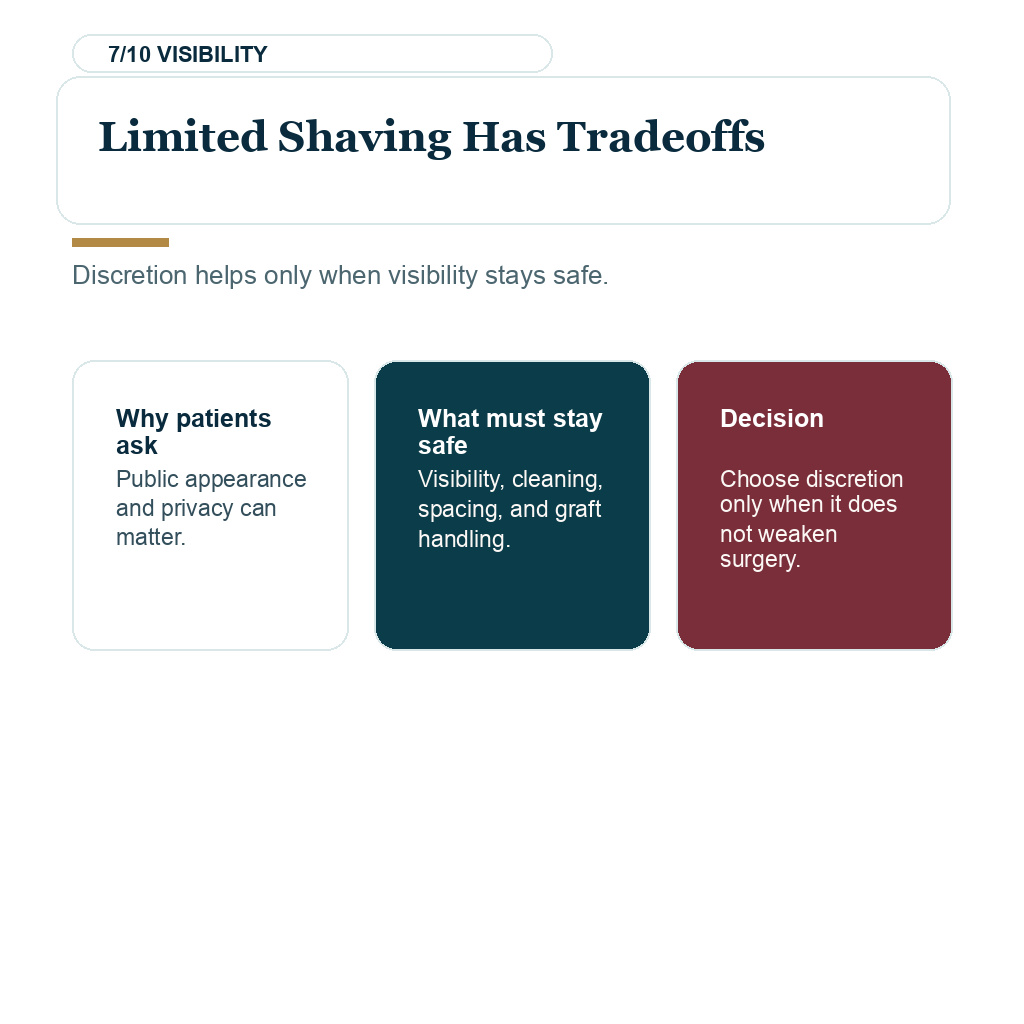
DHI may allow limited shaving in selected patients, but it does not always avoid shaving completely. Some cases still need donor area shaving, and larger cases may need more visibility than the patient expects.
This is important because no shave marketing can make the procedure sound easier than it is. A less visible haircut after surgery is useful only if it does not weaken graft handling, cleaning, or surgical visibility.
Non shaven hair transplant risks show why discretion and surgical control must be balanced carefully.
DHI procedure duration
A DHI procedure may take about 6 to 10 hours, depending on the number of grafts, the size of the area, the complexity of the hairline, and the pace needed to protect graft quality.
The procedure should not be rushed. Extraction, graft preparation, loading, and implantation all need attention. When the graft number is high, the duration and team coordination become even more important.
Be cautious if a clinic promises very large DHI numbers without explaining how graft quality, fatigue, and donor safety will be managed.
Usual graft numbers with DHI
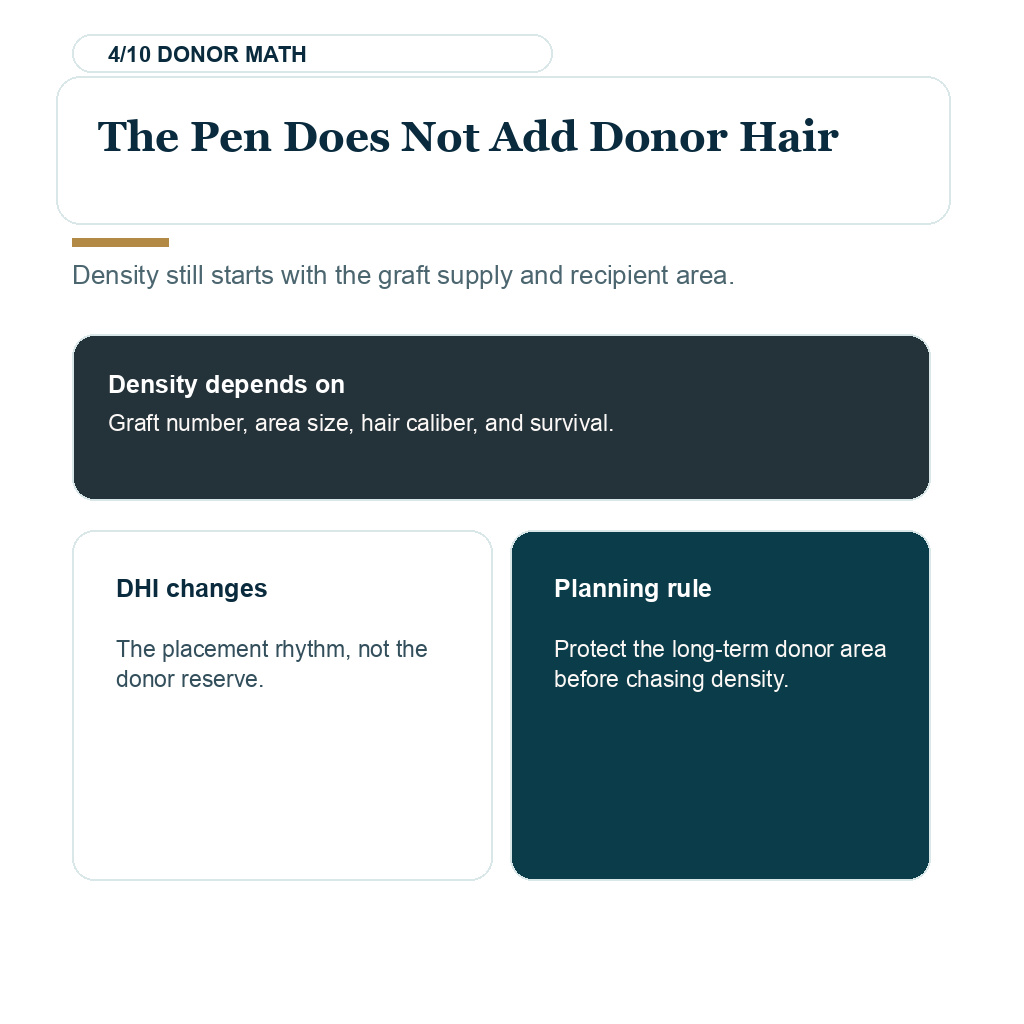
In many DHI sessions, the practical range is often around 2,500 to 3,000 grafts. In larger FUE or Sapphire FUE cases, some patients may safely reach around 4,500 to 5,000 grafts in one session when the donor area and plan allow it.
These numbers are not promises. A safe graft number depends on donor density, hair shaft thickness, recipient area size, future hair loss, and the patient’s long term plan.
Graft number calculation is a clinical decision, not a sales target.
Recovery time after DHI
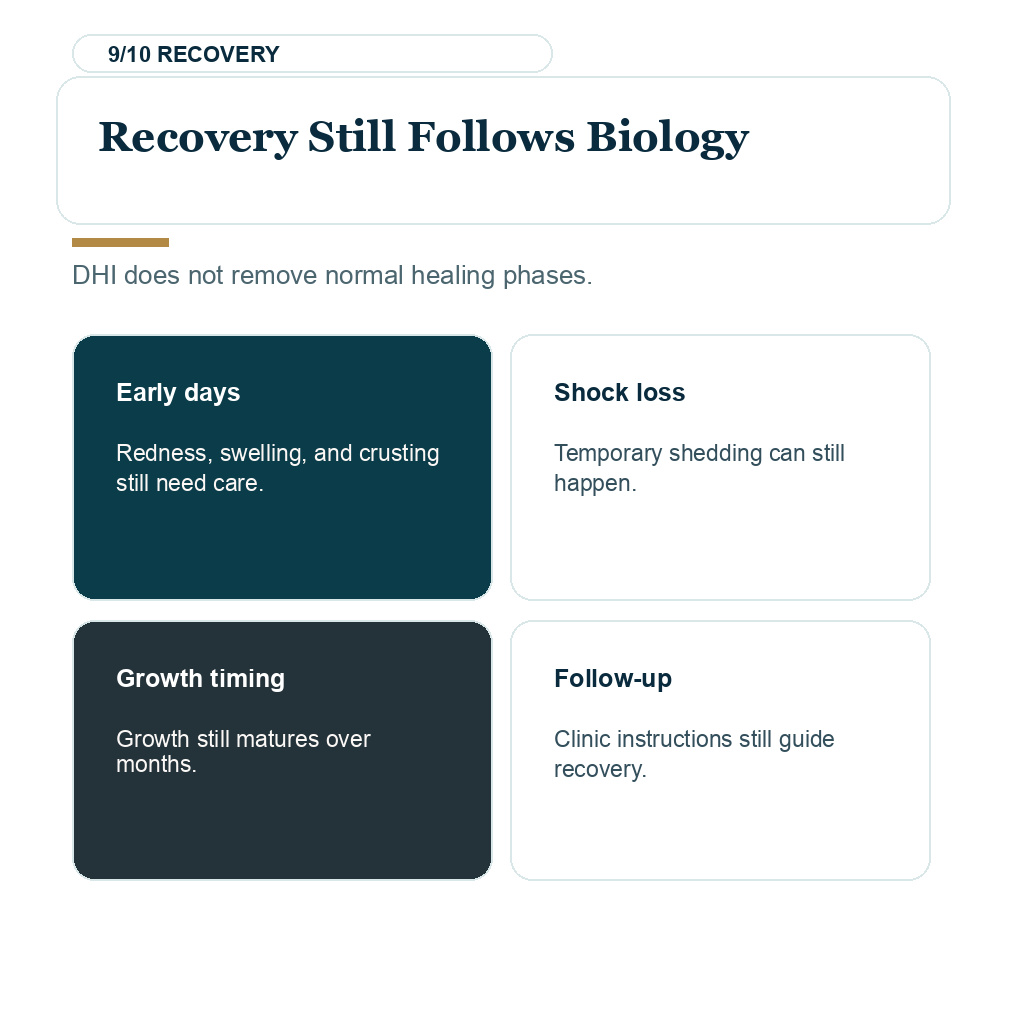
Early recovery after DHI is usually similar to other modern hair transplant methods. Many patients need around 12 to 14 days for the most visible scabs and early healing signs to settle.
Swelling, redness, tightness, itching, and mild discomfort can occur. Medication should be used only as prescribed by the doctor. Washing, sleeping, activity, and sun protection instructions still matter because DHI does not make early healing automatic.
Redness, scabs, and pimples after hair transplant can help separate common healing signs from symptoms that deserve review.
Shock loss period after DHI
Patients can experience shedding and shock loss after DHI, just as they can after FUE or Sapphire FUE. The transplanted hair shafts may shed while the follicles remain under the skin.
Some patients also shed weak native hair in the recipient area. This can make the transplant look thinner before it begins to improve. New growth often starts around month 3 or month 4, but the timing varies.
Native hair shock loss after hair transplant can be emotionally difficult but often temporary.
Final DHI result timing
A DHI result should not be judged early. Some growth may begin around month 3 or month 4, but the result continues to thicken and mature over time.
Many scalp hair transplant results need 12 months for a fair assessment, and some cases continue changing up to 18 months. Crown areas can be slower.
Judging the result too early can create unnecessary anxiety. Follow the timeline with consistent photos and direct clinic communication instead of judging the result from one anxious week.
Side effects after DHI
Possible side effects include swelling, redness, itching, scabbing, temporary shock loss, numbness, infection, folliculitis, uneven early growth, and donor area sensitivity. Most early effects are manageable when the surgery and aftercare are handled properly.
Contact the clinic if there is increasing pain, spreading redness, pus, fever, heavy bleeding, or a sudden change that does not match the instructions.
The broader hair transplant aftercare plan protects the grafts and scalp during recovery.
Hair dye after DHI
Hair dye should usually wait until the scalp has healed well. A common practical minimum is around 3 months, but patients should follow their own surgeon’s guidance because healing speed and scalp sensitivity vary.
Strong chemicals, heat styling, and aggressive salon treatments can irritate the scalp if used too early. If the scalp is still red, itchy, crusted, or sensitive, waiting longer is safer.
Use gentle products and avoid anything that creates burning, inflammation, or scratching. Harmful hair product ingredients matter because product choice can irritate the scalp after transplantation.
When is DHI not the right choice?
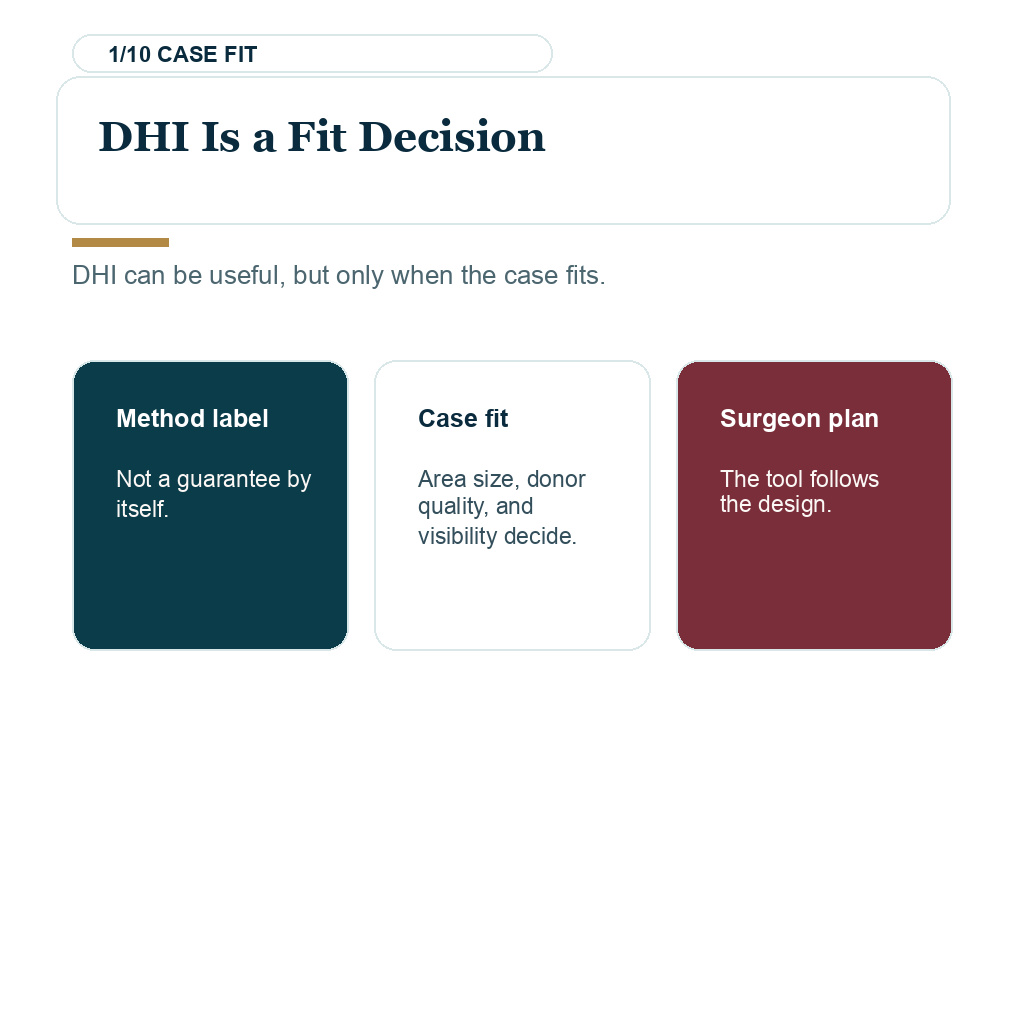
DHI is not appropriate for every patient. Hair type, curl pattern, graft size, donor strength, balding area, density goal, and the need for shaving all affect whether DHI makes sense.
Patients with large bald areas may be better served by FUE or Sapphire FUE. Patients who need a high graft number may find DHI slower and less practical. Patients with certain hair characteristics may also be more difficult to treat with implanter loading.
The method has to fit the donor area, recipient area, hair type, graft number, and long-term plan. DHI should not be chosen only because it sounds newer or more advanced.
Who may be a better candidate for DHI?
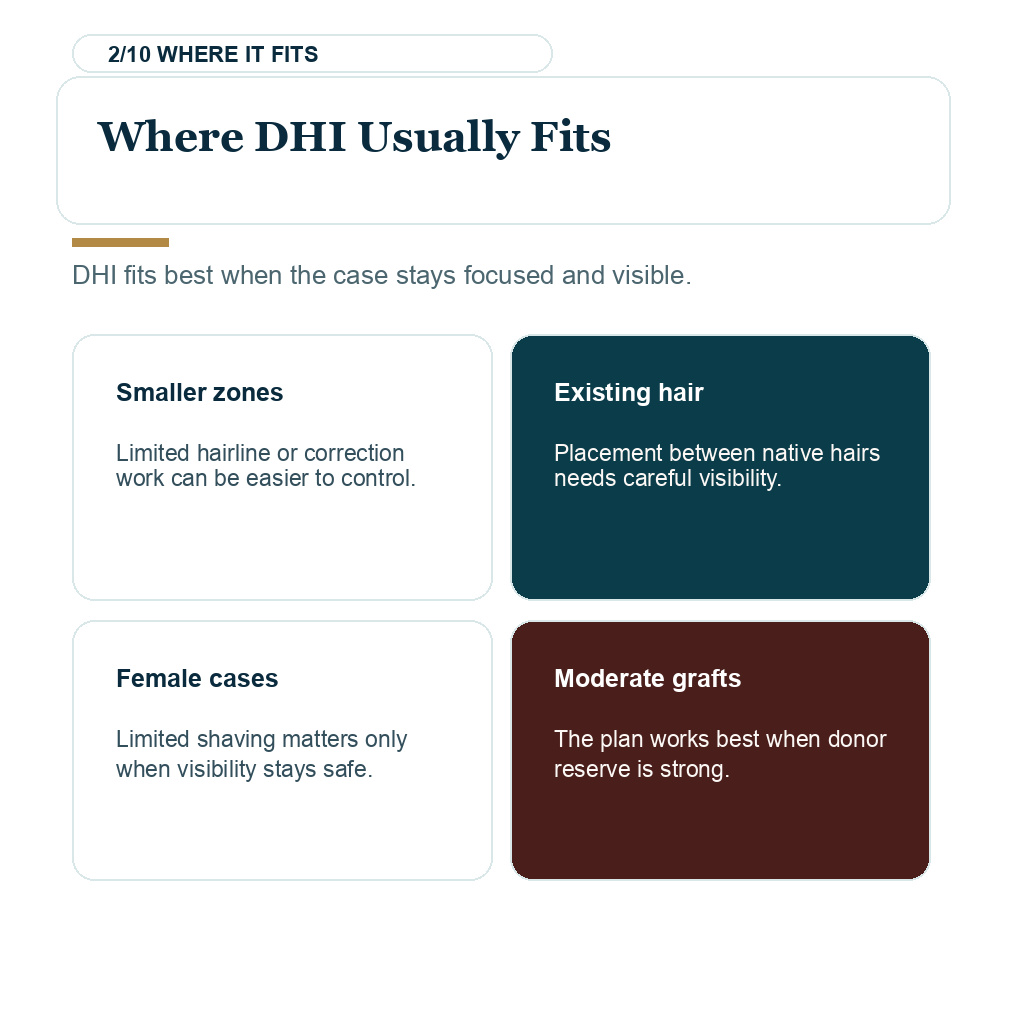
DHI may be more reasonable for patients who need a smaller focused area, patients with strong donor quality, patients who need work around existing hair, or selected female patients where shaving must be limited.
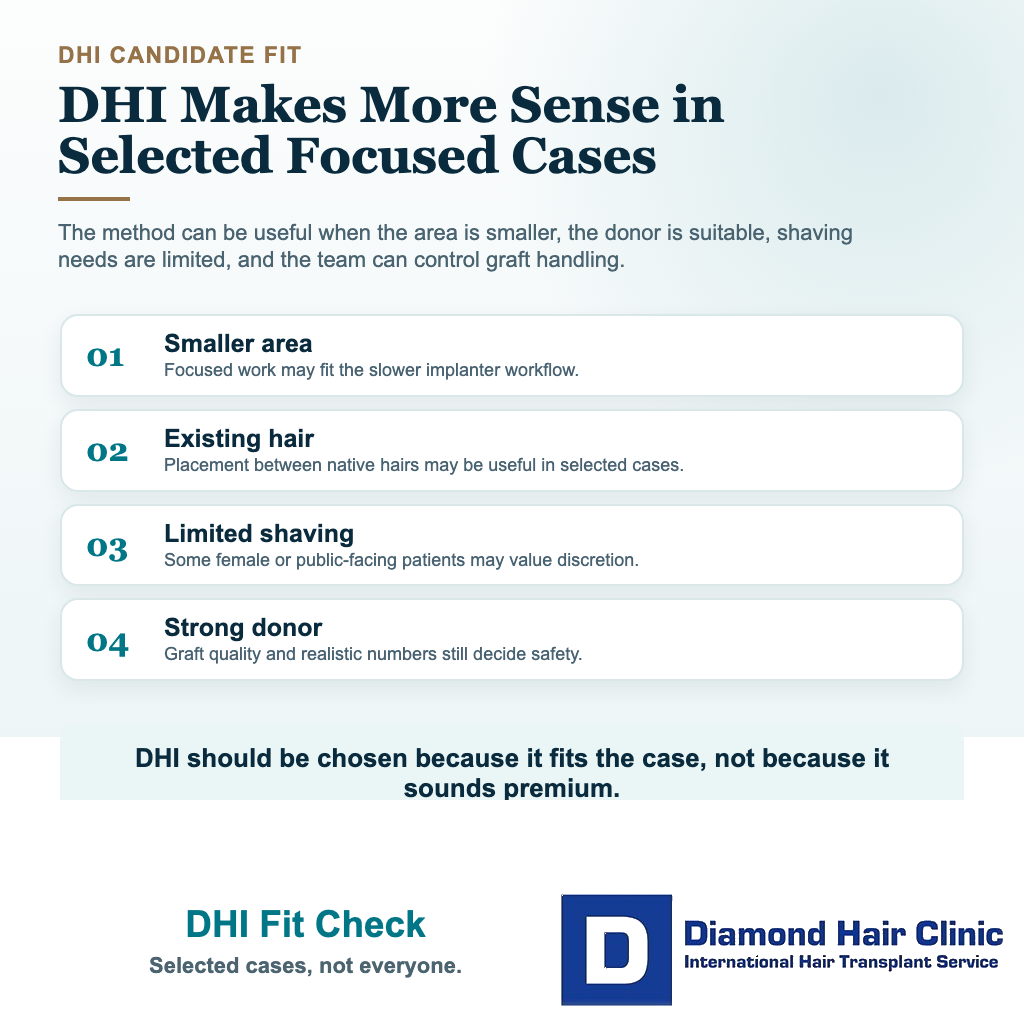
Even in these cases, proper diagnosis still matters. The clinic should explain why DHI is being recommended, how many grafts are realistic, and what the method will not solve.
Broader candidacy still depends on being a good candidate for hair transplant surgery.
What is the difference between DHI and FUE?
FUE describes individual graft extraction. DHI describes one way of implanting those grafts. DHI should not be understood as a completely separate biological method from FUE.
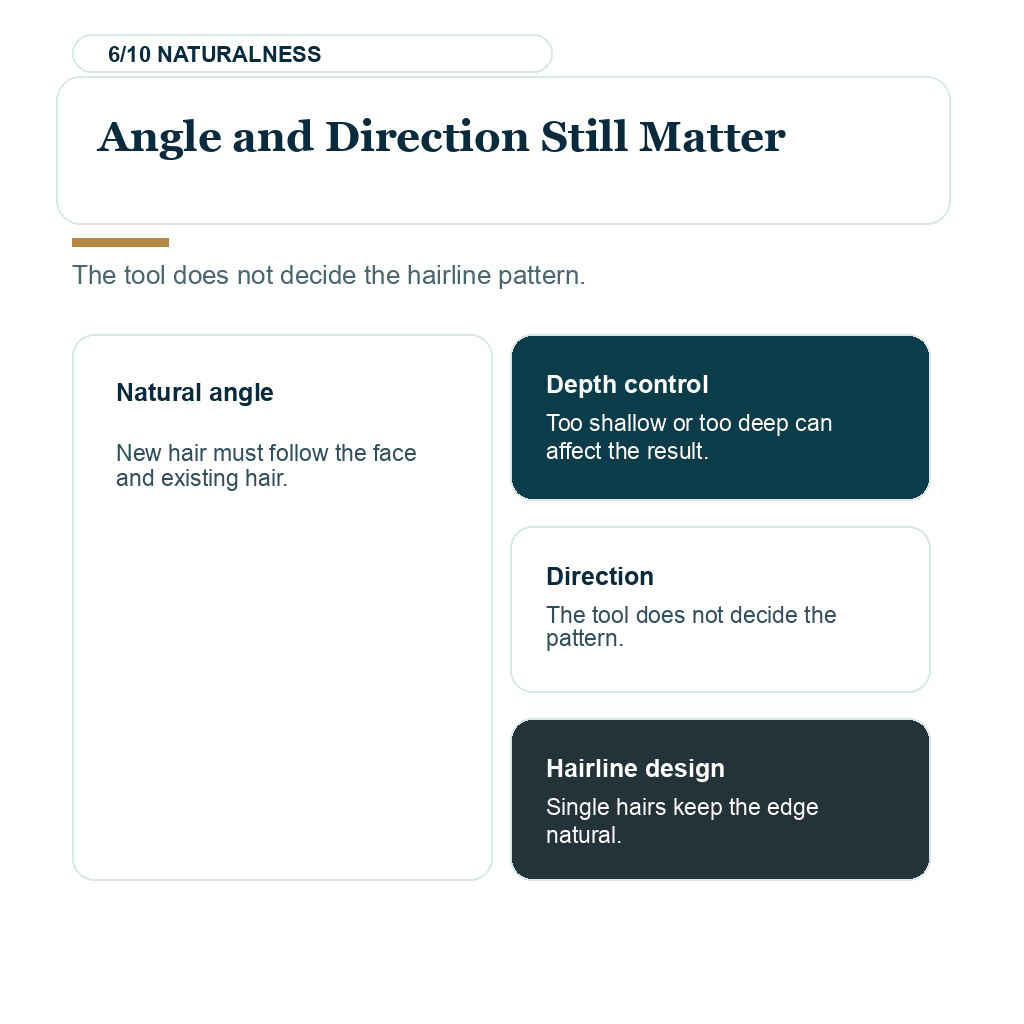
In Sapphire FUE, the surgeon creates recipient area incisions separately and then grafts are placed. This gives strong control over the full visual map of angle, direction, and density. In DHI, placement happens through the implanter pen.
This difference matters most when the patient has existing hair in the area, a narrow hairline correction, or a smaller focused zone. For a wide frontal area, mid scalp coverage, or a large crown plan, the bigger question is usually not the name of the tool. It is whether the surgeon can protect the donor area, create a natural distribution, and avoid wasting grafts on an unrealistic density promise.
The full comparison is explained in DHI vs FUE.
Which questions matter before choosing DHI?
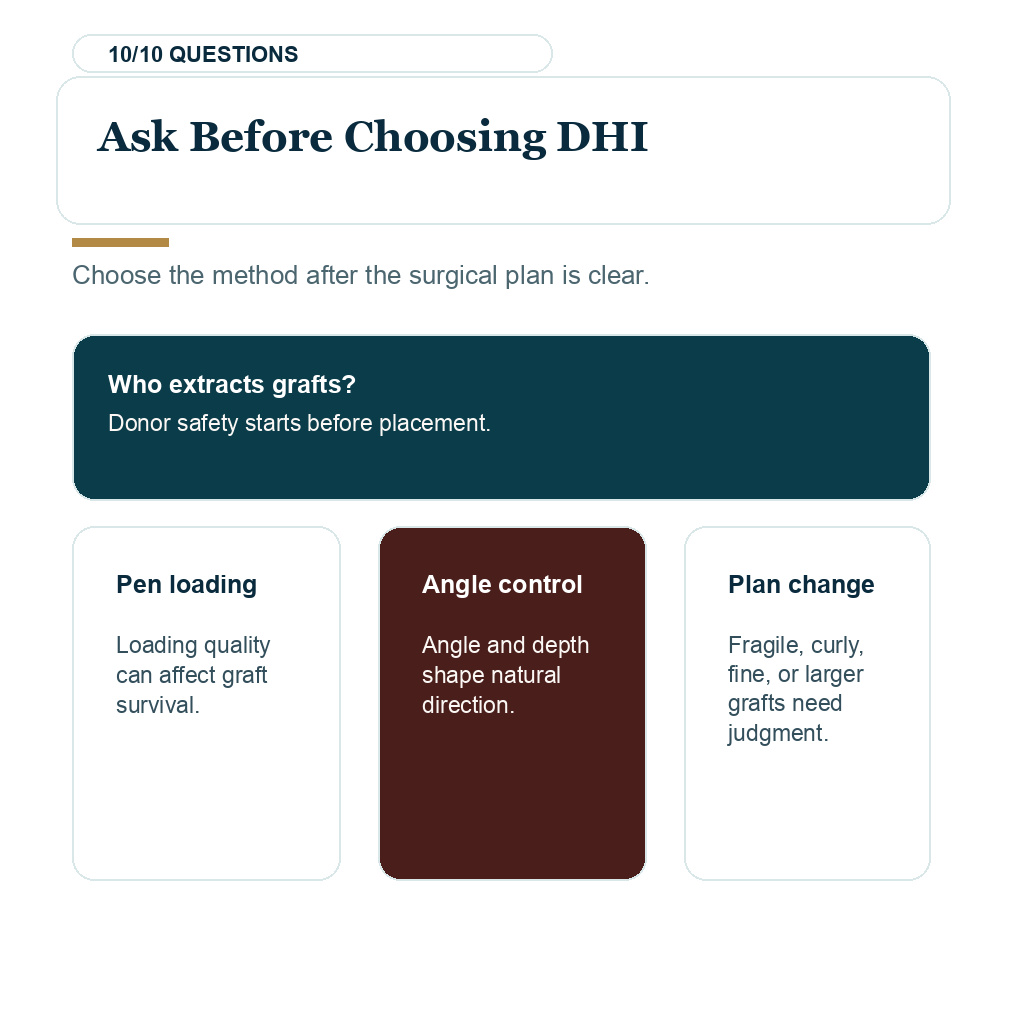
Before choosing DHI, ask who performs the extraction, who loads the implanter pens, who controls angle and direction, and who decides the final graft distribution. If the answer is vague, the method name is not protecting you.
Ask why DHI is being recommended for your case. A useful explanation should mention donor area quality, hair shaft thickness, existing native hair, the size of the recipient area, the need for shaving, and the realistic graft number. If the explanation is only that DHI is newer or premium, that is not enough.
Also ask what happens if the grafts are finer, curlier, more fragile, or larger than expected during surgery. The clinic should adjust the plan to the grafts and scalp in front of them. It should not force the patient into a method just because that method was sold during the consultation.
The same logic sits behind choosing a hair transplant clinic in Turkey. The method is only one part of safety. Doctor involvement, case selection, donor planning, and realistic expectations matter more.
Which alternatives to DHI should be considered?
The main alternatives are FUE, Sapphire FUE, and in selected cases FUT. At Diamond Hair Clinic, Sapphire FUE is usually preferred for larger scalp cases because it supports careful recipient area incision planning.
When I compare these options, I do not start with the instrument. I start with the patient. A young patient with future loss, a weak donor area, a wide crown, or a low hairline request may need a smaller or staged plan before any method is chosen.
The alternative should not be chosen by trend. It should be chosen by donor area, recipient area needs, hairline design, graft number, hair type, and long-term planning.
At Diamond Hair Clinic, I choose between DHI, FUE, and Sapphire FUE by starting with the patient, not the instrument. If DHI helps the plan, it can be useful. If another method gives better control of the recipient area and donor budget, that is the more responsible choice.
