Can Hiccups After Hair Transplant Damage Grafts?
Short hiccups after FUE do not usually mean grafts have been lost. Hiccups come from the diaphragm and chest, while graft risk usually comes from local trauma to the recipient area such as rubbing, scratching, pressure, fresh bleeding, or direct contact. The first question is not only “did I hiccup?” It is what happened around the hiccups.
I check when they began, how long they lasted, which medicines were used, whether reflux, nausea, retching, or vomiting appeared, and whether you can sleep, drink, eat lightly, and take prescribed medicine. Brief, settling hiccups are usually watched. Hiccups that keep returning, last into the next day, disturb recovery basics, or come with vomiting, fever, chest pain, breathing difficulty, strong reflux, weakness, or medicine confusion need a focused review.
Why hiccups can happen after surgery
Hiccups can start after surgery for reasons that are not specific to hair follicles. A long procedure day, an empty stomach, fast eating after fasting, stomach irritation, reflux, anxiety, poor sleep, or medicine exposure can all be part of the picture. Local anesthesia and sedation can also make the body feel unusual for a short time, so I ask about the operation day instead of assuming the scalp is the cause.
I separate the symptom from the graft fear. You may feel a jolt in the chest and imagine the grafts moving. In reality, the grafts sit in the recipient area. Hiccups do not pull them out in the way direct rubbing, scratching, bleeding, or trauma can.
If you want the background on why anesthesia medicine can feel strange after surgery, read my guide to adrenaline and local anesthesia during hair transplant. For this symptom, the practical question is whether the hiccups stayed short, started to affect recovery basics, or became persistent enough to review.
Hiccups do not usually damage grafts
Hiccups alone are not a graft loss diagnosis. I would not treat a short hiccup episode as proof that grafts were dislodged. Grafts are threatened mainly by local events such as rubbing, scratching, picking, direct pressure, fresh bleeding, or trauma at the recipient area.
The exception is the event around the hiccup. Repeated retching, vomiting, a fall, direct contact with the transplanted area, fresh bleeding, or a new open spot on the scalp changes the question. Then I want photos and the exact sequence. The concern is not the sound. It is whether the scalp was injured or whether you cannot keep fluids and medicine down.
Do not test the grafts with your fingers because you are anxious. Do not press the recipient area to prove it is secure. Leave the scalp alone, avoid friction, and report the context instead.
Medicine details to review first
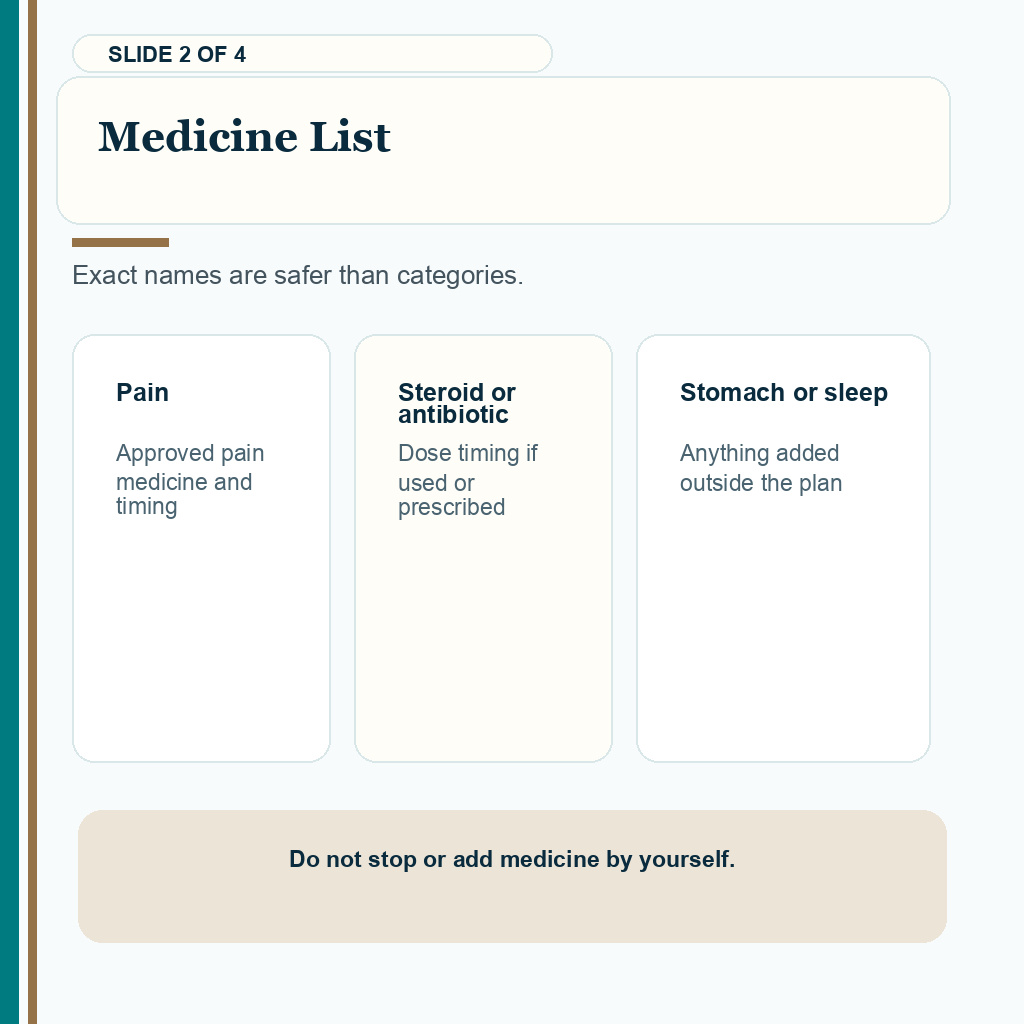
When hiccups are reported after surgery, I review the medicine list before giving a confident answer. I check which painkiller your clinic approved, whether a steroid was given or prescribed, whether antibiotics were started, whether stomach protection or nausea medicine was used, and whether any dose was taken differently from the plan.
Steroid dose or timing is one example. Corticosteroids can be associated with hiccups in some settings, and pain medicines or sedation related medicines may also be relevant. That does not mean you should stop a prescribed medicine alone. It means the detail belongs in the review. The same is true for prednisone and hair transplant planning and for the painkiller your clinic approved after hair transplant.
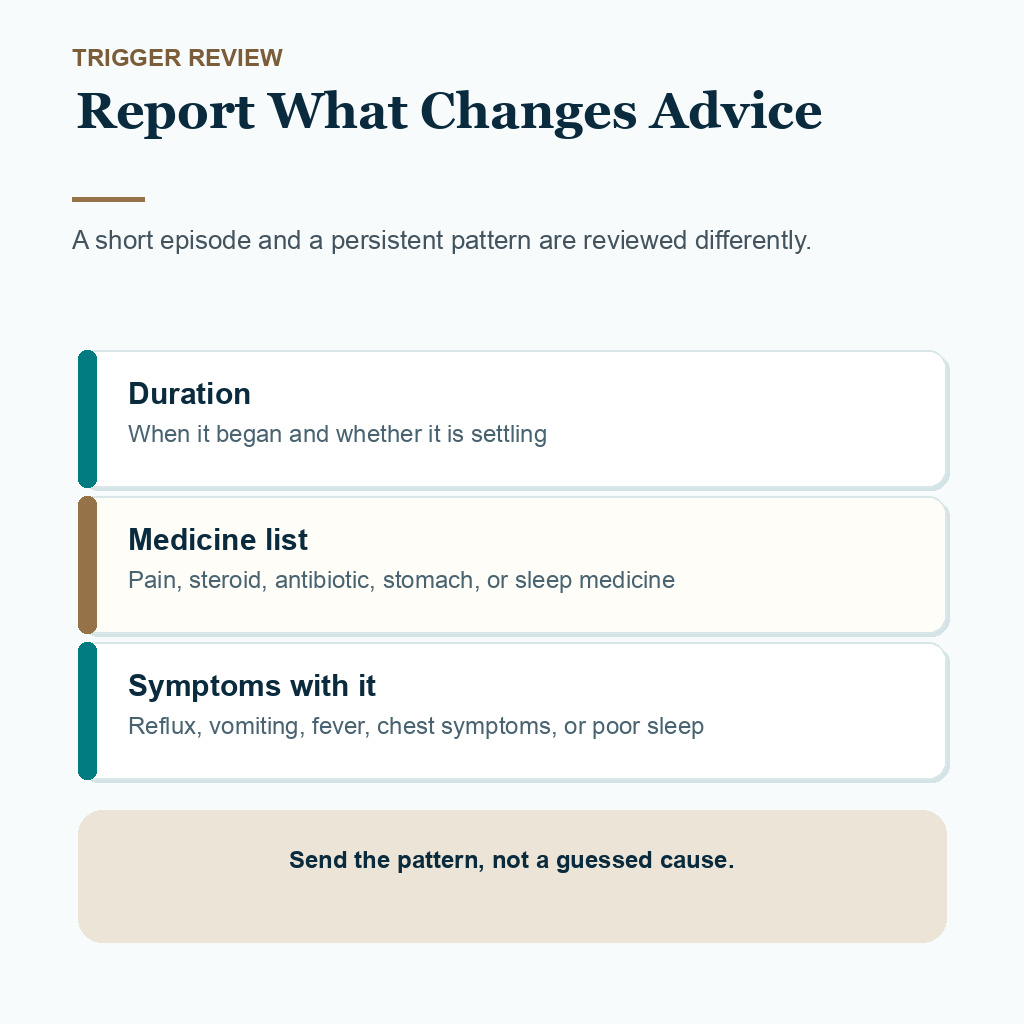
I also ask whether anything was added outside the plan. Herbal drops, sleep tablets, reflux medicine, old prescriptions, alcohol, or a medicine from a travel kit can turn a simple symptom into a medication safety question. A vague message like “I have hiccups” is less useful than a precise message with start time, duration, medicine names, stomach symptoms, and sleep impact.
When hiccups need medical review
A few minutes or a short cluster of hiccups that fades is different from hiccups that keep returning for hours, disturb the night, or continue into the next day. In general medicine, hiccups lasting beyond about 48 hours are a reason for medical review because the trigger may be more than a passing irritation. After hair transplant surgery, I use that threshold as a signal, not as permission to wait when symptoms are already concerning.
If hiccups are mild but interrupting sleep, I still want to know. In the first nights, poor sleep can make aftercare less careful because you may touch the scalp, miss medicine timing, or misunderstand washing instructions. If hiccups come with fever, chest symptoms, breathing difficulty, severe stomach pain, confusion, weakness, or illness symptoms, review should not wait for a routine message window. My article on cold, flu, and fever after a hair transplant explains why systemic symptoms change the recovery plan.
Hiccup trigger radar
Match the pattern before choosing the next step
Select the closest pattern. The response changes when hiccups become persistent, disrupt recovery basics, or appear with stomach or systemic symptoms.
Reflux, vomiting, and poor sleep change the advice
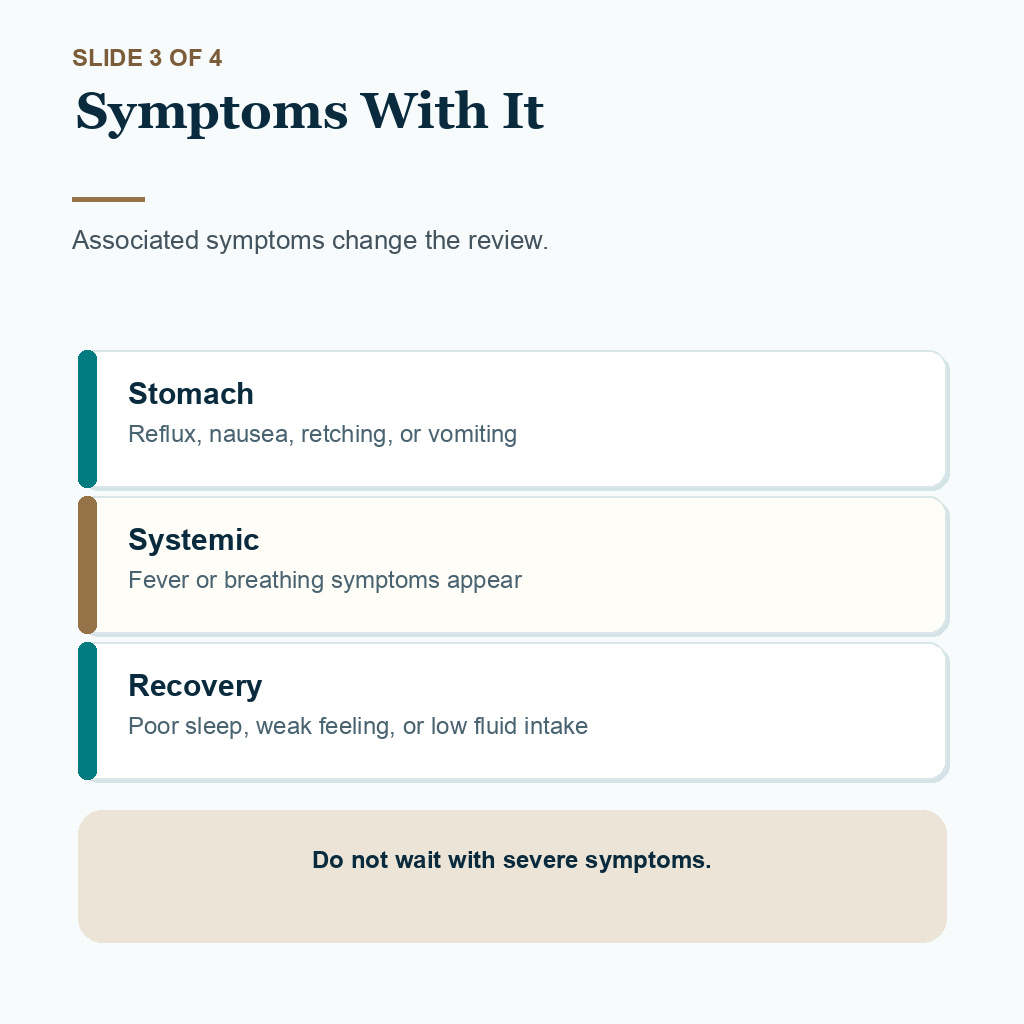
Hiccups that appear with reflux are not the same as hiccups that appear once after a meal and fade. Reflux can irritate the stomach and throat, disturb sleep, and make you reach for extra medicine without asking. If nausea after FUE is also present, I want to know whether you can drink, eat lightly, and keep medicine down.
Vomiting is a separate warning pattern because retching can be forceful and can disturb hydration. It still does not mean graft loss automatically. The main questions are how many times vomiting happened, whether there is fresh bleeding or scalp trauma, whether prescribed medicine stayed down, and whether you feel weak or dehydrated. I explain this boundary in my guide to vomiting after a hair transplant and my guidance on nausea after FUE.
Poor sleep also deserves respect. If hiccups keep you awake, the next day can become more anxious and less careful. Include the sleep effect in the message, not only the word hiccups.
What to send before asking for advice
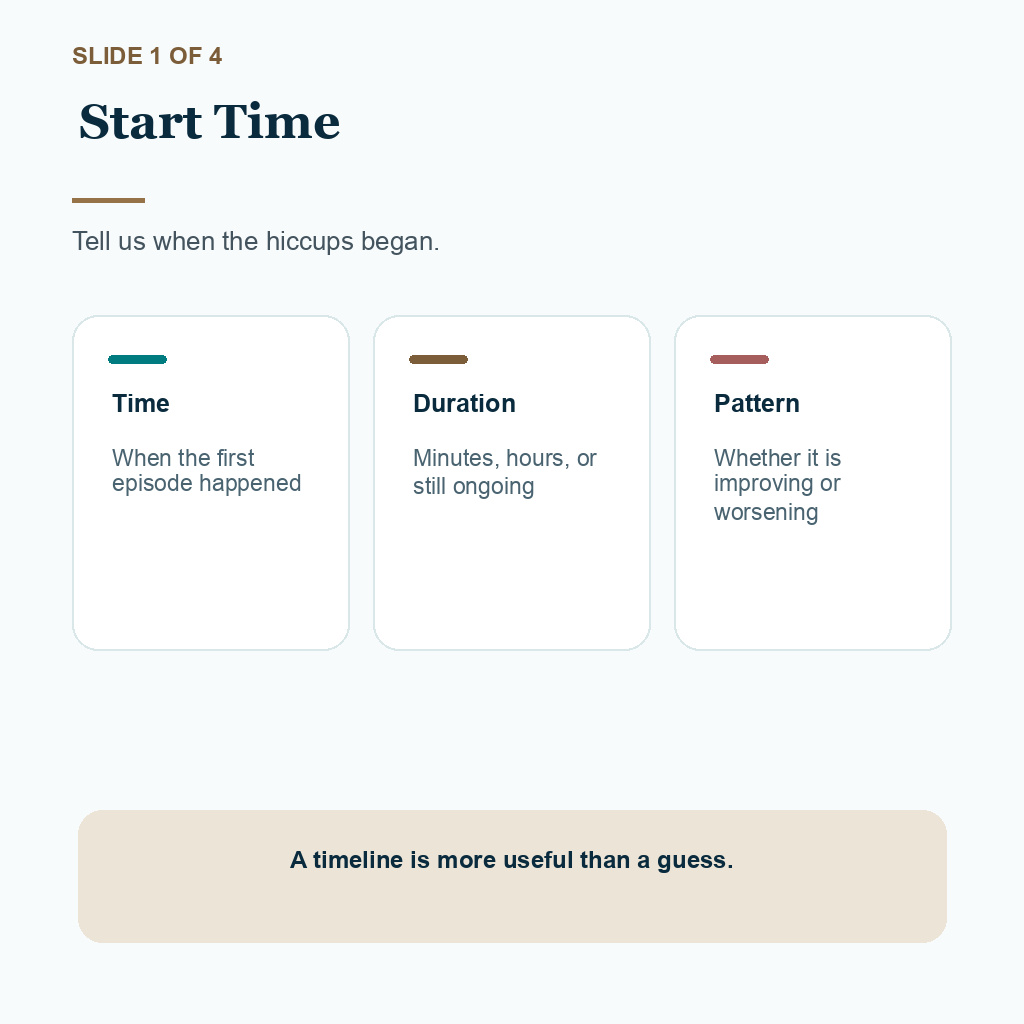
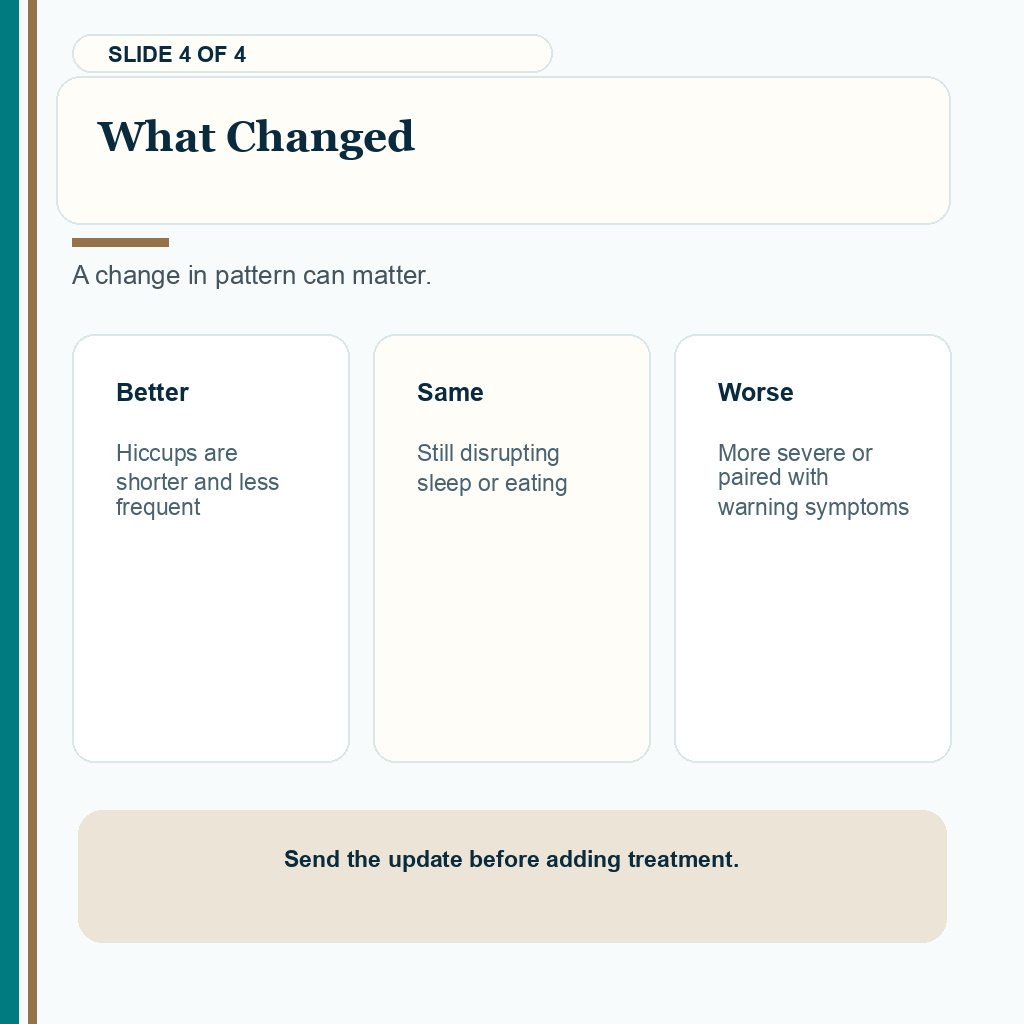
When you message the clinic, send a short timeline. Start with the time hiccups began, whether they are continuous or in attacks, and whether they are improving, unchanged, or worsening. Add the surgery date and whether the first wash has already happened.
Then list medicines exactly. Include pain medicine, antibiotics, steroid tablets or injections, stomach medicine, nausea medicine, sleep medicine, supplements, and anything taken outside the clinic plan. If you have a broad question about medicines after hair transplant, the key principle remains that exact names and timing are safer than guesses.
Finally, report associated symptoms. Mention reflux, nausea, vomiting, fever, chest discomfort, breathing difficulty, severe abdominal pain, weakness, inability to drink, or any direct scalp accident. Photos are useful if the scalp changed, bled, or was touched. Photos are less useful if the scalp looks unchanged and the issue is mainly hiccups. Send the pattern, not a guess.