Bathroom Breaks During FUE Are Part of the Plan
A long FUE day should not feel like a test of how long you can hold your bladder. Patients sometimes ask me very directly whether they can pee during a hair transplant, or whether asking for the restroom will annoy the team or put grafts at risk. That should not be an embarrassing question.
Yes, bathroom breaks can be planned during a hair transplant. The important point is not to stand up suddenly, hide urgency, restrict fluids, or try to solve the problem alone. A planned restroom pause is different from rushing to stand during active graft work, dizziness after lying still, or urinary symptoms that need medical review.
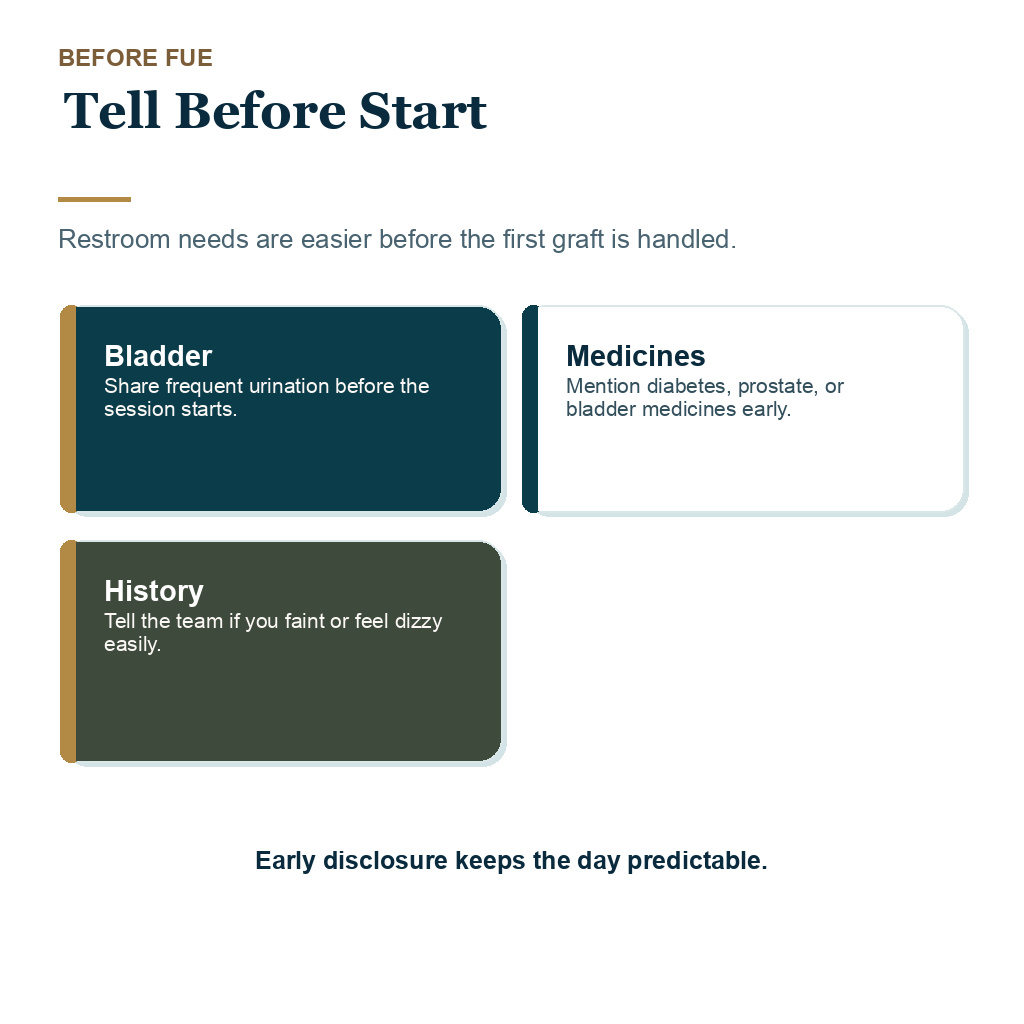
This matters most in longer sessions, where extraction, implantation, anesthesia, meals, and stillness all have to be coordinated. If your bladder, medicines, anxiety, diabetes, prostate symptoms, or previous fainting episodes could affect the day, bring it up before surgery starts.
If you know you need frequent restroom breaks, say it before positioning and anesthesia begin. The team can choose safer pause points when the need is expected instead of urgent.
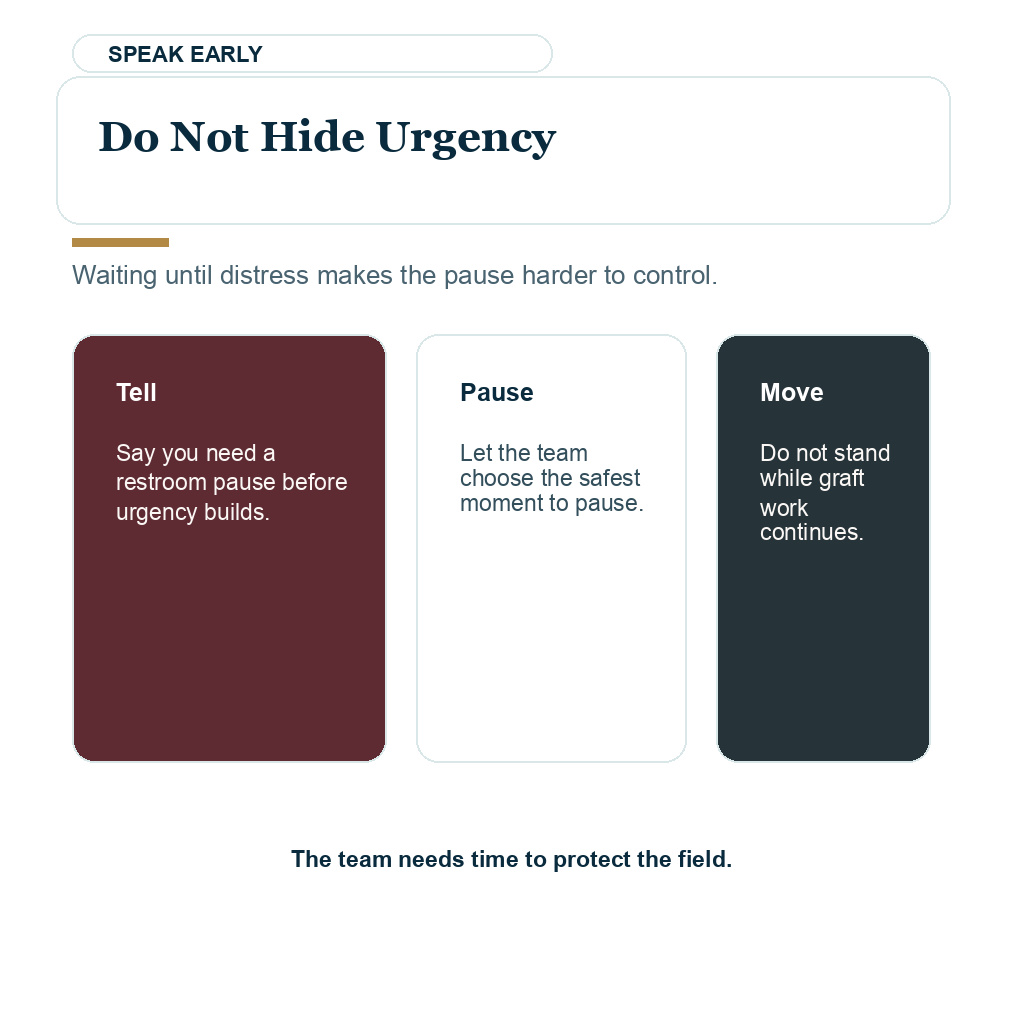
During the procedure, urgency should be signaled before you move. Use the call signal and wait for the team to pause the step. Standing first and explaining later is the situation the plan is trying to avoid during active graft work.
When are bathroom breaks normal during a long FUE day?
A long session is not one continuous movement from the first graft to the last. There are planned transitions, positioning changes, washing steps, local anesthesia checks, food or fluid pauses, and moments where the team can safely reset the field. If lying face down worries you, the face down FUE positioning plan helps name neck, back, breathing, and break limits before the first graft is handled. The exact timing depends on the stage of the operation.
Asking for a break is not the problem. The risk starts when urgency becomes distress and the patient tries to sit up, stand, reach for clothes, or walk without warning. During long hair transplant session planning, comfort is part of the surgical plan because discomfort can make a patient move at the wrong time.
When I know early, I can decide when to pause, how to help the patient stand, and how to restart without rushing the graft work. Tense silence in the chair gives the team less control, not more.
What should you share before the day begins?
Some restroom needs are ordinary. A patient drinks water, waits for a long time, and needs a break. That can be managed. Other patterns should be part of the medical conversation before the procedure begins, especially if privacy, period products, incontinence pads, or assisted walking may be needed.
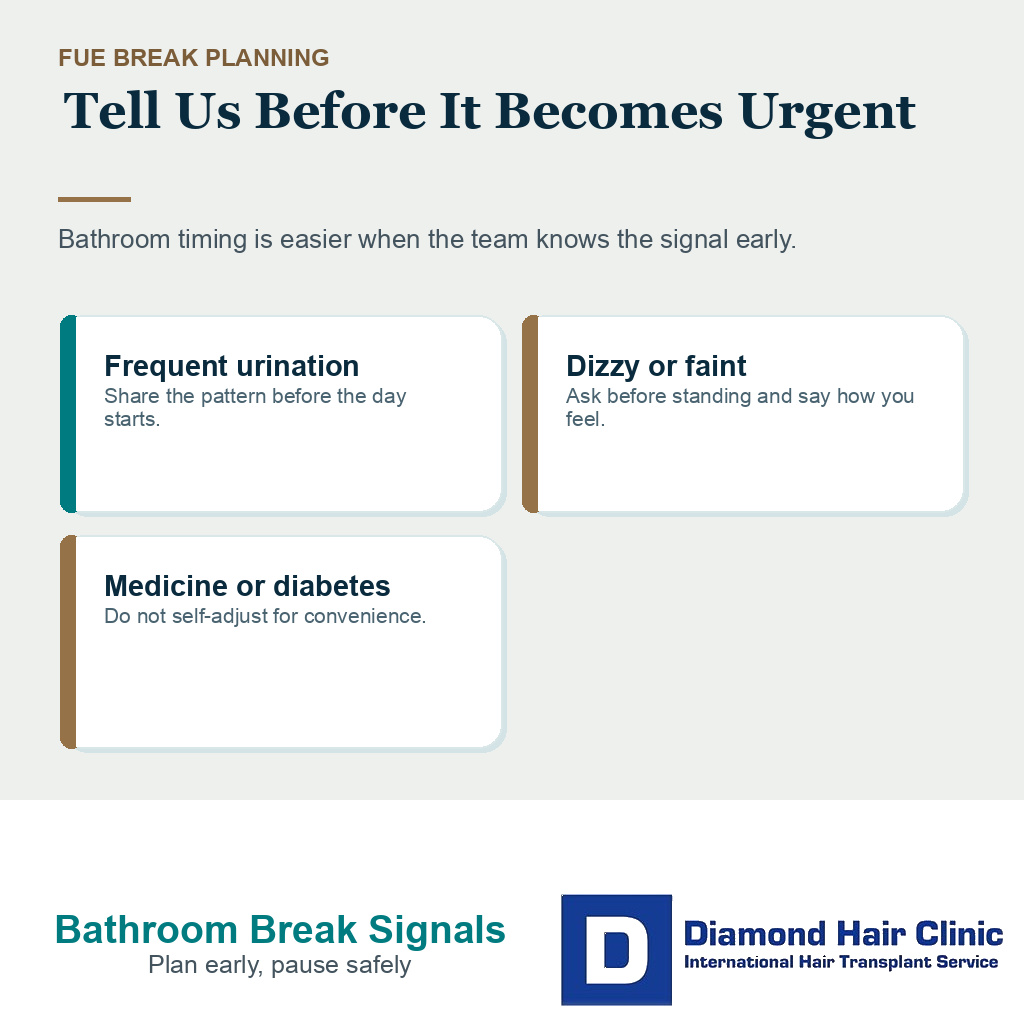
Share if you urinate very frequently, wake at night to urinate, have prostate or bladder symptoms, urinary retention, recurrent UTI symptoms, use diuretics, have diabetes, feel panic urgency, or have a history of dizziness when standing. Also mention new vomiting, diarrhea, or stomach illness before surgery, because that is not just about restroom timing. Medication before a hair transplant should not be adjusted casually for convenience.
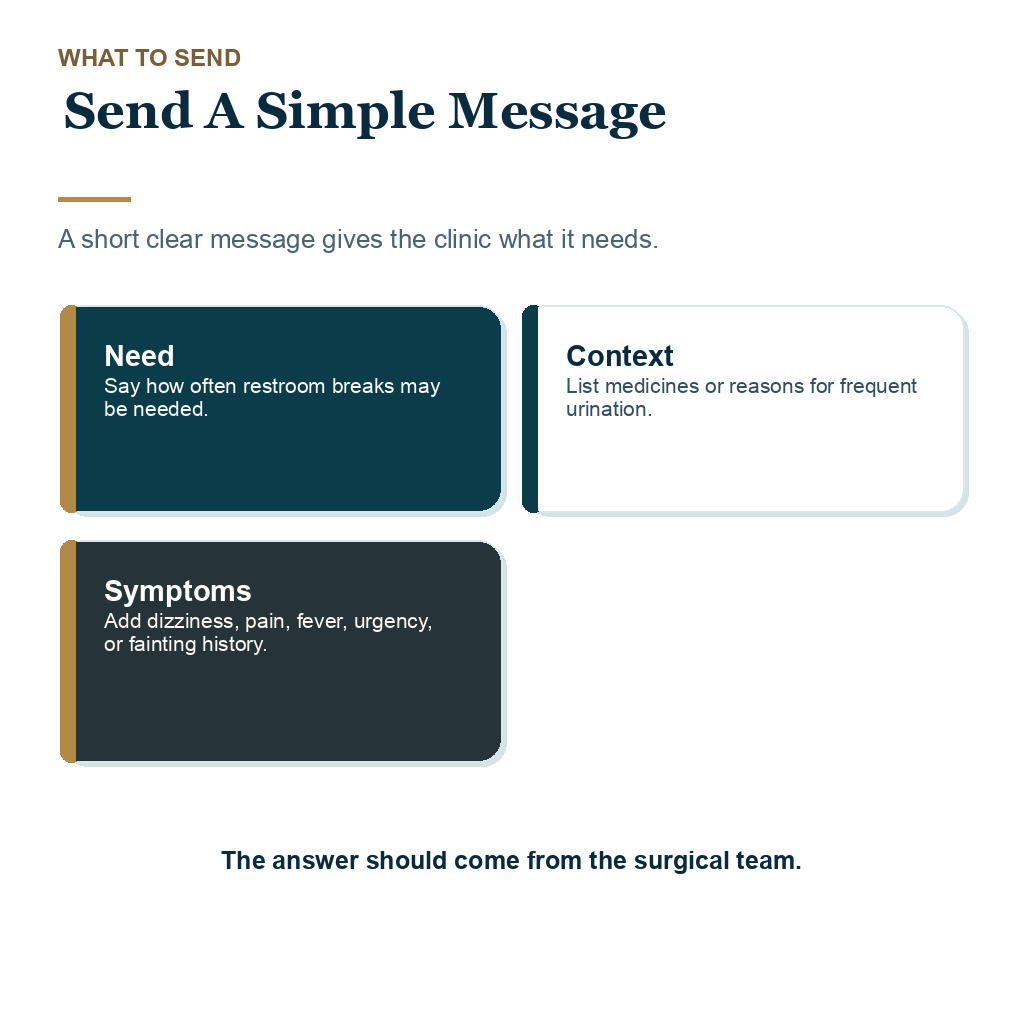
A simple message before surgery is enough. “I usually need the restroom often, I take a diuretic or diabetes medicine, I have prostate or bladder symptoms, I may need privacy for period products or pads, or I sometimes feel dizzy when standing. Can you plan the day around this safely?” This lets the team decide whether the issue is routine comfort planning, assisted movement, or something that needs medical review before the procedure.
I do not see this as embarrassing. I see it as planning the day properly. If sedation is used, if a patient gets lightheaded, or if glucose is unstable, the team needs to know before the patient walks away from the chair. Blood tests before a hair transplant and preoperative history help because they make these risks visible before the first graft is handled.
Why should you not restrict fluids to avoid the restroom?
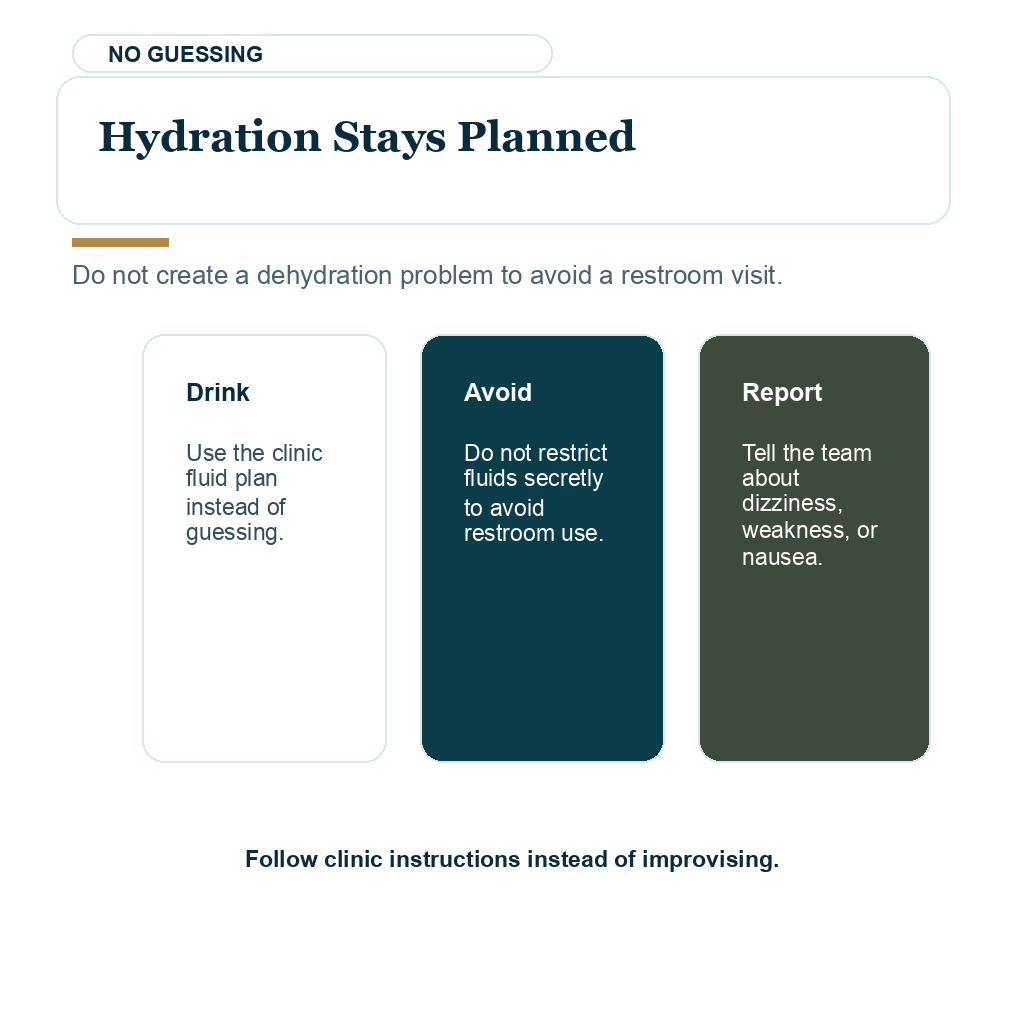
Some patients think the best solution is to drink almost nothing before surgery. That can create a different problem. Dehydration can make a long day harder, especially when there is fasting guidance, local anesthesia, nervousness, and hours of stillness.
Follow the specific fasting and fluid instructions you were given. Do not invent a stricter rule because you are embarrassed about bathroom breaks. Fasting before a hair transplant has a purpose, but it is not the same as making yourself dry for the whole day.
Patients who usually need the restroom soon after drinking should say so before the chair is set. The team can plan water, timing, and positioning without turning comfort into sudden movement. For patients who need help standing, walking, or transferring, the restroom plan should sit inside the wider mobility plan before FUE.
If you feel hungry, shaky, sweaty, faint, or nauseated, tell the team before standing or walking away from the chair. The cause may be anxiety, low intake, glucose balance, blood pressure, medicine timing, or the length of the day. Feeling hungry, shaky, or faint before FUE deserves a direct update before the body forces a pause.
Hydration also continues after the operation. The advice about water and electrolytes after FUE belongs mainly to recovery, not as permission to drink huge amounts on surgery morning. On surgery day, drink according to your instructions and let the team manage breaks around the operation.
How do breaks fit around extraction and implantation?
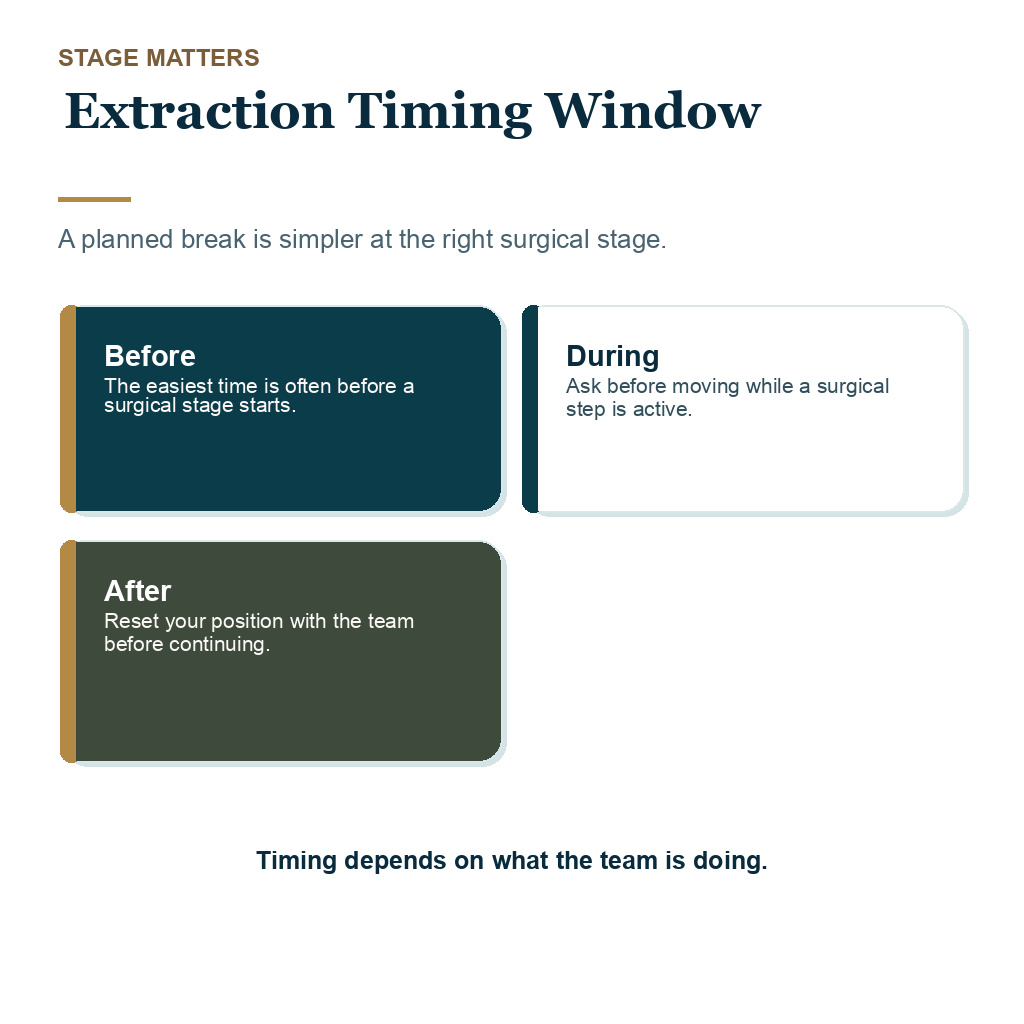
The easiest timing is often before a stage begins. If you already need the restroom before extraction starts, say so. A short pause before positioning and sterile preparation is much easier than a rushed pause after the team has started a delicate sequence.
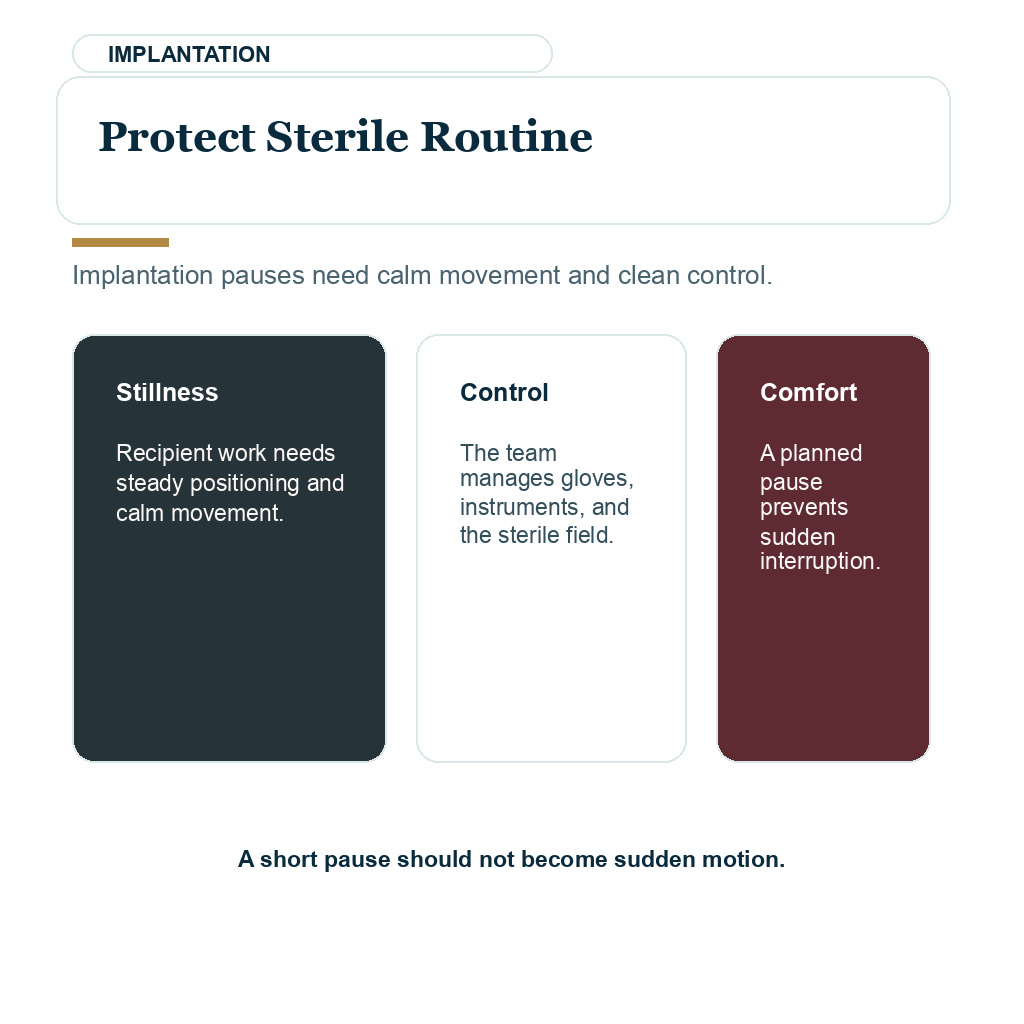
During extraction, the team is managing your head position, anesthesia comfort, graft handling, and the rhythm of work. During implantation, the recipient area must be protected while the team places grafts carefully. The time FUE grafts spend outside the body is one reason the flow matters, but holding urgency until distress is not safer for the graft work. A controlled pause lets the team secure the field, protect the grafts already handled, manage gloves and drapes, and restart deliberately.
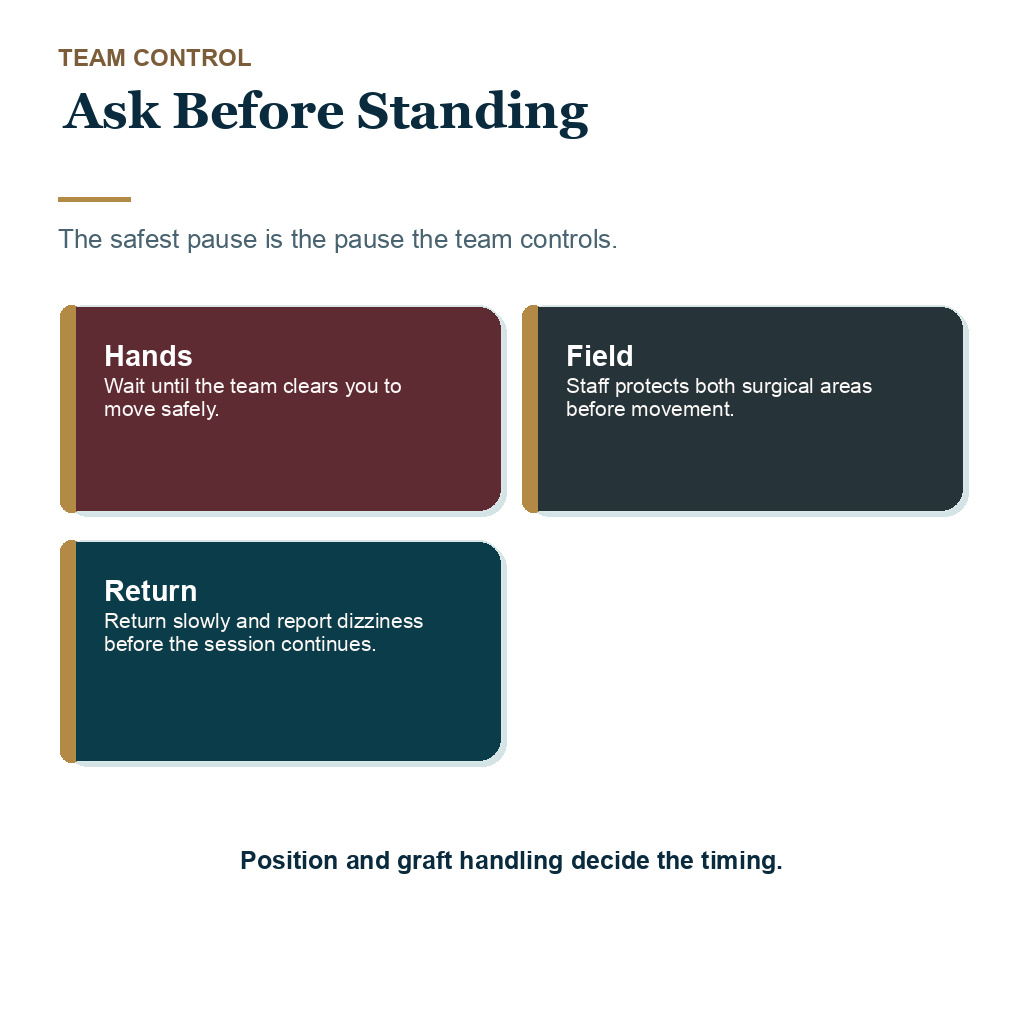
During surgery, ask before moving. If you need the restroom, say it clearly and wait for instructions. If you feel dizzy, lightheaded, sweaty, or nauseated, say that before standing. This is especially important if you had sedation during a hair transplant. You may feel awake but still need help standing and walking.
Keep personal items from causing sudden movement
A restroom pause is easier when watches, rings, loose jewelry, and phone handling are not added to the movement. Planning jewelry, piercings, and nails before FUE helps the team pause, stand, and reset the patient without clutter.
In the restroom, keep that rule. Do not bend close to the mirror, touch the recipient area, test scabs, put on a hood, or inspect grafts with wet or unwashed hands. Use the break for the break, then let the team reset you safely.
Bathroom pause plan controlled by the team
Choose the situation that fits the day. A planned restroom visit before a stage, a pause during graft work, and urinary symptoms before travel are different decisions.
Very frequent urination, diuretics, diabetes, prostate or bladder symptoms, anxiety urgency, or fainting history should be shared before the day starts.
Knowing the issue early lets the room plan bathroom timing without rushed movement or surprise.
List the medicine or condition clearly. Do not hide urgency because it feels embarrassing.
If numbness, heart rate, or adrenaline sensations make you anxious, the hair transplant anesthesia and adrenaline explanation is useful background. For bathroom planning, I still care most about communication before movement.
When does a urinary issue need medical review?
A routine bathroom break is different from urinary symptoms that need medical review before FUE, or from bowel symptoms that may point to a medical issue. Burning with urination, fever, visible blood in urine, cloudy urine with fever or feeling unwell, inability to pass urine, severe pelvic or side pain, uncontrolled diabetes symptoms, repeated vomiting, watery diarrhea, or a new urinary medicine change should be mentioned before the operation day.
Do not ignore those signs because the trip is already booked. Some issues only need planning, but some need medical review before surgery. Contact the clinic early so the procedure plan, timing, or medical clearance can be checked before you travel or arrive.
This is also why the preoperative questionnaire should be taken seriously. A small detail about urination, fainting, anxiety, diabetes, or a tablet taken every morning can change how the day is organized. It may not cancel anything, but it can change the order, the monitoring, or the advice.
Surgery morning should stay simple
On the morning of surgery, do not create a new routine. Do not drink huge amounts of water at once. Do not stop usual medicines unless the clinic or your doctor told you to. Do not take a diuretic differently because you want fewer restroom visits. Wear clothing that opens easily if the clinic has advised it, and do not arrive hiding symptoms that matter.
A simple message is enough. Say that you usually need the restroom often, you take this medicine, you felt dizzy before, or you get anxious when you have to hold still. That gives the team useful information without making the concern bigger than it needs to be.
The written instructions before a hair transplant should remain the foundation. If one instruction seems difficult because of urinary frequency or a medical condition, ask before the day begins instead of improvising alone.
These 8 bathroom break slides separate what to tell before FUE, why not to hide urgency, fluid planning, asking before standing, extraction timing, implantation routine, symptoms that change the priority, and the simple message to send the clinic. Swipe sideways, use the arrows one slide at a time, or use the numbered buttons below the image.