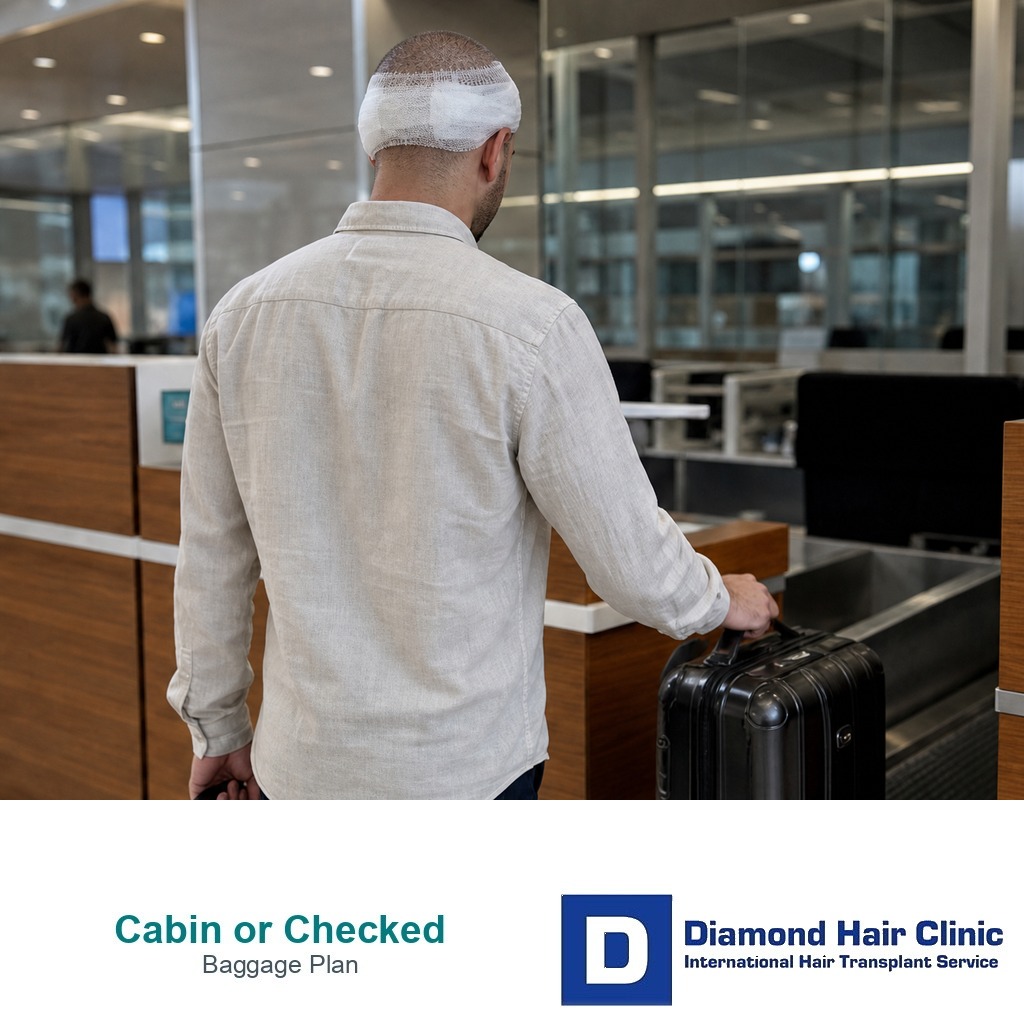
Cabin Bag or Checked Bag for the First Trip Home
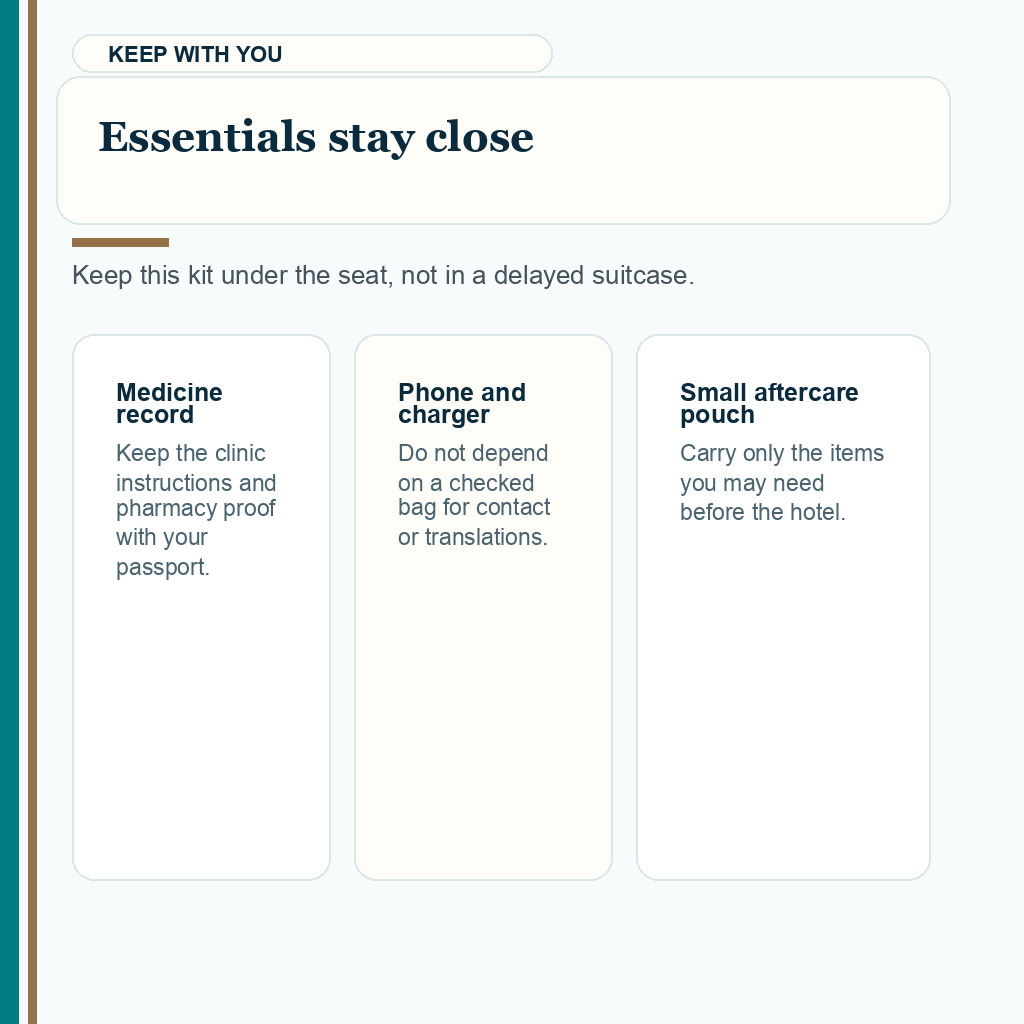
After a hair transplant, I usually do not want the patient to solve the flight home by forcing everything into one cabin suitcase. Keep essentials close, keep heavy or bulky items away from the scalp, and settle unclear items before travel. In practice, that usually means a small bag that stays under the seat for your passport, phone, charger, clinic instructions, medicine record, essential medicines, and the aftercare items you may need soon. Bulky liquids, spare bottles, shoes, clothing, and heavy items can go in checked luggage when your route allows.
The mistake is to treat “cabin bag” as one thing. A small personal item under the seat is different from a cabin suitcase lifted overhead. The safer split is the one that avoids a security argument, a heavy lift above the head, rushed bending, or losing the only copy of a medicine record rather than simply fitting everything in one bag.
This is not a luxury travel question. In the first days after FUE, the scalp is still sensitive, the donor area can feel tight, and the patient may be tired from surgery and travel. A badly packed bag can turn a simple airport route into lifting, searching, spilling, or panicking. A simple split is safer.
What should stay with you?
Keep the items your clinic expects you to use in the first days with you, not only in checked luggage. Some basics can be replaced locally, but prescribed medicines and written instructions should not depend on the suitcase arriving.
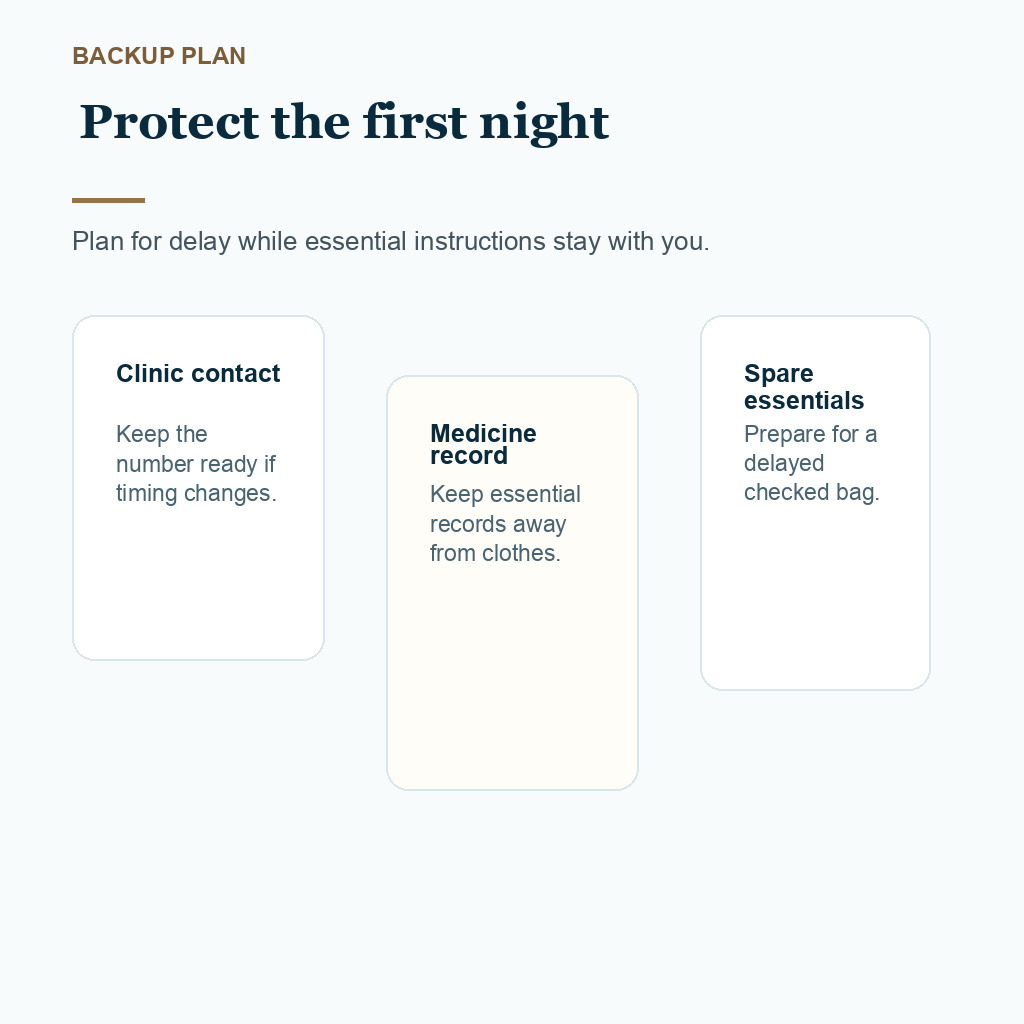
Pack for the first night as if checked luggage may arrive late. Keep the written aftercare plan, essential medicines, phone charger, and clinic contact details in the small bag that stays with you.
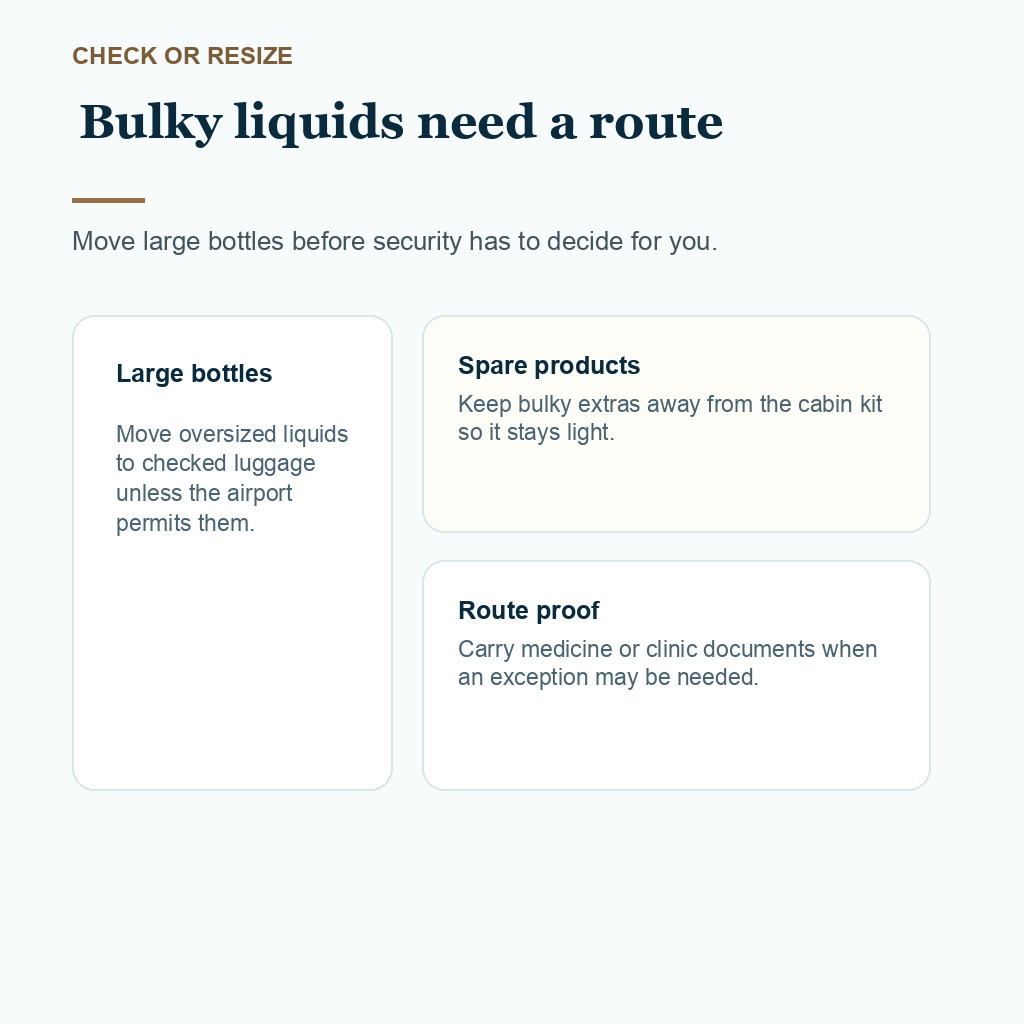
Do not treat spare shampoo, extra foam, or a large bottle as the same problem as the aftercare pouch for the first few days. The urgent pouch should stay reachable. Extra product can travel separately when the route and airline rules allow it.
This is different from packing everything you own into a cabin suitcase. A small personal bag is easier to keep under the seat, easier to protect, and less likely to make you lift above shoulder height. If you use a backpack, keep it light and put it on slowly so the straps do not make you twist or rush through crowds. If you are still preparing for surgery day itself, keep that separate from the flight home plan and review what to bring for FUE surgery day.
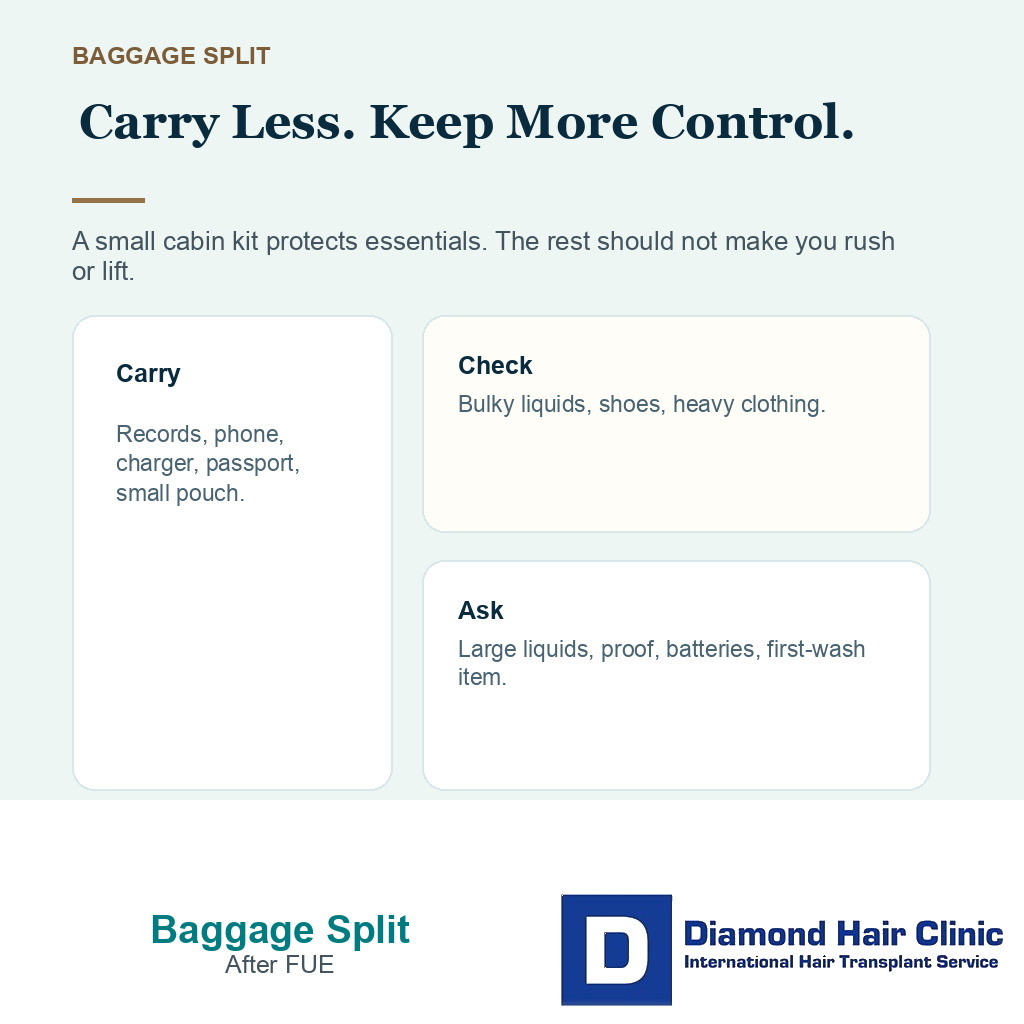
A calm baggage split keeps essential items close without turning the cabin bag into a heavy recovery risk.
Plan large liquids by route rules and urgency
Many patients become anxious because the clinic gives sprays, foams, shampoos, or bottles that do not fit neatly into cabin liquid rules. The mistake is to treat every liquid as the same kind of item. A tablet, a prescribed medicine, a spray, a shampoo bottle, a foam, a spare bottle, and a larger product pack may be handled differently by airport staff.
Rules can differ by airport, route, airline, and security equipment. Some routes still use small container limits for cabin liquids. Some larger medical liquids may need proof. A spare shampoo or extra foam is not the same as a clinic item you may need soon. Check the route rules before travel and review airport security after a hair transplant when liquids or screening rules are the main concern.
A clinic aftercare item should not be left behind because packing is awkward. For a large bottle, confirm a smaller format, written proof, or a different packing route. Clarify first wash or spray timing before checkout, while the bag plan is still easy to adjust. A delayed checked bag should not lead to random product substitutions or missed timed instructions. Contact the clinic before changing the plan.
Before checkout, separate the aftercare items into what you need before landing and what can wait. The products may travel differently, but the written instructions and essential medicine should stay close to you.
Medicine records should travel beside the medicine
If a medicine is essential, the record should travel with it. The medicine and the record should stay in the same small bag. That record can include the medicine name, the reason it was given, the timing, allergy relevance, and the clinic instructions. A medicine without its record is harder to explain at screening, harder to use correctly after landing, and harder to discuss if you need help later. Keep a clear photo of the labelled pack and the written instructions on your phone as a backup, but do not rely on a photo to replace the medicine, its original label, or the clinic contact route.
First, I want the patient to know exactly what each medicine is for. Then we decide where it should travel. If the name, dose, timing, or allergy relevance is unclear, review medicine names on FUE surgery day before the bag is closed.
For pain relief, stay with the plan approved by the clinic rather than adding extra tablets from home because the journey feels stressful. When the medicine plan is unclear, review the logic behind painkillers after a hair transplant before mixing medicines.
Overhead lifting can turn a cabin bag into a scalp risk
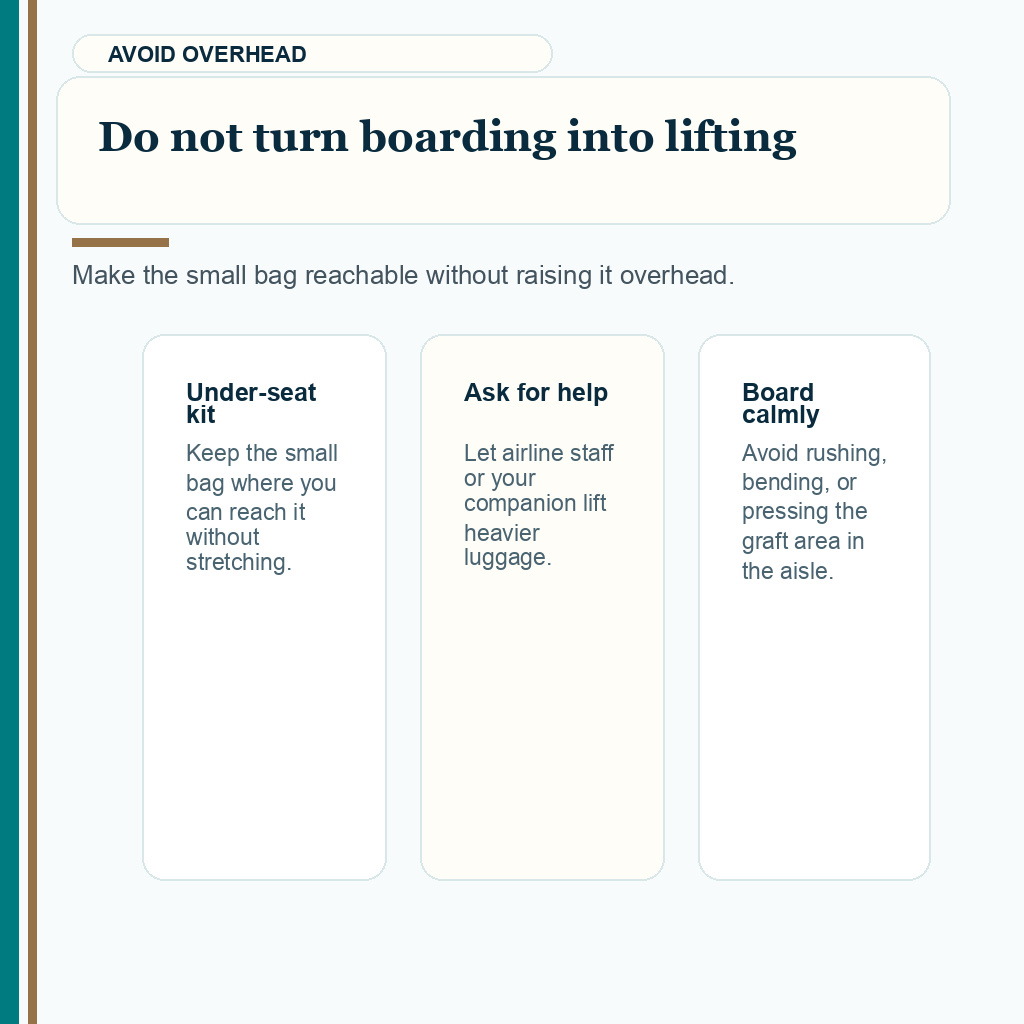
A small pouch that stays under the seat and an overhead cabin suitcase are both cabin baggage, but they are not the same recovery risk. A cabin suitcase can look safe when it is standing beside the bed. It becomes a different object when you have to lift it into an overhead bin while other passengers are moving behind you. Weight is only one part of the risk. The rush, the angle, the bending, the bump risk, and the instinct to protect the bag can matter just as much as the suitcase itself.
For an overhead cabin bag, arrange luggage help at the airport before boarding. A crowded aisle is the wrong place to solve a lifting problem. If you are traveling with someone, let that person handle the overhead bin and baggage belt. Better still, keep the essential kit small enough to stay under the seat and put heavy clothing, shoes, spare bottles, and items you do not need soon in checked luggage. The same common sense boundary applies to heavy lifting after a hair transplant. Recovery should not turn into a strength test.
Read this review excerpt
After the surgery, I was given detailed instructions on post-operative care, particularly the importance of avoiding any bumps to the head in the first few days. Dr. Mehmet even made me practice some precautions to ensure I followed them correctly.
It is also worth thinking about the person next to you. A window seat may reduce people brushing past you, but it can also make you depend on other people for movement. The best seat and bag plan is the one that lets you stay calm, avoid head contact, and avoid sudden movements.
Checked baggage helps with bulk but can create delay risk
Checked baggage can be useful because it keeps bulky liquids and heavy items away from your body during boarding. It can also reduce the temptation to lift a suitcase overhead. But checked baggage creates a different risk of delay, loss, or a long wait at the carousel when you are tired.
A single rule such as cabin only or always check it is too blunt. Do not check the only copy of anything essential. Keep the essentials you cannot safely lose with you. Check the bulky or heavy items that are not needed during the first hours after landing. If the route is tight, delayed, or medically uncomfortable, review flight home changes after FUE because the journey itself may need a calmer plan.
Before you leave for the airport, separate the items into four groups. Ask what must stay with you, what can be checked, what needs a clinic or airline question, and what makes the whole route too rushed or heavy. A packing reminder can help, but clinic instructions and airline rules still come first.