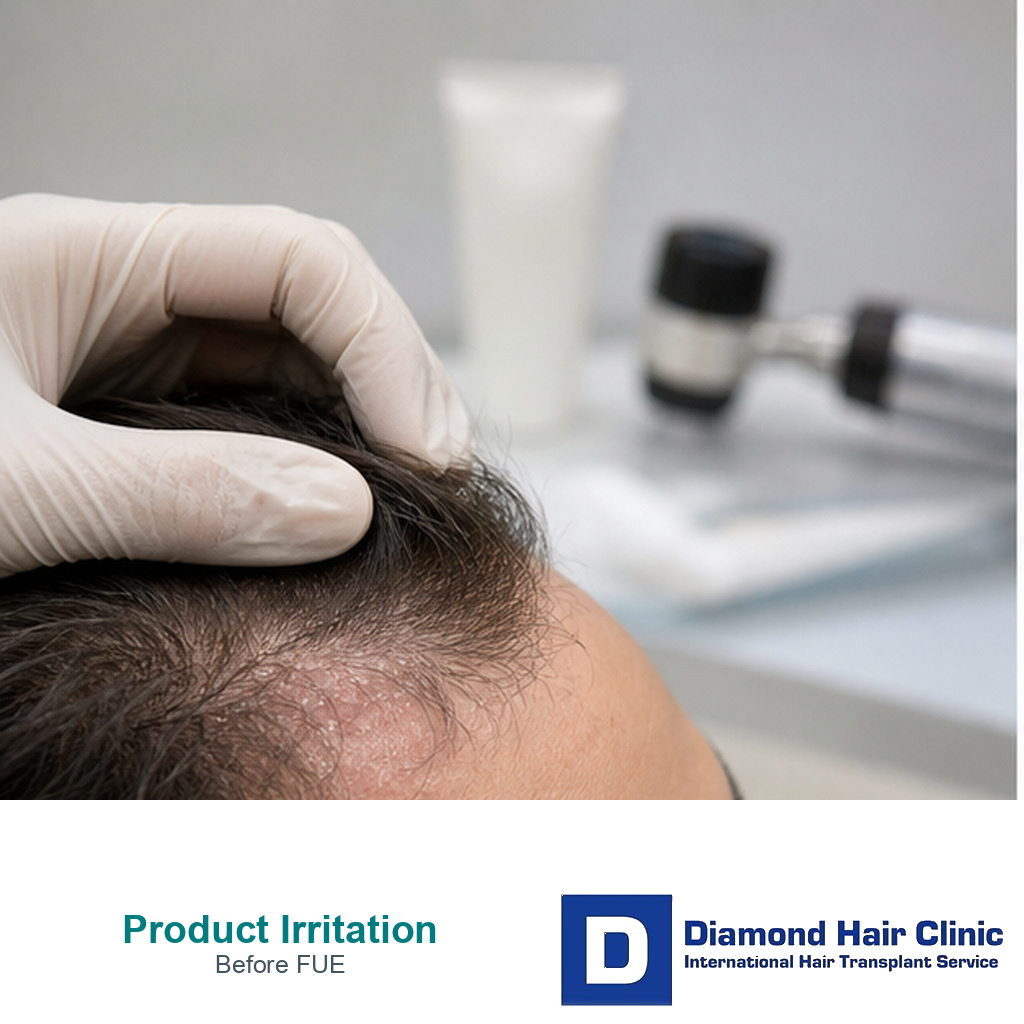
Product Irritation Before FUE Needs a Quiet Scalp
If a new product has made your scalp burn, itch, flake, feel sore, look red, or leave heavy residue before FUE, do not hide it and do not try to fix it with stronger products. Tell the clinic exactly what you used, when you used it, and what the scalp looks like now. FUE is easier to plan when the donor and recipient skin are quiet.
A product reaction before surgery is not a product review. It is a timing and disclosure question. Mild dryness or leftover product is different from active inflammation, pustules, weeping skin, increasing pain, warmth, or fever. The right decision depends on the surface of the scalp, not on the brand name alone.
Product irritation is a timing question
When I review a patient before FUE, I am not only looking at the hairline design or the graft number. I also need to know whether the scalp can tolerate local anesthesia, recipient area work, donor extraction, washing, and early healing. If a product has recently changed the skin surface, that information belongs in the plan before surgery day.
Many patients ask the wrong first question. They ask whether a shampoo, serum, oil, foam, or cream is good or bad. I need to know whether the scalp is quiet. A product that is harmless for one person may sting another. A medicated shampoo may help scale in one scalp and irritate another. A topical treatment may be useful long term but still make the skin look reactive today.
A product name alone does not diagnose the reaction. I look at the pattern, the timing, and whether the skin is improving or becoming more irritated. A small area of dryness after one wash is a different problem from spreading redness after repeated use. A sticky layer of oil is different from broken or weeping skin. These details help the team decide whether the appointment can continue as planned or whether the scalp needs time to settle.
Details I need before I clear the scalp
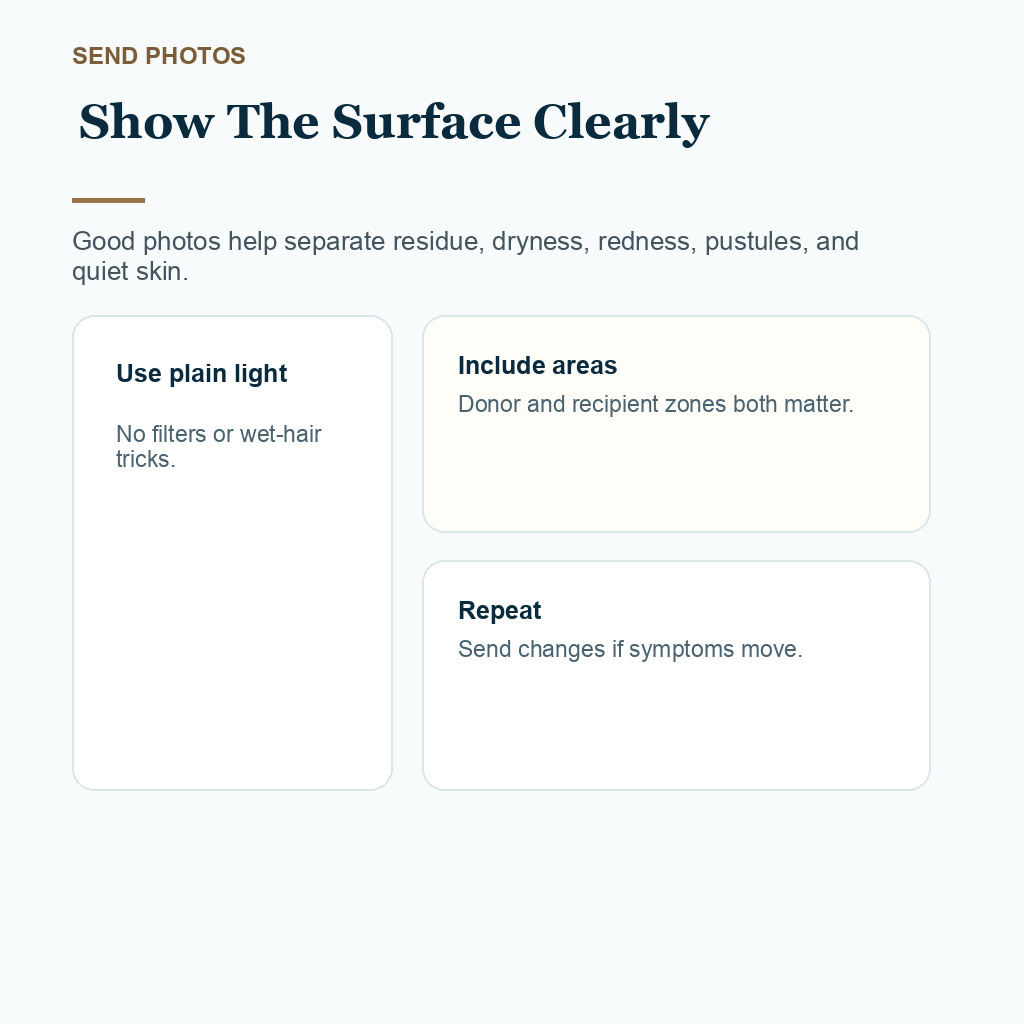
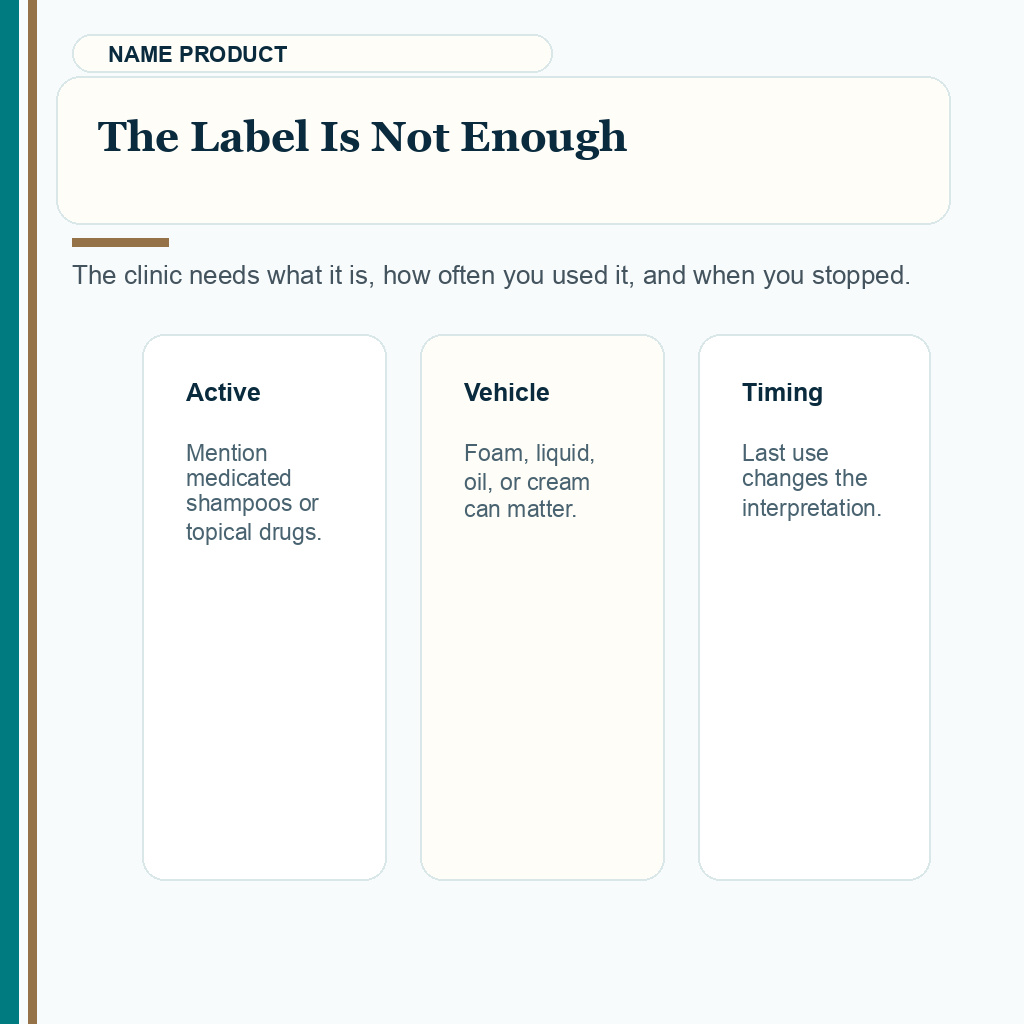
Send the product name and last use, the active ingredient if you know it, how often you used it, where you applied it, and the last time it touched the scalp. Then send clear photos in plain light. Include the donor area, the hairline or recipient area, and a wider view so the team can see whether the change is local or spread out.
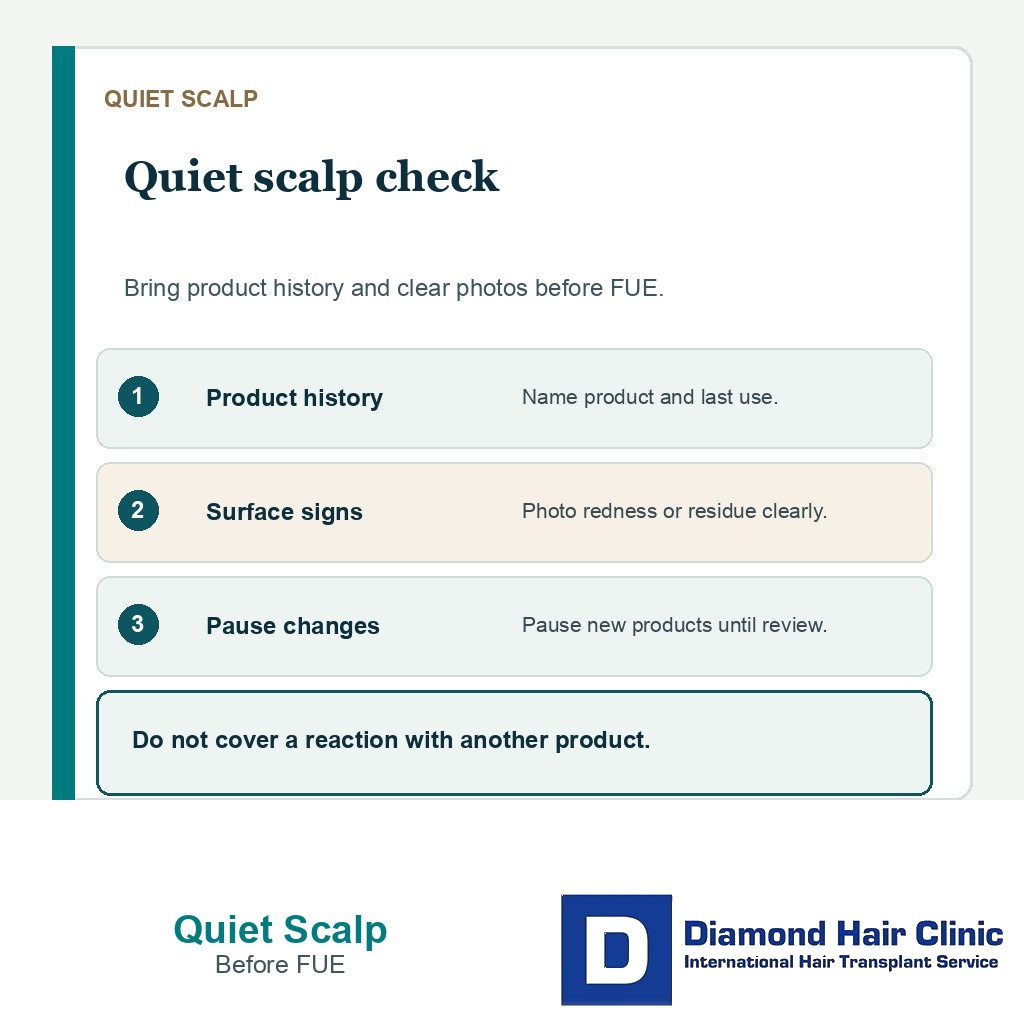
If you have used several products at the same time, do not send only the one you think is responsible. Send the full list. Include medicated shampoo, hair dye, scalp serum, minoxidil, topical finasteride, styling oil, sunscreen on the scalp, antiseptic wash, steroid cream, antibiotic cream, and any home remedy. A short timeline is more useful than a long explanation. Tell us what changed first, what symptom appeared next, and what you stopped or added afterward.
This is also where harmful ingredients in hair products becomes useful, but only as context. The label can help. The clinical decision still comes from the skin response, the timing, and whether the scalp is settling or getting worse.
Mild residue is different from active inflammation
Residue, mild dryness, or a few loose flakes may simply mean the scalp needs a simpler routine before surgery. That is not the same as active redness or burning, warmth, swelling, cracks, bleeding, pustules, or weeping areas. If the surface is actively inflamed, I slow down and review before I treat it as normal pre-op skin.
The donor area matters as much as the recipient area. A reactive donor surface can make extraction and early washing more difficult. A reactive recipient area can make placement and healing less predictable. I do not need perfect skin in a cosmetic sense. I need skin that is calm enough for surgery.
Photos should show the scalp without trying to make it look better. Do not oil the area before taking them. Do not scratch the flakes away just for the picture. Do not cover redness with styling product. If the hair is long, part it gently and take more than one angle. The purpose is not to criticize the scalp. It is to avoid beginning surgery on skin that is actively irritated.
Dandruff shampoo and ketoconazole need context
Patients often reach for shampoo for dandruff when flakes appear before surgery. That may be reasonable for some people, but it should not become a new experiment right before surgery. If flakes are part of known seborrheic dermatitis before hair transplant, that condition needs its own planning. If the question is after surgery, ketoconazole shampoo after hair transplant has a different timing logic.
Flakes can mean several things. They can be seborrheic dermatitis, dryness, contact irritation, product buildup, psoriasis, or a reaction to a topical treatment vehicle. I do not clear surgery from the word dandruff alone. I want the history and photos first.
Minoxidil, dye, oils, and serums can blur the picture
Topical minoxidil, topical finasteride, styling oils, scalp serums, dyes, bleach, henna, and strong exfoliating products can all change how the surface looks. The active ingredient matters, but the vehicle also matters. Foam, liquid, alcohol base, fragrance, oil, and occlusive creams can feel very different on the same scalp.
If the product is minoxidil or a related treatment, the broader medication timing question belongs in stopping minoxidil before a hair transplant. If the trigger is coloring, hair dye before hair transplant owns that routine. This article is narrower. It asks whether the skin reaction before FUE is calm enough to proceed.
Describe the reaction without guessing
A useful message is simple and factual. Say, for example, that the scalp started burning after a new foam, that flakes became thicker after a shampoo change, or that the donor area felt sore after an oil was left on overnight. Avoid turning the message into a diagnosis unless another doctor has already made one. Contact dermatitis, infection, psoriasis, folliculitis, seborrheic dermatitis, and ordinary dryness can overlap in the way patients describe them.
I also want to know whether the reaction is improving, staying the same, or spreading. A calm trend is different from a worsening trend. If you have already stopped the product, say when. If you washed it out, say how. If you used another cream, shampoo, antihistamine, antibiotic, steroid, or home remedy afterward, say that too. The second product may explain the current surface as much as the first one.
Photos should not be dramatic or filtered. Plain light, dry hair parted gently, and a few angles are more useful than one close crop with no context. If residue is present, show it. If redness is present, show where it stops. If the donor area is quiet but the hairline is reactive, that distinction can change the plan. The purpose is not to embarrass the patient. It is to avoid guessing on surgery day.
Irritation signs that should pause travel or surgery
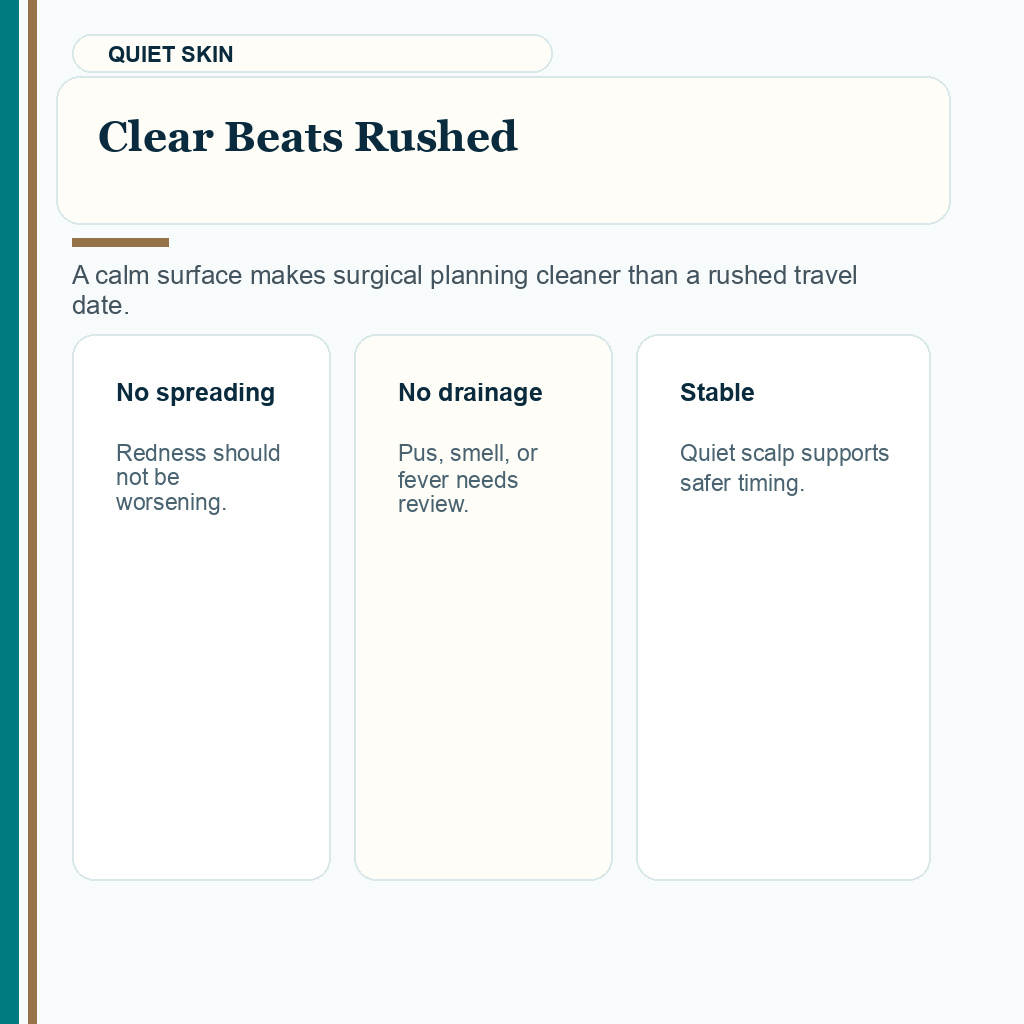
Flying in with spreading redness, increasing pain, warmth, swelling, pus, a bad smell, fever, chills, open skin, uncontrolled bleeding, or dark tissue is not routine pre-op skin. I also want to know about active pustules, severe itch, bleeding plaques, weeping rash, or a suspected allergy. Those signs need review before surgery is treated as routine.
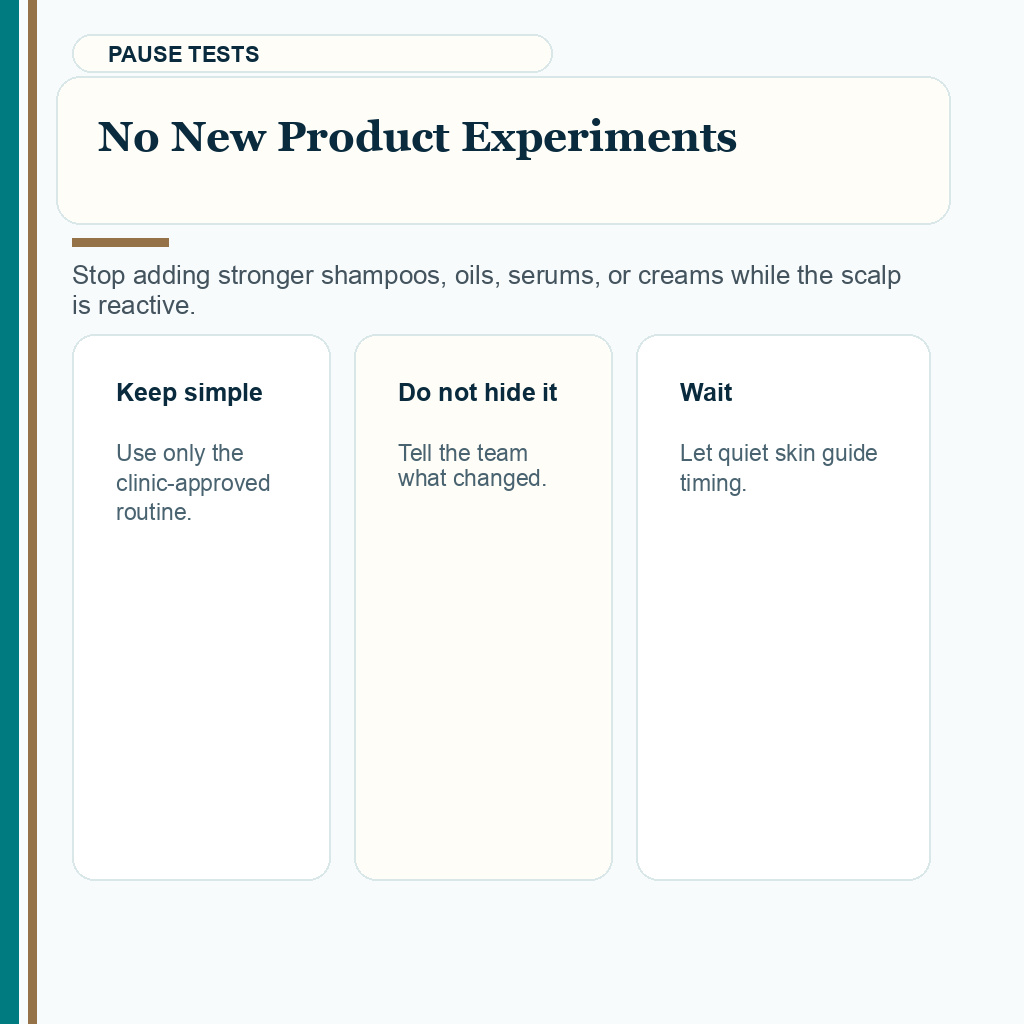
Do not try to clear a problem by adding stronger products unless your doctor or clinic has told you to do that. Stronger shampoo, steroid cream, antibiotic cream, oils, or multiple products can make the picture harder to read. If the issue is broad scalp itching before hair transplant, that page can help with the itch pathway. If the concern is an urgent reaction after surgery, allergy signs after hair transplant belongs to the recovery stage.
A pause does not mean the patient has failed the process. It means the skin is asking for respect. Sometimes I only need observation and a calmer routine. Sometimes the patient needs a local dermatologist before travel. Sometimes we can continue because the scalp is already quiet by the time we review it. The important point is that the decision is made before the patient is on the operating table.
Sort the surface signal before FUE
The same product can create different decisions depending on what the scalp shows. A single universal rule is not useful. I sort the surface signal first, then decide whether to simplify the routine, ask for more photos, delay, or send the patient for medical review.
Surface signal sorter
Which scalp signal changes the timing?
Residue only means disclose and simplify
Send product name, last use, and photos. Residue alone may not delay surgery, but it should not be hidden.
Itch or flaking means check the pattern
Itch, flakes, or scale need context. Dandruff, seborrheic dermatitis, dryness, and product reaction are not the same thing.
Redness or burning means slow down and review
Active redness, burning, warmth, swelling, or broken skin should be reviewed before travel or surgery.
Pustules or weeping means do not treat it alone
Pus, drainage, increasing pain, bad smell, fever, or spreading symptoms need medical review before FUE.
Quiet scalp means keep it simple
If the scalp is calm, avoid new experiments and follow the clinic’s product instructions until surgery.
If the diagnosis itself is unclear, I may ask for a dermatology opinion or, rarely, a scalp biopsy before hair transplant. That is not routine for every product reaction. It is for unclear or persistent cases where the surface does not match the story.
Keep the scalp quiet before FUE
In the final days before surgery, quiet is better than clever. Do not test a new shampoo because a stranger recommended it. Do not scrub harder because flakes worry you. Do not cover redness with oil and hope it disappears. Send evidence early, keep the routine simple, and let the clinic decide whether the scalp is ready.
After surgery, product timing changes again. Washing and shampoo restart should follow the clinic instructions and the stage of healing. For the ordinary aftercare boundary, use normal shampoo after hair transplant rather than applying pre-op logic to grafts that are still settling.
Use these 4 slides to keep product decisions simple before FUE.