Chemical Relaxers Before FUE Need a Quiet Scalp
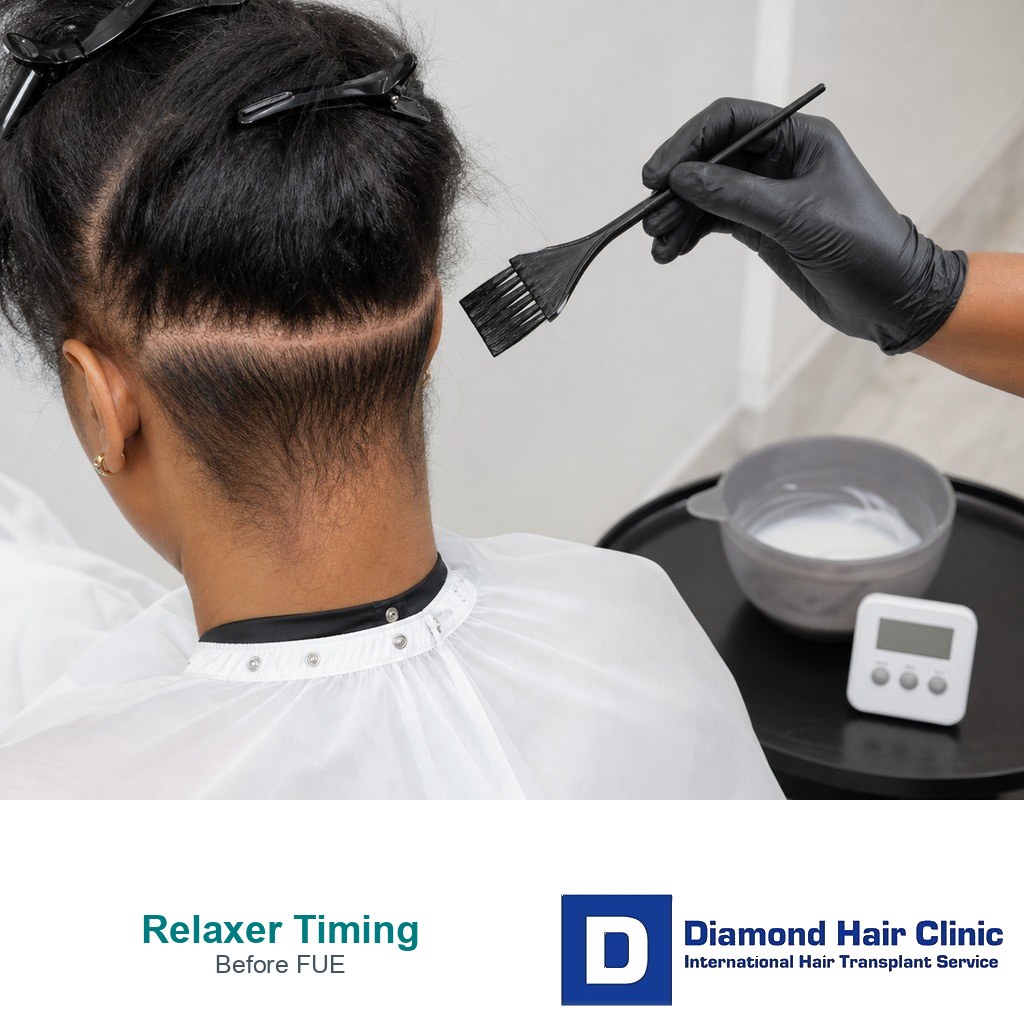
If you use a chemical relaxer before FUE, the first question is not whether relaxed hair is allowed. It is whether the scalp is quiet enough to examine and heal. In a straightforward case, two to three quiet weeks after a well tolerated relaxer gives a safer examination window before surgery. If there was burning, scabbing, sudden shedding, new tenderness, or a known scalp condition, the waiting period becomes longer and the case needs review before travel.
After FUE, restarting relaxers also needs a clear answer. I do not want relaxer on skin that still has crusting, open areas, strong redness, tenderness, or active irritation. The scalp needs to settle first, because chemical irritation can confuse healing and make graft planning less predictable. That healing check also applies to braids, cornrows, and protective styles after FUE.
A service described as lengths only can still bring product, heat, combing, and rinse water close to the scalp. Review the exact service and wash off method before assuming healing skin will not be exposed.
Scalp condition matters more than the salon calendar
A relaxer acts on the hair shaft, but the scalp can still receive part of the stress. Product touching the skin, overlap on already processed hair, scratching before application, heavy heat, or tight styling afterward can all change the scalp response. A small root application that causes no symptoms is different from a full relaxer that leaves burning, scale, or tenderness.
Before FUE, I need a scalp I can examine without guessing. Settled skin does not mean perfect skin. It means no fresh chemical burn, no open sores, no heavy scale, no painful inflammation, and no shedding episode that is still changing the visible pattern. If the surface is still reacting, the graft number and recipient area design become less reliable.
That makes a patient who relaxed hair yesterday and feels no symptoms different from a patient who relaxed hair two weeks ago and has tenderness, crusting, or patches of breakage. The date alone does not answer the question.
My check after a recent relaxer
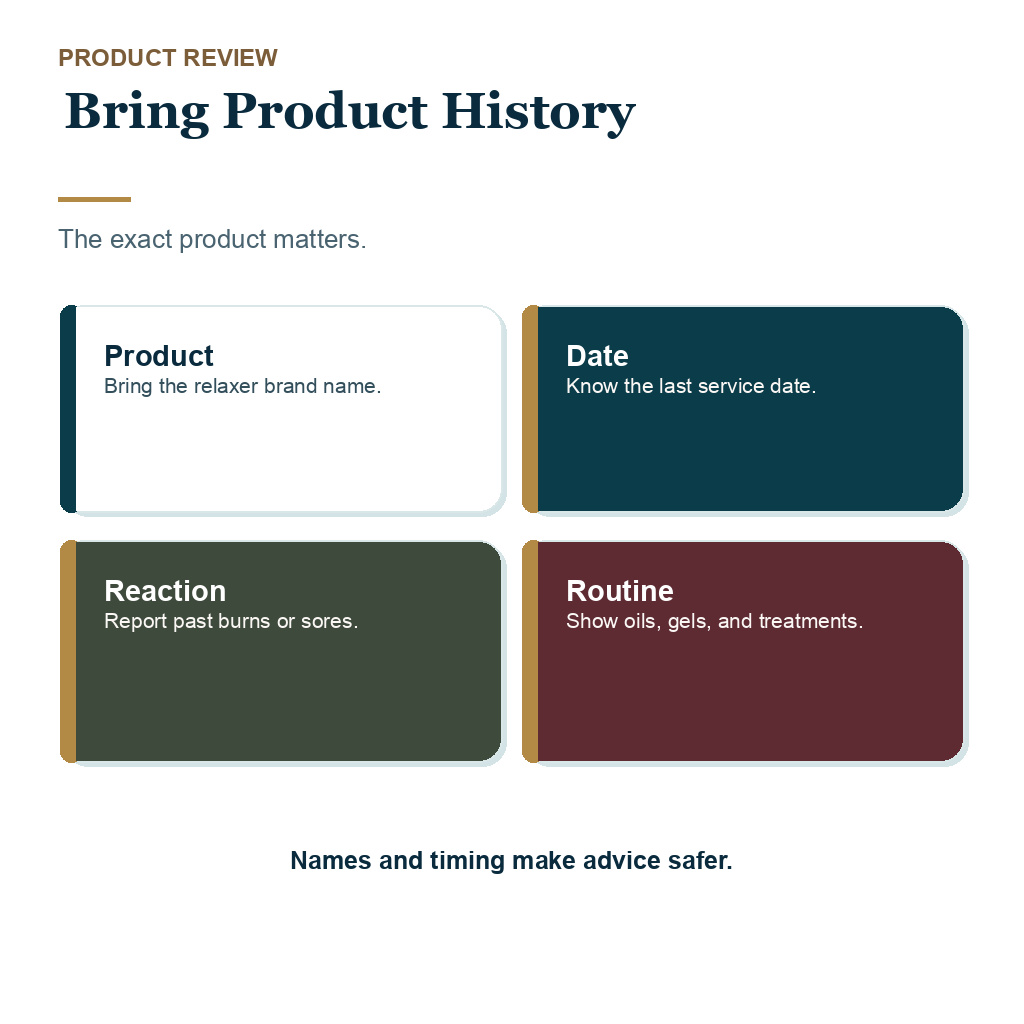
I first review what happened during and after the service. A routine root application is different from a new product, burning during application, scratching before the appointment, added heat, combined color or smoothing, tight braids, extensions, glue, or shedding that changed in the following days or weeks.
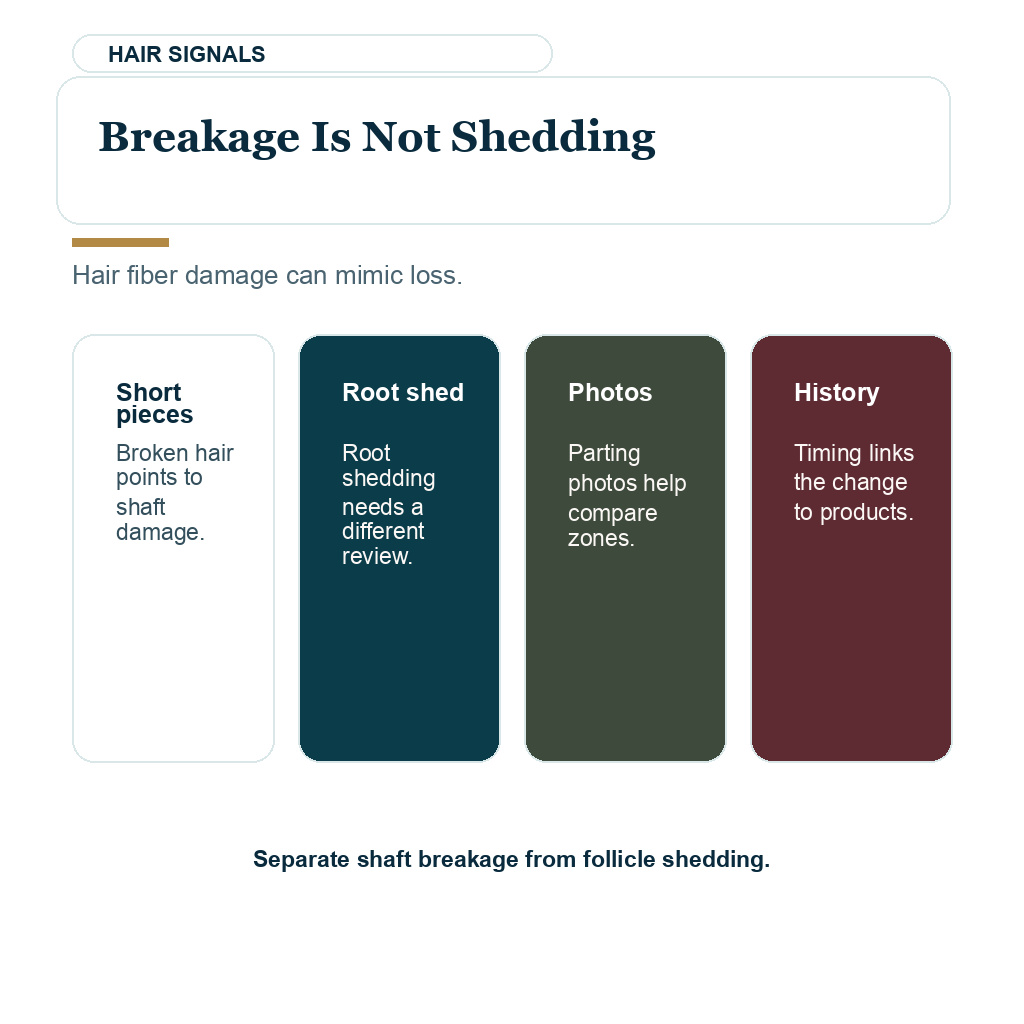
Name the service history in order rather than calling it only relaxer damage. Product change, burning, tight styling, glue, color, and heat can point to different problems. Photos should show the scalp between parted hairs as well as the hairstyle, because breakage, traction, and scalp inflammation can look similar from a distance.
Recent straightening can change how curl, breakage, and scalp show through in photos. If the hair was relaxed before the consultation, add older images that show its natural texture and the same edge or donor area. Those views do not replace examination, but they help the surgeon avoid planning from one temporarily altered appearance.
Then I look at the scalp pattern. Hair shaft breakage can make density look worse and can feel frightening, but it does not prove permanent follicle loss by itself. Traction can thin the temples and edges in a pattern that needs a different discussion. A scarring condition can look like styling damage early, especially when there is scale, tenderness, or shiny patches. The transplant plan must follow the diagnosis, not the hairstyle label.
Reasons a relaxer can delay surgery
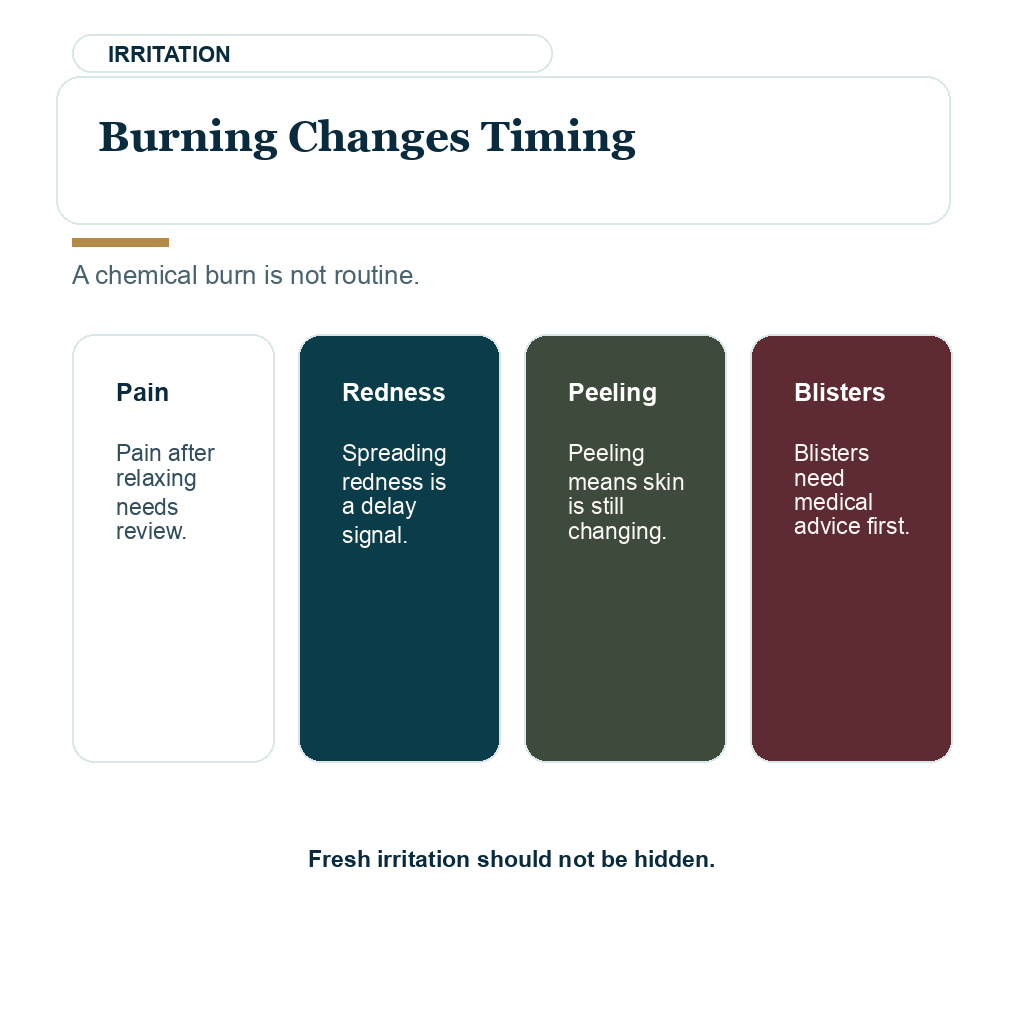
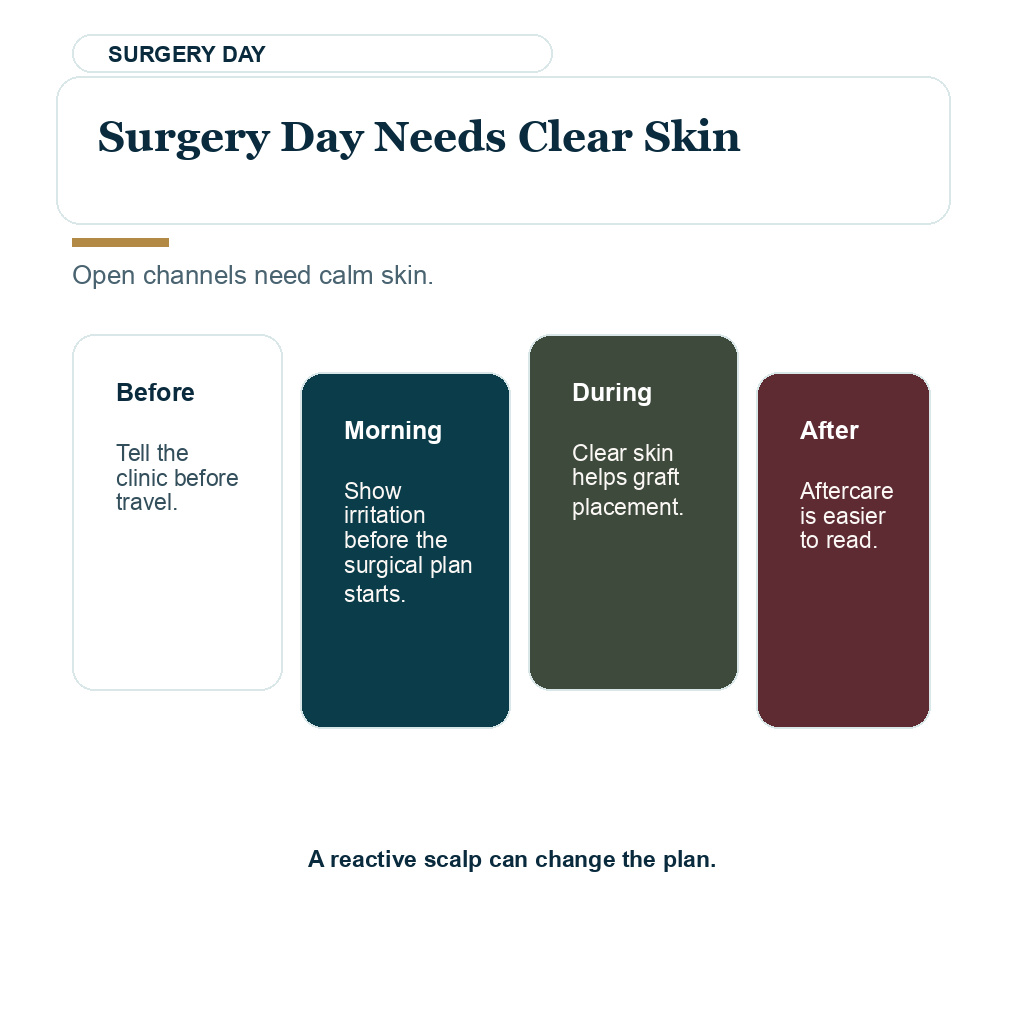
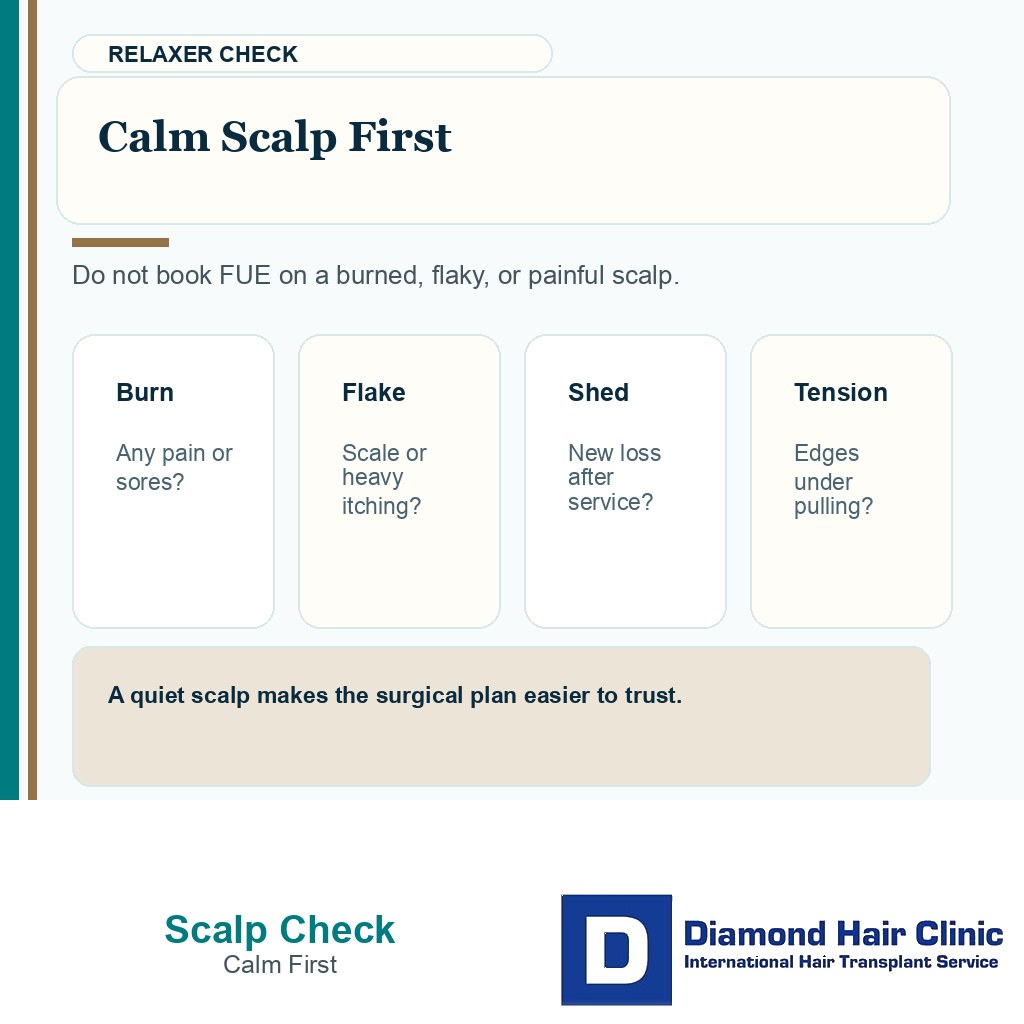
Surgery should wait if the scalp has a fresh burn, painful redness, open areas, scabs, weeping, crusts, strong itching, new scale, or sudden shedding after the relaxer. It should also wait when there was strong scratching before the service or repeated relaxer overlap on already irritated skin.
Delay does not mean the patient can never have FUE. It means the scalp has not yet earned a permanent graft plan. If the irritation settles and the donor and recipient areas can be measured clearly, surgery may still be possible. If the irritation reveals traction alopecia, CCCA, psoriasis, eczema, seborrheic dermatitis, or another active condition, that condition needs its own plan first.
Quick travel after cosmetic scalp irritation needs extra care. A rushed transplant during active inflammation can create a confusing recovery. The patient may later ask whether redness, shedding, or delayed comfort came from the surgery, when the scalp was already irritated before we began.
Chemical irritation can hide other scalp problems
Relaxer irritation can sit on top of other scalp disease. A patient may blame every symptom on the last salon visit, while the real issue is scalp eczema before hair transplant, seborrheic dermatitis before hair transplant, or scalp psoriasis before hair transplant. Those conditions can still be compatible with surgery once controlled, but active inflammation changes timing.
Scarring alopecia is the bigger concern. CCCA and hair transplant planning matters for many patients with textured hair because the early story can include tenderness, breakage, styling tension, and slow central thinning. A relaxer can be part of the history, but I would not treat it as the single explanation for CCCA. The important question is whether the scalp disease is active, stable, or still unexplained. If the diagnosis is uncertain, I may ask for dermatology review, trichoscopy, or sometimes a scalp biopsy before hair transplant.
The purpose is to avoid spending donor grafts on skin that has not yet declared its diagnosis.
Traction and relaxers can affect the same follicles
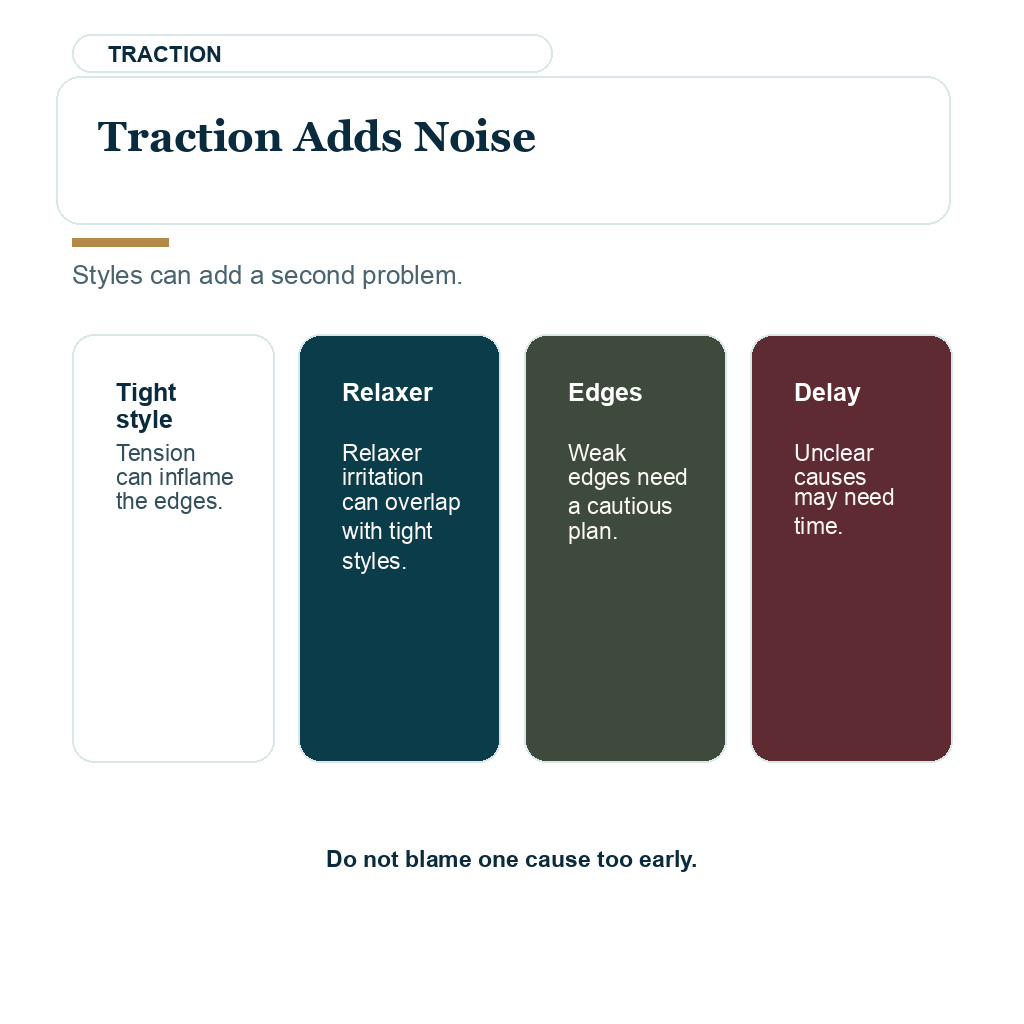
Chemical relaxing is only one part of the history. Many patients also use tight ponytails, braids, extensions, glue, wigs, or edge styling. When relaxed hair is already fragile, added tension can make breakage and follicle stress worse. Styling habits belong in the consultation, not only chemical products.
Style history also includes loc maintenance
A careful style history should include relaxers, color, heat, glue, braids, wigs, and loc maintenance. Locs before hair transplant planning is a separate check because donor visibility, tension, and retwisting timing can all change the plan.
Traction alopecia and hair transplant planning is important here. A patient with thinning at the temples or edges may need tension reduction before any surgical design. If tight styling continues after the transplant, the native hair and the transplanted area can both be exposed to avoidable stress.
For FUE, the donor area matters too. Tight styles, chemical processing, and chronic inflammation can make the visual exam less reliable. I need to separate breakage from true donor weakness because donor hair is the limited resource we cannot replace.
Separating relaxers from dye, keratin, and perms
Patients often group all salon chemicals together. I separate them because the risks are not identical. A dye appointment raises questions about color processing, scalp sensitivity, and timing before or after healing. If the question is color before surgery, hair dye before hair transplant belongs in that planning conversation. If the question is restart timing after healing, dye hair after hair transplant is the safer comparison.
Keratin treatments and perms have their own timing and heat questions after surgery, especially when heat, tension, or product contact is involved. Keratin and perm after hair transplant is a separate issue from relaxer timing, because relaxer planning is more often about scalp burning, breakage, traction overlap, and textured hair planning.
Afro curly hair transplant planning is also related, but it is not the same topic. Curl pattern affects angle, graft handling, density illusion, and design. Relaxer timing affects whether the scalp is settled enough to examine and heal.
A settled timing plan before travelling to Istanbul
If the relaxer was routine, there was no burning, the scalp is comfortable, and there is no new shedding or scale, I usually prefer to keep a quiet gap of at least two to three weeks before FUE. That gives the scalp time to show whether irritation appears and gives us a cleaner exam.
If there was burning, sores, flakes, tenderness, or new shedding, do not use a simple calendar rule. Send photos in good light, describe the service, and explain what changed afterward. I may ask the patient to wait, treat the scalp locally, or see a dermatologist before buying a ticket. The travel decision should come after the scalp decision.
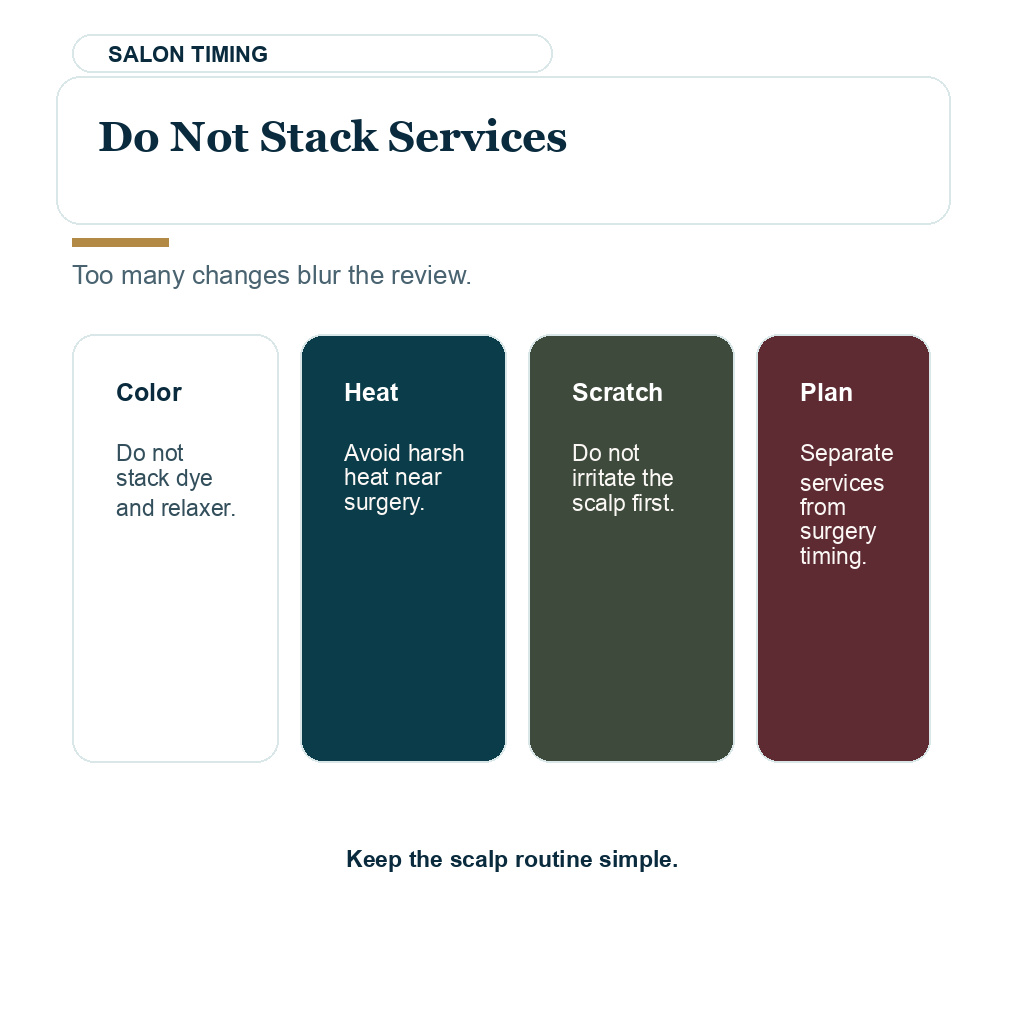
I also avoid new chemical experiments close to surgery. A first relaxer just before travel is different from a familiar root touch up. Combining relaxer, color, smoothing, tight extensions, and heavy heat in the same window gives the scalp too many possible irritants at once. FUE is already a controlled injury to the scalp, so I do not want avoidable chemical or traction stress stacked on top of it.
Restarting relaxers after grafts have settled
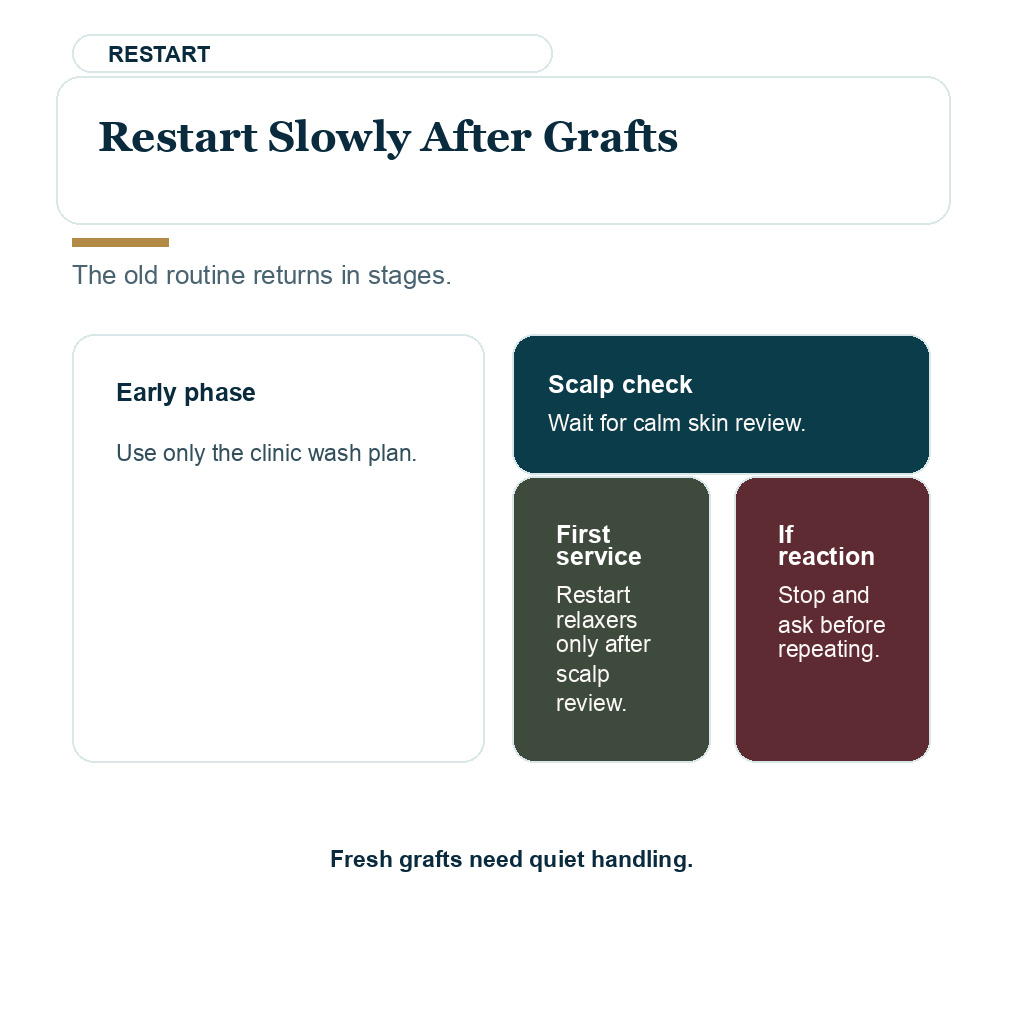
After FUE, the restart question is just as important. I do not want relaxer cream, neutralizer, or heavy heat on a recipient area that still has crusting, open spots, strong redness, tenderness, or active irritation. For many patients, salon chemical services need to wait several weeks, and sometimes longer if healing is slow or scalp disease is part of the story.
Keep salon timing separate from style pressure. If an event is coming, the question is not only whether the hair will look neat, but whether the scalp can tolerate the product.
The first restart needs to be cautious. Tell the stylist about the transplant, avoid product on irritated skin, avoid aggressive scratching, avoid high tension, and do not combine multiple chemical services at once. If the scalp stings or burns, stop and contact the clinic instead of trying to push through for the final look.
After surgery, I look at the whole routine. Washing, moisturising, sun exposure, headwear, and styling tension all affect comfort. A relaxer restart is safer when it is part of a settled recovery plan, not a quick attempt to hide early shedding or uneven texture.
A relaxer timing proof check
Quiet Scalp Decision Gate
Scalp readiness for FUE after a relaxer
Use this before travel or before restarting salon chemicals after surgery. I am not asking only for the salon date. I am trying to decide whether the scalp can be examined clearly, whether active irritation could confuse healing, and whether a chemical service should wait.
A quiet scalp is the planning baseline
A routine root touch up that was well tolerated and followed by two to three quiet weeks is usually a disclosure and examination issue, not an automatic reason to cancel. Send the timing, product type, and any past irritation so I can confirm the scalp is clean enough to plan from.
Burning or sores can delay the plan
Burning, scabs, painful redness, open areas, or tenderness after a relaxer move the question out of routine salon timing. The scalp may need time, local treatment, or dermatology review before donor planning, recipient area design, or travel is sensible.
Separate relaxer damage from the transplant plan
New shedding, edge pulling, extensions, glue, or tight styles can change the diagnosis and the graft number more than the relaxer itself. The changing pattern has to be documented before any density target is chosen, because grafts should not be used to cover an active traction or chemical injury.
Restart only after the graft skin is settled
After FUE, relaxer cream, neutralizer, heavy heat, scratching, and stacked salon services should wait while crusting, open spots, strong redness, tenderness, or irritation remain. The safer restart is separated from color, smoothing, extensions, and heavy heat so a reaction is easy to recognize.
Decision matrix
Scalp findings before travel
This gate separates a quiet scalp, an irritated scalp, a changing pattern, and a graft area that is still healing. The timing carousel below turns that decision into a practical salon sequence.
Salon timing map before and after FUE
Pause the chemical service close to surgery, then review scalp symptoms and separate traction from chemical irritation. Avoid stacking salon services, and restart slowly after the grafts have settled.
The sequence is deliberately cautious. It does not give every patient the same waiting period. It separates a clean routine service from an irritated scalp, a changing shedding pattern, or a stack of salon treatments that can confuse healing.
These 8 chemical relaxer slides separate quiet scalp readiness, burn signs, breakage versus shedding, traction overlap, stacked salon services, product history, surgery day skin clarity, and restart timing. Swipe sideways, use the arrows one slide at a time, or choose a number below the image.

Read this review excerpt
Every single one of my questions was answered and they made sure I had all the details I needed to make an informed decision.