


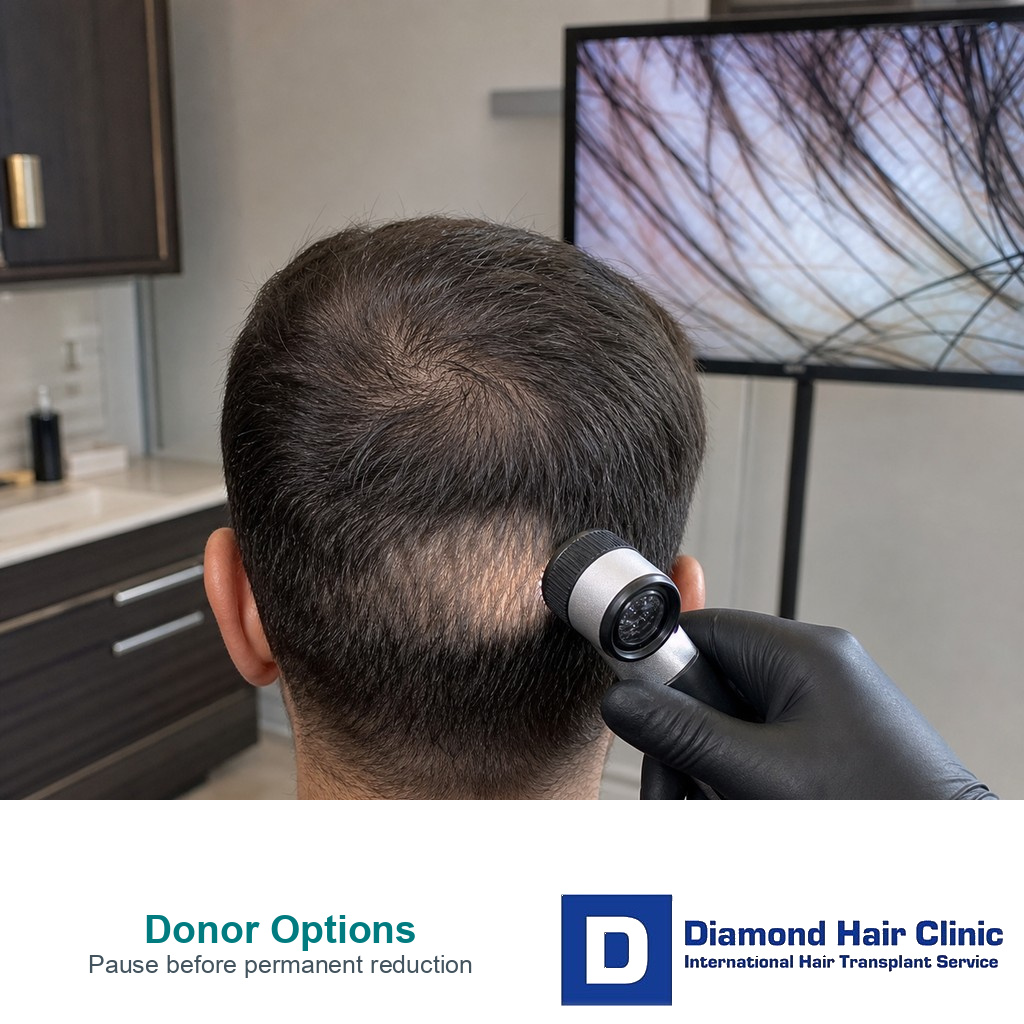
Keep Donor Options Open Before Laser Hair Removal
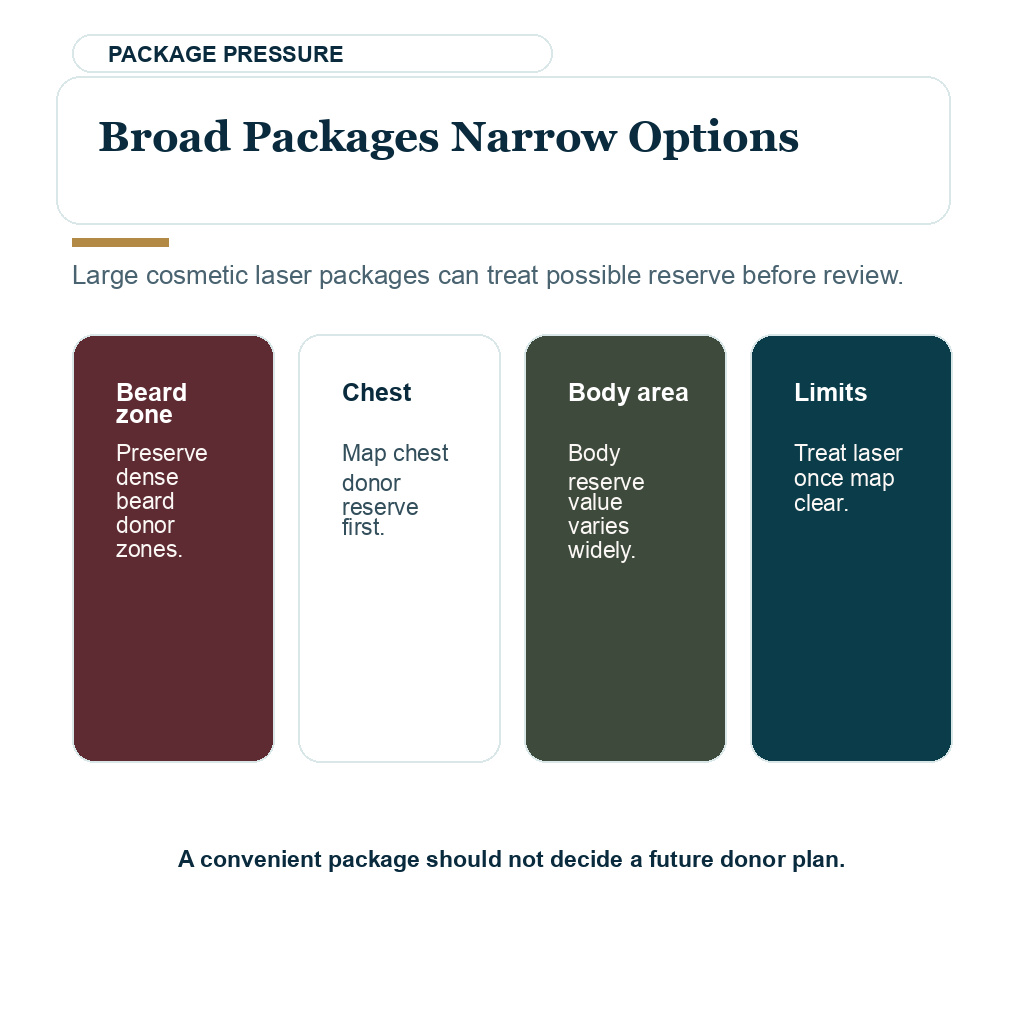
If you may need a hair transplant in the future, laser hair removal should not be treated as a separate cosmetic decision until a surgeon has mapped your donor options. A small cosmetic area is different from a broad package that reduces beard, chest, or body hair that might later matter. Laser hair removal can still be reasonable. The point is to avoid making a lasting reduction before you know whether those hairs may have surgical value.
Scalp donor hair remains the main reserve for most hair transplant plans. Beard or body hair is only a supplement in selected cases. Still, once laser treatment thins those hairs, that optional reserve may be smaller, patchier, or harder to judge. For any area that could plausibly matter in a future repair or advanced loss plan, donor mapping should come before broad permanent reduction.
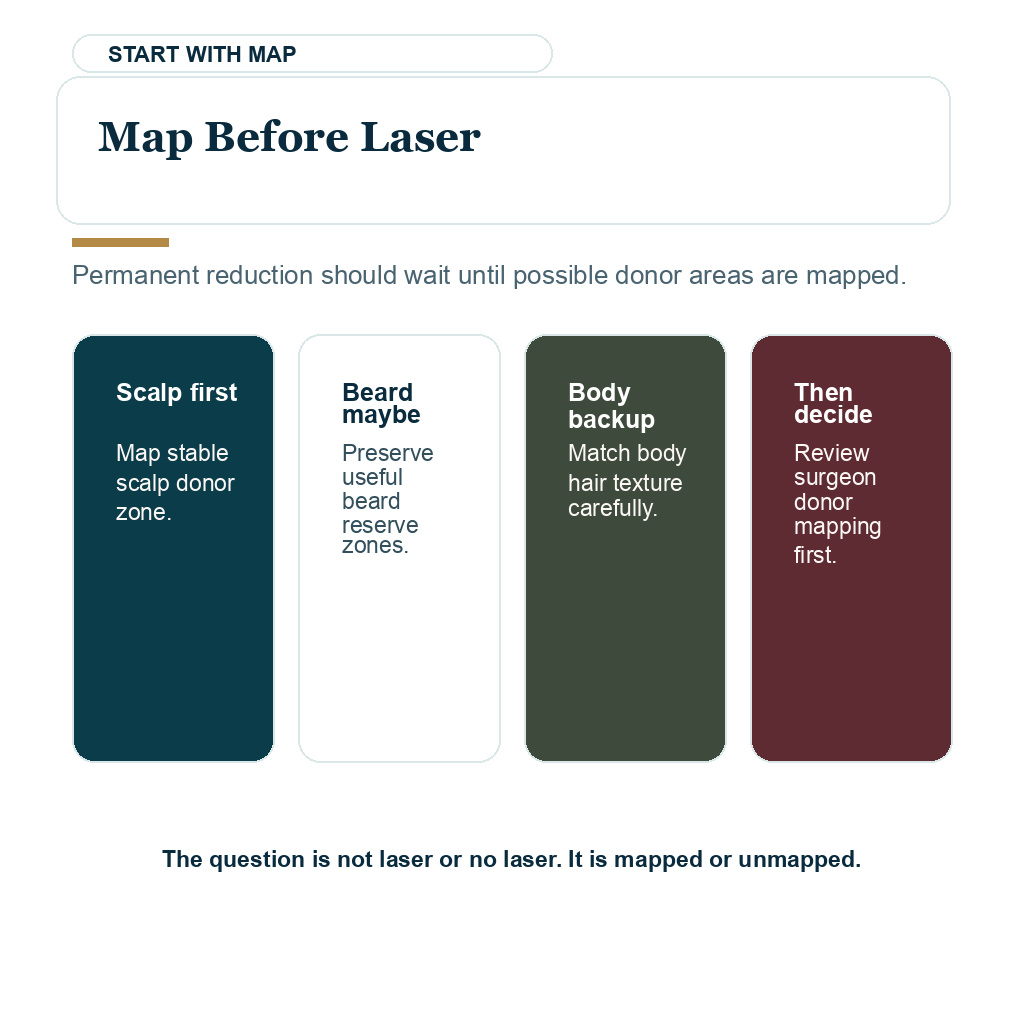
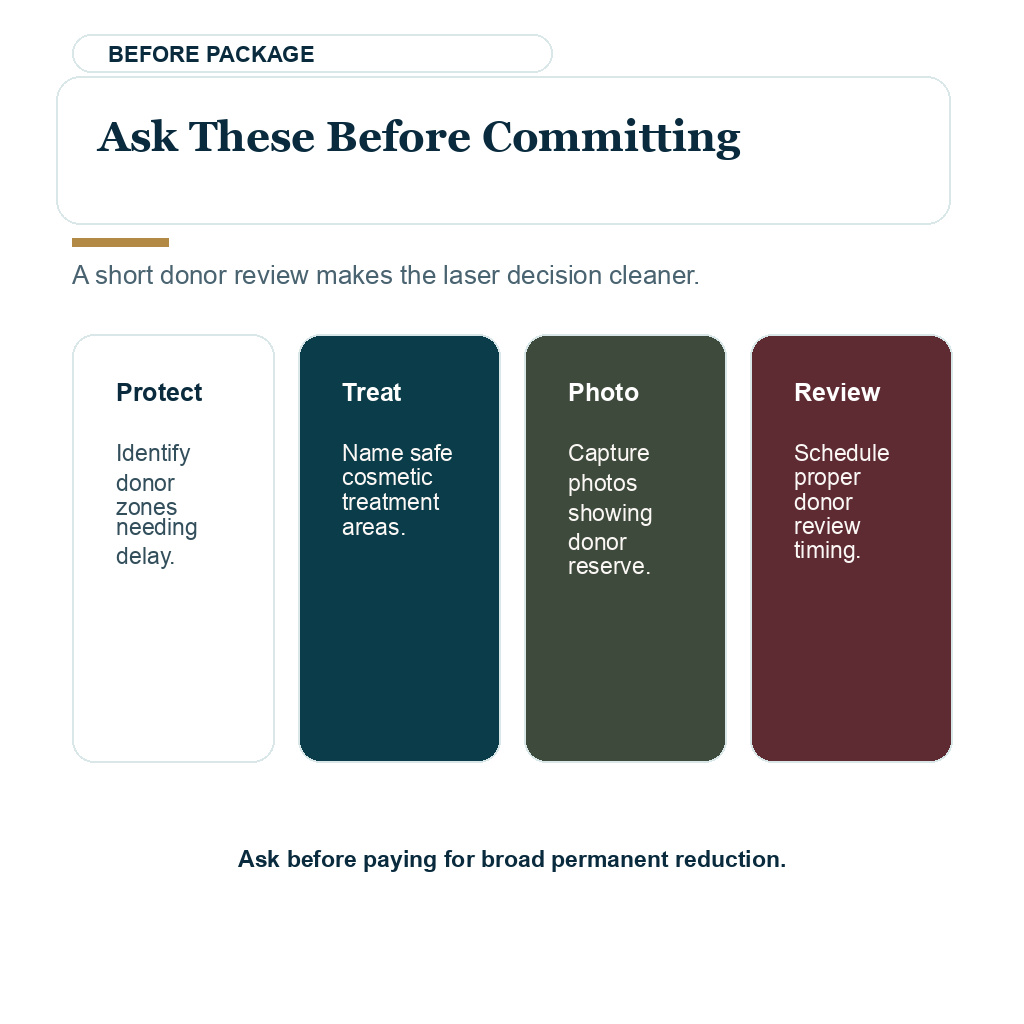
Ask the surgeon to mark areas that should stay untouched before starting a long laser package. Once a beard or chest area has been thinned, it may no longer show its original donor value. A broad laser package should wait until those possible donor areas have been assessed.
Laser hair removal is also a donor planning decision
Many patients think about laser hair removal because they want less body hair, easier grooming, or smoother skin. Those are valid cosmetic reasons. The planning problem appears when the same patient is young, has family hair loss, already has thinning, or may need repair work in the future.
Laser systems target pigment in the hair and can produce long-term reduction. That is exactly why the decision matters. If a future surgeon might need to consider beard, chest, or body hair as a supplement, reducing those areas before evaluation can remove information and possibly reduce supply. Not every body hair will become donor hair, but the surgeon should see the possible reserve before it is reduced.
This does not mean every patient must avoid laser hair removal. It means the decision should match the long-term hair plan. A person with strong scalp donor, mild hair loss, and no realistic need for donor hair outside the scalp is different from a patient with advanced loss, a weak donor area, or a possible repair case.
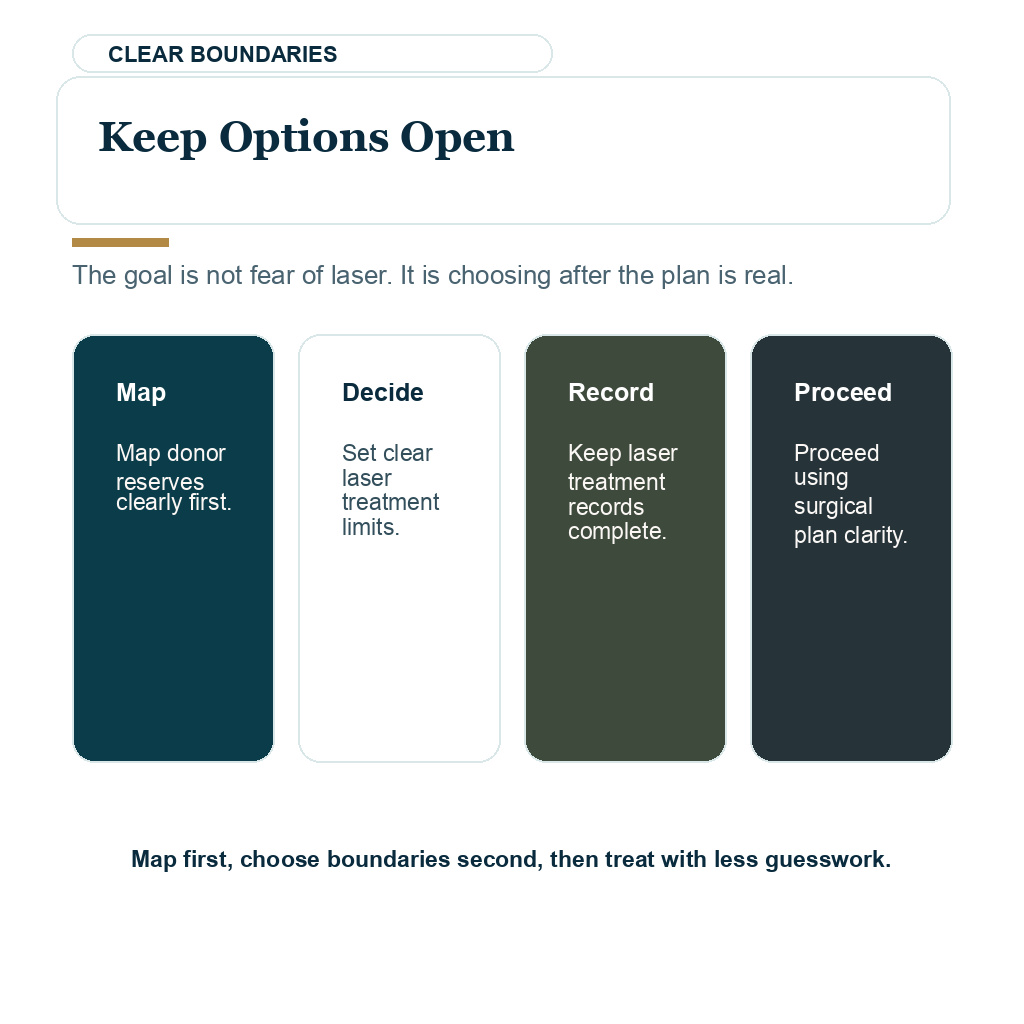
Map the donor area first. If the area could plausibly become a donor reserve, map it first. If the area clearly has no surgical value after review, laser treatment becomes a more comfortable cosmetic decision.
Scalp donor still comes first
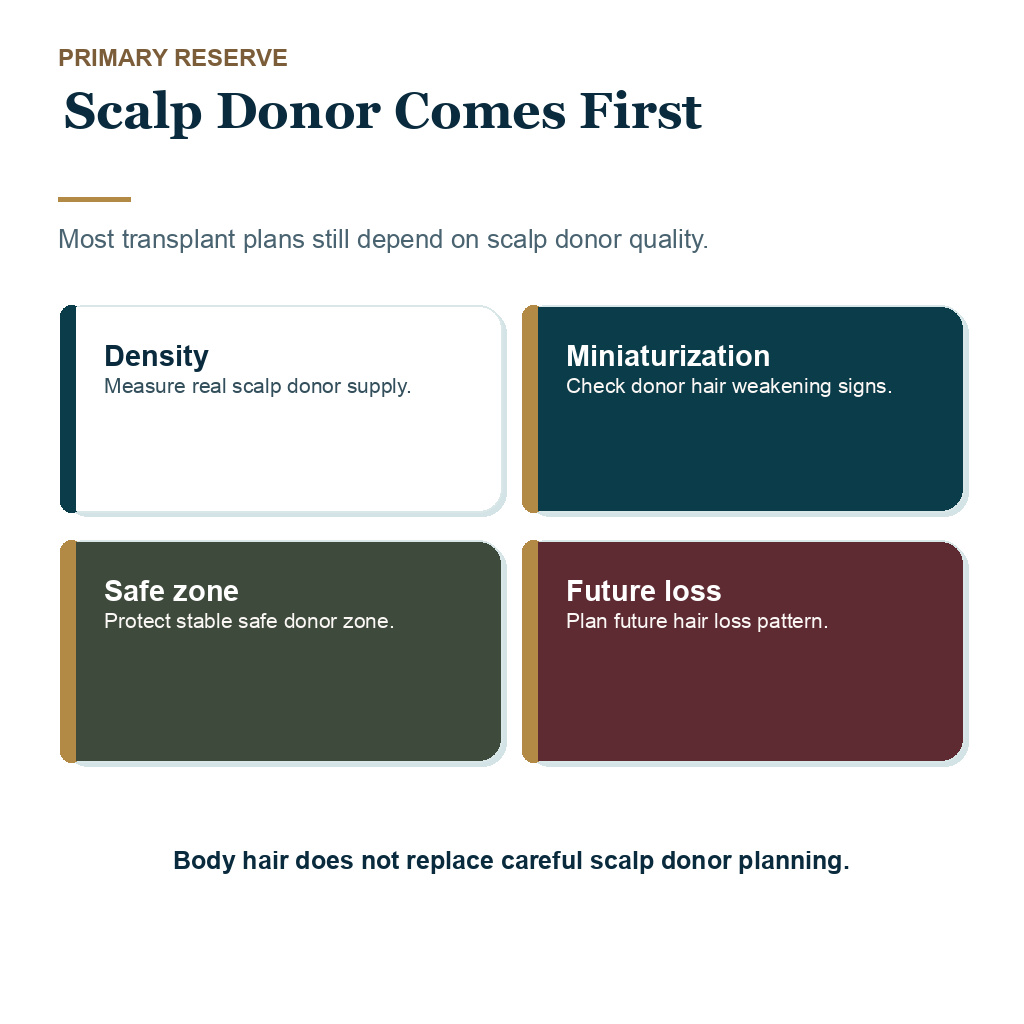
In hair transplantation, scalp donor hair is still the foundation. It usually grows longer, behaves more predictably, and matches scalp recipient areas better than beard, chest, or other body hair. Every serious plan starts by judging the scalp donor area, not by assuming body hair will save the case.
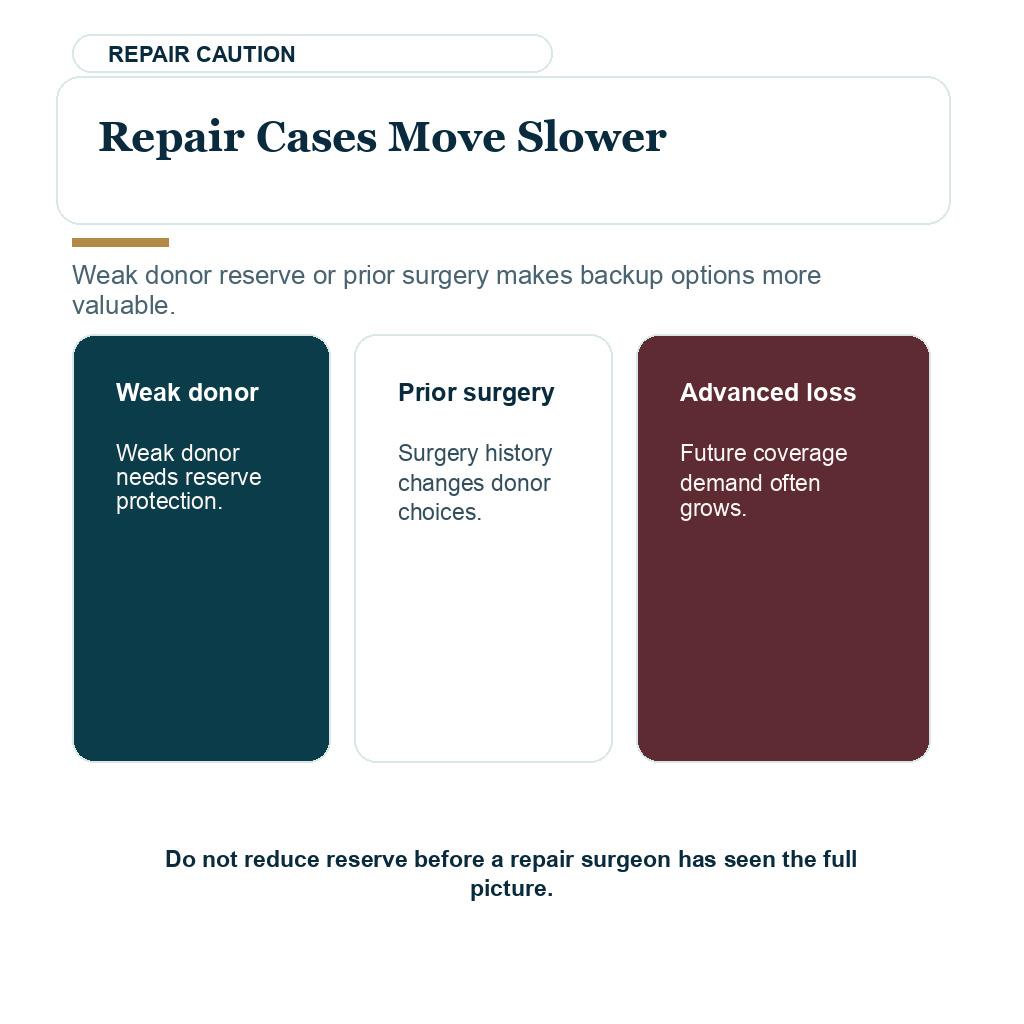
The donor area is also finite. If scalp reserve is already limited, the surgeon has to think about graft economy, future loss, coverage priorities, and whether any hair outside the scalp has a useful role. A patient with a weak donor area should not permanently reduce possible supplements before that discussion.
The important distinction is not laser versus no laser. It is mapped versus unmapped. If your scalp donor is strong and your long-term need is modest, a surgeon may say certain body areas do not need to be protected. If donor reserve is uncertain, the answer may be different.
Preserving every body hair out of fear is not the goal. The goal is to avoid closing a door before anyone has checked whether that door matters.
Beard hair may be worth preserving in selected advanced cases
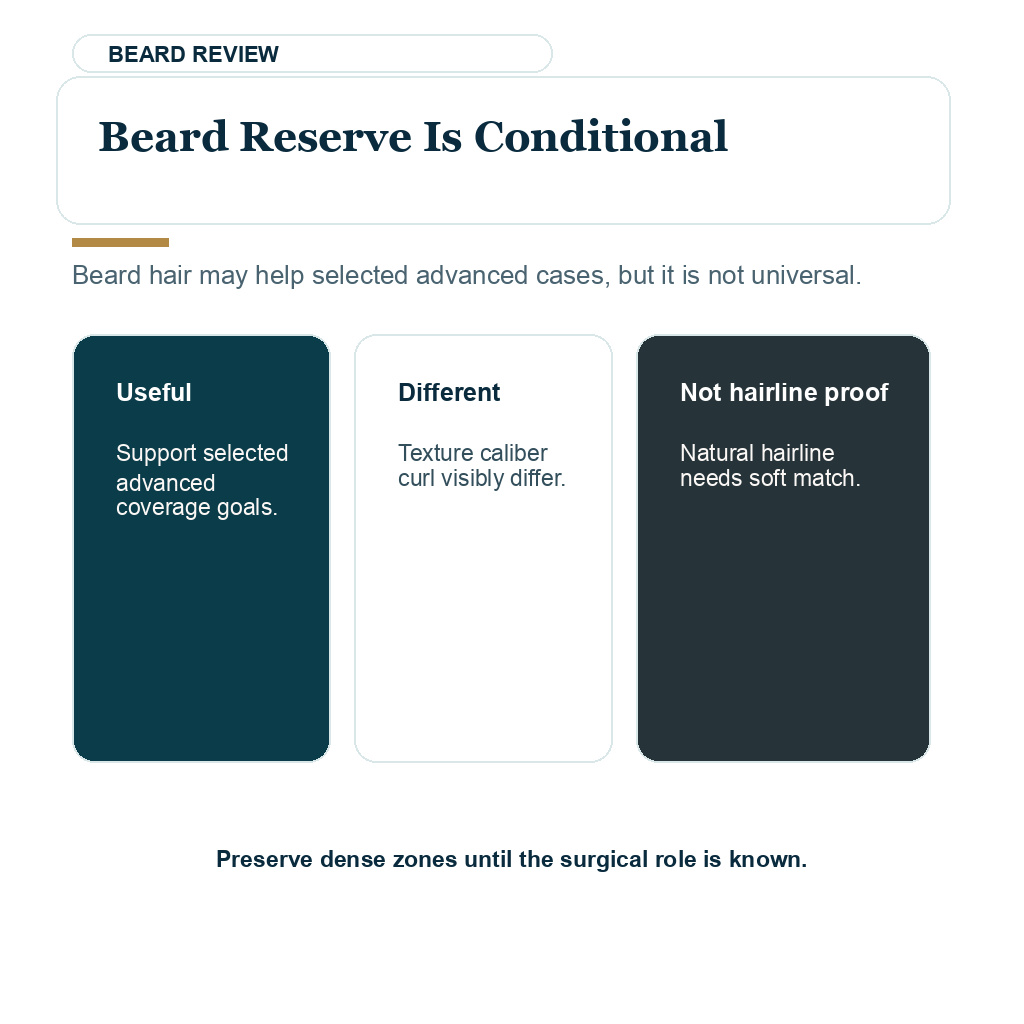
Beard hair is the reserve outside the scalp that patients ask about most often. In selected cases it can be useful, especially when scalp donor reserve is limited and the goal is to add support behind a frontal zone or improve coverage in less delicate areas. But beard hair is not the same as scalp hair.
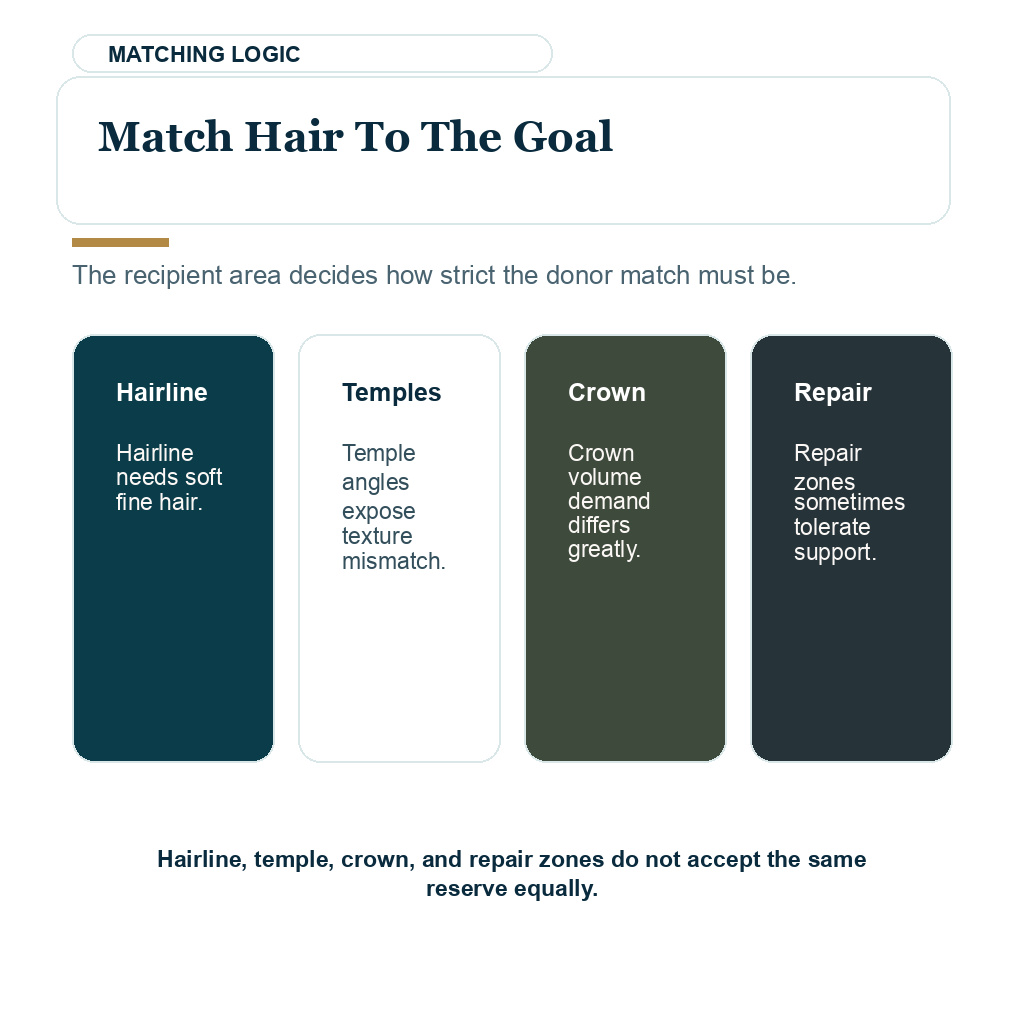
Beard hair can be coarser, curlier, and visually different. Beard and body hair for hairline transplant needs careful judgment. A natural hairline cannot simply be built from any strong beard hair without thinking about texture, angle, and visibility.
If a patient has dense beard hair and advanced scalp loss, the beard should be evaluated before laser removal. If the beard has no realistic role, fine. If it could become a supplement, then permanent reduction should be delayed or limited until the plan is clearer.
The mistake is deciding only from the cosmetic side. A laser clinic may see unwanted beard or neck hair. A transplant surgeon sees a possible reserve that may or may not be useful. Both perspectives can be valid, but the order matters. Before removing that hair permanently, consider whether it might be part of a future neck beard donor map for facial hair repair or beard filling.
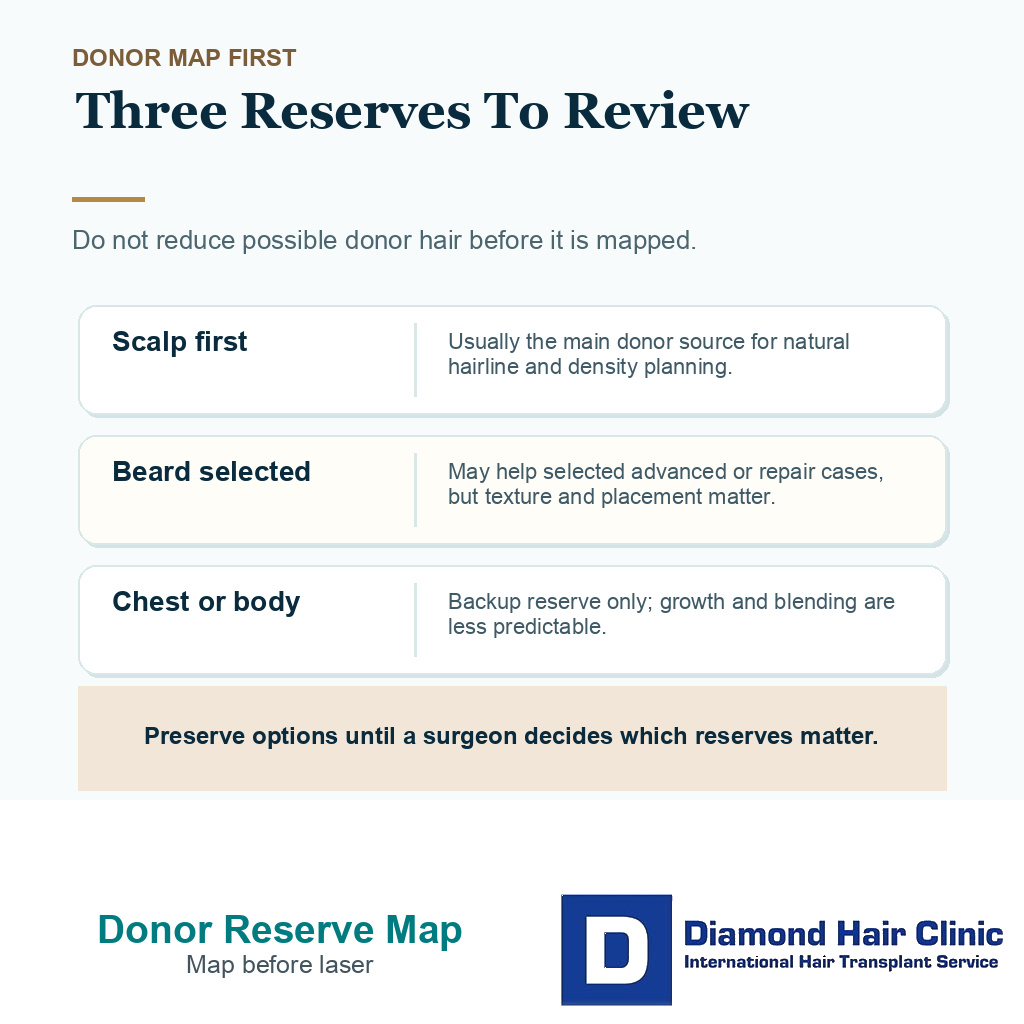
Chest and body hair are backup options, not a rescue guarantee
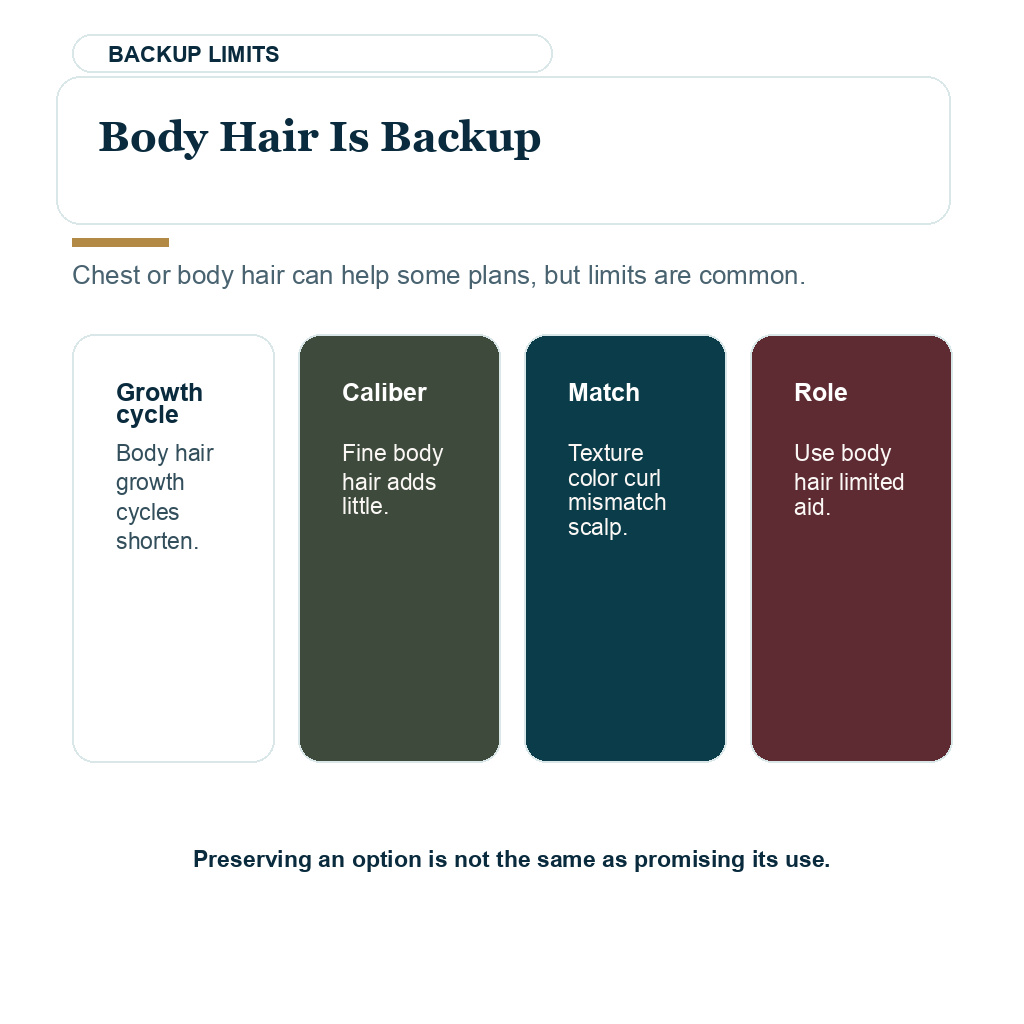
Chest and body hair are even more variable. Some patients have thick, stable chest hair. Others have hair that is too fine, has too short a growth cycle, is too sparse, or looks too different from scalp hair to add much value. Preserving body hair does not mean it will become a good transplant donor option.
Body hair, chest hair, and beard as donor reserves must be discussed with limits. These hairs can sometimes help, but they are not a substitute for careful scalp donor planning.
The temples and frontal hairline show the limitation clearly. Body hair for temple restoration can be difficult because the hair must match a delicate area. A strong chest hair reserve does not solve that problem by itself.
So the advice is balanced. Do not remove all possible backup hair before evaluation if future transplant need is plausible. Also do not preserve it because someone online promised body hair can rescue every case. Preserving an option is not the same as promising its use.
How should you decide before a laser package?
The decision becomes easier when you separate local grooming from donor reserve planning. Someone with a mapped, strong scalp donor and low future need may not need to protect every body hair area. Someone with advanced loss, repair concern, or limited scalp donor reserve should slow down before treating broad beard, chest, or body zones.
Laser donor reserve review board
Use this board before broad permanent reduction. It is not trying to make you keep every hair. It shows when donor mapping should come before a laser package and when laser treatment is unlikely to affect a future plan.
No surgeon has checked scalp donor density, future loss pattern, beard quality, and chest or body hair.
Permanent reduction can remove an option before anyone knows whether it may matter later.
Photograph scalp, beard, and chest or body hair, then ask whether future crown, repair, or advanced loss planning is plausible.
How is laser removal after a poor transplant different?
There is another laser topic that can confuse patients. Sometimes laser is used after a poor transplant to reduce unwanted transplanted hair, especially when grafts were placed in the wrong direction or wrong area. That is a correction discussion after hair has already been moved.
Here, the decision comes earlier. Before any future transplant plan is known, you are deciding whether to reduce hair that might later be considered as donor reserve. That is not the same as laser hair removal for transplanted hair after a bad placement.
The two decisions can even point in opposite directions. Removing misplaced transplanted hair may improve an unnatural result. Removing untreated beard or chest hair before donor mapping may reduce a future option. The timing and purpose have to be separated.
What should a donor map check before a laser package?
A donor map does not need to be complicated. It means the surgeon has reviewed scalp donor density, miniaturization risk, hair caliber, beard density, chest or body hair quality when relevant, family history, age, future loss pattern, and previous procedures. The map decides what should be protected and what does not matter.
If you are already considering a large laser package, take clear photos before starting. Include the scalp donor area, beard if relevant, chest or body areas you want treated, and any thinning zones. If you already had sessions, write down which areas were treated and when.
This is also where donor preservation connects with long-term safety. Donor area overharvesting and overharvested donor area repair show why reserve should not be treated casually. Laser is not harvesting, but both decisions can change what remains available later.
What if the area was already treated?
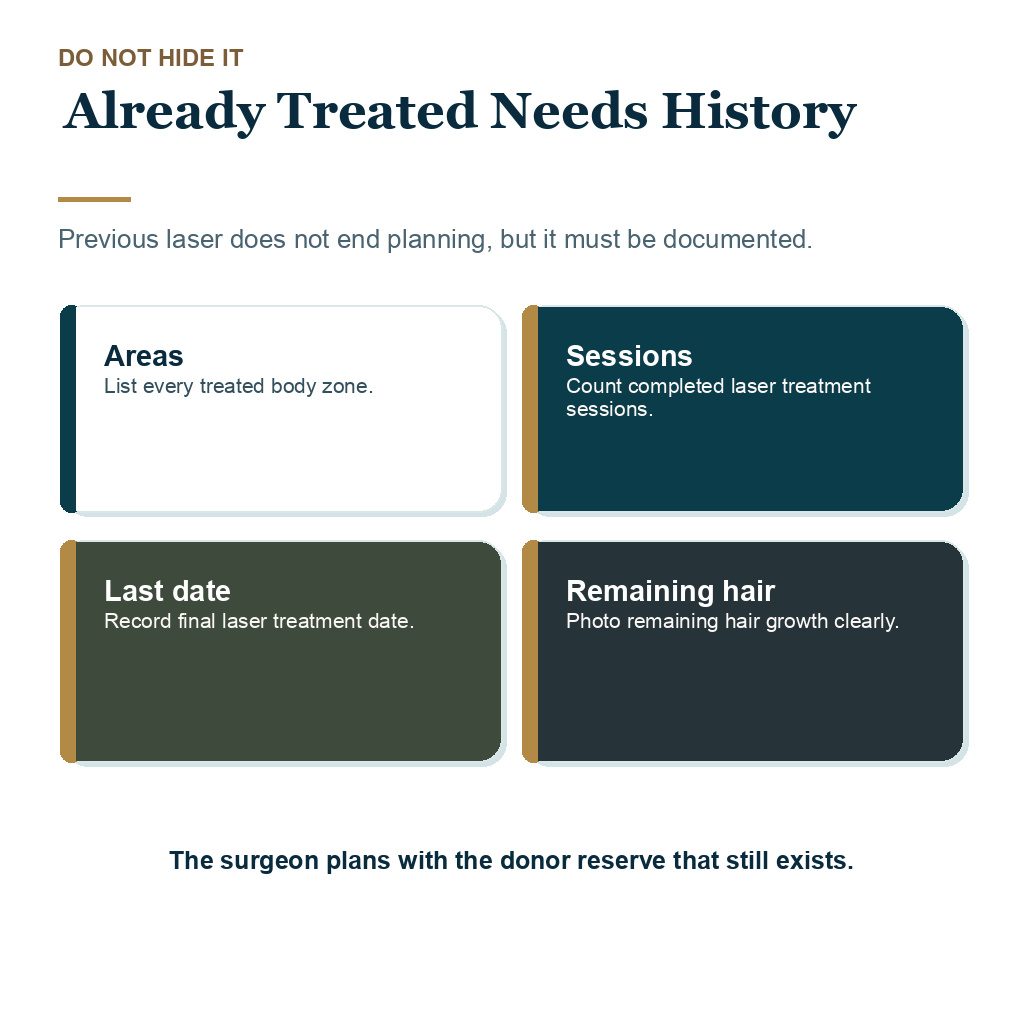
Many patients only ask this question after some laser sessions have already happened. Previous laser treatment does not make a future hair transplant impossible. Laser hair removal often reduces hair rather than removing every follicle permanently, and regrowth can vary by area, hair color, skin type, and treatment course.
The useful step is documentation. Tell the surgeon which areas were treated, how many sessions were completed, when the last session happened, and whether regrowth remains. Photos in normal lighting help more than memory. If beard or chest hair is thinner now, the plan should be built around the reserve that actually exists.
Do not hide previous laser treatment because you feel embarrassed. It is simply part of the donor history, like previous surgery, scarring, or naturally weak donor density. A realistic plan needs the truth.
Do not remove donor options by accident
Laser hair removal can fit someone’s life, but it can also permanently reduce beard or body hair that might later matter for coverage. The answer depends on whether those hairs have real donor value for that patient.
Map the scalp donor first when future hair loss is possible. If beard or body hair might be useful later, keep it until the surgical picture is clearer. If it has no realistic role, laser treatment can be chosen with cleaner boundaries.

Read this review excerpt
told me the quality of my donor hair and what he could take out and advised me what will the be best outcome with what donor hair I had.