Norwood 4 or 5 Hair Transplant Planning Needs a Graft Budget
At Norwood 4 or 5, I do not begin by asking how many grafts can be packed into one operation. I first decide how the front, midscalp, crown, and future hair loss can safely share the same donor reserve. This stage is already beyond a small hairline change, but it is still different from an advanced Norwood 6 or 7 case. The plan has to use limited donor capacity carefully.
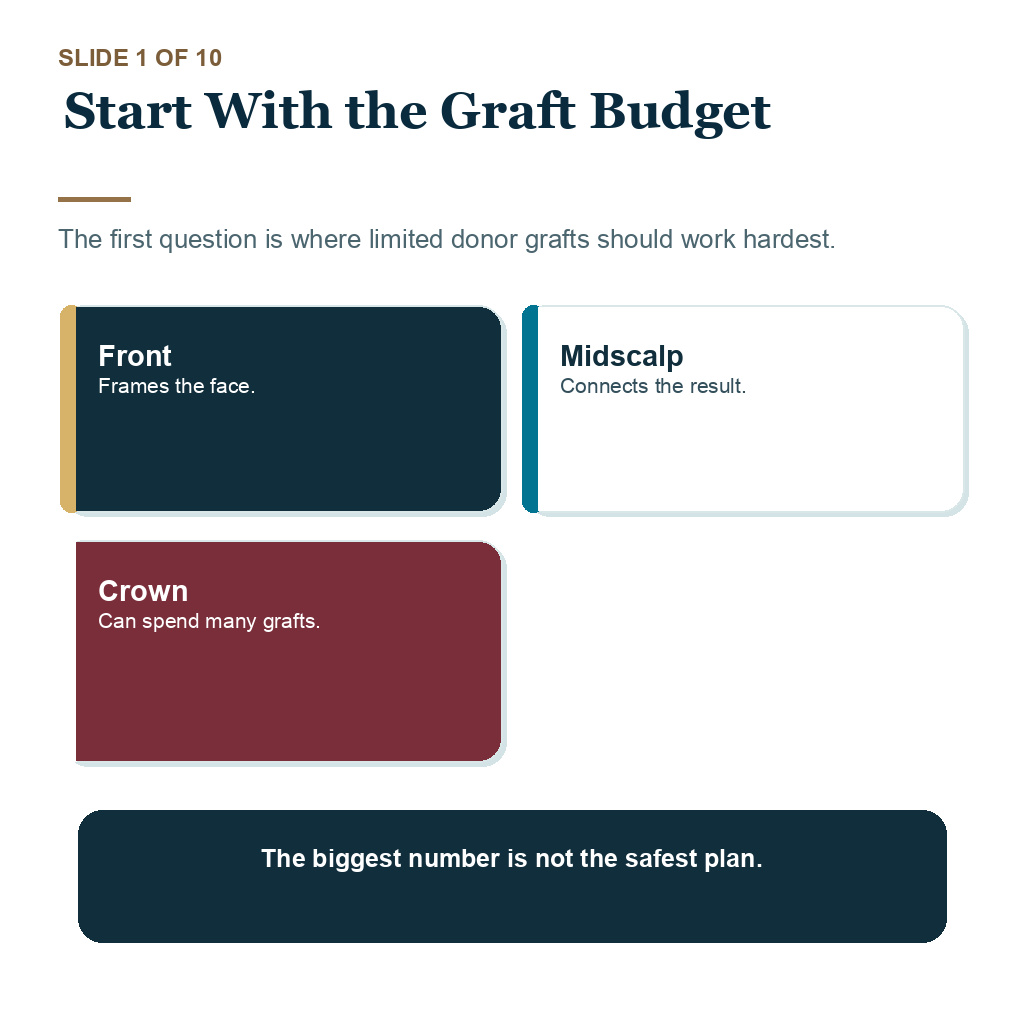
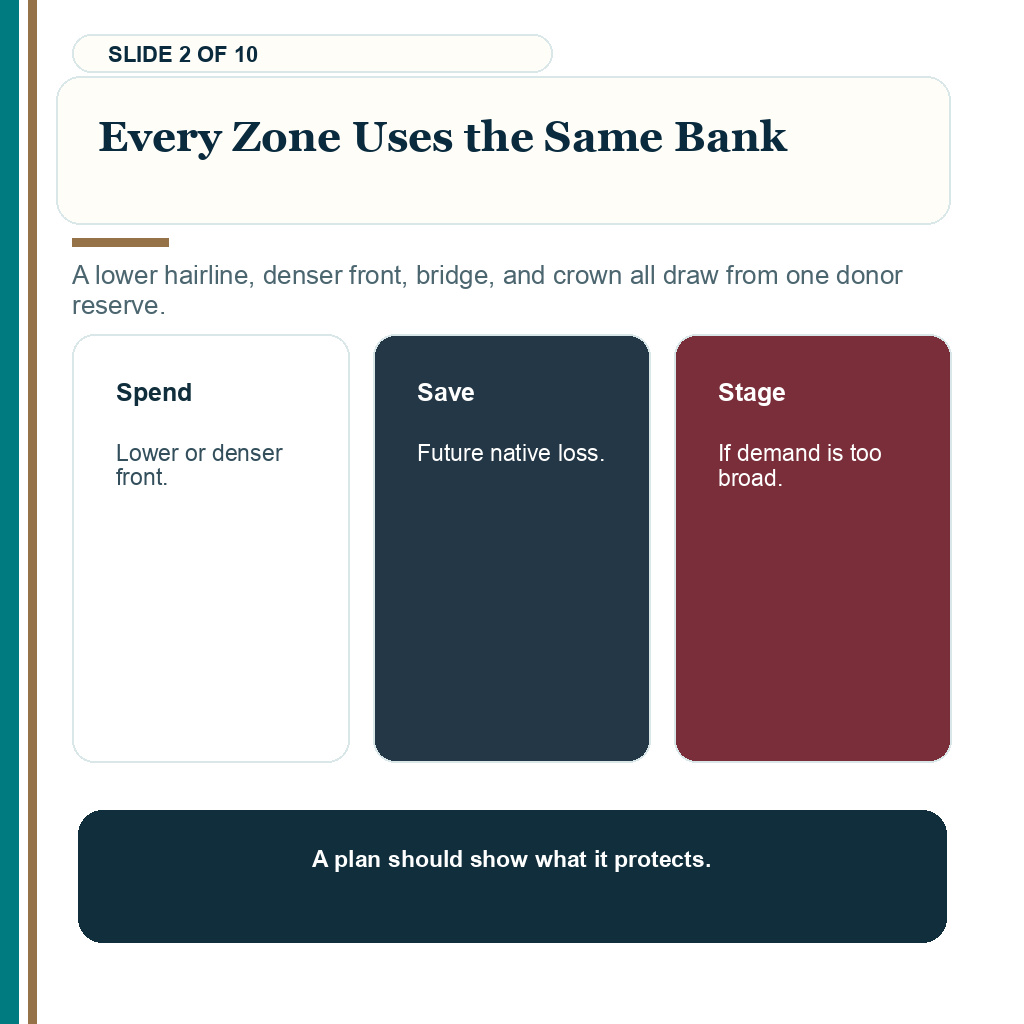
The hard part is that every attractive promise uses the same graft bank. A lower hairline uses grafts. A dense front uses grafts. A bridge through the midscalp uses grafts. Crown coverage uses many grafts and often gives a softer visual return. In many Norwood 4 or 5 plans, the front usually gets priority, the midscalp has to connect the result, and the crown is treated cautiously or staged if it would spend too much reserve. I judge the plan by whether it still makes sense if the pattern progresses. The biggest advertised number is not enough.
The first decision is not the graft number

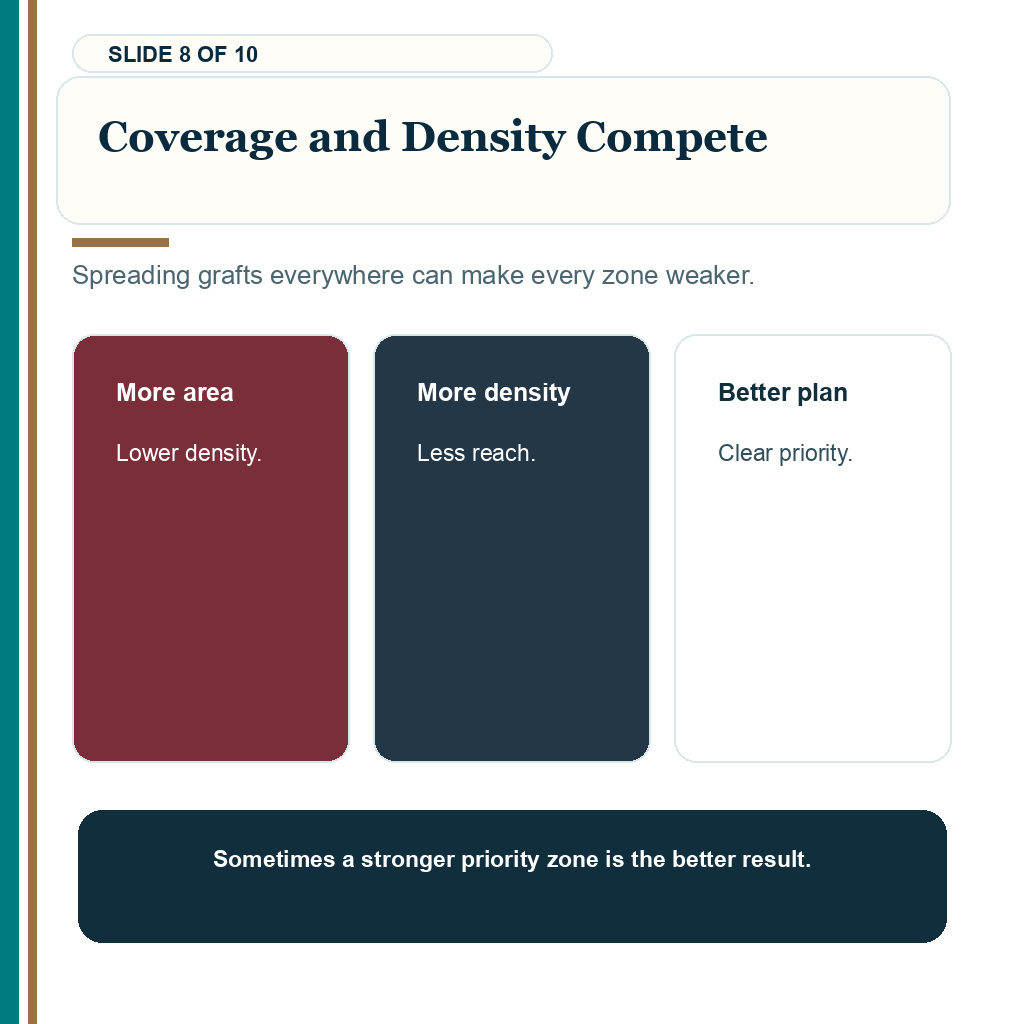
A patient may arrive with three clinic estimates. One says 3,500 grafts, one says 4,500 grafts, and one says 5,500 grafts. That range looks like a technical disagreement, but often it is really a design disagreement. One clinic is spending more on a low, dense hairline. Another is trying to reach the crown. Another is spreading grafts thin across a large area. The number alone does not tell you whether the plan is wise.
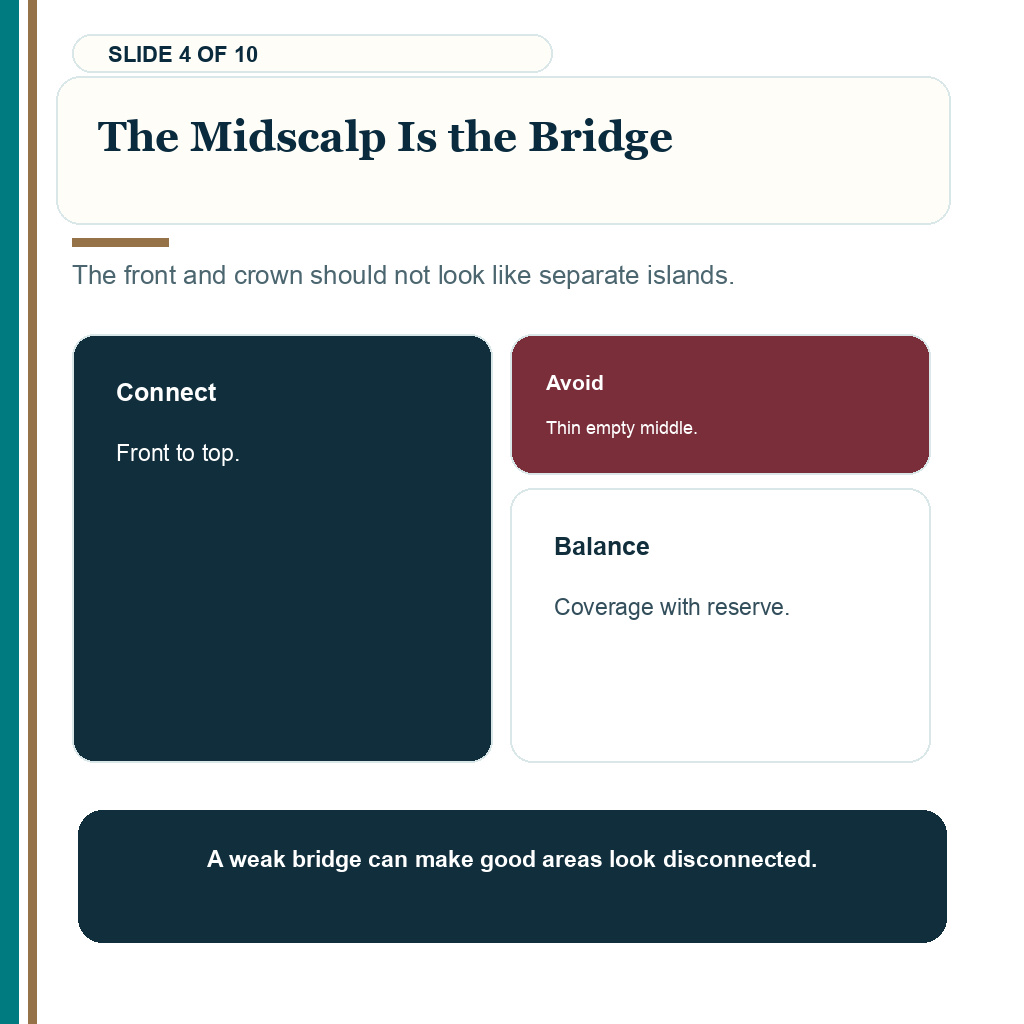
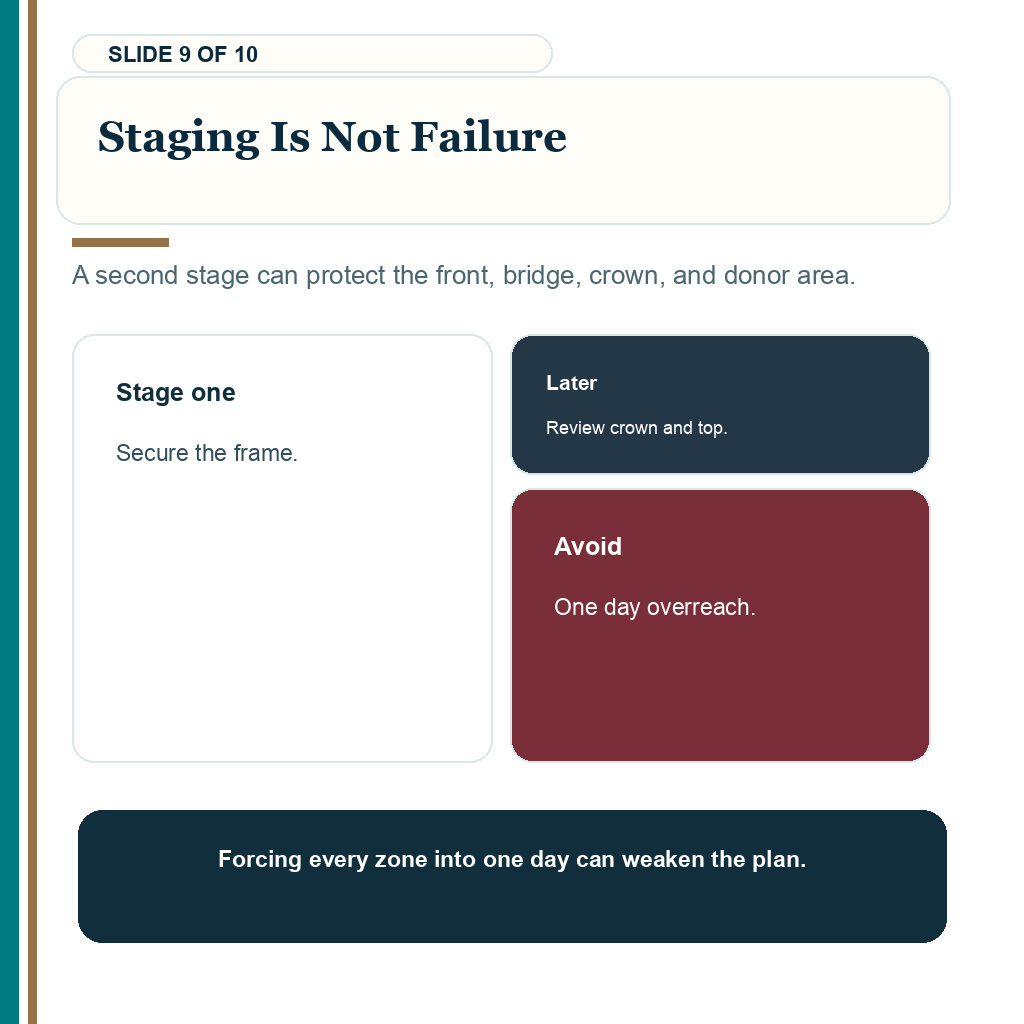
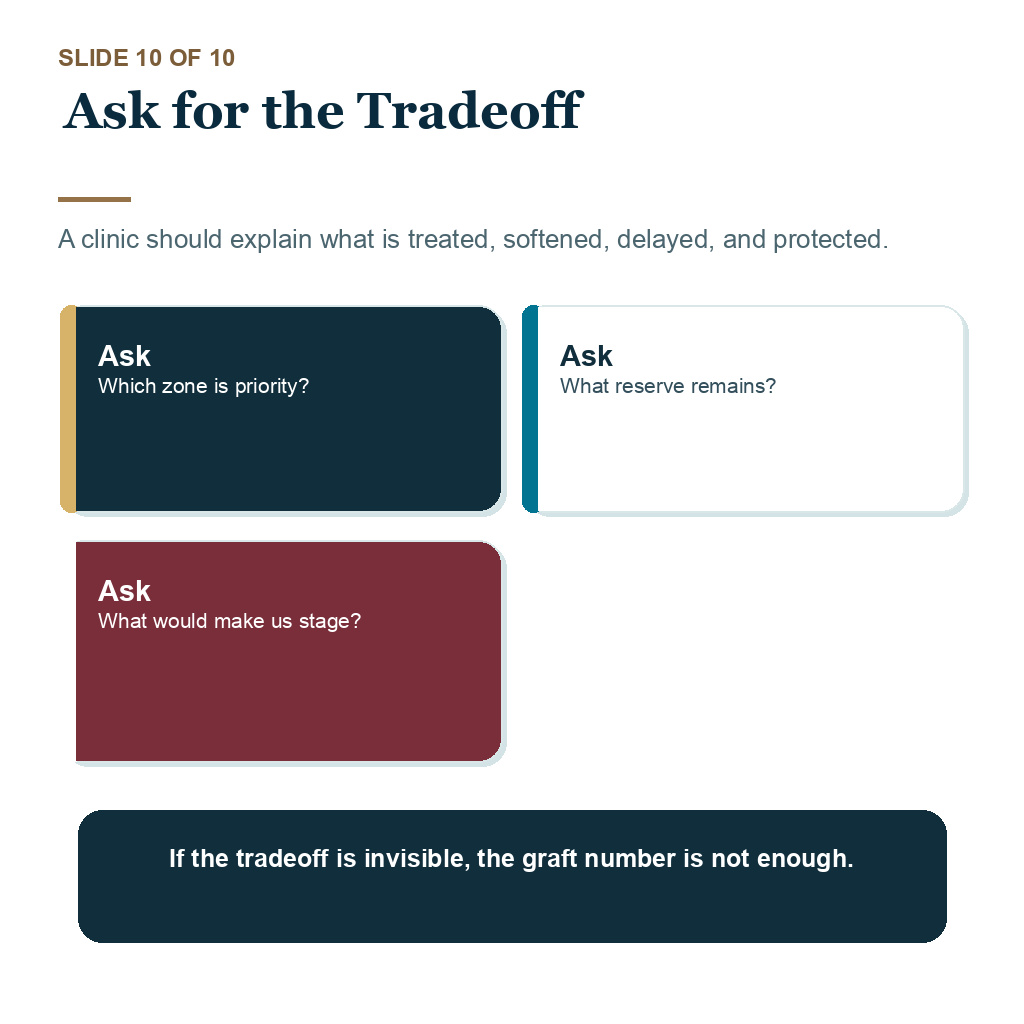
A better first question is where the grafts are going. How much is reserved for the frontal frame? How much is needed to connect the midscalp so the top does not look divided? Is the crown being treated now, reduced, or saved for later? What donor area remains if native hair continues to miniaturize? A graft budget should name both what is being treated and what is being protected. It should also say what finding would make us stage the operation instead of forcing the front, midscalp, and crown into one day.
When two quotes are far apart, ask each clinic to mark the same zones on the same photos. Only then can you see whether the difference is a real plan, a wider treated area, or a number that spends donor reserve too quickly.
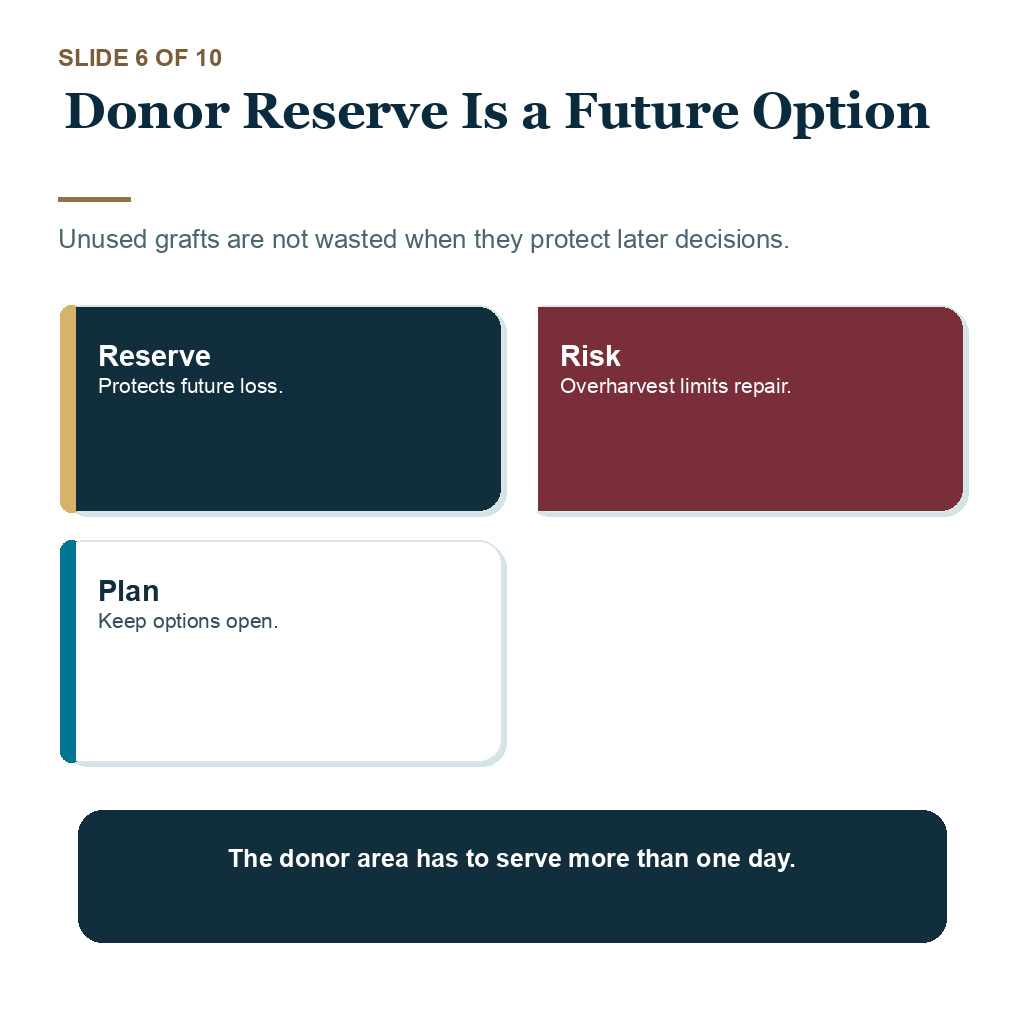
Lifetime graft planning matters here because a hair transplant is not a single day purchase. It is the planned use of a limited donor resource over many years. A Norwood 4 or 5 patient needs that idea before the first recipient area incision is made.
Norwood 4 and Norwood 5 are not the same surgical problem
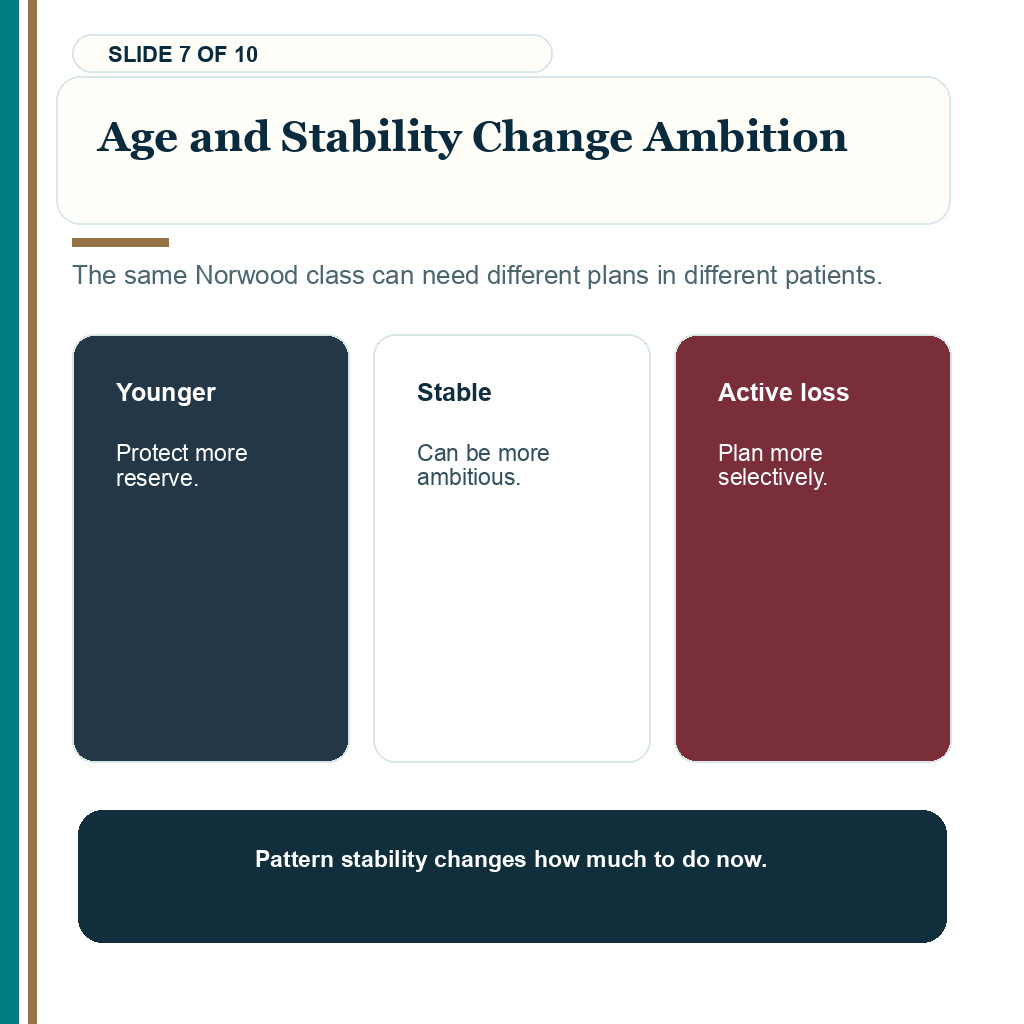
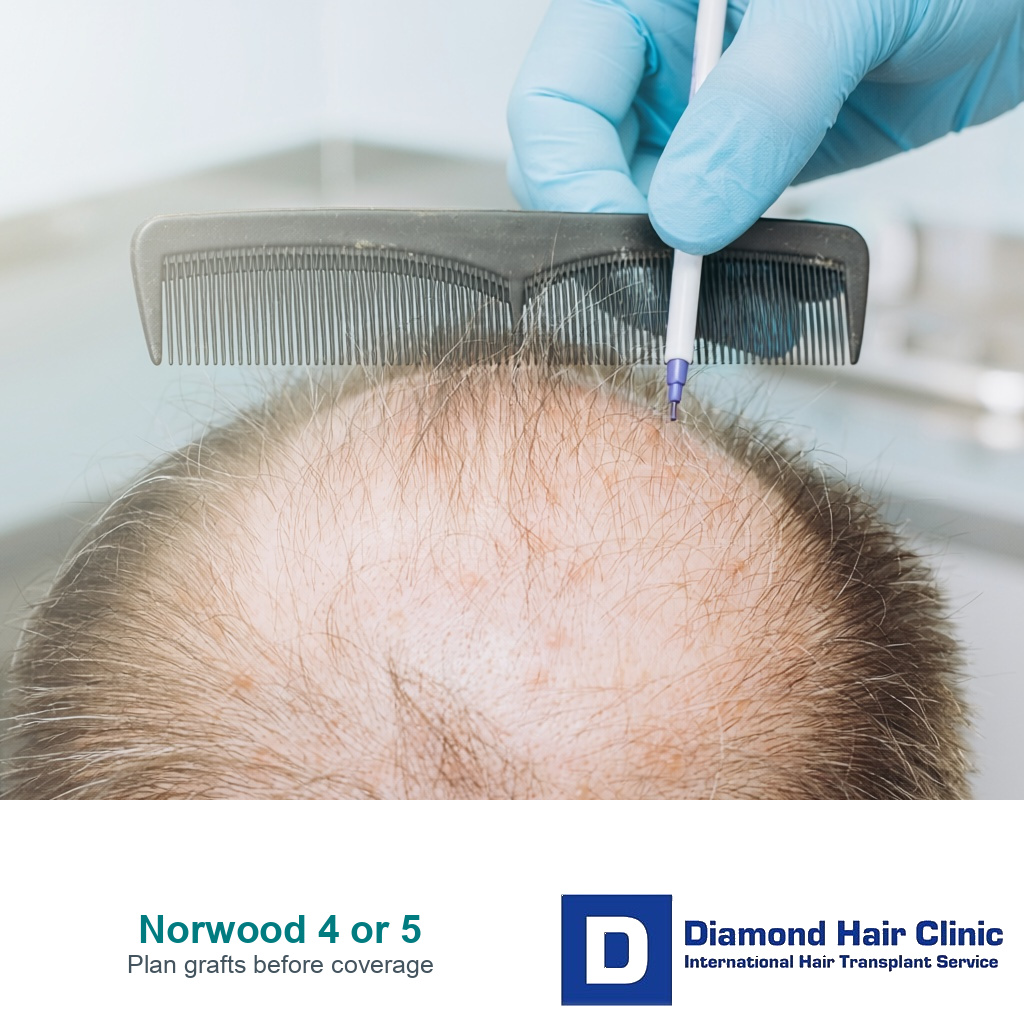
Norwood 4 usually means the frontal recession and top thinning have become more established, often with crown involvement beginning or already visible. Norwood 5 means the balding bridge between the front and crown is weaker, and the total area needing coverage is larger. Two patients may both say they are “around Norwood 5,” but one still has useful midscalp hair and another has almost no bridge left. A styled photo can also understate the difference. Wet hair, comb through views, and donor examination can move the plan closer to Norwood 4 or closer to Norwood 5.
The difference changes planning. If the midscalp bridge is still present, the operation may be able to reinforce the front and protect the visual connection to the crown. If the bridge is weak, the plan has to decide whether to rebuild that connection or accept a more staged approach. If the crown is large and expanding, chasing it too early can dilute the front and still leave the back looking thin.
Here the practical distinction matters. A Norwood 4 pattern with a usable bridge can often prioritize the frontal frame and connection behind it. A Norwood 5 pattern with a weak bridge or expanding crown usually needs a more conservative hairline, staged midscalp work, and a crown plan that does not empty the donor reserve.
For earlier recession, Norwood 3 hair transplant planning shows why early planning still needs discipline. For advanced loss, Norwood 6 or 7 hair transplant planning shows why limits become stronger. Norwood 4 or 5 sits between those two situations, which is why the decision is often misunderstood.
A low hairline can steal from the crown later
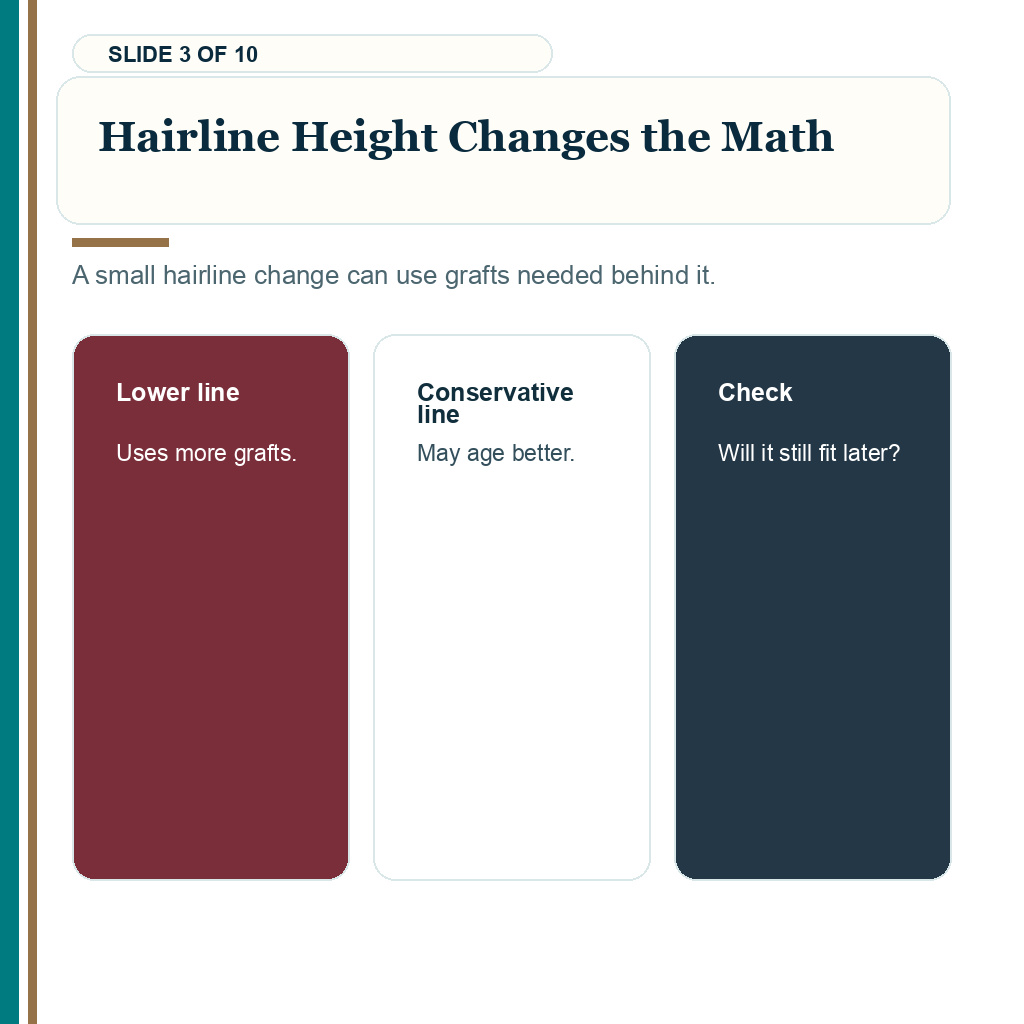
Many patients judge a plan by the proposed hairline. I understand why. The frontal frame is what you see in the mirror, in photos, and in conversation. But at Norwood 4 or 5, a low adolescent hairline can take grafts away from the midscalp and crown before we know how the rest of the pattern will behave.
A natural hairline should match age, face shape, donor reserve, hair caliber, and likely future loss. Recreating a teenage front edge can make the top look patchy later. A slightly more mature hairline with stronger density behind it can look more natural and age better than a low line that consumes too much donor capacity.
Hairline or crown first becomes a real planning question at Norwood 4 or 5. The front usually gives the strongest visual change, but that does not justify ignoring the crown completely. It means the crown decision has to fit the donor math instead of competing with it blindly.
How should crown coverage be discussed?
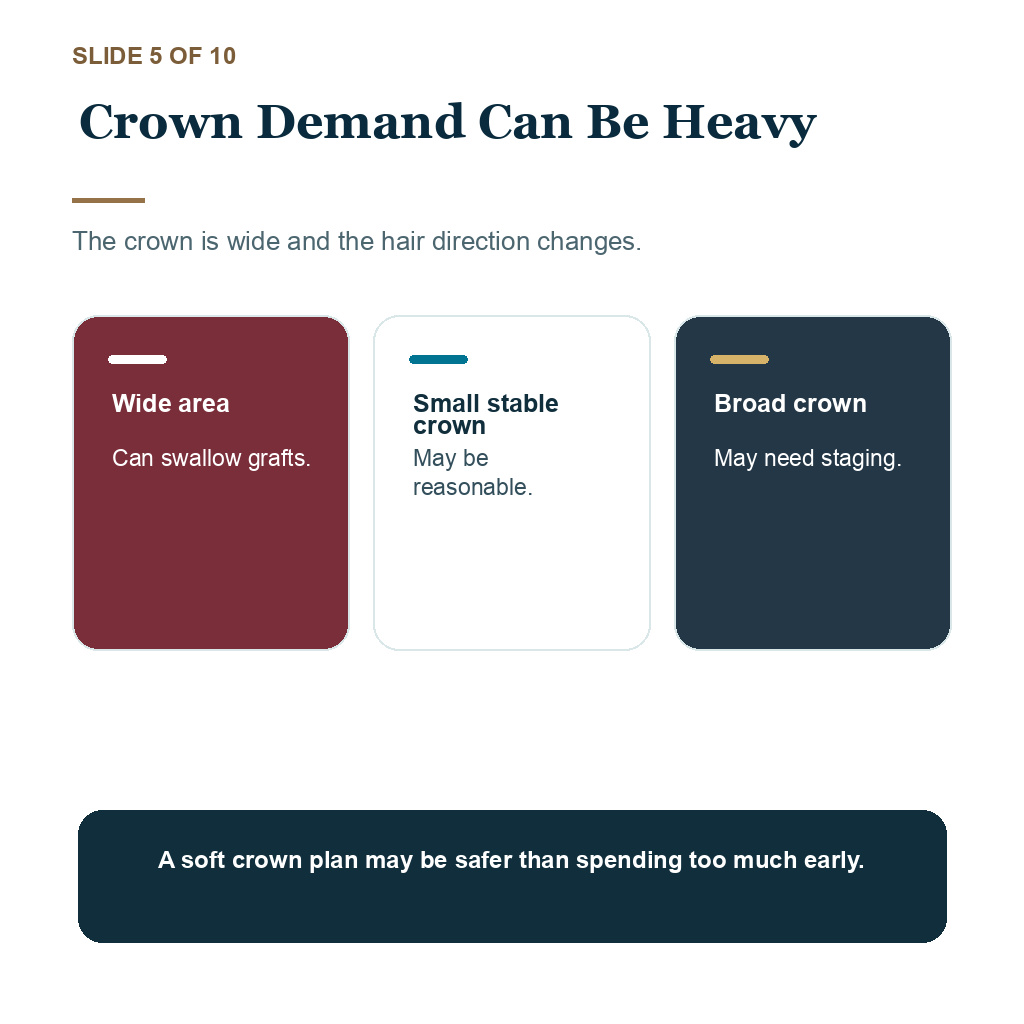
The crown is a wide spiral area. It can swallow grafts quickly because the hair changes direction and the surface area may be larger than it appears in a single photo. Patients often ask for the crown to be “filled in” at the same time as the front, but a crown can demand more grafts than the result will visually repay.
That does not mean the crown should never be transplanted at Norwood 4 or 5. It means I need to know the size of the crown, the strength of the donor area, the patient’s age, medication history, hair caliber, styling goal, and whether the frontal half can still be made stable. A small, stable crown is a different problem from a broad or expanding crown. A small crown may be reasonable. A broad or expanding crown may need lighter coverage, a delayed plan, or a second stage decision after the front and midscalp are secure.
The crown hair transplant discussion is useful here because the crown behaves differently from the hairline. For Norwood 4 or 5, the crown is often the difference between a strong lifetime plan and an overextended first surgery.
One session should not pretend the crown is free. If the crown is included early, the plan has to show what front density, midscalp connection, or future reserve is being traded for it.
Use these 10 graft budget slides to see how a Norwood 4 or 5 plan spends, saves, or stages grafts across the hairline, midscalp, crown, donor reserve, and future loss. Swipe sideways, use the arrows one slide at a time, or choose a number below the image.