


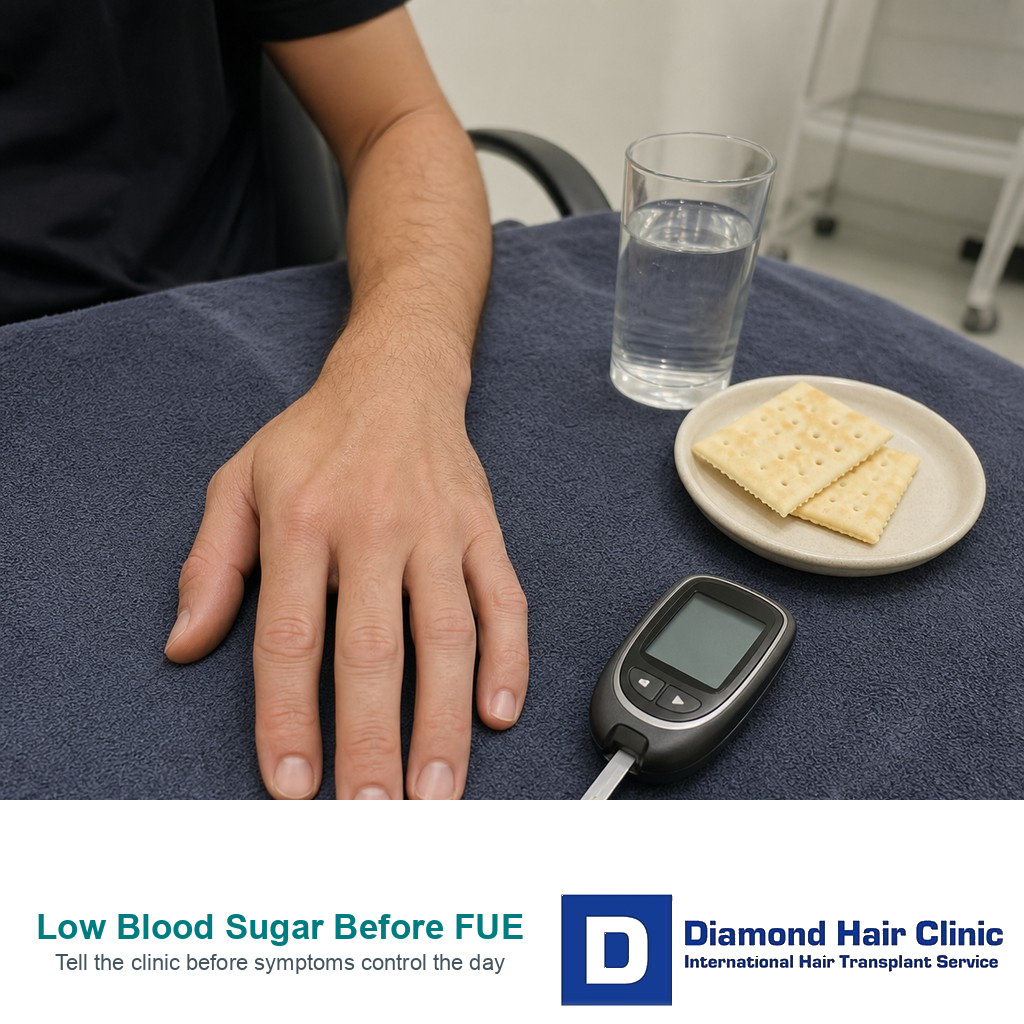
Hungry, Shaky, or Faint Before FUE and What to Tell the Clinic
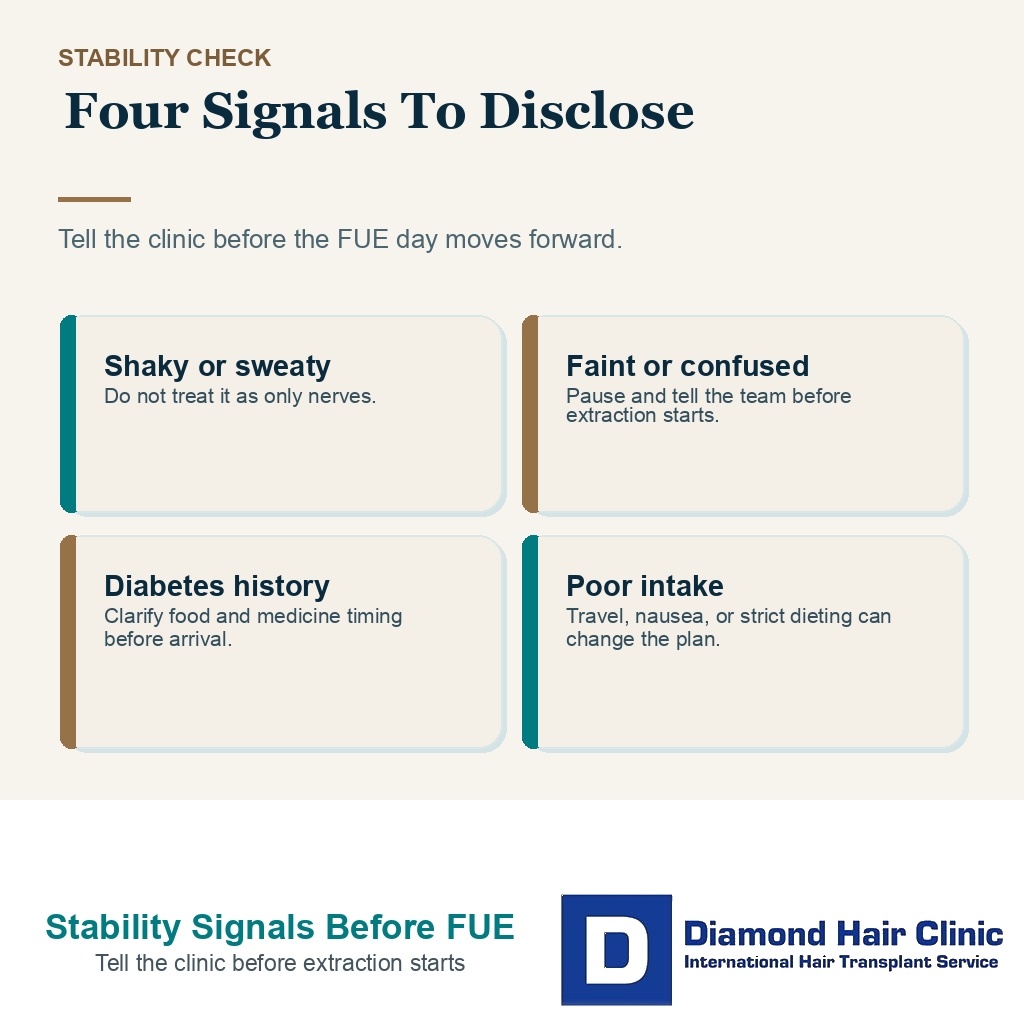
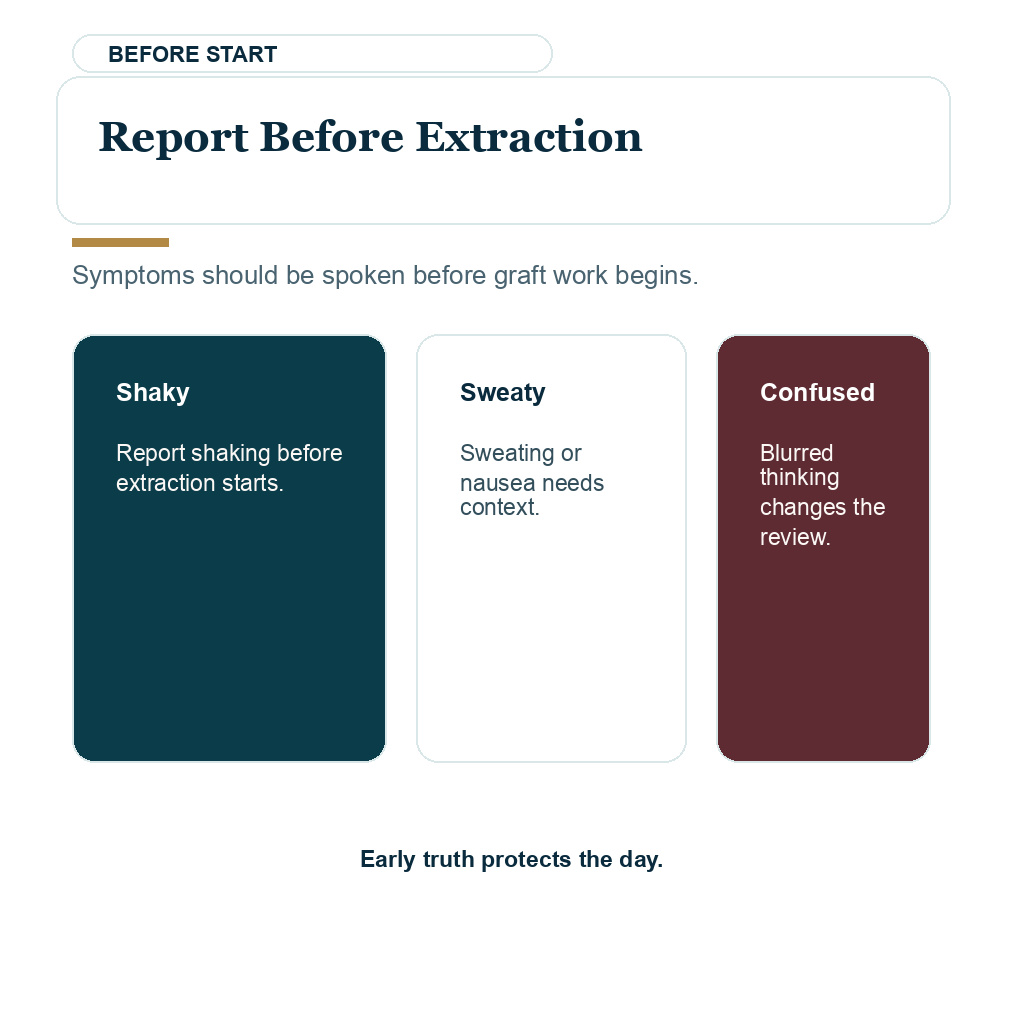
Feeling hungry before FUE does not mean you have ruined the transplant. The clinical issue is whether your body is steady enough for a long awake surgery day. Tell the team before extraction starts if the problem feels physical rather than only nervous, because the plan can only be adjusted while the morning is still controlled. If you feel shaky, faint, sweaty, confused, nauseated, unusually weak, or unable to communicate clearly, tell the clinic before the day moves forward.
Feeling shaky before FUE is not always nerves. Tell the clinic when you last ate or drank, whether you feel dizzy or nauseated, and whether diabetes medicine, fasting, travel, or poor sleep is part of the morning.
A hair transplant is planned around graft quality, donor protection, and natural design, but your body still has to tolerate the chair, the timing, and the instructions. Mild hunger can often be managed with the clinic plan. Symptoms that suggest low blood sugar, dehydration, blood pressure trouble, medicine timing, or illness need review before extraction or implantation continues.
The issue is stability, not only breakfast
This question often arrives as a breakfast worry. Patients think one missed bite, one late meal, or feeling hungry before surgery might directly damage grafts. I do not see it that way. During FUE, I look for a patient who can stay awake, still, responsive, and medically predictable.
A hungry but steady patient is different from a shaky, faint, confused, vomiting, or unusually sweaty patient. The first situation may only need clarification of the meal schedule. The second situation can change whether the surgery day should pause, be adjusted, or wait for medical review.
If you have already read the broader guide on fasting before hair transplant, keep the blood sugar rule here. Do not invent your own fasting rule, and do not hide symptoms to keep the schedule moving.
Steady blood sugar matters during a long awake FUE day
During FUE, you are awake for many hours. You need to lie still, answer questions, change position when asked, and report discomfort early. Lightheadedness, shaking, or confused thinking can make the chair harder to tolerate and can turn a planned surgical day into a safety review.
Staying silent does not protect the grafts. Some people try to push through because they travelled far or do not want to delay the team. That makes the day less controlled, not more successful.
This is separate from the graft handling question in long hair transplant session planning. A long day already needs pacing. If blood sugar, hydration, blood pressure, or general stability is uncertain, the pacing issue becomes a patient safety issue as well.
Some patients should tell the clinic before surgery day
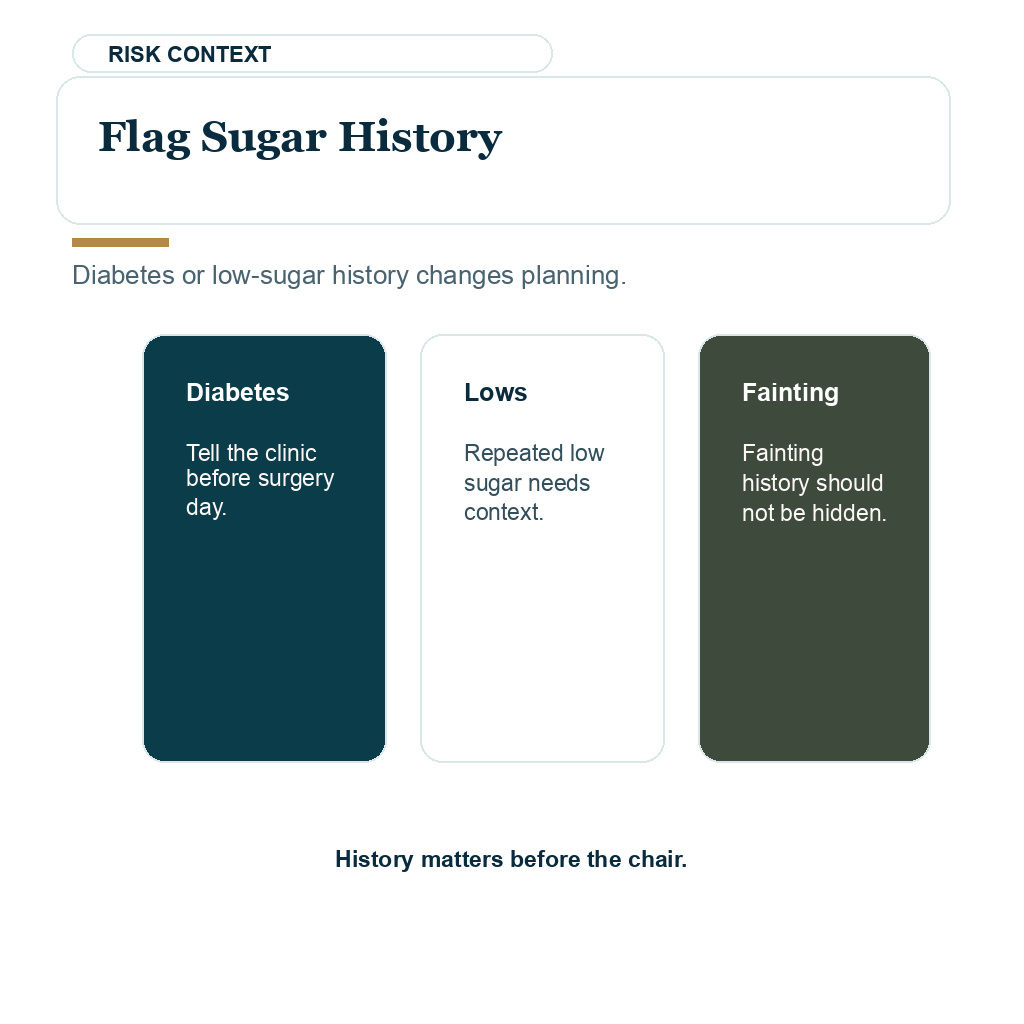
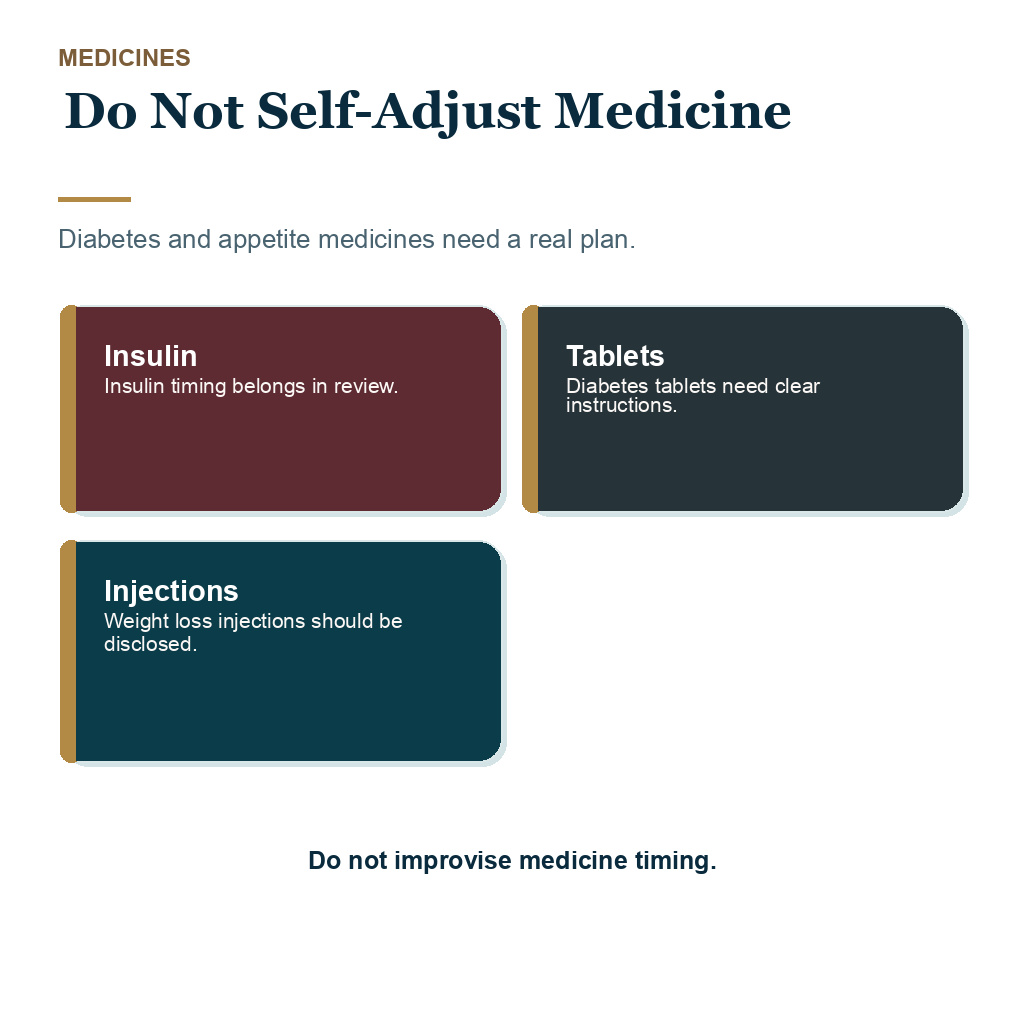
Tell the clinic before surgery day if you have diabetes, repeated low blood sugar, fainting episodes, low blood pressure, strict dieting, recent vomiting, poor oral intake, or a pattern of feeling shaky when meals are delayed. Also mention appetite suppressing medicine, weight loss injections, new stomach symptoms, or any medicine that changes how much you can eat.
A fainting tendency with injections or long procedures should be known before the chair, because snacks and breaks work better when they are planned early.
With diabetes, the question is not only whether a transplant is possible. The day needs a plan for meals, medicines, monitoring, and what to do if symptoms or glucose readings do not fit the schedule. If a pump or sensor is involved, insulin pump and CGM planning during FUE should also cover device reach, alarms, and who checks glucose. The broader candidacy discussion belongs in diabetes and hair transplant, but surgery day stability needs more specific planning.
If you use Ozempic or another weight loss medicine, appetite and stomach symptoms matter too. Nausea, poor intake, vomiting, or dehydration risk should not be treated as a normal morning. If this applies to you, read hair transplant and Ozempic before the surgery plan is finalized.
The clinic should separate hunger from unsafe symptoms
Use the state of your body before or during FUE. The plan changes because mild hunger, clear thinking, and normal communication are not the same as shakiness, confusion, faintness, vomiting, or a medically unclear morning.
Continue with planned admission checks
If you ate as instructed, feel steady, can communicate normally, and have no new symptoms, the team can continue the normal admission checks.
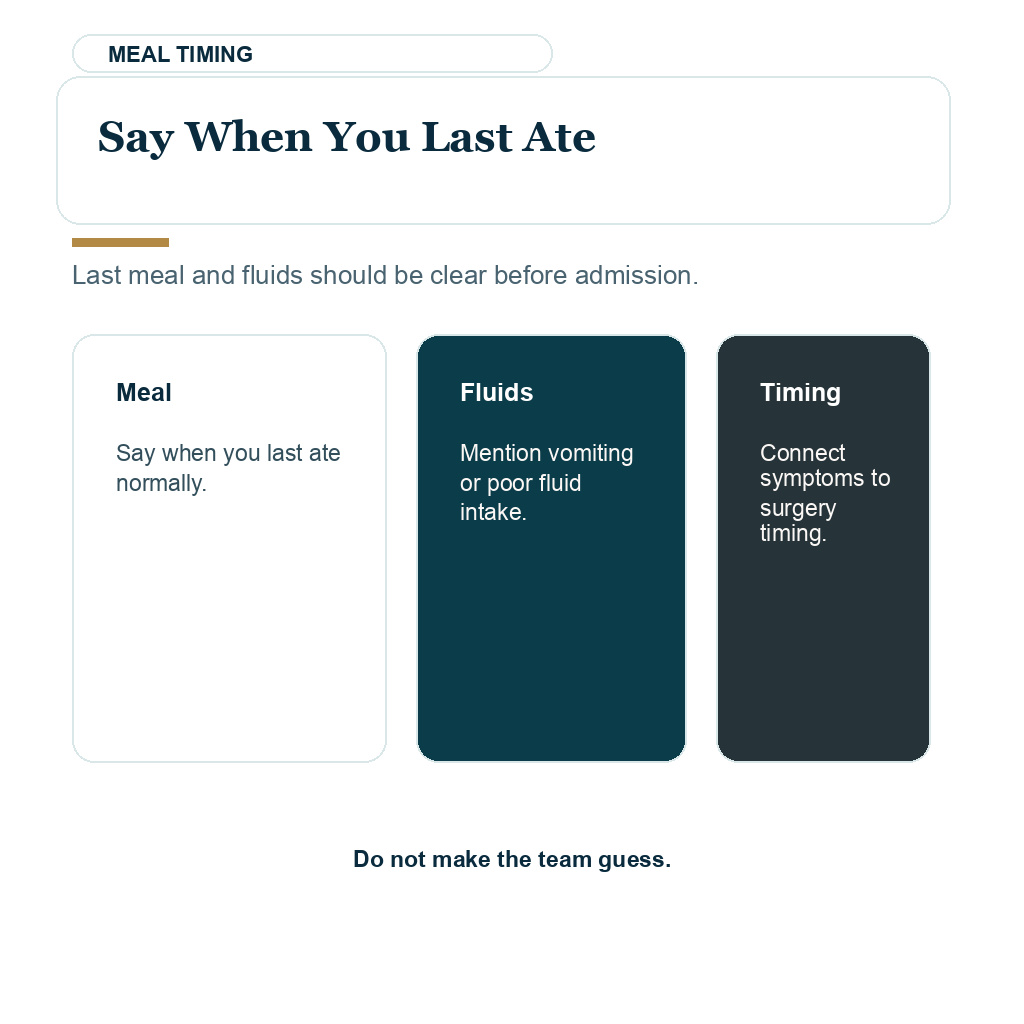
- Confirm your last meal and drinks.
- Keep approved snacks or glucose plan visible only if the clinic asked for it.
- Report any change before extraction starts.
Meal and medicine details should be clear before FUE
Before the day starts, the plan should clarify what you can eat, when you can eat it, which drinks are acceptable, and whether instructions from your treating doctor change the routine. For diabetes, fainting history, strict dieting, or appetite changing medicine, this is not a place for guesswork. A history of fainting with blood tests or injections belongs in that same conversation. The team can arrange the blood draw, position changes, and the first minutes after local anaesthetic before the patient is already lightheaded.
Many diabetes resources use a blood glucose level below 70 mg/dL as a common low blood glucose threshold, but your personal target, treatment plan, and surgery day instructions may be different. So I need the real history, symptoms, medicines, and readings when they exist, not a vague statement that everything is fine.
Separate clinic instructions from personal medical instructions. If your treating doctor gave rules for diabetes medicine, low blood sugar treatment, or meal timing, those rules matter. A transplant schedule can be adjusted around a known plan more safely than around a surprise on the morning.
The same plain disclosure applies to ordinary medicines and supplements. If a tablet changes appetite, blood pressure, bleeding risk, sedation, or nausea, I want to know before surgery. The general medicine checklist is covered in medication before hair transplant.
Do not try to compensate with stimulants. Strong coffee or an energy drink can make shakiness harder to interpret, and they do not replace a proper meal or medical plan. If this is relevant to you, read coffee on surgery morning and energy drinks before hair transplant before the day starts.
Symptoms during FUE can pause the day
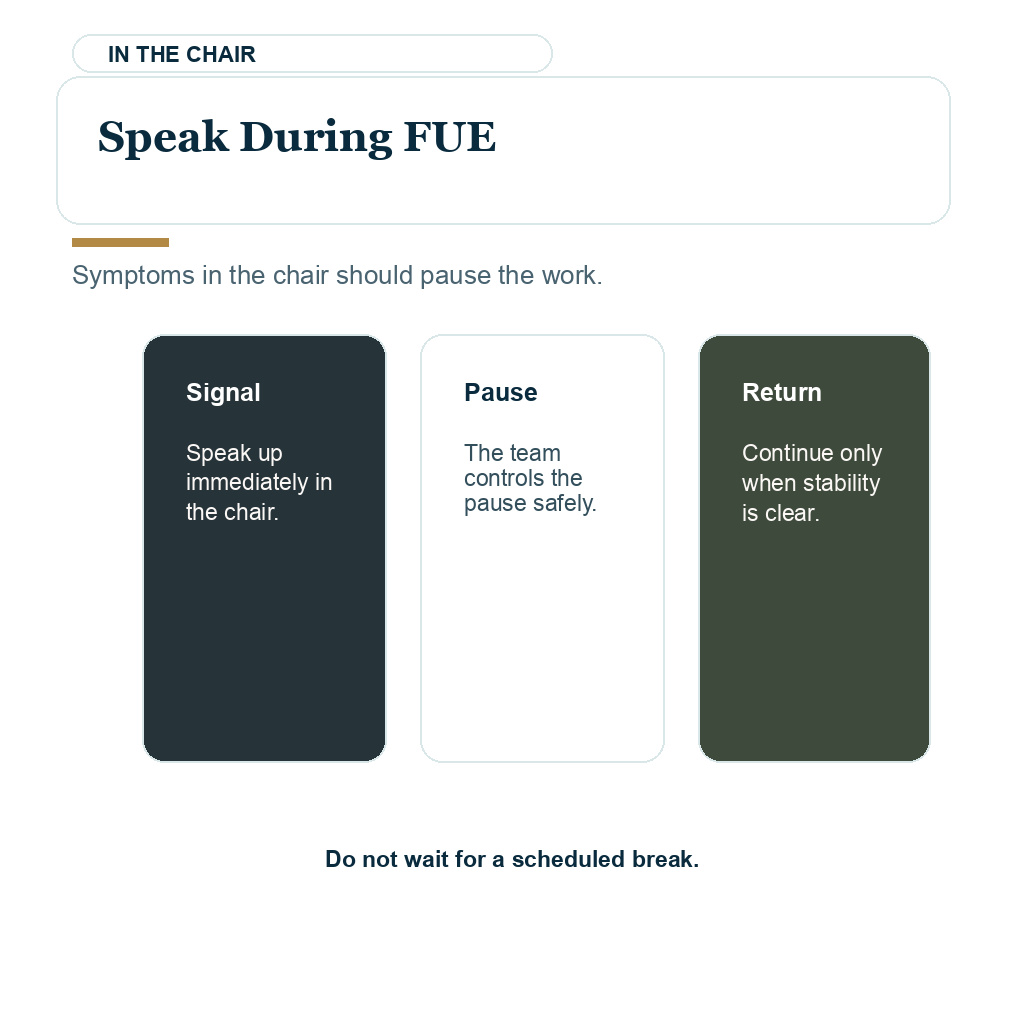
If symptoms appear during FUE, say it immediately. Do not wait for the next planned break. Do not assume it is only anxiety. Shakiness, sweating, sudden hunger, dizziness, weakness, nausea, blurred thinking, or feeling close to fainting is enough reason to tell the team.
A pause is not a failure. It gives the surgeon time to decide whether the issue is simple discomfort, anxiety, low blood sugar, dehydration, blood pressure, medicine timing, or something that means the day should stop.
Some patients feel embarrassed because they think the team will see them as difficult. I see it differently. Hunger, shakiness, sweating, or faintness is information I need in real time. Early speech gives us more choices than waiting until the body forces the day to stop.
This overlaps with the broader warning sign page on fainting and dizziness around hair transplant. The difference here is that low sugar risk often starts before the chair, especially when travel, missed meals, diabetes medicine, weight loss injections, or strict dieting are involved.
Tell us the risk details before travel
Some patients become unstable before they even arrive in Istanbul. They change diet aggressively, sleep badly, get a stomach illness, start a new medicine, or travel after very little food. If that happens, send the details before surgery day.
A small update before travel is easier to handle than a weak patient in the chair. If you had two days of poor eating, vomiting, a new injection, repeated low readings, or dizziness when standing, I do not want you to treat that as a minor travel detail. I want to know whether the original plan still fits your body that week.
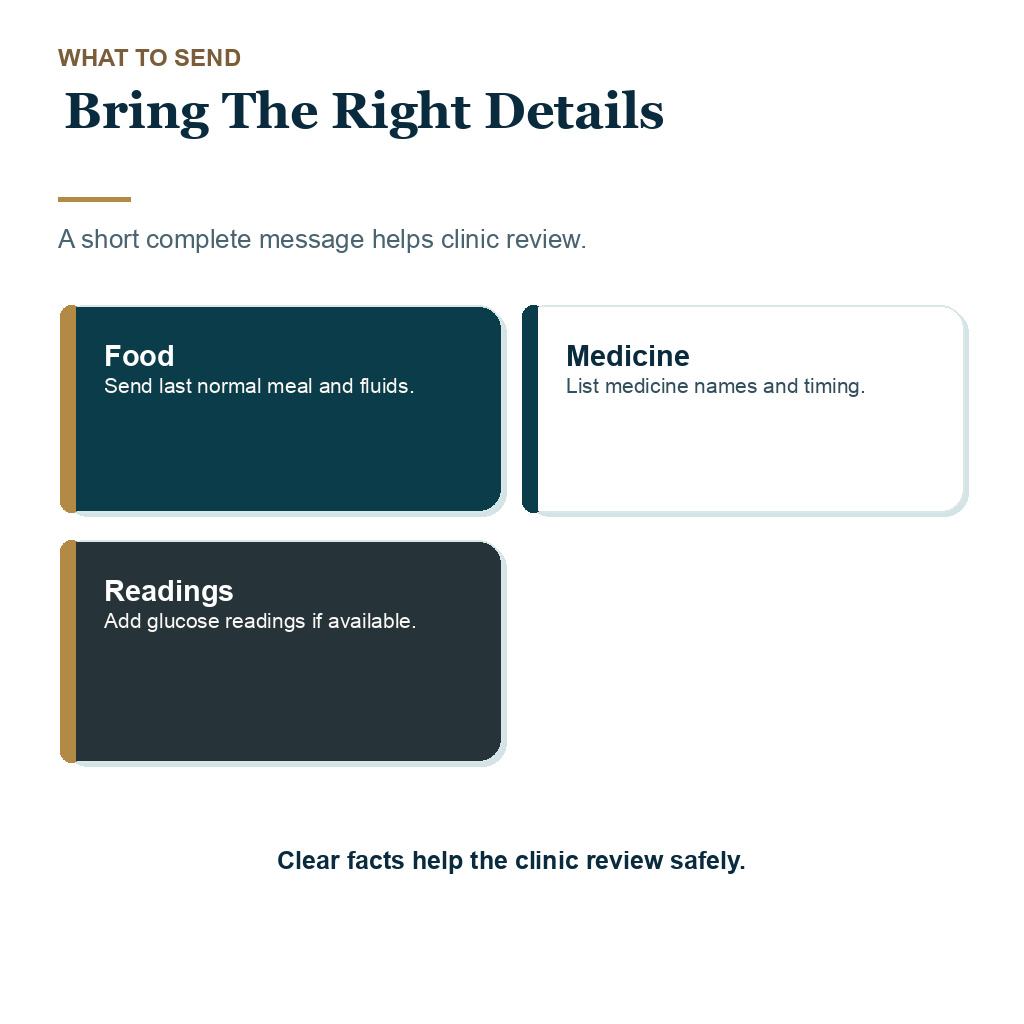
A useful message is short but specific. Say what changed, when you last ate normally, which medicine you took, whether you feel steady while standing and walking, and whether diabetes, fainting, or low blood pressure has been part of your history.
If you feel weak before pickup, say whether you are alone at the hotel. That detail helps the team decide whether to review you before transfer instead of discovering the problem in the chair.
Send the new medicine, the symptoms, the last normal meal, any diabetes or low sugar history, and whether a doctor has recently changed your treatment. This is the blood sugar rule behind medical changes after booking a hair transplant.
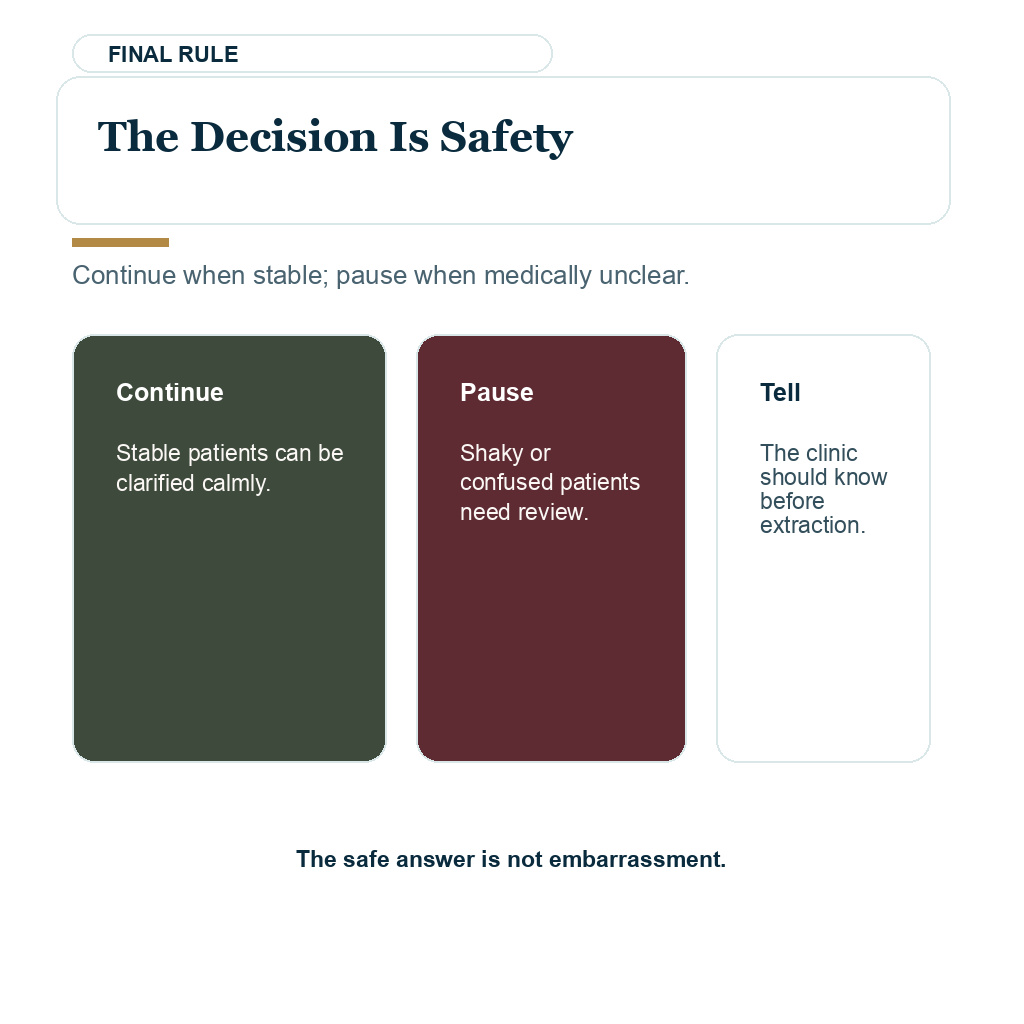
Use the 8 stability slides below to compare hunger versus unsafe symptoms, last meal and fluids, diabetes or low sugar history, medicine uncertainty, symptoms before extraction, symptoms during FUE, the details to send, and the final safety decision. Swipe sideways or use the arrows one slide at a time.

Pause the FUE day when stability is uncertain
I continue only when the patient is stable, communicating clearly, and following a plan that makes sense for that person. If you are hungry but steady, we clarify. If you are shaky, faint, confused, vomiting, repeatedly sweating, or medically unclear, we pause.
This is about keeping the surgery day predictable, not frightening you about food or blood sugar. A careful clinic would rather hear the truth early than discover the problem halfway through extraction.
So if you are worried about low blood sugar before FUE, do not hide it. Tell us before you travel if possible, and tell us again before surgery starts if something has changed. A steady patient gives the surgeon a safer day to plan.

Read this review excerpt
Every single one of my questions was answered and they made sure I had all the details I needed to make an informed decision.