



Clomiphene or hCG Before FUE Needs a Hormone Review
If you use clomiphene, enclomiphene, or human chorionic gonadotropin (hCG) before FUE, raise this before travel dates or surgery dates are fixed. Do not change the medicine alone. The review is usually not a simple question of whether grafts will automatically fail. I want to know why the medicine is being used, who is prescribing it, whether the hormone plan is stable, and whether native hair loss is changing while the transplant plan is being made. A hidden medicine history can make a safe plan look clearer than it really is.
This subject matters because many patients do not think of these medicines as part of a hair transplant consultation. Some use them as prescribed fertility treatment. Some are given them during a low testosterone review. Some use them without supervision after a steroid or performance drug cycle and call them supplements. In a surgeon-led FUE plan, all of those versions need to be visible. The point is not to judge the patient for telling me. The point is to know which medical situation I am planning around.
The graft question is not the only question
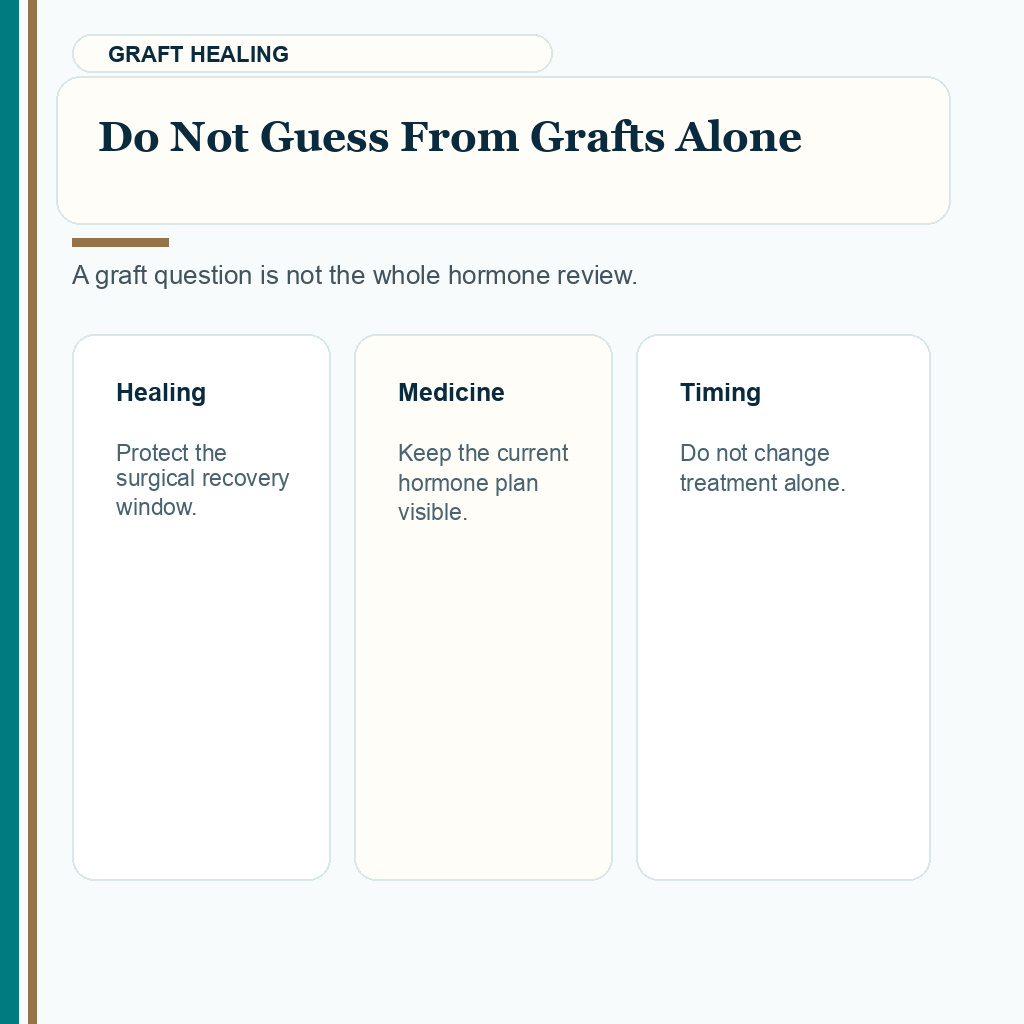
Patients often ask me whether clomiphene or hCG will ruin transplanted grafts. That is not the right first question. The better first question is whether the full hormone and medication picture is stable enough for surgery planning. Grafts are selected from donor hair that is usually more resistant to miniaturization than weak hair in the front and crown. That does not mean the rest of the scalp becomes immune to hormonal change, stress, shedding, or continuing androgenetic hair loss.
I bring this back to the medication review before hair transplant surgery because a medicine matters when it can change the decision. Clomiphene, enclomiphene, and hCG can belong to a real medical plan, but they can also be part of unstable experimentation without medical supervision. Those two situations should not be treated the same way.
I also need exact names. A patient may say Clomid, hCG, enclomiphene, testosterone booster, fertility shot, or post cycle tablets. Those labels do not always describe the same situation. That standard behind medicine names on FUE surgery day should start earlier than the chair. I want the real name, the reason it was given, and the doctor responsible for it before the plan becomes final.
Include who prescribed it and what problem it is treating. Fertility treatment, testosterone recovery, and unsupervised post cycle use do not create the same planning conversation.
Fertility treatment and hair planning need one review
Clomiphene or hCG prescribed in a fertility context has to be reviewed inside that context. A man who is trying to conceive may also be worried about finasteride, dutasteride, semen testing, sperm banking, freezing sperm, hormone levels, timing with a partner, or whether surgery travel will interrupt medical review. Those questions do not make FUE impossible, but they make secrecy a poor strategy.
I already separate hair loss medication from fertility planning in finasteride, dutasteride, and fertility planning. Clomiphene and hCG sit on the other side of the same practical problem. They are not hair transplant instructions. They are part of a patient’s medical situation, and the surgical plan should not pretend they are invisible.

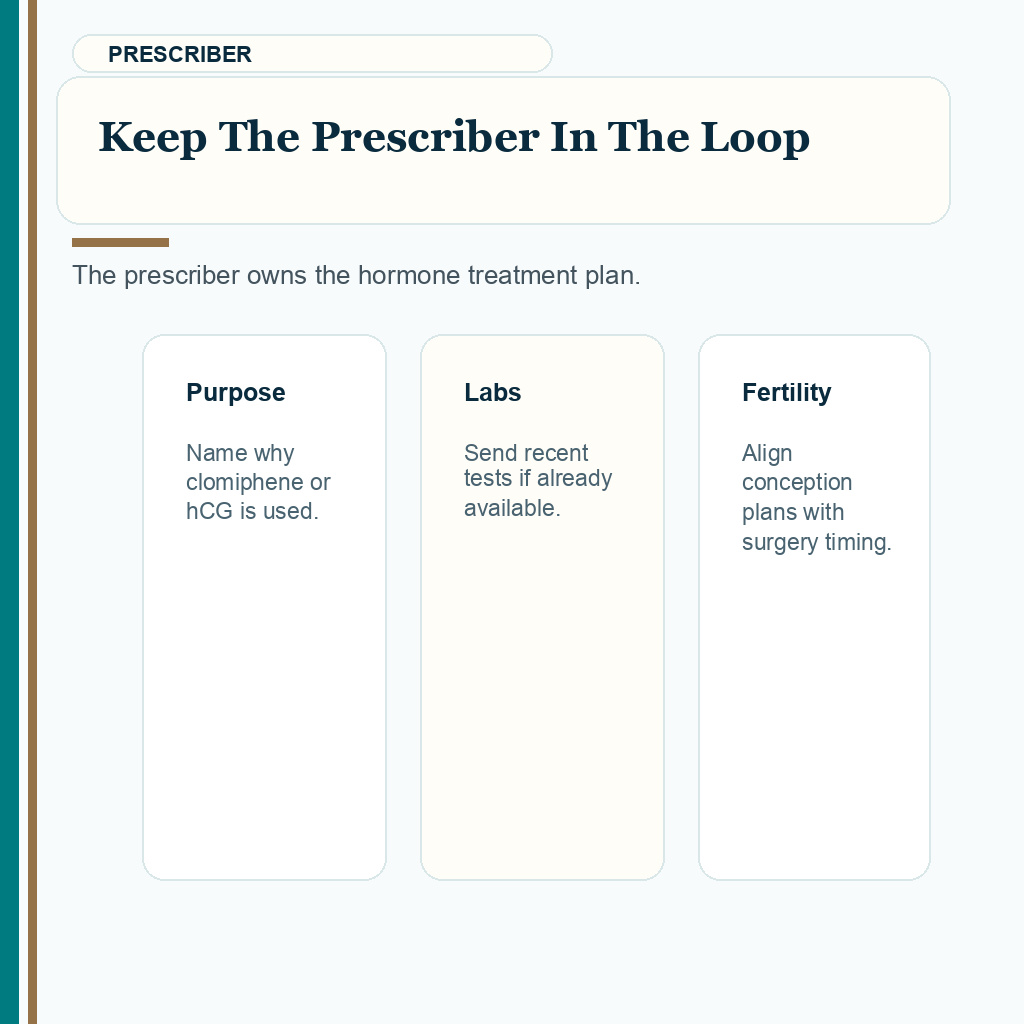
The medicine purpose matters. Send the medicine name, who prescribed it, why it is being used, whether it has changed recently, and whether blood tests or fertility appointments are already planned. I do not need a patient to interpret laboratory values alone. I need enough context to know whether timing, hairline design, graft distribution, or the native hair plan needs a slower review.
Tell the clinic what the medicine is doing
The most useful sentence is not “I take hormones.” A clearer version gives the medicine name, the purpose, the prescribing doctor, and whether the plan has changed recently. That tells me whether the medicine is part of supervised fertility care, a testosterone evaluation, a plan used for a long time, or something the patient started alone.
Recent change matters. A medicine that has been stable and supervised is different from a new plan started days before travel. A patient who has new acne, breast tenderness, mood changes, blood pressure concerns, shedding, or rapid hair pattern change needs that symptom history reviewed with the medication history. These details can change whether we proceed, pause, or ask for the prescribing doctor to clarify the plan.
A blurred pill photo is not enough for the surgical team to identify the medicine. Hiding a medicine because you are afraid the clinic will say no creates a weaker plan. If the answer becomes no or not yet, that may protect the medical review. If the answer is yes, the team still needs the real details to plan the donor area, recipient design, and aftercare with fewer surprises. Keep that list current if the plan changed recently, because old doses and old appointments can mislead the surgical review.
A hidden post cycle plan changes the risk discussion
Clomiphene or hCG can appear in a completely different setting after anabolic steroid or performance drug use. I am careful here because a hair transplant should not become advice about cycles, medicine after a cycle, or bodybuilding protocols. I do not give those plans. I do need to know if they exist.
In hidden steroid or post cycle medicine planning, the concern is not only the graft. It is the whole recovery and long term hair picture, including androgen exposure, acne or folliculitis risk, blood pressure, heavy training, sweating, native hair loss, and whether the patient’s story is medically stable enough to support a surgical decision.
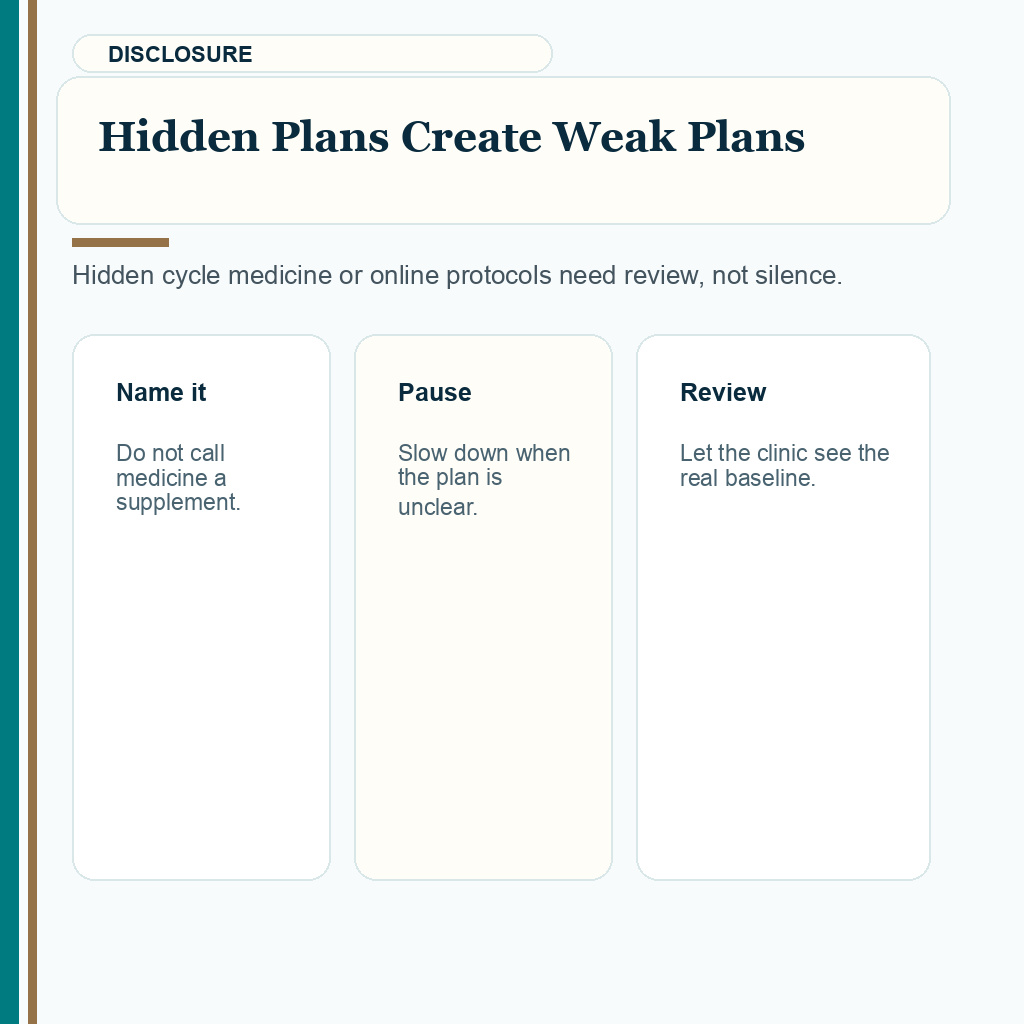
If a patient says, “It is only a supplement,” but the plan includes testosterone, SARMs, clomiphene, hCG, aromatase inhibitors, acne medicine, or blood pressure tablets, I want that disclosed. The clinic cannot protect a plan it cannot see. Hiding the protocol makes the consultation less clear and can make the result harder to interpret later.
Separate graft healing from native hair loss
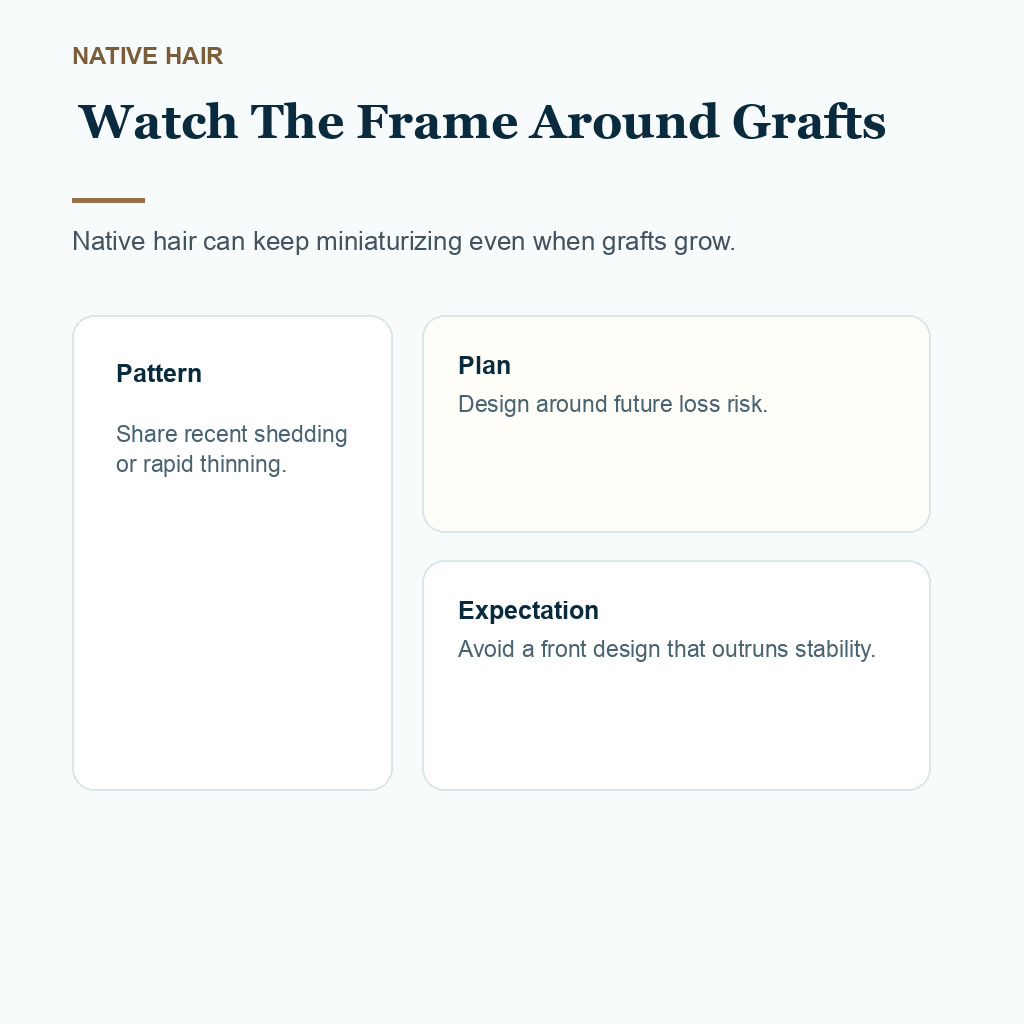
A graft can grow while surrounding native hair continues to weaken. That distinction is central to this topic. When patients read about testosterone therapy and hair transplant planning or hair transplant while on TRT, they often focus on whether transplanted hairs survive. I also focus on the frame around those grafts.
If native hair is miniaturizing quickly, the design may need to be more conservative. If the crown is unstable, a dense crown promise can spend grafts too early. If the patient cannot or will not use finasteride, the plan may need a different expectation. For that reason, hair transplant without finasteride is not just a medication preference. It changes how we think about future loss.
Hormone medicine does not give me permission to make a dramatic hairline. It also does not by itself disqualify a serious patient. It tells me to slow down and separate graft survival, donor protection, native hair stability, and the patient’s real medical plan.
The four hormone review slides below separate the graft question from native hair planning.
Use the review route before dates are fixed
Vague medication history leads to vague surgical advice. Sorting the medicine by purpose gives the consultation a clearer route. A prescribed fertility plan, a low testosterone review, medicine after a cycle, a conception timeline, and an unclear online protocol are not the same route.
Hormone review route selector
Start with the reason for treatment
- Prescribed fertility planSend the prescriber context
- Low testosterone reviewKeep the baseline visible
- Post cycle medicineHidden protocol changes risk
- Trying to conceiveAlign fertility and surgery timing
- Unclear online protocolPause before guessing
Send the prescriber context
Clomiphene, enclomiphene, or hCG may be part of a fertility plan. I need to know the purpose, the prescribing doctor, and whether timing is being coordinated around conception or testing.
Prescriber note Do not change the medicine alone before FUE. Send the current plan and let the clinic decide whether the surgical date needs more review.
Keep the baseline visible
Some patients use these medicines while low testosterone symptoms or blood tests are being reviewed. A moving hormone plan can make hair loss, shedding, and medication tolerance harder to interpret.
Lab note Share recent blood work if it already exists, the reason for treatment, and any recent medicine change.
Hidden protocol changes risk
When clomiphene or hCG is tied to a steroid plan started without medical supervision or medicine after a cycle, the risk discussion changes. The issue is safety, native hair planning, and unstable androgen exposure.
Protocol note Name every medicine before dates are fixed. Do not call it only a gym supplement.
Align fertility and surgery timing
The hair plan should not fight a fertility appointment, semen test, or partner timeline. This is especially important when finasteride, dutasteride, or other hair loss medicine decisions are also being reviewed.
Timing note Put the fertility timeline and hair loss medication plan in one message before final dates are fixed.
Pause before guessing
If the medicine was bought online, copied from a forum, or started without a prescriber, I do not treat it as a small detail. Unknown dosing, side effects, and timing can make surgery planning less safe.
Review note Stop guessing and ask for medical review before adding or changing hormone medicine around FUE.
This is also where gynecomastia or hormone sensitivity matters. A patient who has already had breast tenderness, hormone side effects, fertility concerns, or emotional side effects from hair loss medication should not be pushed into a standard answer. The plan needs a more careful conversation.
If the route selector points to uncertainty, pausing planning is safer than building a transplant around half a medicine history. Extra review time can still lead to surgery when the facts are clear. A hidden hormone plan usually makes the consultation weaker.
Send this before the surgical plan is finalized
Send one clean medication list. Include clomiphene, enclomiphene, hCG, testosterone, finasteride, dutasteride, minoxidil, blood pressure medicine, acne medicine, supplements with hormonal claims, and anything used after a cycle. For each item, write the exact name, current dose and schedule as prescribed or actually used, who prescribed it, why it is being used, and when it last changed. If recent blood test reports already exist, attach the reports instead of translating the numbers yourself.
If you are actively trying to conceive, say that directly. If a fertility appointment, semen analysis, or endocrinology visit is already planned, the hair transplant schedule should be reviewed around that. If another clinic gave you a quick yes without asking about medication history, a second opinion before a hair transplant can be useful because the missing detail may be the real issue.
Clear photos still matter, but they are not enough. A photo can show hairline shape, donor density, or crown thinning. It cannot show why hormone medicine was started, whether it is stable, or whether the native hair plan is changing. The best file before surgery combines clear photos with a complete medication history.
Hormone treatment needs one shared record
Clomiphene, enclomiphene, hCG, testosterone history, fertility treatment, and recent lab changes belong in the same conversation as the graft plan. The surgeon should not be discovering them after the hairline has already been treated as fixed.
I want to know who prescribed the medicine, what problem it is treating, whether symptoms or doses are changing, and how native hair loss is behaving. That keeps temporary hormone changes separate from surgical design decisions that spend permanent donor hair.
A stable, supervised hormone plan can still fit with FUE. Moving labs, side effects, fertility timing, or native shedding call for a slower consultation so every doctor works from the same facts.

Read this review excerpt
Every single one of my questions was answered and they made sure I had all the details I needed to make an informed decision.