


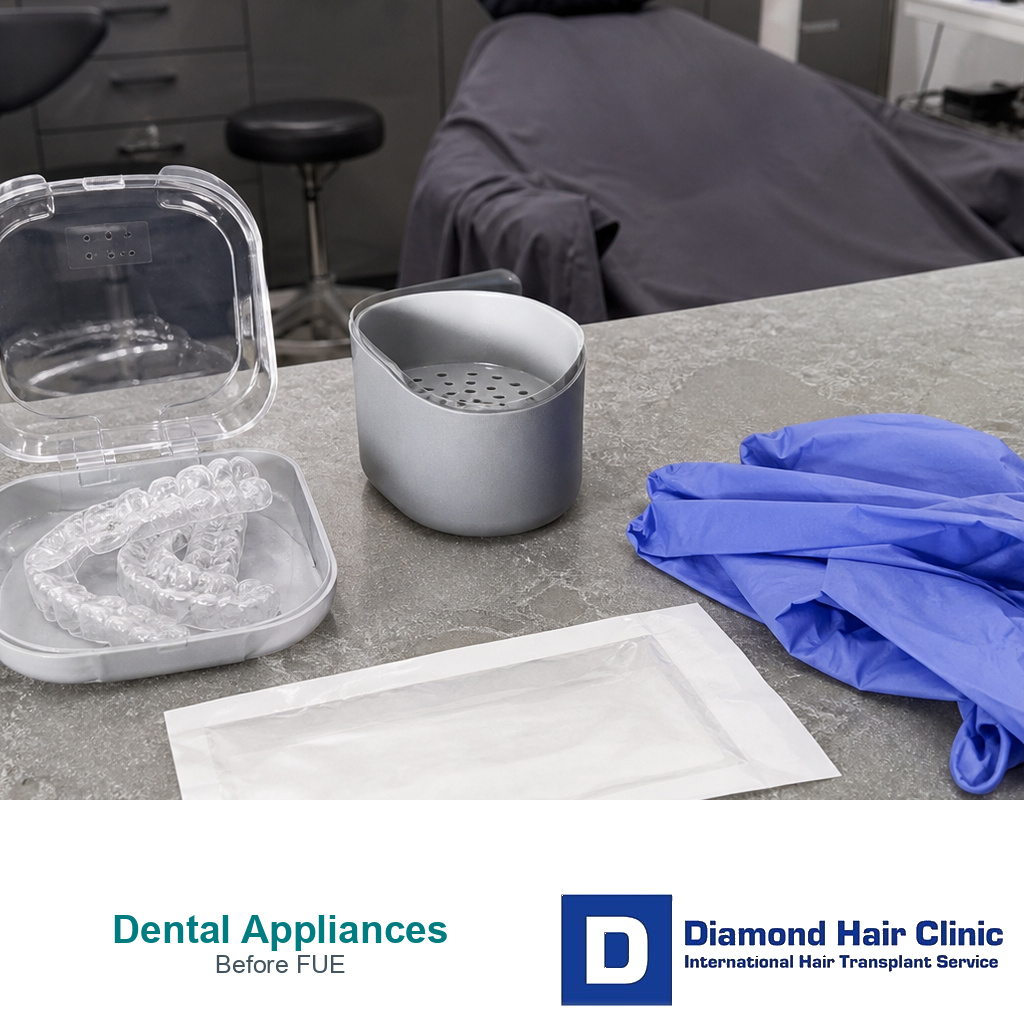
Dental Appliances Need a Plan Before FUE Surgery Day
If you wear dentures, a partial plate, a clear aligner, a retainer, a mouthguard, or dental jewelry, do not treat it as a small detail on the morning of FUE. Share it before surgery day and bring a clean case. It may be routine, but it still belongs in the plan. A removable dental appliance belongs in the procedure day notes, not hidden in a pocket or tissue.
I do not want a patient to feel embarrassed about dentures or orthodontic appliances. I also do not want the team to discover a loose tooth, a removable plate, or a tight aligner only after the patient is already positioned for graft work. A calm FUE day depends on clear communication before the chair day starts.
The first answer is usually planning, not refusal
Using a dental appliance does not by itself stop a hair transplant. Many appliances are routine. What matters is whether the appliance affects airway safety, sedation planning, jaw comfort, communication, hygiene, or storage during a long procedure.
A full denture, a partial denture, a clear aligner, a night guard, a sports mouthguard, and fixed dental work are not the same issue. A loose tooth is different again. I avoid blanket rules such as “always keep it in” or “always remove it” because the details matter. Tell us what you wear, how secure it is, whether you can remove it yourself, and whether you need it to speak or feel comfortable.
Root canals, extractions, implants, and dental surgery timing are a separate question, covered in dental work before or after a hair transplant. The narrower decision here is what to do with removable dental appliances on the FUE procedure day.
Bundling dental care into the same trip changes the conversation. A retainer or denture plan is one issue, while dental infection, swelling, X rays, or a recent root canal can affect comfort, timing, and medical review in a different way.
Details to send before arrival
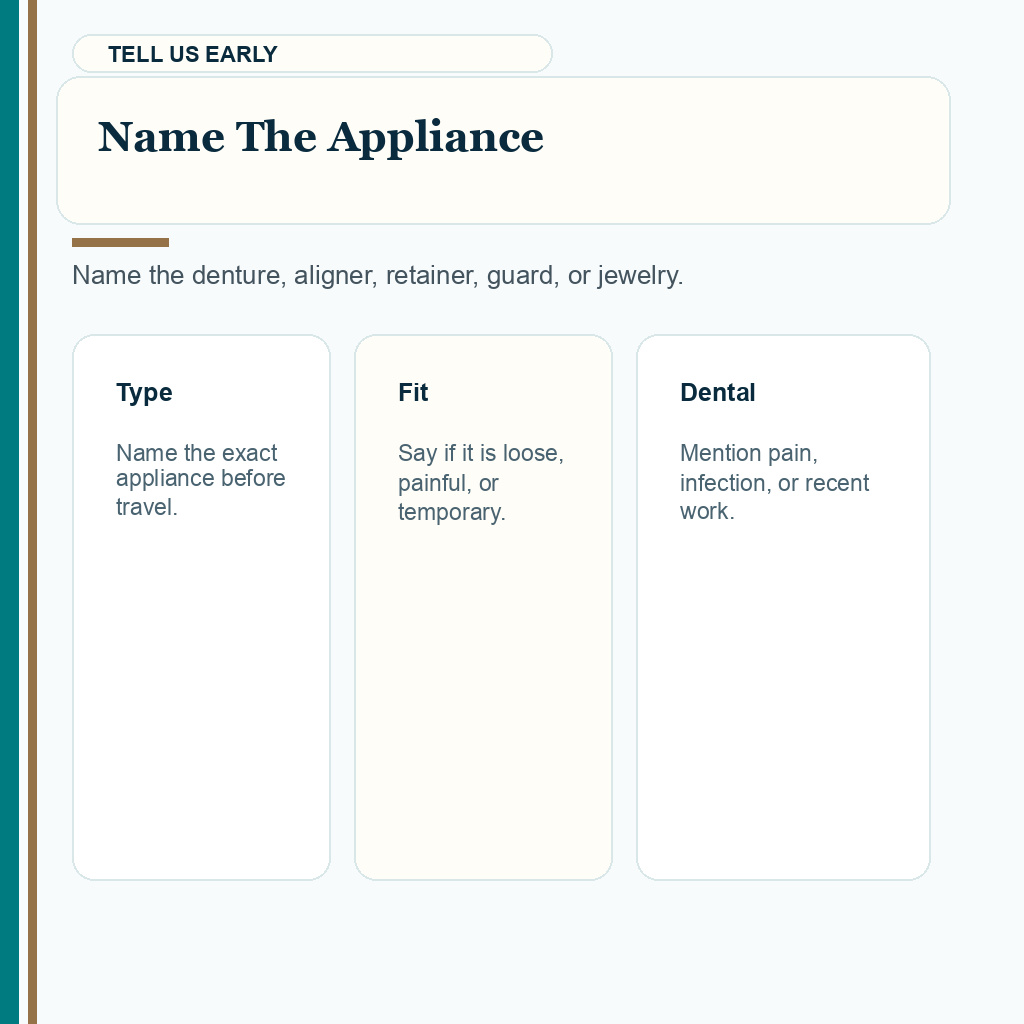
Before arrival, tell the coordinator if you wear removable dentures, partials, retainers, clear aligner systems such as Invisalign, a night guard, a mouthguard, tongue or lip jewelry, or anything else inside the mouth that can come loose. Also mention loose teeth, recently fitted crowns, temporary crowns, unstable bridges, dental pain, recent dental infection, or dental medication.
Write the message as concretely as you can. You might say that you wear a removable upper denture, use clear aligners and can remove them yourself, have a loose lower tooth, or use a night guard for jaw clenching. If you have a case, say that you will bring it. If you do not have one, get a clean hard case before travel.
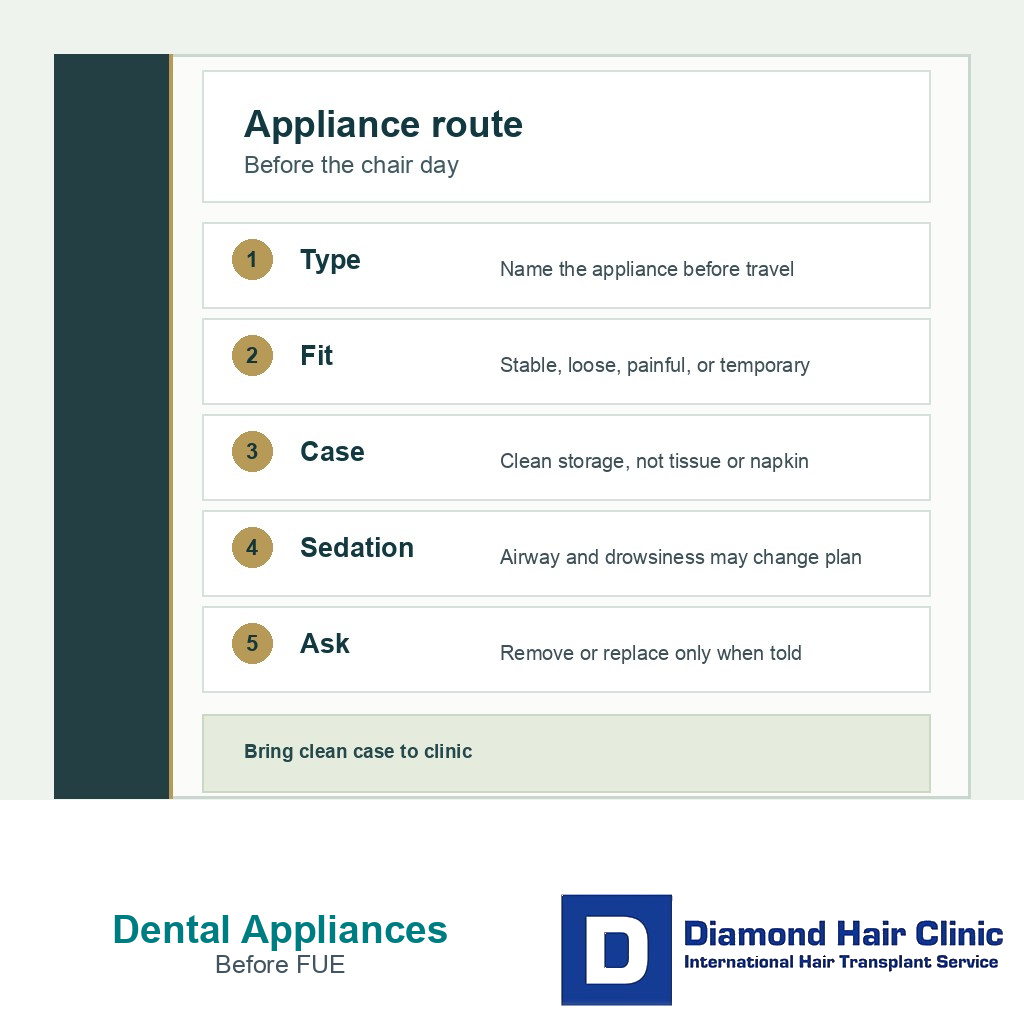
The surgery morning consultation should confirm this information, not discover it for the first time. The morning is already busy with hairline review, donor confirmation, photos, consent, and anesthesia planning.
Removal is not the same for every appliance
Some removable appliances may need to come out before part of the procedure. Some may be kept until a later moment so the patient can speak clearly during check in and planning. Fixed dental work, such as crowns or implants, is not removed, but it still matters if it is loose, painful, or temporary.
The right plan depends on the appliance and the procedure setup. A loose full denture is different from a tight orthodontic retainer. A clear aligner that comes out easily is different from a partial denture with metal clasps. A lip or tongue piercing is different from a stable dental implant.
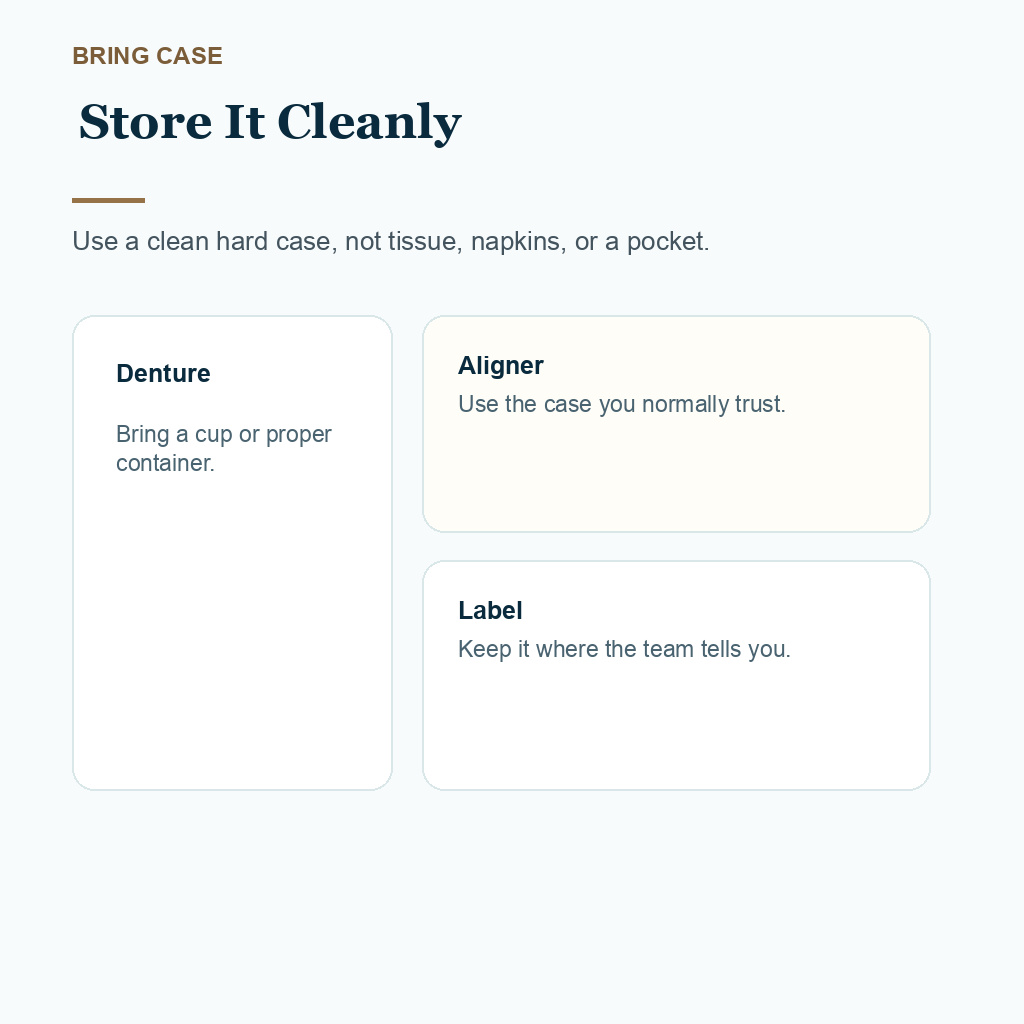
Never wrap a denture, retainer, or aligner in tissue. It can be thrown away by mistake. Bring a clean labeled case and keep it in the place the team tells you. Keep this alongside the ordinary packing advice in what to bring on FUE surgery day.
Position comfort matters during FUE
FUE can involve long periods with the head and jaw in a fixed position. During extraction, some patients spend time lying face down during FUE. Others are reclined or turned depending on donor access and recipient placement. If a denture, retainer, aligner, or mouthguard creates pressure, jaw fatigue, drooling, gagging, or speech difficulty in that position, the team should know early. A fixed implant or crown is different from something removable, but both should be mentioned before the team positions you.
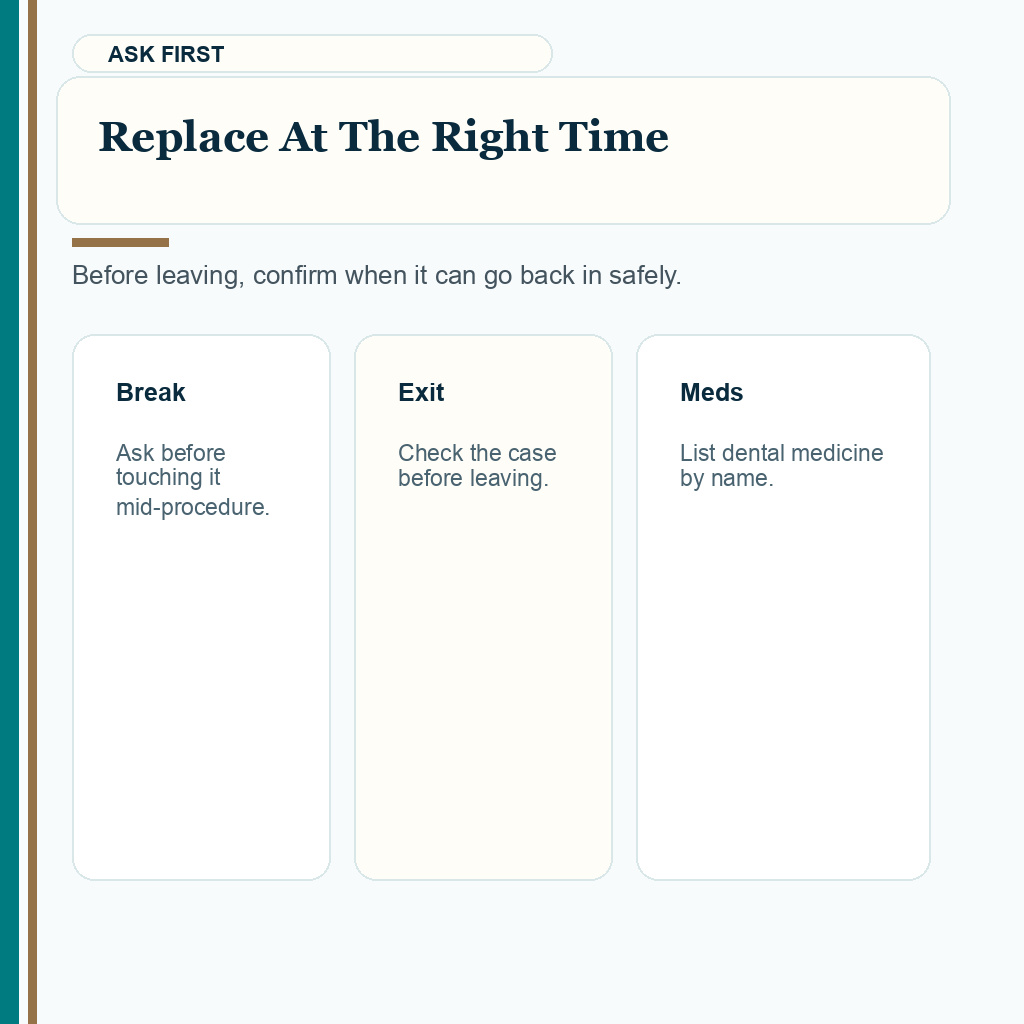
Do not wait until discomfort becomes severe. A patient who suddenly lifts the head, moves the jaw, or reaches for an appliance while graft work is active can create avoidable disruption. Plan this before positioning begins. The team should know when the appliance should be removed or replaced, and you should confirm before touching it during the procedure. A mouthguard for clenching still needs a clean case and a place in the surgery day notes.
On a long FUE day, small comfort problems can become larger because time is long. A tight aligner may feel tolerable at breakfast and distracting after hours in the chair. A partial denture may feel stable while sitting upright and less comfortable when the head is supported in a different position.
Use the dental appliance planner
The appliance plan changes across the FUE day. Checking in is not the same as anesthesia planning. An extraction position is not the same as a break. Leaving the clinic is not the same as returning to the hotel. Use the planner below to decide which part of the day needs a clear instruction.
Dental appliance planner
Match the appliance to the FUE day decision
- 1Denture
- 2Aligner
- 3Mouthguard
- 4Loose tooth
- 5Sedation
Disclose the fit
Say whether it is full or partial, upper or lower, stable or loose, and whether you can remove it yourself.
Plan cue Bring a clean denture cup or hard case. Never use tissue as storage.
Bring the case
Clear aligners and retainers may be simple, but the team still needs to know when they are out and where they are stored.
Plan cue Ask before replacing them during a break or before leaving.
Explain the reason
A night guard or mouthguard may signal clenching, jaw pain, TMJ symptoms, or pressure sensitivity.
Plan cue The reason you wear it matters as much as the object itself.
Flag dental risk
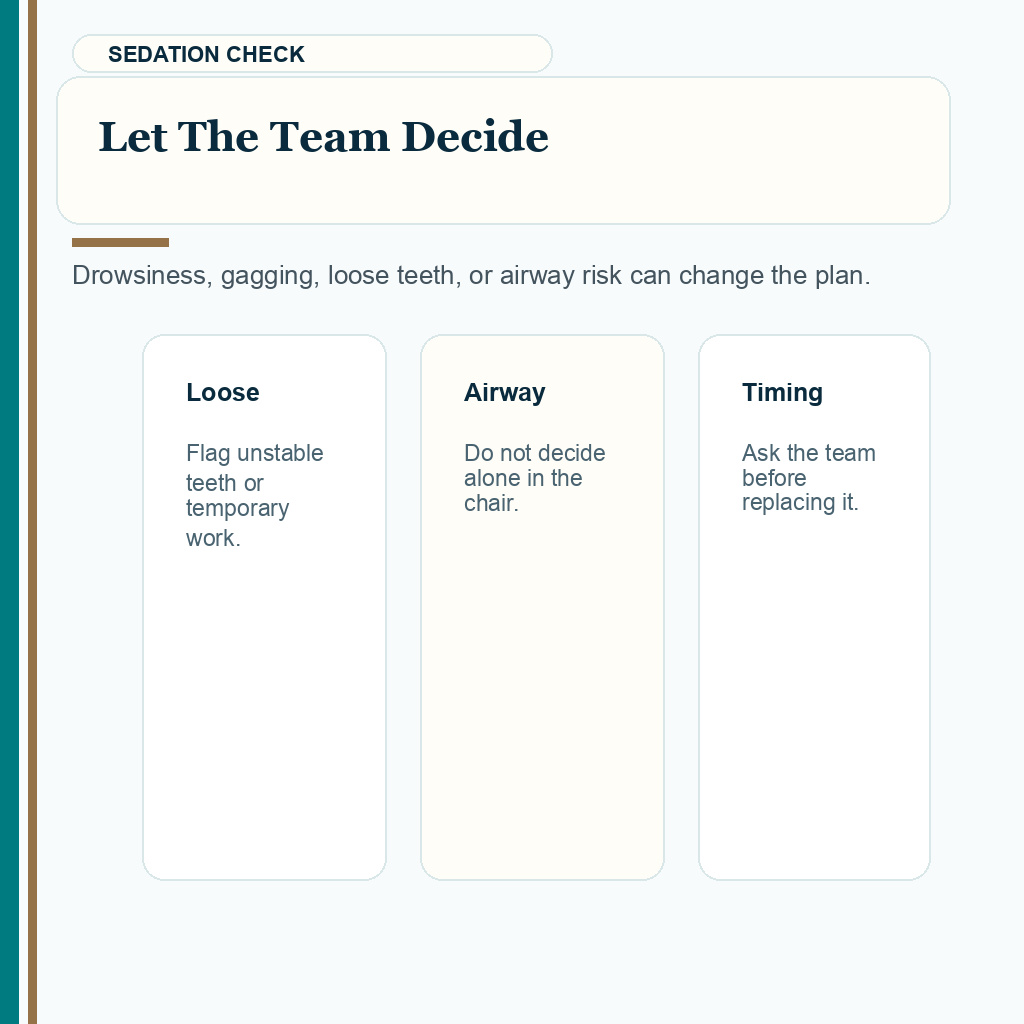
Loose teeth, temporary crowns, unstable bridges, dental pain, or recent dental infection should be disclosed before sedation or positioning decisions.
Plan cue This is a reason to slow the plan until the risk is understood.
Let the clinic decide
Sedation, drowsiness, airway concern, gagging, or difficult removal can change whether an appliance stays in or comes out.
Plan cue Do not make the removal decision alone in the chair.
This should not make the patient feel embarrassed. It should remove guessing. When the scenario is named, the next action is easier to choose. Disclose it, bring the case, remove it only when instructed, store it safely, and confirm before replacing it.
Sedation and airway questions change the answer
The dental appliance decision becomes more important when sedation is part of the plan. Even if the hair transplant is done with local anesthesia, a patient may receive medication that changes alertness, airway protection, gag reflex, or cooperation. For me, sedation during a hair transplant should never be treated as a comfort shortcut that ignores removable appliances.
If sedation, drowsiness, airway concern, gagging, loose teeth, or a removable denture is involved, the team may want a different removal and storage plan. Do not decide alone in the chair. Raise it early and follow the clinical instruction for that day.
Hair transplant consent also belongs here. Consent is not only the graft number and hairline. You should understand the practical day, including whether a removable appliance may need to come out, where it will be stored, and when it can be replaced.
Preparation before the procedure
Before the procedure, pack a clean hard case for every removable appliance. If you use aligners or retainers, bring the case you normally use rather than wrapping them in a napkin. If you wear dentures, bring a proper denture container. If you have dental pain, a recent dental infection, or medication from a dentist, include it in the medical information you send.
This connects with medicine names on FUE surgery day. Dental antibiotics, painkillers, anti inflammatory tablets, sedatives, or herbal products should not be described vaguely. Write the actual names and doses so the clinic can review them properly.
Use these four slides before travel if you wear a removable dental appliance.
Dental work timing is a different question
Do not mix two separate questions. One question is whether a removable appliance needs removal, storage, or comfort planning on the FUE day. The other question is whether dental treatment should happen before or after the hair transplant. Root canal treatment, dental extraction, implant surgery, infection, swelling, or antibiotics can change the timing discussion.
A dental imaging appointment, root canal, extraction, implant visit, swelling, fever, antibiotics, or pain medicine belongs in the dental treatment timing review. Send the appointment date, reason, and medicine names before travel. A stable retainer or aligner may only need a storage and positioning plan.
If dental treatment and FUE are arranged during the same trip, the calendar should keep the two medical plans separate. Hotel convenience does not remove the need to check infection signs, antibiotics, pain medicine, jaw comfort, first wash timing, and whether either appointment could make the other recovery harder.
Reasons to slow the plan down
I would slow the plan down if a tooth is loose, a denture is unstable, a temporary crown or bridge may come away, there is active dental infection, the patient cannot remove or replace the appliance safely, the appliance causes gagging in procedure position, or sedation makes removal and replacement unsafe without a clear instruction.
Slowing down does not always mean cancelling. It may mean collecting dental information, changing when the appliance is removed, storing it differently, confirming sedation details, or postponing if there is active infection or unresolved dental pain. Good planning protects the airway, the patient’s dignity, the procedure rhythm, and the graft work.
The goal is no surprises on the chair day
By the end of planning, the answer should be clear enough that nobody has to improvise. The team knows what appliance you use, whether it is removable, whether there are loose teeth or dental symptoms, where the case is, when the appliance comes out if needed, and when it can be replaced.
A predictable day is safer. Tell us early, bring the case, do not hide dental appliances out of embarrassment, and do not remove or replace anything during graft work without instruction. Small details are easier to handle when they are known before the room is prepared.

Read this review excerpt
It was a very long day which you have to prepare yourself for which is probably why I found it challenging. I was constantly being asked if I was alright and could request toilet breaks (thank goodness).