


Wearing an Insulin Pump or CGM During FUE Surgery
If you use an insulin pump or continuous glucose monitor, FUE surgery is not decided by the device alone. During a long awake procedure, the pump, sensor, receiver, insulin routine, meals, glucose checks, and backup route have to be workable. I want that route written before the chair day starts, not improvised after graft extraction has already begun.
This article is not an insulin dosing guide. Do not change basal settings, boluses, correction doses, fasting rules, or device use privately because of something you read online. In practice, I want the device details shared early, the doctor who manages your diabetes involved when needed, and the surgical team clear on how the device will be placed, heard, checked, and handled.
First Answer Depends on the Written Device Route
Having a pump or CGM does not rule out a hair transplant by itself. It also does not mean the device can stay in its usual place during the operation. The answer depends on diabetes control, the anesthesia plan, the surgical position, the device site, the clinic’s monitoring method, and whether you can communicate clearly during the day.
The broad question of diabetes and hair transplant belongs on the diabetes page. This page is narrower. It is for the patient who already knows diabetes is part of the medical review and now needs to understand what happens to the pump, CGM, receiver, alarms, meals, and glucose checks during FUE.
The worst plan is silence. If the device is discovered on surgery morning, the team may have to decide quickly while you are anxious, fasting, dressed for the room, or already financially committed. A calm plan made earlier protects the patient and the surgical day.
The Broad Diabetes Page Still Owns Candidacy
Diabetes affects more than the device. Recent glucose control, HbA1c when available, infection history, wound healing, medicines, other conditions, and the treating doctor’s advice all matter before an elective procedure. If control is unstable, the answer may be to wait. That is not a rejection of the patient. It is a timing decision.
For FUE, I also think about procedure length. A long case can involve hours in one position, planned breaks, local anesthesia, fluid and food instructions, and the need to stay still enough for careful graft work. A device route does not replace medical clearance for diabetes. It sits inside it.
A one sentence answer such as “it is fine” or “remove everything” skips the part that matters. In a careful clinic, the questions are what device you use, where it is placed, how you normally monitor, what your diabetes clinician recommends, and what would make the day pause.
Place the Device Before the Chair Position Is Fixed
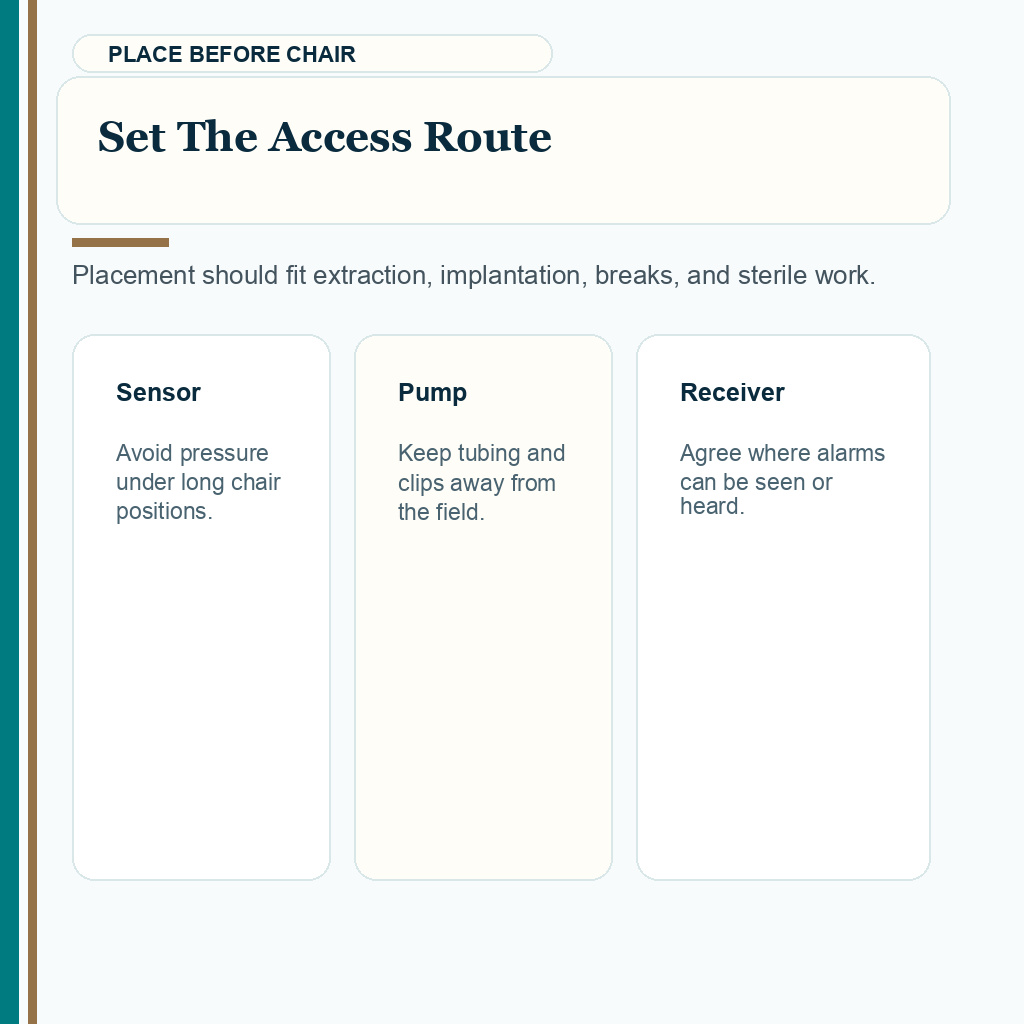
Placement comes before positioning. Pump and CGM placement can become a practical problem during FUE. The patient may be face down, turned to one side, or positioned so the donor and recipient areas stay stable. A pump clipped at the waistband, tubing across the body, a sensor under pressure, or a receiver placed out of reach can all create avoidable interruptions. I also want a backup plan for simple device problems, such as a loose sensor, an alarm, or a pump site that has to move.
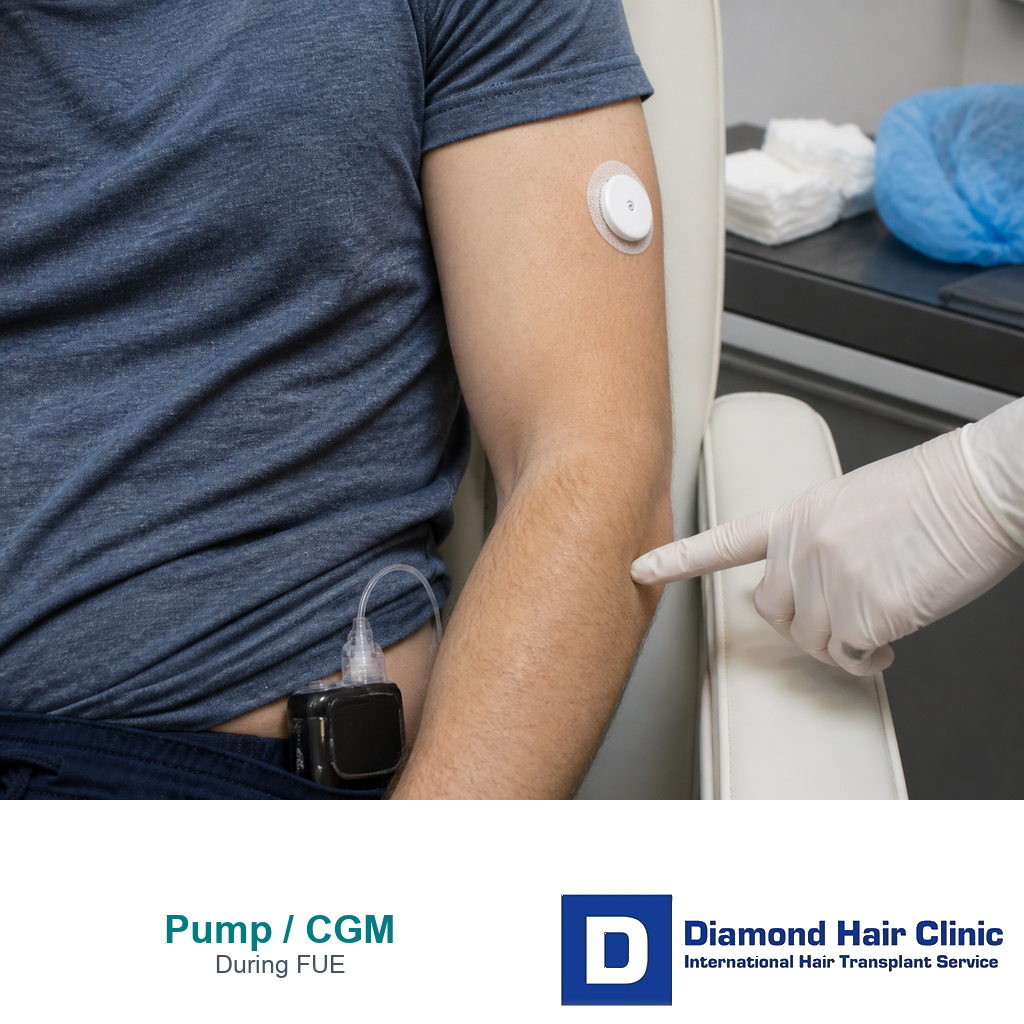
Before the procedure begins, tell the team where the pump site and sensor are. Show whether the pump is tubed or patch based. Explain whether the receiver is a phone, a reader, or the pump itself. If the clinic allows a phone or reader nearby, agree where it can sit without crossing the sterile field or forcing you to reach suddenly.
A long FUE comfort plan works best when small details are settled early. Comfort items are useful only when they do not make the patient move suddenly, miss instructions, or interfere with the team. Diabetes equipment deserves the same boring, careful placement discussion.
Glucose Checks Need a Clinic Method, Not Guesswork
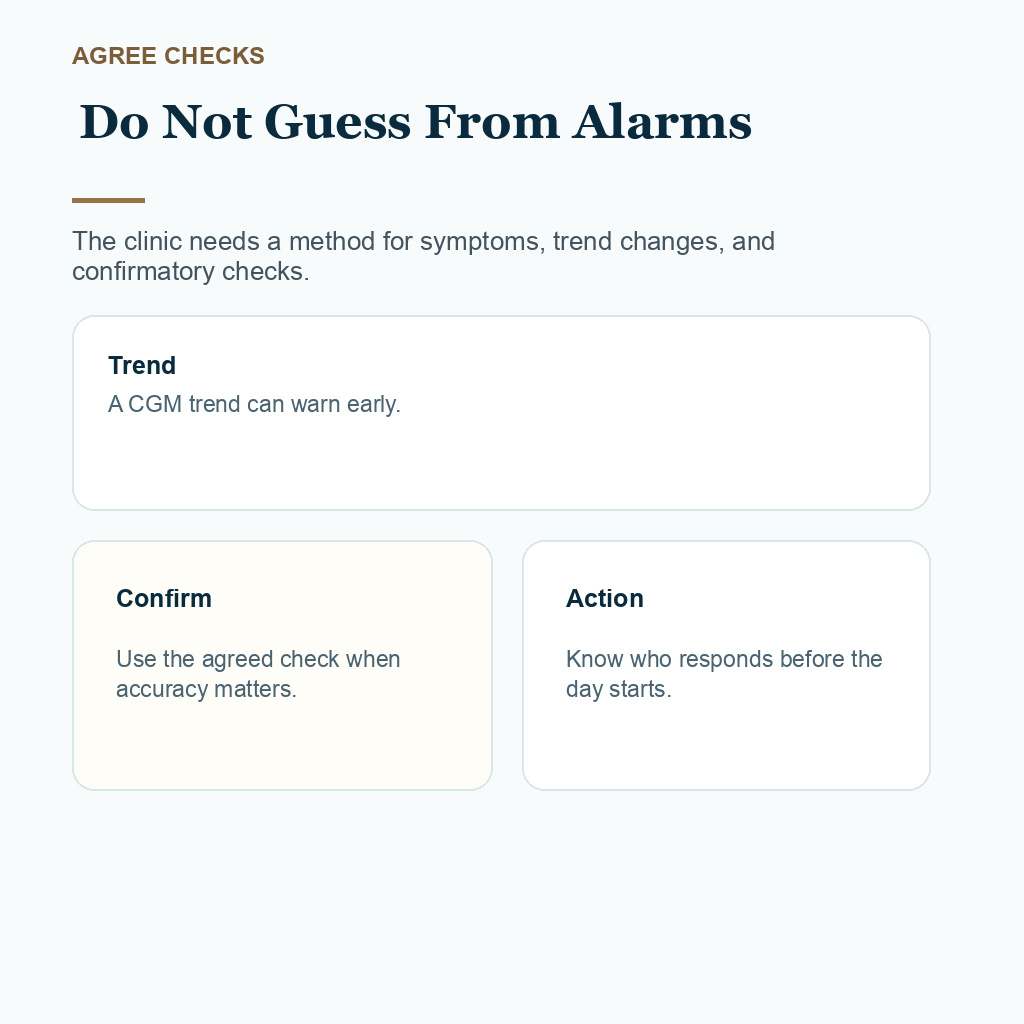
A CGM trend needs a checking route. A trend can be helpful because it may show direction before symptoms become obvious. But the clinic still needs a method for confirming glucose when accuracy matters, when symptoms appear, or when the device reading does not fit how the patient looks or feels. Do not build the day around one screen number with no backup.
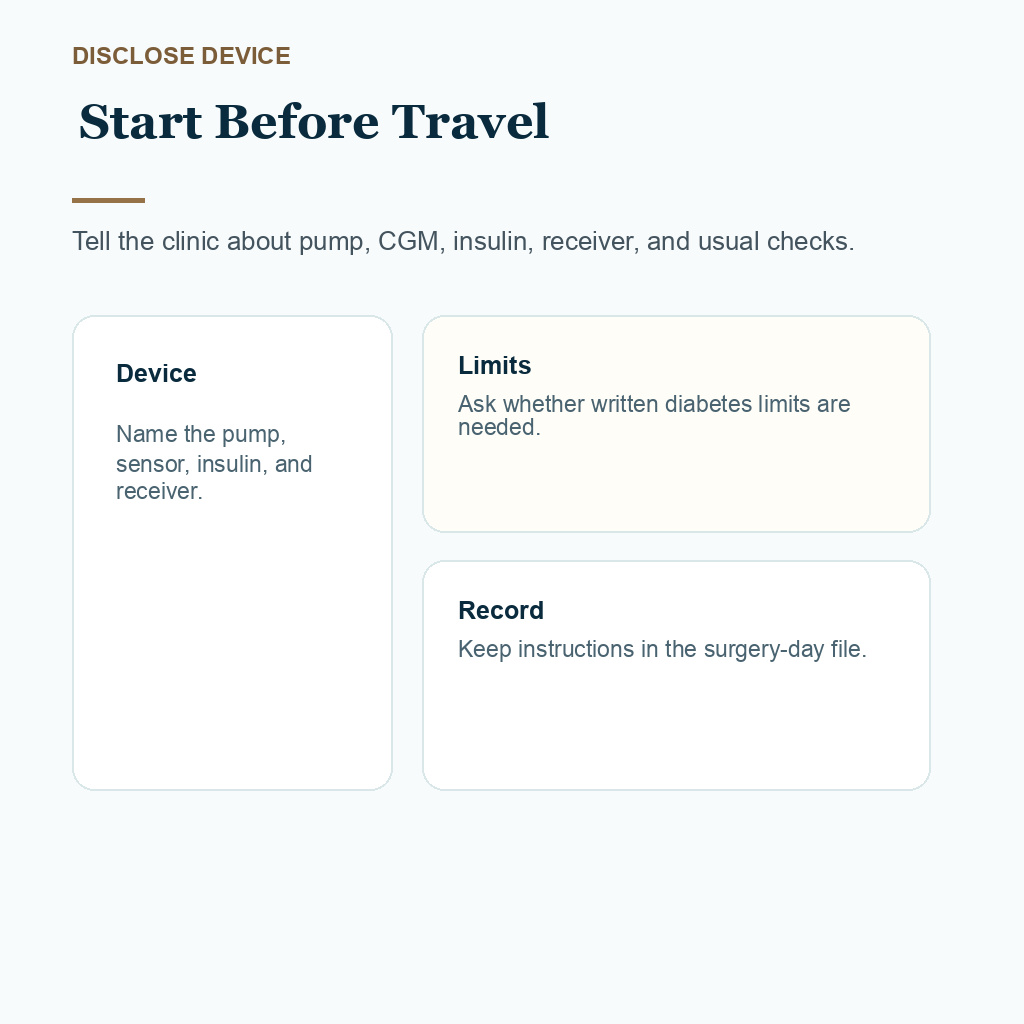
Medicine names on FUE surgery day matter here. The team should know the insulin type, pump or pen routine, other diabetes medicines, allergy history, and any written instructions from the doctor who manages the diabetes. The article can tell you to disclose and coordinate. It cannot tell you how to dose insulin for your own body.
Insulin device route board
Match the device day state to the next safe action
- Accessible deviceProceed with written route
- Receiver not reachableMove the receiver before work starts
- Pump site under pressureReposition before pressure builds
- CGM alarmUse the agreed response method
- Reading outside routePause and review before continuing
Proceed with written route
The pump or CGM sits where the team can protect it, the receiver is reachable, and the check method is understood before positioning.
Room note Keep the planned route visible in the room and speak before changing position.
Move the receiver before work starts
If the phone, reader, or receiver is across the room, alarms and trend changes may be missed during a long stage.
Receiver note Agree where the receiver can safely stay without crossing the sterile field.
Reposition before pressure builds
A pump, infusion set, tubing, or sensor should not be trapped under a long chair position or placed where the team must work.
Positioning note Tell the team before the chair position is fixed, not after extraction begins.
Use the agreed response method
An alarm is not a reason to panic or to ignore the surgical field. It needs a calm route for communication and checking.
Alarm note Know who reads the alarm, who confirms, and when the stage pauses.
Pause and review before continuing
If symptoms, readings, or the clinic check do not fit the agreed route, pausing before graft work continues is the cautious choice.
Pause note The schedule should not become stronger than the medical check.
The monitoring route should name who looks at the receiver, when a check is done, what symptoms must be reported, and who decides whether the procedure continues. If the answer is “you will just know,” the plan is not detailed enough for a long surgical day.
Food, Fasting, and Medicine Timing Must Fit Together
A fasting rule from another operation is not enough for this situation. FUE is often done with local anesthesia, but the food and fluid instruction still depends on the clinic, the anesthesia plan, medical history, travel schedule, and whether sedation is involved. The existing guide on fasting before hair transplant explains why written food and fluid instructions matter.
For a patient using insulin, fasting instructions and diabetes instructions must meet each other. A clinic may allow food, clear fluids, or a planned meal break in one case and give a different instruction in another. Do not secretly eat, secretly fast longer, or adjust insulin alone just to keep the schedule moving.
If you have a history of feeling shaky or faint before FUE, say so before the day starts. Treat sweating, confusion, unusual weakness, nausea, dizziness, or difficulty communicating as safety information. A long hair transplant day is easier when symptoms are reported early, not hidden.
Know the Reasons to Pause Before Extraction Continues
I would pause the plan if the device route is unclear, the receiver cannot be accessed, the patient cannot explain the diabetes instructions, the pump or sensor sits under pressure, symptoms suggest low or high glucose, or readings do not match the agreed route. Pausing is not failure. It is how elective surgery stays elective.
I use that pause test during the surgery morning plan review. Before grafts are removed, the team should know what problem is being treated, why the graft number fits, what medicines and devices matter, and what would make the day wait. Once graft work starts, every avoidable medical surprise becomes harder.
Sometimes the correct decision is a smaller adjustment. Sometimes it is a longer break. Sometimes it is asking the diabetes clinician for written guidance before rescheduling. A good plan makes those possibilities less dramatic because the patient already knows the route.
Bring Device Supplies and Agree Where They Sit
Your packing list should stay practical. Bring the written diabetes instructions, current medicine list, pump or CGM details, receiver or reader, charger if relevant, backup supplies requested by your diabetes team, and any emergency plan your clinician gave you. The broader what to bring on FUE surgery day guide covers the normal surgery day pouch.
Equipment should stay organized around the agreed device route. The treatment area should stay clean and easy for the team to work in. Ask which items can be in the room, which should be in your bag, and who can reach them during extraction and implantation. If the phone is your receiver, the team needs to know that before it is silenced, stored, or placed out of reach.
If your device recently changed, your readings became unstable, your prescription changed, or you developed an illness after booking, send that update before travel. That belongs in the broader review of medical changes after booking, because the date should never become stronger than the medical information.
Aftercare Starts With the Same Device Handoff
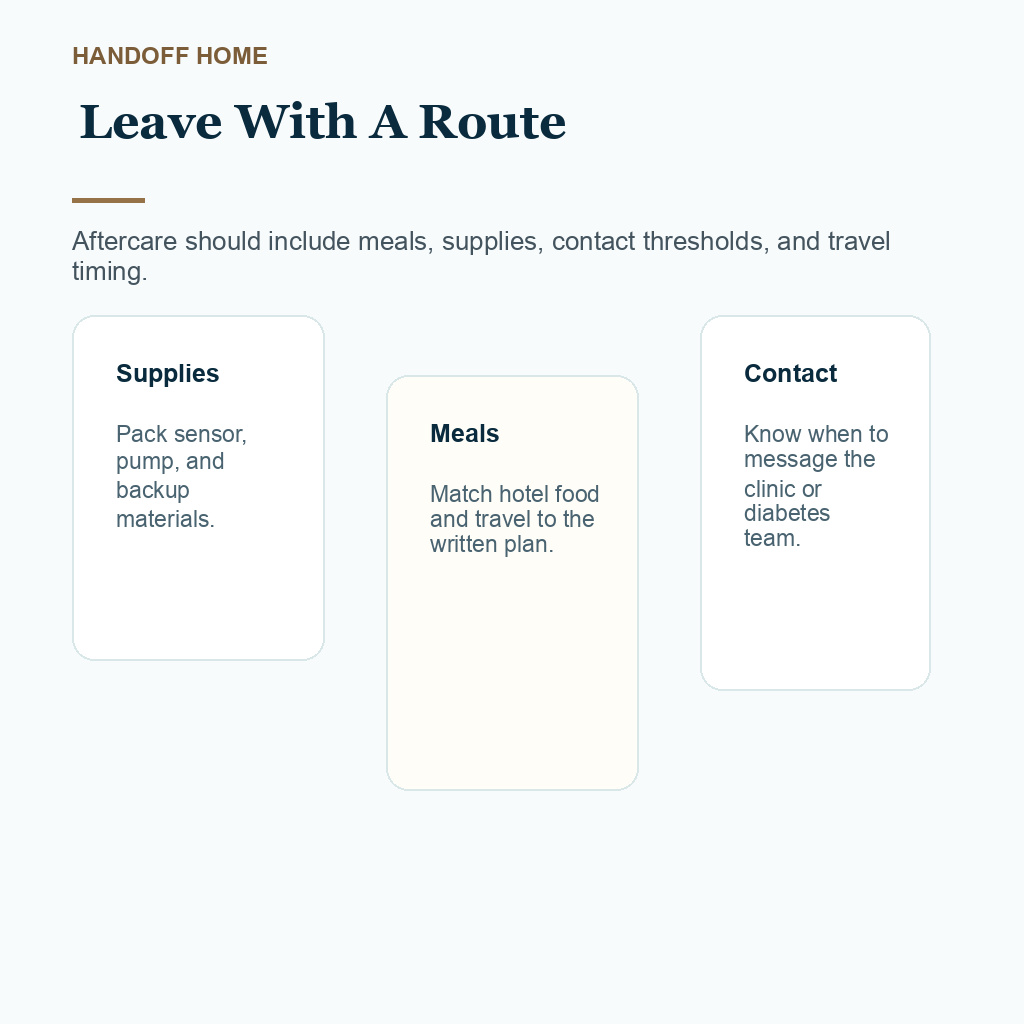
After FUE, the device plan continues into the hotel and travel period. Meals may be delayed by transport, sleep can be awkward, and early recovery instructions already require attention. If diabetes equipment is part of your daily life, the discharge plan should include supplies, contact instructions, meal timing, and who to call if readings, symptoms, or device problems do not follow the expected route.
A long surgical day also has its own pacing. The broader article on long hair transplant session planning explains why careful staging protects the surgical work. For pump and CGM users, that staging should include safe breaks for food, checking, bathroom access, and communication rather than late unplanned movement.
Use these 4 route slides to keep the day structured.
The Pump, Sensor, and Receiver Need One Shared Method
The useful standard is one written method before the chair day begins. State clearly that you use an insulin pump, CGM, or both. Confirm whether the device can stay in place, where the receiver will sit, how glucose will be checked, what supplies belong in the room, how meals or fasting are handled, and when the team should pause.
With that method settled, FUE may remain a planned elective procedure. Without it, travel, deposit pressure, or excitement should not make the medical question smaller than it is. The donor grafts, the surgical field, and your safety deserve a calm diabetes device method before the first graft is removed.

Read this review excerpt
Every single one of my questions was answered and they made sure I had all the details I needed to make an informed decision.