Laser Hair Removal Can Spend Future Donor Options
If you may need a hair transplant in the future, laser hair removal on the beard, chest, or neck is not only a grooming decision. In many patients, it may not meaningfully affect future transplant planning. In a patient with weak scalp donor hair, advanced hair loss, or possible repair needs, I would pause before removing hair that might later be useful as secondary donor reserve. The aim is not to preserve every body hair out of fear. The aim is to avoid spending a donor option before anyone has measured whether it matters.
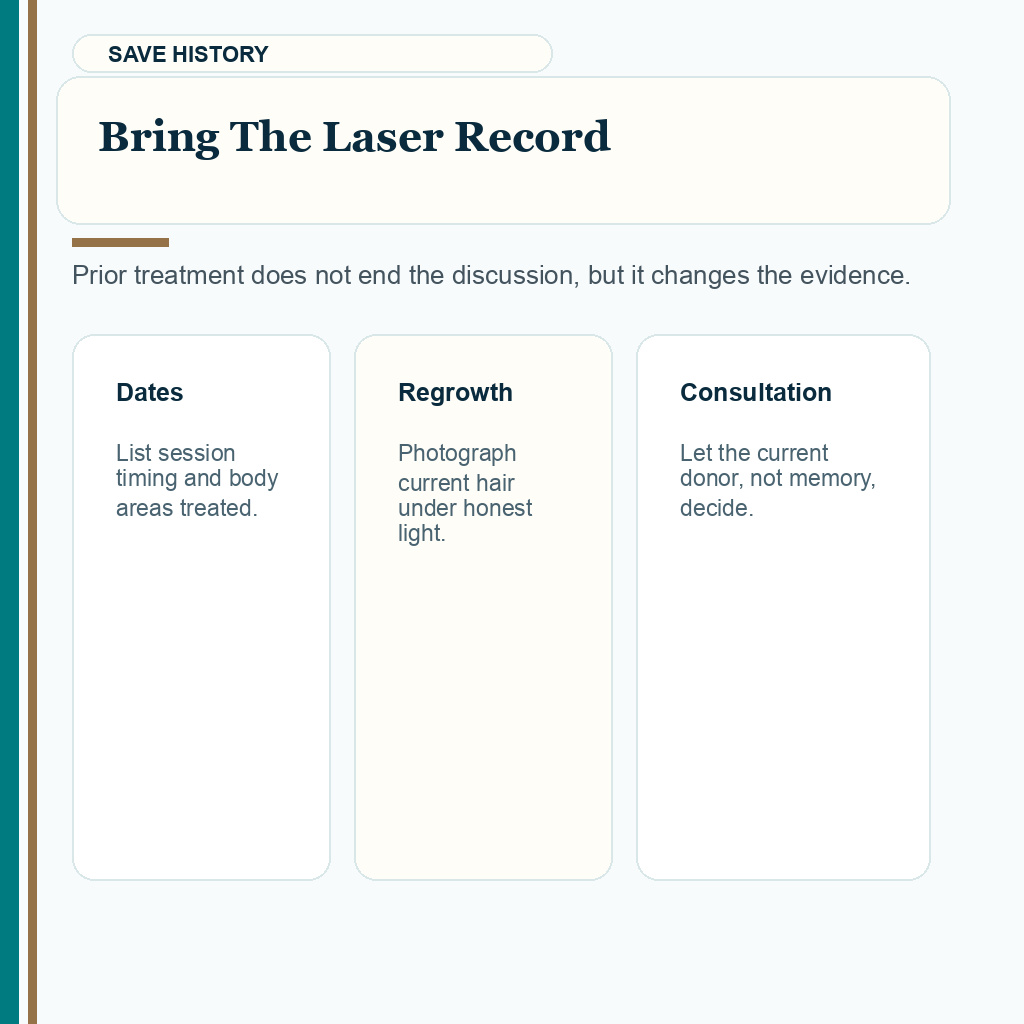
Before laser on beard or chest hair, the area should be photographed while the hair is still visible and its possible repair value should be considered. Once laser treatment has reduced that hair, later donor planning becomes narrower. If you already started laser, send the dates, treated areas, and how much hair remains instead of assuming the donor option is fully gone or fully preserved.
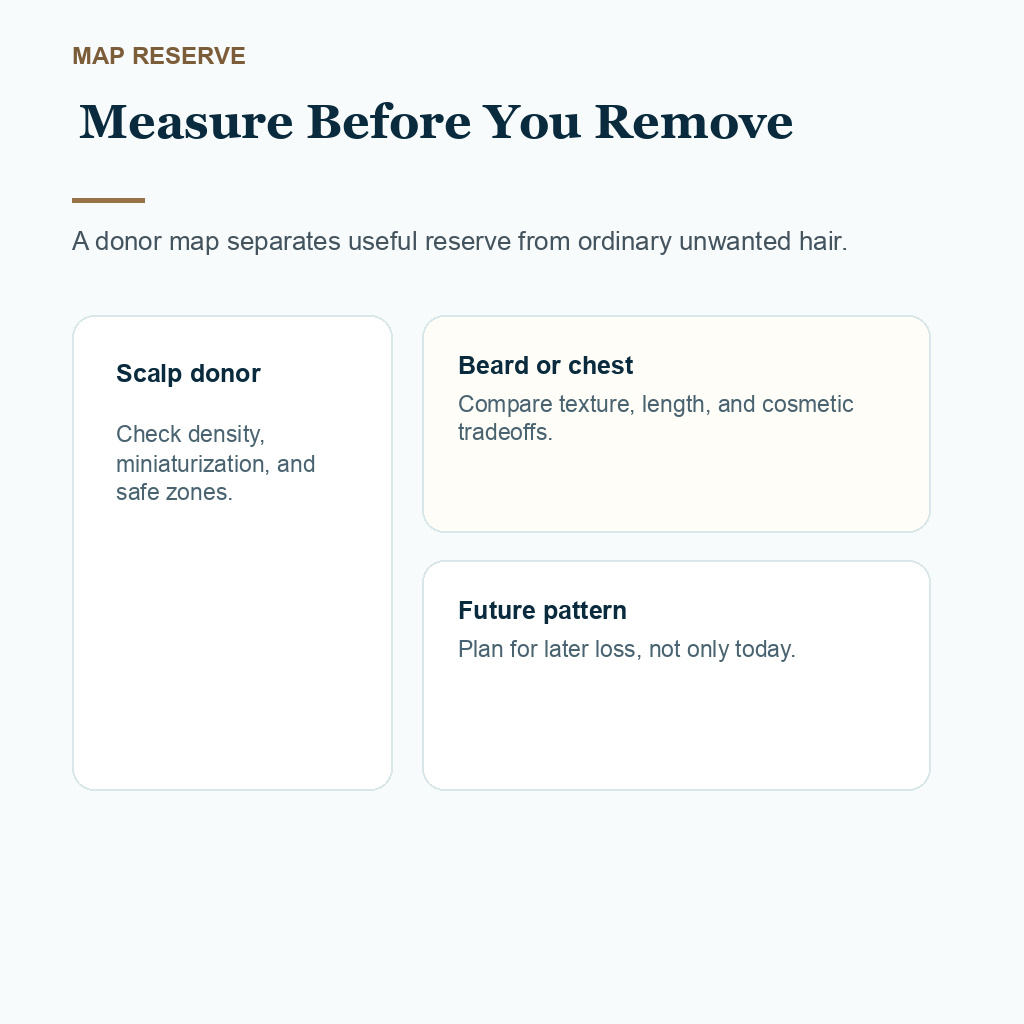
Scalp donor hair remains the main donor supply for most hair transplant planning. Beard, chest, and other body hair can sometimes support coverage when scalp donor supply is limited, but these hairs do not behave exactly like scalp hair. They differ in texture, growth length, curl, yield, and where they can look natural. I treat body hair as reserve, not as a guaranteed backup plan.
Donor risk changes the answer
If your family history is mild, your scalp donor is strong, and you are removing body hair for a clear quality of life reason, laser hair removal may still be reasonable. I would not ask a patient to keep unwanted chest or neck hair forever only because a future transplant is theoretically possible.
The answer changes when the scalp donor looks narrow, the crown is likely to progress, the hairline has already been operated on, or another clinic has mentioned a very large graft number. In that setting, the lifetime graft planning conversation is already active. Removing beard or chest hair before donor mapping can make a later plan smaller, less flexible, or more dependent on compromises.
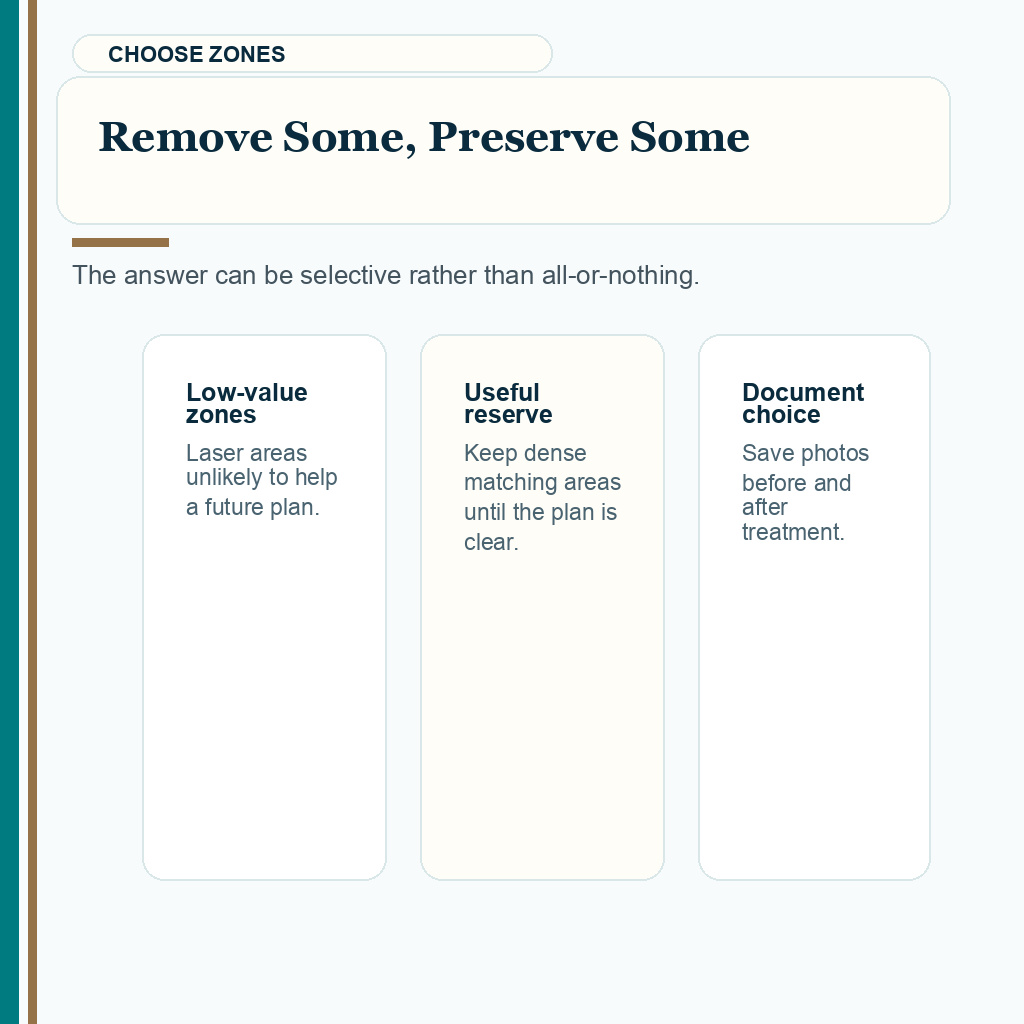
I also separate the grooming area from the surgical area. Removing back hair or arm hair may have little surgical meaning in many patients. Removing dense beard, useful chest hair, or neck beard hair as a donor source can matter more because these areas are more often considered when scalp donor supply is limited. Your own hair loss pattern and donor measurements should guide the decision, not a generic rule copied from another patient.
Body hair is reserve, not a guarantee
In beard and chest hair donor planning, I keep the limitation clear. Body hair may help selected cases, but it does not erase donor limits. Beard hair can give useful optical weight in the crown or less delicate zones. Chest hair can help in some patients, but it is more variable. Other body areas often have shorter growth, different texture, or less cosmetic value than the number of follicles suggests.
This matters before laser hair removal because a patient can make two opposite mistakes. One mistake is removing every possible reserve area before donor planning, then discovering later that the scalp donor or repair reserve is weaker than expected. The other mistake is keeping unwanted body hair for years even though the patient has a strong scalp donor and a low chance of needing body hair. Both mistakes come from making the decision without a real donor plan.
Body hair also has placement limits. For example, beard or body hair in the hairline needs great caution because the front edge is judged closely. Coarse beard hair may support density behind softer scalp grafts, but it should not be treated as the same material as a fine single-hair scalp graft. If a future plan depends on body hair, the design still has to respect where that hair can look natural.
Pause before laser in these donor risk cases
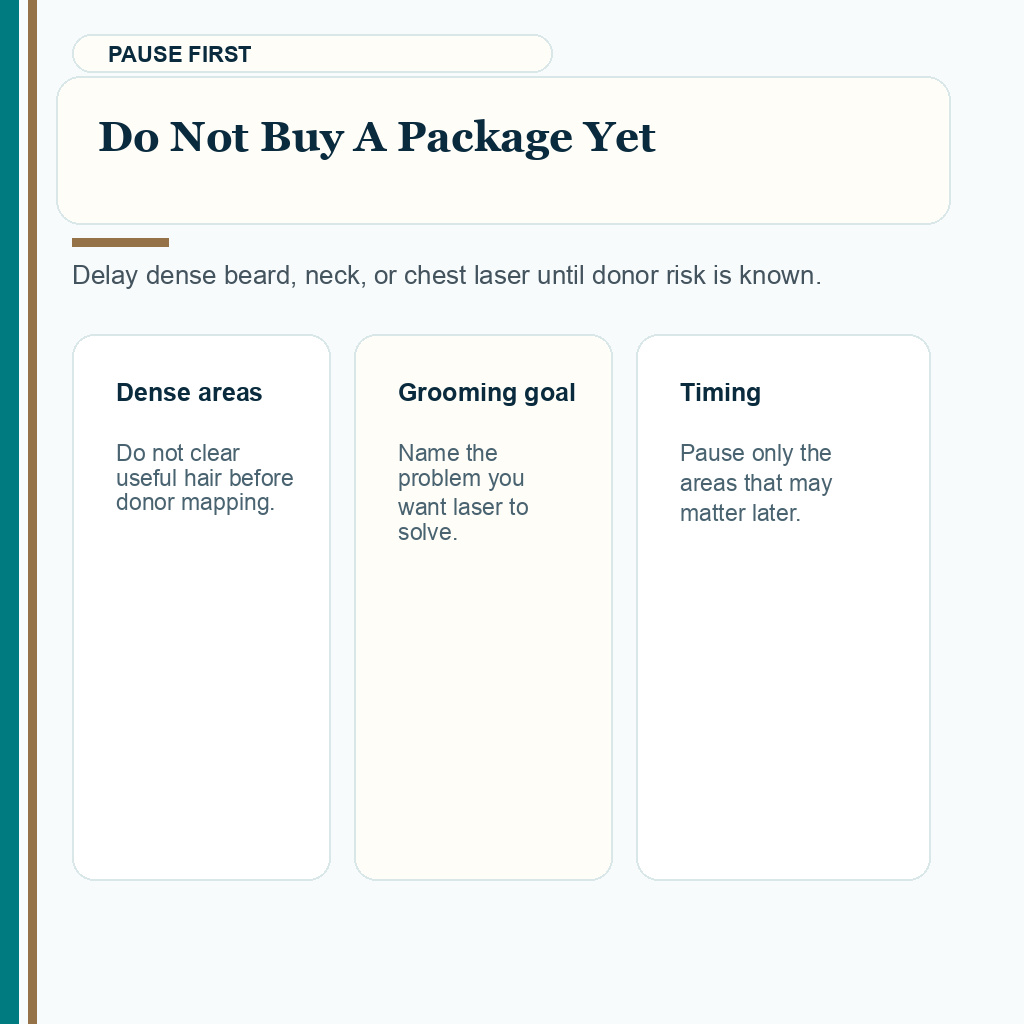
I would pause before laser hair removal if the donor story is already uncertain. A weak donor and high graft quote conflict is one example. If one clinic says your donor is limited and another clinic offers a large number quickly, removing more possible donor options is the wrong response. First understand the donor math.
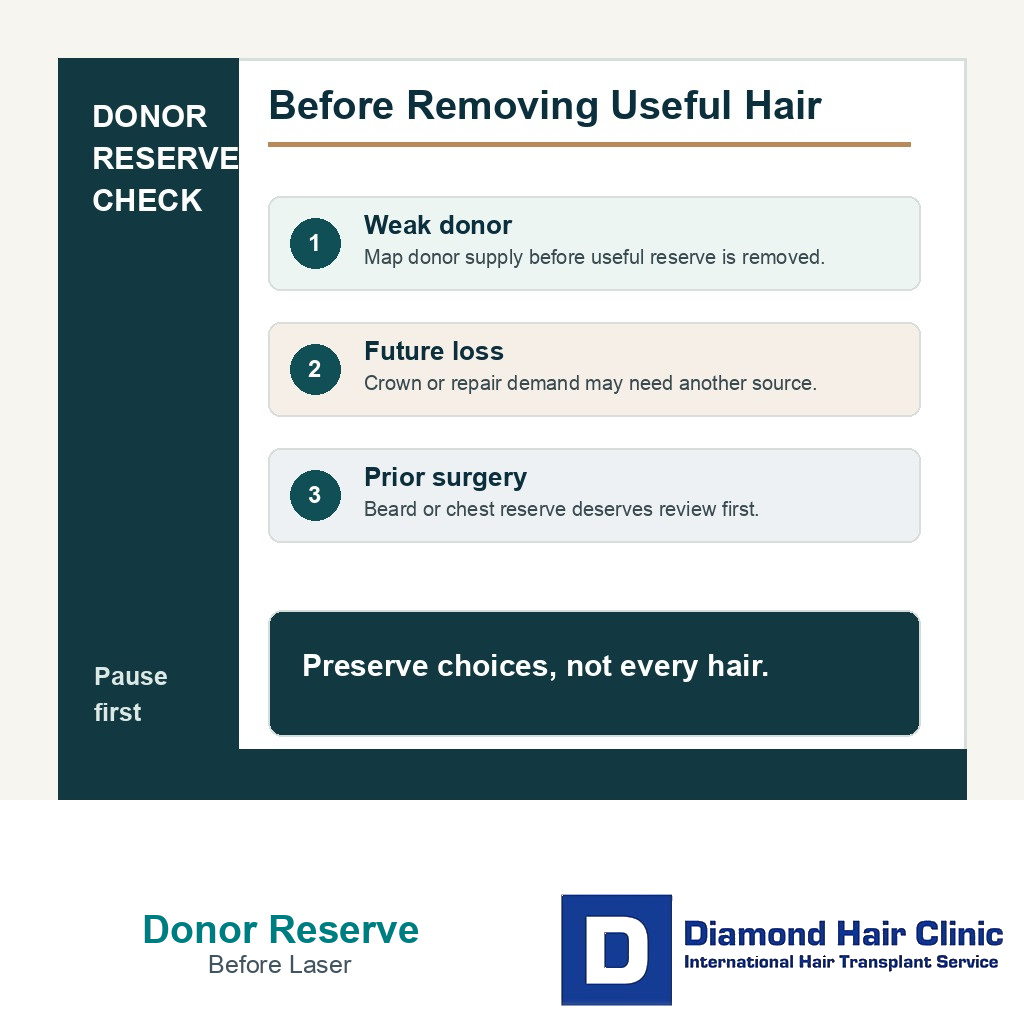
Prior surgery is another reason to slow down. If the donor area has already been used, especially if there is visible thinning, pluggy hairline repair, or concern about donor area overharvesting, beard and chest reserve can become more relevant. That does not mean body hair will solve the repair. It means I would not remove it casually before a surgeon has examined the whole situation.
Advanced future hair loss also changes the calculation. A young patient with early recession and strong family history may need more than one operation over time. A patient with a crown that is likely to enlarge may eventually face a front and crown allocation decision. In those cases, donor reserve is not a cosmetic afterthought. It is part of long-term planning.
Laser hair removal can still be reasonable
Laser hair removal can still be a good decision when the benefit is clear and the donor risk is low. Some patients have thick body hair that causes irritation, ingrown hairs, grooming burden, or strong personal discomfort. If donor mapping suggests the scalp donor is strong enough for realistic goals, keeping unwanted hair only because it might one day be used can become unnecessary anxiety.
I am also careful with the word permanent. Laser treatment is best understood as long-term hair reduction. It can greatly reduce hair growth, it often takes several sessions, and results vary by hair color, skin type, body area, hormones, and device settings. Some hair may regrow finer or lighter. From a transplant planning view, however, you should not assume a lasered area will remain a reliable donor reserve. If you need that reserve, check before treatment rather than hoping enough hair returns later.
I separate this from a different repair problem. Laser hair removal for transplanted hair is about reducing poorly placed grafts after a bad transplant. Here, the question is not how to erase a bad hairline. It is whether to remove potential donor hair before a future operation has been planned.
Checks before removing donor options
Before a patient starts laser on dense beard, neck, or chest hair, I want to know the scalp donor strength under magnification and normal haircut conditions, the likely hair loss pattern, any previous surgery or visible donor depletion, and the patient’s real grooming goal. A patient who wants a clean neck line has a different donor reserve question from a patient planning full body laser without any donor assessment.
For beard hair for crown coverage, the donor discussion is especially practical. Beard hair may add visual weight in selected crown plans, but it is visible donor hair on the face and neck. Removing it by laser first may close a door. Harvesting it surgically later may also create cosmetic tradeoffs. Neither choice is free.
Donor reserve readiness gate
Match the laser choice to the donor risk
- Low future needProceed carefully
- Possible future needMap first
- Weak scalp donorPreserve reserve
- Already laseredDocument history
Proceed carefully
Laser can be reasonable when scalp donor is strong, future hair loss risk is low, and the grooming benefit clearly matters.
Next move Keep normal treatment records and do not let a general transplant fear control every grooming choice.
Map first
Pause dense beard, neck, or chest laser until donor density, hair loss pattern, and likely future graft demand are reviewed.
Next move You may still laser some areas, but choose zones after the donor plan is clearer.
Preserve reserve
If the scalp donor is weak, prior surgery is visible, or repair may be needed, do not remove useful beard or chest reserve without a surgeon review.
Reserve note Keep the few options that may carry real value instead of trying to preserve maximum body hair.
Document history
If the area was already treated, bring dates, body areas, number of sessions, and current regrowth photos to the consultation.
History note Do not assume the area is useless or reliable. Let the current hair, not memory, guide the plan.
Chest hair needs its own donor assessment. It may be useful in selected patients, but its growth length and texture can be less predictable than beard hair. If the chest hair is light, fine, sparse, or very different from scalp hair, preserving it may add little surgical value. If it is dense, dark, and the scalp donor is weak, it may deserve review before laser.
Preserve useful donor options without fear
The healthiest decision is usually not extreme. I do not want patients to avoid every grooming treatment because of a future transplant they may never need. I also do not want a patient with real donor risk signs to remove useful reserve before anyone has explained the long-term cost.
Before laser on beard, neck, chest, or dense body hair, I want the donor question answered from photos, history, and realistic goals. The issue is not whether every hair must be saved. It is whether removing that hair closes an option the patient may genuinely need later.
When I plan FUE, I think about the first operation and a possible second one together. Laser hair removal belongs in the donor reserve discussion if it touches areas that might help a repair or density plan later.
The donor reserve slides below separate beard, neck, chest, and scalp donor value before laser becomes permanent enough to matter surgically.

Read this review excerpt
told me the quality of my donor hair and what he could take out and advised me what will the be best outcome with what donor hair I had.