


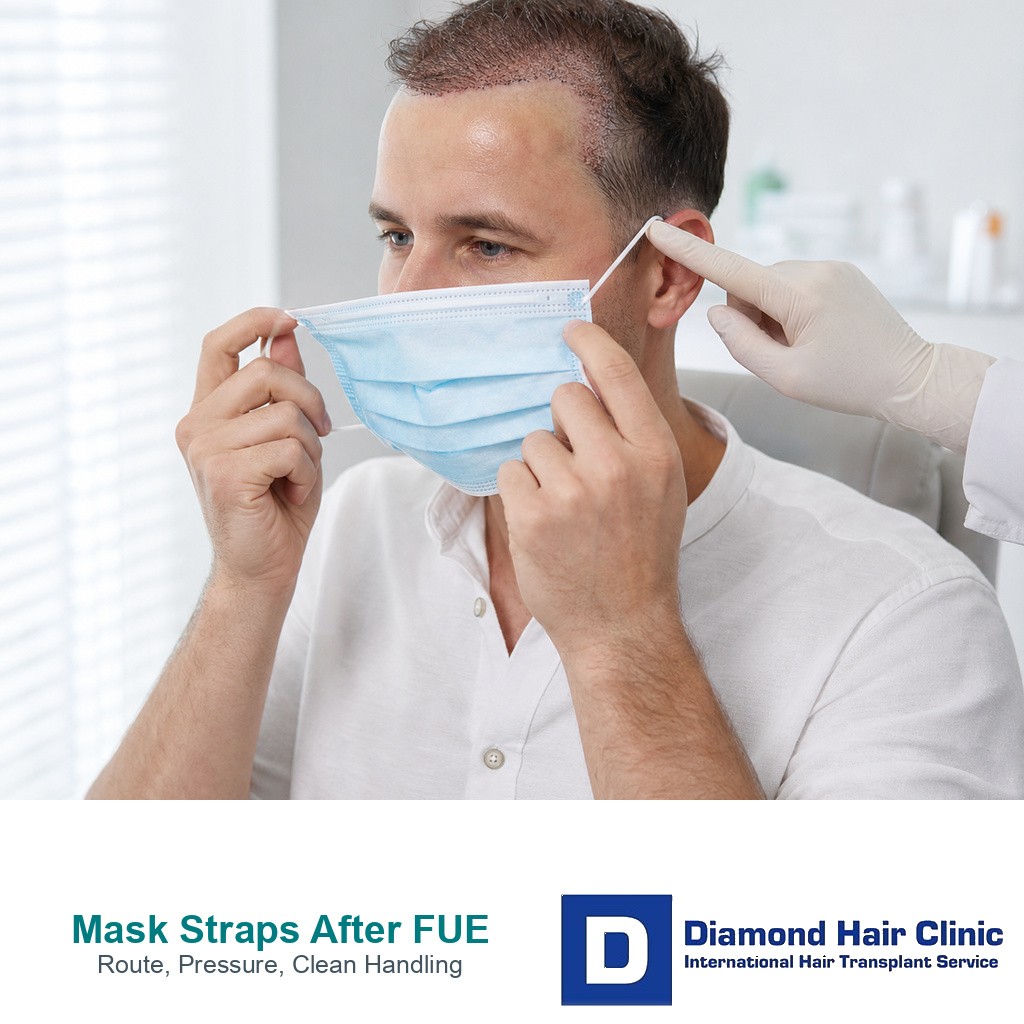
Mask Strap Pressure During Early FUE Recovery
After FUE, a face mask does not become a graft problem by itself. What matters is where the straps sit, how much pressure they create, how long the mask stays on, and whether you keep adjusting it. If you need a mask for the flight home, a crowded space, a hospital rule, workplace protection, or a vulnerable family member, bring that exact mask to the clinic before surgery so we can check the route.
A short, soft loop behind the ear is very different from elastic dragged through fresh grafts or a tight band pressing over donor skin. If your grafts include the temples or sideburn area, even an ear loop needs review because it can pull exactly where the grafts sit.
Timing matters as much as mask type because the same strap can be harmless later and irritating too early. In the first 24 to 48 hours, I am strict about anything near the recipient area. From day 3 to day 10, rubbing, pulling, dragging, and repeated adjustment still matter. Around day 10 to day 14, grafts are usually harder to dislodge if healing is uncomplicated, but the skin is not ready for tight pressure.
It is easier to review the mask before the operation than to discover at passport control that the elastic pulls near your temples. If the mask is part of prescribed breathing support, the question is different from a public face mask. Review the CPAP strap route after hair transplant before the first night, and do not stop prescribed breathing support on your own just to avoid a strap problem.
What makes the strap route more important than the mask itself?
Asking whether a mask is allowed after a hair transplant is too broad. A loose ear loop that stays behind the ear is not the same as a tight band that runs across the donor area, presses a swollen forehead, or slides near grafted temples.
The recipient area needs the strictest protection because pressure or dragging there is a graft security issue. A band across the donor area is different. It is usually a comfort and skin irritation issue first, but worsening pain, bleeding, drainage, spreading redness, heat, or fever still needs review. The graft security timeline is about timing and contact, not permission to rub or press the scalp.
A mask can be useful when exposure risk is real. If the mask is medically required, required by a facility, needed around an immunocompromised person, or needed for work protection, do not treat scalp pressure as a reason to skip protection. Change the mask style, route, setting, or timing before the strap becomes a scalp problem.
Before travel, what mask plan is safest?
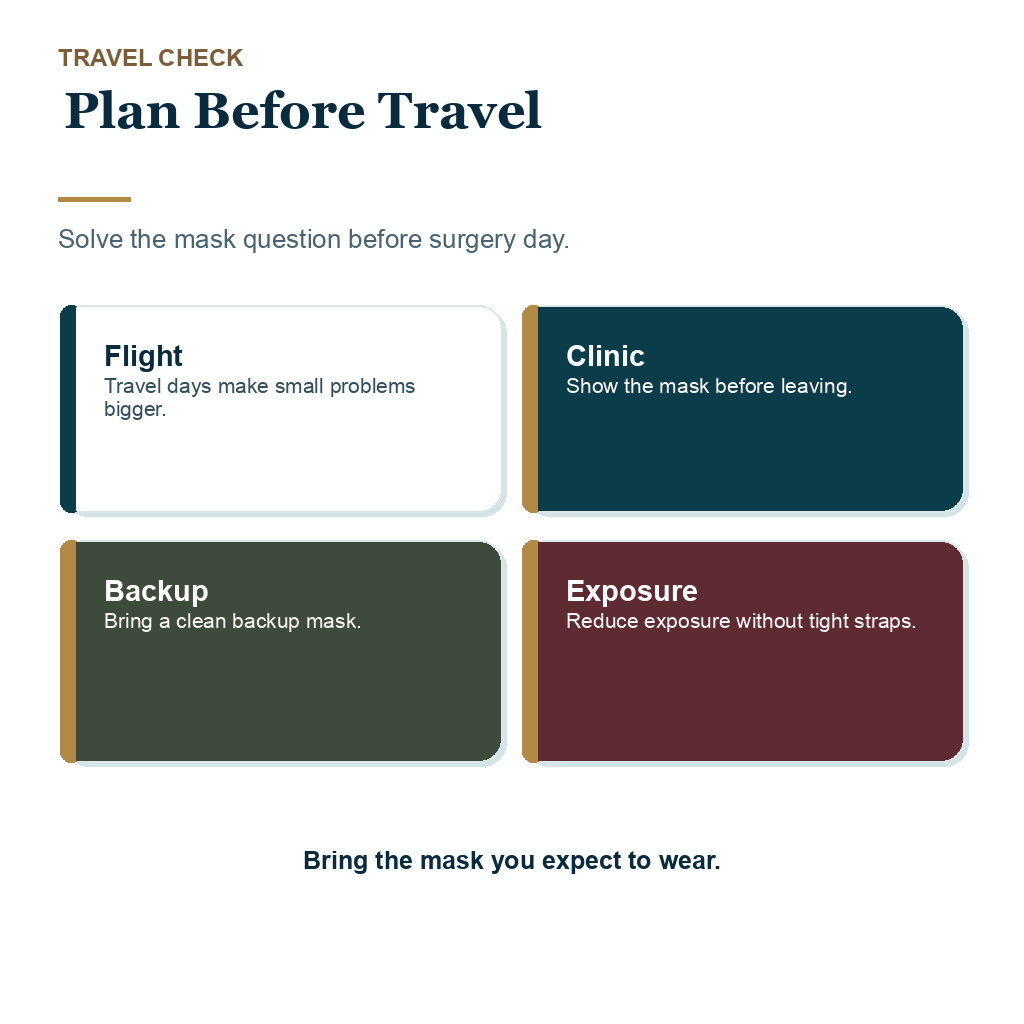
The easiest time to solve this is before surgery, especially for patients who will fly home, use public transport, or sit in crowded waiting areas. Bring the exact mask you expect to wear. Put it on in front of the team, stand normally, speak once, look down once, and remove it slowly so we can see whether it pulls near the hairline, temples, ears, crown if relevant, or donor area.
Keep a second mask style in your carry on. When one strap starts rubbing at the airport, changing the route is safer than adjusting the same pressure point again and again. The problem usually appears during movement, not while the mask is sitting perfectly for a quick check. Pack the backup before you travel, because changing mask style is easier than protecting a sore strap line later.
This is the same practical thinking I use for travel after surgery. It applies to flying after a hair transplant before the flight, to airport security after a hair transplant during screening, and to the physical details around leaving the clinic. The mask that feels harmless for ten minutes in the clinic can behave differently during passport checks, security, boarding, overhead luggage, bathroom mirror checks, sleeping on the plane, and the ride home.
If you need a mask because someone close to you is immunocompromised, because a hospital or workplace requires it, or because you cannot avoid crowded spaces, say that clearly. The answer may be a cleaner mask choice, private transport, a quieter waiting area, or a strap route that avoids the healing zones.
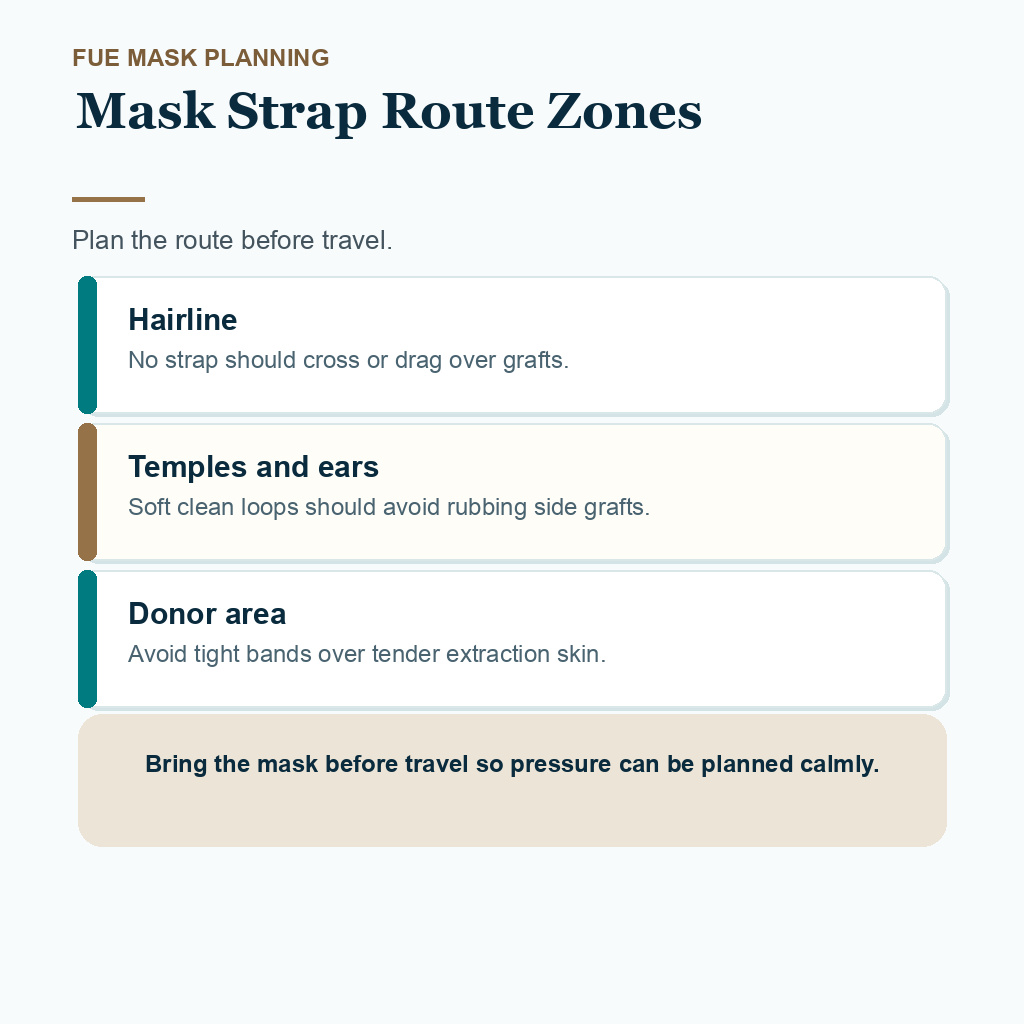
Different mask straps create different risks
Soft ear loops are often the simplest option only when they stay behind the ear and do not pull toward grafted temples or sideburn work. A loop can irritate swollen skin, catch a scab, or drag when the mask is removed quickly.
Tie back masks give more control, but only if the tie is placed deliberately. A tie that crosses the donor area too tightly can be uncomfortable, and a tie that slides forward can come too close to the recipient edge. Ear savers and plastic extenders need the same review. They can relieve the ear, but they can also turn a simple ear loop mask into a strap behind the head.
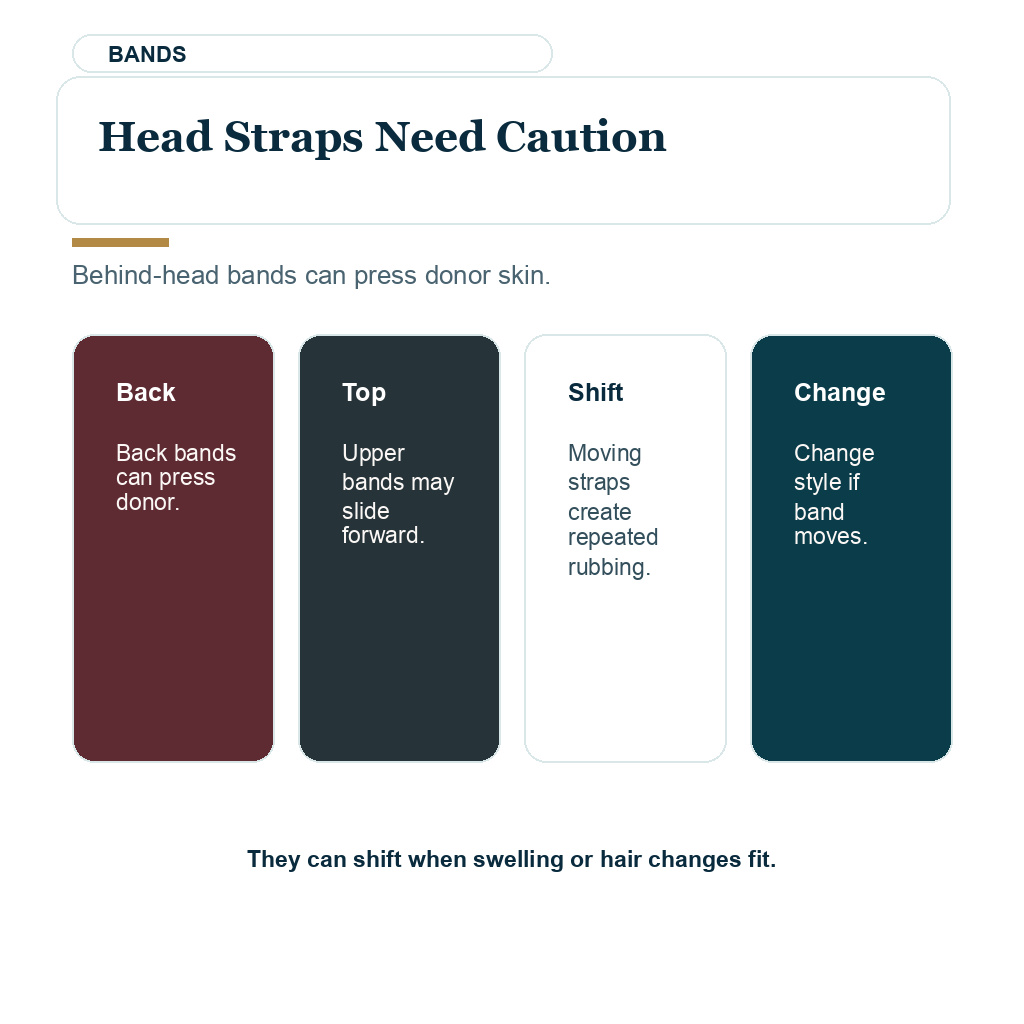
Behind the head straps and rigid respirators can be more complicated. They may be necessary in some work, hospital, or travel settings, but they depend on stronger tension. An N95 or similar respirator is not just a tighter mask. If it only works by sealing firmly against the face, do not solve scalp pressure by loosening it until it leaks. Change the model, route, environment, or timing instead.
Mask pressure route board
Use this board to match the mask style with the healing zone it may touch. Put the mask on, speak once, look down once, and remove it slowly. The route that looks safe while you stand still may move when you actually use it.
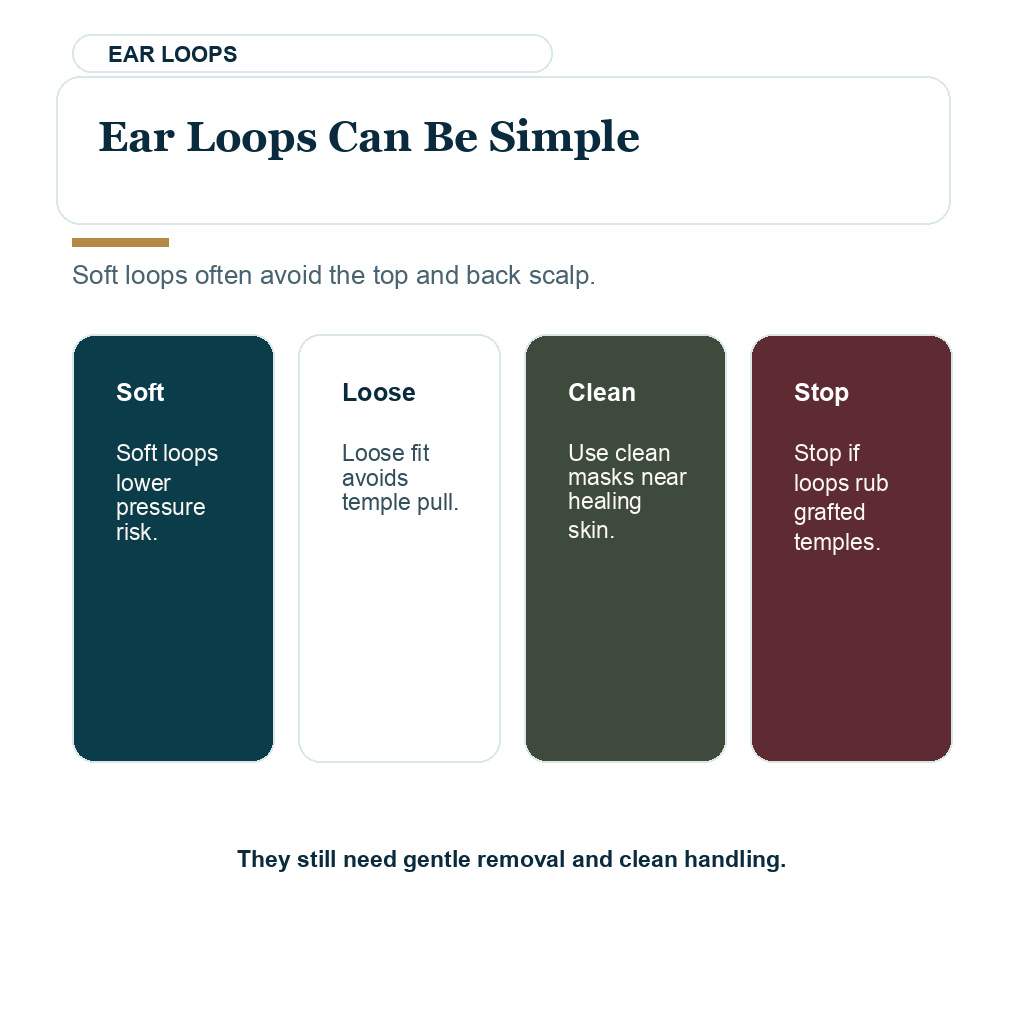
Soft ear loops often give the simplest route if they stay away from the grafted temples
Ear loops can be useful because they do not cross the top or back of the scalp. They still need to be clean, soft, and loose enough that removal does not pull across the hairline or grafted temples.
- Use a clean mask with soft loops.
- Lift the loop away from the ear before removing.
- Stop if it rubs grafted temples or swollen skin.
Where should mask pressure stay during early healing?
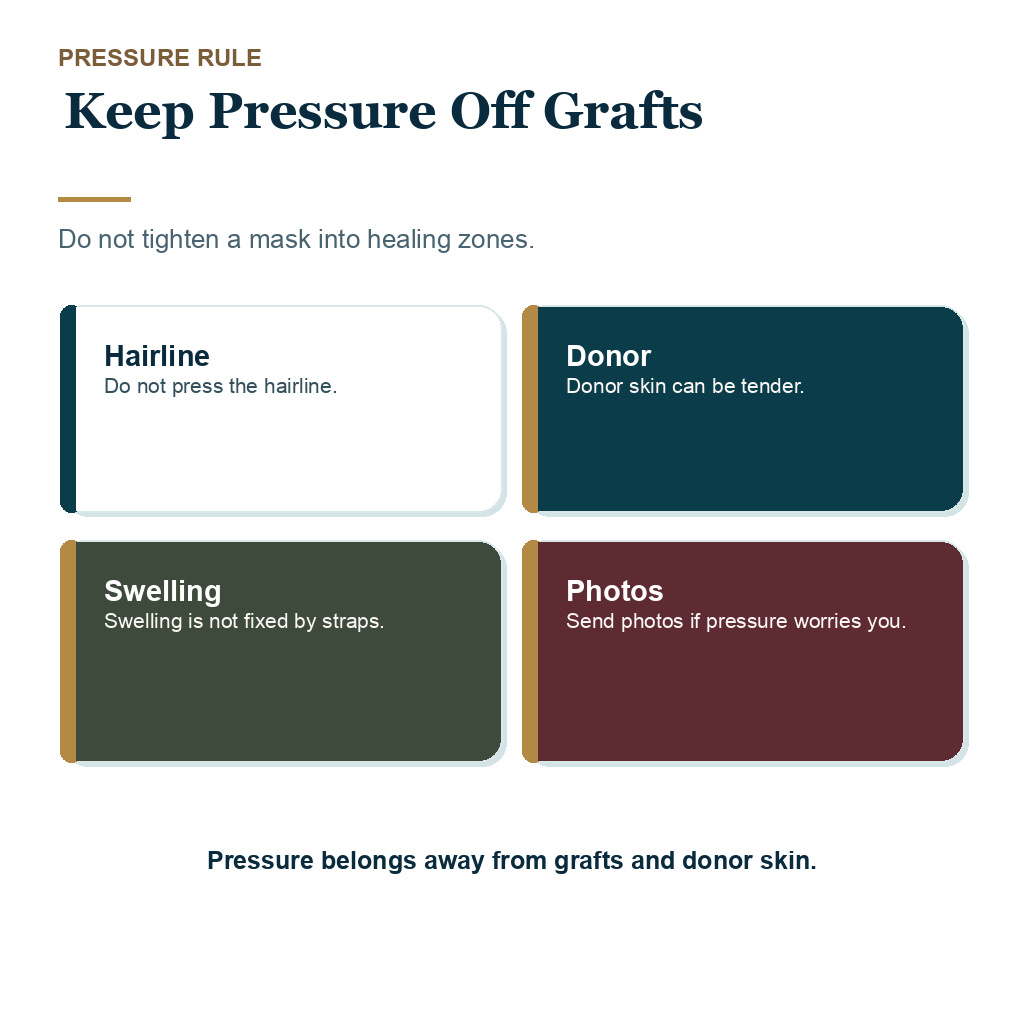
The first rule is to avoid strap pressure over the grafted hairline, temples, and recipient scalp. Do not let an upper band slide into the grafted area. Do not press a mask edge into swollen forehead skin just because the mask feels loose.
The common mistake is stacked pressure. A mask loop, glasses arm, headphone band, hat edge, neck pillow, and repeated mirror checking can each seem small. Together, especially during a long airport day, they can create more rubbing than the patient realizes. That planning view applies to the VR headset strap path, because the product name matters less than where the pressure crosses healing skin.
This boundary is similar to the pressure logic behind eyewear, headbands, and any object that sits near healing skin. I use the same contact rules for glasses and sunglasses after a hair transplant and headband use after hair transplant swelling when pressure is close to the grafted area. Pressure belongs away from grafts and should never be tightened to fight swelling.
If swelling moves toward the forehead or eyes, the solution is not to strap the mask tighter. Follow the clinic’s swelling instructions, keep your head position sensible, and send photos if swelling closes an eye, affects vision, becomes one sided, painful, hot, rapidly worsening, or comes with fever, drainage, or feeling unwell. The same warning pattern in swelling after a hair transplant helps decide whether photos are enough or a faster review is needed.
Clean handling matters while the skin is healing
Mask hygiene matters because the strap and mask edge are close to healing skin. Use a clean mask and carry clean spares in a clean bag. Replace a wet or dirty disposable mask, and do not place a used mask on the hairline, donor area, pillow, hotel table, airplane seat, tray table, or luggage surface and then put it back against the face.
Clean your hands before adjusting the mask when possible. Remove it by the loops or ties, lift the strap away from the ear or head, move the mask forward without dragging near the hairline or temples, and avoid touching the front. This is not because a mask changes hair growth. It is because dirty handling can irritate healing skin and increase the chance of unnecessary scratching or checking.
Keep the practical point simple. Fit and clean handling matter, and the front of the mask should not be handled repeatedly. For a hair transplant patient, that same habit sits inside the clinic’s own hair transplant aftercare instructions.
Which mask events need clinic review?
A mask loop touching the ear for a short time is not the same as a strap scraping through grafts. If there is no bleeding, no open spot, no visible graft movement, and no new pain, one light event is usually less concerning. Stop adjusting, take clear photos if worried, and avoid repeated checking.
Contact the clinic if the strap caused bleeding, opened skin, increasing pain, yellow or green pus, discharge, bad smell, spreading redness, unusual heat, fever, chills, feeling unwell, delayed healing, or a visible change in the grafted area. Also contact the clinic if a tight strap pressed across the donor area for a long time and the pain or swelling is worsening.
A useful message includes which day after surgery it happened, the mask type, how long it was worn, where the strap sat, whether it rubbed or only touched, and whether there is bleeding, open skin, pain, heat, discharge, swelling, or a visible graft change. Send the front hairline, both temples, and the donor area if it was pressed, with one close photo and one normal distance photo in clear light.
I use the same distinction for touching grafts after a hair transplant when I separate one light event from force, rubbing, pressure, bleeding, or visible tissue. Do not test the grafts to reassure yourself.
When does a mask become a social hiding risk?
Some patients want the mask mainly to hide swelling, scabs, or the fact that they had surgery. I understand that feeling. Most people notice less than the patient imagines, but embarrassment can still make the airport feel long. Hiding should not override graft protection. A tight mask, cap, hood, or scarf can create more local friction than a simple explanation, private transfer, or quieter travel route.
Do not stack every accessory at once. A mask, glasses, cap, hood, and headphones can each look harmless alone, but together they create more straps, edges, heat, and adjustment near the grafts. Choose the simplest setup that solves the specific privacy or travel problem.
If concealment is the concern, review wearing a hat after a hair transplant with the same contact logic. Do not judge the object only by how well it hides the transplant. Check whether it touches, rubs, or presses the healing areas.
Avoid repeated mirror checking in public spaces. Each adjustment is another chance to catch a loop, touch the recipient area, or turn anxiety into rubbing.





Mask pressure is a path problem
A mask after FUE is usually about where the strap travels, not the brand name. The strap should stay away from grafted skin, swollen donor skin, tender areas, and any place already being pressed by glasses, headphones, hats, or a pillow edge.
Choose the mask before the trip home and keep a second style in the bag. If one strap starts rubbing at the airport or hotel, changing the route is safer than tightening the same pressure point again.
Remove the mask gently, use clean hands, and avoid dragging fabric across the scalp. If rubbing, bleeding, new pain, or visible skin change appears, document the timing and ask the clinic before repeating the same setup. The aim is to reduce exposure when needed without testing healing tissue.
Read this review excerpt
Upon arriving home, I sent 4 photos (of each side of head) after every washing process to doctor for checking where I was given personal advice for how to take care of my healing head.