


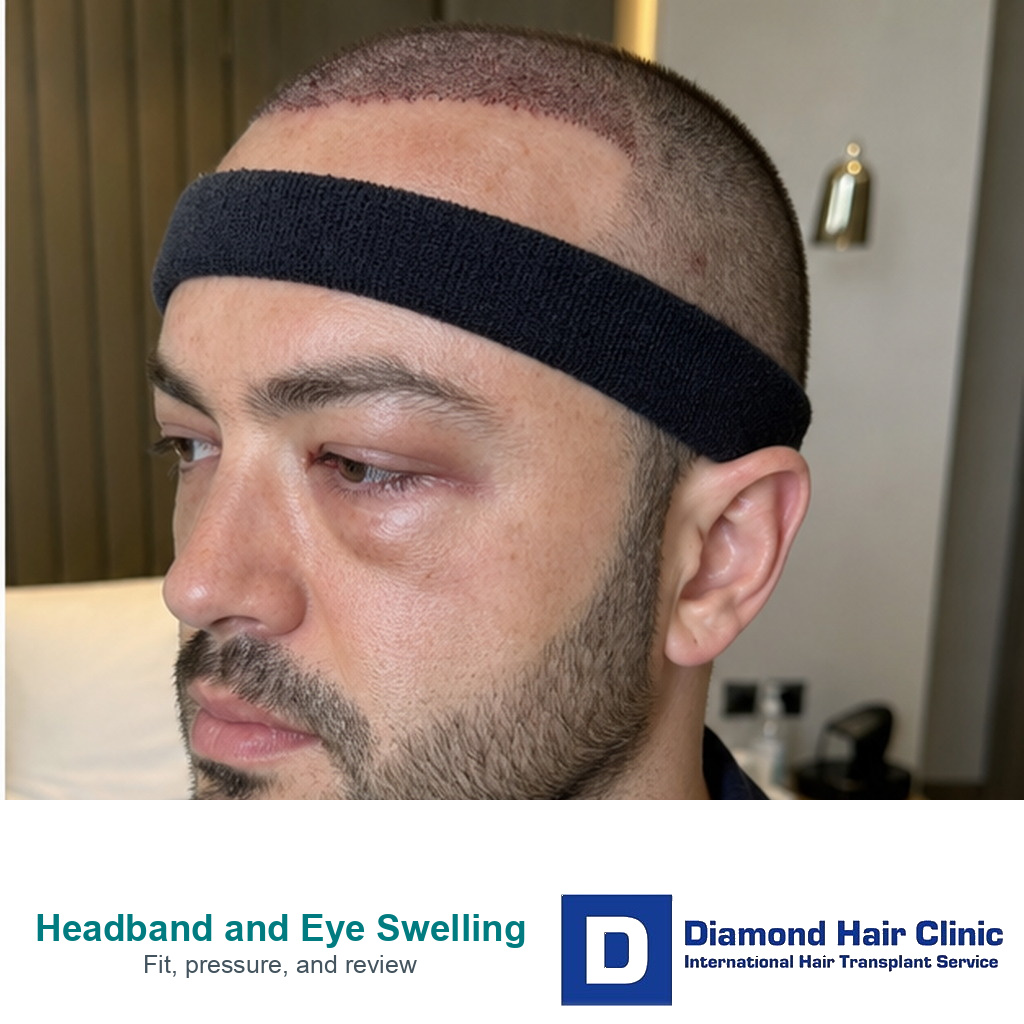
A Soft Headband Can Guide Swelling, but It Cannot Stop It
A soft forehead band can help guide fluid away from the eyelids after FUE, but it is not a seal and it should never feel tight. I use it as a gentle boundary across the forehead, below the grafts, only when it sits easily and does not press on the implanted area.
Mild swelling around the eyes can still happen in the first few days because fluid follows gravity. In many patients, swelling is most noticeable around day 2 to day 4, improves over the next few days, and sometimes takes closer to 10 to 14 days to fully settle.
What matters is the fit, the timing, and whether the swelling is comfortable enough to watch at home or unusual enough to send photos to the clinic. If swelling closes an eye, changes vision, becomes hot, painful, clearly one sided, or comes with fever, drainage, breathing trouble, lip or throat swelling, fainting, or severe dizziness, do not try to solve it by tightening the band.
If your clinic did not give you a headband, do not add a tight sports band, elastic bandana, fashion headband, or improvised pressure band to force swelling away from the eyes. Ask the clinic that operated on you first. A soft band provided by the clinic is different from something you buy later because your eyelids look puffy.
Forum photos from another clinic should not become your own headband instruction without your own clinic’s timing. Some surgeons use a band and some do not, depending on the dressing, swelling plan, and graft placement. Your own clinic’s instruction controls whether the band is added, tightened, extended, or left off.
The most common mistake is to treat the band like a stronger bandage. A headband is not a pressure treatment. If it is pulled down, tightened, or repeatedly adjusted, it can become the thing we are trying to avoid, which is unnecessary friction near a healing graft area. The same pressure logic applies to mask straps after FUE. A soft object can still create a problem if it sits in the wrong route, stays on too long, or has to be adjusted again and again.
A band that keeps needing adjustment is already giving useful information. Sliding, headache, deep marks, or pressure near grafts means the fit deserves review, not another adjustment. The goal is gentle guidance for swelling, not a tighter object on healing skin.
Can a headband stop swelling completely?
After FUE, swelling usually starts in the forehead and then moves downward. The band can slow that path by giving the fluid a soft line to meet, but it cannot cancel normal postoperative swelling. Some patients still wake up with puffiness under the eyes even when they wore the band correctly. That alone does not mean anything was done wrong.
I explain it this way because puffy eyelids often make patients want to tighten the band. The band is a guide, not a wall. The forehead, eyelids, sleep position, inflammation, and individual tissue response all matter. If you expect the band to block every drop of fluid, you may keep tightening it each time you see swelling. That is the wrong direction.
To judge the swelling itself, compare it with the usual pattern of swelling after hair transplant. Soft swelling that moves downward is different from swelling that is hot, painful, one sided, or quickly worsening. If you are tempted to add pineapple juice, bromelain, or arnica because the face looks dramatic, treat pineapple and arnica after FUE swelling as a separate product decision, not as a reason to tighten the band.
The band should stay on the forehead, not the grafts
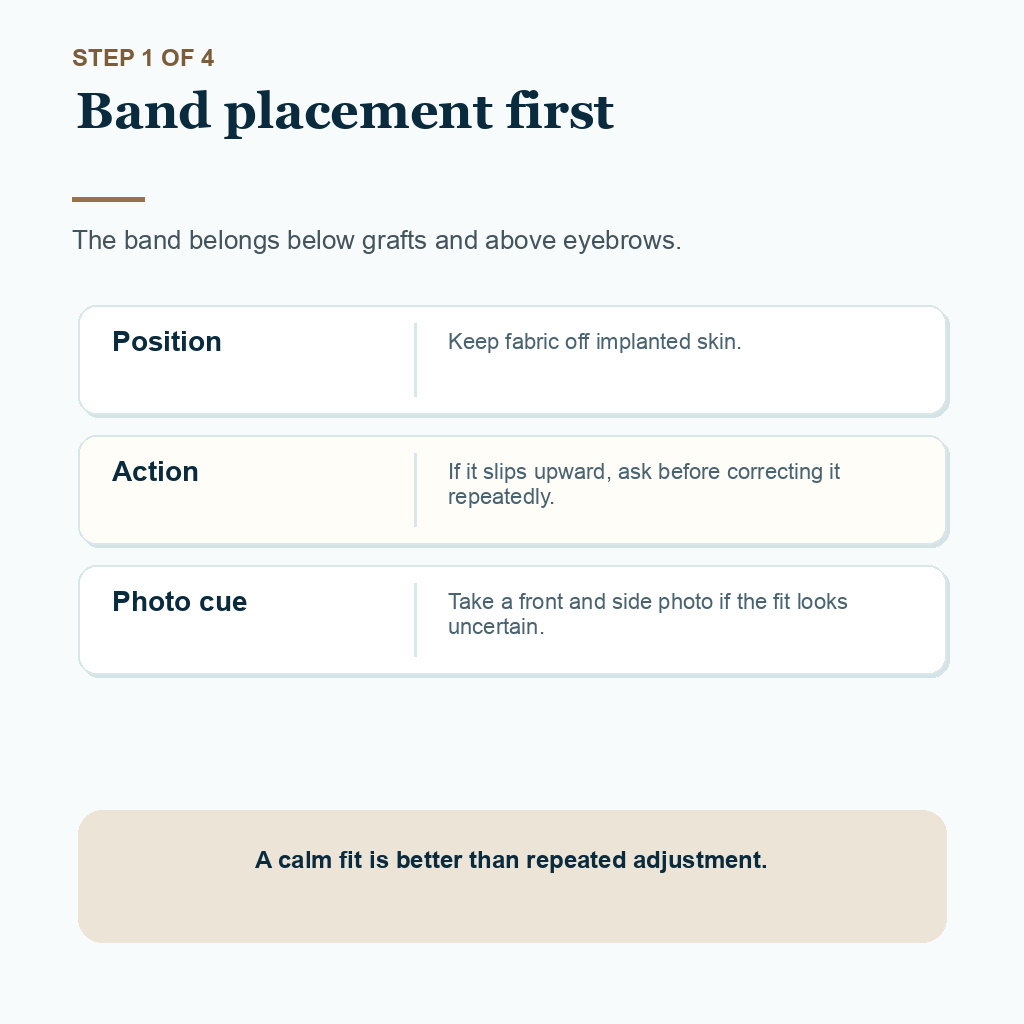
The usual position is across the forehead, below the hairline work and away from the implanted grafts. The exact instruction can vary by clinic, technique, and how your bandage was placed, so you should follow your own postoperative plan. In general, the band should sit low enough to guide forehead swelling, but not so low that it touches grafts, crusts, or the delicate recipient area. The band itself should be clean, soft, dry, and free of a hard seam or Velcro edge near the grafts.
If no timing was given, ask before wearing it longer, tighter, or overnight. Do not sleep with the band unless your clinic specifically instructed that and the band can stay away from the grafts while you move in bed.
A good fit feels stable and boring. A faint line after brief wear is different from a deep groove, headache, numbness, or burning. It should not force you to keep checking the mirror every few minutes. The right band position should become forgettable. If you can forget it is there, it is usually closer to the right fit than a band you keep feeling and correcting.
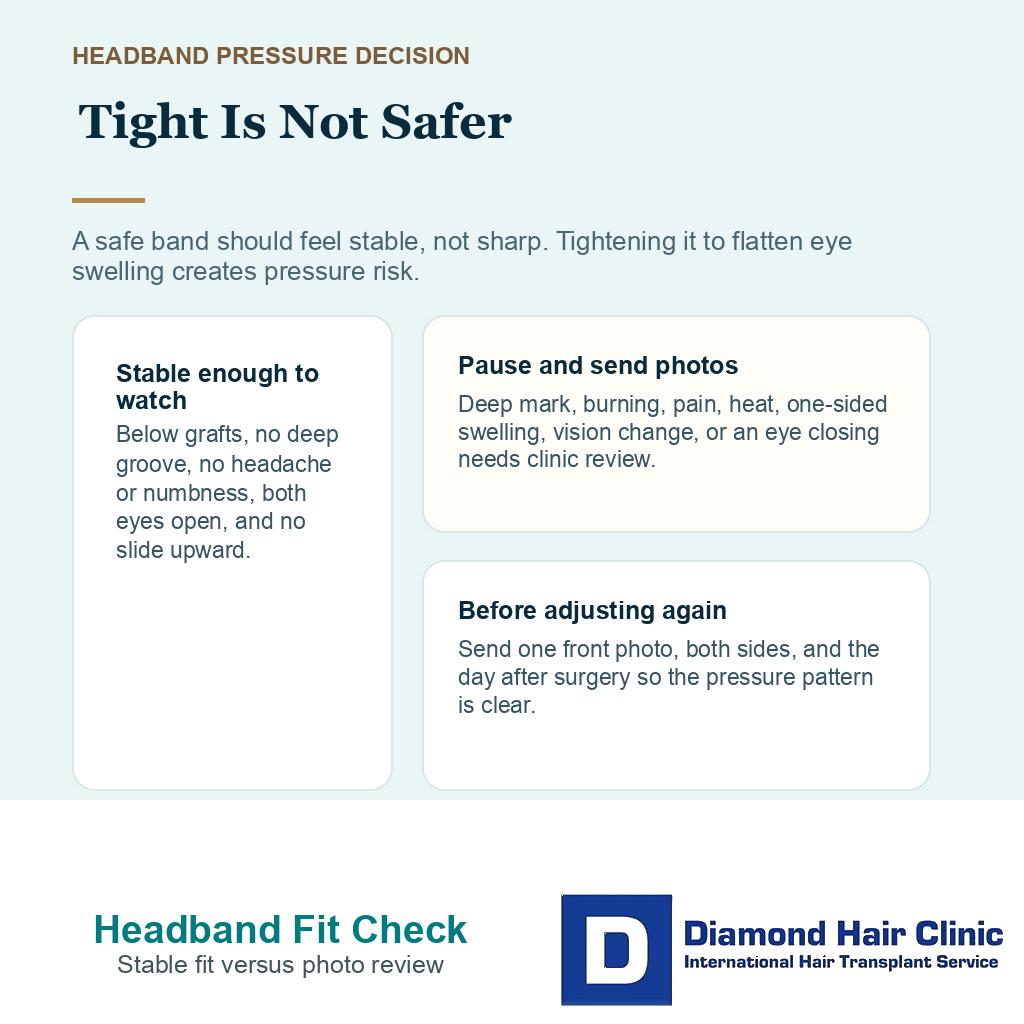
If the band slips upward toward the recipient area, do not keep pushing it back with your fingers near the grafts. If it slips downward toward the eyelids, do not pull it tighter to hold it in place. Either pattern is a reason to pause and get fit guidance before continuing.
When an edge catches crusts, creates a new raw line, or keeps pulling the hand back toward the recipient area, the band has stopped helping. Further finger adjustments near the grafts add more risk than benefit, so removal or loosening should follow the clinic’s own instruction.
Does a tighter band prevent eye swelling better?
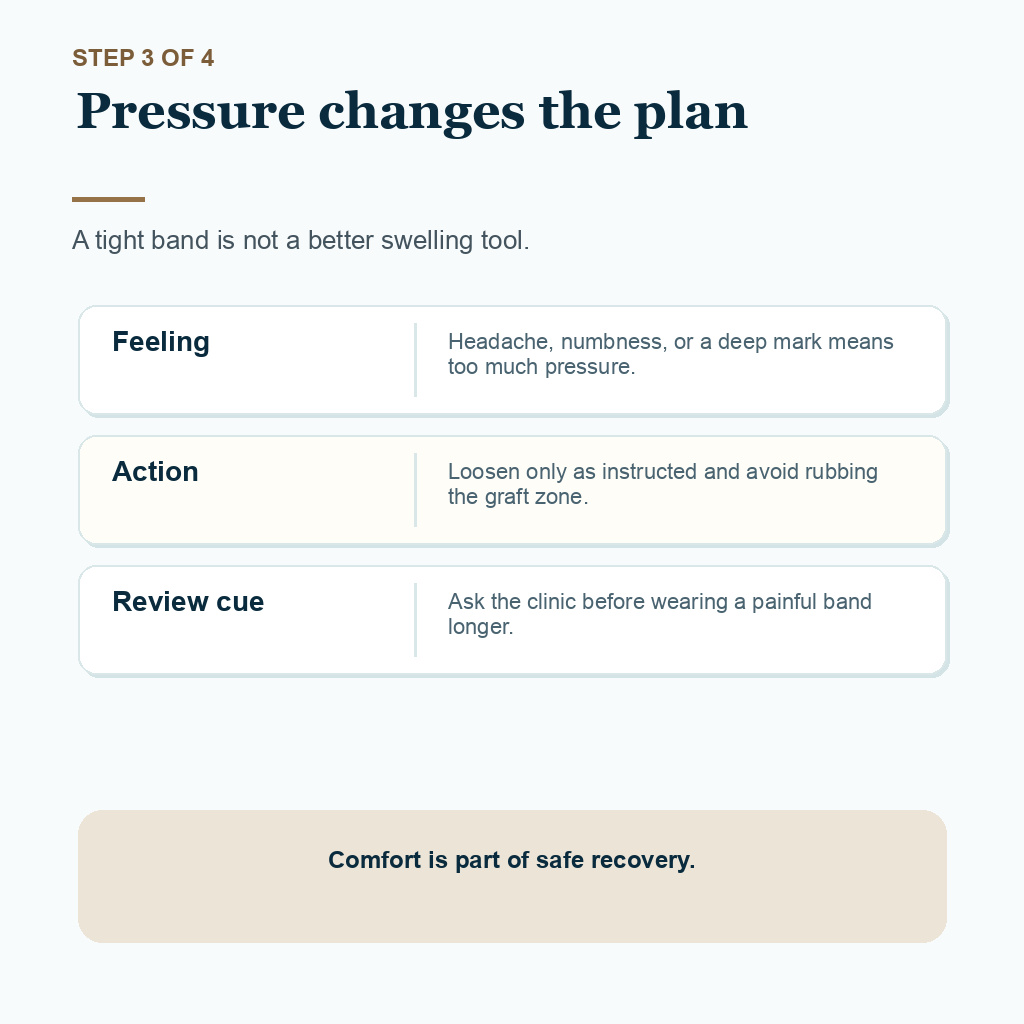
No. A tighter band does not prevent eye swelling better. It can turn a swelling guide into a pressure problem. Strong compression may feel like active treatment, but after hair transplant surgery we are usually trying to reduce unnecessary contact, not add it.
If the band causes a headache, leaves a clear indentation, makes the forehead feel numb, or becomes uncomfortable enough that you cannot rest, take that seriously. You do not need to guess whether the tightness is acceptable. Take clear photos from the front and both sides, show where the band was sitting, and ask for review before continuing in the same way.
A band close to transplanted hair needs careful handling. Early grafts need protection from rubbing, scratching, and accidental pressure. The same handling rule applies when removing the bandage after hair transplant. If something is stuck, tight, painful, or near healing skin, careful guidance is safer than repeated pulling.
Headband fit planner
Which fit signal should guide the headband decision?
The decision depends on what the band is doing. Use the closest signal before you loosen, move, or remove anything. If the signal is unclear, photos are safer than another adjustment.
It rests below the grafts without marks
The band feels present but not sharp. It stays on the forehead and does not creep into the implanted area.
Leave it alone and follow the timing plan
Repeated adjusting usually creates more risk than benefit. Keep your head elevated as instructed and use the clinic’s planned check time.
This is the only situation where the band is doing its job. It guides swelling without becoming another pressure point.
It leaves a groove, headache, or numb feeling
Pressure strong enough to leave marks is no longer gentle swelling guidance. It can distract you from the real job, which is keeping pressure and friction away from the grafts.
Avoid pulling it tighter
Pause, take clear photos from the front and both sides, and request review before wearing it tighter or longer.
A tight band is not a better band. The aim is a soft boundary, not compression treatment.
The edge moves toward implanted grafts
A slipping edge can rub the area that needs the most stillness, especially during the early crust and scab period.
Stop repositioning near the grafts
If it cannot stay safely on the forehead, remove it only as instructed and use a photo update rather than pushing it back into place again and again.
Protection of the grafts comes before trying to control every swelling change.
Swelling has reached the eyelids but both eyes open
This can happen because fluid travels downward. It is uncomfortable, but it does not by itself mean the band failed.
Use photo review instead of guesswork
Keep the head elevated and avoid pressing the eyelids. Contact the clinic if the swelling changes quickly or blocks vision.
The route of swelling matters less than whether the pattern is improving and whether the eyes remain comfortable and open. Clear photos are more useful than repeated mirror checks.
Pain, heat, swelling on one side, or vision trouble appears
These signs are not just ordinary forehead puffiness moving downward. They need review before another band adjustment.
Send photos and contact the clinic promptly
Include when the band was worn, where it sat, and whether symptoms changed after removing pressure from the forehead. That history helps us judge whether pressure changed the swelling.
A clear photo set is more useful than trying another adjustment without review. It gives the clinic enough evidence to guide you.
Swelling can still move toward the eyes because fluid follows gravity
Eye swelling after hair transplant is usually related to fluid movement, not only the band. Fluid tends to move down with gravity. If you bend forward, sleep too flat, strain, or keep your head low for long periods, swelling may move toward the eyelids even when the forehead band was placed correctly.
I look at the whole recovery pattern, not only the band. Sleeping position, forehead swelling, medication instructions, salt intake, travel fatigue, and how often you touch the area can all affect the appearance. Before tightening the band, review your sleep after hair transplant setup and ask whether head position, travel fatigue, salt intake, or repeated checking is making swelling look worse.
Cold application is another area where people can overdo things. Do not try to drain swelling with strong massage, extra tablets, diuretics, or long cold pack sessions unless your clinic specifically instructed it. You should never press ice directly onto the grafts. The ice after hair transplant guidance is useful here because cold only helps when it stays gentle, wrapped, and away from the grafted recipient area.
Photos are more useful than repeated adjusting
When swelling changes, the most useful step is often not another adjustment. It is a clear photo. Take one photo from the front, one from each side, and one closer view of the band position if the clinic asks for it. Use normal light. Do not press the skin to demonstrate the swelling. Do not lift crusts or hair to show more detail.
A short message should say which day after surgery it is, when the band was placed, how long it was worn, where it sat, where the swelling is now, whether both eyes open normally, and whether there is pain, heat, fever, drainage, headache, numbness, or worsening on one side. Photo review protects you from guessing. It also protects the graft area from being touched repeatedly just because swelling looks different in the mirror.
Travel days can make this advice more important because they add fatigue, long sitting, rushed mirrors, and fewer chances for direct review. If you are planning flights or hotel movement soon after surgery, use the timing guidance for flying after hair transplant and contacting the clinic before travel to decide when a photo update is safer than waiting.

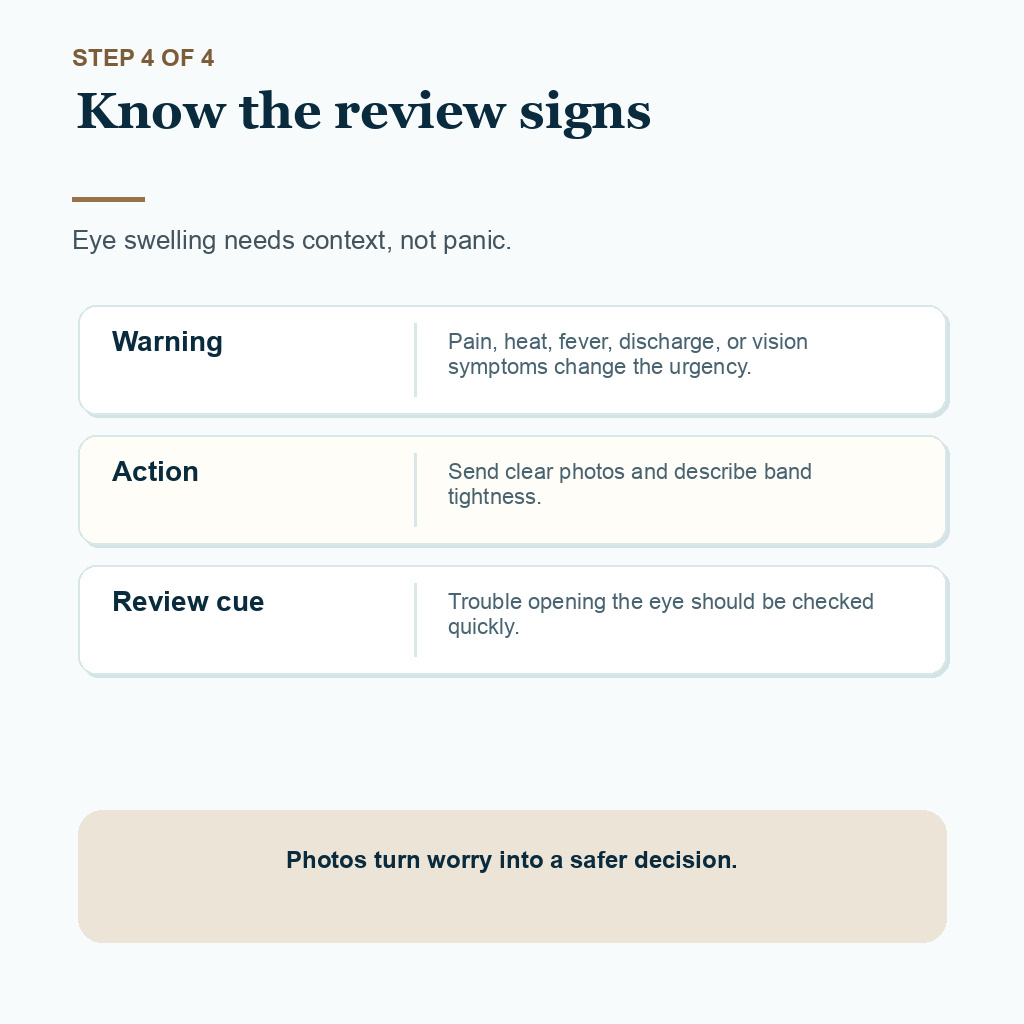
A steady headband is safer than chasing every swelling change
A perfect looking forehead every hour is not the goal. The priority is to protect the grafts, keep swelling within an expected pattern, and notice the few signs that deserve review. A soft, steady headband helps with that. A tight, sliding, frequently adjusted headband does not.
Clothing and accessories need careful handling too. Anything that passes over the grafts can create friction if used too early or removed carelessly. When you are choosing hats, hoodies, collars, or travel clothing, the same low contact idea applies in what to wear after hair transplant.
When you are resting in a hotel or during transport, a stable neck position can help you avoid bending forward and increasing facial puffiness. A neck pillow after hair transplant can help keep the head steadier during that early recovery window.
Pressure marks matter more than the band itself
Swelling that closes an eye, becomes much stronger on one side, or comes with increasing pain, heat, drainage, fever, breathing trouble, lip or throat swelling, fainting, vision change, or rapidly worsening pain is no longer a simple band question. Severe symptoms need urgent local medical care, and the clinic should be updated with clear timing and photos.
The band should keep pressure away from the grafted area while swelling settles. It should not leave a deep groove, slide onto grafts, force repeated handling, or make the patient tighten and loosen it all day. A band that creates pressure becomes part of the problem, even if swelling itself is expected.
When the fit is not right, the safer decision is to stop improvising around the grafts and move back to the instructed recovery plan. Head elevation, steady aftercare, and less handling often support healing better than a tight band that makes the patient keep checking the scalp.
Read this review excerpt
Upon arriving home, I sent 4 photos (of each side of head) after every washing process to doctor for checking where I was given personal advice for how to take care of my healing head.