



Pineapple Juice Is Not a Swelling Plan
A swollen forehead or puffy eyelids can look more frightening than they are, especially around day 2 to day 4 when facial swelling can move downward. That is when many patients start looking for something natural to do. Pineapple juice, bromelain, and arnica often appear in recovery advice, but I do not treat them as one simple category.
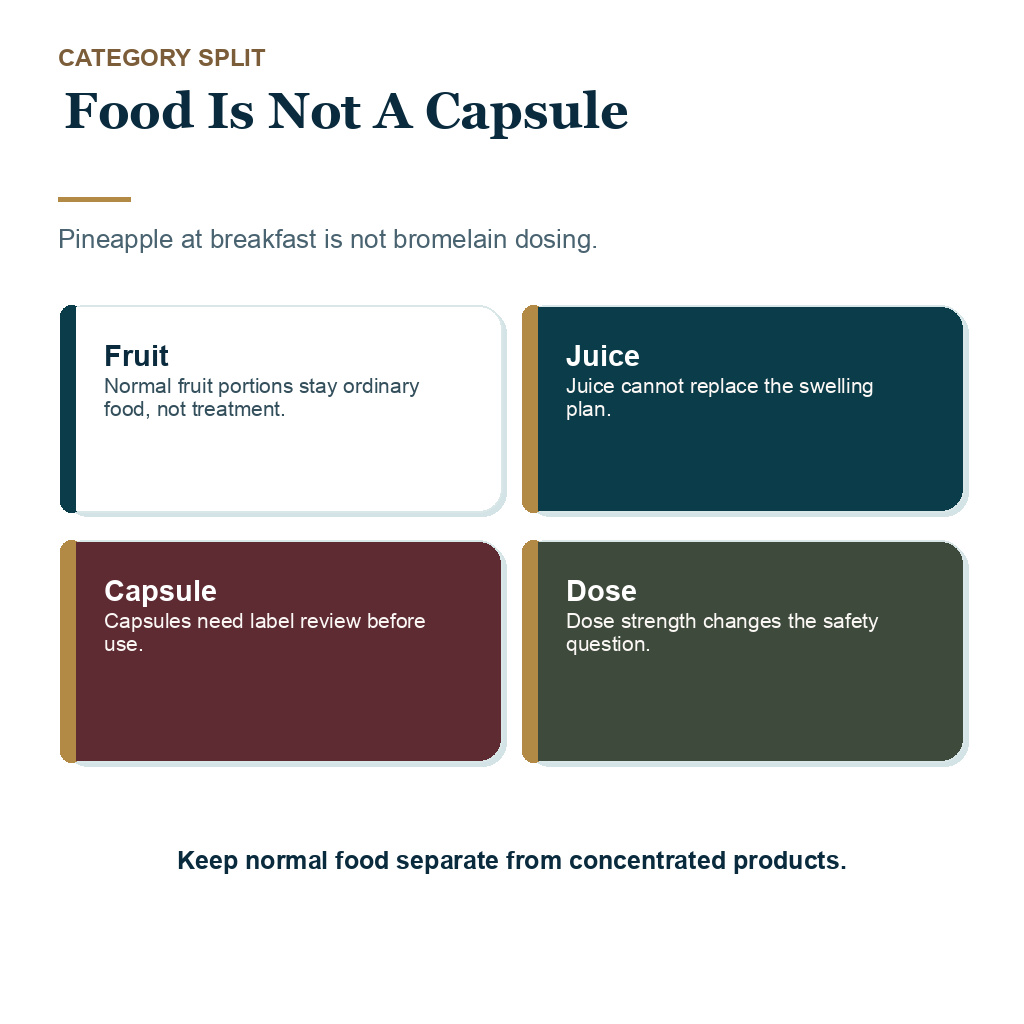
Pineapple as food is different from bromelain capsules, arnica tablets, or topical products. A normal serving of fruit is usually a diet choice. Pineapple juice is not a swelling treatment plan after FUE, and bromelain or arnica should be reviewed before use when swelling, medicines, bruising, allergy, stomach symptoms, or bleeding risk is part of the picture.
Facial swelling by itself is not the same as graft damage. The larger concerns are rubbing, pressure, trauma, fresh bleeding, infection warning signs, allergy symptoms, or putting an unapproved product near healing skin. Before adding a remedy, first judge the swelling pattern and the written aftercare plan, not only the ingredient name.
Check the swelling pattern before trying a remedy
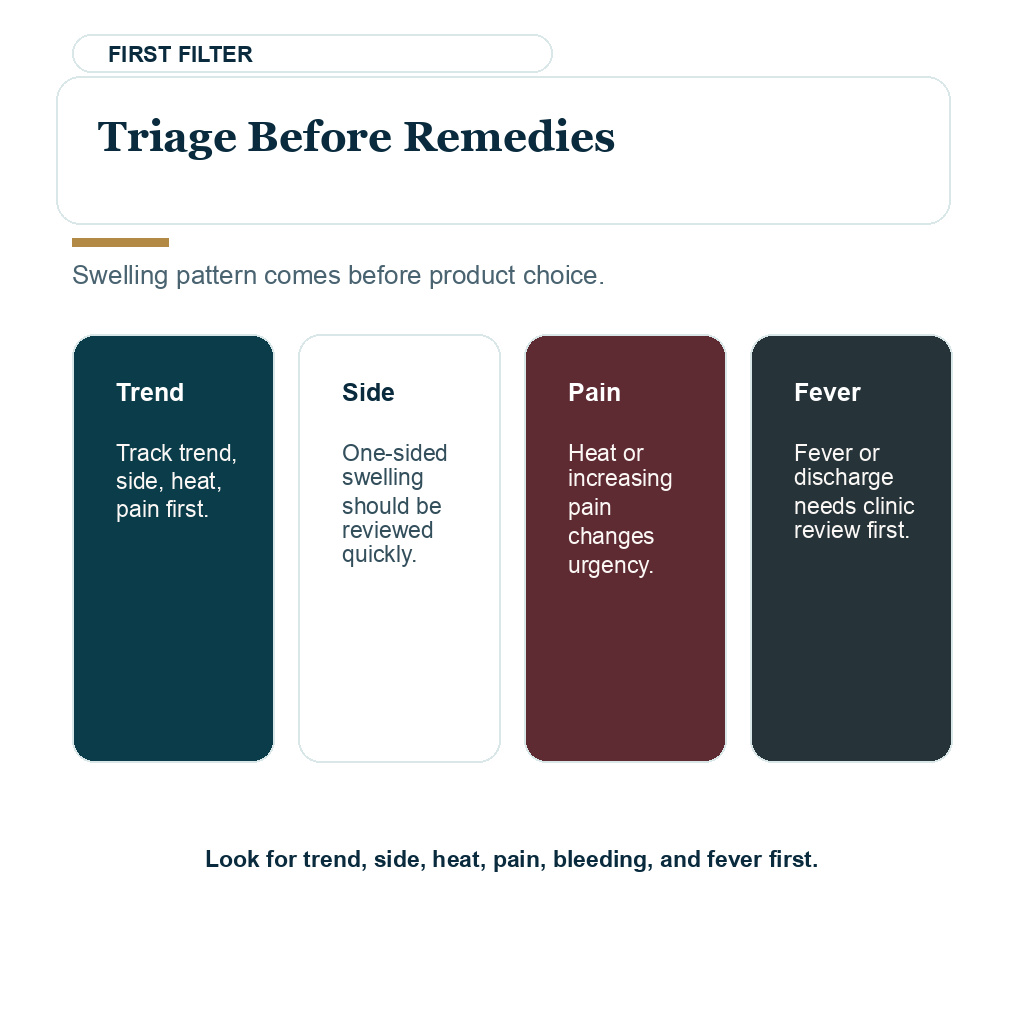
If you wake up and do not recognize your face for a moment, the first fear is often that something has gone wrong. The broader swelling after a hair transplant pattern matters because soft swelling that moves downward and gradually settles is a different situation from swelling that is hot, painful, one sided, or rapidly worsening.
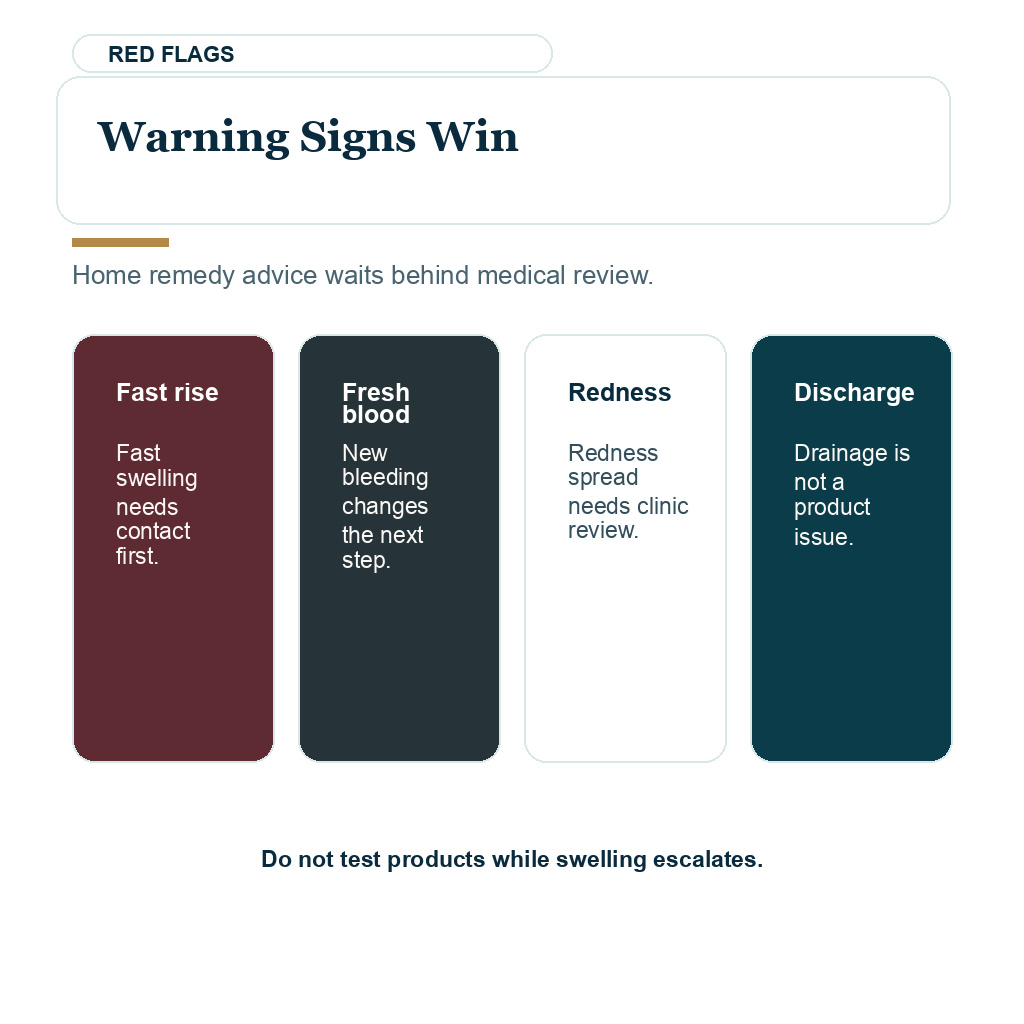
If swelling is worsening quickly, one sided, painful, hot, linked with fresh bleeding, or paired with fever, spreading redness, discharge, hives, lip or throat swelling, breathing trouble, fainting, or severe dizziness, do not test a home remedy first. Urgent symptoms need urgent medical help first. For other warning signs, share clear photos in good light and ask the clinic before adding a supplement.
Food and supplements are not the same decision
Food is part of normal recovery. A glass of juice or a piece of fruit is usually discussed as diet, appetite, sugar tolerance, hydration, reflux, nausea, diarrhea, and stomach comfort. It is not the same as taking a concentrated capsule with an active ingredient and expecting a medical effect.
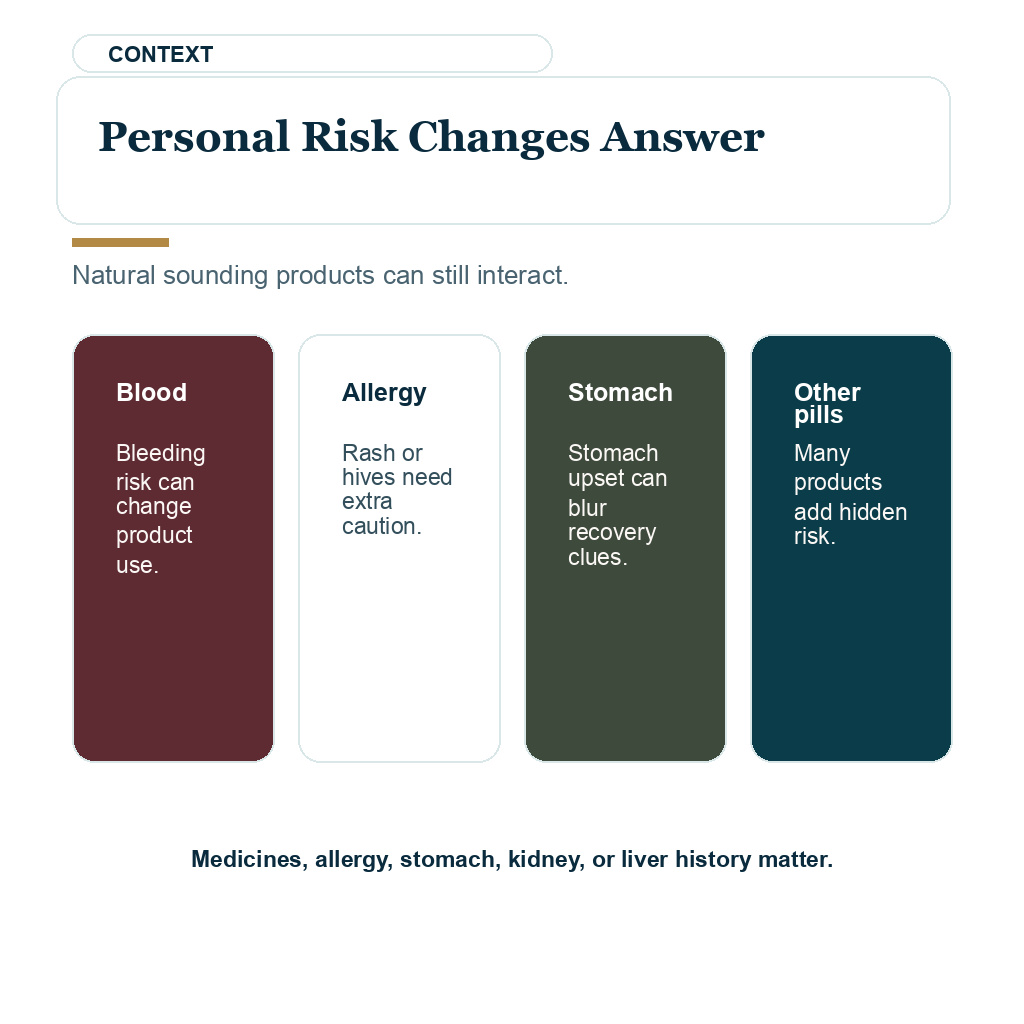
That difference matters because a patient may hear pineapple and assume a bromelain capsule is only a stronger version of the same food. I do not want that jump. The clinic already asks about supplements that should be disclosed because natural products can still affect bruising, stomach symptoms, allergy risk, bleeding risk, or other medicines.
A normal portion of fruit is not a predictable bromelain dose. Drinking more juice to chase swelling can create a sugar or stomach problem without giving a controlled treatment plan.
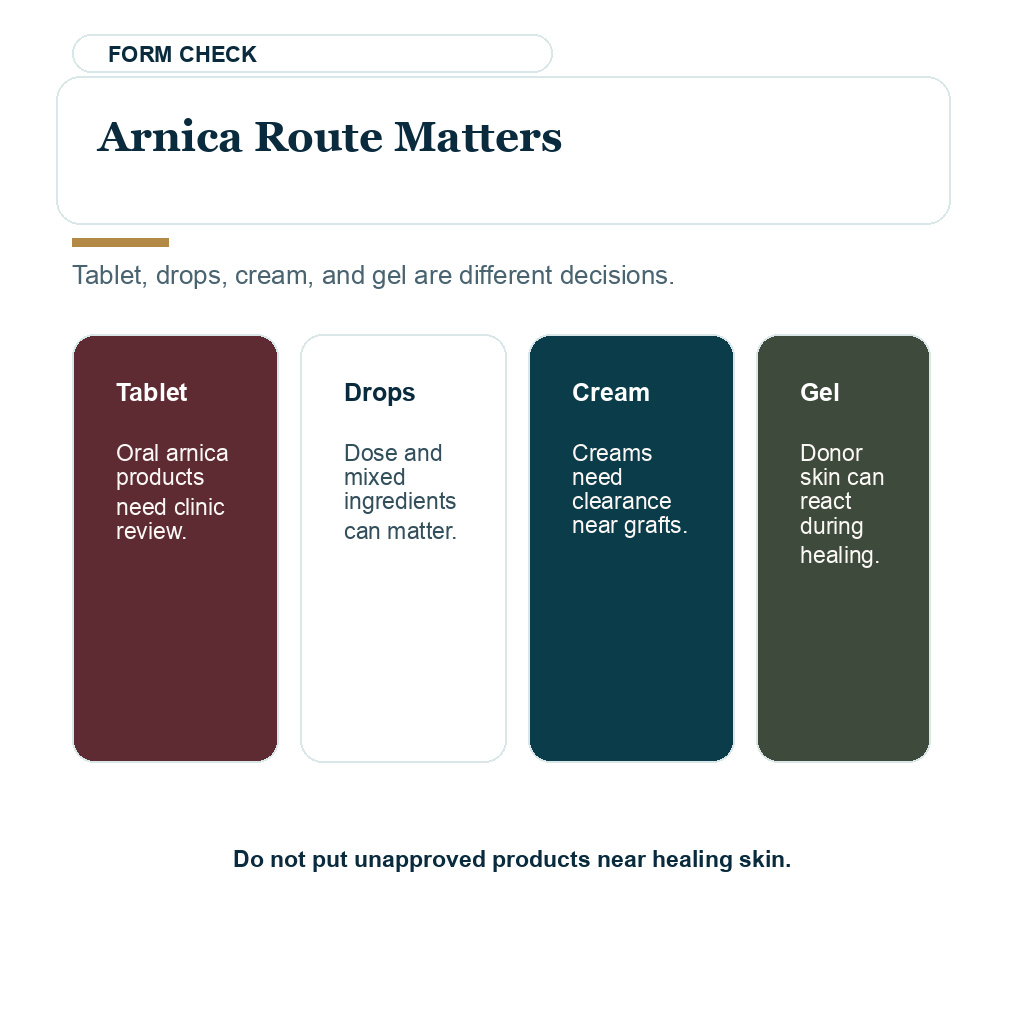
Arnica has the same problem in a different form. One patient may mean a tablet. Another may mean drops, tincture, cream, gel, or oil. Concentrated oral arnica is not something I want a patient to add casually after FUE, and a topical product used for an old bruise should stay away from grafts, scabs, donor punctures, broken skin, or irritated skin unless the clinic has reviewed it.

Bromelain and arnica need disclosure first
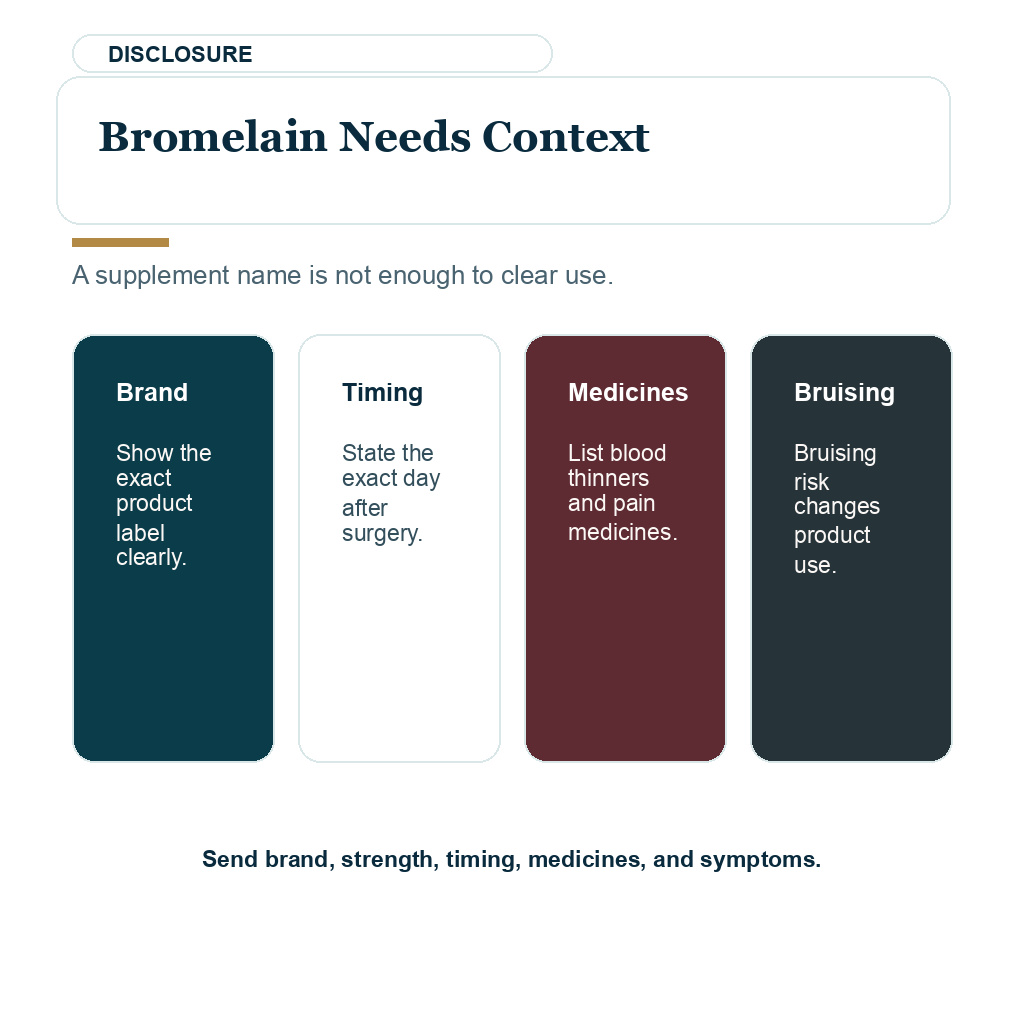
Bromelain and arnica are often discussed as swelling or bruising remedies, but I cannot clear them for every patient from the product name alone. The decision changes with the product form, label strength, surgery timing, bleeding history, medication list, allergies, stomach tolerance, and whether the patient is taking other products bought without a prescription.
Do not turn the swelling week into a supplement experiment. If a product was not listed before surgery, send the label before taking it rather than adding it because it sounds natural.
For example, a patient who takes aspirin, medicine for inflammation or pain, a blood thinner, antibiotics, several supplements, or medicine for a medical condition needs a different conversation from a patient asking about fruit with breakfast. That is the same practical reason I treat supplements that can affect bleeding context as disclosure items rather than private experiments. The issue is not that every product is dangerous. The issue is that I need to know what is being added.
Allergy history matters too. A swollen face after surgery is stressful, and an allergic reaction can add itching, rash, hives, lip or tongue swelling, throat symptoms, breathing trouble, fainting, severe dizziness, or worsening facial swelling. If you have possible allergy signs during hair transplant recovery, urgent medical help comes first when breathing, throat, fainting, or rapidly spreading whole body symptoms are present.
A dramatic day can still be a normal pattern
Some swelling looks worse before it feels better. Forehead fluid can move toward the eyelids, bruising can change color, and a day 3 mirror check can make an expected recovery pattern feel like a new problem. Timing, trend, pain, heat, and symmetry matter more than the amount of swelling in one photo.
Swelling should not be answered by tightening a band, pressing ice, massaging the face, or holding a cold pack near grafts. The eye swelling and pressure planning guidance and clinic approved cold use guidance share the pressure rule. Comfort measures should not add pressure, moisture, rubbing, or repeated handling around healing grafts.
Pineapple, bromelain, and arnica should not become a way to avoid asking whether the swelling pattern itself is acceptable. If the pattern is expected, keep the plan simple. If the pattern is concerning, review matters more than a stronger home remedy.
Warning signs outrank home remedies
A home remedy is the wrong first response when swelling is paired with symptoms that suggest a complication or irritation. Contact the clinic if swelling is rapidly worsening, clearly one sided, painful, hot, linked with fresh bleeding, associated with fever, or accompanied by spreading redness, discharge, bad smell, or increasing tenderness.
If the donor area or recipient area opens, bleeds again, or develops unusual drainage, do not look for a supplement answer first. Check infection warning signs after a hair transplant and contact the clinic instead.
Arnica cream, gels, oils, or mixed products should stay away from grafts, scabs, donor punctures, broken skin, irritated skin, and skin that looks infected unless the clinic has reviewed the exact product and location. A topical product can create a local problem even when the bottle sounds gentle.
Use simple basics before adding products
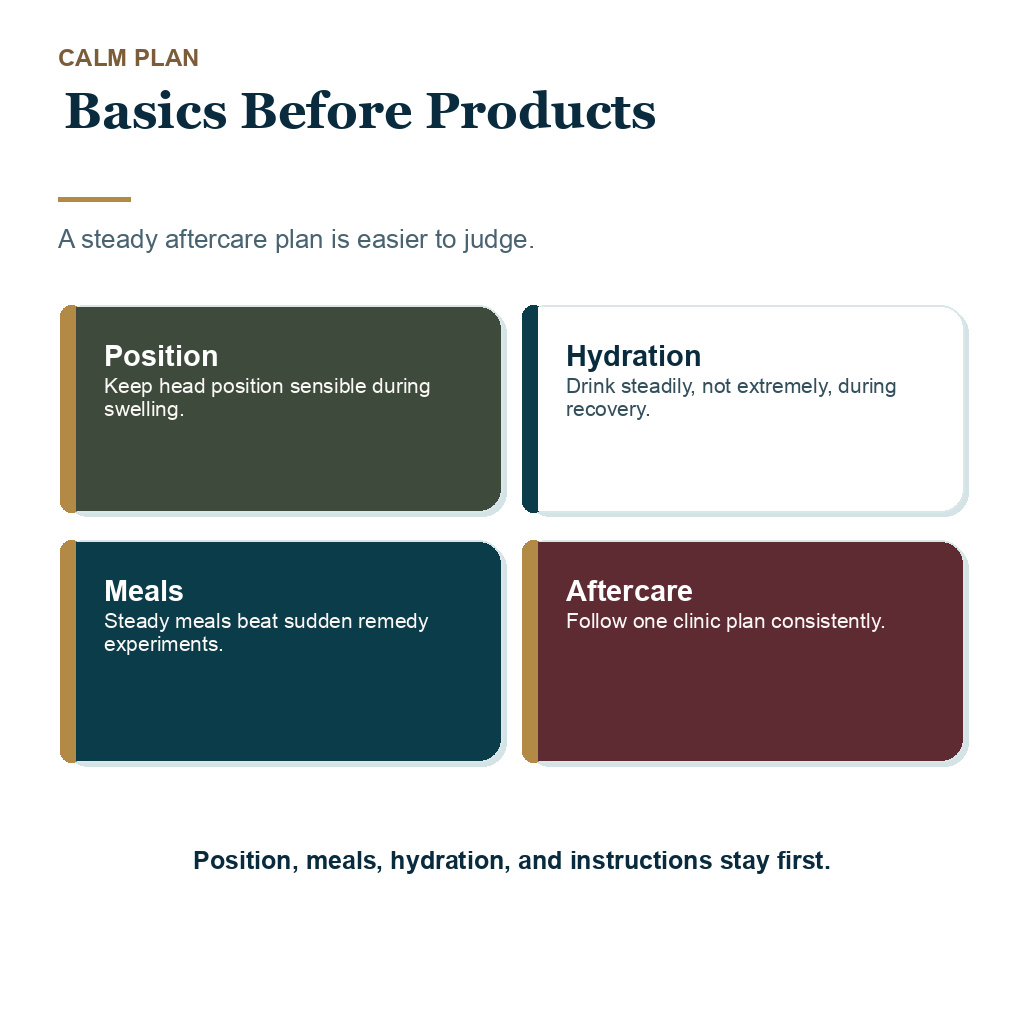
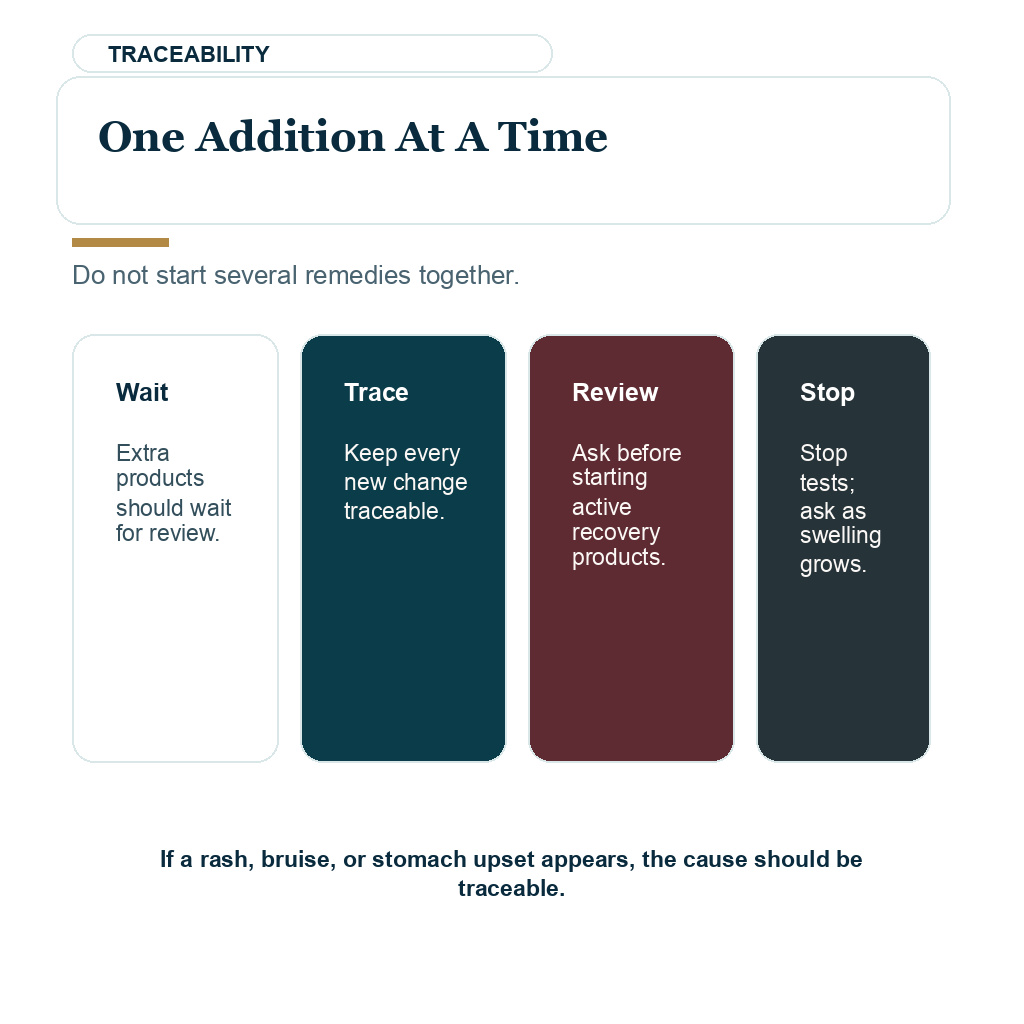
A boring recovery plan is easier to judge than five new remedies. Follow the written aftercare instructions, keep the head position sensible, avoid pressure on the recipient area, drink normally, eat steady meals, and do not add several products at once. If rash, stomach upset, bruising, or swelling changes after one addition, we can trace it. If everything changed on the same day, we cannot.
Fluid balance while healing means steady intake, not chasing swelling with one special drink. It keeps the basics stable so the body can recover without unnecessary extremes.
If a product label or advice from someone else conflicts with your written instructions, keep one aftercare plan as the base and ask one focused question. Mixing several small pieces of advice can create a bigger problem than the original swelling worry.
Sort the product before you take it
The decision board below is not a dosing guide. It is a sorting tool. Choose the state that matches your situation and notice how the next action changes. A normal food portion, a concentrated supplement, a topical product, warning swelling, and medication risk should not all receive the same answer.
Remedy decision board
Use this board to sort the product or symptom state before you follow a home remedy. The safer response changes when food becomes a capsule, when arnica is oral instead of topical, or when swelling has warning signs.
A normal food portion is not the same as a treatment plan
Eating pineapple as part of normal meals is usually a food choice. It should not be used as proof that swelling is controlled, and drinking more juice should not replace the clinic instructions for position, hydration, or photo review.
- Do not call it a swelling treatment.
- Keep following the written aftercare plan.
- Ask if diet is restricted for another medical reason.
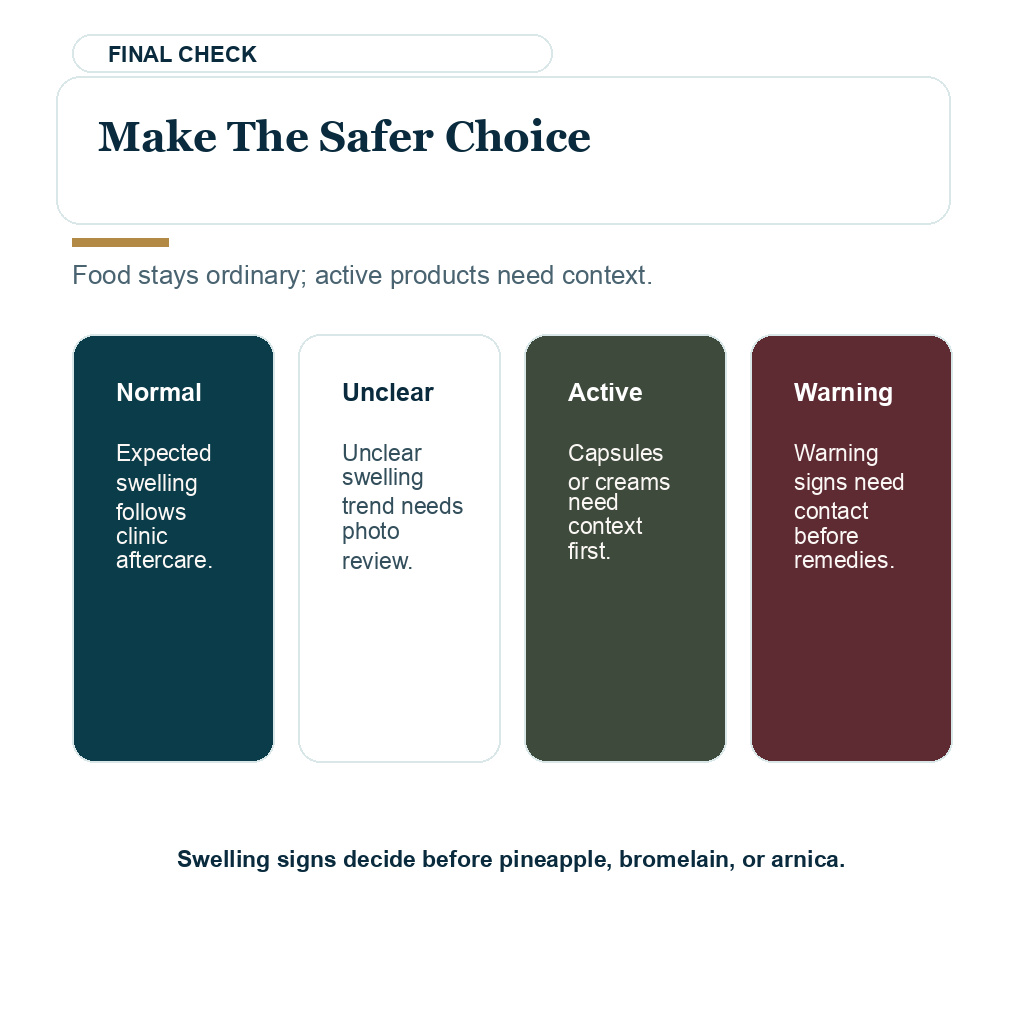
If more than one state applies, use the more cautious state. Pineapple juice plus worsening one sided swelling belongs in the warning swelling path. Bromelain plus blood thinner medication belongs in the medicine risk path. Arnica gel near healing skin belongs in the product review path.
Send a clear product message to the clinic
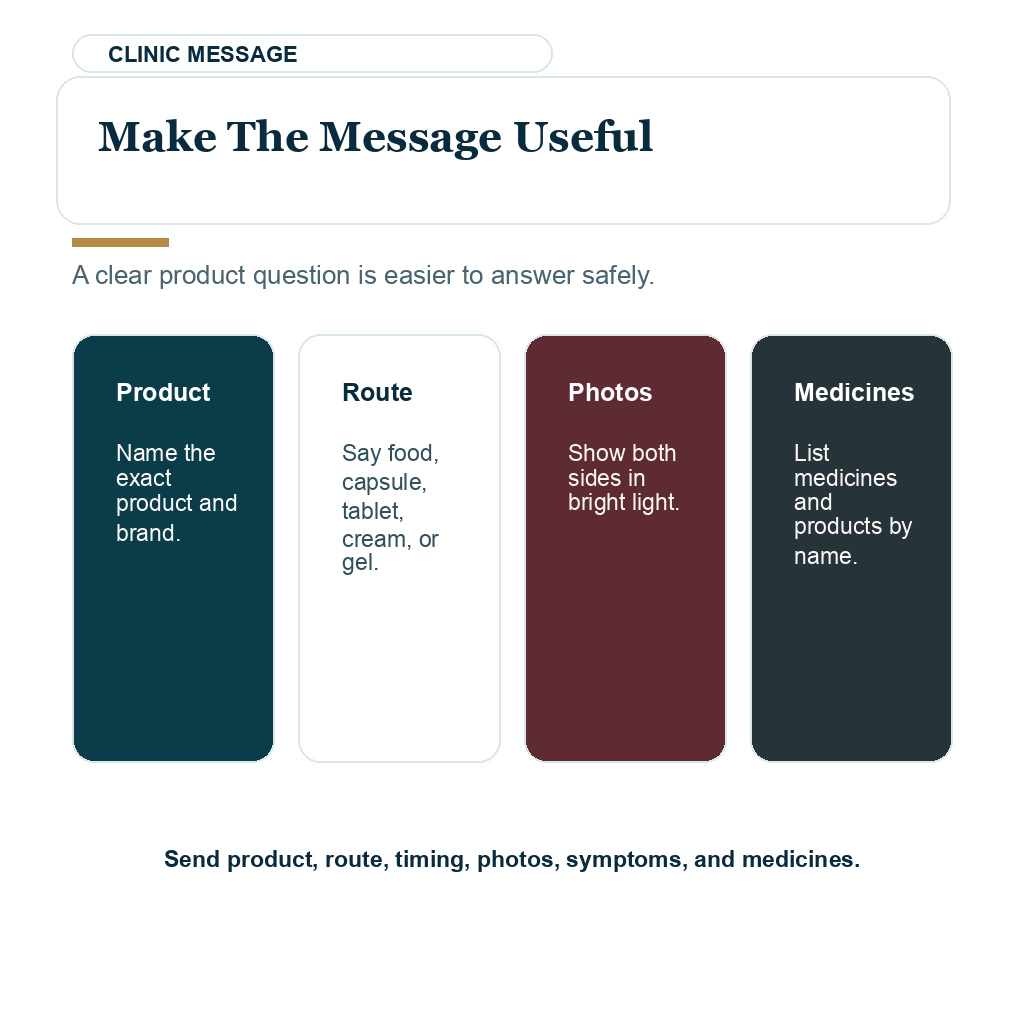
A vague message such as “Can I take this supplement?” is hard to answer safely. A useful message is short but complete. Include the product name, whether it is food, juice, capsule, tablet, drops, tincture, cream, gel, or oil, the label strength or dose written on the package, the day after surgery, the swelling pattern, and your medication and supplement list.
If the product is a blend, photograph the whole label because the word arnica or bromelain alone is not enough to judge the dose or other ingredients.
Attach clear photos when swelling is the reason for the question. Use good light, show both sides of the face, and include whether the swelling is improving, moving, painful, hot, or one sided. If you are away from Istanbul, know who to contact after FUE before travel creates a delay.
Starting pineapple juice, bromelain, arnica, extra medicine for inflammation or pain, and a topical product on the same day makes side effects harder to trace. Stomach upset, bruising, rash, or itching becomes more difficult to interpret. When a product is not essential, waiting for review is usually safer than experimenting during the first visible swelling days.
Swelling signs come before supplement shortcuts
Pineapple as food is different from treating bromelain or arnica as medicine. I do not want normal meals to become scary, but I also do not want an active product added because swelling feels stressful.
Soft swelling that moves downward and improves is usually handled with the written aftercare, fluids, meals, elevation, and photo updates. Heat, swelling that becomes stronger on one side, bleeding, fever, rash, discharge, breathing symptoms, or throat symptoms changes the priority.
Before taking bromelain, arnica, or another product, share the label, dose, timing, symptoms, photos, and medicine list. Then the answer is based on recovery context rather than on a shortcut.

Read this review excerpt
First wash completed and visual instructions given to my daughter.