


Urinary Symptoms Before FUE Need Medical Clearance
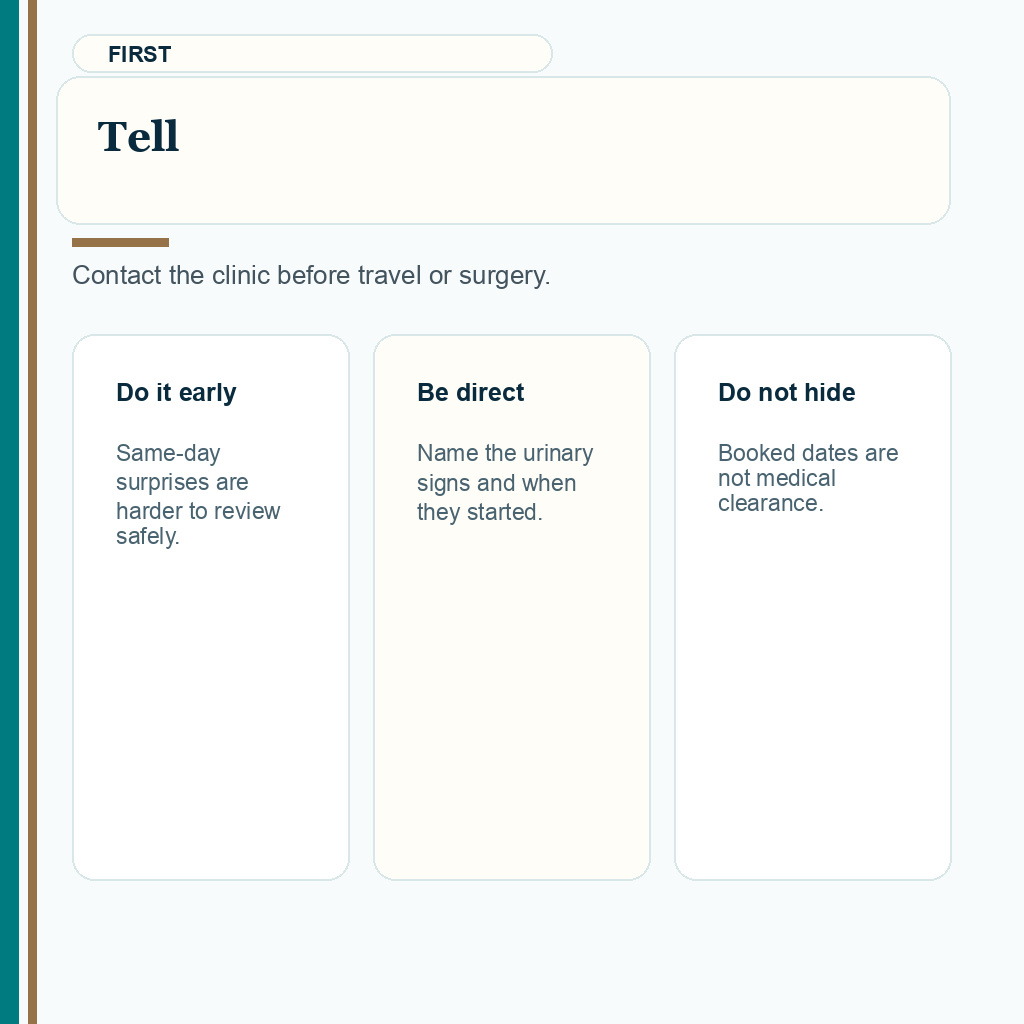
If you develop urinary burning, urgency, fever, flank pain, blood in the urine, a positive urine test, or a new antibiotic prescription before FUE, contact the clinic before you travel or come for surgery. Do not hide the symptom to protect the date. Do not start, stop, or change antibiotics on your own. Clearance depends on your symptoms, test results, treatment plan, general health, and the surgical and anesthesia plan.
Some urinary symptoms are mild and easy to review. Others point toward an active infection or a kidney problem that should not be squeezed around a hair transplant calendar. When I review this, the question is not only whether the scalp can be transplanted. It is whether you are well enough for an elective procedure, a long surgery day, travel, local anesthesia, and recovery without a preventable medical problem taking over. A long procedure day can turn mild symptoms into a practical problem when hydration, bathroom breaks, pain, or fever are already uncertain.
Do not solve urinary symptoms in silence with leftover antibiotics. Send the symptom pattern and medicine name early, so the team can separate comfort, infection risk, and surgery timing.
On surgery day, urinary symptoms can become a practical safety issue as well as a medical question. Urgency, burning, pelvic pain, or a new antibiotic can change hydration, rest breaks, and the ability to stay still for a long procedure. That belongs in the planning conversation before travel fixes the date.
Tell the clinic before the date controls the decision
Start with disclosure. A possible UTI before FUE is not a private detail you should manage alone in the hotel room or on the flight. It can affect timing, medication review, hydration, comfort during a long procedure, and whether the medical team needs more information before surgery. A past episode of urinary retention after anesthesia or surgery belongs in this update, even when there is no burning or infection now.
I do not want a patient to arrive on the morning of surgery and casually mention that urination has burned for three days, or that an antibiotic was started the night before. That creates a rushed decision. It is safer to know early, even when surgery may still be possible after review.
Disclosure is a review step, not an automatic cancellation notice. It lets the right person collect the necessary details before travel pressure narrows the options. The immediate medical concern comes first, and the FUE date comes after the symptom, test, or prescription is understood. Fever, flank or back pain, blood in the urine, prescribed antibiotics, symptom improvement, diabetes, kidney disease, and other conditions all affect that judgment. Those details matter more than the word UTI by itself.
Symptoms matter more than the UTI label
Patients often use one label for very different situations. One person means mild burning. Another means fever, chills, nausea, and side pain. Another has no symptoms but was told a urine test looked abnormal. I do not treat those as the same question. Symptoms, test results, and the reason for testing have to be separated before the surgery date is judged.
Burning when urinating, needing to urinate very often, urgency, lower abdominal discomfort, cloudy urine, or urine with a strong smell should be reported. Fever, chills, flank or side pain, nausea, vomiting, feeling very unwell, or blood in the urine makes the message more urgent. These are not details to save for the surgery room.
A positive urine test without symptoms is still worth sending, especially if a doctor ordered it or treatment was suggested. But it is different from burning with fever, flank pain, vomiting, or blood in the urine. That distinction helps avoid two mistakes. One is hiding a real infection. The other is turning every abnormal test into automatic panic.
This is similar to the broader readiness logic in cold, flu, and hair transplant readiness. The label matters less than the pattern. A blocked nose, fever, chest symptoms, active infection signs, or worsening illness changes the timing discussion. Urinary symptoms work the same way. The clinic needs the pattern, not a vague reassurance that you feel mostly fine.
Antibiotics need context before FUE
A common mistake is to make the whole problem about antibiotics. A patient may think, “If I take antibiotics, can I still come?” or “If I do not mention it, nobody will know.” Both approaches are wrong.
If a doctor prescribed antibiotics, share the name of the medicine, the dose schedule if you know it, when it started, why it was prescribed, and whether symptoms are improving. If no doctor has reviewed you, do not use leftover antibiotics to keep the surgery date alive. That can mask symptoms, create confusion, and make the medical review less clear.
The broader rules in antibiotics before a hair transplant still apply. Antibiotics have to be judged by the reason they were prescribed, your symptoms, your medical history, and the surgical plan. Urinary symptoms add a specific preoperative clearance question on top of that.
Medical clearance protects timing and safety
Medical clearance is not a formality. It protects the patient, the surgical team, and the result. FUE can be done under local anesthesia, but it is still an elective operation that may take many hours. The patient needs to lie still, stay hydrated, communicate clearly, and recover without a preventable medical problem becoming the main event.
A urine test or culture result matters most when it is connected to symptoms, treatment, or a doctor’s concern. Fever, kidney pain, blood in the urine, or a new antibiotic plan may change whether the timing is sensible. If you already have kidney disease, the clearance threshold can be different, which is why kidney disease and hair transplant planning is a separate medical review topic.
Blood tests and preoperative checks are there to catch timing problems before they reach the surgery room. They are not only paperwork before a hairline design. They help decide whether surgery is being done at the right time. If your concern started during the testing window, connect it to blood test review before surgery and include what changed in your update.
Diabetes can also change the conversation because infection, hydration, and blood sugar stability can interact. If that applies to you, the planning logic in diabetes and hair transplant planning is relevant. The point is not to panic. The point is to avoid treating a new infection concern as if it is unrelated to an elective procedure.
Send the details that determine whether surgery should wait
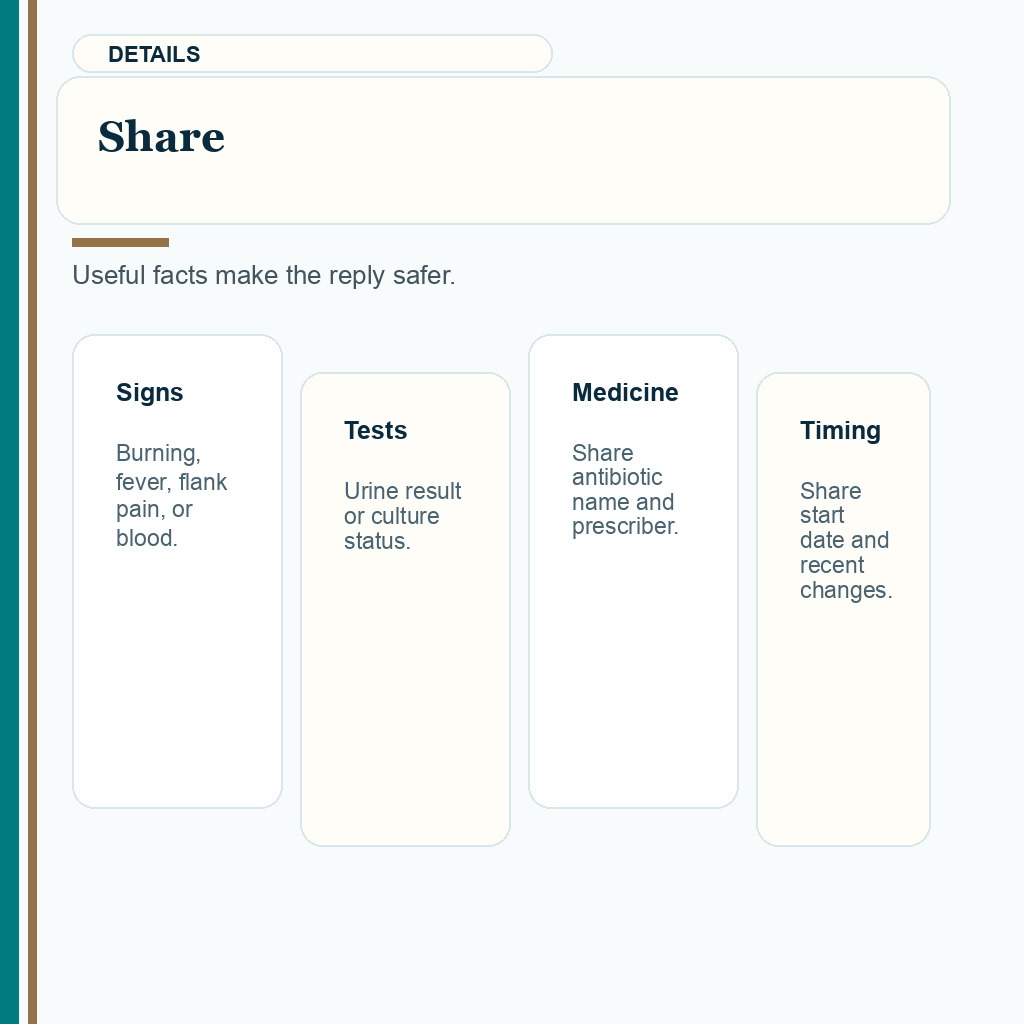
A useful clinic message is short and concrete. Do not send only, “I think I have a UTI, is it okay?” Send the details that let the medical team understand the timing.
Include the symptoms, when they started, whether they are improving or worsening, whether you have fever, flank pain, nausea, vomiting, or blood in the urine, whether a urine test was done, whether a doctor prescribed treatment, the antibiotic name if one was started, and your travel and surgery dates.
Improvement after medicine still belongs in the timeline, because it is useful context but not the same as clearance when travel and surgery are close.
If you take regular medication, include any recent change in the same message. The general principle in medication before hair transplant is the same. We need to know what is current, what changed recently, and who made the change.
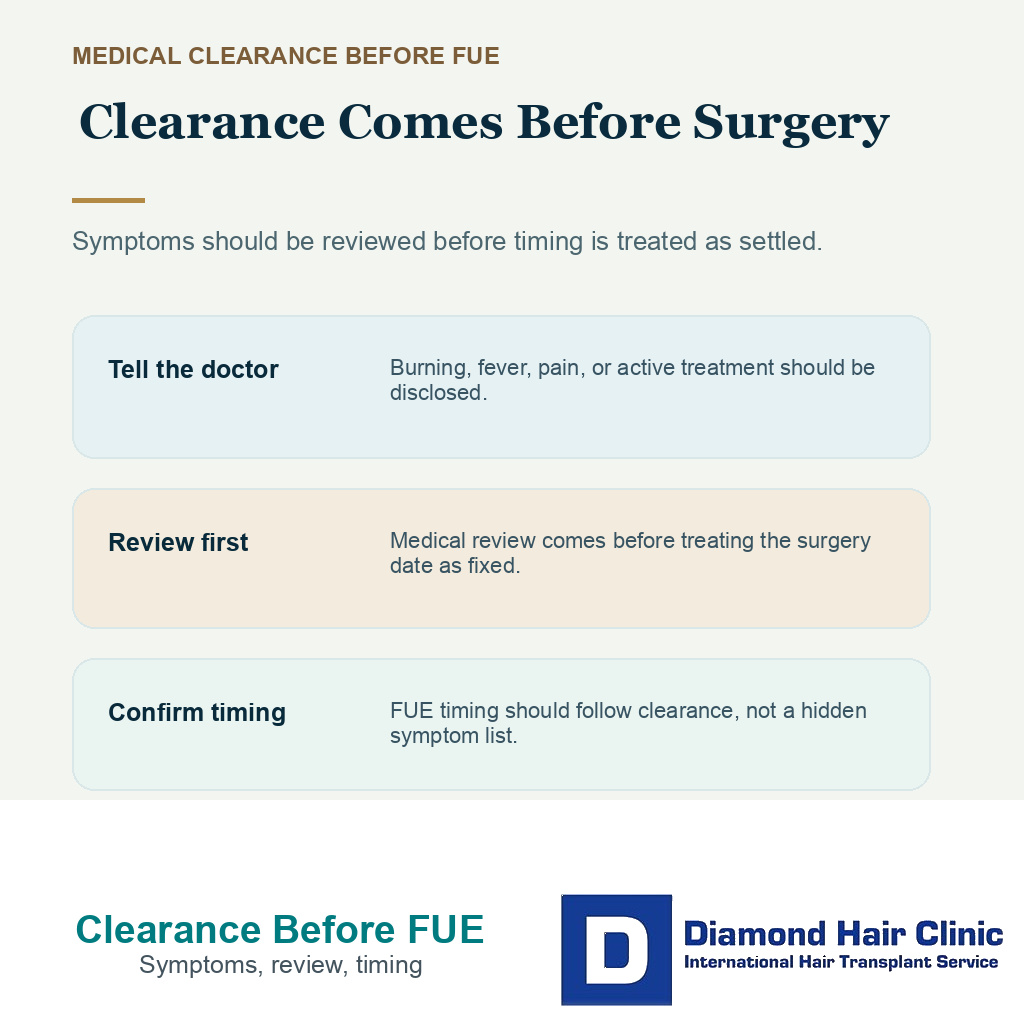
Use the clearance console before travel
Before you fly or arrive for surgery, sort the situation by state. The next action changes when symptoms are new, when tests or antibiotics are already involved, when red flags appear, or when the issue has settled and clearance is documented.
Clearance Console
Sort the urinary symptom state
The action changes when symptoms, tests, treatment, or red flags change.
Send the symptom update
Send the update before travel or surgery. Include when symptoms started, what you feel, and whether symptoms are changing.
- Name the symptom.
- Give the date it started.
- Wait for review before assuming clearance.
Share the medical details
If a urine test was done or antibiotics started, send the result if you have it, the medicine name, who prescribed it, and whether symptoms are settling.
- Do not adjust the medicine yourself.
- Send pending culture information.
- Confirm the surgery date in the message.
Pause the calendar
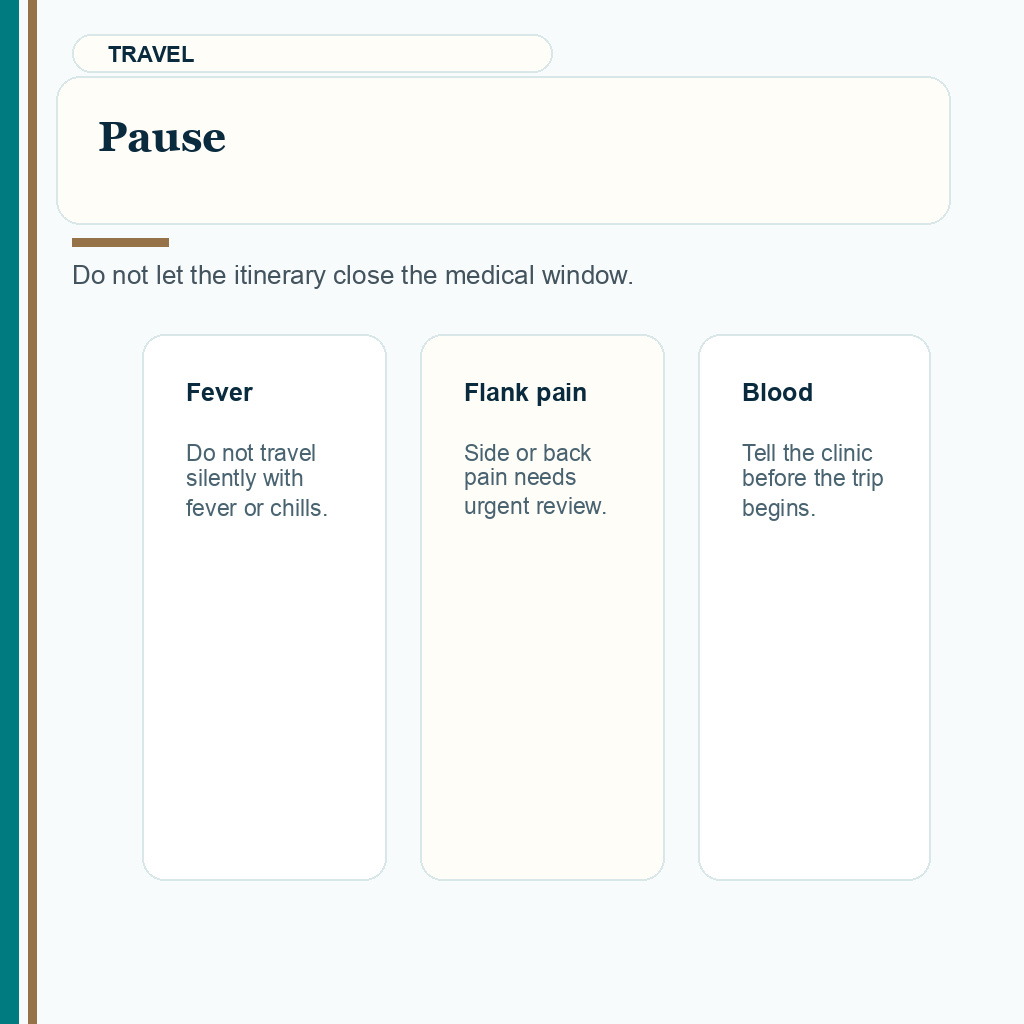
Fever, flank pain, vomiting, blood in urine, or feeling very unwell should be medically reviewed urgently. Do not fly silently and hope surgery can absorb the problem.
- Contact local medical care.
- Update the clinic before travel.
- Expect timing to be reviewed.
Proceed only after review
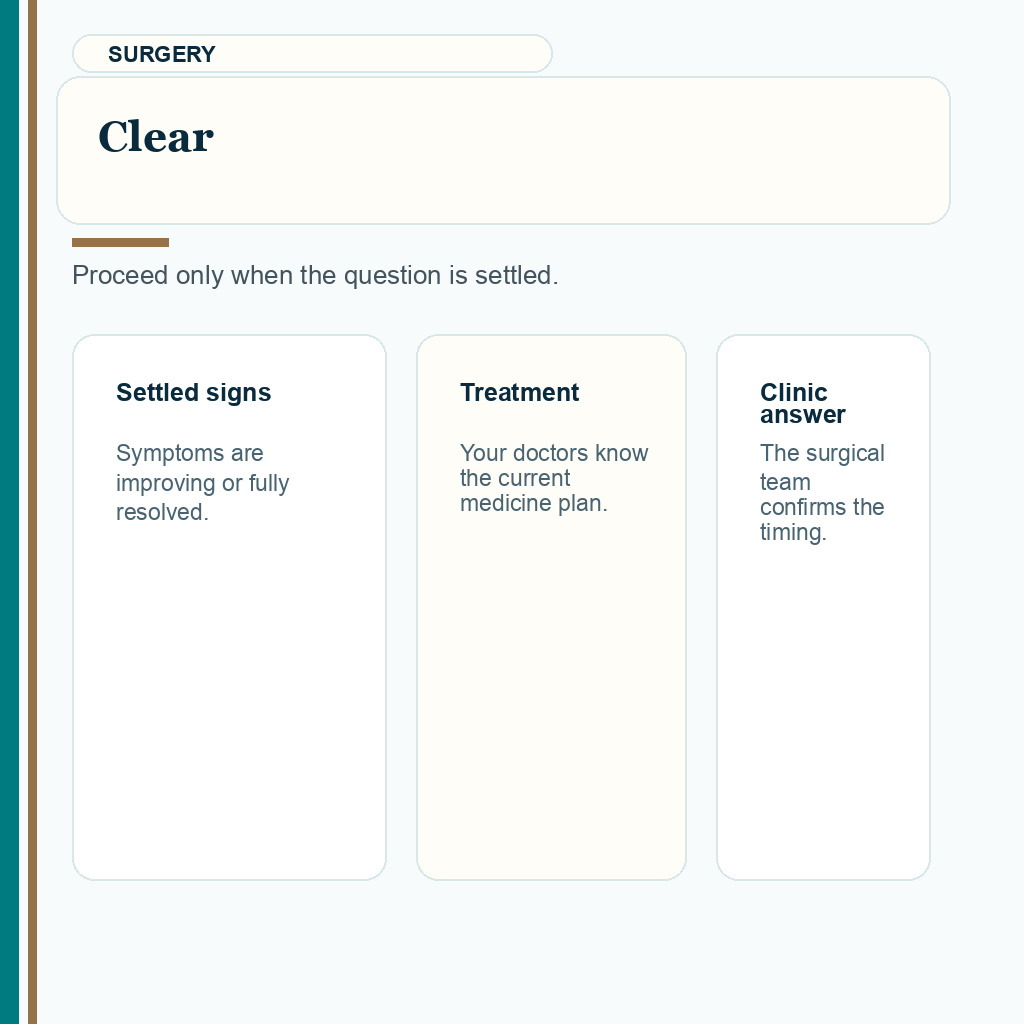
If symptoms have settled, treatment has been reviewed, and the clinic confirms timing, the plan can be considered with a calmer medical picture.
- Keep the clinic updated.
- Bring the medicine details.
- Report any recurrence.
Travel pressure should not hide urinary symptoms
International hair transplant travel can make patients behave as if the date is fixed and the body has to cooperate. That is backwards. If urinary symptoms appear before the flight, use the contact route before travel and send the update before you leave. If symptoms worsen after arrival, update the clinic immediately rather than waiting for the surgery morning.
A clear contact route before travel gives you a place to send medical updates, photos, test results, and medication changes before the itinerary becomes the main pressure.
Travel can also make hydration, rest, access to your usual doctor, and pharmacy advice less predictable. A mild symptom at home may be easier to check before departure than in a hotel the night before surgery. That is not a reason to panic. It is a reason to communicate early.
Travel should wait for a clear urinary picture
Urinary symptoms change the timing when they are worsening, come with fever or flank pain, have unclear test results, or antibiotics have only just started. When that is present, postponing is not punishment. It keeps an active medical question out of elective surgery.
FUE should fit the patient’s health. If another doctor is treating the infection or symptoms, I need the diagnosis, tests, medicine, response, and travel timing to line up.
On surgery morning, the consultation should confirm stability, not uncover fever, pain, blood in the urine, vomiting, or worsening illness for the first time.
Tell us early, share the details, and do not take medicine on your own just to keep a date. The right day is the day when we have reviewed the urinary issue and the body is stable enough for the procedure.

Read this review excerpt
He was very thorough in every little detail and I never felt pressure to do anything I wasn’t sure of.