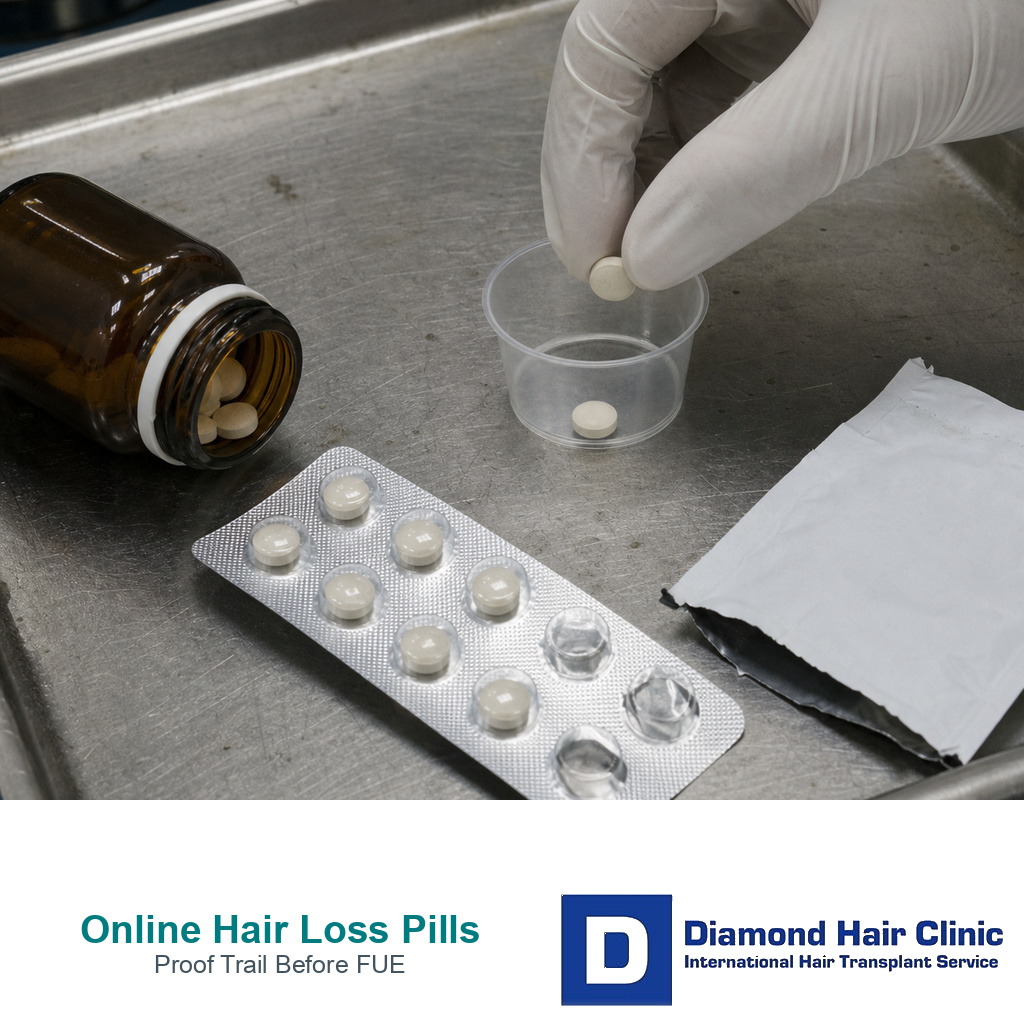
Before FUE, Online Hair Loss Pills Need a Proof Trail
Online hair loss pills can be acceptable before FUE when the record is clear. I can work with finasteride, dutasteride, or oral minoxidil when the prescription, pharmacy, dose, and dates are traceable. If the source is unclear or the tablet has changed close to surgery, I treat the medication history as uncertain. Do not switch tablets, split doses, or add a new online pill just to calm the anxiety before consultation. A pill you cannot document is a weak part of the surgical plan.
I hear this worry most often from patients who are still shedding while they take a tablet. They wonder whether the medicine is real, whether the dose changed, or whether the company would simply say it did not work for them. Those fears can become exaggerated, but they are not meaningless. A hair transplant plan depends on knowing what native hair is doing under real treatment. If the medication story is unclear, the graft plan becomes less reliable.
Proof matters more than arguing about the brand
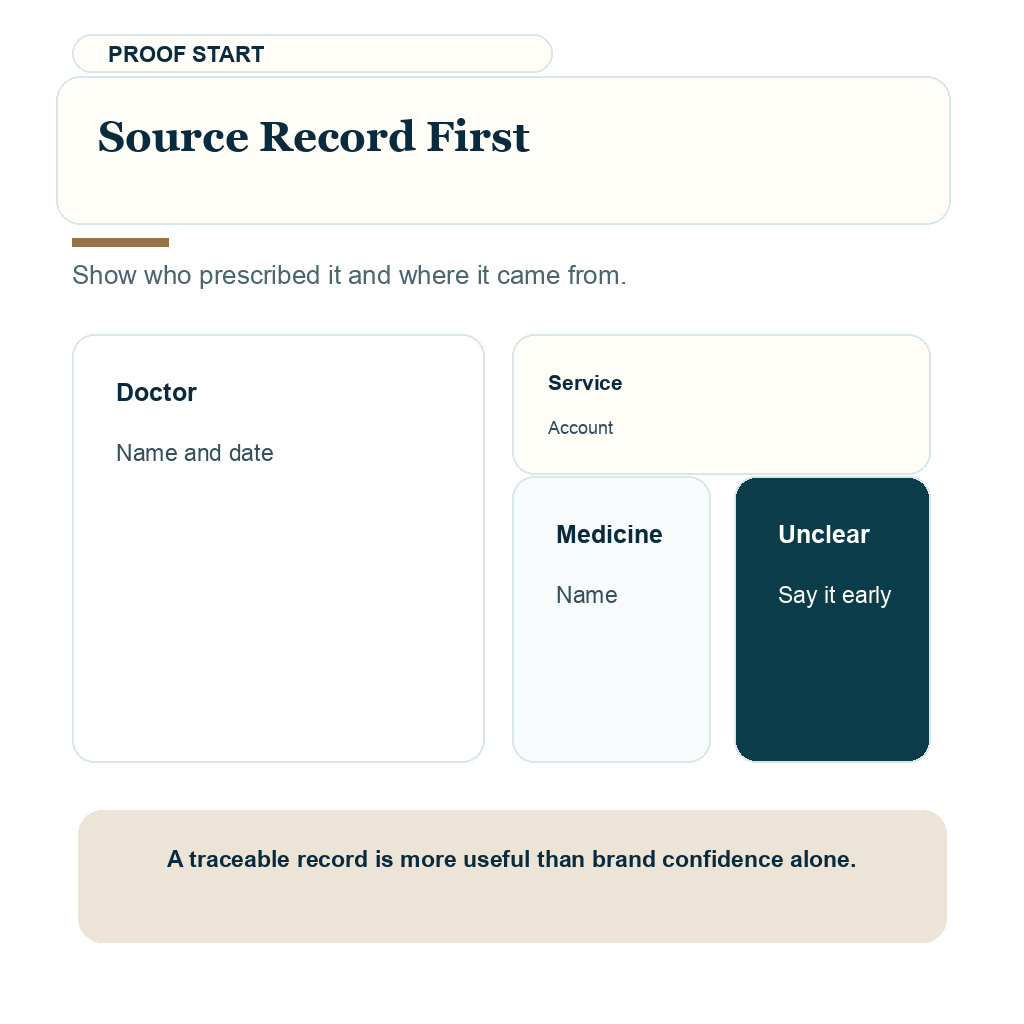
Brand reputation can be noisy. Some patients trust large telehealth companies. Others distrust any subscription medicine. In consultation, I try to move away from the brand argument and reconstruct the real treatment history. The useful question is simple. What exactly did you take, who prescribed it, and which pharmacy dispensed it?
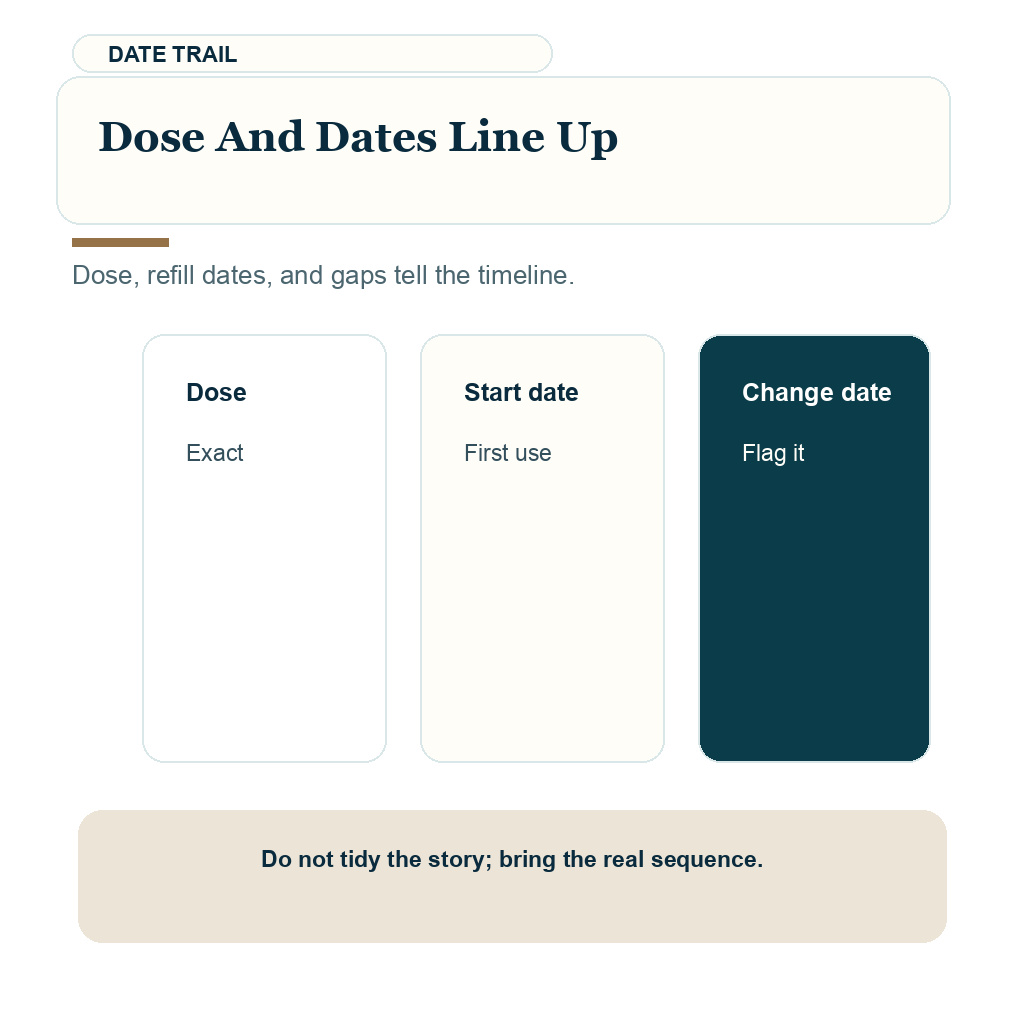
For FUE planning, I do not need a perfect brand story. I need the prescribing clinician, medication name, strength, dispensing pharmacy, refill dates, and any tablet or capsule change over time. This is the same reason I ask for a complete list during any review of medication before hair transplant. A short, exact list is stronger than a confident memory or a checkout screenshot.
The package matters too. A pharmacy label, a prescription receipt, a bottle photo, and a refill record can all help. I am not asking patients to become drug inspectors. I am asking them to avoid making a surgical decision from an undocumented medicine story.
A licensed pharmacy is part of the medical record
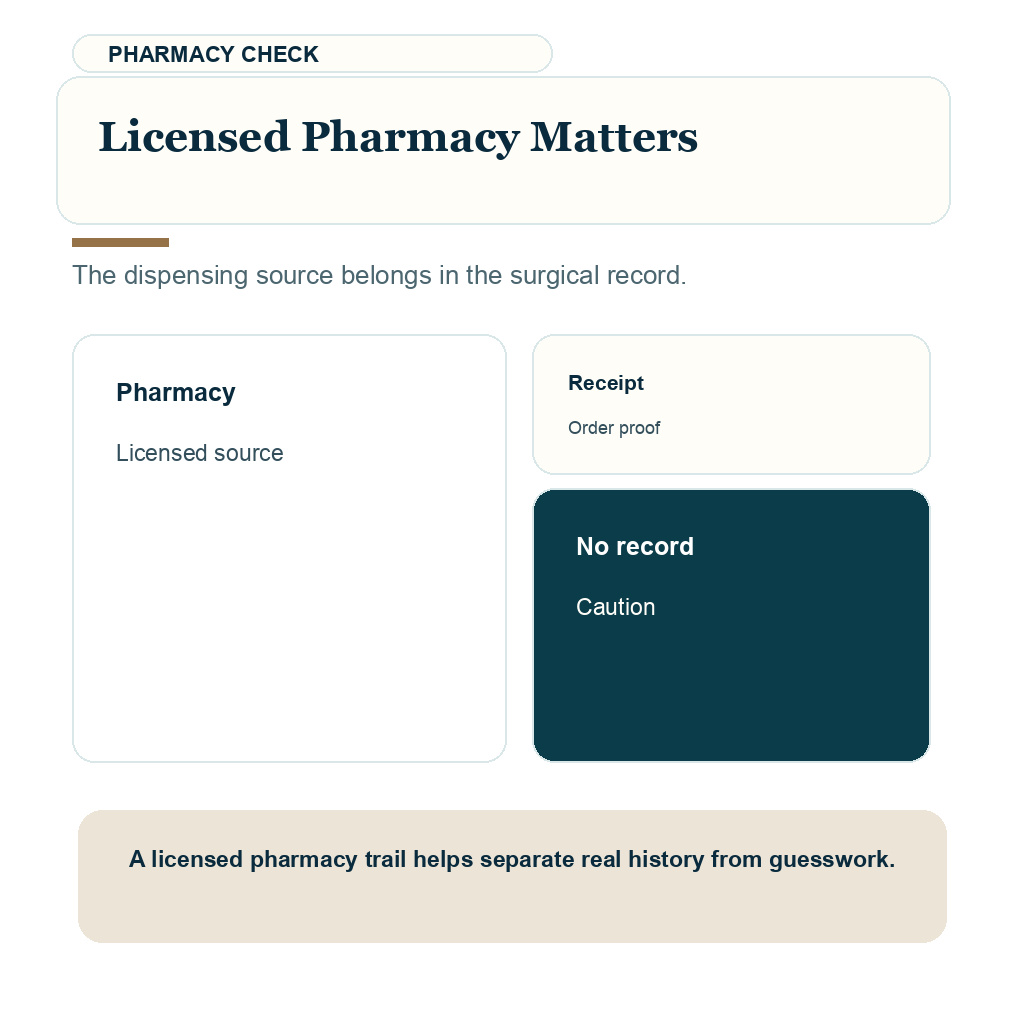
Online prescribing can be legitimate when there is a real medical review and a licensed pharmacy dispenses the medicine. A tablet that looks different can still be legitimate when the pharmacy record, strength, and refill history explain the change. The history becomes weaker when the patient cannot identify the pharmacy, cannot show a prescription, or receives pills with unclear labeling. Before travel, find the pharmacy name and keep a copy of the prescription or order details.
The practical checks are straightforward. The service should require a doctor’s prescription, name the dispensing pharmacy, give a real address and contact route, and provide access to a pharmacist or prescribing clinician when questions arise. If the site sells prescription tablets without a prescription, hides the pharmacy, ships pills with damaged packaging or packaging only in a foreign language, or offers a price that looks too good to be true, I treat counterfeit, unsafe, or unapproved medicine as a real possibility and do not treat that history as stable.
If you live outside the United States, use the equivalent local regulator or pharmacy board where available. The principle is the same. You want a traceable pharmacy and a real prescription pathway, not only a checkout page and a monthly charge.
Weak response does not prove a bad pill
A weak response has several possible explanations. Finasteride and dutasteride can take time before the pattern is easier to judge, and they do not stop every patient’s hair loss completely. Early shedding or a few uncertain months does not prove a bad pill. Some men continue to thin because the loss is aggressive, the crown is active, the dose was not taken consistently, the follow-up period is too short, or the diagnosis is not simple androgenetic hair loss.
The discussion of finasteride before and after hair transplant focuses on native hair protection rather than a promise of certainty. The medicine may help stabilize the background, but it is not a promise that the donor and recipient plan will become simple.
Photos matter here. If you tell me the medicine is not working, I need baseline photos, current photos, the date you started, any missed months, and whether the tablet changed. If the product is a subscription or combination capsule, I also need the active ingredients and dose per tablet, not only the brand name. Without those details, “it did not work” can mean too early, inconsistent use, side effects, continued progression, or a medication source I cannot verify.
Late pill switches can confuse the surgery plan
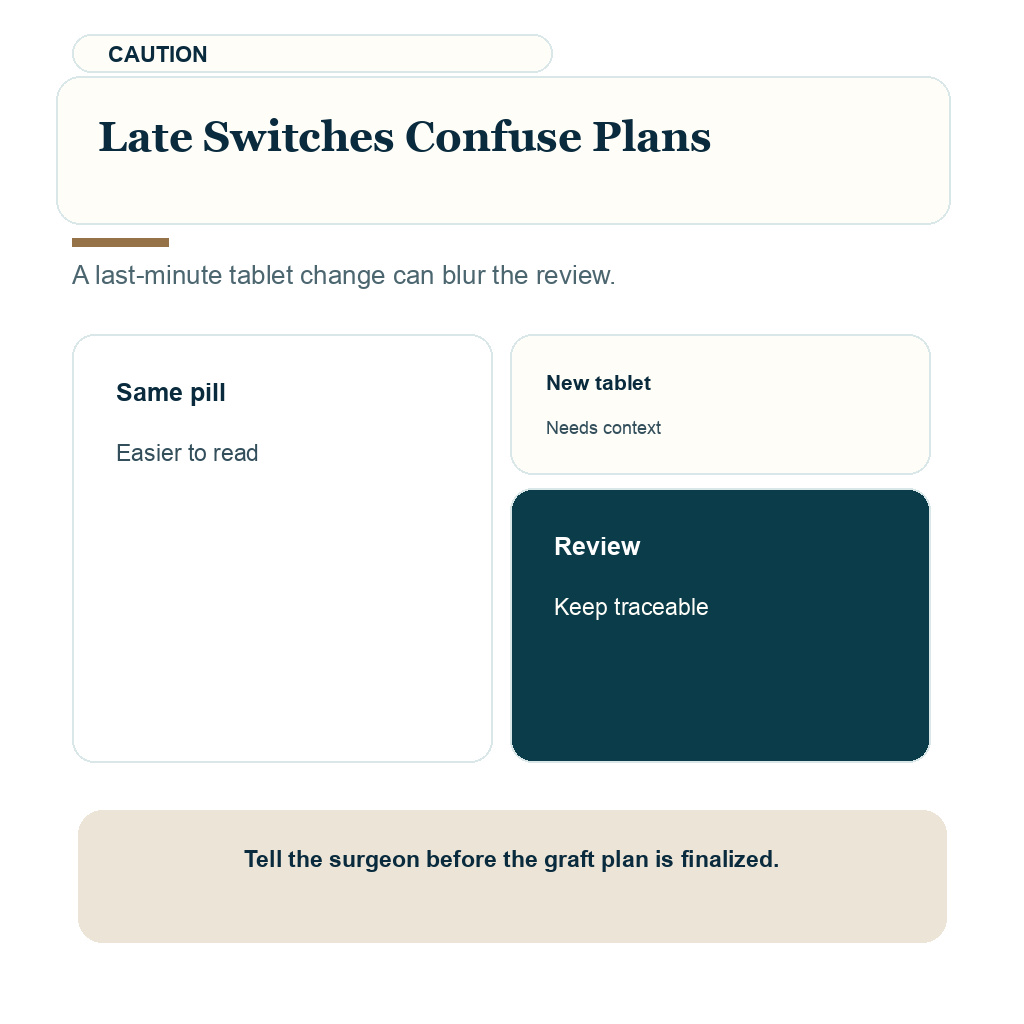
A common mistake is to panic and change suppliers, dose, or medicine shortly before surgery. That can create more confusion than it solves. A stable prescribed routine is different from a new or switched online pill in the final weeks. A late start or switch may introduce side effects, shedding anxiety, blood pressure questions, or a dose history that is too short to interpret.
Oral minoxidil is a good example. It is not the same decision as topical minoxidil, and it should sit under a prescribing clinician’s supervision because blood pressure, swelling, dizziness, fast or irregular heartbeat, heart history, and dose history matter. Chest discomfort, shortness of breath, fainting, sudden swelling, rapid weight gain, or unstable blood pressure should be reviewed medically before the surgery timing is treated as routine. If you use it, read the separate planning discussion on oral minoxidil around hair transplant surgery and do not treat it as a simple cosmetic supplement.
Finasteride and dutasteride also need a stable story. If side effects appear, the transplant plan may need more margin, and the prescribing clinician should be involved. Mood change, depression, suicidal thoughts, breast lump, nipple discharge, breast tenderness, sexual side effects, fertility concerns, or hormone sensitivity should be disclosed before graft design is finalized. If you stopped for any of those reasons, the decision connects with finasteride side effects and hair transplant planning. The surgical design should respond to the real medication tolerance, not a late experiment.
Online pills are different from online topicals
Some patients use tablets. Others use sprays, foams, compounded mixtures, or experimental topical products. I separate these because the practical risks are different. A pill raises questions about prescription source, systemic tolerance, dose consistency, and response over months. A topical raises questions about scalp irritation, residue, concentration, compounding, and timing around recipient healing.
If your main product is a topical spray or compounded topical finasteride, start with online hair loss topicals before FUE. If you are switching between topical and oral finasteride, the decision also overlaps with topical finasteride around FUE.
For this article, I am focusing on tablets and capsules because the patient decision is different. The question is whether your oral medication history, active ingredients, dose, and tolerance are documented well enough to use during graft planning without guessing.
Pharmacy proof check before graft planning
Use this proof check before the consultation or before travel. It is not a test of the pill and it is not an accusation. It is a way to make your medication story clear enough for surgical planning.
Online pill proof trail
Which medication record is safe to use for graft planning?
Choose the weakest part of the medication story before deciding whether it supports the surgical plan or needs medical clarification first.
Use the label or prescription record, not memory alone. If the medicine or dose is unclear, I plan as if the medication history is unstable.
A traceable pharmacy record is stronger than a subscription screenshot. Unknown source, damaged packaging, or no prescription path needs caution before surgery planning.
A dated timeline separates true progression from inconsistent use or too little time on treatment. It also keeps native hair risk clearer before grafts are spent.
Chest pain, fainting, sudden swelling, severe mood change, breast lump, or other new symptoms need medical review before surgery timing is treated as routine.
Do not switch pills just to calm anxiety before travel. Ask whether the change should stabilize before it becomes part of the graft plan.
Surgeon checkpoint The useful question is not whether the worry is real. It is whether the evidence is strong enough to guide the next medical or surgical decision.
Ongoing hair loss needs context, not accusation
If hair continues to thin while you take medication, I look at the whole pattern. Age, family history, miniaturization, crown activity, diffuse thinning, dose consistency, and time on treatment all matter. Some patients are still surgical candidates. Others need more observation before grafts are spent.
If hair loss is still moving despite medication, I do not treat stability as proven. For surgery, I need a pattern I can plan around, because a low or aggressive hairline can create a future problem when the surrounding hair keeps changing.
This is where proof becomes clinically useful. A clear pharmacy trail plus clear photos tells me whether the concern is poor documentation, poor adherence, side effects, not enough time, or true progression despite treatment.
The graft plan changes when medication trust is low
When I cannot trust the medication history, I plan with more safety margin. I may avoid overcommitting grafts to the crown, avoid an overly low hairline, or ask for more observation. The issue is not punishment. It is donor protection.
A patient who can use finasteride safely and consistently may have a different long term risk profile from a patient who cannot tolerate it, cannot document it, or has unstable thinning despite it. Patients who may not be able to rely on DHT blocking medicine should also read about hair transplant without finasteride.
Sometimes medication first is the wiser decision. Sometimes surgery can still be reasonable. The waiting logic behind using medication to delay hair transplant timing becomes clearer when the proof trail is complete and the hair loss pattern is not being judged from guesswork.
What should you send before your consultation?
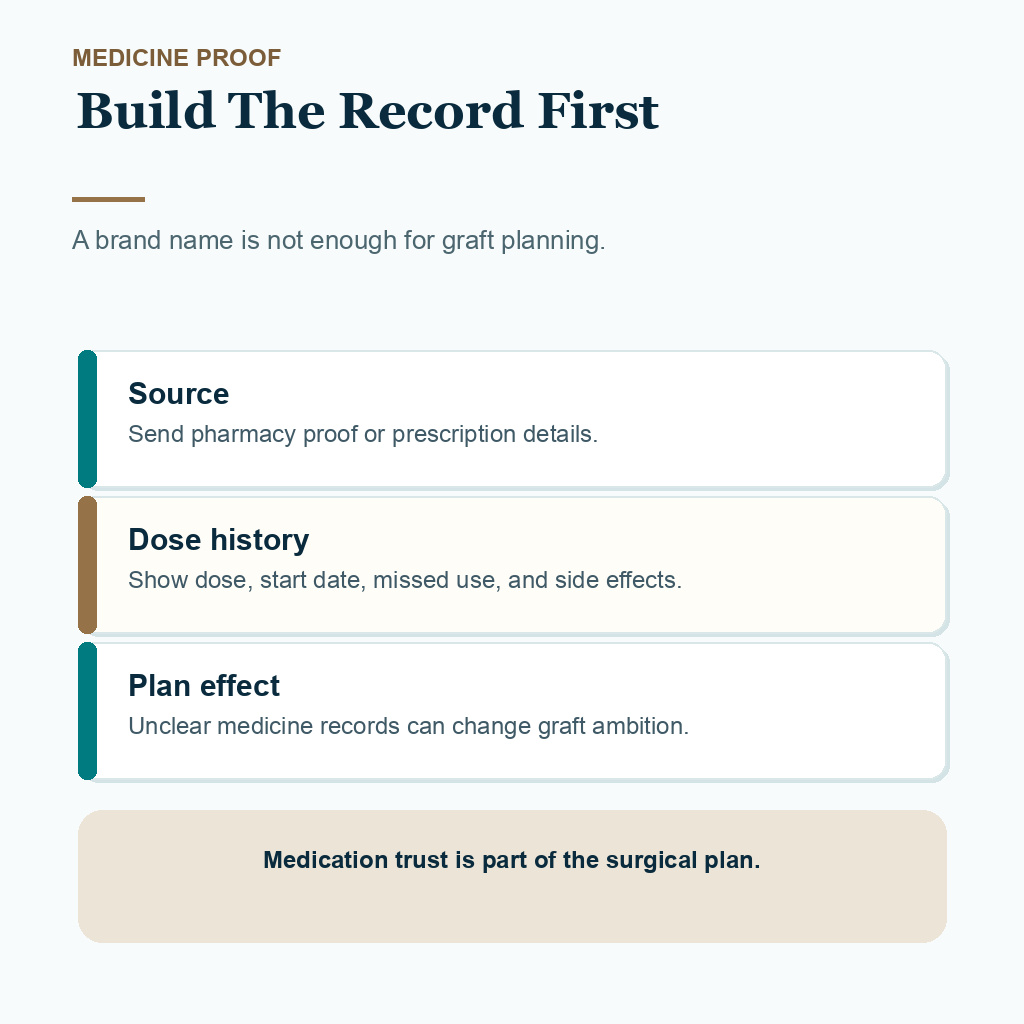
Send photos of the medication bottle or blister, the pharmacy label, the prescription or online medical record, the active ingredients, the dose, the start date, and any change in supplier or tablet appearance. Add photos of your hair from the front, temples, midscalp, crown, and donor area in consistent lighting.
Also say what you actually did. If you missed doses, stopped for side effects, halved tablets, changed brands, or used a combination capsule, tell me. An accurate imperfect history is safer than a polished incomplete one.
Do not change tablets just to reduce anxiety before the consultation. Bring the concern into the review and let the plan stay traceable.
These 8 medication proof slides separate source records, pharmacy details, dose and refill dates, tolerance, photo response, late switches, and the planning margin a surgeon needs before FUE. Swipe sideways, use the arrows one slide at a time, or choose a number below the image.