Food Poisoning Can Delay Surgery Plans
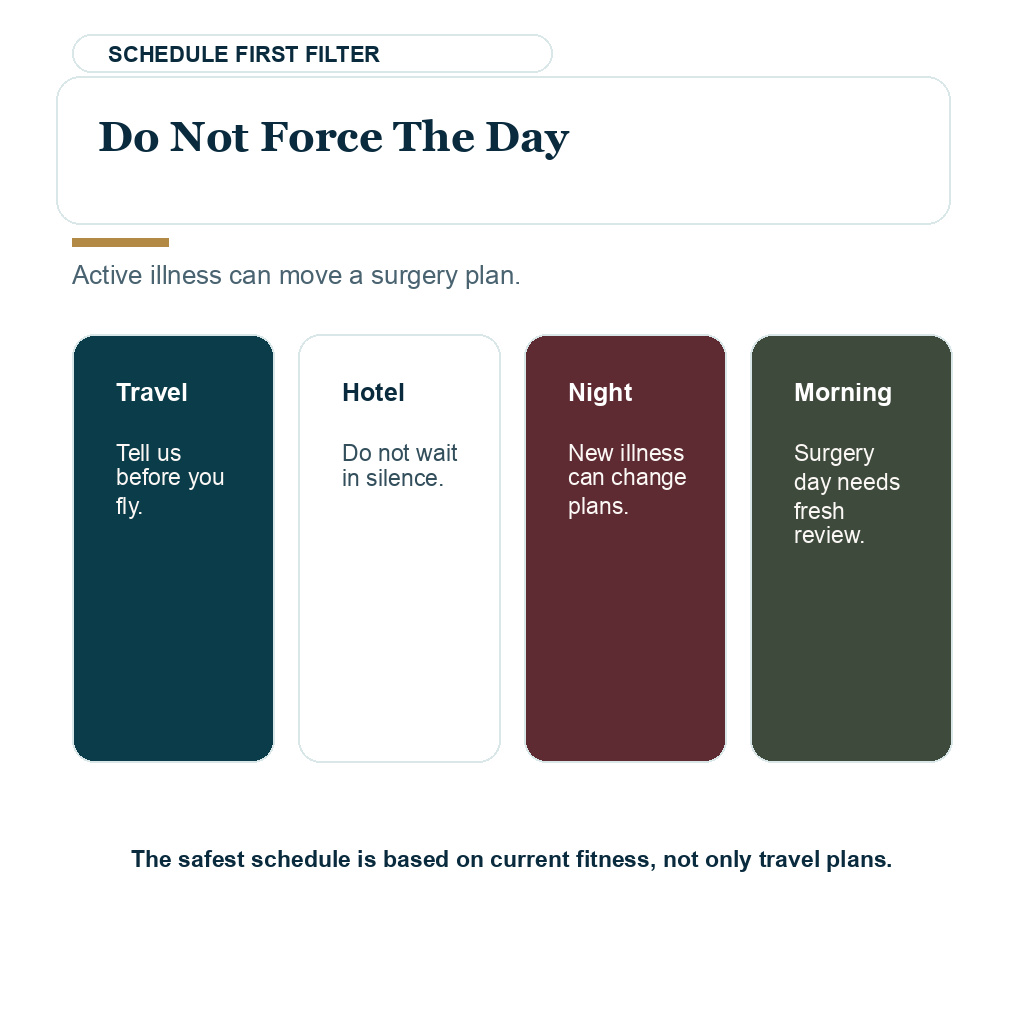
If food poisoning starts before your hair transplant, tell the clinic before you leave for surgery. Active vomiting, repeated diarrhea, fever, dizziness, poor fluid intake, or severe weakness can make postponement safer than forcing the day.
If it happens after surgery, do not judge the problem only by graft fear. I need to know whether you can keep fluids and prescribed medicines down, whether there is fever or blood, whether you feel faint, and whether the scalp has fresh bleeding, rubbing, scratching, or direct trauma.
Food poisoning is a small phrase for a wide range of illness. One loose stool after an unfamiliar meal is different from a night of vomiting, cramps, sweats, and exhaustion during travel. Around a hair transplant, the label matters less than what the illness is doing to your body that day. The operation cannot be planned separately from how your body is coping that day. Someone who is dehydrated, feverish, or too weak to cooperate with aftercare is not in the same position as someone with mild stomach discomfort that is already settling.
Not every stomach upset needs to become frightening. What matters is separating ordinary graft anxiety from the symptoms that should change the schedule, trigger local medical care, or at least prompt a direct clinic update.
Handling sickness before surgery
If vomiting or diarrhea begins before the procedure, do not hide it because the flight is booked or the hotel is paid. The clinic needs the current picture, not the optimistic version from yesterday or the version you hope will be true by morning. A hair transplant takes time. You need to lie still, eat enough to tolerate the day, drink safely, follow instructions, and avoid sudden urgent bathroom trips during surgery. Severe stomach illness can disturb all of that.
Symptoms that start at the airport, on the flight, or in the hotel should be reported before you arrive at the clinic desk. The team can decide whether to delay arrival, send you for local care, or continue the plan.
I would review the surgery day before you come in if you are actively vomiting, repeatedly passing watery stool, feverish, weak, dizzy, or unable to keep fluids down. This sits in the same safety family as any other medical change after booking a hair transplant. A new illness is not a small administrative detail. It can change anesthesia comfort, blood pressure stability, medication tolerance, and basic cooperation during a long day.
If symptoms are mild and clearly improving, the clinic may ask for timing, temperature, fluid intake, stool frequency, vomiting frequency, and any medicine already taken. The answer is not always cancellation. The decision depends on severity and direction. One episode yesterday with normal eating today is different from still losing fluids on the morning of surgery.
Dehydration matters more than the label
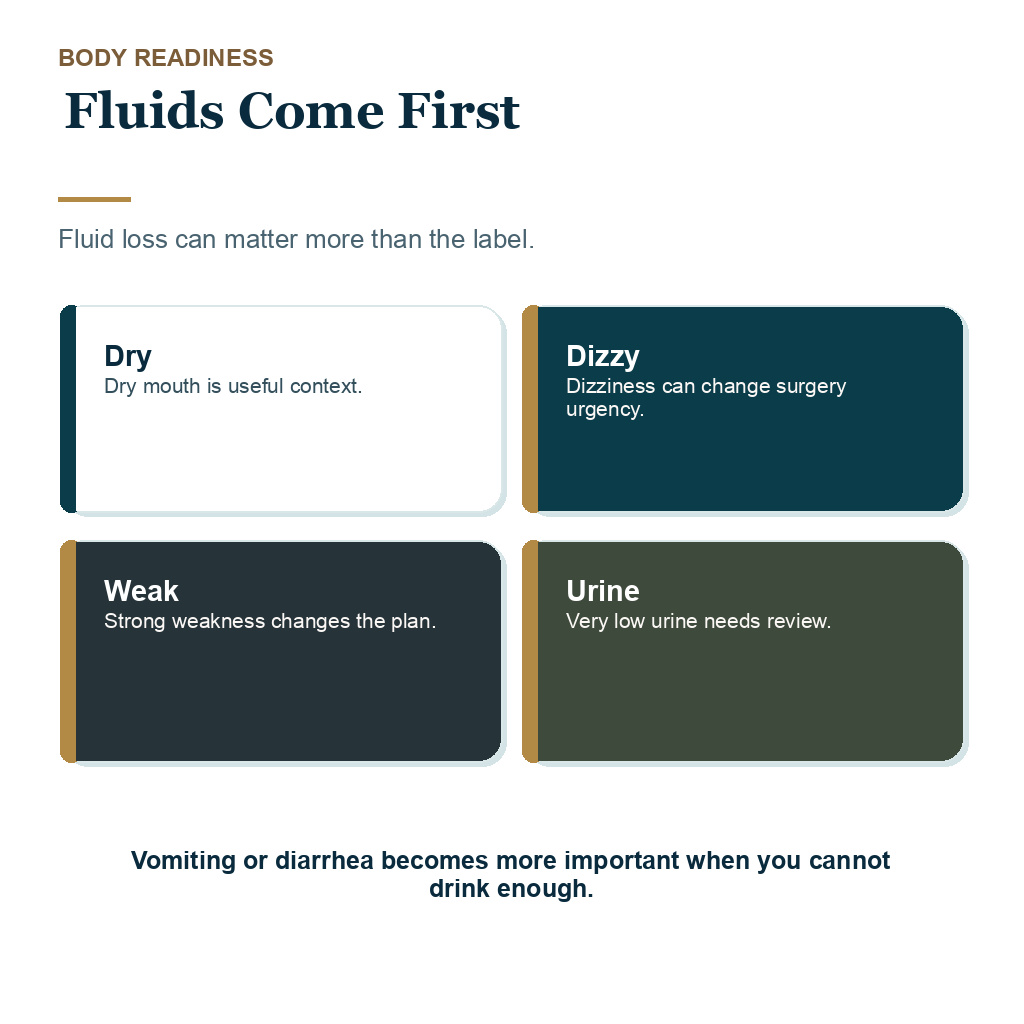
The main medical concern is not whether the illness came from food, a virus, or travel stress. The concern is whether fluid and electrolytes are being lost faster than they are replaced. Vomiting and diarrhea can leave you lightheaded, dry mouthed, weak, or unable to tolerate tablets. That matters before surgery and in the first days after surgery.
For hair transplant recovery, hydration is supportive rather than magical. Drinking water does not glue grafts in place. Water and electrolytes after FUE matter because they help you feel steadier, tolerate meals and medicines, and notice whether symptoms are settling. With food poisoning, the added problem is active fluid loss, possible fever, and medicine that may not stay down.
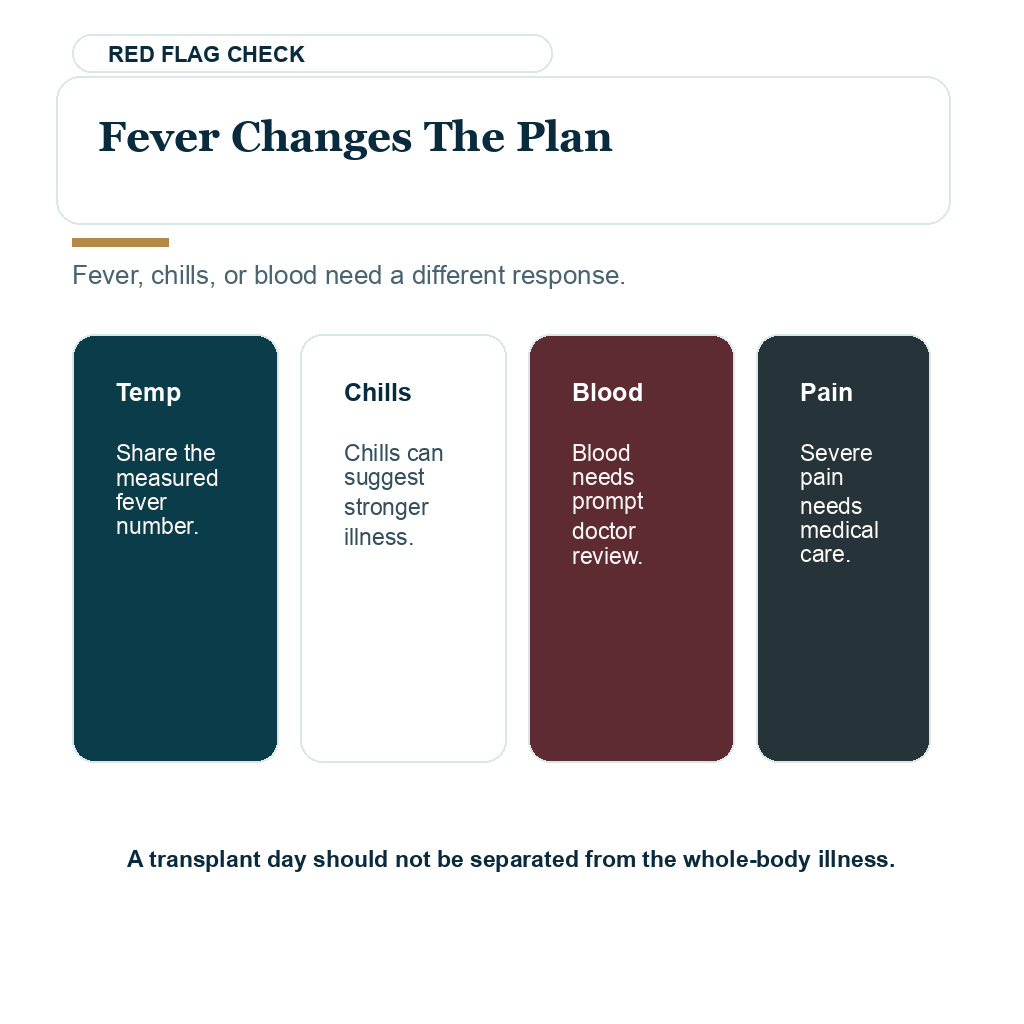
Oral rehydration drinks can help when fluid loss is significant, but the clinic should not become the only medical contact if the illness is severe. Severe weakness, confusion, fainting, very low urine output, vomiting so often that fluids will not stay down, blood in diarrhea, or diarrhea that lasts more than a few days are warning signs. A high fever such as 38.9 C (102 F) needs medical review in a stomach illness. After FUE, I also want fever around 38 C (100.4 F) or higher reported promptly, especially when it repeats, comes with chills, or appears with scalp redness, discharge, worsening pain, or dehydration.
Vomiting after FUE is mainly a pressure and safety question
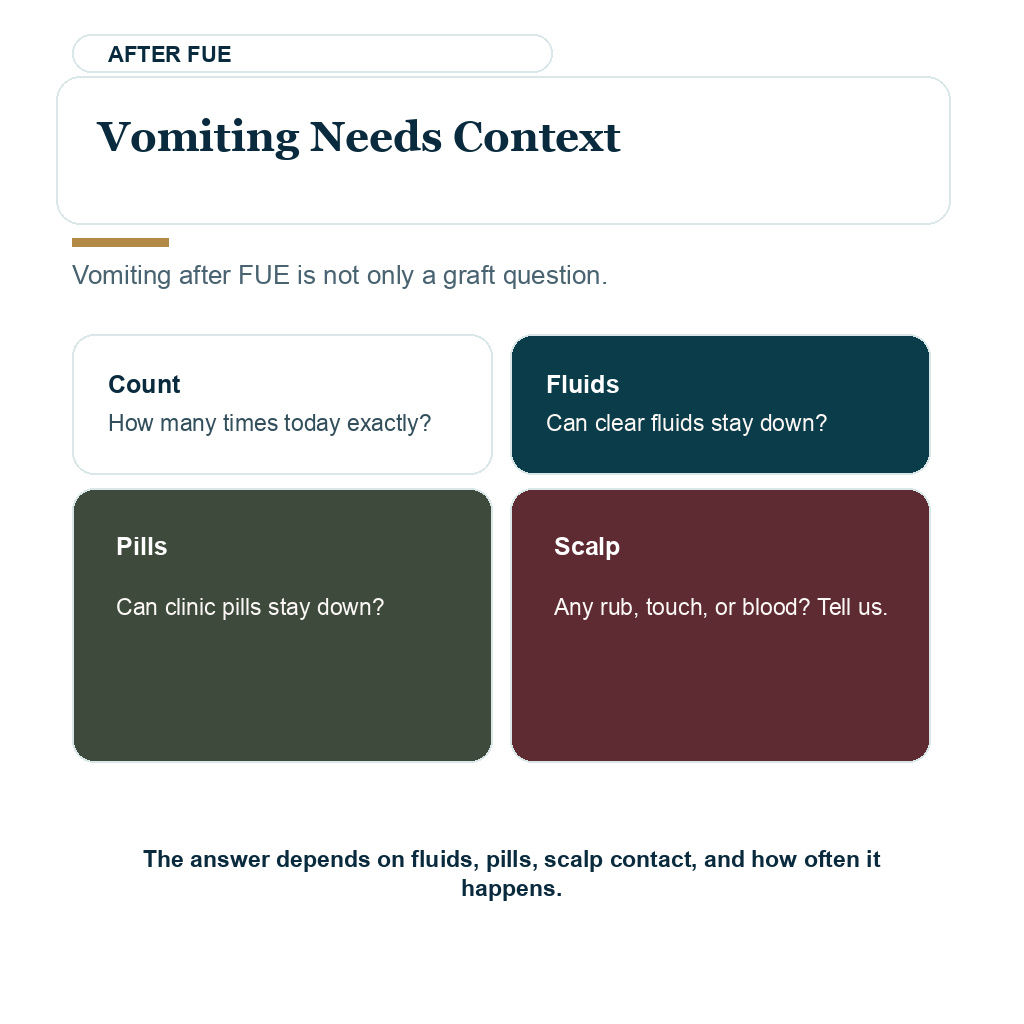
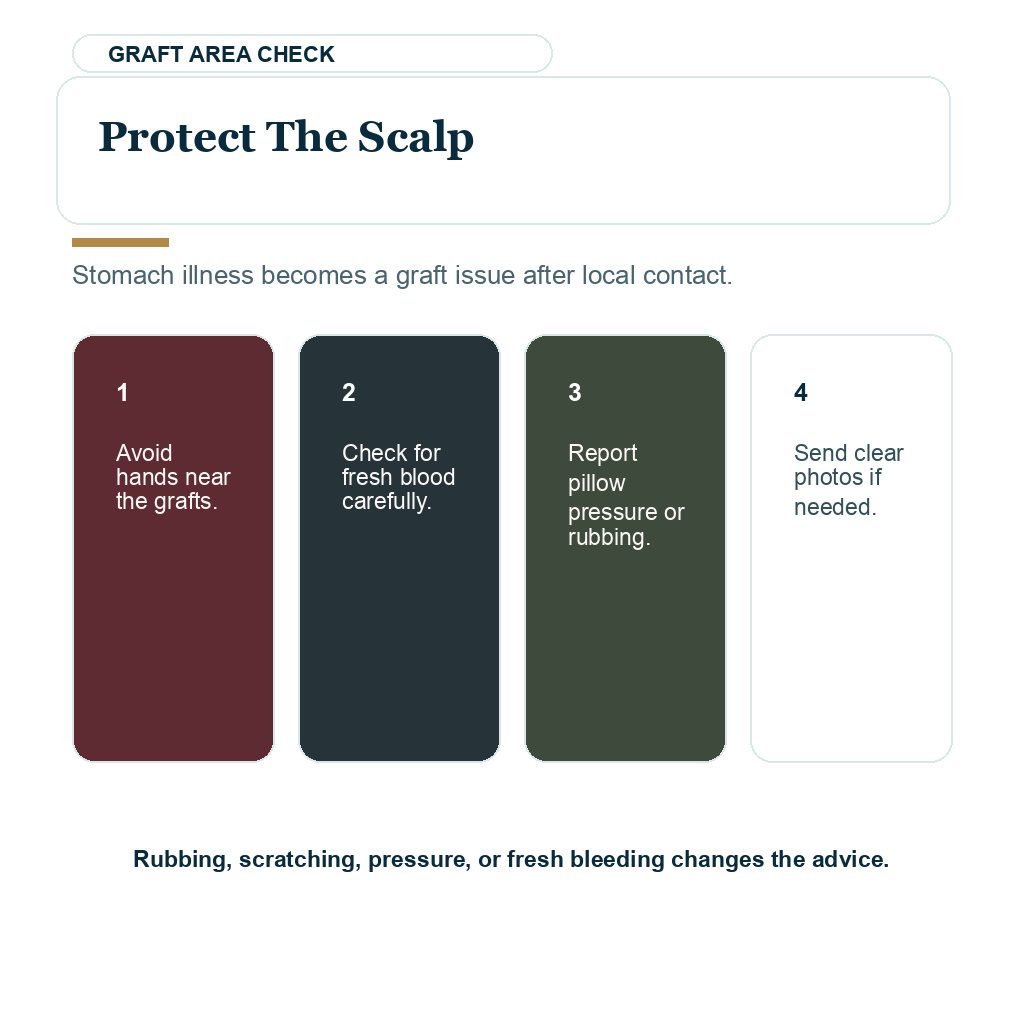
Vomiting after FUE creates a very specific fear. The worry is that retching will push grafts out or ruin the hairline. I first separate abdominal strain from actual scalp contact. A head impact, fresh bleeding, rubbing, scratching, wiping, or a sudden hit to the recipient area changes the concern.
With vomiting after hair transplant, I look at scalp contact and bleeding, not only nausea. Retching itself is uncomfortable and can increase pressure for a moment, but the more useful question is whether the recipient area was touched or injured. If there is no contact, no new bleeding, and you can settle, the graft risk is usually not the same as a direct scrape or trauma.
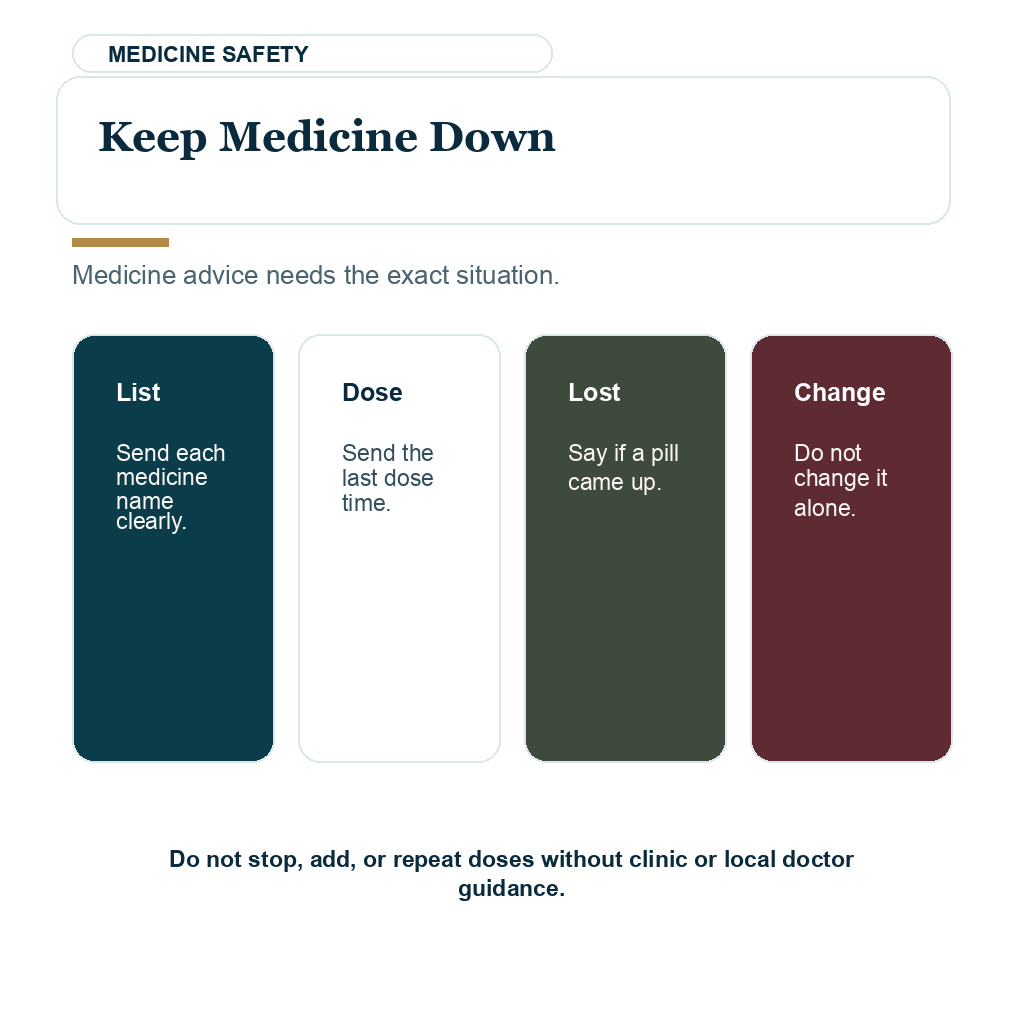
That does not mean repeated vomiting should be ignored. Vomiting can still change medicine and fluid safety. If antibiotics, pain medicine, or other instructions are being vomited back up, send that detail in the update. Say which medicine it was, the dose time, whether it stayed down, and whether vomiting happened once or kept repeating. Do not quietly repeat a dose, skip the rest of the plan, or add stomach medicine without review unless your doctor has already given that instruction.
Diarrhea after surgery can still change recovery
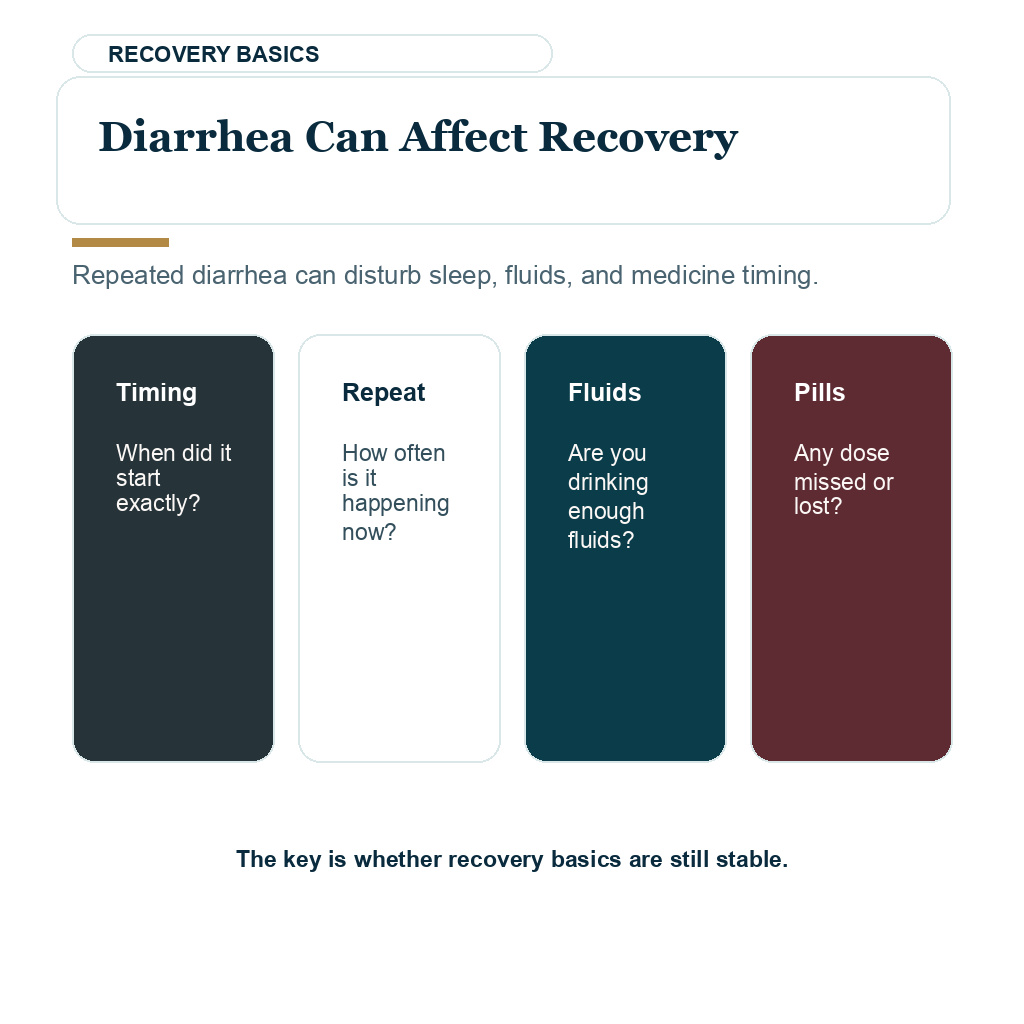
Diarrhea after surgery is often more about general recovery than direct graft damage. It can still matter because it may bring dehydration, poor sleep, weakness, and missed tablets. If you cannot leave the bathroom comfortably, you may also struggle to spray, wash, sleep upright, or travel home safely.
When diarrhea after hair transplant continues, I care less about the number alone and more about whether you can drink, urinate normally, stand without dizziness, eat a little, and keep prescribed medicine down. Those answers are more useful than the word diarrhea alone.
Some people take over-the-counter diarrhea medicine without telling anyone. That can be reasonable in some mild situations, but it is not a universal answer. Bloody diarrhea, fever, severe abdominal pain, recent antibiotic use, dehydration, or worsening illness should not be covered up just to keep a travel plan moving. At that point, update the clinic and seek local medical advice when warning signs are present.
Do not use diarrhea medicine, anti nausea tablets, or antibiotics to look well enough for surgery without saying so. Medicine can change the symptoms the team sees, while the illness may still affect fluids, meals, and recovery instructions.
Symptoms that can change the plan
Several symptoms move the issue out of ordinary aftercare anxiety. Fever suggests more than a simple settled stomach. Blood in diarrhea needs medical attention. Faintness or repeated dizziness can mean dehydration or instability. Severe weakness can make even simple recovery instructions difficult.
After a transplant, fever also raises a separate question. Is it coming from the stomach illness, another infection, or the scalp? The warning signs in fever after hair transplant help separate feeling generally unwell from a surgical site concern. Scalp pain that is worsening, spreading redness, pus, or unusual swelling belongs in the clinic update, especially if fever is present.
Dizziness belongs in the same practical safety group. If you feel faint, do not force a shower, bend over for luggage, or rush through airport movement. An early message with a clear symptom list is safer than a late photo after a fall. The body safety warning applies to fainting and dizziness after hair transplant, where the body may be unstable before the scalp is the main issue.
Travel illness can change the hair transplant plan
Food poisoning during travel has extra pressure because you are away from home. There may be a flight, hotel checkout, translator timing, or family member waiting. That pressure can make people underreport symptoms. From a clinical point of view, the travel plan should not overrule the body.
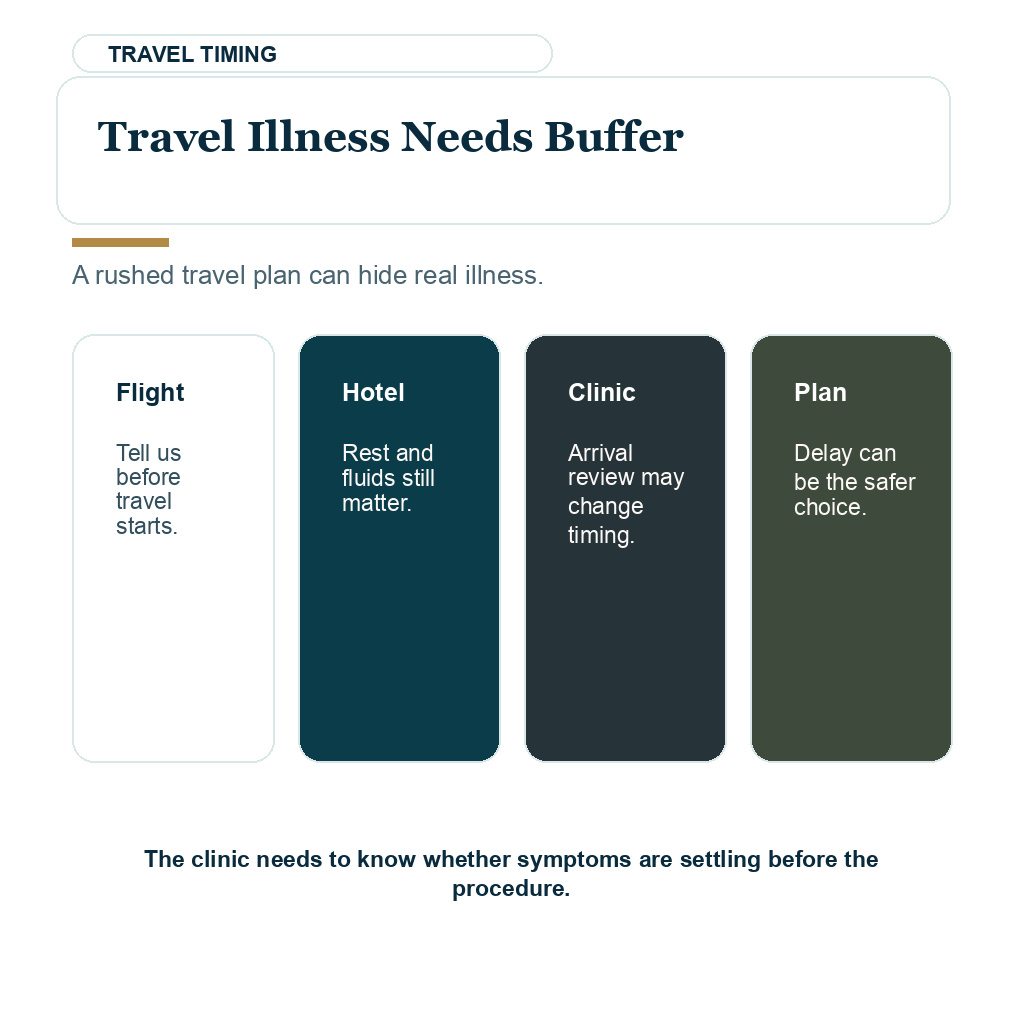
If illness starts before the operation, send the clinic a concise update before leaving for the clinic. If it starts after surgery, send the update before making difficult travel moves. A long transfer or flight is harder when you are vomiting, dehydrated, feverish, or urgently using the bathroom. At that point, a travel adjustment before the flight home can be safer than treating active illness as ordinary travel fatigue.
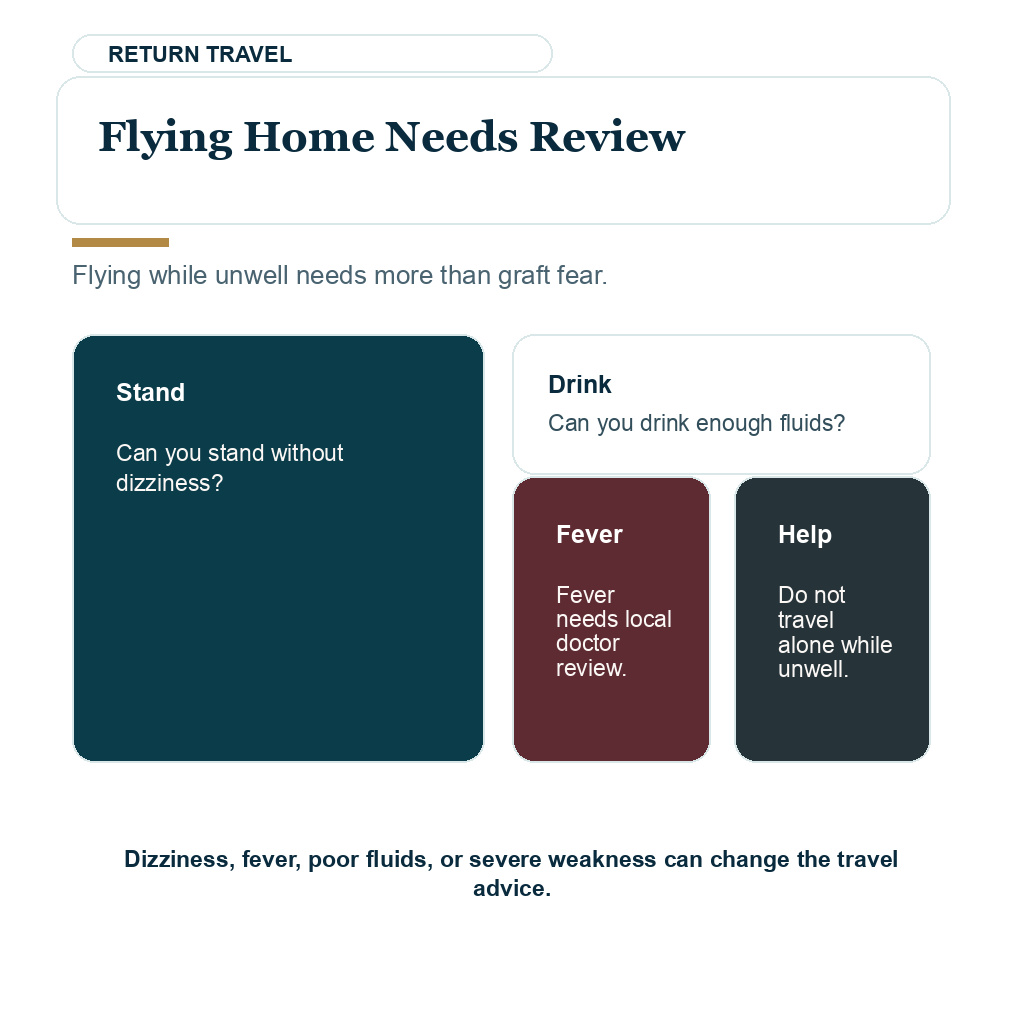
Think in practical terms before flying home. Drinking, standing in lines, keeping medicine down, and protecting the grafts during sudden bathroom movement all matter. If faintness, fever, poor intake, or repeated vomiting is still active, local medical review may need to come before airport movement. Those practical details are more useful than trying to prove that the stomach problem is unrelated to the transplant.
The schedule decision should be medical, not rushed
First name where you are in the schedule, then send the facts that change safety. Vomiting or diarrhea, fever, fluid intake, medicine tolerance, scalp contact, and travel pressure do not all mean the same thing.
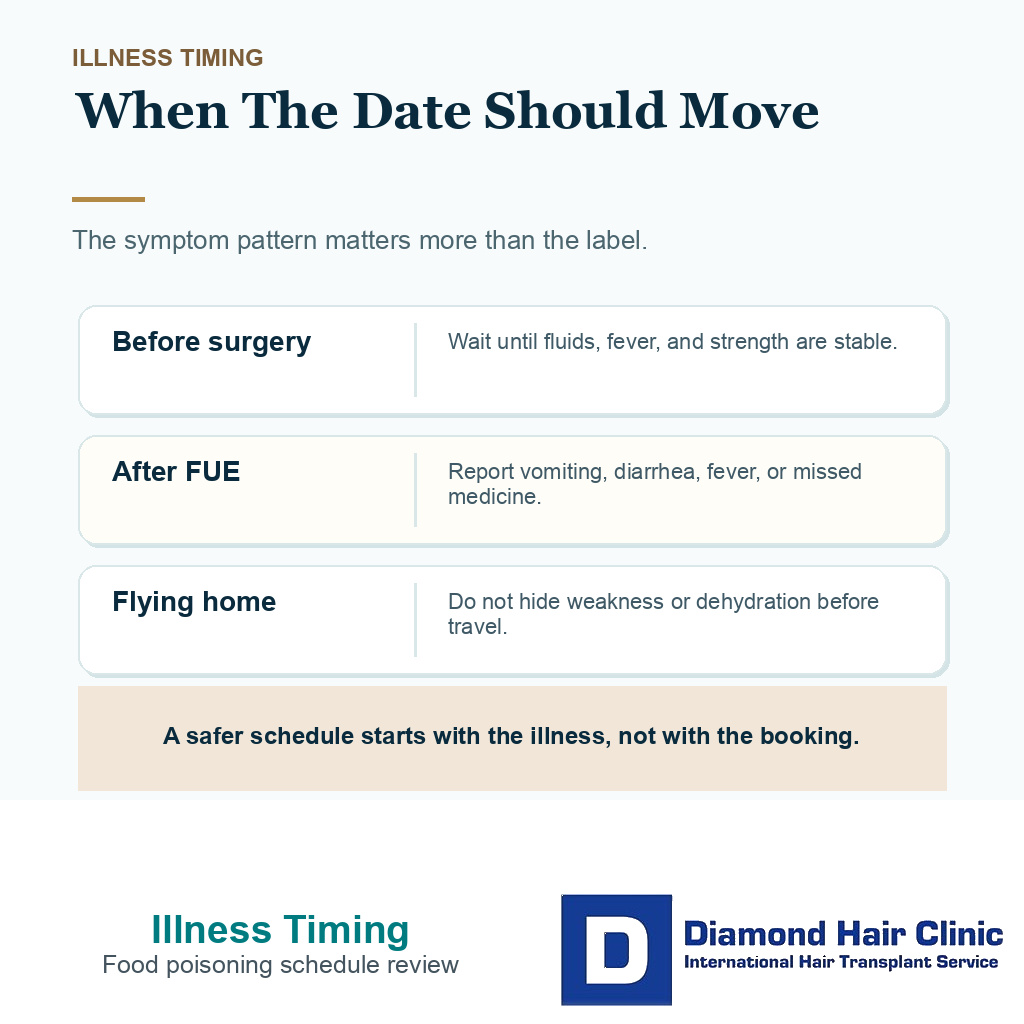
Before travel or surgery
Contact the clinic before travel if vomiting, watery diarrhea, fever, dizziness, or poor fluid intake is still active. Include the start time, last vomiting episode, stool frequency, temperature, fluids, and medicine already taken. The schedule should be reviewed before you arrive, and postponement can be the safer medical decision.
Surgery day symptoms
If you cannot reliably eat, drink, lie still, tolerate medicine, or avoid urgent bathroom movement, the day needs review before surgery starts. Current symptoms, direction of change, fever, hydration, and morning medicine matter more than the original flight, hotel, or booking pressure.
First week after FUE
After FUE, send two tracks of information. Give the stomach symptoms, medicine tolerance, hydration, and fever status, then add scalp facts only if there was contact, bleeding, unusual swelling, or possible impact. That helps the clinic judge general illness and graft contact risk without treating every symptom as graft loss.
Flying home while unwell
Before a transfer or airport wait, describe bathroom urgency, faintness, poor intake, fever, weakness, and whether symptoms are settling. If you cannot drink, stand in lines, keep medicine down, or protect the grafts during sudden bathroom movement, local medical review or travel adjustment may need to come before the flight home.
Details that help the clinic decide
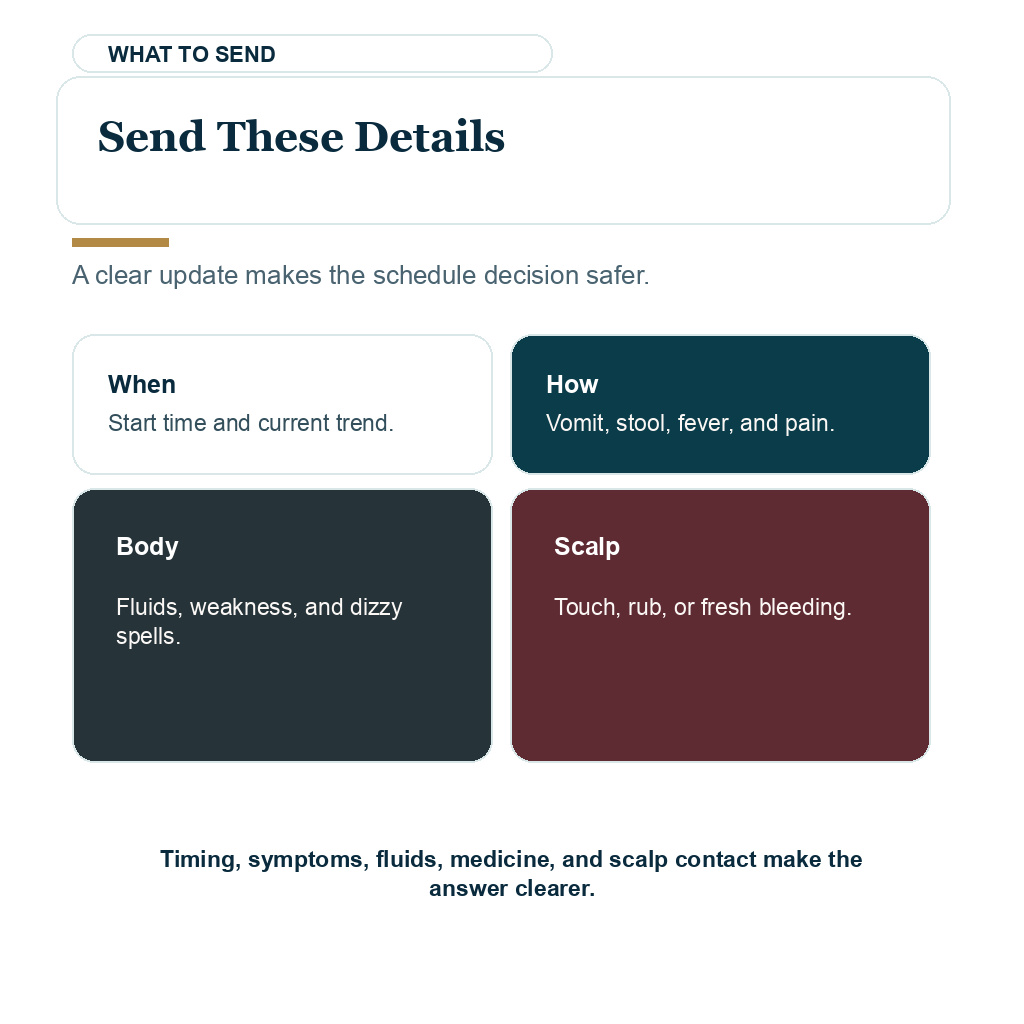
A useful message is short, but it must contain the right facts. Send when symptoms started, the number of vomiting episodes, the number of diarrhea episodes, whether there is fever, whether there is blood, whether you can keep fluids down, whether you have urinated normally, and whether you missed any prescribed medicine.
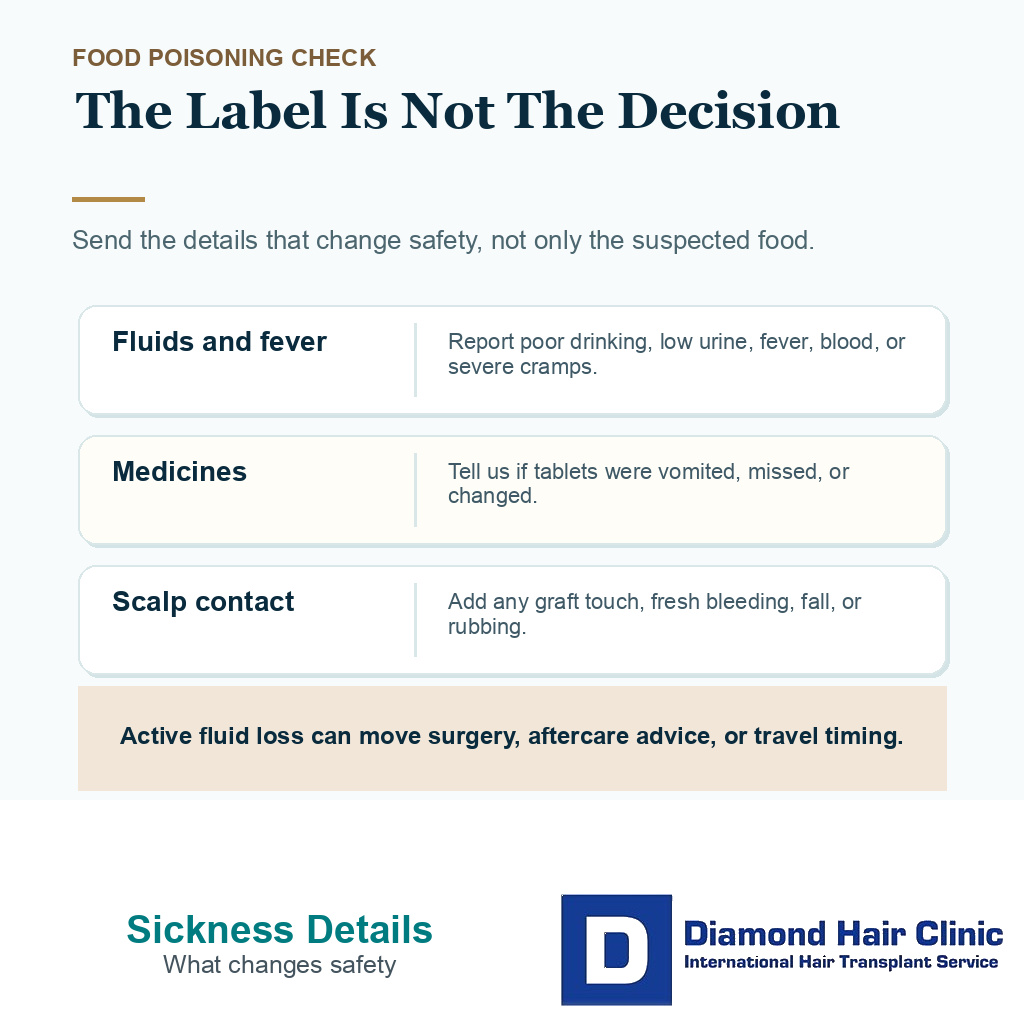
Food poisoning matters most when fluid loss, fever, medicine tolerance, or scalp contact changes the safety picture.
If surgery has already happened, add scalp information. Mention any direct hit, rubbing, scratching, bleeding, or unusual swelling. Share clear photos only when there is a scalp concern or when the clinic asks for them. Do not flood the phone with random images. Give the doctor enough information to separate graft trauma, general illness, and medicine tolerance.
If you are already in the follow up period, use the usual clinic channel and keep the message easy to read. Clear timing matters in hair transplant follow up after surgery because the surgeon has to judge symptom order, scalp findings, and medicine tolerance together. A clean symptom timeline is often more useful than a worried paragraph.
Use the symptom check to send the right facts
Before asking whether the date can stay unchanged, name the moment clearly. State whether you are before surgery, on surgery day, in the first week after FUE, or trying to fly home. That does not replace clinic review, but it helps you send the right update before the schedule, medicine, or travel decision is made.