



Jewelry, Piercings, and Nails Before FUE Need a Removal Plan
Before FUE, remove jewelry and watches that are easy to remove, raise difficult piercings early, and keep nails simple enough for monitoring and clean handling. The best plan is not dramatic. It is a quiet removal plan before the room becomes busy, not a last minute search for what can stay on.
Patients often think about graft numbers, anesthesia, hotel timing, and flight plans, then arrive with a ring that will not come off, a fresh piercing, long acrylic nails, or a watch they keep reaching for. Those are small details, but a long hair transplant day is built from small controlled steps. If one item affects positioning, hygiene, monitoring, communication, or movement, I want to know before the first medical step begins.
Remove what is simple before the clinic day
Start with the easy category. Rings, watches, bracelets, necklaces, loose earrings, hair clips, and detachable accessories should usually stay at the hotel or with a trusted companion. If you bring them to the clinic, they should not become part of the procedure space. This belongs with what to bring on FUE surgery day. The room works better when useful items are separated from clutter.
The reason is practical, not moral. Most jewelry is a room preparation issue, and each item carries a different level of concern. The procedure has different stages. There is planning, shaving if needed, local anesthesia, donor extraction, graft handling, implantation, breaks, instructions, and the final review. A watch that is harmless at breakfast can become something you keep checking while the team needs you still.
Do not leave tight rings for the morning of surgery if your fingers swell during travel. Remove them the day before if that is easy. If a ring is already tight, do not injure the skin by forcing it. Raise the problem before travel so it can be solved calmly, not while the team is preparing the room.
Piercings need an early disclosure plan
Piercings deserve a separate discussion because removal is not always simple. A healed ear piercing that you remove every night is different from a new cartilage piercing, a nose ring that needs tools, an embedded stud, an irritated piercing, or jewelry close to where the head will rest. A piercing may not be in the transplanted area and still affect comfort or positioning.
List ear, nose, eyebrow, lip, scalp, and neck piercings before travel. Say whether the piercing is new, painful, infected, hard to remove, or likely to close quickly. Do not assume that tape, plastic retainers, or a rushed workaround will be acceptable. The answer depends on the exact item, where it sits, whether it touches the working area, and what kind of monitoring or positioning is planned. A raised scar or keloid history from a piercing belongs in the medical note, even when the jewelry itself is no longer present.
This is especially important when lying face down during FUE is part of the extraction plan. Earrings, studs, necklaces, and facial jewelry can press against a headrest or distract you when you need to stay still. If a patient starts adjusting jewelry during donor work, the item has already become part of the surgical plan. Agree on the workaround before jewelry reaches the headrest.
Nails matter because monitoring and cleanliness matter
Nail polish, gel nails, acrylic nails, and very long nails are often treated as beauty details. In a clinic, they can also become monitoring and hygiene details. Some monitoring devices read through a fingertip. Some teams prefer at least one clear natural nail so color and circulation are easier to judge. Long nails can also make it harder to handle contacts, medicine packets, phone screens, or aftercare supplies without touching areas that should stay clean. Short nails also make the first nights easier, when a half asleep scratch can happen before you notice your hand moving.
There is no single nail rule that fits every clinic setup. The practical advice is to ask before surgery day. If you love gel or acrylic nails, avoid doing a fresh set right before FUE until the clinic has confirmed what they need. If monitoring is planned, keep at least one nail clear when asked. If polish is dark, chipped, lifting, or covering all fingers, do not wait until arrival to ask whether it should be removed. If a piercing or nail appointment is optional, leave it until the clinic has confirmed the procedure room requirements.
A similar practical issue appears with contact lenses after a hair transplant. A small personal habit can be fine when handling is clean and stable, and a poor idea when swelling, tiredness, or dirty hands make it less controlled. Nails are not about fashion in that moment. They are about clean handling and clear monitoring. Short nails lower the chance of scratching the scalp when you are tired or half awake.

Face, ear, and neck accessories change positioning
A hair transplant is not one fixed sitting position. You may be upright for planning, tilted for anesthesia, face down or partly turned for extraction, and positioned differently for implantation. Ear jewelry, necklaces, thick hair ties, hair clips, and hard accessories can become uncomfortable when the head or neck needs to stay in a controlled position. Front opening clothing after a hair transplant is easier here because nothing has to be pulled over fresh grafts.
Small pressure can become a serious distraction over time. A stud behind the ear can press. A necklace can pull when the neck turns. A hair clip can interfere with donor access. A tight bracelet or watch can become something you notice every few minutes. I want your attention on breathing, stillness, and communication, not on negotiating with an accessory.
If you expect sedation during a hair transplant, the removal plan matters even more. Sedation can affect memory, balance, and how reliably you follow instructions. The team should not discover a difficult piercing after medicine has been discussed or given.
Use the accessory board before surgery day
The easiest way to handle this is to sort each item into a simple lane. Remove it, disclose it, simplify it, or keep it outside the room. Do not create a fifth lane called I will decide later. Later usually means the room is already moving and the patient feels rushed.
Accessory removal board
Which small item changes the plan?
- Rings and watchesRemove before setup
- PiercingsDisclose early
- NailsKeep monitoring easy
- Phone and valuablesLeave clutter outside
Remove before setup
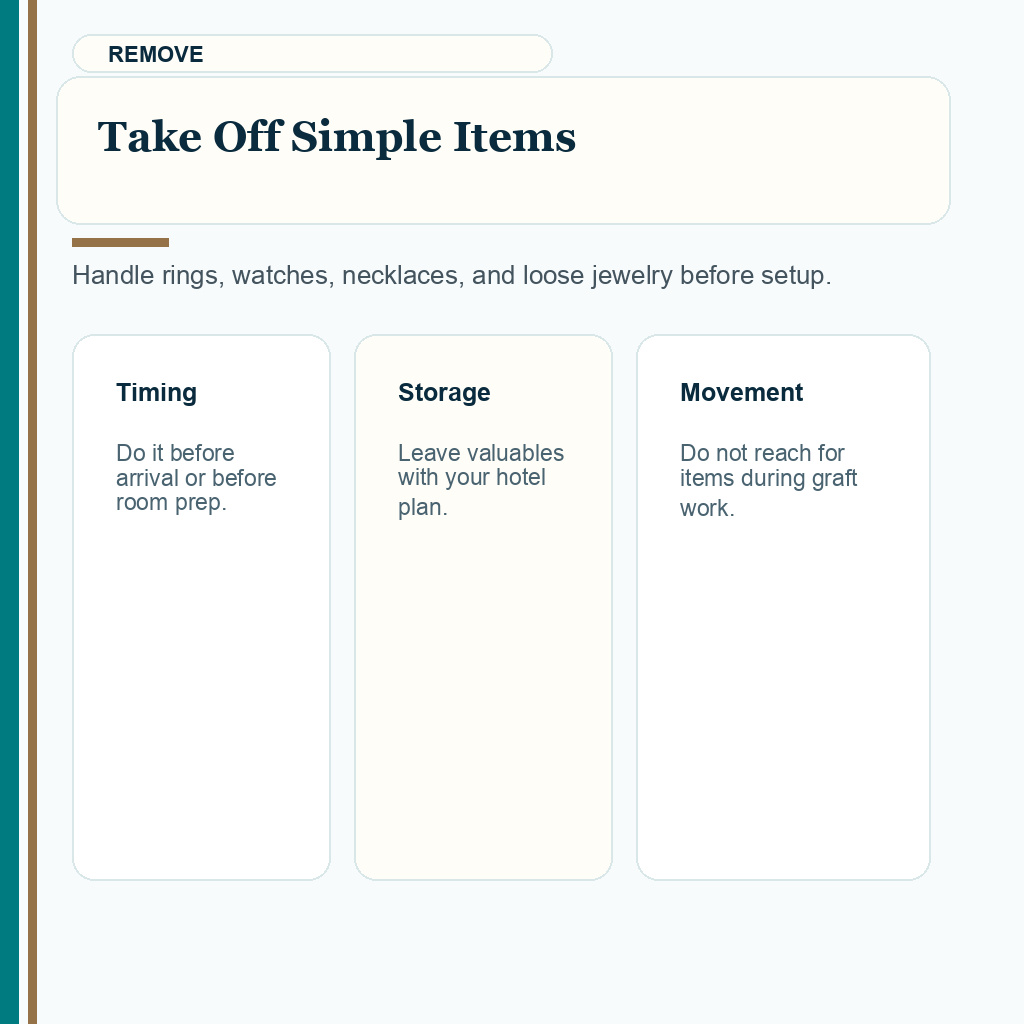
Room setup Take off simple rings, watches, bracelets, and necklaces before the room gets busy.
Before arrival If something is tight or stuck, message the clinic early instead of forcing it off.
Disclose early
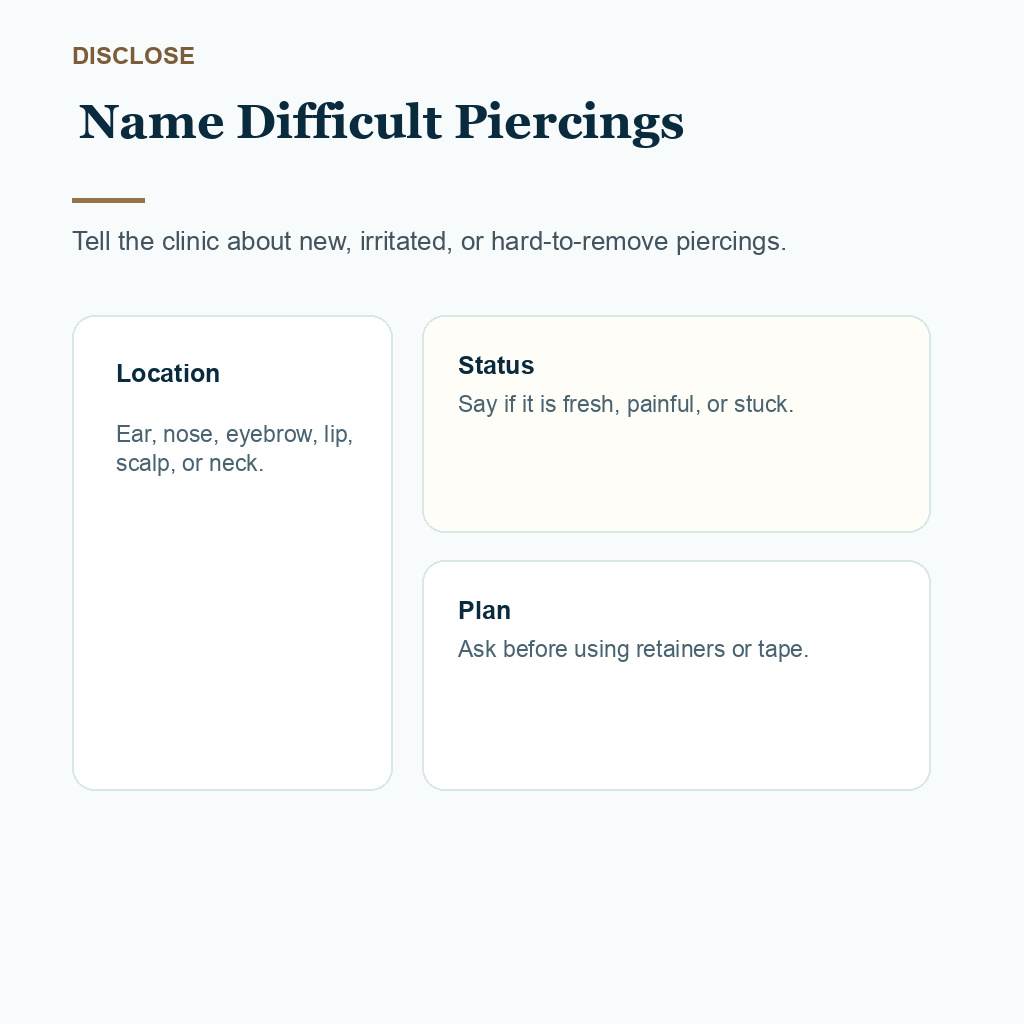
Positioning risk Name ear, nose, eyebrow, lip, scalp, and neck piercings, especially if they are new or hard to remove.
Clinic decision Confirm whether removal, a safe retainer, or a delay is needed before travel.
Keep monitoring easy
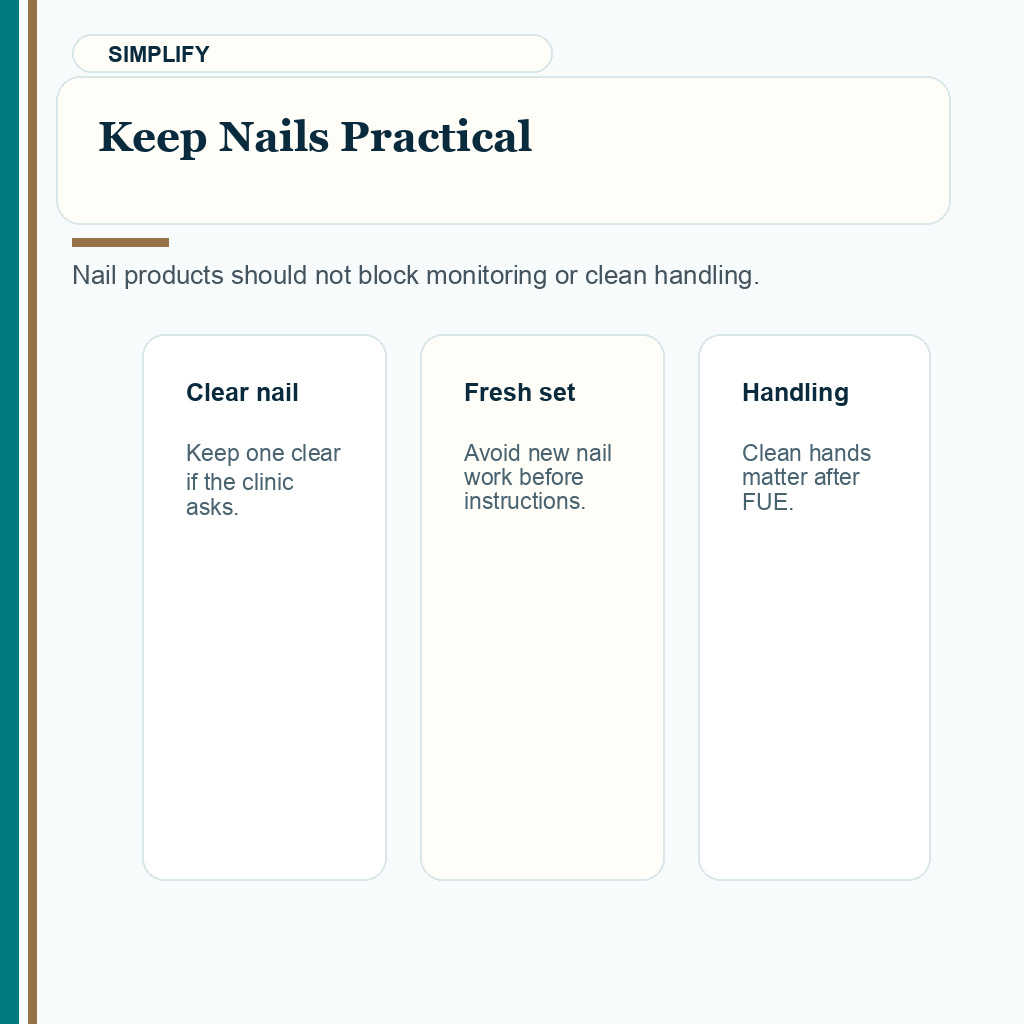
Monitoring Gel, acrylics, dark polish, or long nails can make clean handling and monitoring harder in some settings.
Before surgery Keep at least one nail clear if your clinic asks, and avoid new nail work right before surgery.
Leave clutter outside
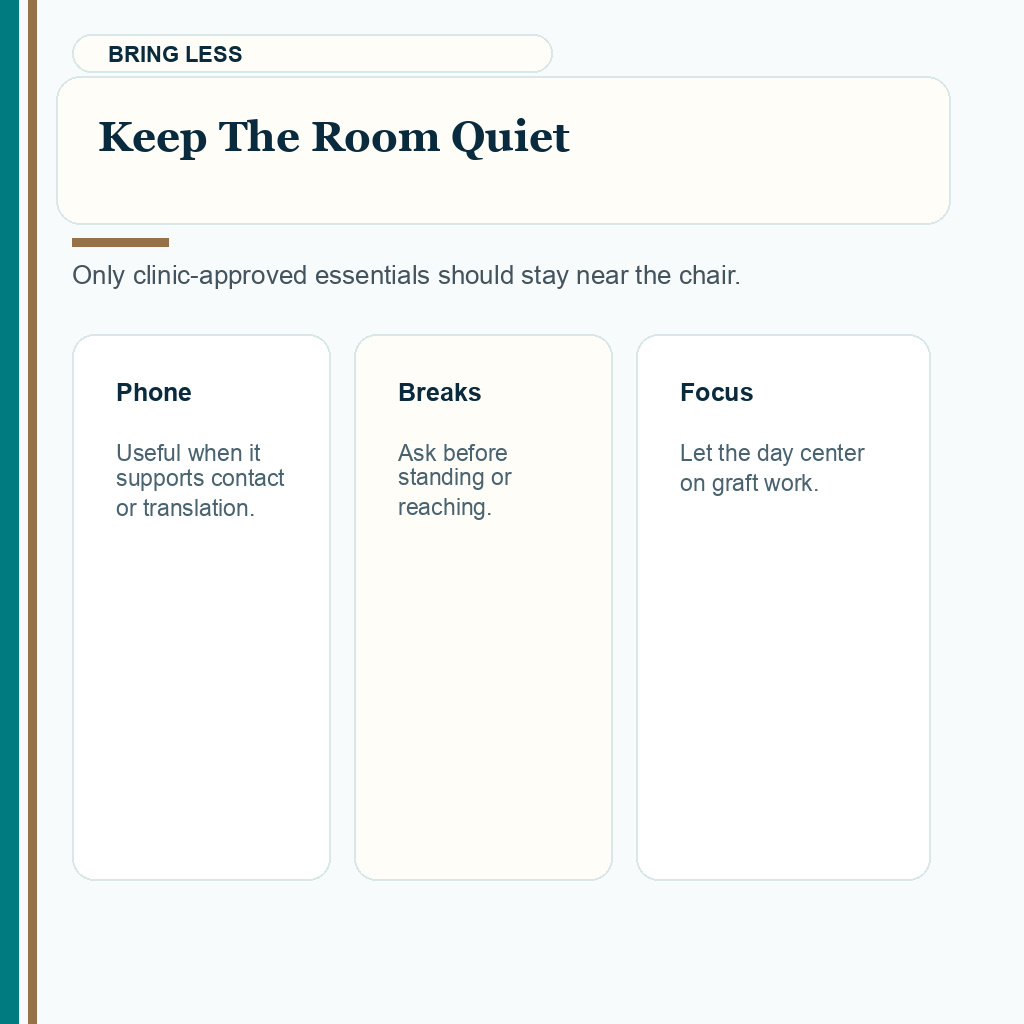
Movement control A phone can be useful, but jewelry, chargers, and loose valuables should not crowd the sterile routine.
Chair area Bring only the small items the team has allowed near the chair.
Use this board a few days before surgery, not on the clinic chair. If an item is easy to remove, remove it before arrival. If it is not easy, send the clinic a clear message. If it involves nails, ask what monitoring or hygiene setup the clinic uses. If it is only a valuable item, keep it outside the procedure space.
Bring fewer objects into the room
A phone can be useful because international patients may need translation, hotel details, emergency contact numbers, payment confirmation, or transport information. It becomes a problem when the patient keeps reaching, turning, checking notifications, or moving the hand near the recipient area. Watches, loose jewelry, and valuable objects add unnecessary movement too.
During bathroom breaks during FUE, movement should be planned before you stand. Personal items need a controlled pause too. Ask before moving. Let the team pause the step, secure the field, and tell you what to do. Do not reach for a watch, phone, ring, earring, or bag while graft work is active.
If you travel with valuable jewelry, plan who keeps it. If you travel alone, leave unnecessary items locked away according to your hotel safety plan. The clinic room is not the place to manage valuables, compare accessories, or decide what to remove.
Use the checklist below to prepare the personal item plan before arrival.
What if removal would be rushed?
A stuck ring, swollen finger, irritated piercing, or painful nail problem should not be handled aggressively on surgery morning. Forcing removal can create cuts, swelling, bleeding, or stress. If a piercing is fresh or infected, the issue may need medical judgment instead of a rushed answer.
Send the clinic the detail early. Say what the item is, where it is, whether it can be removed, whether it is new or irritated, and whether a professional piercer is needed. A photo can help when it does not show private identifying details. The goal is to decide whether removal, delay, modified setup, or outside medical care is needed before the surgery plan is active.
Do not use internet reassurance to override the clinic’s instruction. Hair transplant rooms differ in monitoring, anesthesia choices, positioning, and room sequence. The clinic that is responsible for your surgery day has to give the instruction for your case.
Handle accessories before they interrupt the room
Hairline design and graft range are not the only details that shape the day. A tight ring, a piercing that cannot be removed, dark nail products, contact lens needs, or loose valuables can slow the setup if nobody hears about them until the procedure room.
Hair transplant consent before surgery should cover these practical details in plain language. The team needs to know what can come off, what cannot come off safely, what may affect monitoring, and what may change positioning around the headrest and drapes.
I do not want an accessory question to become the loudest part of FUE. Remove the easy items early, disclose the difficult ones early, and keep the room focused on stillness, graft handling, and comfort.
Small FUE accessory questions
Can I keep a wedding ring on during FUE?
If it comes off easily, remove it before arrival and keep it outside the procedure room. If it is tight, do not force it on surgery morning. Message the clinic before arranging flights so the plan can be handled calmly.
Do I need to remove gel or acrylic nails before FUE?
Ask before surgery day. Some monitoring and hygiene routines work better when at least one nail is natural and clear, so avoid a fresh dark gel or acrylic set until the clinic confirms its preference.
Can I use a plastic piercing retainer?
Only use a retainer if the clinic has cleared it for your case. It can still affect positioning, cleanliness, or the setup around the headrest and drapes. Do not change jewelry at the last minute without telling the team.
What if a piercing may close if I remove it?
Message the clinic early, especially if the piercing is new, irritated, embedded, or difficult to remove. You may need a piercer’s help, a planned retainer, a delay, or a different timing discussion.
Where should I keep valuables on surgery day?
Bring fewer valuable items than you normally would. Leave unnecessary jewelry locked away according to your hotel safety plan or with someone you trust, and ask the clinic what can stay near you before the procedure room is prepared.
Read this review excerpt
He was very thorough in every little detail and I never felt pressure to do anything I wasn’t sure of.