



Never Hide Ashwagandha Before FUE
Do not start ashwagandha before FUE just to feel steadier, and do not keep taking it close to surgery without review if it is still in your routine. If you already use it, send the exact product, dose, last use, reason, medicines, medical conditions, and surgery date before travel or surgery day.
A single past capsule is usually a review detail, not a reason by itself to assume graft damage or cancellation. Active use, a new dose, symptoms, sedatives, sleep aids, alcohol, cannabis, blood pressure medicine, diabetes medicine, thyroid treatment, immune medicine, seizure medicine, liver symptoms, or an unclear label changes the review.
This is not about blaming you for a capsule. I want fewer unknowns on surgery day. Herbal products do not need drama, but they do need the same clear disclosure as medicines and other supplements.
It belongs in the surgery message, not in the background
Patients often mention prescription medicine but leave out ashwagandha because the label says herbal, natural, stress support, sleep support, testosterone support, or wellness. That is exactly why it should be disclosed. Marketing language does not replace a surgical review when sedation, blood pressure, sleep, or other medicines are part of the plan.
If you already take ashwagandha regularly, say so. If you bought it yesterday because you are nervous, say that too. If the dose was increased, the product is a blend, or the label is unclear, that also matters. For broader supplement timing, list supplements before hair transplant surgery with the rest of your preoperative details, and include ashwagandha by name.
Supplement stacks need one list, not separate guesses. Put ashwagandha together with sleep aids, gym products, hair vitamins, hormone related products, and tablets you use only sometimes.
Recent stopping still belongs in the message. Include the last dose and why you stopped, especially if sleepiness, stomach upset, anxiety, or a label concern is already being reviewed.
If you plan to keep taking the same supplement after surgery, include that plan too because the review is not only about the last capsule before surgery.
Mention the supplement before surgery instead of hoping it is too small to matter. After review, an old small detail may be no problem. A new product, an increased dose, symptoms, or a mixed label may need a different instruction. I am trying to keep the surgical day predictable, not looking for a reason to criticize you.
Natural does not mean irrelevant before an operation
Natural products can still affect sleepiness, stomach comfort, blood pressure, blood sugar, thyroid context, liver signals, or the way a patient feels on the day of surgery. They can also be mixed with other ingredients, especially when sold as stress, gym, testosterone, or sleep formulas.
I am not checking whether ashwagandha will make grafts grow better. I am checking whether the product could make you sleepy, nauseated, dizzy, hard to assess, or connected to abnormal lab results or medicine overlap.
The word “ashwagandha” is not enough. A bottle may contain different extract strengths, extra herbs, sedating ingredients, magnesium, melatonin, caffeine compounds, or other additions. Two patients can both say “ashwagandha” while taking very different products.
For medication before a hair transplant, the name alone is rarely enough. Dose, timing, reason, and medical background change the answer.
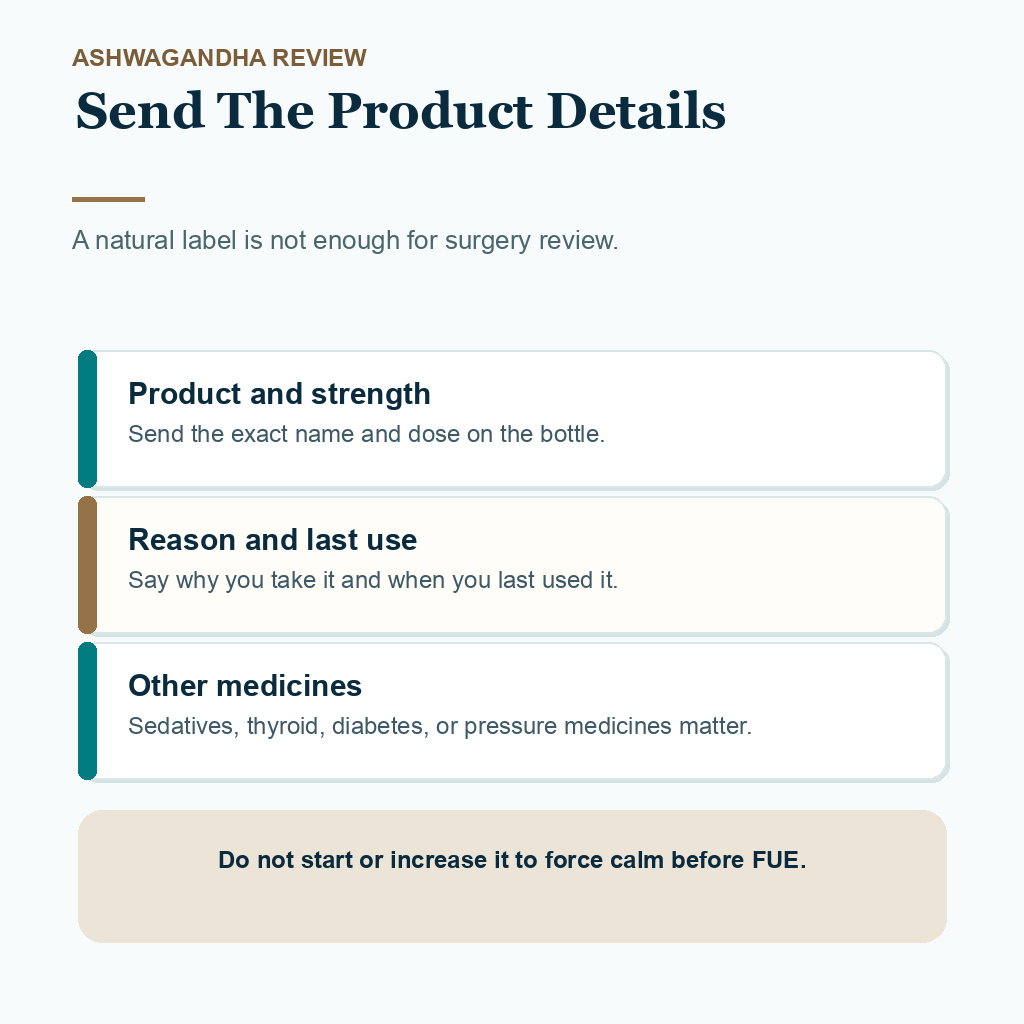
The exact product matters more than the herb name alone
When you message the clinic, send a photo of the front label and the ingredients panel if possible. Add the dose, how often you take it, when you last took it, why you take it, and whether anything changed recently. This is much clearer than saying “I take a natural supplement.”
Strength matters because many products list extract amounts differently. Timing matters because a product used months ago is not the same as a new capsule taken the night before surgery. Reason matters because ashwagandha used for gym recovery is a different conversation from ashwagandha used to force sleep or manage panic before travel.
If your product is part of a blend, list the other ingredients. If you are unsure what the label means, send the label instead of interpreting it yourself. If blood tests, liver enzymes, blood sugar, or general medical stability are already under review, connect that information in the same message. When lab context is relevant, blood tests before hair transplant surgery matter because stable numbers make the operation easier to plan.
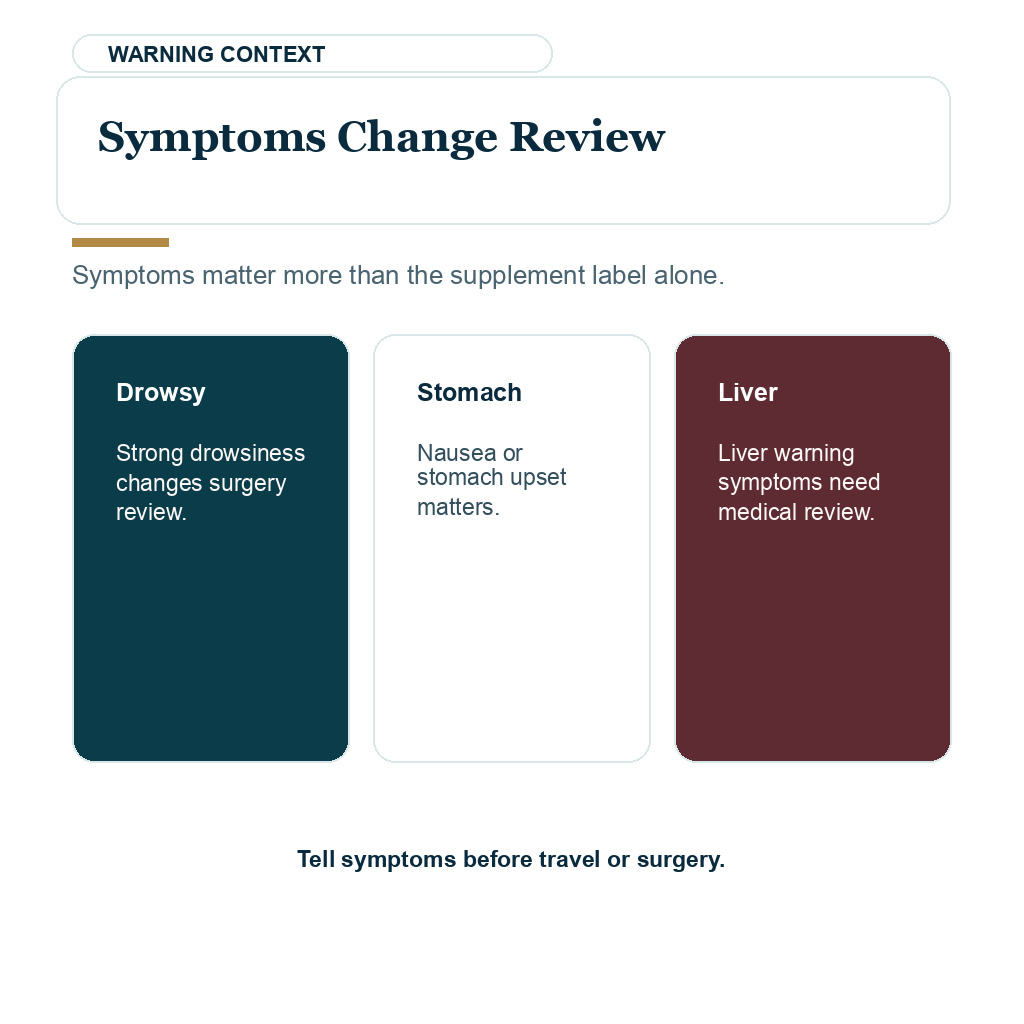
Drowsiness, stomach symptoms, and liver warnings change the review
Ashwagandha is not only a hair or wellness topic. Some people report drowsiness, headache, stomach upset, diarrhea, nausea, vomiting, or feeling unusually sedated. Rare reports of liver injury are also a reason to avoid treating the product as background noise, especially if a patient already has abnormal liver tests or new symptoms.
Do not diagnose liver problems from the internet. But mention yellowing skin or eyes, dark urine, itching, abdominal pain, unusual fatigue, persistent nausea or vomiting, severe diarrhea, or recent abnormal liver tests if they exist. Those details change the review much more than the supplement label alone.
If liver enzymes are already a concern, treat high liver enzymes and hair transplant planning as the broader medical question first. For the ashwagandha message, include the product in the same preoperative picture instead of leaving it out.
Ashwagandha review ladder
Use the product review ladder before travel
Choose the closest situation. The selected panel shows whether the question is simple, needs review before taking more, or should pause until the clinic answers.
Stable use is easier to review
A new dose creates uncertainty
Symptoms move the question up the ladder
Other medicines can change the answer
An unclear label is not a guesswork problem
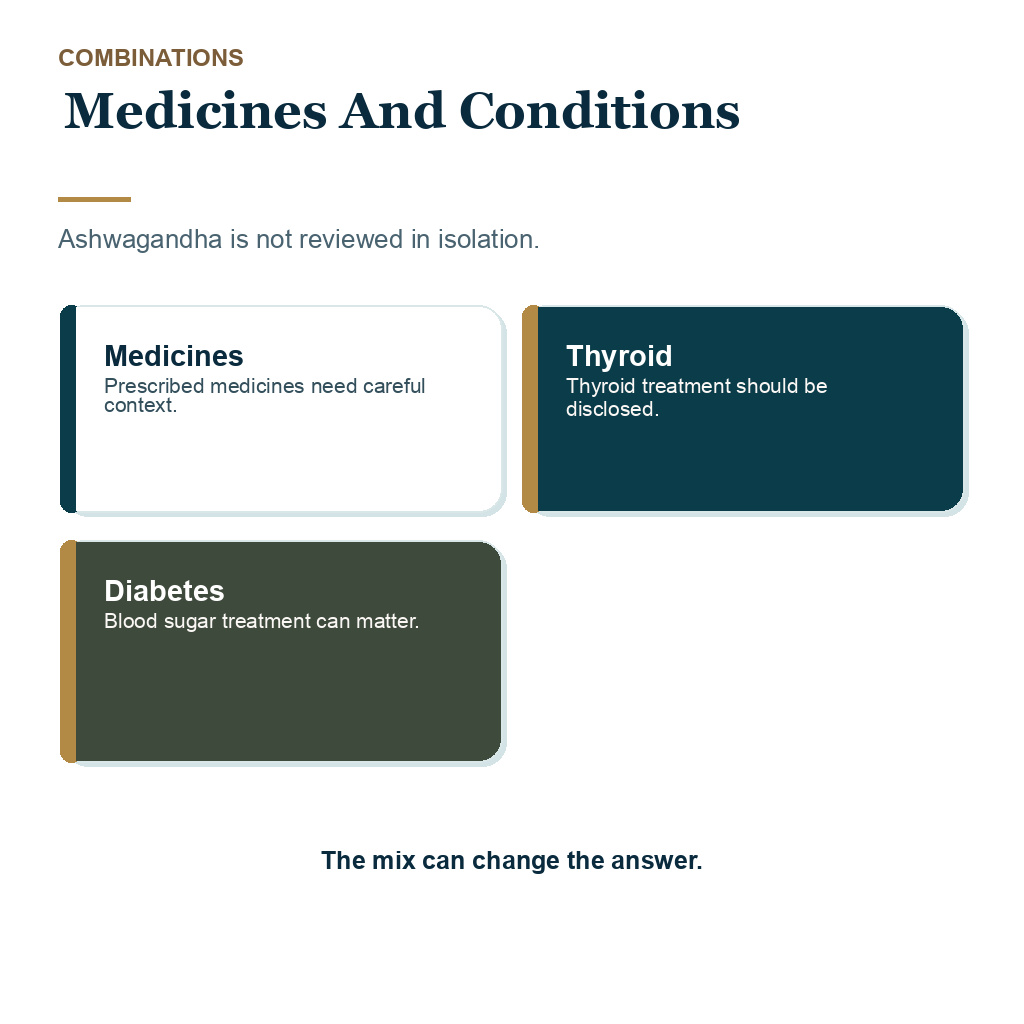
Medicines and medical conditions can make the answer different
The biggest mistake is looking at ashwagandha by itself when the real issue is combination. Sedating products, sleep aids, alcohol, cannabis, thyroid hormone, diabetes medicine, blood pressure medicine, immune treatment, immunosuppressants, seizure medicine, and liver concerns can all change the review.
FUE is usually done with local anesthesia, but local anesthesia does not make products added by the patient irrelevant. Drowsiness, dizziness, low blood pressure, blood sugar shifts, or unclear symptoms still matter when the surgical team is planning a long day.
If you take medication for blood pressure, send that context. Stable readings make FUE easier to plan, so blood pressure stability before hair transplant surgery should be part of the same message before the day starts.
If you use diabetes medicine, do not change it because of what you read about a supplement. Send the medication list and follow your prescribing doctor’s plan. Diabetes and hair transplant planning belongs with the medication list, not a separate guess about ashwagandha. The medicine boundary applies to thyroid medicine. If thyroid treatment is part of your history, connect ashwagandha to that context instead of treating it separately. For thyroid problems and hair transplant planning, stability matters more than a single supplement label.
If pregnancy, IVF, breastfeeding, autoimmune disease, organ transplant medicine, epilepsy medicine, or hormone sensitive prostate cancer is part of your history, say that in the same message. This may not apply to every patient, but it changes the safety review enough that it should not be hidden.
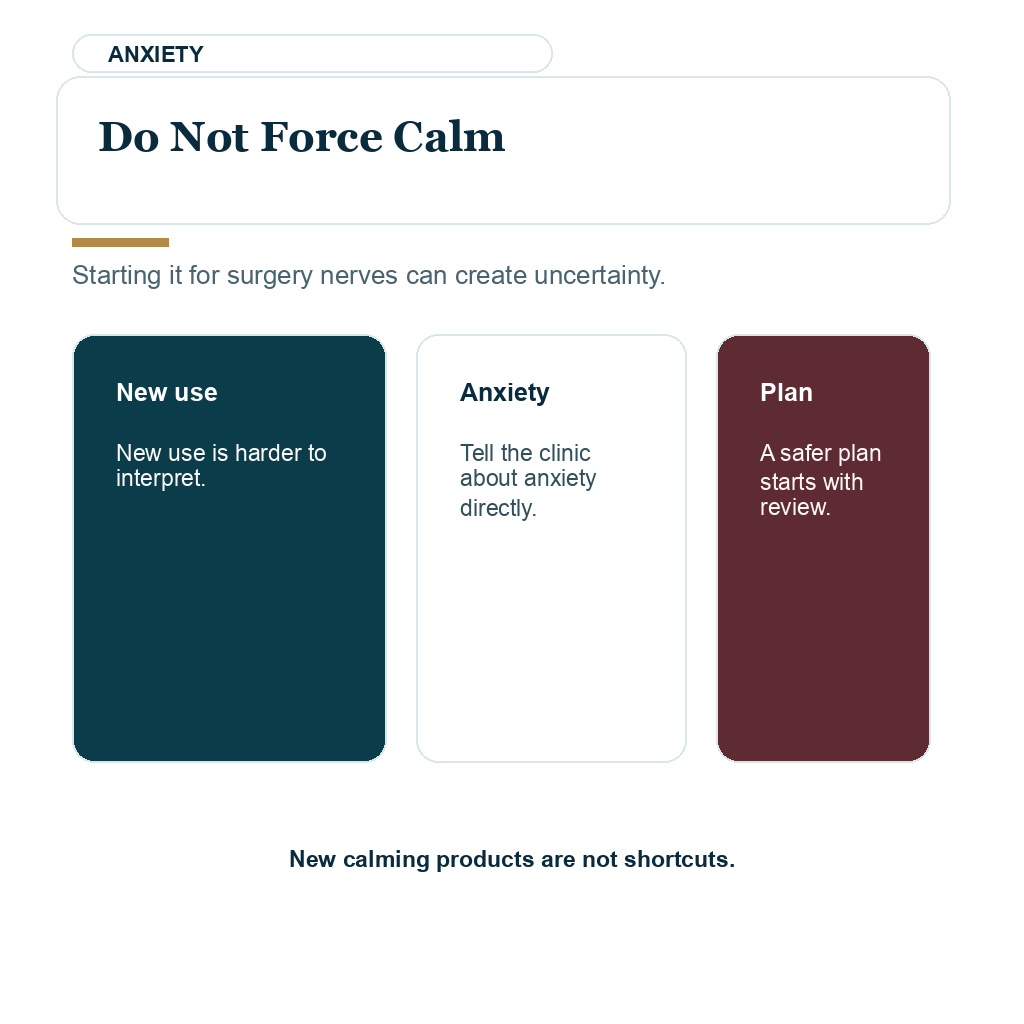
Avoid starting it just to steady yourself before FUE
Many patients ask about ashwagandha because they are anxious before surgery. I understand the feeling. Travel, surgery, photos, graft numbers, and the unknown result can make the final days feel heavy. But starting a new anxiety product right before FUE makes the day harder to interpret, not easier.
Do not start, increase, or mix ashwagandha to steady yourself before surgery without review. A new product can make you sleepy, nauseated, dizzy, or unsure whether a symptom comes from nerves, travel, food, sleep loss, or the supplement itself. That uncertainty is exactly what we try to reduce before surgery.
If anxiety is the real issue, say that directly. Being anxious before a hair transplant can be normal, but severe panic, poor sleep, or new sedating products may change whether the plan should pause. For procedure comfort or sedation questions, keep sedation during a hair transplant separate from taking products you decided to take on your own on your own.
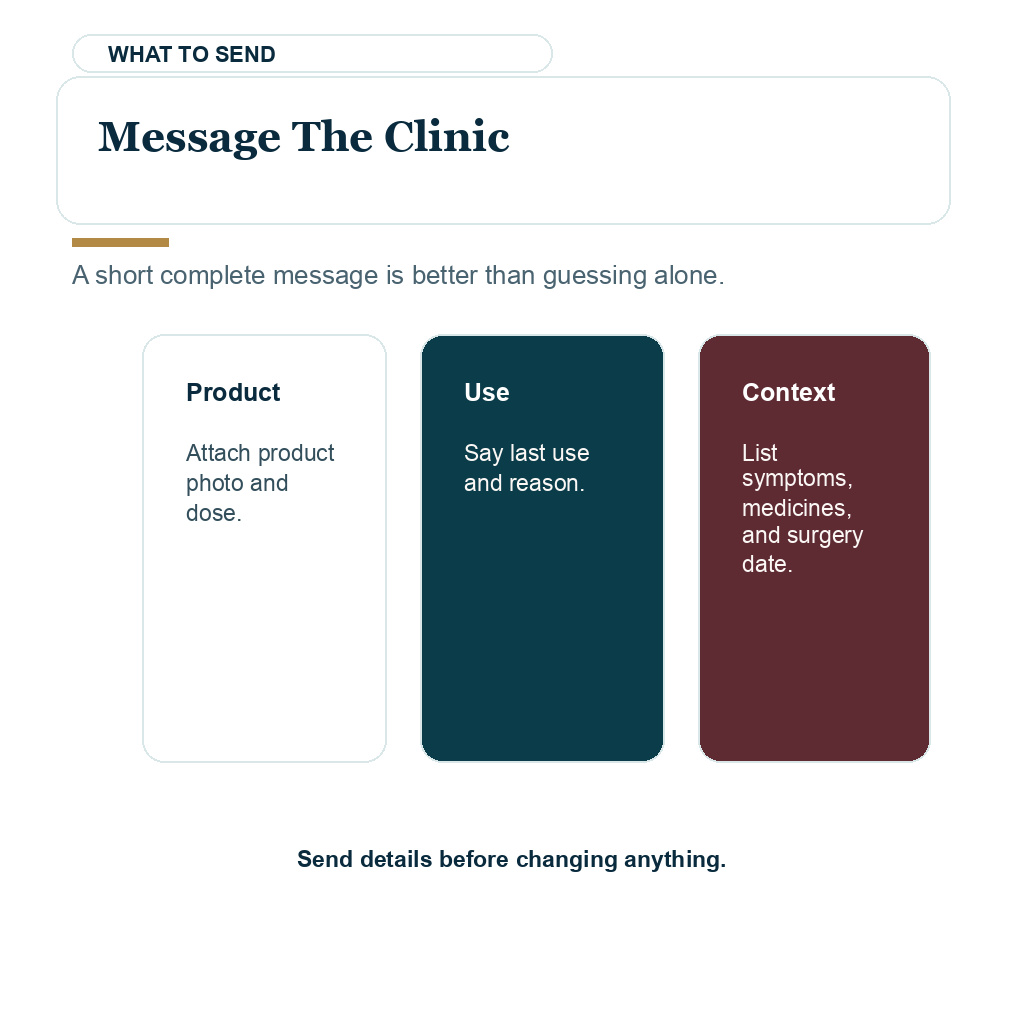
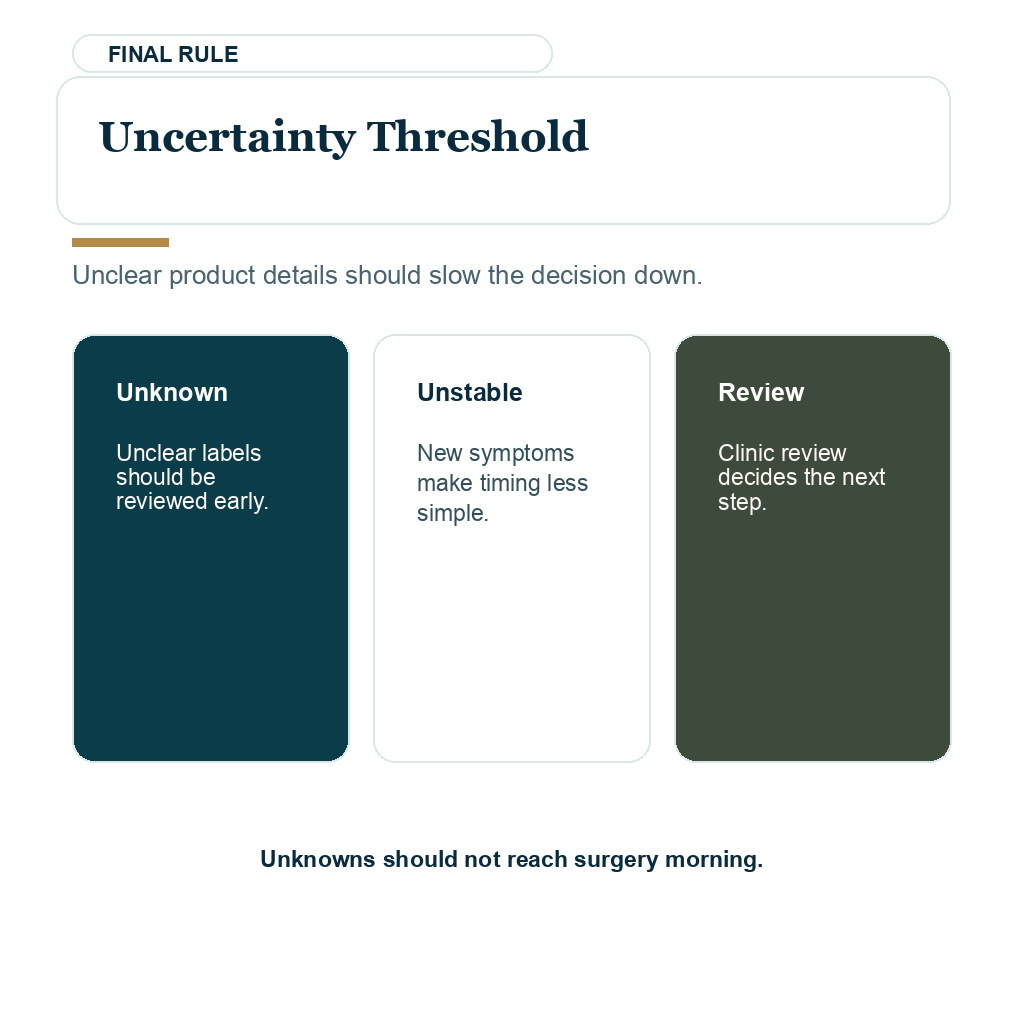
The 8 ashwagandha slides below keep the message practical. They separate disclosure, label details, last use and dose, symptoms, medicine or condition context, why not to start it to steady yourself, the message to send, and the uncertainty threshold. Swipe sideways or use the arrows one slide at a time.
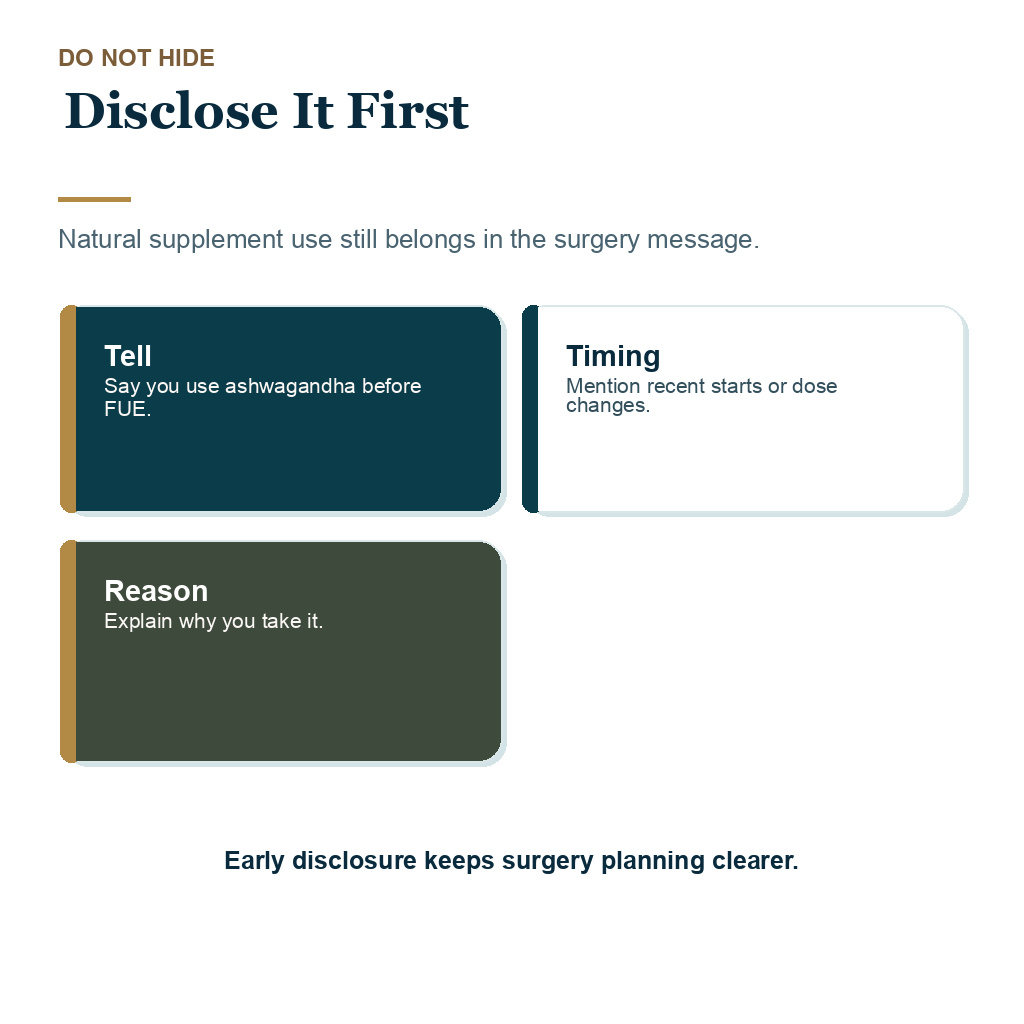
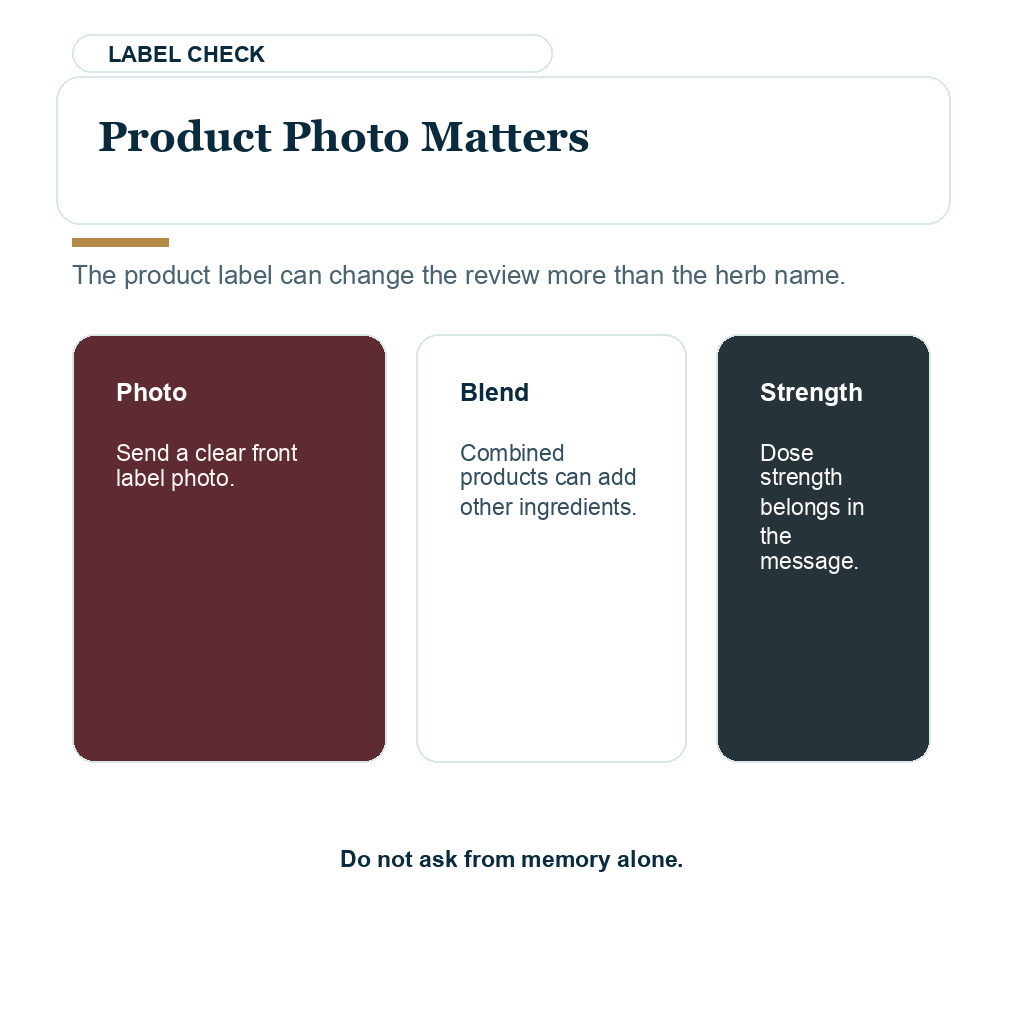
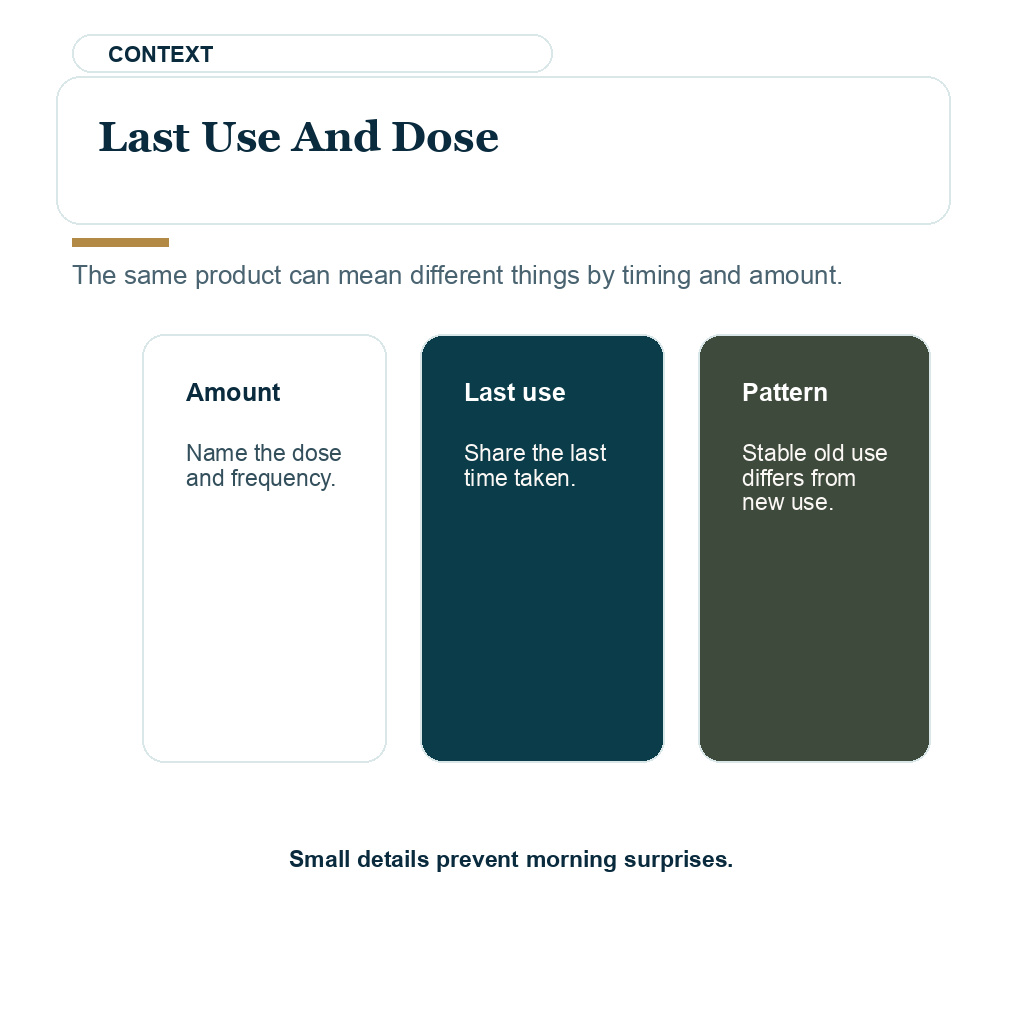
If you already took it, send context instead of guessing
If you already took ashwagandha, do not spend the night searching for dramatic answers. Send one complete message. Include the product photo, dose, how often you use it, last use, reason for taking it, any symptoms, other medicines, medical conditions, and surgery date.
That message lets the clinic separate old stable use from new use, symptoms from no symptoms, and simple labels from complicated blends. It also protects you from changing prescribed medicine or mixing sedating products without guidance.
There is no graft growth shortcut in ashwagandha. If your question is actually about vitamins, nutrition, or hair support supplements after surgery, vitamins after a hair transplant is the better recovery topic. Before FUE, the practical step is disclosure.
Surgery morning should have no supplement surprises
For ashwagandha, the useful details are the product label, dose, how long you have used it, why you take it, and whether sleep, anxiety, blood pressure, stomach symptoms, or other medicines are part of the picture.
Do not stop prescribed medication to simplify a supplement question. Do not arrive with a changed dose that nobody has seen. Elective FUE is easier to manage when the team knows what might affect sedation comfort, blood pressure, hydration, and post-operative instructions.
If the supplement is harmless in your case, naming it will not ruin the plan. If it creates uncertainty, discovering that before surgery morning is better than trying to solve it while the operating day is already moving.

Read this review excerpt
Every single one of my questions was answered and they made sure I had all the details I needed to make an informed decision.