



A Swollen Donor Area Needs Careful Review
A puffy donor area a few days after FUE is judged by the pattern, not by the word swelling alone. If it is soft, slowly settling, not hot, not leaking, and your pain is improving, it can often be watched with clear photos and the normal recovery plan from your clinic. If the swelling is getting bigger, feels hot or hard, has drainage, comes with fever at or above 38 C (100.4 F), or the pain is rising, it needs review the same day rather than a routine reply.
I separate two very different worries. One is expected tissue fluid after injections and extraction. The other is a changing donor area problem that needs clinical eyes. I look at time, shape, touch, skin temperature, pain, drainage, and photos from the same angle before making that call.
Why can the donor area look puffy?
During FUE hair transplant, the donor area is numbed, washed, shaved, and used for thousands of tiny extraction points. Local anesthetic fluid, natural inflammation, sleeping position, and pressure from collars or pillows can all make the back or sides of the scalp look fuller in the early days. That does not mean grafts were harmed or that donor damage can be judged from one view. It means the skin and soft tissue have been through surgery.
The donor area also drains differently from the forehead. Many patients read about swelling around the eyes and then feel confused when the back of the head is the area that feels raised. Forehead swelling is often fluid moving forward. Donor swelling is more local. It may sit around one side of the occipital scalp, near the ear, or low on the neck line. The location changes the way we review it.
Swelling is easier to understand when it is matched to the day after surgery. On day one or day two, soft fullness can be part of the normal tissue response. By days three to five, the pattern should usually be stable or improving. A new area that expands after it had settled is different from early puffiness that slowly fades.
What does a normal donor swelling pattern look like?
A safer pattern to track with photos has several features together. The skin may feel tight or padded, but the discomfort should be manageable with the clinic plan. The surface may be pink, but not increasingly red and hot. The extraction points may have small scabs, but there should not be wet discharge. A soft area that slowly settles is different from a firm lump, a shiny tight patch, or swelling that expands from one photo to the next.
One close photo does not answer everything. A donor swelling review is more useful with a photo series from the same angle from the left, back, and right. Keep the ear and neck in the frame. Use daylight or a bright bathroom light without flash glare. A perfect photo is not needed. What matters is a comparison that shows whether the pattern is changing.
Use one calm photo set each day instead of checking the area every hour. Repeated pressing can irritate the donor skin and make it harder to see whether the swelling is truly changing.
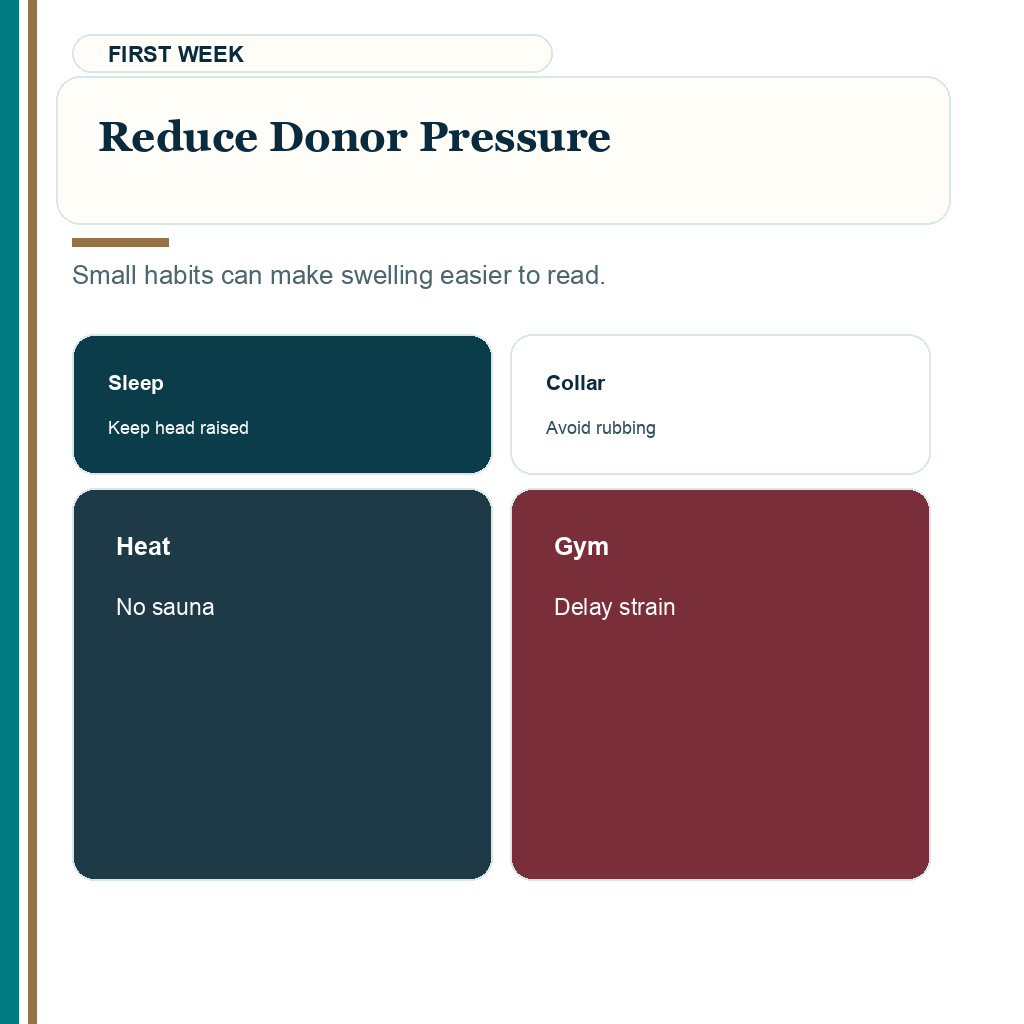
Include pressure clues in the photo note, such as tight collars, helmet straps, a pillow edge, long travel, or lying on one side. The pattern is easier to judge when the clinic knows what touched the donor area.
Which donor swelling signs should not wait?
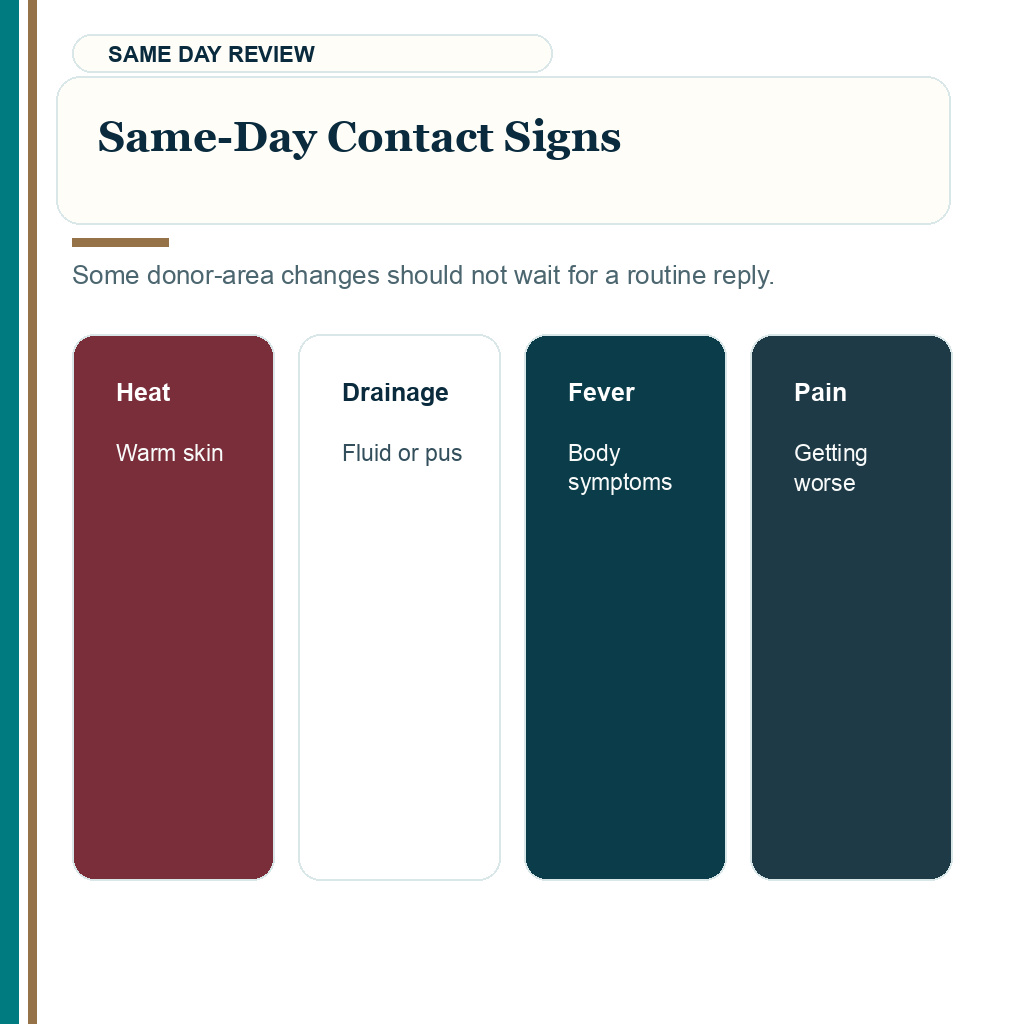
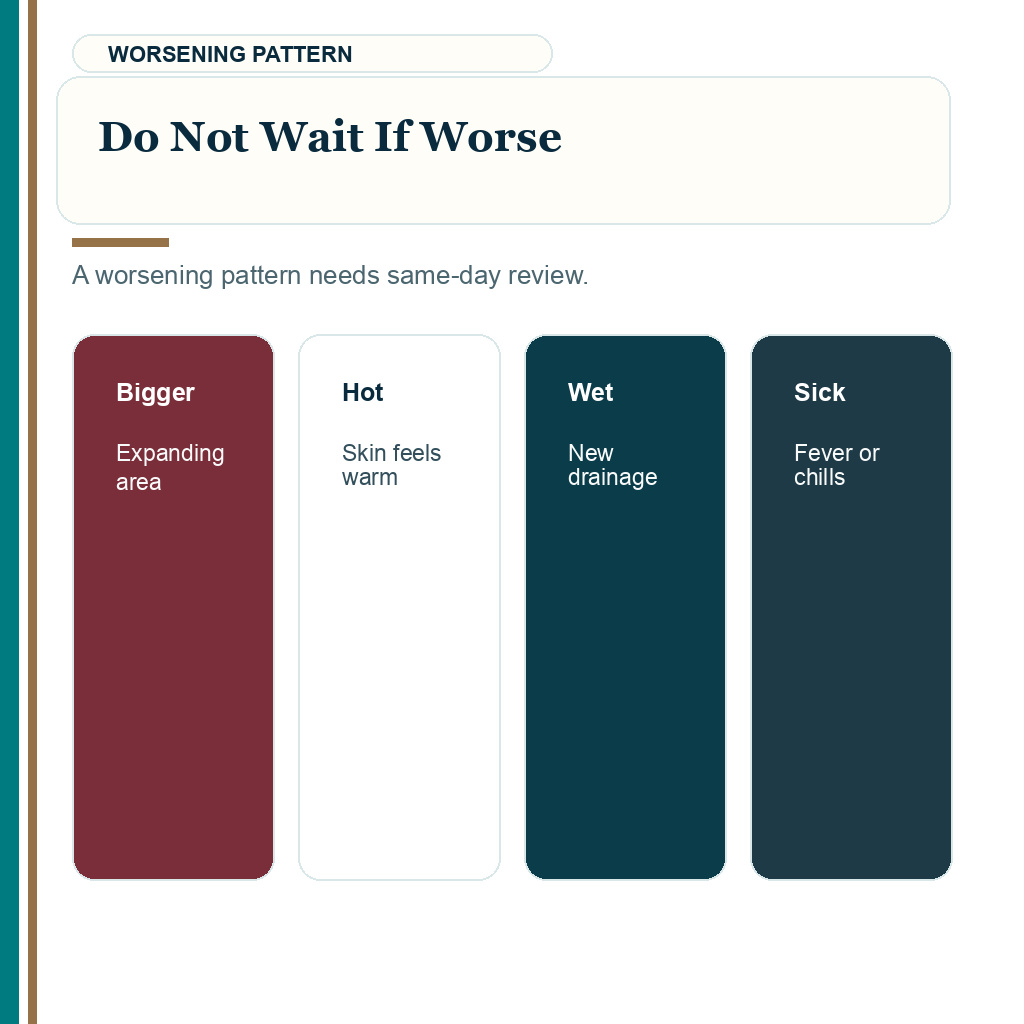
Some donor area swelling should be reviewed the same day. Do not wait through a weekend if the area is enlarging, the skin feels hot, pain is rising, or fluid appears on the pillow. Fever, chills, spreading redness, a firm painful lump, or yellow drainage can point toward infection warning signs after a hair transplant, a fluid collection, irritation, or another problem that needs assessment by the treating team.
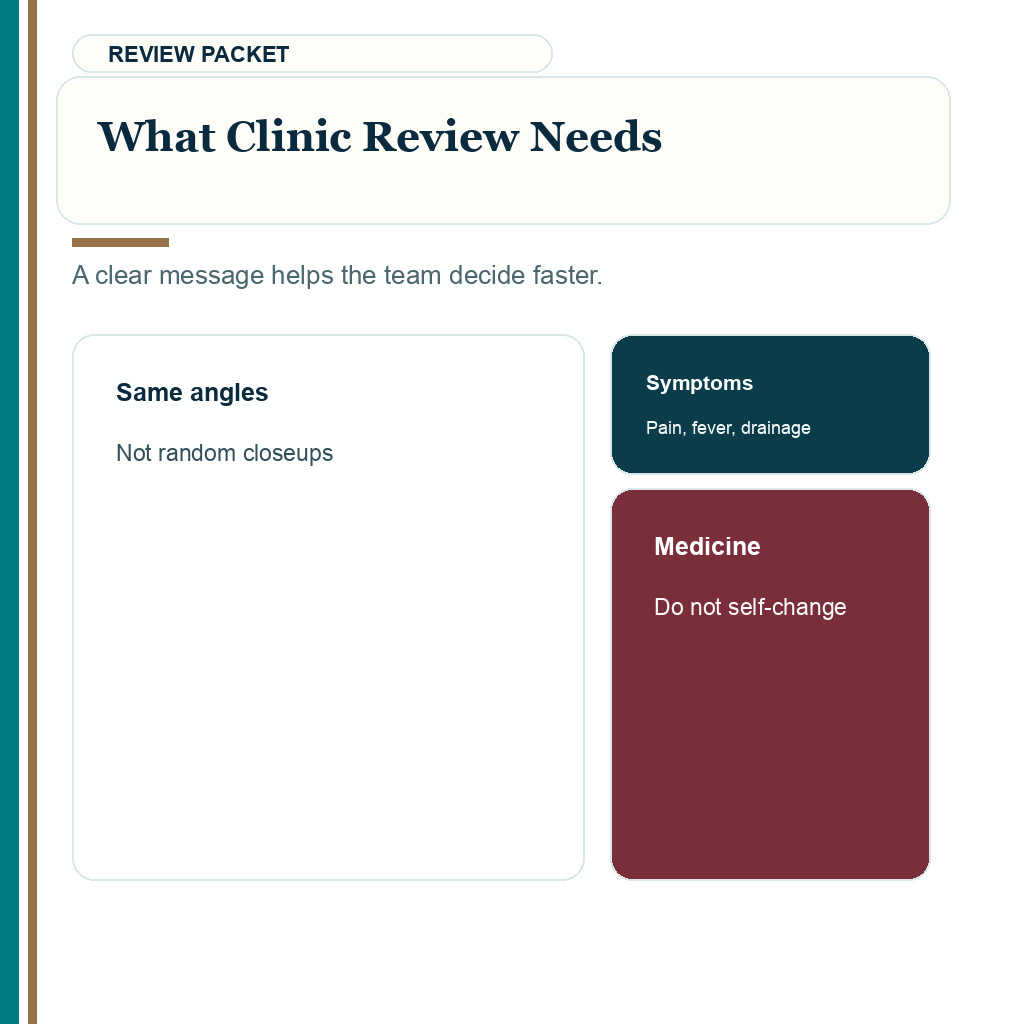
Medication history changes how the clinic reads the swelling. Some patients receive steroid tablets, and others receive antibiotics as part of the clinic protocol. Do not change, add, or stop medication based only on a photo or another patient’s comment. Send the clinic a complete message with timing, pain level, temperature, drainage, and current medicines so the team can decide whether photos are enough or you need local assessment.
A simple way to check the donor area at home
The home check should be consistent, not aggressive. Stand in the same light, take the same photo angles, and write a short note about pain and body temperature. Notice whether the area feels soft or firm, but do not keep pressing it to test the swelling. Do not squeeze the area, try to drain a lump, or massage swelling down. Do not use random cold packs unless your clinic has told you to use them, because pressure and moisture can irritate healing extraction points.
This check is not a diagnosis. It makes the clinic message useful. A short complete message helps the team decide whether simple observation is enough, whether the wound instructions need to change, whether a video review is reasonable, or whether the donor area needs same day examination.
Which details should you send to the clinic?

Send the surgery date, the exact day after surgery, and the graft count if you know it. Add what you were prescribed and what you actually took. If you were given steroid tablets, write the dose schedule from the clinic instruction sheet. If you measured your temperature, include the number. If you missed a dose or took extra tablets, say that clearly. Surgeons can work with clear information. We cannot safely judge a changing donor area from incomplete details.
Photos should include both the swollen area and the surrounding scalp. A photo that is too close can make every pore look alarming. A wider photo shows whether the swelling is one small patch, a broad soft area, a firm lump, or a line of irritation from pressure. If you flew home soon after surgery, also mention travel, sleep position, tight headwear, and whether the swelling feels soft, firm, local, or spreading. Travel can make normal swelling feel more dramatic, so I connect it with broader recovery concerns after flying home when patients ask.
Use these 8 donor area swelling review slides to check the early pattern, same day contact signs, photo angle, touch pattern, pressure, symptom message, worsening signs, and what the clinic needs to review. Swipe sideways, use the arrows one slide at a time, or choose a number below the image.




Donor swelling and severe pain are different
Swelling and pain often travel together, but they do not mean the same thing. Mild tightness can happen while swelling settles. Severe pain is a different signal. If pain is sharp, escalating, one sided, or strong enough to stop sleep despite the clinic plan, the question is no longer just swelling. Compare that concern with the guide to severe pain in the donor area after hair transplant.
In a normal recovery, discomfort should usually become easier to manage as the first week moves on. A swollen donor area that looks better each day but still feels tight is less concerning than an area that looks smaller but hurts more, gets hot, or starts leaking. Pain trend belongs in every clinic message.
Redness, scabs, pimples, and lymph nodes
The donor area can show several surface changes while it heals. Small scabs are expected early. Mild redness can linger, especially in fair skin. Tiny pimples may appear when hairs regrow or when follicles become irritated. These are not the same as a swollen donor area, but they can appear beside it. If the main worry is surface inflammation, the redness, scabs, and pimples after hair transplant guide is the better match.
Some patients also feel tender lumps below the donor area or behind the ear. Those may be lymph nodes reacting to scalp healing or inflammation. A tender node does not always mean infection, but I review it with fever, skin heat, drainage, and how fast the lump changes. If a tender lump is the main symptom, read swollen lymph nodes after hair transplant before assuming the swelling is only in the skin.
Donor appearance weeks later is a different topic
Early swelling is a first week issue. Patchiness, uneven density, redness that lingers, and short hair visibility weeks later are different questions. If your concern is how the donor area looks at one month or two months, use the donor area looks normal after FUE guide. That page focuses more on healing appearance, temporary shock, and extraction pattern visibility.
The key distinction is timing. A puffy area in the first few days is a healing response that needs pattern review. Swelling that returns or begins after the early pattern had settled deserves a fresh review, because it is not the same question as fluid in the first week. A thin patch months later raises donor management and extraction planning questions. Both matter, but mixing them creates unnecessary fear.
How should you act without irritating the donor area?
Early photos are better than quiet worry at home, but repeated checking can irritate the donor area. A clear photo message helps us see whether swelling is part of the expected recovery curve or whether the donor area needs more attention. After the photos are taken, leave the area alone unless the clinic gives a different instruction.
At the same time, do not let normal swelling become a reason to touch, press, scrub, or treat the donor area aggressively. The donor area has thousands of small extraction points. It needs clean washing, gentle drying, and the exact recovery instructions from your clinic. If you are unsure about washing or sleeping position, start with recovery instructions after hair transplant before adding anything new.
Donor swelling changes priority when it changes
Soft donor swelling that is settling, not hot, not leaking, and becoming easier day by day can usually stay inside the written recovery routine.
The priority changes when swelling grows, becomes hot or hard, leaks fluid, develops worsening pain, or comes with fever at or above 38 C (100.4 F). If the clinic is closed and the patient feels unwell or the donor area is changing quickly, local medical assessment is safer than waiting for a routine reply.
I do not want patients to ignore swelling, and I also do not want them pressing the donor skin every hour. Watch the pattern, avoid friction, and let symptoms guide how urgent the response should be.
Read this review excerpt
First wash completed and visual instructions given to my daughter.