


Dutasteride Injections Need Context After Surgery
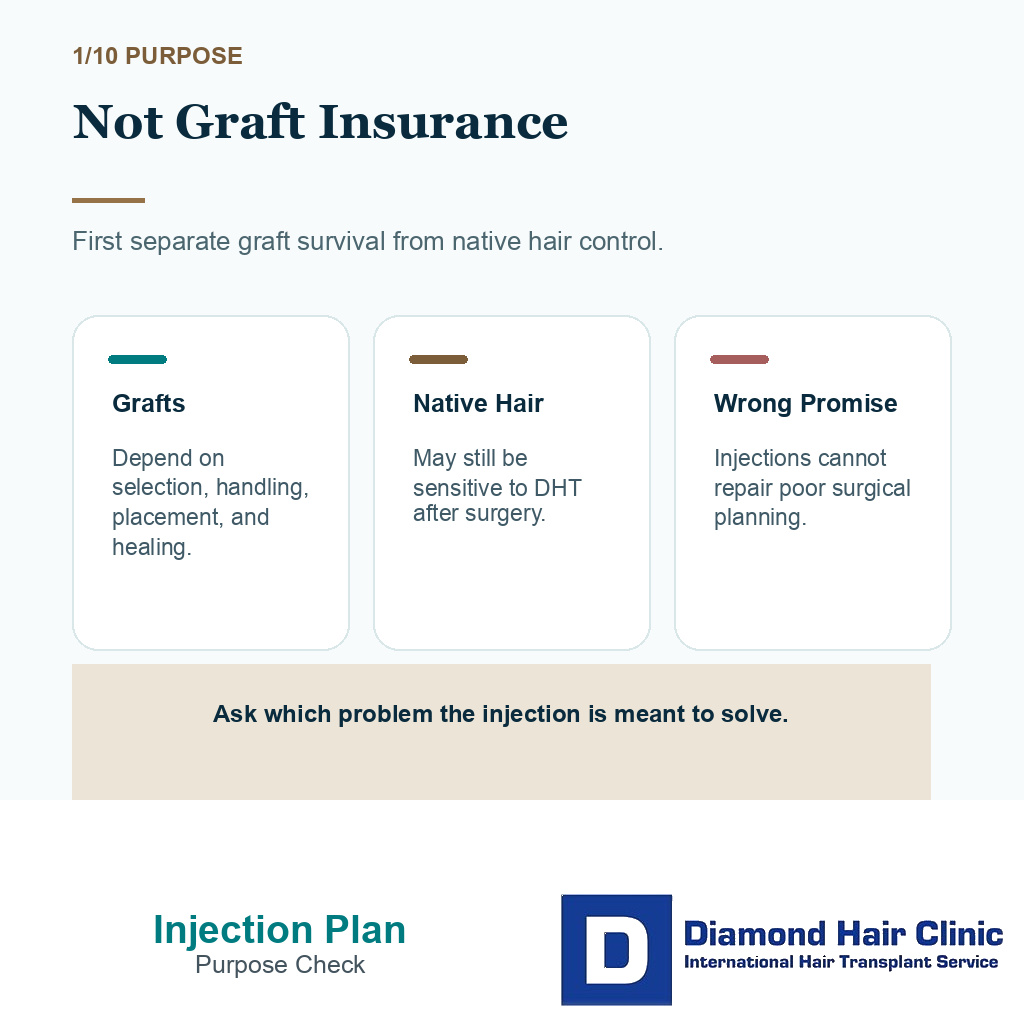
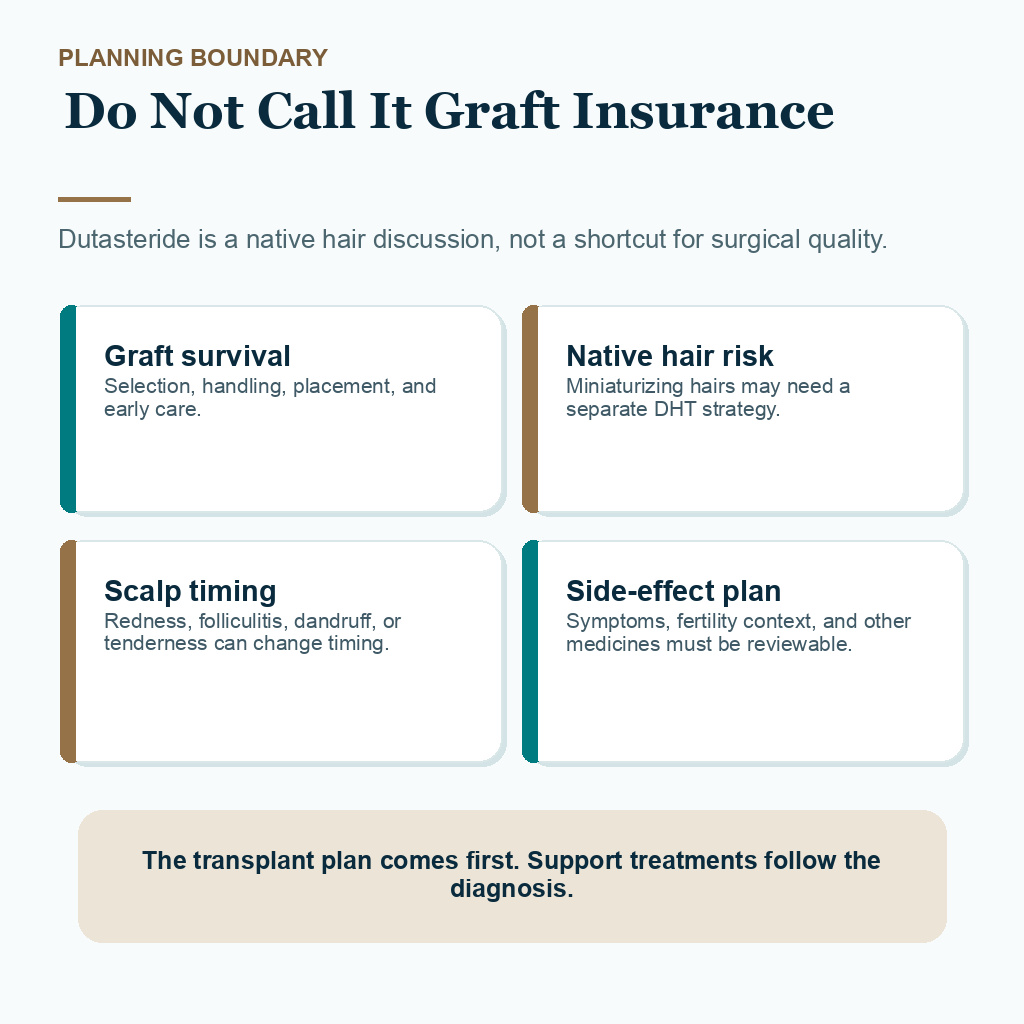
Dutasteride injections after FUE may help selected people protect vulnerable native hair, but they should not be treated as graft insurance or as an automatic package after surgery. A transplanted graft survives because it was selected, handled, placed, and protected properly. Dutasteride is mainly a medication discussion about native hair that is still sensitive to androgens.
Graft survival and native hair preservation are different questions. If the transplanted grafts were handled correctly, injections are not what makes them survive. If the hair behind or around the transplant is still miniaturizing, a treatment focused on DHT may be worth discussing, but only after the diagnosis, timing, dose, side effect history, fertility context, and prescriber responsibility are clear.
The first question is what the injections are supposed to protect. Transplanted grafts, thinning native hair, and a general promise of better density are different claims. The drug name, dose, interval, prescriber, and side effect plan need to be clear before the treatment is treated as part of recovery.
Dutasteride injections are not graft insurance
No. A useful support treatment can have a place, but it cannot repair poor donor selection, rough graft handling, an unsafe hairline, excessive density promises, or weak aftercare. I separate every extra treatment from the surgical plan because the two decisions are not the same.
If a clinic says injections are needed so the grafts will survive, ask for a clearer explanation. The more accurate conversation is usually about native hair protection, scalp inflammation, or androgenetic alopecia control. The exact product matters here. Mesotherapy after hair transplant can describe many different products and routes, so the label alone is not enough.
The danger is not only financial. If someone believes the injection is the main protection, he may ignore the more important questions. Was the donor area used carefully? Is the hairline age-appropriate? Is the crown plan realistic? Is native hair loss still active? The treatment name should never distract from those decisions.
The hair the treatment is trying to protect
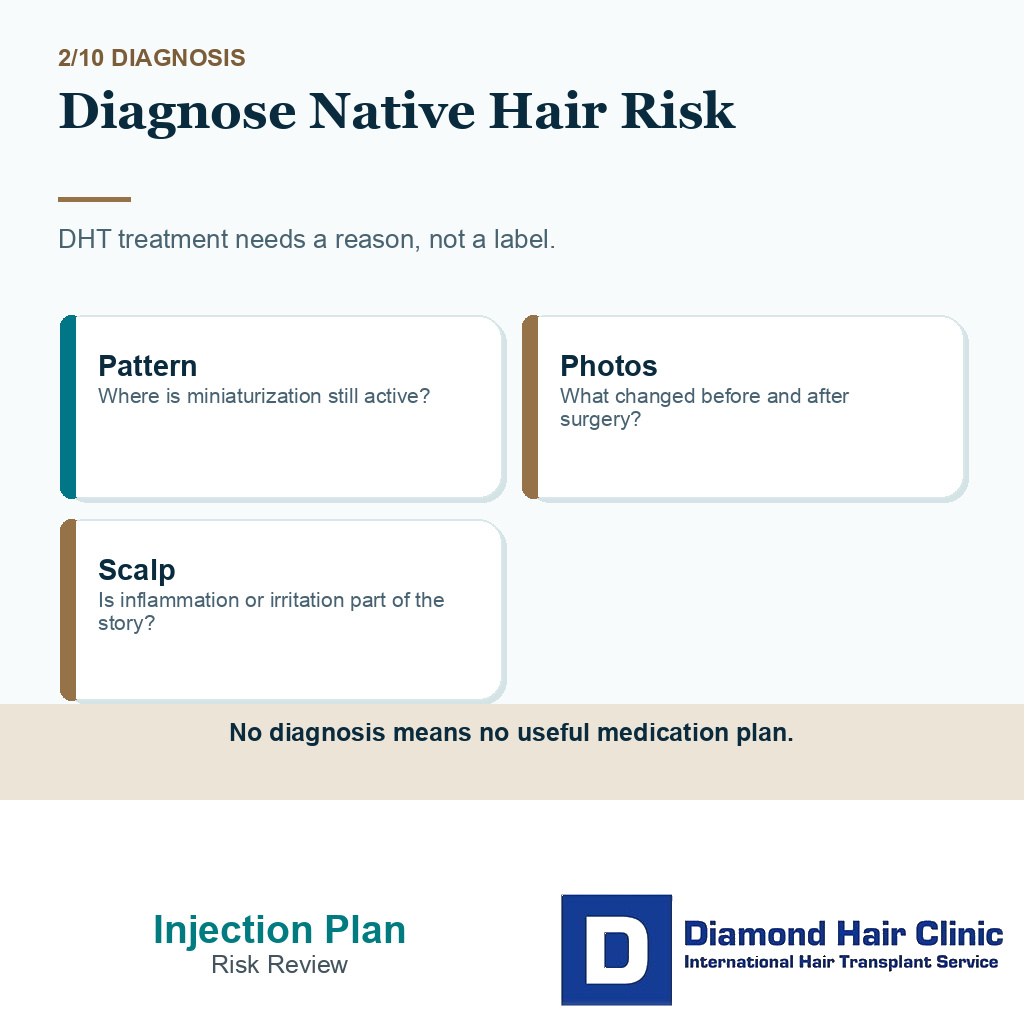
Dutasteride injections are usually discussed as support for androgenetic alopecia. In plain language, they are aimed at hair that is still alive but sensitive to DHT. They are not meant to create a new donor area, replace lost follicles, or fill a bald zone that needed grafts in the first place.
That distinction matters after a transplant. Transplanted donor hairs and native hairs are not the same medical problem. Donor hairs are chosen because they are more resistant. Native hair around them may still be miniaturizing. If that native hair continues to thin, the transplant can look less dense years later even when the implanted grafts grew.
The comparison should not be limited to PRP, exosomes, vitamins, or stem cell language. Those treatments sit in different categories. If the question is DHT control, the comparison belongs closer to a medication plan. If the question is healing support or package marketing, the discussion belongs elsewhere, such as PRP and exosomes after hair transplant or stem cell extras before hair transplant.
Scalp readiness after surgery
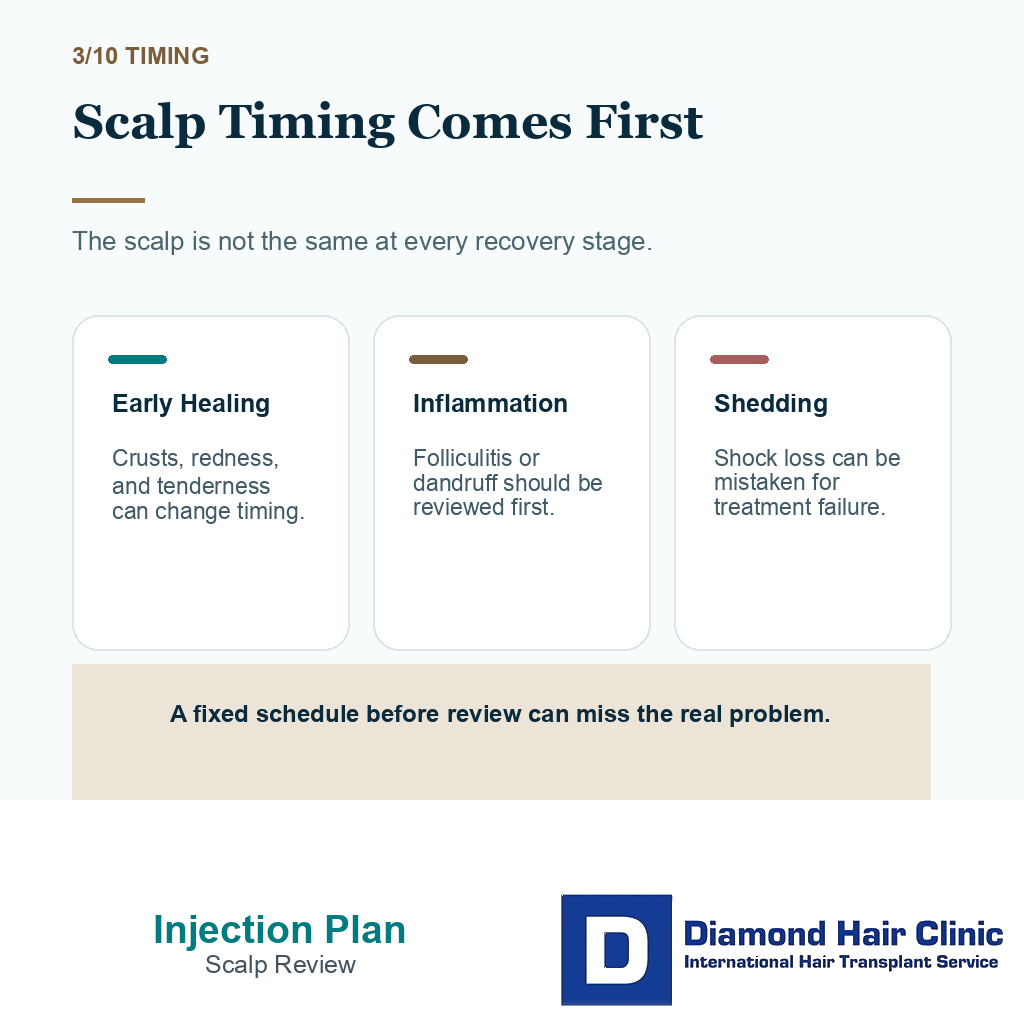
The scalp is not the same one week, one month, and four months after FUE. Early on, the skin is healing, crusts are settling, and the donor and recipient areas can still be sensitive. Later, shedding and early regrowth can make the result look unstable. Later again, native hair and transplanted hair need to be judged separately.
A fixed injection schedule should be questioned when it is sold before the scalp has been reviewed. A plan such as every month for a year may be reasonable in one protocol and unnecessary in another case. Timing should consider skin healing, redness, tenderness, folliculitis, dandruff, infection risk, other topical products, and whether oral or topical hair loss medicine is already being used.
It is also important not to confuse shock loss with treatment failure. Weak native hairs can shed temporarily around the procedure, and a worried person may buy another treatment too early. If shedding is the concern, first understand native hair shock loss after hair transplant before adding injections out of fear.
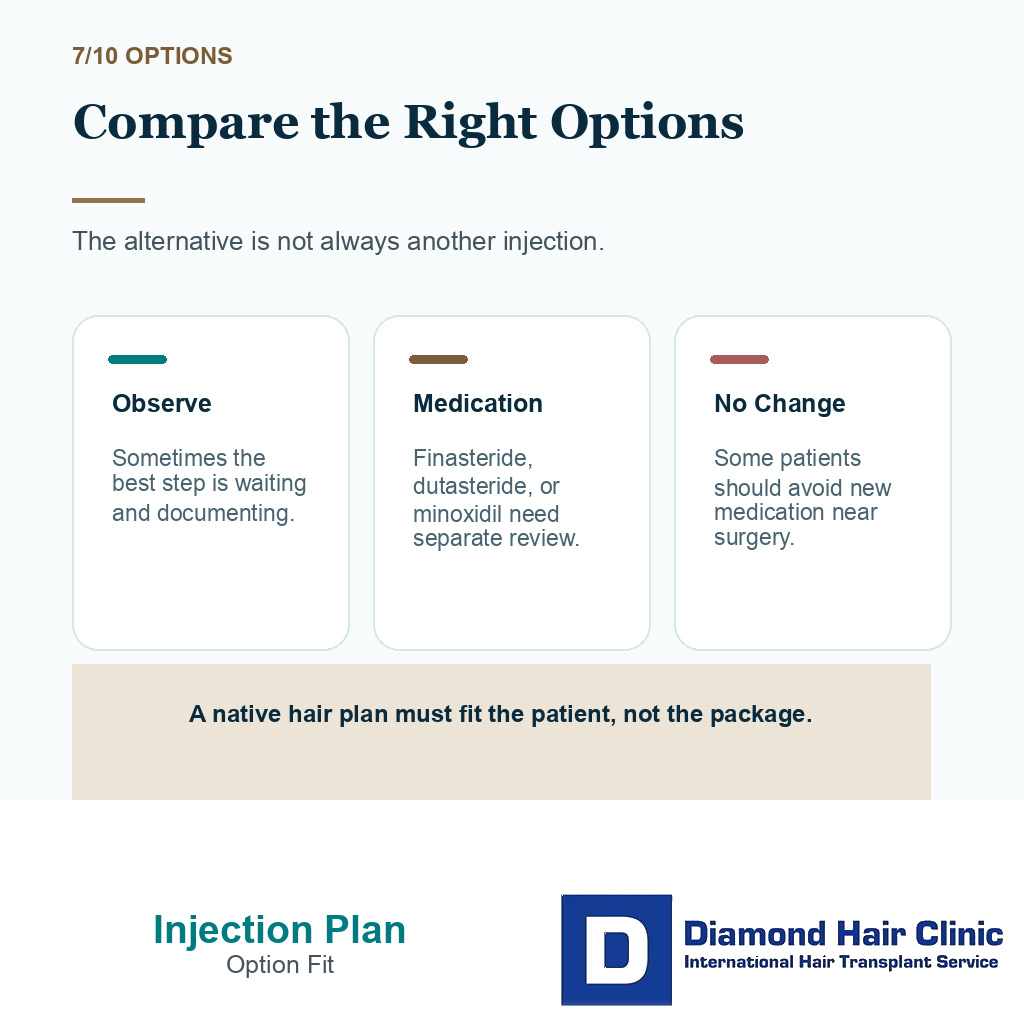
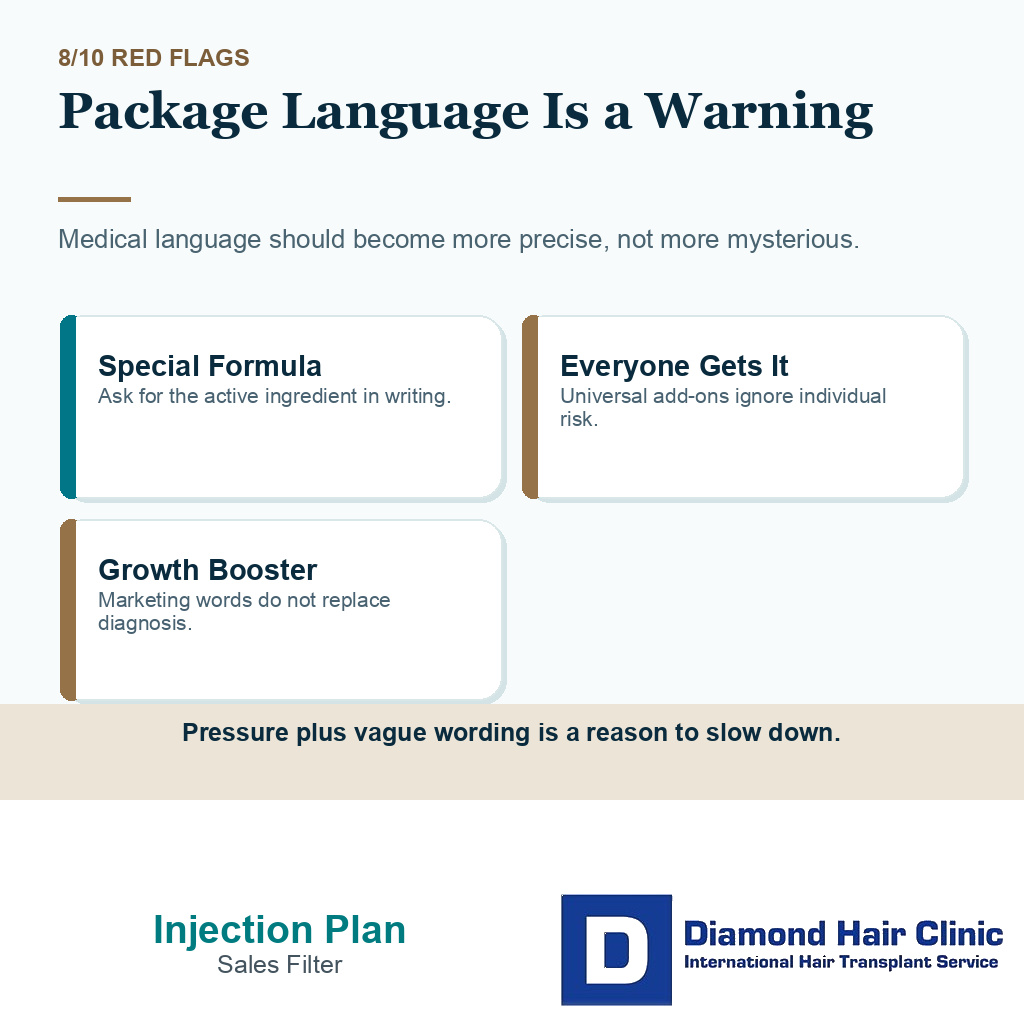
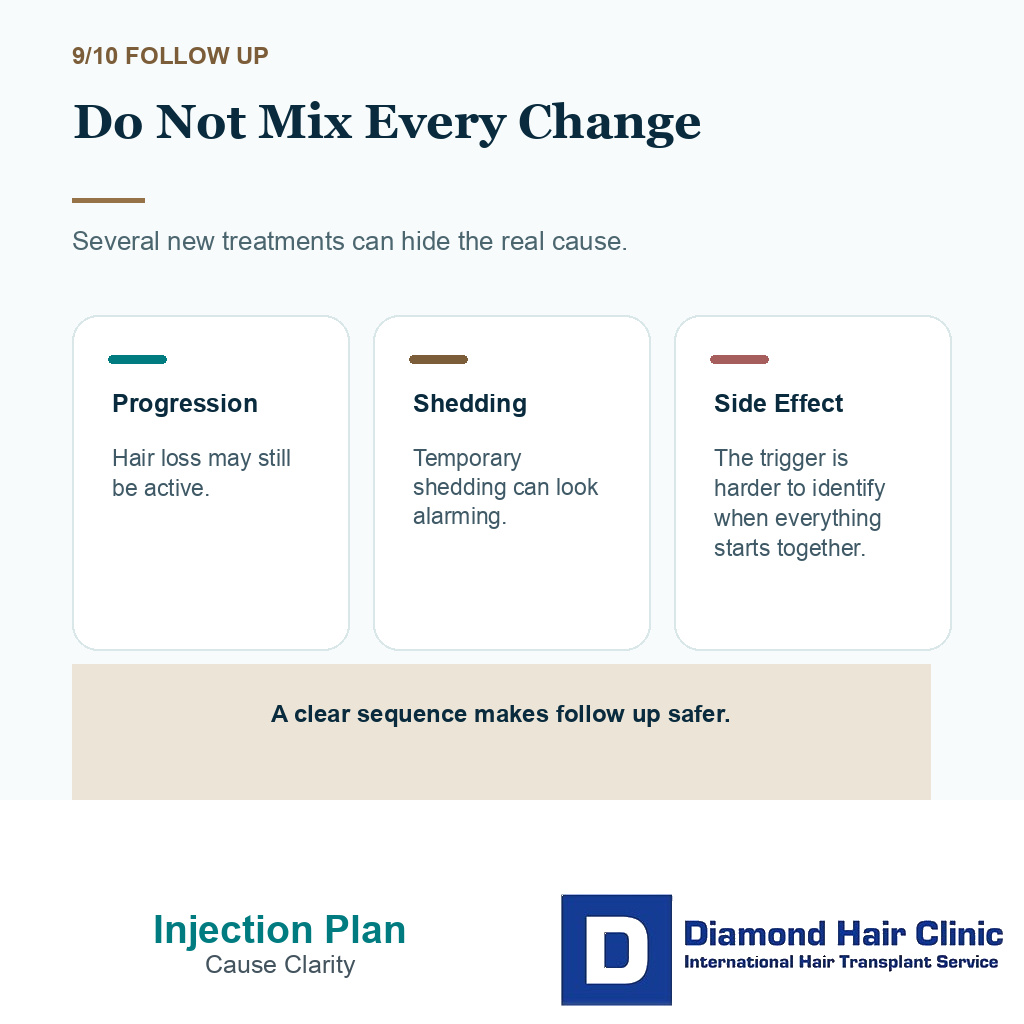
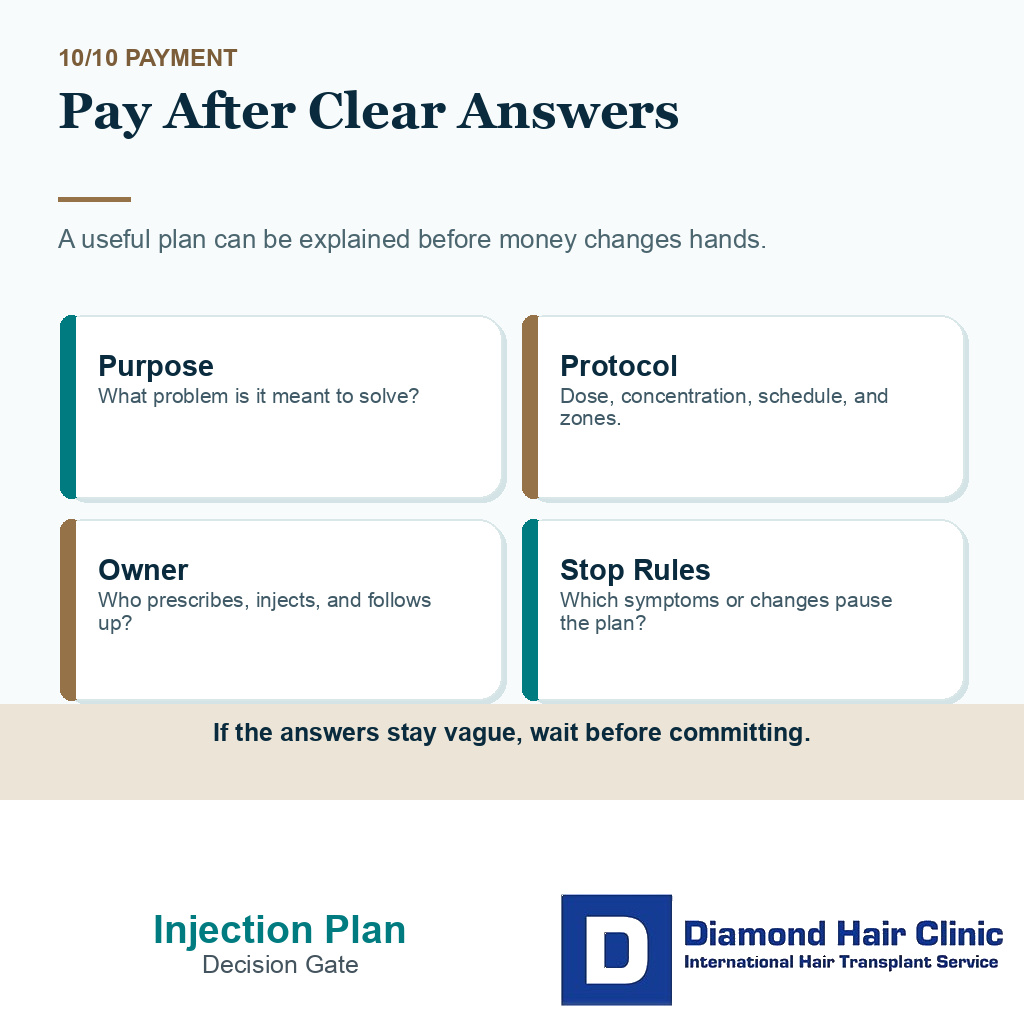
The 10 dutasteride injection slides below are a quick check before paying for repeated sessions. They keep graft survival, native hair protection, scalp timing, dose, side effects, fertility context, and prescribing responsibility in the same review. Swipe sideways, use the arrows, or choose a number below the image.
Dose and schedule matter more than the label
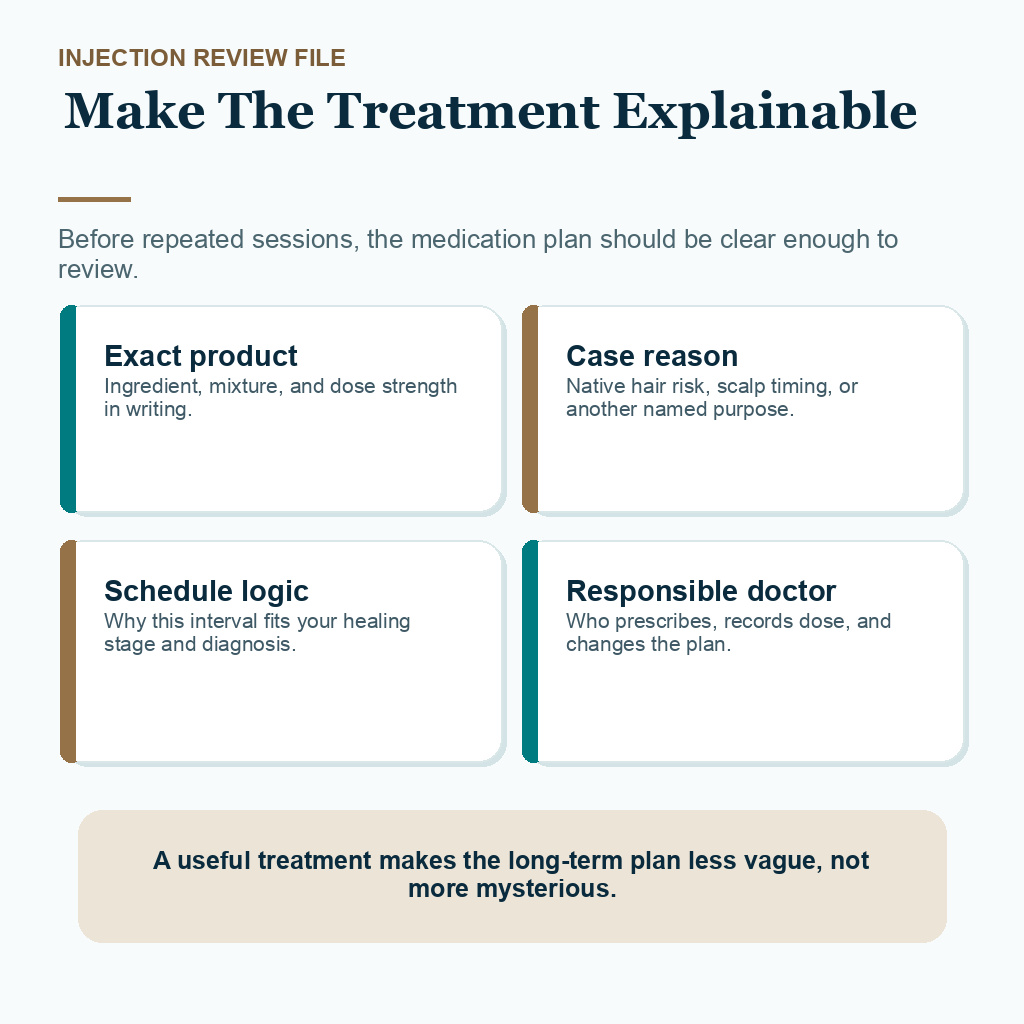
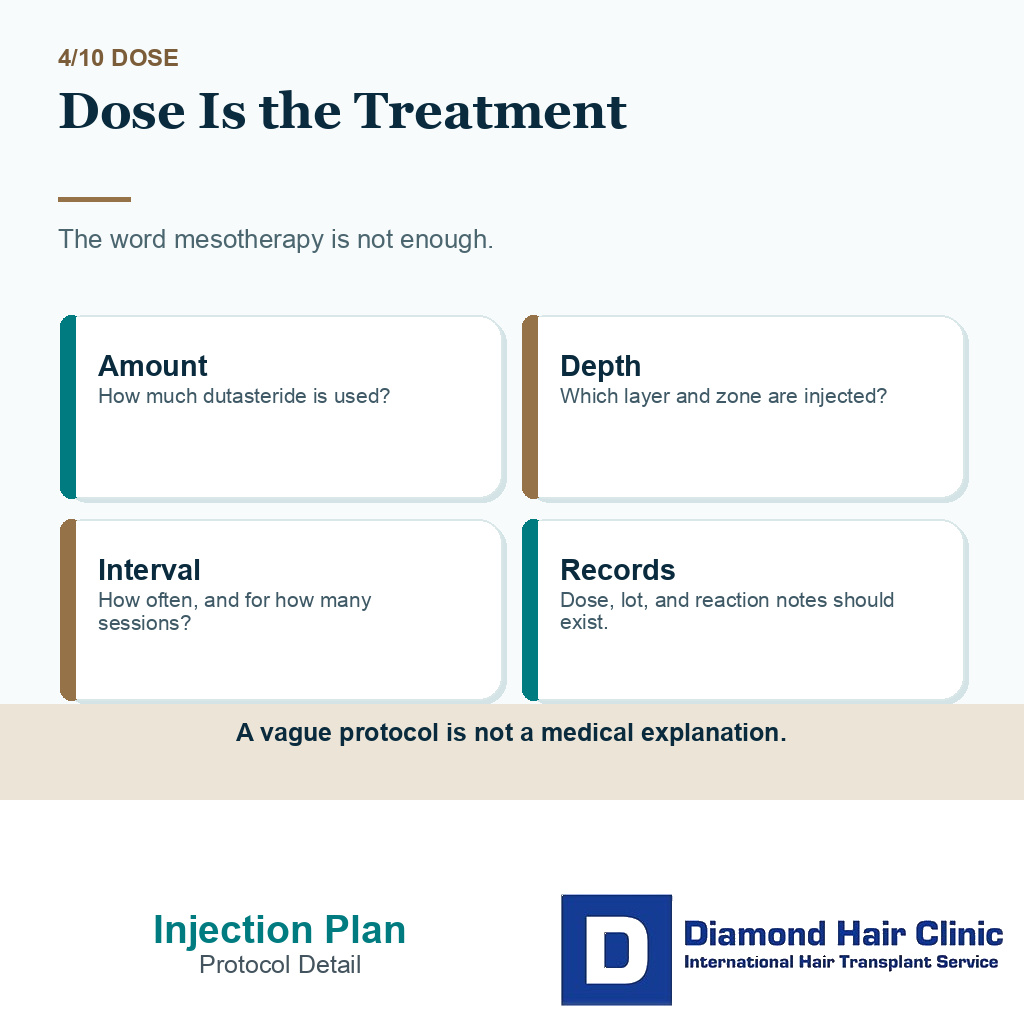
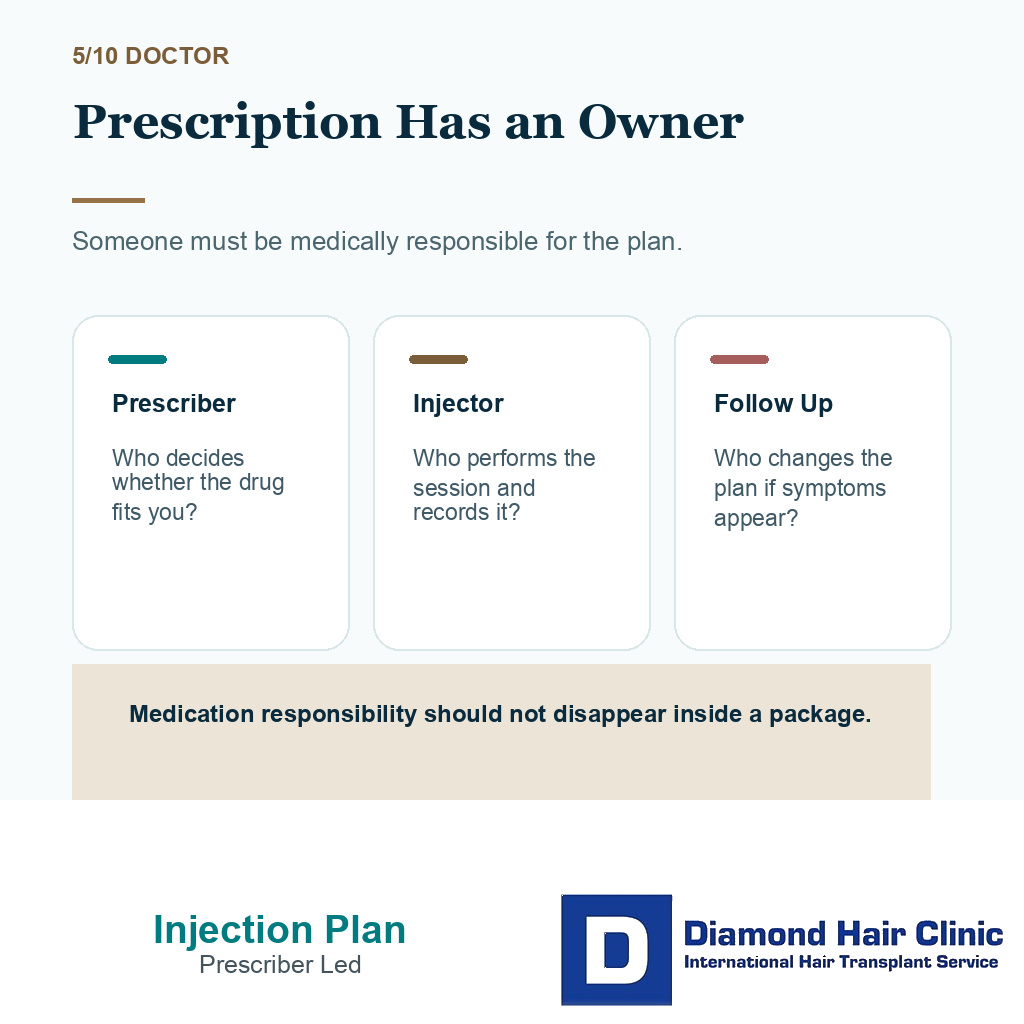
When someone says he was offered dutasteride mesotherapy, I need the exact meaning. What concentration is being used? How much is injected? How deep? Into which zones? How often? For how many sessions? Who prepares it? Who performs it? Who records the dose, lot, and adverse events?
I also want to know whether this is a medical protocol with clear records or a clinic package with a familiar drug name attached to it. Injection studies and clinic protocols do not all use the same dose, depth, interval, or follow up, so the label alone is not enough.
If these questions feel uncomfortable, that is already useful information. A medical treatment should be explainable without pressure. You should not be told only that it is a special formula, a growth booster, or something everyone gets. The more powerful the medication language, the more precise the explanation should be.
Injections still need medical scrutiny when they are offered as a way to avoid oral finasteride or oral dutasteride. Lower systemic exposure is often the reason people become interested in local treatment, but lower exposure is not the same as no medical review. Dutasteride is still a medication decision.
Local injections can still have side effects
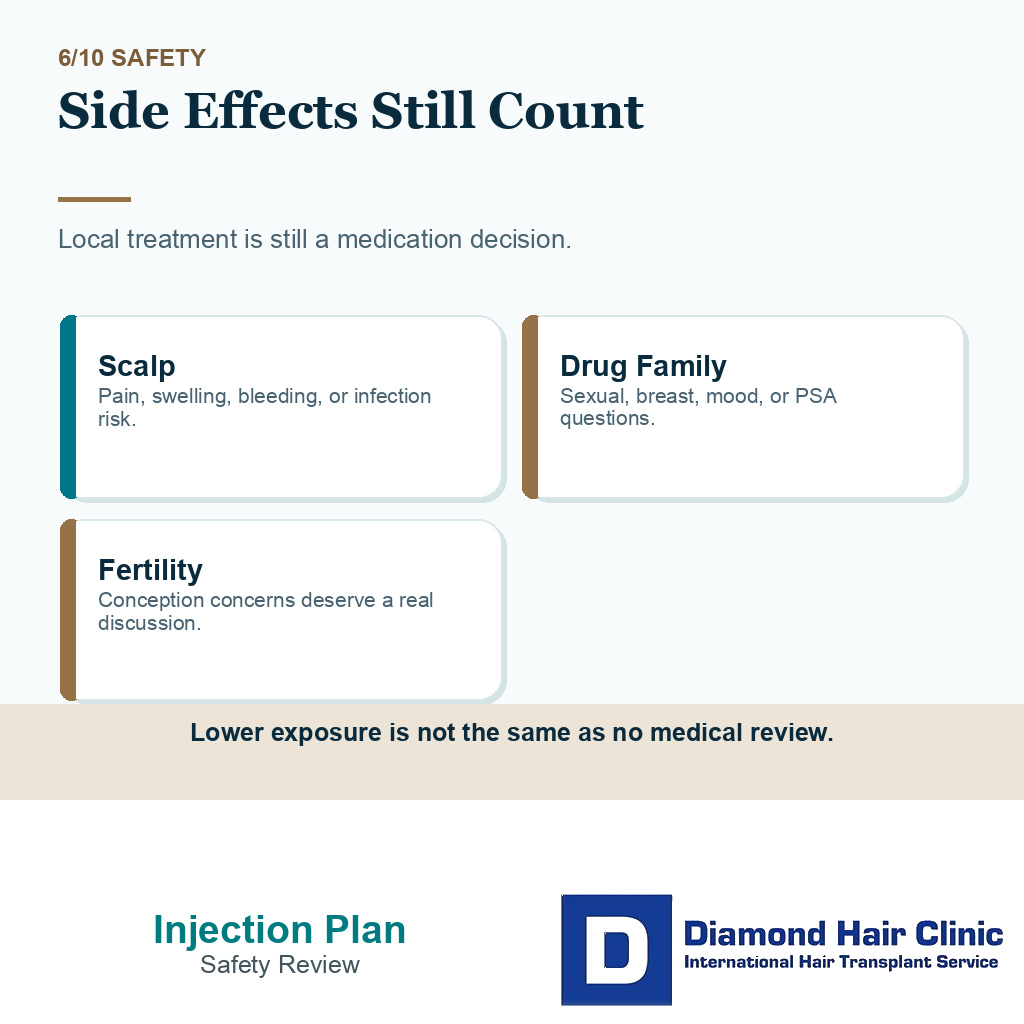
Yes. Local treatment does not remove every systemic question. A scalp injection can cause local issues such as pain, bleeding, swelling, irritation, infection risk, or temporary tenderness. Dutasteride itself belongs to a drug family that needs discussion around sexual side effects, breast tenderness or swelling, mood changes, PSA interpretation, liver history, other medicines, and fertility or pregnancy related concerns when relevant.
This is not written to frighten people. Many tolerate hair loss medication well. Some do not. Some may be suitable for dutasteride, some fit better with finasteride, some need topical approaches, some need oral minoxidil review, and some should avoid changing medication near surgery until the plan is clearer. Stronger DHT blocking is a different medical choice, so dutasteride versus finasteride after hair transplant belongs in the same discussion as side effects, fertility plans, and surgical design.
Family planning also needs respect. Local treatment does not make fertility or pregnancy questions disappear. If someone is trying to conceive, has an abnormal semen analysis, has a pregnant partner, or is anxious about medication exposure, the answer should not be a quick comment in a sales message. I keep a separate discussion on finasteride, dutasteride, and fertility planning because this issue deserves its own space.
Injections cannot replace a native hair plan
No. The weakest reason to start injections is the idea that dutasteride mesotherapy can replace the whole medication conversation. Hair loss is rarely managed well through avoidance. The useful decision is what can be used safely and consistently over the long term.
A native hair plan may include observation, finasteride, dutasteride, topical finasteride, topical minoxidil, oral minoxidil, PRP, or no drug treatment for a period of time. The right answer depends on age, pattern, family history, crown risk, donor reserve, side effect history, blood pressure, fertility plans, and how much native hair is still worth protecting. If oral minoxidil is part of the discussion, treat oral minoxidil and hair transplant planning as a separate medication decision, not as a casual part of an injection package.
Medication should also match the surgical design. A young person with aggressive diffuse thinning may need a more careful transplant plan than an older person with stable isolated frontal loss. No injection creates new donor reserve. Donor protection remains central, so I keep returning to the donor area rather than chasing every extra treatment.
When hair loss continues on medication?
If hair loss continues while using finasteride, dutasteride, minoxidil, or injections, the answer is not simply to add another treatment. First separate active progression from temporary shedding, poor adherence, wrong diagnosis, side effects, and unrealistic expectations. A patient who is still losing hair while using medication may need timing changes before another procedure is planned.
This matters after a transplant because early photos can be misleading. A thin month, a medication shed, and true miniaturization are different problems. If several treatments are started together, it becomes harder to know what helped, what irritated the scalp, and what caused a side effect. When possible, change one variable at a time so shedding, scalp irritation, and side effects are easier to interpret.
Before repeated sessions, separate graft survival, native hair protection, side effects, timing, and cost.
Key questions should be answered before payment
Before paying for dutasteride injections after FUE, the treatment name, active ingredient, dose, concentration, session interval, number of planned sessions, prescribing clinician, treating clinician, and reason for the schedule should be written clearly.
A safer discussion separates the scalp problem from the package being offered. If the native hair, donor area, and shedding pattern have not been reviewed recently, the injection decision may need to wait until the reason for treatment is clear.
Then ask what problem it is meant to solve. Is the clinic trying to protect miniaturized native hair? Is it trying to reduce scalp inflammation? Is it being offered because oral medication was refused? Is it bundled into a package? Is it being sold because growth looks slow even though the timeline is still early? Each answer changes the decision.
Finally, ask what would make the plan stop or change. Persistent scalp pain, infection signs, allergic reaction, sexual or breast symptoms, mood symptoms, fertility concerns, or a change in other medication should not be ignored. After the operation, even ordinary tablets need context, and the broader recovery medication framework is covered in medications after hair transplant.
Do not let injections become automatic
I decide the order this way. First comes the surgery plan, then the native hair strategy, and only after that any supportive treatment. The diagnosis, donor area, graft number, hairline plan, and long-term risk of further hair loss need to be clear before an extra treatment influences the decision.
If dutasteride injections are discussed later, I treat them as a medical option for selected cases, not as a universal package. The scalp should be examined. The native hair risk should be described. The expected benefit, limits, side effects, fertility concerns, and follow up plan should be explained without pressure.
When injections are appropriate, they should make the transplant plan clearer, not more mysterious. If the ingredient, dose, schedule, prescriber, purpose, or side effect plan stays vague, slow down. Dutasteride injections may support the right person, but they should never replace diagnosis, surgical judgment, donor protection, careful technique, healing, and long-term follow up.

Read this review excerpt
Every single one of my questions was answered and they made sure I had all the details I needed to make an informed decision.