


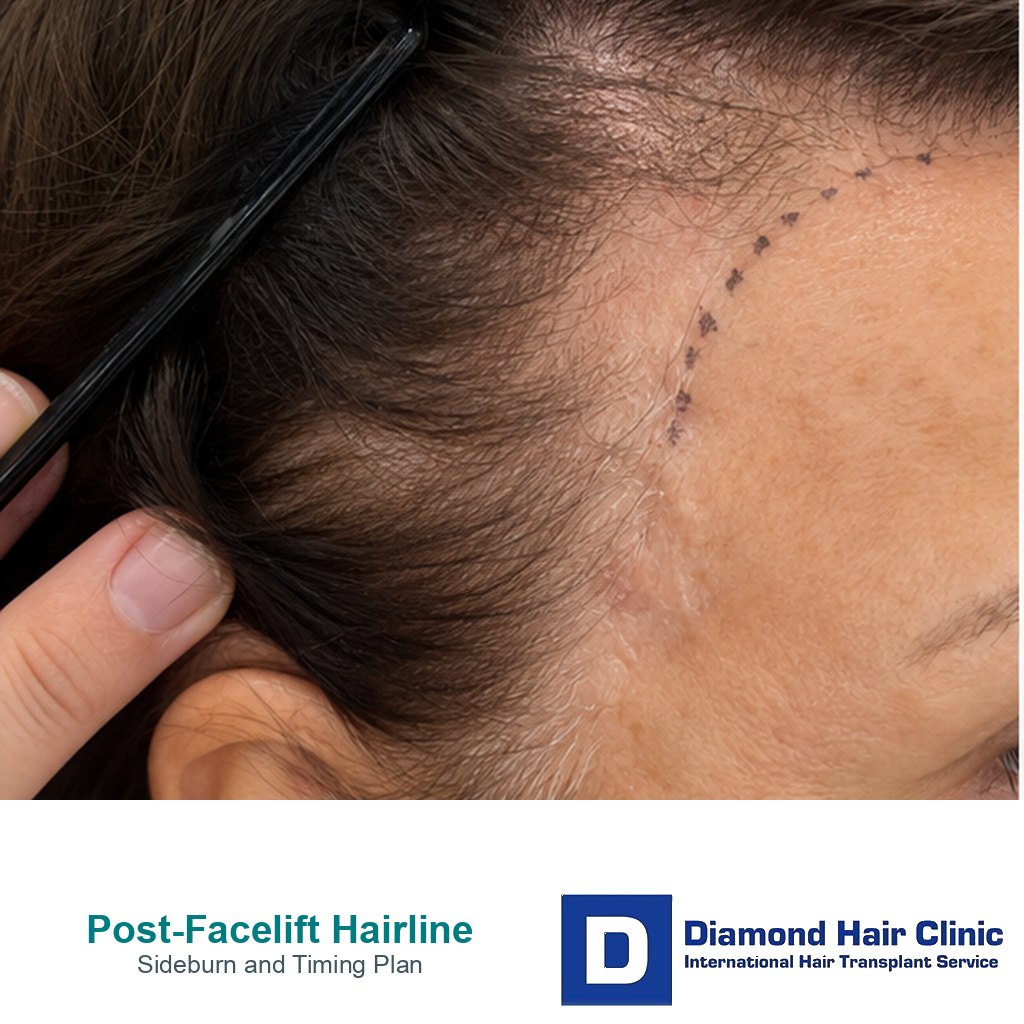
Facelift History Changes Female Hair Transplant Planning
It can be possible to transplant hair after a facelift, but I do not plan it from the calendar alone. I first need the side hairline, sideburn area, and scar tissue to be settled enough to support grafts. The skin should be soft, the scar should be mature, and the hair direction around the face should be clear enough to rebuild naturally.
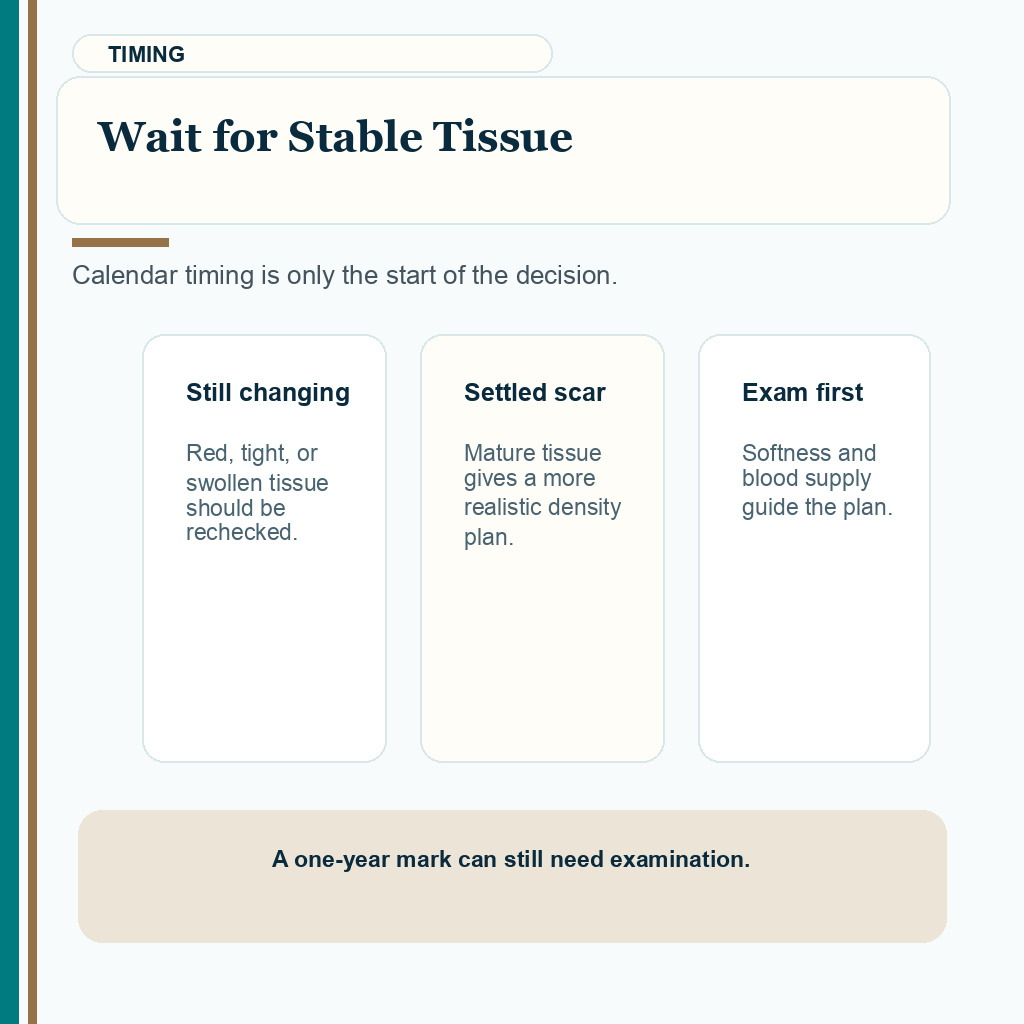
One year after a facelift can be a reasonable time to start planning in some patients, but it is not an automatic green light. Earlier photo review can help document the problem, but it is not the same as placing grafts into healing scar tissue. If the tissue is still tight, red, numb, swollen, tender, or changing, I slow the plan down. If the sideburn was lifted or thinned by the facelift, I also need to see how the scar sits when the face moves and when the hair is tied back. For that review, show hair down, hair tied back, and the side profile. A scar can look minor in one view and become the main design limit from another.
I treat this differently from routine female hairline transplant design. Sideburn repair, scar camouflage, forehead softening, and separate female pattern thinning are different decisions. A woman may want all of them improved at once, but the plan has to respect circulation, tissue quality, donor reserve, and long-term facial proportion.
The facelift area must be ready for grafts
The first decision is whether the operated area can accept grafts safely. A date helps me organize the discussion, but it does not replace examination. Scar color, skin softness, tenderness, swelling, numbness, and a hairline position that is still changing all matter.
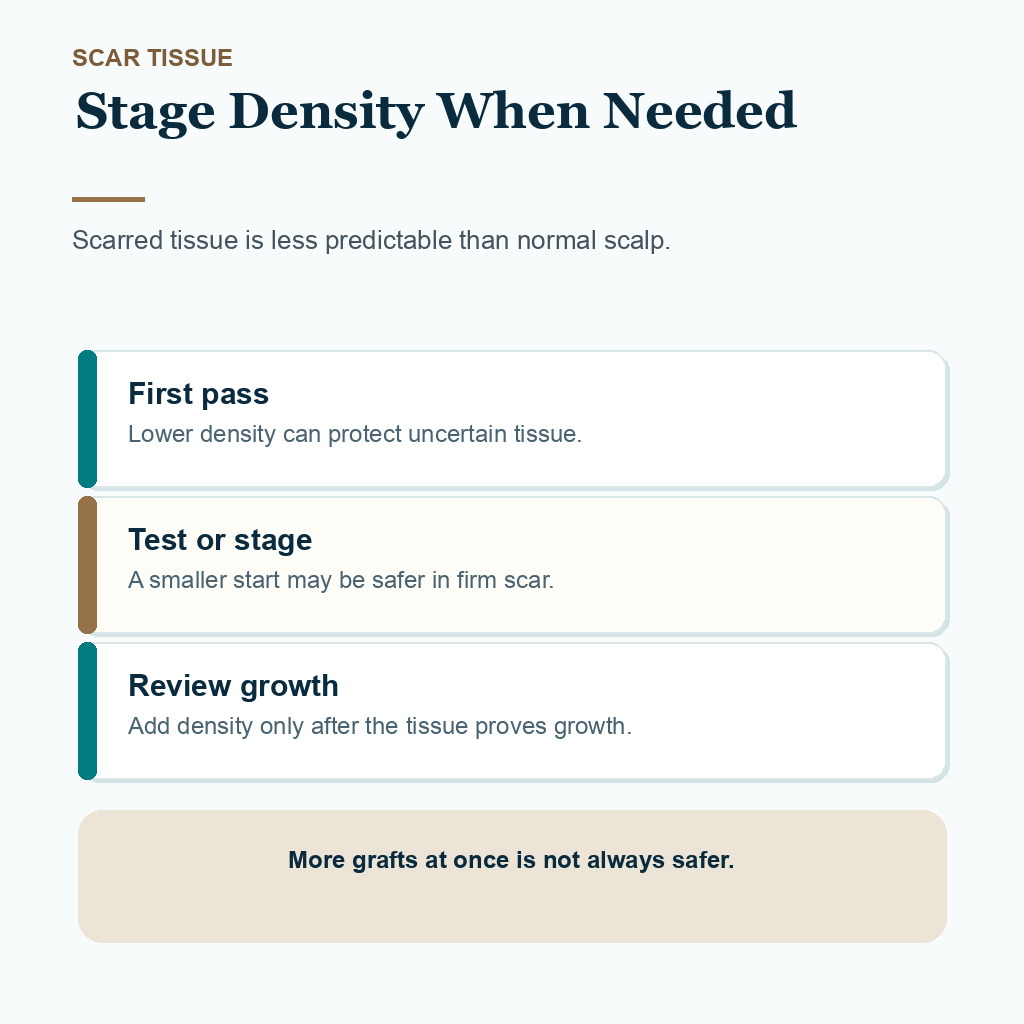
If the scar is red, painful, raised, tight, or still changing, I wait. If the tissue is mature but firm, grafting may still be possible, but I may use lower density, a smaller first session, or staging. That is the scar tissue rule I use when planning a hair transplant into scar tissue. Scarred skin can sometimes accept grafts, but it is less predictable than normal scalp.
I also separate temporary shedding from permanent loss caused by scar tissue, incision damage, or tension. Temporary shedding may recover without grafts. Female pattern hair loss, traction, inflammatory hair loss, and diffuse miniaturization can all change the plan. A woman who is not a stable candidate should not be pushed into surgery just because the facelift changed one visible area. That is where female hair transplant candidacy matters more than the wish to repair the side frame quickly.
Why can the sideburn look different after a facelift?
A facelift can change the sideburn because skin is lifted and repositioned near the temple and ear. Sometimes the sideburn sits too high. Sometimes it looks thinner, sharper, or disconnected from the temple point. Sometimes the scar only becomes obvious when the hair is tied back. These problems are related, but they are not the same design problem.
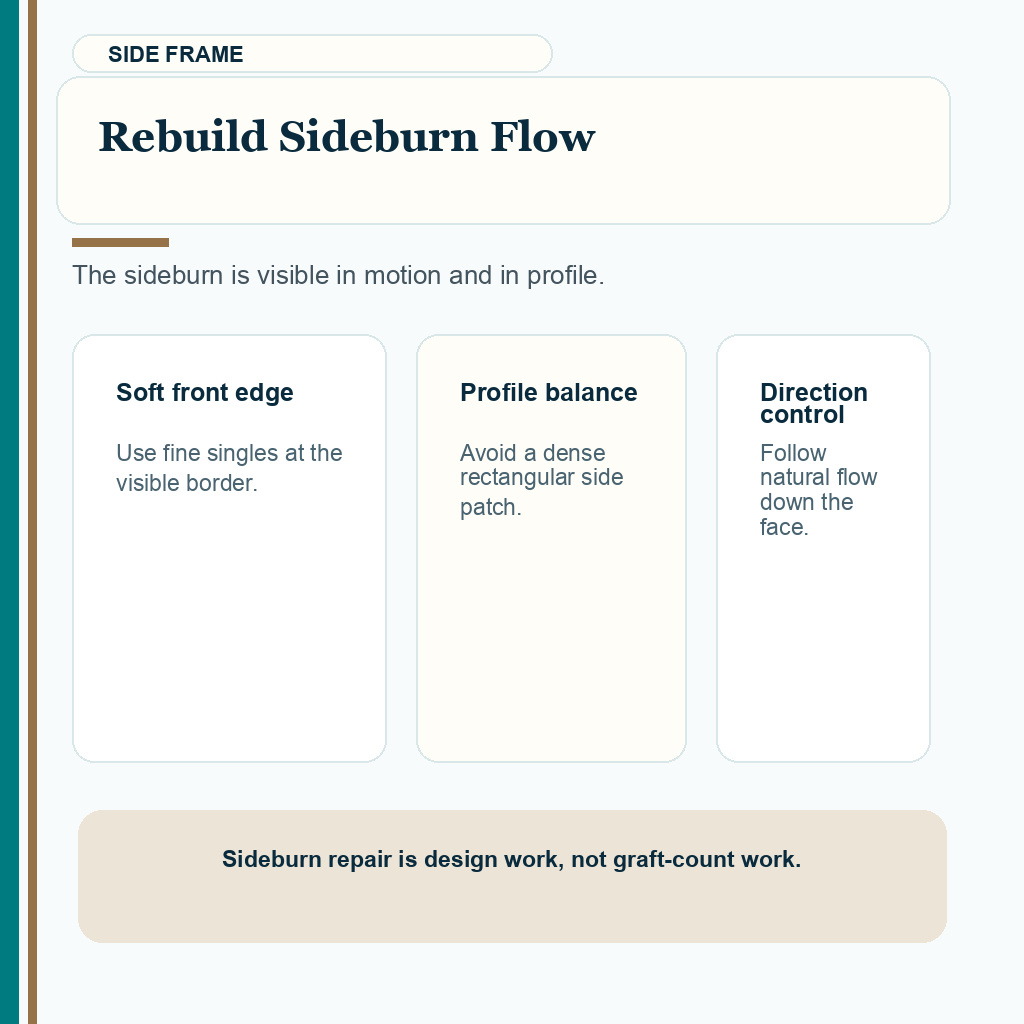
The sideburn is unforgiving. If grafts are too thick, too straight, or placed with the wrong angle, the area can look artificial even if the grafts grow.
I normally prefer fine single-hair grafts at the visible edge, a soft transition into the temple, and direction that follows the natural flow down the side of the face. When the side frame is the main issue, temple point restoration becomes part of the design conversation.
The target should not be a dense rectangular patch. A female sideburn has softness, irregularity, and movement. The more visible the area is in daily hairstyles, the more carefully I check the design from the front, the profile, and with the hair pulled back.
Movement can reveal a different problem than a still front photo. A smile, a turned head, or hair pulled back may show whether the sideburn edge sits naturally or looks tight.
Scar tissue changes the density plan
Scar tissue after a facelift may feel firm or fibrotic. That does not always block grafting, but it changes how I think about density. Normal scalp has a more reliable blood supply than scarred tissue. If I overload a firm scar with too many grafts, I may be asking the tissue to support more than it can safely support.
In a narrow scar or sideburn edge, I may choose a lower density first pass. In a wider area, I may stage the work and review growth before adding more. A test area can sometimes be useful when the tissue quality is uncertain. The patient may want the scar hidden in one operation, but the more realistic first goal may be softer camouflage, not normal scalp density in one session.
This is different from hairline advancement scar repair. A forehead reduction scar sits in a different surgical context than a side hairline or sideburn scar after a facelift. Both can involve scar tissue, but the design boundary and circulation concerns are not identical.
Should the forehead be lowered at the same time?
Many women ask whether the transplant can lower the forehead at the same time as it repairs the sideburn. Sometimes a small softening of the frontal hairline is possible. Sometimes the better answer is to rebuild the side frame and avoid aggressive lowering.
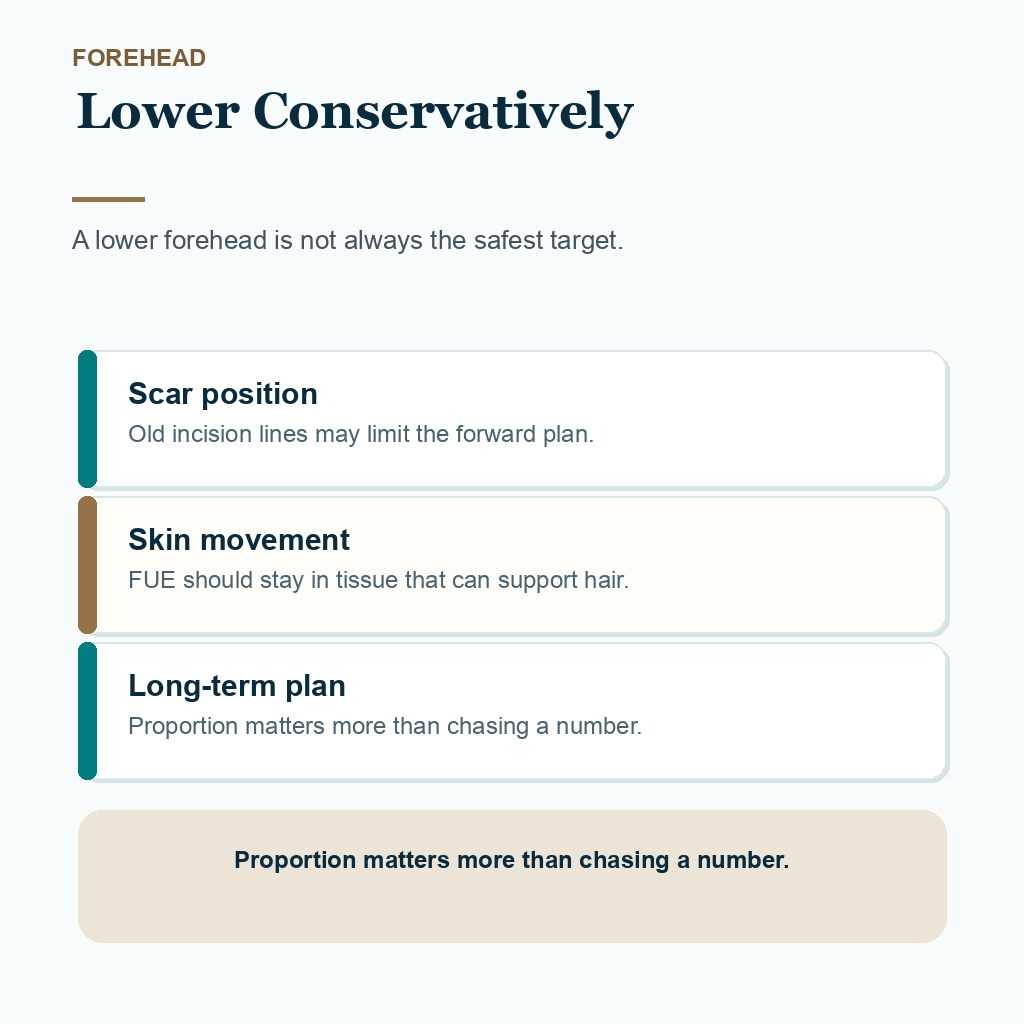
The forehead goal depends on face shape, existing hairline, donor reserve, and the quality of the skin in front. I am especially careful when there has been prior facial surgery. Grafting can soften the visual height of the forehead, but it should not ignore skin tension, old incision lines, or the movement of the forehead muscle. The discussion is different from simply lowering a naturally high forehead with hair transplant.
There is also a practical stopping point. FUE hairline lowering should stay in tissue that can support hair naturally and move like scalp that normally supports hair. If the plan drifts into moving forehead skin, I step back and explain where FUE hairline lowering should stop.
Curly donor hair needs tighter angle control
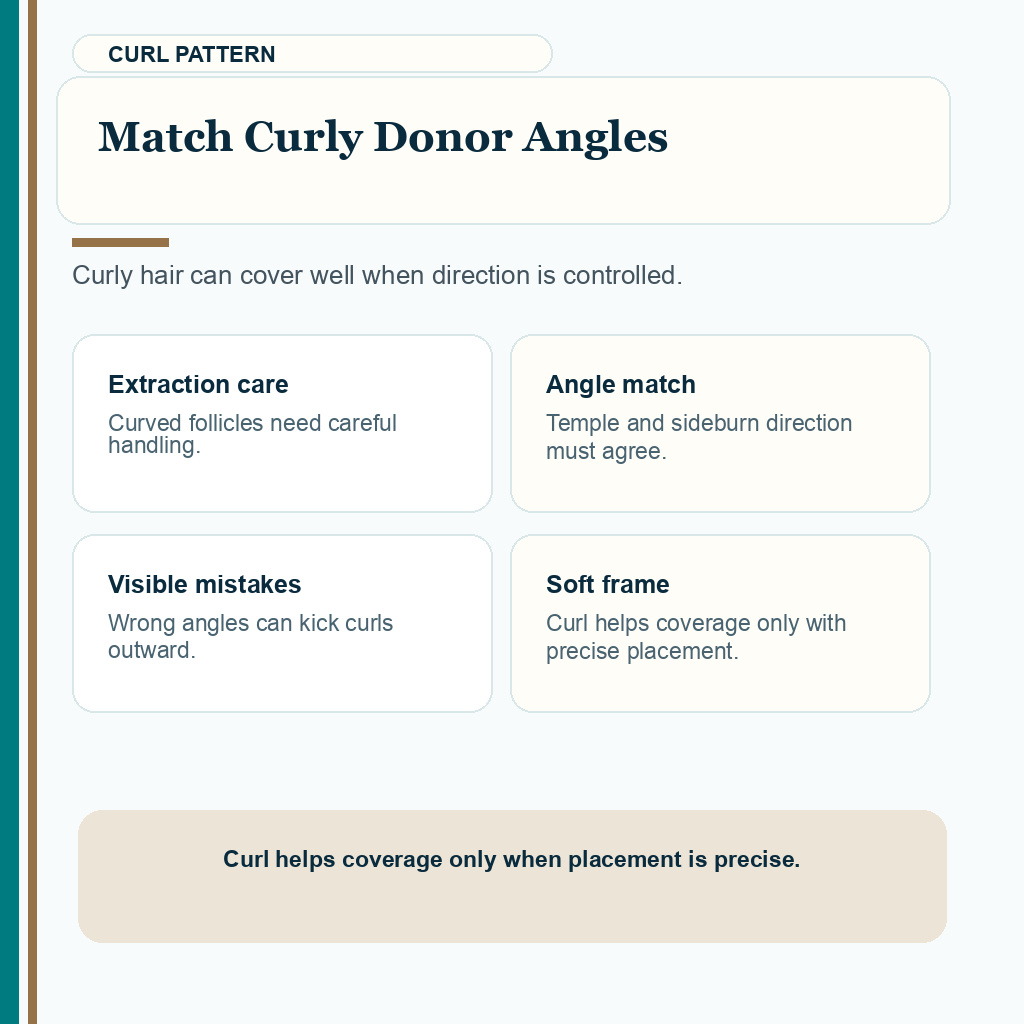
Curly donor hair can be helpful because each hair can give more visual coverage. It also makes the technical plan less forgiving. The follicle may curve under the skin, extraction may need more care, and the placed hair must follow a direction that looks natural near the face.
This is especially important in the sideburn and temple. A curl placed at the wrong angle can kick outward or fight the natural flow. The result can look busy instead of soft. I do not see curly donor hair as a problem by itself. I see it as a reason to plan angle, curl direction, caliber, and graft selection more carefully. The principles overlap with very curly hair in FUE surgery, even when the curl pattern is not tightly coiled.
The donor area also has to be protected. A facelift correction may feel small, but sideburn and hairline work can consume many fine grafts when the design keeps expanding. Grafts should be spent where they change the face most naturally.
Spend grafts where they change the face most
Before I agree to graft the side hairline after a facelift, I want the tradeoffs to be visible, not hidden inside a graft number. The same request can lead to different surgical plans depending on tissue, scar, sideburn shape, forehead goal, and curl direction.
Planning variables that change the graft plan
Choose one signal at a time. Timing, scar tissue, sideburn design, forehead goals, and curl direction can point toward different surgical choices.
Is the tissue ready, or should we wait?
Soft, mature tissue may be ready for a careful plan. Red, tight, swollen, or tender tissue should be rechecked before grafts are placed.
Soft skin, calm color, and a scar that is not still changing.
Recheck tissue readiness before deciding whether to proceed. A smaller design does not replace that assessment.
Tenderness, redness, swelling, or tight pull changes timing.
Does the scar need a lower first density?
Scar tissue may grow grafts, but it is less predictable than normal scalp. Lower density or a staged session can be safer than forcing coverage.
Firmness, pale color, tethering, or thin local blood supply.
Reduce density and preserve donor grafts for a second pass.
The first pass can show how scarred tissue behaves.
Will the sideburn look natural in profile?
The visible edge needs fine grafts, irregularity, and direction that flows down the face. A rectangular patch can look artificial even if it grows.
The lifted edge, missing taper, and how hair falls with movement.
Build a soft taper instead of a dense rectangular border.
The side frame should look natural when hair is tied back.
Is lowering the forehead actually safe?
Old incisions, skin movement, and circulation can limit how far the hairline should move. Proportion matters more than chasing a low number.
Skin tension, old incision direction, and front hairline stability.
Lower only where the tissue and facial proportion support it.
A softer side frame may be better than a major lowering goal.
Will curly donor hair follow the right direction?
Curly hair can cover well, but the temple and sideburn direction must be exact. A wrong angle can make the curl kick outward near the face.
Curl exit angle, shaft curve, and donor caliber before sorting.
Choose finer grafts and place them to follow facial flow.
The curl should soften the edge, not point away from the face.
The board does not replace examination. It simply shows why the answer may be to proceed, wait, stage, or make the design smaller before donor grafts are spent.
The details I need before I say yes
In consultation, clear photos help only if they show the problem in context. I need front, both sides, and profile. For many women, I also ask for hair up and hair down in the same light, because a sideburn or scar can look acceptable with hair down and exposed when the hair is tied back. If possible, I compare current photos with older photos before the facelift.
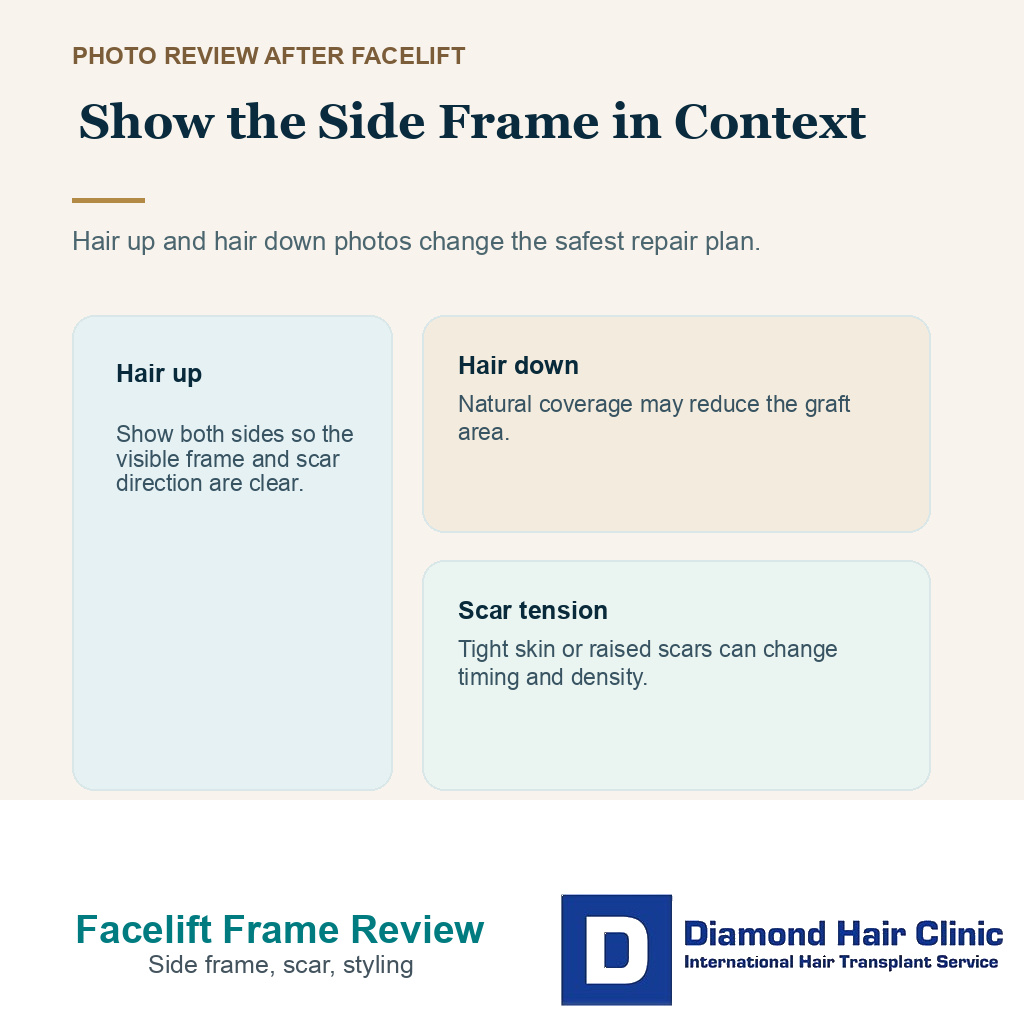
I also review the facelift timeline, incision location, any revision history, and whether numbness or tightness is still present. Then I examine the hair itself. I look at donor density, hair caliber, curl pattern, and whether there is miniaturization. I check the sideburn direction and the frontal hairline together, because a side repair can look wrong if it ignores the rest of the hairline design.
I ask what would count as success. Hiding a scar with hair down is different from wearing the hair pulled back. Lowering the forehead is different from softening the side frame. These goals may overlap, but they should not be treated as the same operation.
Staging protects growth and donor reserve
I use staging when the tissue quality, density target, or donor demand makes one large session less sensible. The first operation can prove growth in scarred tissue, test density tolerance, confirm direction, and preserve options before more grafts are spent. That does not mean the patient is a poor candidate. It means the tissue and donor reserve deserve a measured plan.
A staged plan can feel slower, but it is often more accurate in scarred or fibrotic tissue. It gives us growth information before we commit more grafts. It also protects the donor area if the patient later needs additional frontal, temple, or crown work for a separate hair loss pattern.
A smaller design can be the better result
Some women are good candidates for a transplant after a facelift, but not for every requested change. The better plan may be a smaller sideburn repair, soft scar camouflage, or a limited frontal adjustment rather than a major forehead lowering operation.
That can be the stronger result. A smaller design can make the face look softer while protecting the donor area and avoiding a hairline that looks transplanted. In female hairline work, the strongest result is often the one that does not announce itself.
I do not graft a side hairline after a facelift until the tissue, scar, sideburn shape, forehead goal, donor hair, and curl direction all support the plan. If one of those pieces is not ready, waiting or staging is not a failure. That is how we protect healing. The graft count is not the starting point. The real issue is which change can be repaired safely enough to still look natural years later.

Read this review excerpt
Every single one of my questions was answered and they made sure I had all the details I needed to make an informed decision.