


Returning to Hijab or Turban While Grafts Heal
The medical rule comes before the social pressure. A hijab, turban, scarf, prayer cap, durag, or any daily covering after FUE has to stay clean, loose, brief, dry, and away from the grafted area until the scalp can tolerate more contact. Soft fabric can still be unsafe when it presses, slides, traps heat, ties, or catches crusts.
I understand why this question feels different from an ordinary hat question. For some patients, covering is connected to faith, modesty, cultural identity, work, privacy, or feeling able to leave the hotel. That matters. But fresh grafts do not know why the fabric is there. They only experience pressure, friction, sweat, heat, and removal movement.
My approach is to plan the first days before surgery. If the recipient area includes the frontal hairline or temples, the margin is small. If the covering must cross that area, it may be better to create private time without covering, use a looser public option for short periods, or delay public routines until the grafts are more settled.
My approach is to plan the first days before surgery. If the recipient area includes the frontal hairline or temples, the margin is small. If the covering must cross that area, it may be better to create private time without covering, use a looser public option for short periods, or delay public routines until the grafts are more settled.
Airport security and hotel privacy need their own covering plan. A scarf or turban that works while standing still can become risky when it is adjusted quickly, pulled aside, or placed back over crusts in public.
The first rule is no pressure on fresh grafts
In the first days after FUE, the safest covering is often no covering over the recipient area. That is uncomfortable for many patients, but the biology is temporary. The grafts have been placed into tiny openings in the skin, the surface may be crusted, and the hairline can be easy to catch with fabric. General recovery guidance separates the earliest healing period from later washing and return to routine decisions. Diamond Hair Clinic aftercare keeps the same mindset about early contact.
If you must cover briefly, I judge the fabric by what it does. Does it touch the grafts? Does it leave a line? Does it move when you turn your head? Does a seam, fold, knot, or elastic edge cross the recipient area? Does it trap sweat? Does it catch crusts when removed? A covering that fails those checks is too much contact, even if the material feels gentle.
For that reason, I avoid giving one universal date. Some patients have crown grafts, some have hairline grafts, some have swelling, some have dry crusts, and some need strict public privacy. The clinic’s own instruction for your graft pattern matters more than a general online timeline.
Required covering is different from casual headwear
A casual hat can usually be skipped for a few days. A required covering may be part of daily life, so I treat the plan differently. The timing principles behind soft headwear after a hair transplant still apply, but the planning burden is higher when the patient cannot comfortably stay uncovered outside a private room.
For ordinary caps, bucket hats, beanies, helmets, and hard hats, I keep the separate guidance on wearing a hat after a hair transplant. Here, I am talking about a hijab, turban, scarf, prayer cap, durag, bonnet, or similar covering that may be worn for identity, worship, modesty, hair texture care, or public return.
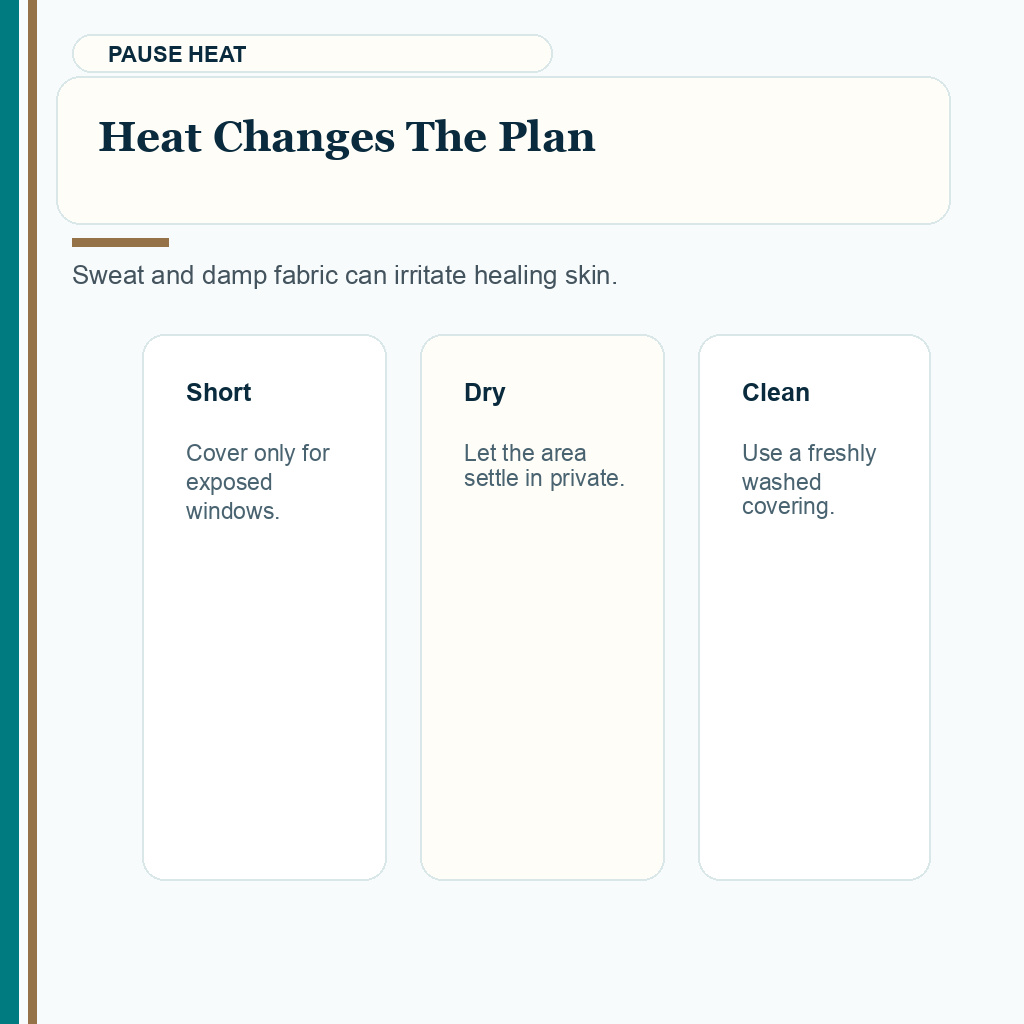
The practical difference is duration and removal. A loose cap for a short walk is one event. A scarf or turban worn for many hours, adjusted often, tied near the hairline, or removed quickly becomes repeated contact. Build in private breaks so the fabric can come off slowly before heat, sweat, or pressure marks build up.
Build private time without covering first
Before surgery, decide where the scalp can be uncovered without panic. That may be the hotel room, a private car, a clinic room, a quiet restroom, or a trusted home setting. These windows allow heat and sweat to settle, reduce repeated adjustment, and make it easier to inspect the scalp once without touching it.
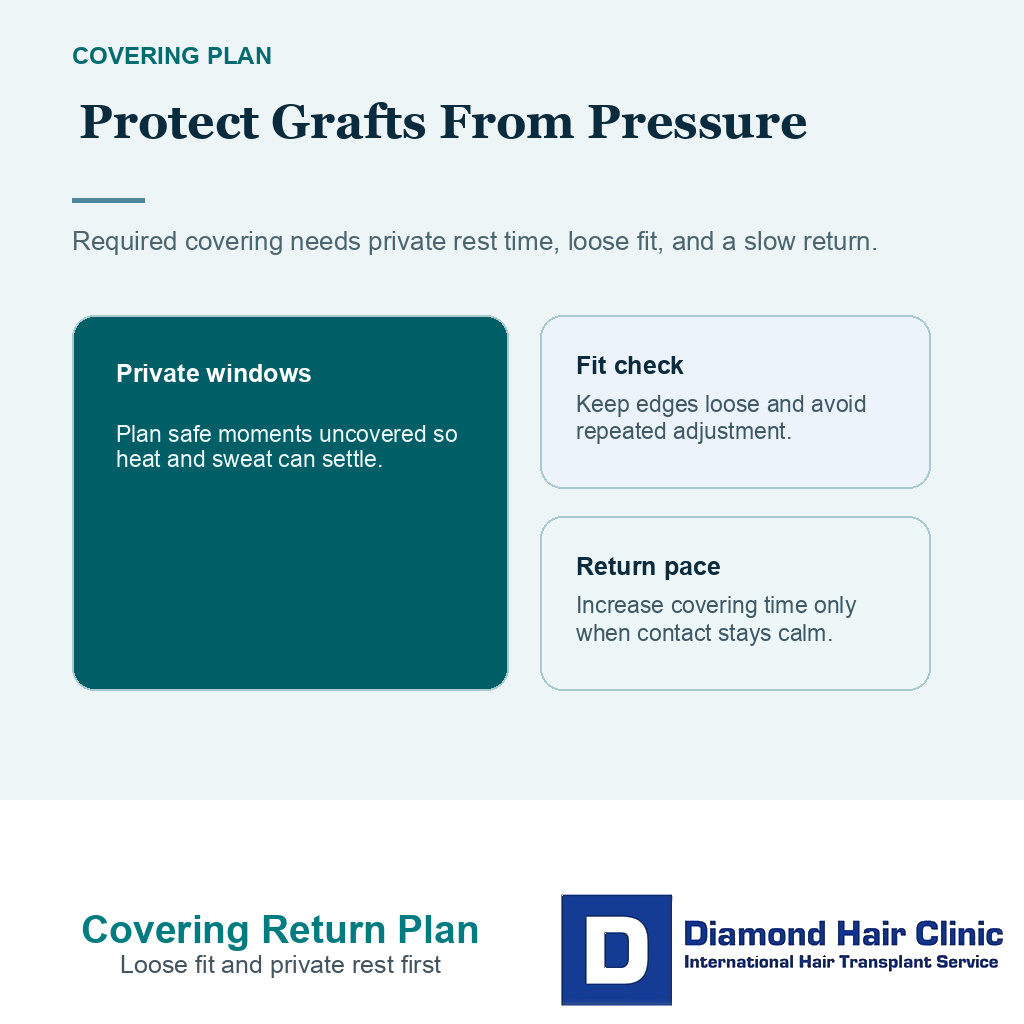
For patients travelling after female hairline work, privacy can feel urgent. During private travel after female hairline FUE, the new edge still has to be protected first. A short exposed walk through a controlled space is safer than a tight fabric edge rubbing a fresh hairline for a whole journey.
Work planning matters in the same way. If your job requires public contact, cameras, customers, religious dress, or uniform expectations, plan the first return around scalp protection. For public work after a hair transplant, realistic visibility and timing expectations matter, but the covering itself still has to pass the pressure test.
Match the covering to the current pressure window
The safest covering choice changes as healing changes. Use this planner to match the covering decision to the current scalp state, not to a single number on the calendar.
Covering pressure window
Match the covering choice to the healing stage
- Fresh graftsKeep it off
- Crusting stageLet crusts settle
- After first washDry before covering
- Travel or workUse short windows
- Wudu or prayerSeparate the ruling
- Gradual returnReturn gradually
Keep it off
If the recipient area is fresh, bleeding, wet, tender, or has early scabs, ordinary fabric should stay off the grafts.
Next move Use privacy in the room first. Do not solve visibility by pressing fabric over new grafts.
Let crusts settle
Dry crusts can catch on fabric during removal, even when the fabric feels soft.
Next move Avoid repeated testing. If fabric catches, stop and loosen rather than pulling.
Dry before covering
A cleaner scalp may still be unready for tight or damp covering.
Next move Keep fabric clean and dry, and do not drag a towel or scarf across the recipient area.
Use short windows
Cover only for the exposed part of travel or work when it can stay loose and away from grafts.
Next move Remove it in a clean private space before heat, sweat, or repeated adjustment builds up.
Separate the ruling
The medical issue is graft pressure, rubbing, wiping, and wet fabric. The religious validity question is separate.
Next move Ask your own adviser for religious rulings and keep the clinic boundary on scalp contact.
Return gradually
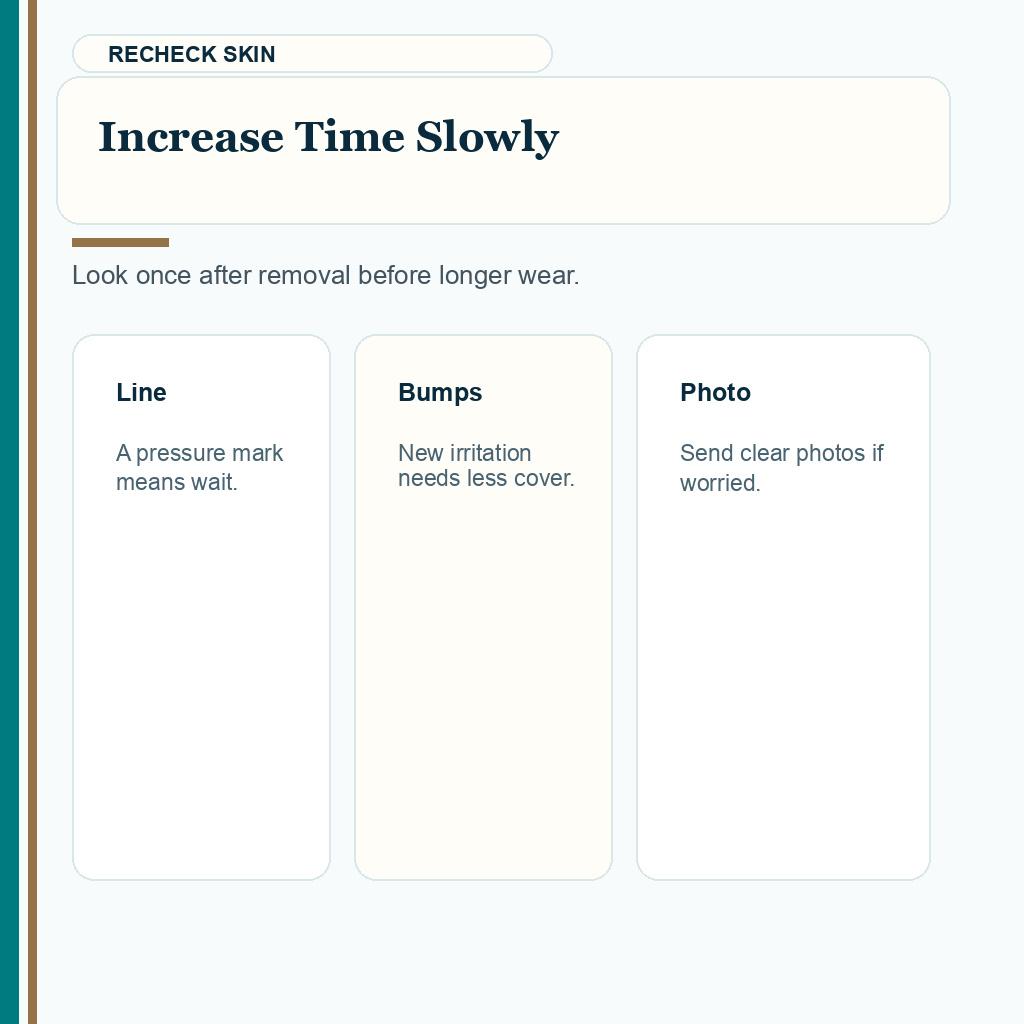
Longer wear becomes more reasonable when skin is dry, crusts are gone, and removal leaves no pressure line.
Next move Increase time slowly and step back if redness, tenderness, pimples, or rubbing appears.
The stage matters because a covering can be wrong for different reasons. Early on, direct graft disturbance matters most. Later, crust catching, sweat, damp fabric, repeated adjustment, or pressure marks may matter more. A patient who understands the stage usually makes fewer anxious tests.
Wudu and prayer need two separate boundaries
From the surgical side, I can set the contact boundary. Fresh grafts should not be rubbed, wiped, pressed, soaked, dragged with a towel, or covered with damp fabric. For the religious ruling about modified practice, masah, prayer posture, or how to handle a temporary limitation, speak with your own religious adviser. I do not replace that role.
The medical details are still important. If you perform wudu after a hair transplant, separate water from pressure. A careful medical wash is not the same as wiping directly across grafts. If fabric goes back on afterward, the scalp should not be wet in a way that makes the cloth stick, slide, or trap irritation.
The fabric boundary applies to prayer after a hair transplant. A prayer cap, scarf edge, forehead contact, bending, and repeated adjustment all deserve planning. The act of worship is not the medical problem. The medical problem is the contact pattern around a healing recipient area.
Fabric choice matters less than how it moves
Silk, cotton, jersey, wool, bamboo, satin, and synthetic blends all behave differently, but fabric name is not enough. A smooth material can still be tight. A soft scarf can still drag across crusts. A turban can create pressure from wrapping tension. A durag can pull from the tie point. A prayer cap can press exactly where frontal grafts were placed.
Choose a clean, dry, breathable, loose option that can be placed and removed without sliding across the grafts. The front edge should not sit on fresh hairline grafts. The fabric should not need constant correction. If the covering becomes sweaty, dusty, perfumed, oily, or damp, it is no longer a gentle surface for healing skin. The safest cover is one that can be lifted away without crossing the recipient area.
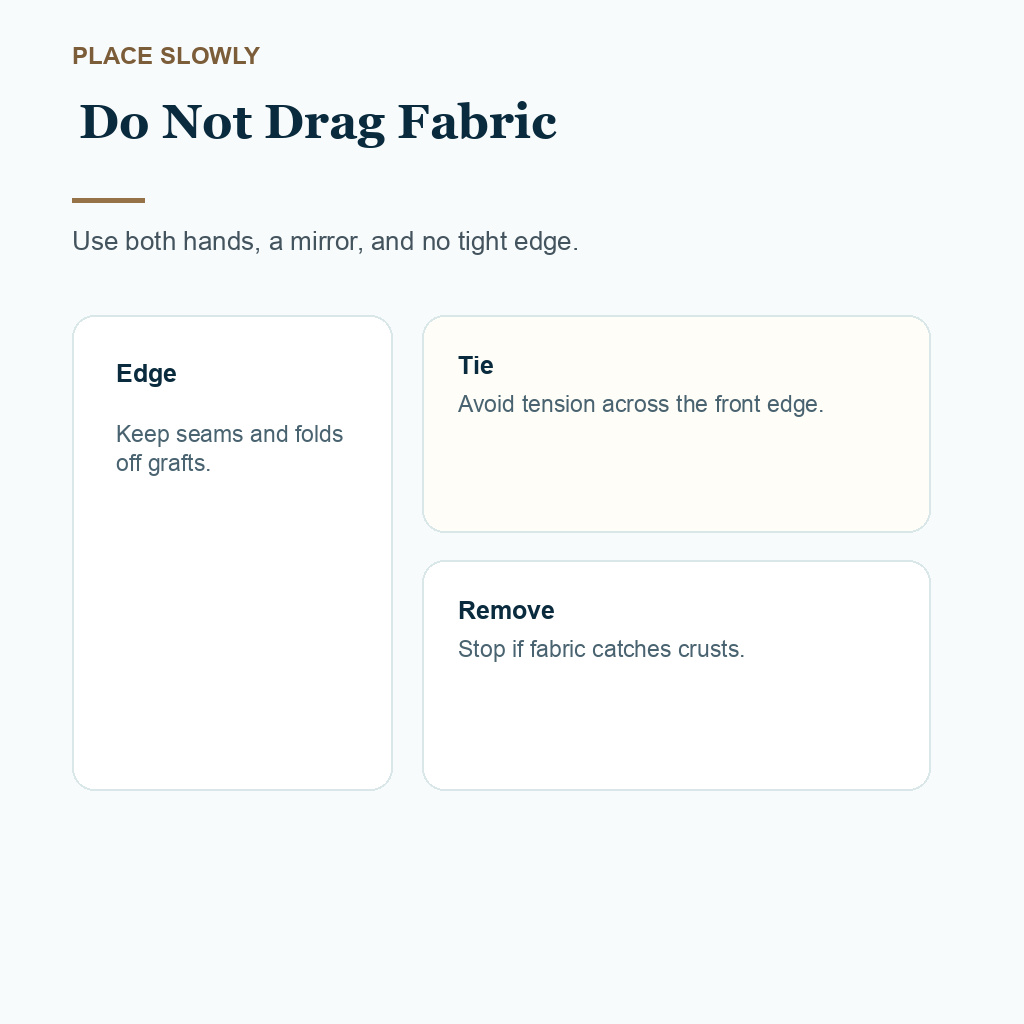
Removal is often the riskiest moment. Put the covering on slowly in front of a mirror, then remove it slowly. If fabric catches, stop. Do not pull to see whether the grafts are fixed. Do not keep repeating the test. If you are worried after contact, the safer next step is usually a clear photo and clinic message, not more touching.
Travel and work should use short covering windows
For travel, use the covering only for the exposed part if that is the safest compromise. Avoid all day concealment during airport queues, long transfers, hot cars, or flights if the fabric touches the recipient area. If you must cover, choose the loosest option, practice before leaving, and remove it in a clean private place when possible.
The coverage plan applies to going out after a hair transplant. Crowds, heat, sun, sweat, and accidental bumps can make a fragile plan worse. A short, calm outing is different from a full public day with fabric rubbing and repeated adjustments.
If washing or clinic spray is part of the timing, follow the same careful contact logic used for how to wash hair after a hair transplant. Do not cover damp grafts because the scalp looks cleaner. Clean skin can still be mechanically vulnerable.
After contact, judge what actually changed
If a scarf edge, turban wrap, cap, or loose cloth touches the grafts once, do not panic and do not start rubbing. Look once in good light. Was there bleeding? Did a graft with tissue come out? Is there a new open spot, increasing pain, wet crusting, pus, spreading redness, fever, or swelling that keeps getting worse? Or did the fabric simply brush the surface and the scalp looks unchanged?
The same measured response applies to touching grafts after a hair transplant. Not every brief contact means graft loss. The response should match the event. Stop using that covering for now, take photos if there is a visible change, and send those details to the clinic before trying the same covering again.
Do not try to prove the grafts survived by touching, picking, washing harder, or putting the same covering on again. One small accident should lead to less contact, not repeated experiments.
Return to covering gradually
Gradual return usually starts when the scalp is dry, crusts are gone or clearly settling, removal does not catch, and the fabric leaves no pressure line. Even then, start with short wear at home. Take it off slowly. Check the scalp once. If there is no fresh redness, tenderness, sweating irritation, or pressure mark, you can increase the time in steps.
The four covering recovery slides below keep the return calm and away from graft pressure.

Keep the covering plan inside the wider hair transplant aftercare sequence. Sleep position, washing, swelling, travel, heat, sweat, and clinic photo follow-up all affect how the scalp behaves. A covering that is safe for one hour in a cool room may be too much for a long hot day outside.
If your clinic gives a stricter rule than this article, follow the stricter rule. The surgeon who knows the graft pattern, hairline position, skin response, and operation details has the best view of your case.
Let the first days be temporarily inconvenient
It is better to make the first days awkward but controlled than risk the result with a tight cover too early. Privacy and identity deserve respect, but graft protection still comes first. A few days of careful planning can prevent weeks of anxiety about rubbing, bleeding, or whether a visible area was damaged.
Before surgery, tell the clinic what covering you normally use, how long you need to wear it, whether the hairline or temples will be covered, and what public situations you cannot avoid. Bring the cleanest, loosest option you can use. Plan where you can remove it. Then return gradually instead of forcing normal life onto fresh skin.
The right question is not simply when you may cover again. It is whether the covering you need can stay off the grafts, stay clean and dry, avoid heat and pressure, and come off without catching. When the answer is yes, the plan becomes much calmer.

Read this review excerpt
told me the quality of my donor hair and what he could take out and advised me what will the be best outcome with what donor hair I had.