


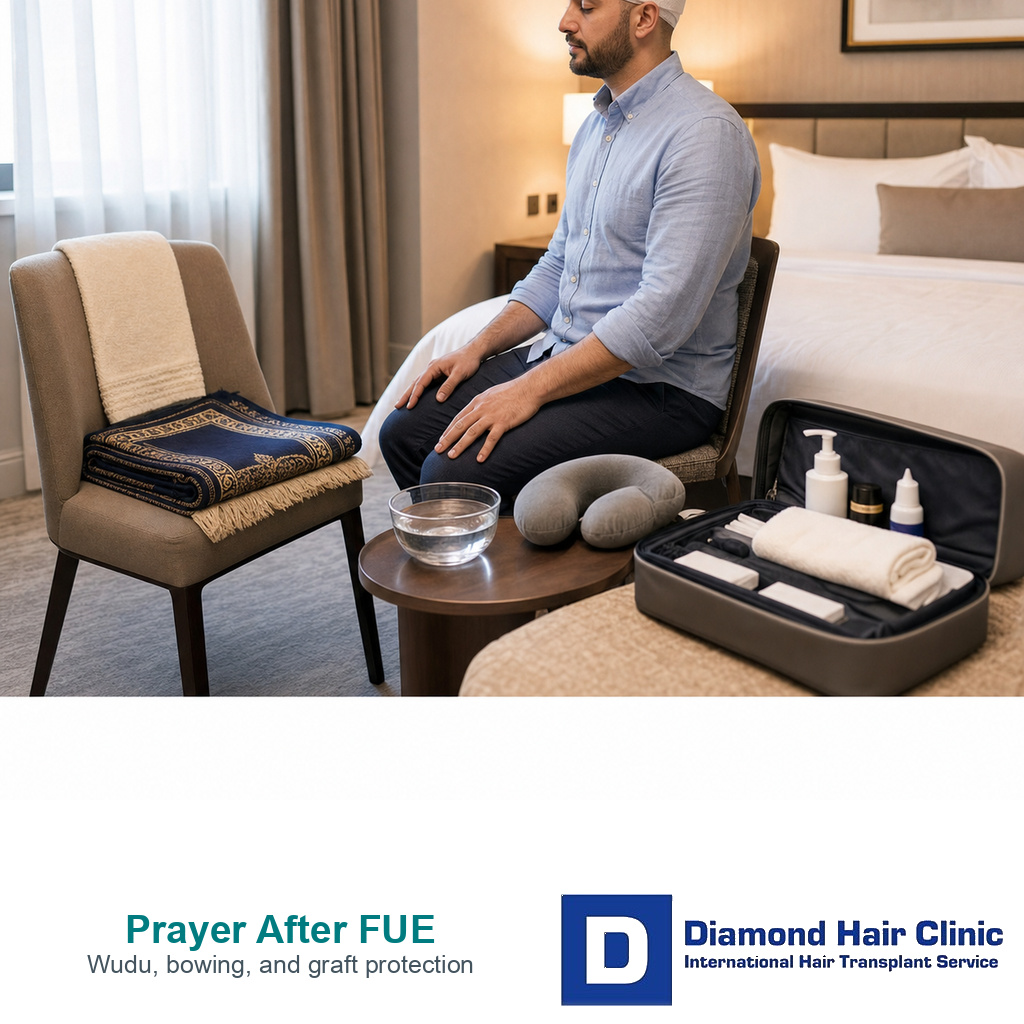
Praying While FUE Grafts Heal
Prayer can usually continue while FUE grafts heal, but the first days may need medical adaptation. The medical priority is to protect the grafts from rubbing, pressure, towel drag, strong water pressure, repeated low head position while swelling is active, and forehead contact with the mat or floor. Wudu after a hair transplant, head wiping, bowing, and prostration can be planned so worship remains practical without treating fresh grafts as normal skin.
I can set the medical boundary, but I cannot give the religious ruling. If you need a modified method, speak with your own religious adviser before surgery. That is much easier than trying to decide while you are swollen, tired, or worried in the hotel. Protect the grafts while keeping prayer realistic.
Make the prayer plan before surgery day. Decide how you will wash gently, avoid forehead or graft contact, and keep the head position comfortable while swelling is possible. The clinic can set the contact boundary. Religious rulings should come from your own trusted adviser.
This question matters because prayer is repeated through the day. Each repetition may involve water, wiping, bending, kneeling, standing, a cap or scarf, and sometimes forehead contact. Those are not abstract concerns after FUE. They are exactly the contact points we manage in early recovery.
The prayer adjustment should protect the scalp without turning every prayer into a fear check. Plan the posture first, then follow the same calm method each time.
Prayer needs a medical recovery plan
Prayer needs a recovery plan because a hair transplant is a skin procedure, not only a hair procedure. The grafts sit in tiny openings in the recipient area, the donor area is healing, and the scalp is still sensitive. A normal daily movement can become risky when it adds rubbing, pressure, sweat, bleeding, or repeated contact.
The act of prayer is not the medical problem. The medical issues are specific. Water pressure, hand wiping over the grafts, towel friction, bending the head down, forehead contact with a mat, a tight cap, sweat, and moving quickly while tired can all change the risk. You may be able to pray with a modified position while full forehead contact remains medically unwise in the first days.
Bending over after a hair transplant matters here because prayer can involve repeated low head posture, forehead contact, or quick movements. One slow movement is different from pressure or accidental graft contact.
Handling wudu in the first days
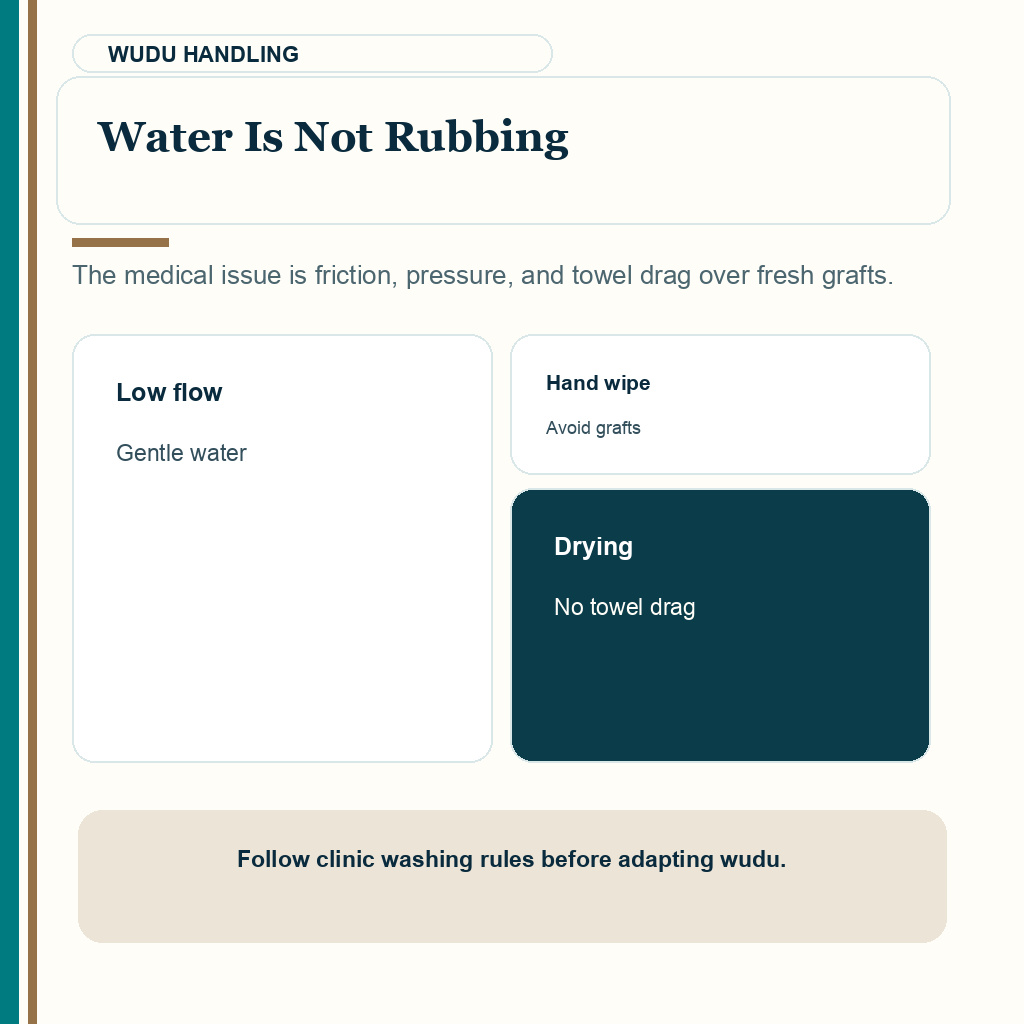
I separate wudu into water, wiping, and drying. Water by itself is not the same as rubbing. A gentle clinic approved washing method is different from running the hand firmly through the recipient area, using strong shower pressure, splashing from height, or dragging a towel across fresh grafts. Drying should also stay gentle. Avoid towel drag over the recipient area and follow the clinic’s instructions for whether to pat nearby skin or leave the area alone. Clean hands and low flow water matter more than completing the movement quickly.
At Diamond Hair Clinic, the first wash is controlled by the clinic, and we show you the amount of pressure that is safe for your own case. Until you have been shown that, do not guess by copying another person’s routine. Water can be gentle. Friction is the danger.
If your clinic has told you not to wet the recipient area yet, follow that instruction. The donor area and recipient area may have different rules, so do not treat the whole scalp as one surface. If your clinic has already started gentle washing, the question becomes how to avoid rubbing or pressure while keeping the scalp clean. The same medical distinction matters when washing after a hair transplant. If only one zone is restricted, build the medical plan around that exact zone.
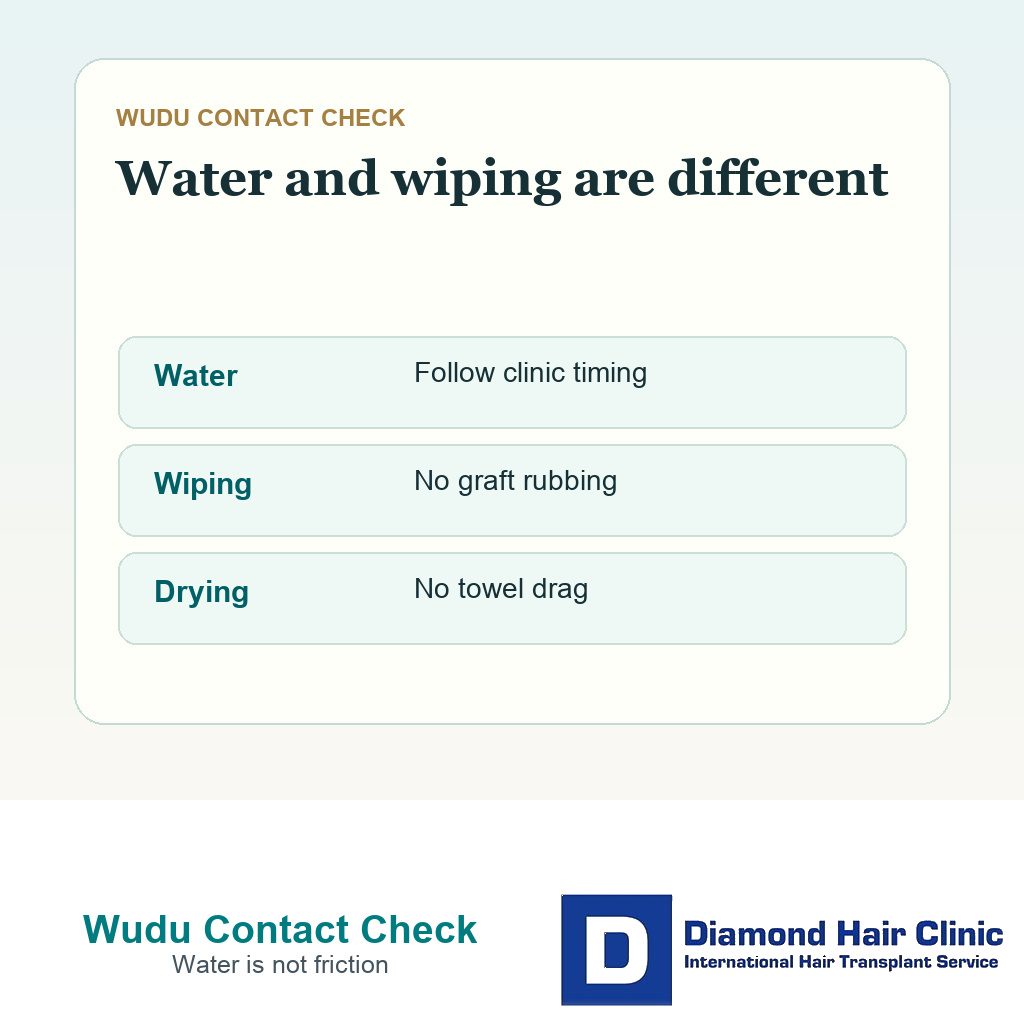
Water is not the main concern. Rubbing, pressure, and towel drag are.
Wiping the head during wudu
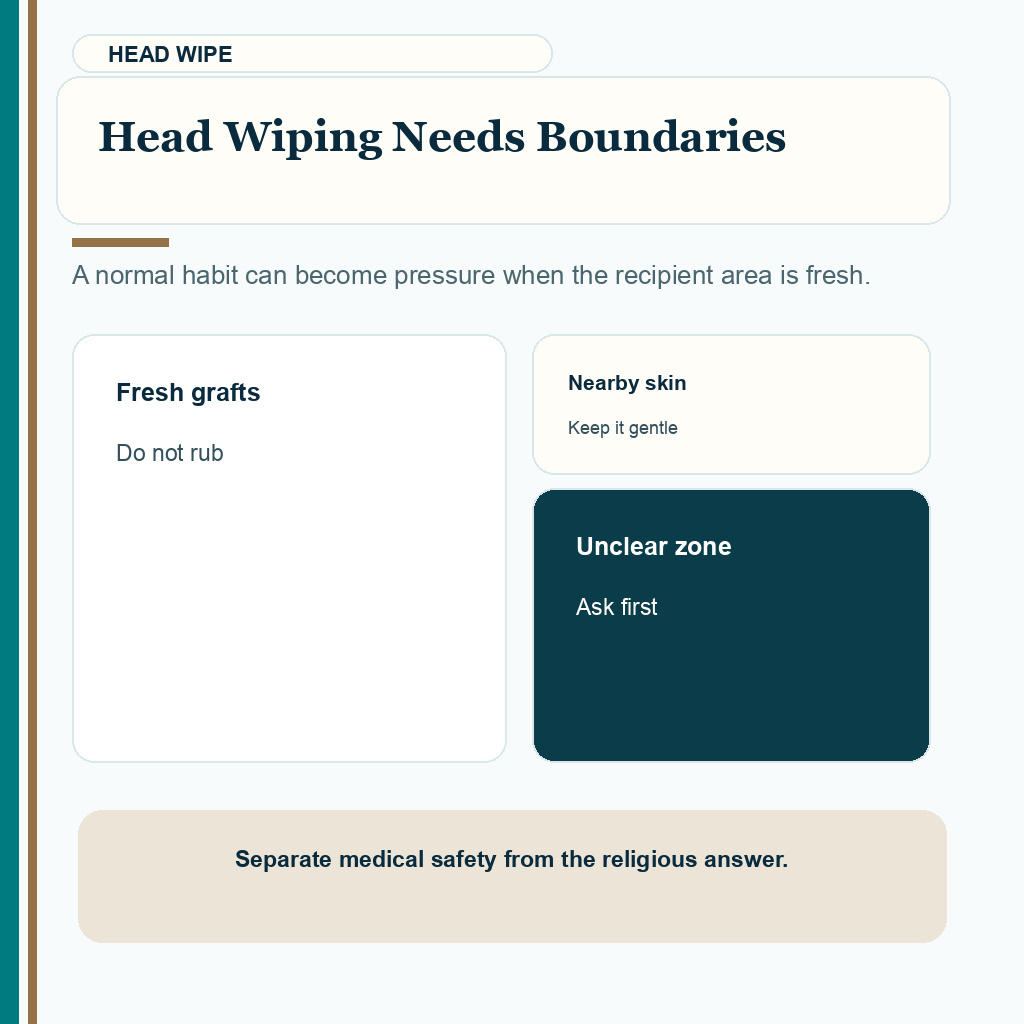
From a medical point of view, wiping directly over fresh grafts is the part I treat with the most caution. In the first days, the recipient area should not be rubbed, scratched, picked, pressed, or tested. A light medical mist is not the same as a hand moving across grafts. If the transplanted area includes the frontal hairline or temples, even a small wiping motion can pass over the most visible grafts.
A brief accidental touch is different from wiping back and forth to complete a habit. If a modified religious method is allowed for your situation, that worship ruling should come from your own religious adviser. I cannot make that ruling for you. What I can say medically is that the recipient area needs protection until the grafts are more secure, the crusts are settling, and your clinic has cleared more normal contact.
Touching grafts after a hair transplant follows the same contact principle. Repeated checking, wiping, testing, or adjusting creates more risk than following a clear plan once.
Saline spray is not the same as wudu water
Saline spray is a medical support tool when the clinic prescribes it. It is usually a soft mist, used in a controlled way, with a clean bottle and no wiping pressure. Wudu involves a broader routine and may include hand contact, head wiping, towel drying, repeated movement, and a different setting.
When saline is part of your aftercare, keep the nozzle clean and avoid touching the scalp with the bottle. Do not turn a medical spray into a reason to keep checking the grafts. If the scalp feels dry, tight, or uncomfortable, send a photo to the clinic instead of increasing contact by yourself.
Saline spray after a hair transplant is useful only when it adds moisture without rubbing. That same separation helps with wudu planning. Medical mist can be gentle, but repeated hand contact is still contact.
Bowing and prostration after FUE
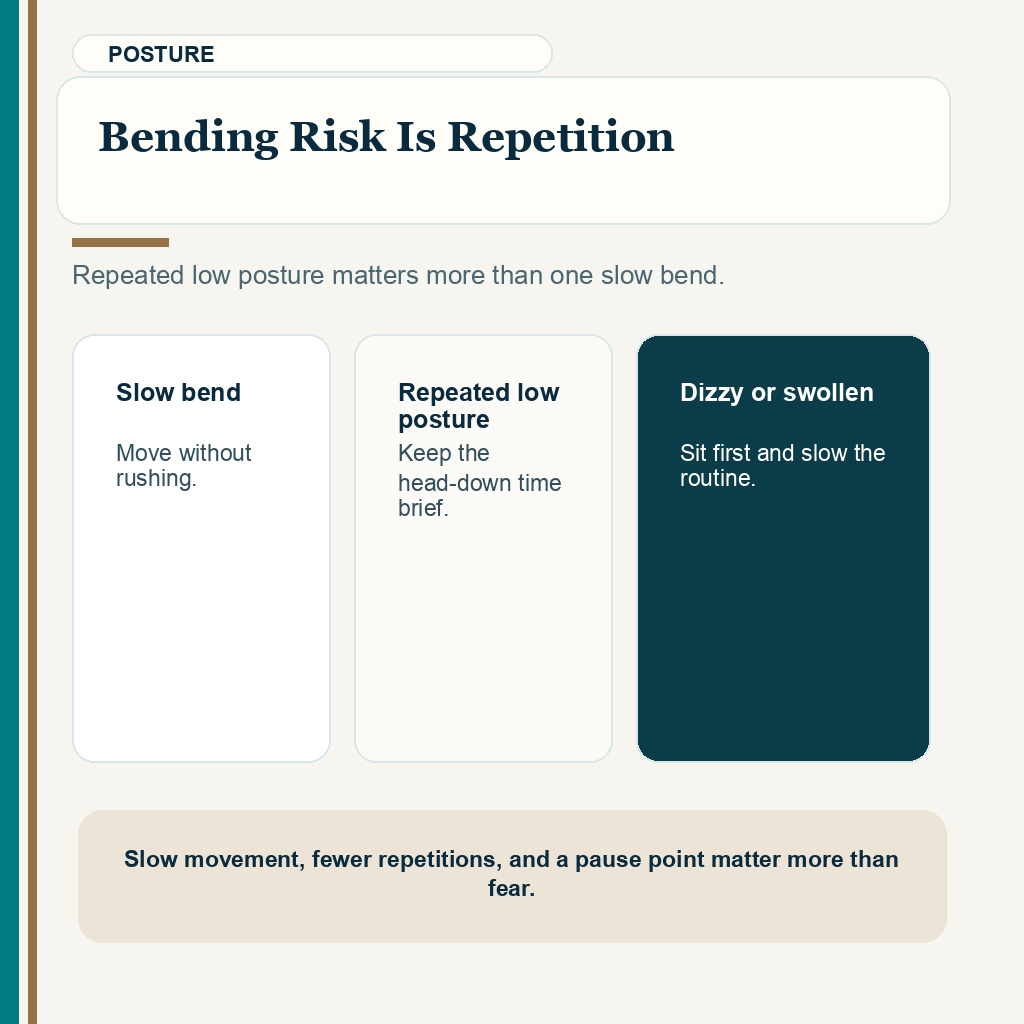
During the first night after a hair transplant and the next day, I am strict with low head positions. Repeated bending can increase facial swelling, make the scalp feel more pressured, and raise the chance of accidental contact. Full prostration adds forehead or hairline contact with the mat or floor. If the recipient area reaches the frontal hairline, the contact margin is smaller than many people realize.
For some patients, a modified or seated position that keeps the head elevated and avoids scalp contact is medically safer during the early days. Sit, move slowly, keep the head above the heart when swelling is active, and avoid pressing the recipient area against anything. I am describing the medical boundary, not making the religious ruling. If dizziness, nausea, bleeding, heavy swelling, or unusual weakness is present, do not force the routine.
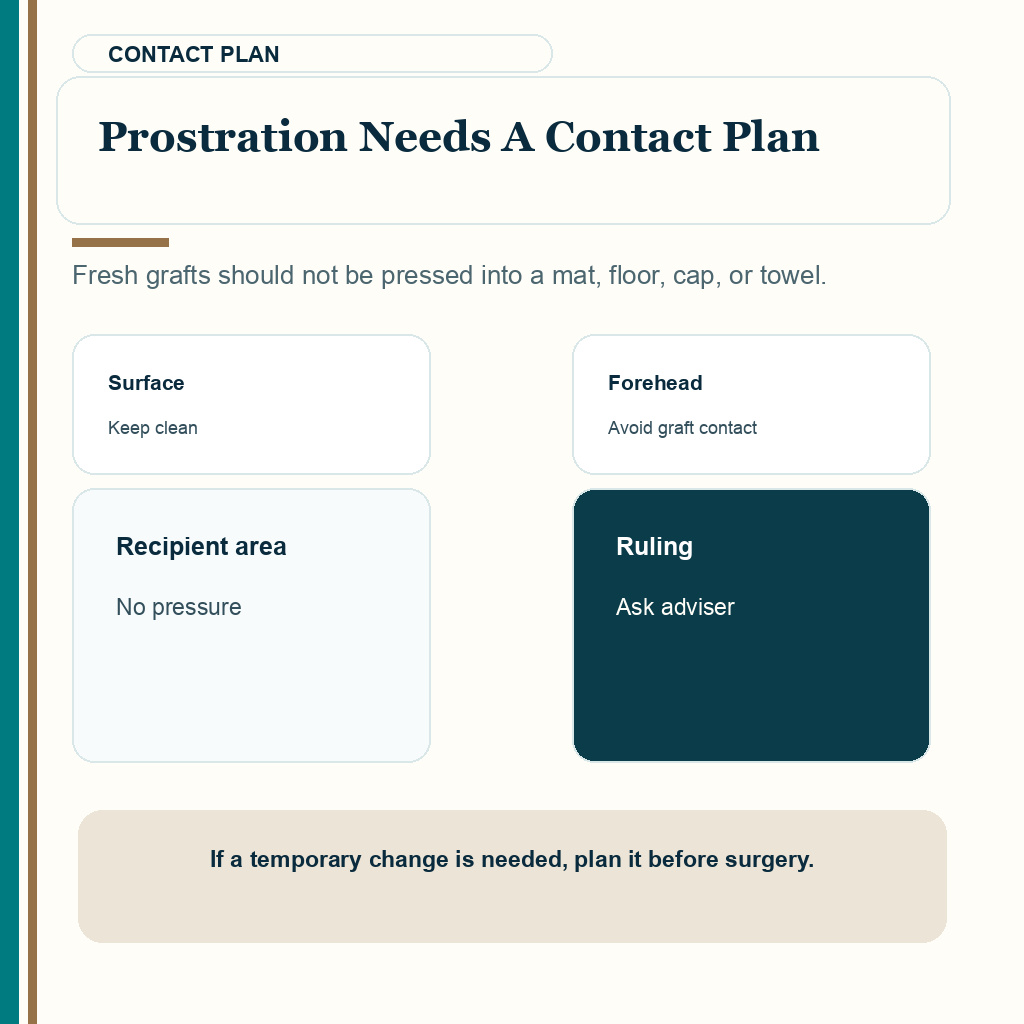
No forehead pressure on fresh grafts is the rule that matters most. The grafts do not need perfect stillness, but they do need protection from friction, pressure, and impact. This matters most when grafts were placed in the frontal hairline or temples, because sujood or full prostration brings the contact point close to the recipient area. If accidental contact happens, stop the movement. Do not rub, rewash, or test the grafts to see whether they survived.
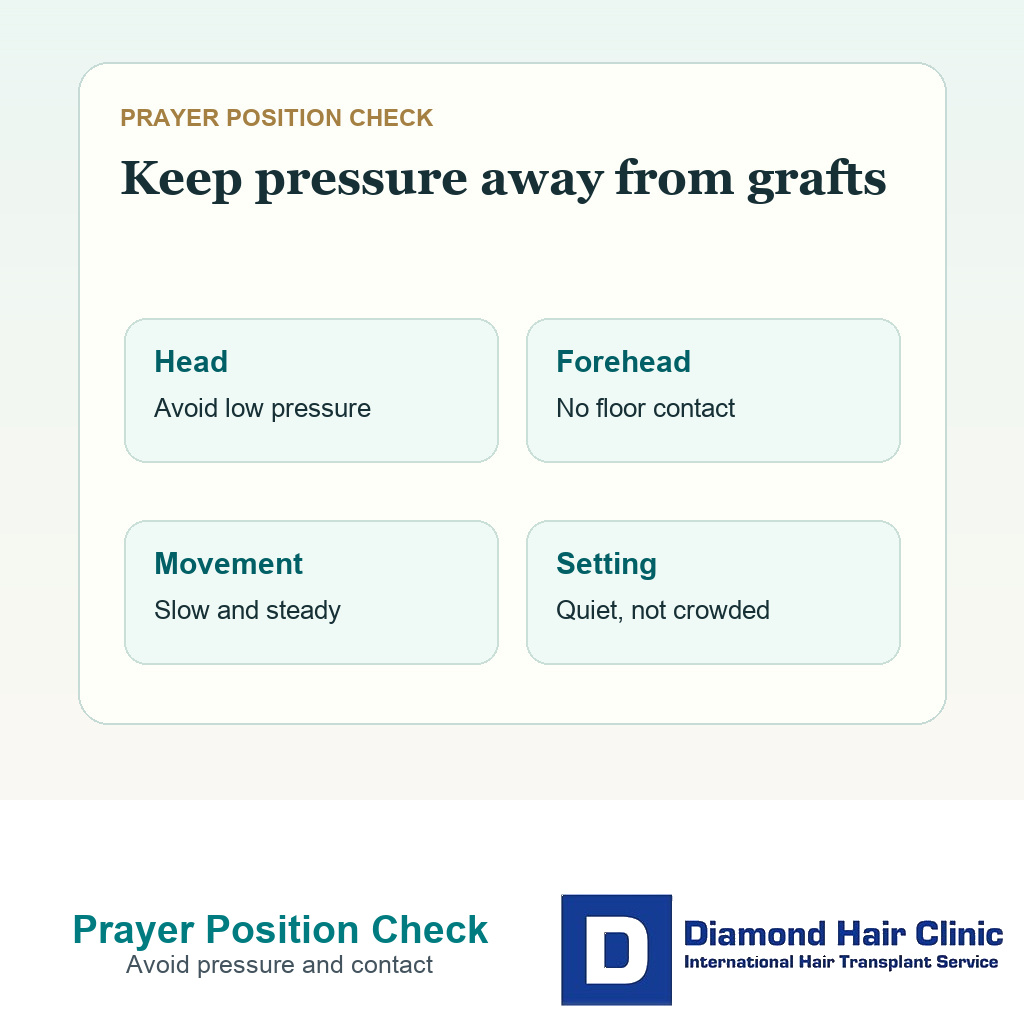
The medical issue is pressure, bending, sweat, and contact, not the act of prayer itself.
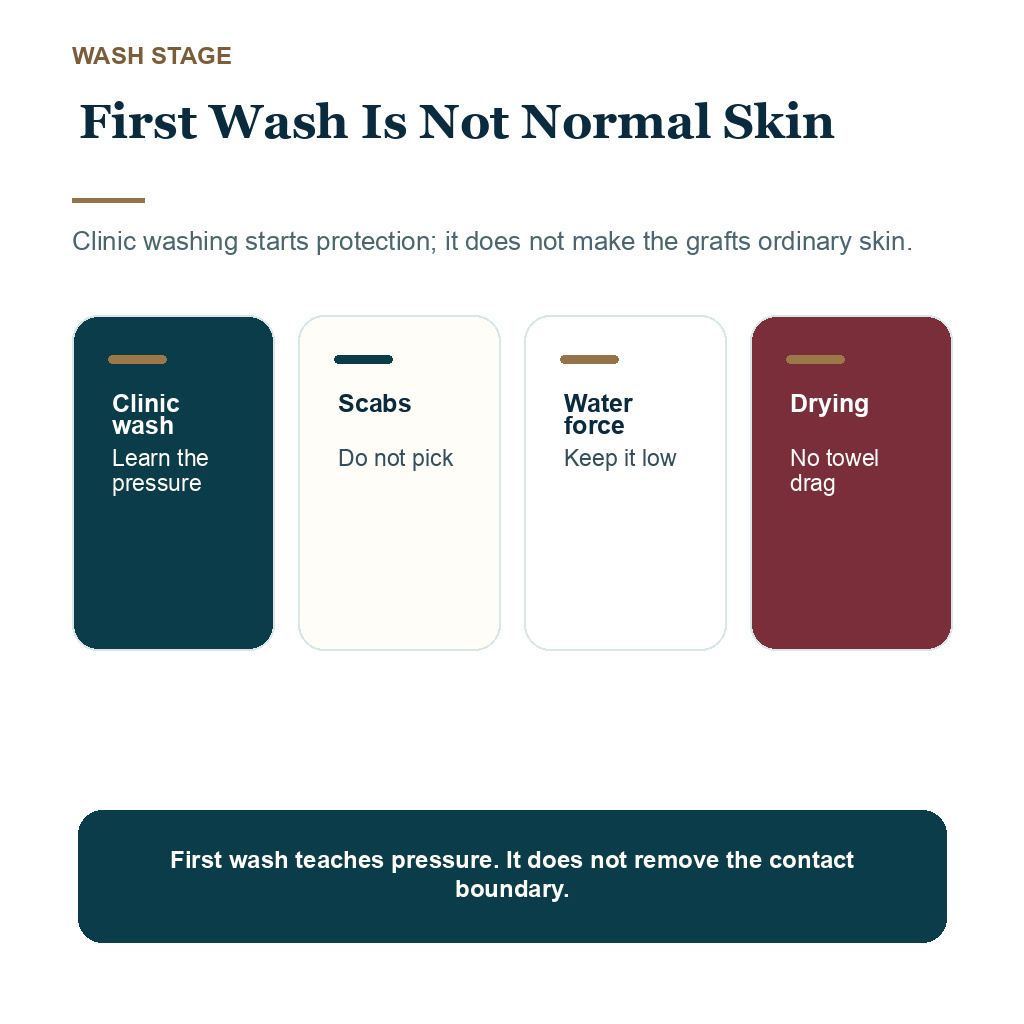
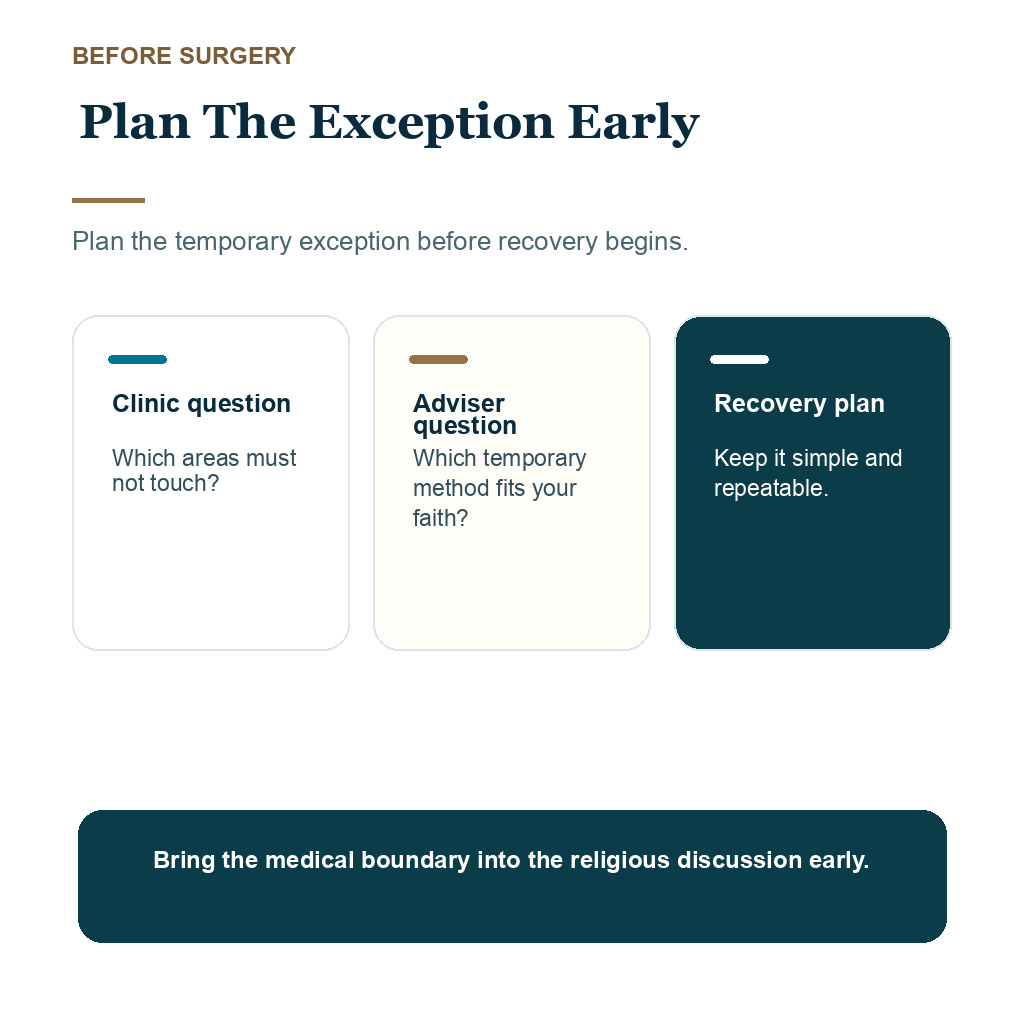
These 10 prayer recovery slides show the medical contact points to plan around while FUE grafts heal. Swipe sideways, use the arrows one slide at a time, or choose a number below the image.
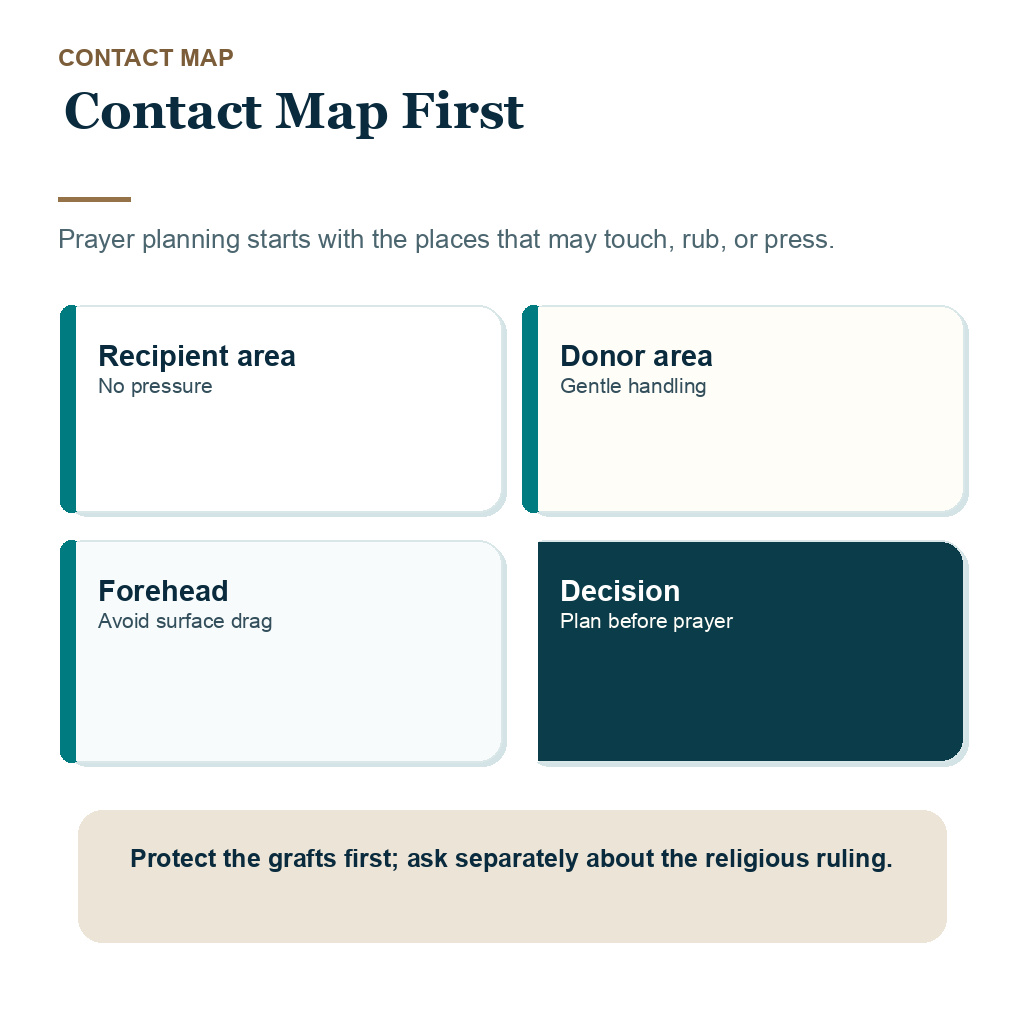



Praying in the hotel or going to the mosque
Medically, the hotel room is usually easier to control in the first days. It is clean, quiet, close to your instructions, and easier to stop if you feel dizzy or swollen. You can use a clean personal surface you control and keep the scalp away from shared contact points. A mosque may be emotionally important, but it can also involve walking, stairs, crowds, heat, shoe changes, bending, and people moving close to your head.
If you go out, treat it like going out after a hair transplant. Keep it short, shaded, quiet, and easy to stop. Avoid crowds, tight headwear, bright sun, sweating, and situations where someone may bump your head.
This does not mean you must isolate yourself. It means you should remove unnecessary variables while the grafts are fresh. A quiet room, a clean personal mat or towel placed away from the recipient area, and a modified position may protect the surgery better than trying to behave normally in a public setting too early.
Prayer cap, scarf, or covering
A prayer cap, scarf, or covering should not rub the recipient area in the first days. Fabric can look soft and still create pressure if it crosses the hairline, slides during movement, has a seam over the grafts, or is adjusted repeatedly. The risk is the contact pattern, not only the fabric name. For patients who wear hijab, turban, scarf, or another daily covering, a covering plan that avoids graft pressure after FUE belongs in the return plan for public prayer or other routines.
If your clinic allows a loose covering, it must be clean, dry, brief, and easy to put on without dragging across grafts. If the covering needs to be pulled over the head, tied tightly, or adjusted during prayer, it is not a good early choice. Privacy is understandable, but the first week is temporary.
With soft headwear after a hair transplant, loose and clean is different from pressure and movement. Put it on and take it off slowly. The removal can be riskier than wearing it.
First wash does not end graft protection
After the clinic has performed or demonstrated the first wash, you have better information about safe pressure. After the crusts begin to soften and clear, the scalp usually tolerates more normal contact gradually. But normal contact and careless rubbing are not the same thing. The first wash is not permission to wipe firmly during wudu or drag a towel across the hairline.
A scalp that looks cleaner can create too much confidence. I still treat the first 10 to 14 days as a protected period. Prayer sits inside the wider hair transplant aftercare plan, along with sleep, washing, clothing, movement, swelling, and follow up.
If crusts are attached, do not remove them because you want the scalp to look better for prayer or public visibility. Let washing and clinic review guide the timing. Trying to make the scalp look cleaner can create more friction than the prayer movement itself.
Swelling, bleeding, or dizziness during prayer
Swelling, bleeding, and dizziness change the plan. If swelling is around the forehead or eyes, repeated bending may make the face feel heavier. If there is bleeding, do not add floor contact or wiping. If dizziness or faintness is present, sit, rest, do not walk alone, hydrate if allowed, and message the clinic with clear details. If bleeding follows accidental contact, send a photo and describe exactly what touched the scalp before doing another wash or prayer movement.
Ordinary soft swelling can be part of recovery, but painful swelling on one side, heat, worsening swelling, fever, pus, drainage, bad smell, or strong redness needs review. With swelling after a hair transplant, those warning signs need a different response from ordinary fullness.
Sleep after a hair transplant matters here too. If you wake at night, pray while still sleepy, bend quickly, or forget the grafts for a moment, you are more likely to bump or touch the scalp.
Decision points before surgery
Settle this before surgery, not after you are already anxious in the hotel room. Confirm when the recipient area may get wet, when the first wash will happen, whether donor and recipient instructions differ, whether wiping over the recipient area is allowed, how to dry the scalp, whether bending should be modified, whether you may use a prayer cap or scarf, and when full forehead contact becomes reasonable for your case. Also confirm whether grafts will be placed at the frontal hairline or temples, because that changes how close prayer contact comes to the transplanted zone.
If religious adaptation matters to you, speak with your religious adviser before travel. The clinic can give medical boundaries. Your religious adviser can answer the worship question. Both sides should be clear because stress after surgery can make small uncertainties feel much larger.
When you send the clinic a question, include your surgery day, the areas transplanted, whether the frontal hairline is involved, swelling level, bleeding, pain, what prayer movement or wudu step caused concern, whether there was scalp contact, and photos if something looks unclear. A clear message helps the hair transplant follow up team give a useful answer.
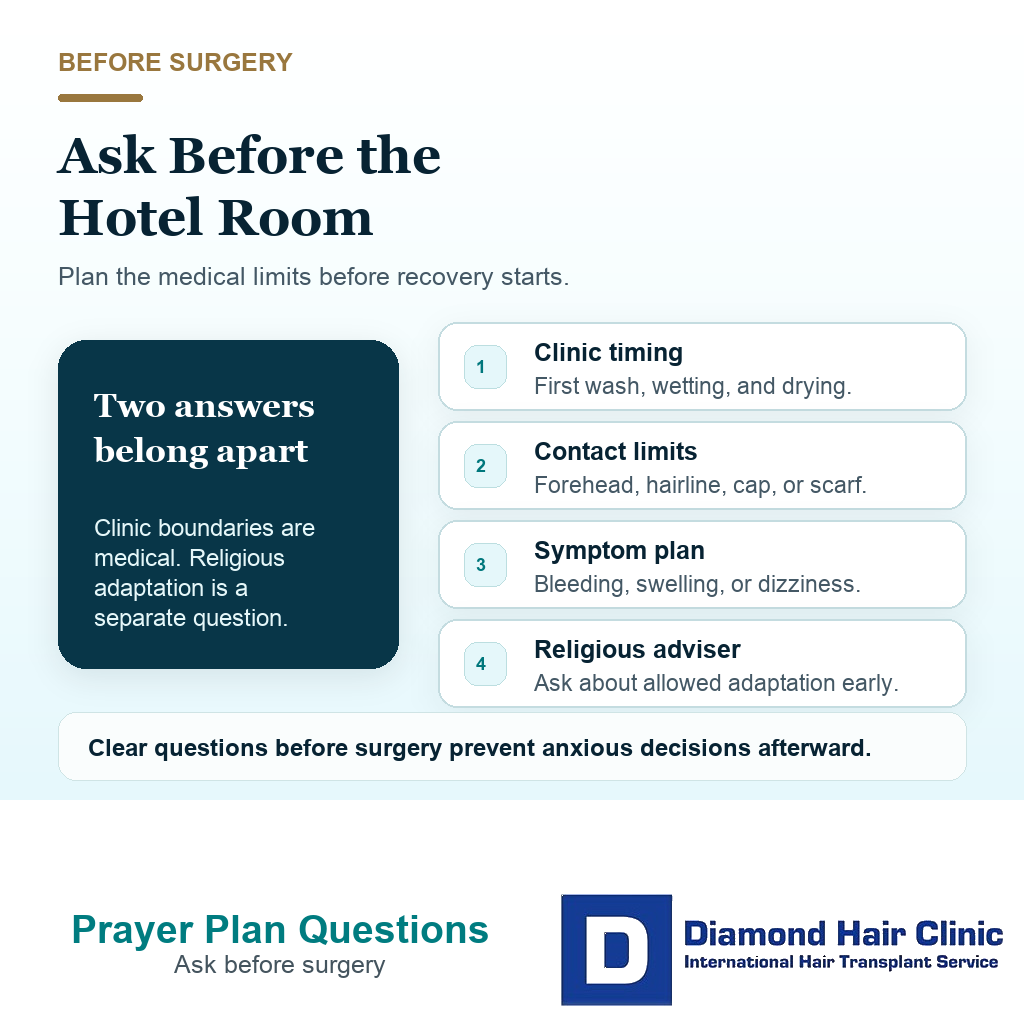
Planning prayer before surgery keeps medical boundaries and religious adaptation questions clear.
Prayer posture should not press on new grafts
Plan it before surgery day. Treat the first 48 hours as the strictest period for head position, contact, and fatigue. Keep wudu medically gentle, separate water from rubbing, and avoid forehead or graft pressure. A temporary seated or modified posture can be the safer medical choice while the grafts are fresh, with religious validity discussed with your adviser. Keep prayer in the hotel room early if travel, crowds, heat, shared surfaces, or swelling make the mosque environment harder to control.
Then I adjust the plan after seeing the scalp. A small frontal case, settled skin, no swelling, and a clean first wash may allow a faster return toward normal movement than a large case with forehead swelling, bleeding anxiety, or heavy crusting. The calendar matters, but the scalp decides. If the scalp is not ready, one more day of modified movement is safer than proving normality too early.
I treat this as practical, not casual. Continue worship in a way that respects the grafts and healing scalp. Do not sacrifice graft protection for a posture that can be modified for a few days. A short period of careful adjustment now protects the result you came for.

Read this review excerpt
told me the quality of my donor hair and what he could take out and advised me what will the be best outcome with what donor hair I had.