


Gentle Wudu Timing for a Healing Scalp
In the first healing days, water is not the main danger during wudu. I worry more about rubbing, wiping, pressure, towel drag, or rushed movement across fresh grafts before the recipient area is ready. A separate small towel can help you dab around the scalp instead of wiping across it out of habit.
I understand why this becomes stressful for Muslim patients. Prayer routine is part of daily life, and surgery should not leave you guessing at the sink after you return to the hotel. At the same time, a hair transplant has a practical healing period. The grafts need protected handling, and the scalp instructions from your clinic must be respected. Even gentle contact can become too much when each wash turns into checking, rubbing, or adjusting the scabs.
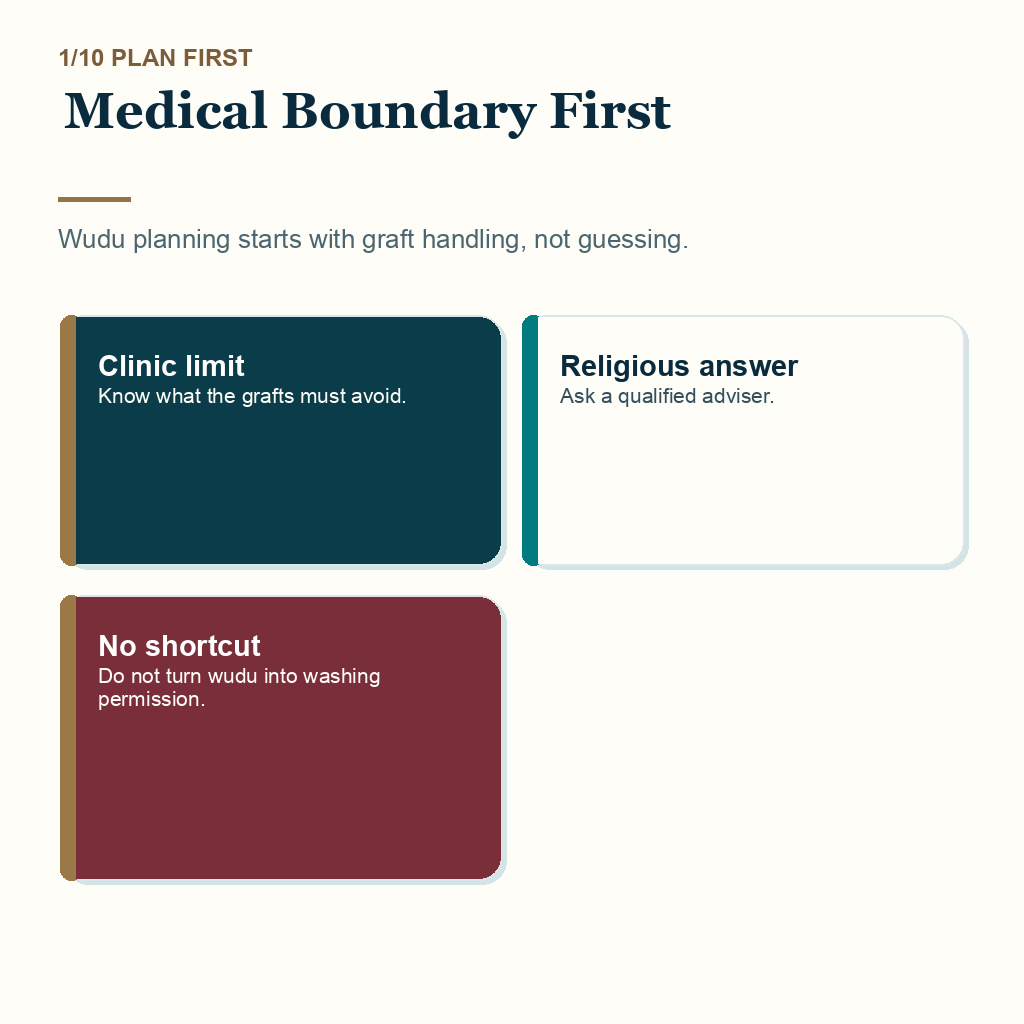
So I plan wudu like any other early recovery routine. We protect the recipient area first, keep the donor area clean, follow the clinic washing schedule, and ask a qualified religious adviser when the religious duty needs a specific alternative. My role here is medical and surgical. I can tell you what fresh grafts should not experience. I should not pretend to give a religious ruling.
After surgery, if this was not discussed beforehand, keep the grafted area out of improvisation. Follow the written wash instruction, avoid wiping the recipient area, and message the clinic with your surgery day and the exact wudu step you are unsure about. A modified wash before normal wiping is safe needs clear medical limits. Guessing at the sink is the wrong place to decide how much pressure, rubbing, or water flow fresh grafts can tolerate.
Why does wudu need a separate plan after FUE?
After FUE, the recipient area contains newly placed grafts. They sit in tiny openings in the recipient area while early healing begins. In the first days, the skin can look secure before it is ready for normal handling. Casual rubbing, towel wiping, scratching, or direct shower pressure can matter more than the simple presence of water.
Many patients first think about prayer after hair transplant, then realize that the separate wudu routine creates the practical problem. The prayer posture, the timing of the day, and the ablution steps all have to fit around the scalp. If that plan is left until the first morning after surgery, it is easy to rush or improvise.
Practice the movement once before surgery without touching the scalp. If the routine already feels rushed at home, it will be harder when the grafts are fresh.
The safest approach is to discuss it before surgery. Ask your clinic exactly how they want the recipient area handled during the first days, which areas can be washed normally, which areas should be avoided, and when the clinic will show or approve the first wash. Then ask your religious adviser what is acceptable if normal wiping or washing cannot be done safely for a short time.
The first days are about contact, not only water
A patient often asks, “Can water touch the grafts?” I usually ask a more useful question first. Will this step disturb the grafts? Direct water pressure, fingers moving through the grafts, a towel rubbing the front, a sleeve brushing the scalp, or a cap pulled down too soon can all create avoidable risk. Water is only one part of that larger contact problem.
I keep the rule simple. Do not turn wudu into a normal hair washing movement during the early healing days. If your clinic has told you not to wash the recipient area yet, then you should not use wudu as a back door to wet, wipe, or pressure that area. Follow the medical timing first, and ask for a religiously appropriate alternative if needed.
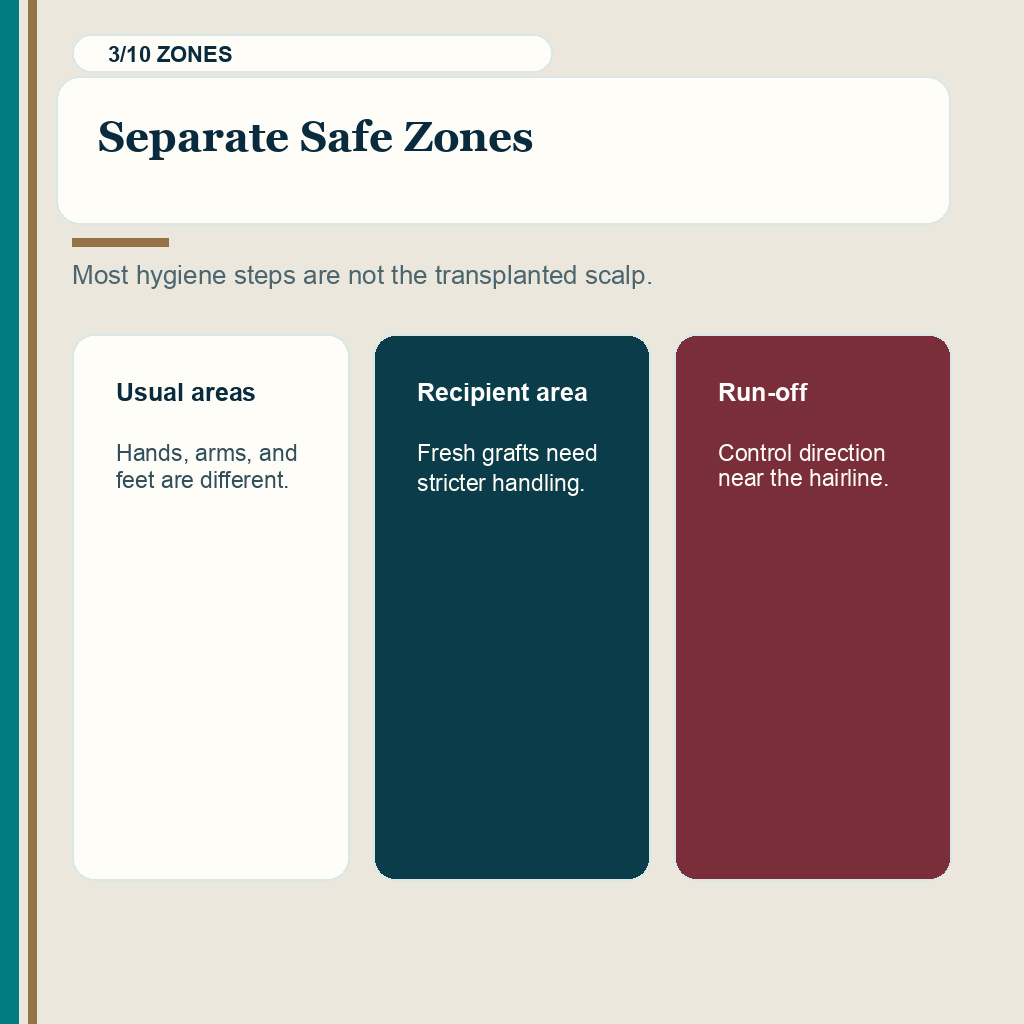
There is also a difference between controlled water near the face and a strong stream onto the transplanted zone. The face, hands, arms, and feet are not the same problem as fresh grafts on the hairline, mid scalp, or crown. A careful patient separates those areas instead of treating the whole head as one surface.
A safe wudu plan starts before surgery
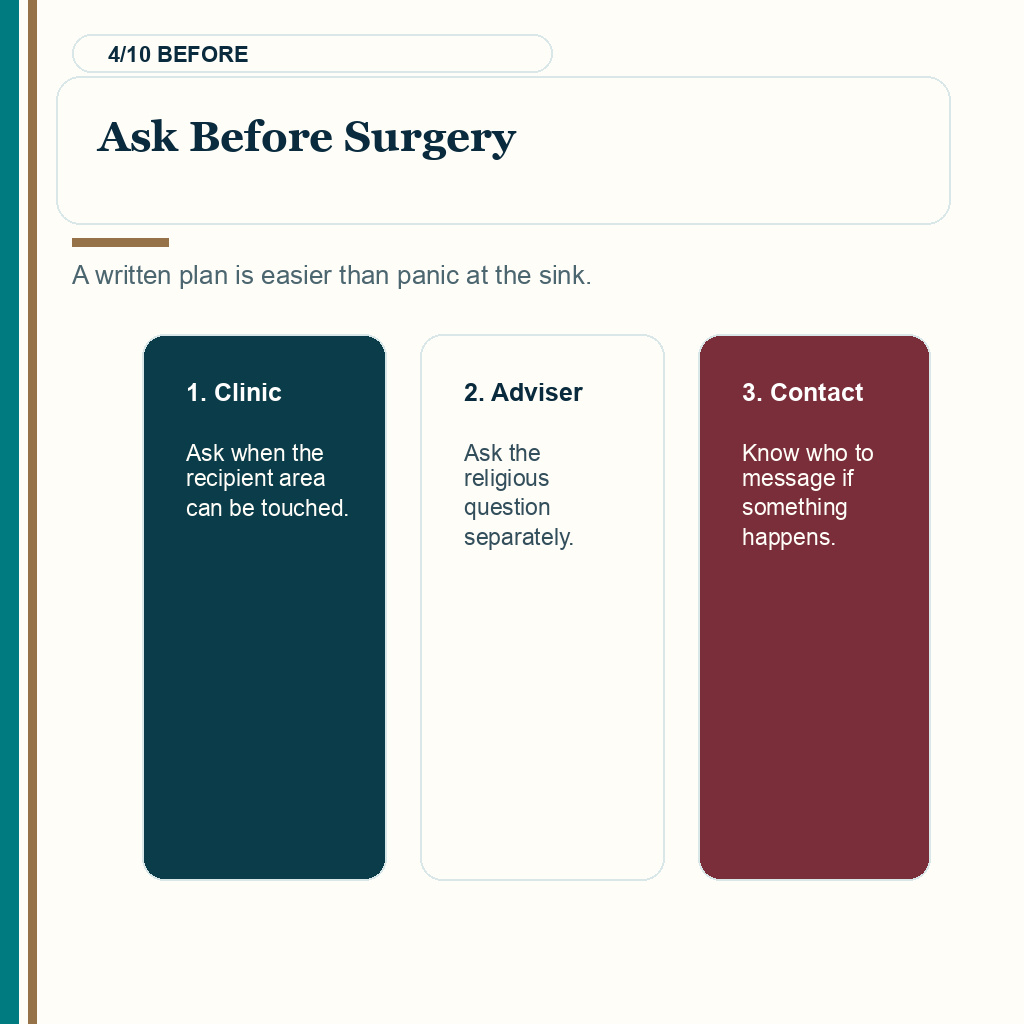
Before surgery, write down the plan in ordinary language. Which day is surgery day? Which day is the first wash? Which part of the scalp should be kept untouched? Who should you contact if water, rubbing, or bleeding happens? This is much easier than trying to remember instructions when the scalp feels tight and you are worried about every movement.
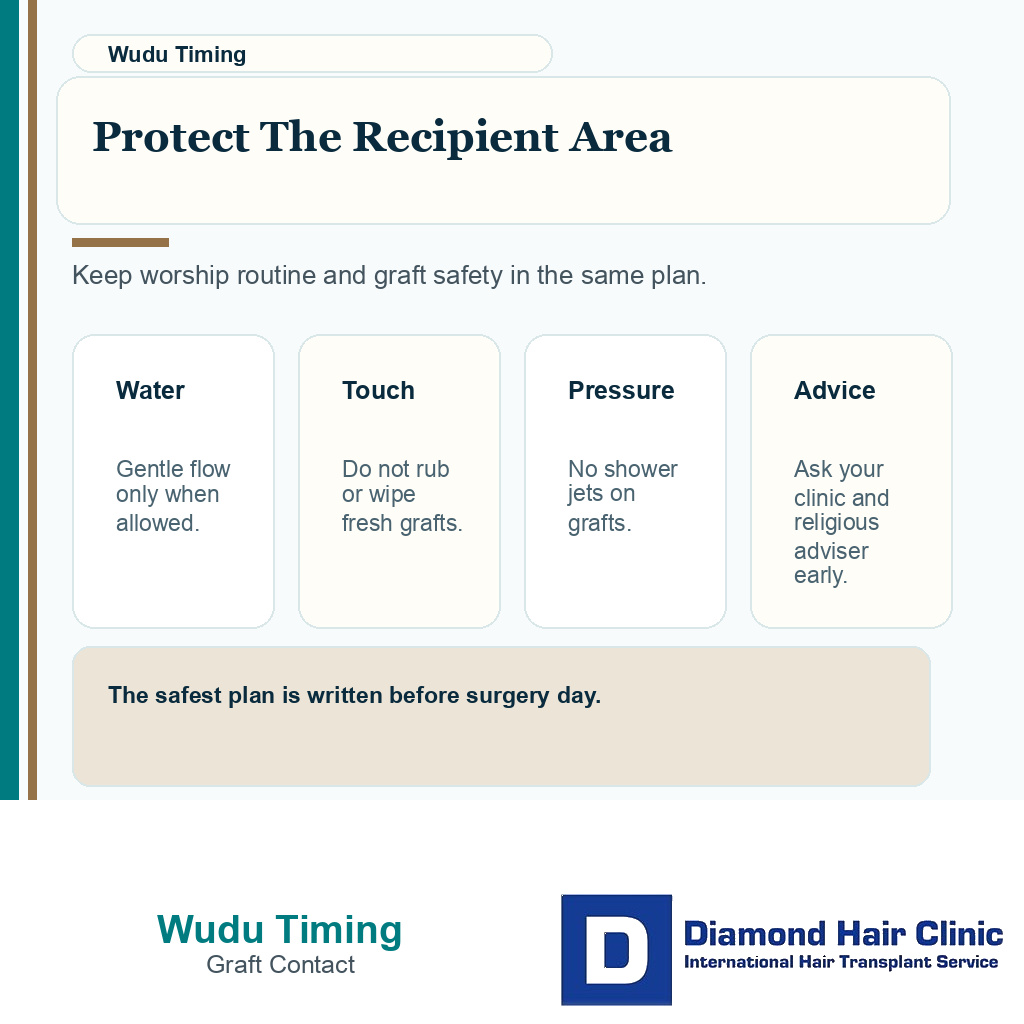
At Diamond Hair Clinic, patients leave with the recovery sequence before they leave the clinic. That includes the first wash, the use of sprays or medicines when prescribed, sleep position, and what to do if an unexpected contact happens. Wudu should be written into that routine if it is part of your daily life.
After surgery, if wudu was not discussed, do not test the grafts with your hand to see what feels safe. Keep the recipient area untouched, follow the written washing instructions, and send the clinic a simple message before your next wudu if you are unsure. The answer can usually be adjusted from the surgery day, the graft position, and whether your first wash has already been shown.
If you are also using saline spray after hair transplant, do not assume that spray permission means normal washing permission. A spray can be used for a narrow purpose, while washing and wiping still need different timing. Always separate what was prescribed from what you are adding on your own.
What can usually be washed normally?
Most of the body is not the transplanted scalp. Hands, mouth, nose, arms, feet, and many routine hygiene steps can often be handled without touching the recipient area. The head step is the one I slow down most, especially when the transplanted hairline sits near the forehead or temples.
Do not let the fear of the recipient area make the whole recovery feel impossible. Instead, separate the safe zones from the sensitive zone. Keep normal hygiene where it does not threaten the grafts. Slow down near the scalp. If water could run down from the hairline into the grafts, control the direction and avoid sudden splashing. When you are unsure, pause and message the clinic.
That routine also helps with clothing and sleep. A loose shirt, careful pillow setup, and an organized routine reduce accidental contact. If clothing is still a question for you, plan what to wear after hair transplant before travel, not after surgery.
A simple contact check before each wudu
Water is usually less important than pressure, rubbing, and timing
Wudu graft contact lens
After FUE, wudu planning protects the recipient area from rubbing, wiping, towel drag, sleeves, and strong water pressure. I set the medical boundary with the patient, and the religious practice question goes to a qualified religious adviser.
This small check is useful because it turns anxiety into decisions. A patient who only thinks, “I must do wudu,” may rush. A patient who asks about contact, pressure, rubbing, and alternatives can protect the grafts while still taking the religious question seriously. The repetition matters because gentle contact repeated several times a day still creates more chances for towel drag or fingertip pressure.
How should you think about masah without rubbing the grafts?
Masah is where many patients become most uncertain, because the head is involved. From the surgical side, the boundary is clear. Fresh grafts should not be rubbed, dragged, or wiped as if the scalp were healed. Even a light movement can become risky if the finger catches scabs, crusts, or grafts.
Medically, I separate three situations. Wiping over skin where no grafts were placed is different from wiping near the hairline where water may run, and both are different from wiping directly across grafts. Direct wiping across the grafted area is the highest risk situation in the early days.
Do not improvise over the recipient area. Do not test the grafts to see whether they feel fixed. Do not slide fingers through the new hairline. Do not use a towel to make the scalp feel dry afterward. A light accidental touch is not the same as a wiping motion repeated several times a day. When the normal action would touch the transplanted zone, decide before surgery how those first days should be handled medically and religiously.
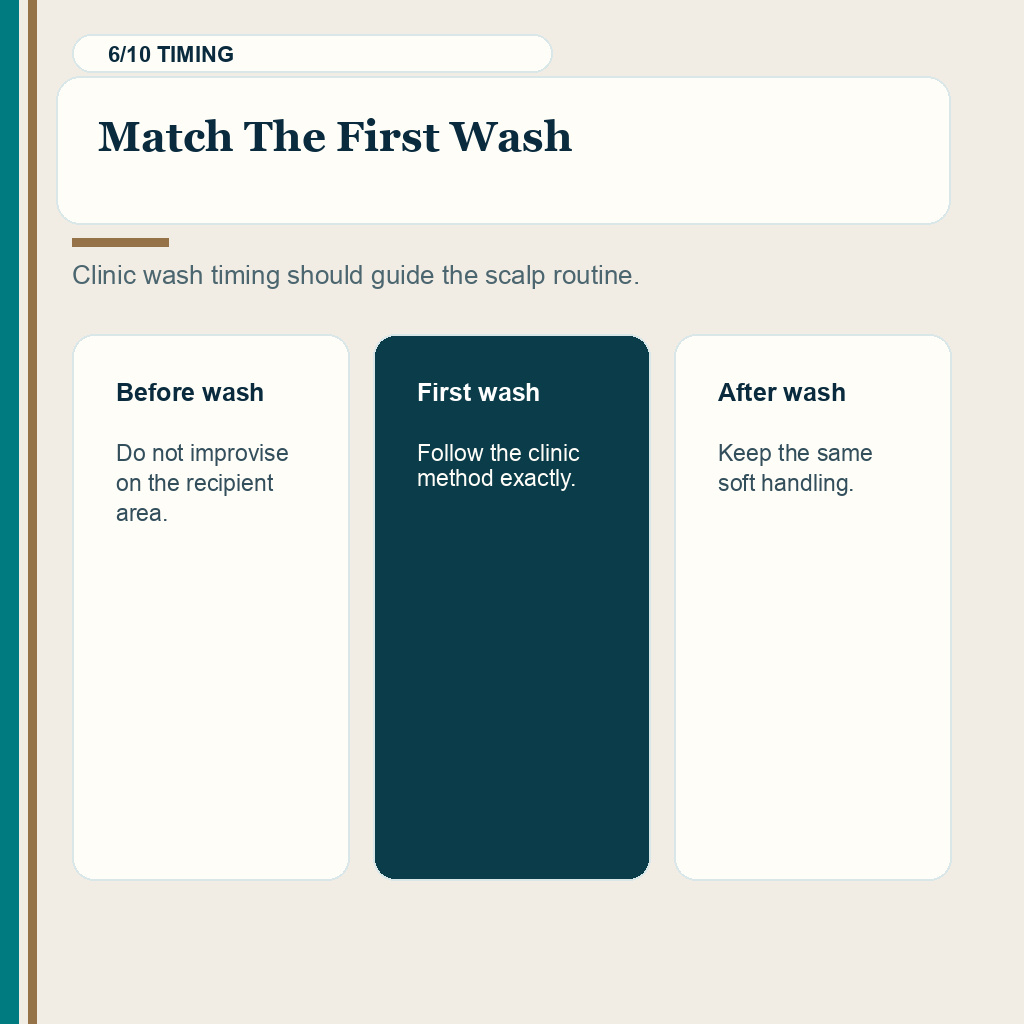
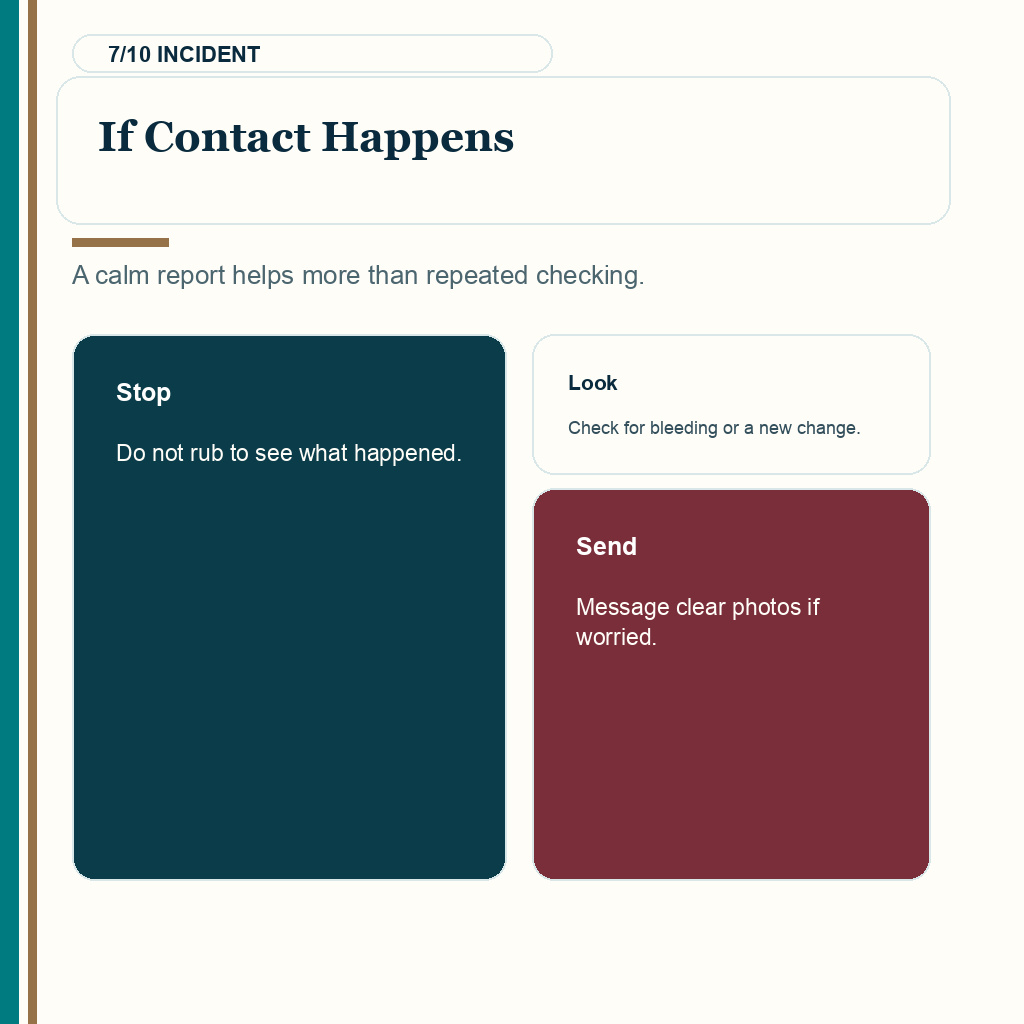
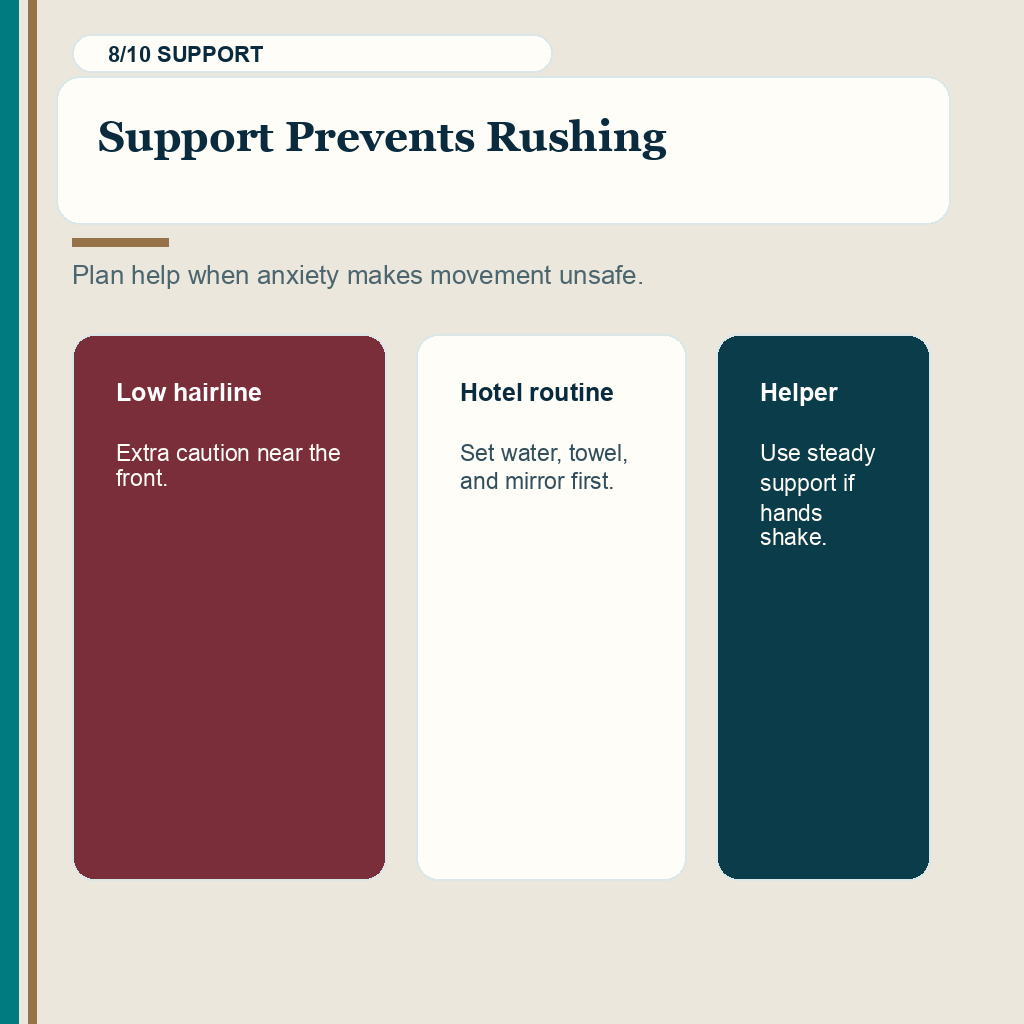
The 10 wudu planning slides below split the medical handling question into one calm check at a time. Swipe sideways, use the arrows for one slide at a time, or choose a number below the image.


Match wudu timing with the first wash instruction
The first wash approved by your clinic is a separate event from casual wetting. At Diamond Hair Clinic, the first wash is usually demonstrated on day 2, but that does not make the recipient area normal. I still treat the first 10 to 14 days as protected time, especially for rubbing, wiping, towel drying, caps, and repeated contact.
Your wudu routine should follow the same gentle handling described in how to wash hair after hair transplant. Wudu timing needs gentle handling too. Timing and softness matter more than speed. When your clinic says the recipient area should not be washed yet, stronger water is not a shortcut.
After the first wash, patients sometimes panic because hair, crusts, or temporary weakness appear different. If the hair looks different afterward, why a hair transplant can look less dense after the first wash can help separate normal appearance changes from true concern. The appearance can change during cleaning, and that alone does not mean graft loss. What matters is whether the scalp was handled correctly.
When might support or an alternative routine be needed?
Some patients are comfortable with a careful routine. Others need help. If grafts sit close to the frontal hairline or temples, if your hands shake when anxious, if you are staying alone in a hotel, or if you know you will rush before prayer in a shared setting, arrange support before surgery. A steady helper can prevent accidental towel contact, sudden bending, and overhandling.
Sleep is part of the same plan. If the scalp is bumped during the night, the next morning wudu can become more stressful. Careful sleep after hair transplant planning protects the scalp and makes the next routine easier.
Also be careful with heat and sweating. Wudu itself is not exercise, but rushing, hot rooms, and repeated anxiety can make the scalp feel wetter and more irritated. If this is relevant for you, read about sweating after hair transplant and keep early recovery quiet and controlled.
What if water or a finger touches the grafts?
Do not panic and do not start rubbing to check. Stop the movement. Look for obvious bleeding, graft displacement, increasing pain, strong swelling, or a new area that looks different from the surrounding scalp. Then contact your clinic with clear photos if you are worried.
A small touch or brief splash does not always mean a graft was lost. A hard scrape, repeated rubbing, towel drag, direct shower jet, or visible bleeding deserves more attention. If you see blood on pillow after hair transplant or after a contact incident, think in terms of urgency, photos, and clinic review.
Explain the incident clearly even if you feel embarrassed. The clinic can only guide you from the real event. Send photos in normal light, say what happened, and explain the time after surgery. That is more useful than guessing alone.
Keep hats and coverings away from fresh grafts
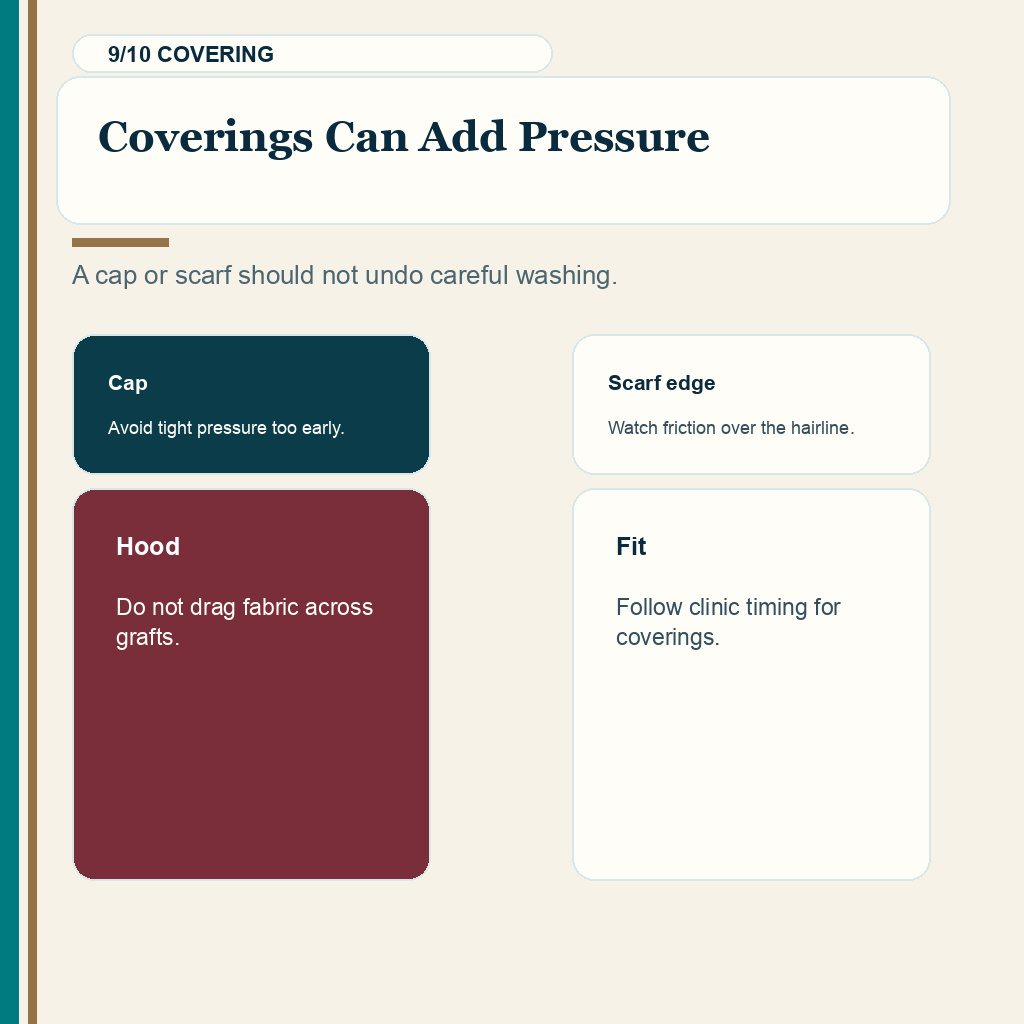
Some patients want to cover the scalp after wudu because they feel exposed. Be careful. A tight hat, prayer cap, hood, or scarf edge can create pressure and friction over the recipient area if worn too early or fitted poorly. Covering should not undo the precautions you took during washing. After washing or prayer, hijab or turban after FUE needs clean, dry, loose fabric that stays away from fresh grafts.
When travel or leaving the hotel is necessary, follow the clinic guidance for coverings. The same timing, fit, and pressure rules from wearing a hat after hair transplant apply to any covering that touches the grafts.
Donor area comfort is different from recipient area safety. The donor area may feel tight or tender, but the fresh grafts need the strictest protection. Keep those zones separate in your mind.
My medical frame for wudu timing after FUE
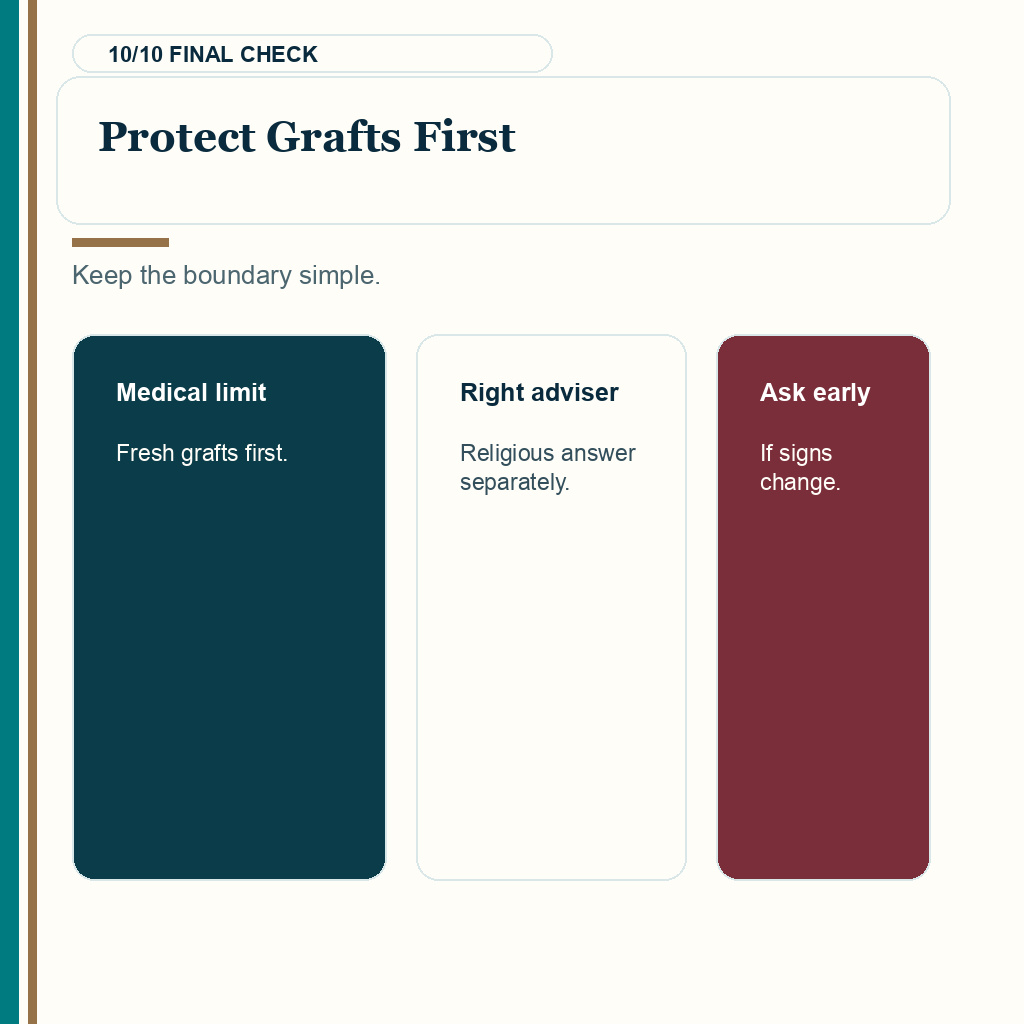
Surgery and worship routine should not feel like they are fighting each other. The plan is easier when it is clear before surgery, but it can still be made safer afterward. The clinic explains the medical limits. The religious question goes to the right religious adviser. Then the routine becomes less rushed.
For me, the key sentence is this. Protect the grafts first, and do not make a religious routine depend on unsafe scalp handling. When a normal step would rub the recipient area in the first days, pause before you do it and get clear instructions. If the clinic has not yet allowed washing of the recipient area, do not treat wudu as permission to wash it anyway.
Clear recovery instructions reduce fear by making timing specific. The broader hair transplant recovery plan should include prayer routine, washing, sleep, travel, clothing, and what to do after accidental contact. When these parts are planned together, patients usually protect the grafts more consistently.
Wudu after hair transplant should be gentle, planned, and medically cautious. My advice is not to choose between worship and graft protection. Build a temporary plan where both are respected. For a few days, the scalp should not be asked to behave like normal skin.

Read this review excerpt
Upon arriving home, I sent 4 photos (of each side of head) after every washing process to doctor for checking where I was given personal advice for how to take care of my healing head.