



Kratom Use Needs Disclosure Before Surgery or Recovery Medicines
If you use kratom before FUE, tell the clinic before travel, planning, or surgery day medicine decisions are confirmed. If you are thinking about using it after FUE for pain, sleep, anxiety, or withdrawal symptoms, do not restart or add it until the recovery plan has been reviewed.
I would not treat kratom like a harmless vitamin. I also would not tell a dependent patient to stop suddenly because something online made them afraid. The useful answer is disclosure and review. Send the product name or photo, the form, how often you use it, when you last used it, why you use it, what else you take with it, and whether you have symptoms. Kratom belongs in the same preoperative message as painkillers, sleep aids, alcohol, and sedatives, because the risk often comes from the combination.
Daily kratom use also raises the withdrawal question. A sudden stop can change sleep, anxiety, stomach symptoms, blood pressure, and how recovery medicines are judged.
This is not a moral conversation. In hair transplant planning, hidden products create risk because the surgeon and medical team may be trying to read alertness, blood pressure, nausea, sleep, pain, bleeding history, liver history, and recovery medicines at the same time. Kratom can act more like an opioid or a stimulant in the body, so I want it named clearly before FUE, not mentioned casually after a problem appears.
The most important point is simple. Do not clear kratom for yourself because it is marketed as herbal, and do not stop it suddenly on your own if dependence or withdrawal is possible. Send the product facts, last use, reason, and other medicines so the plan can be reviewed.
Why is kratom different from an ordinary supplement?
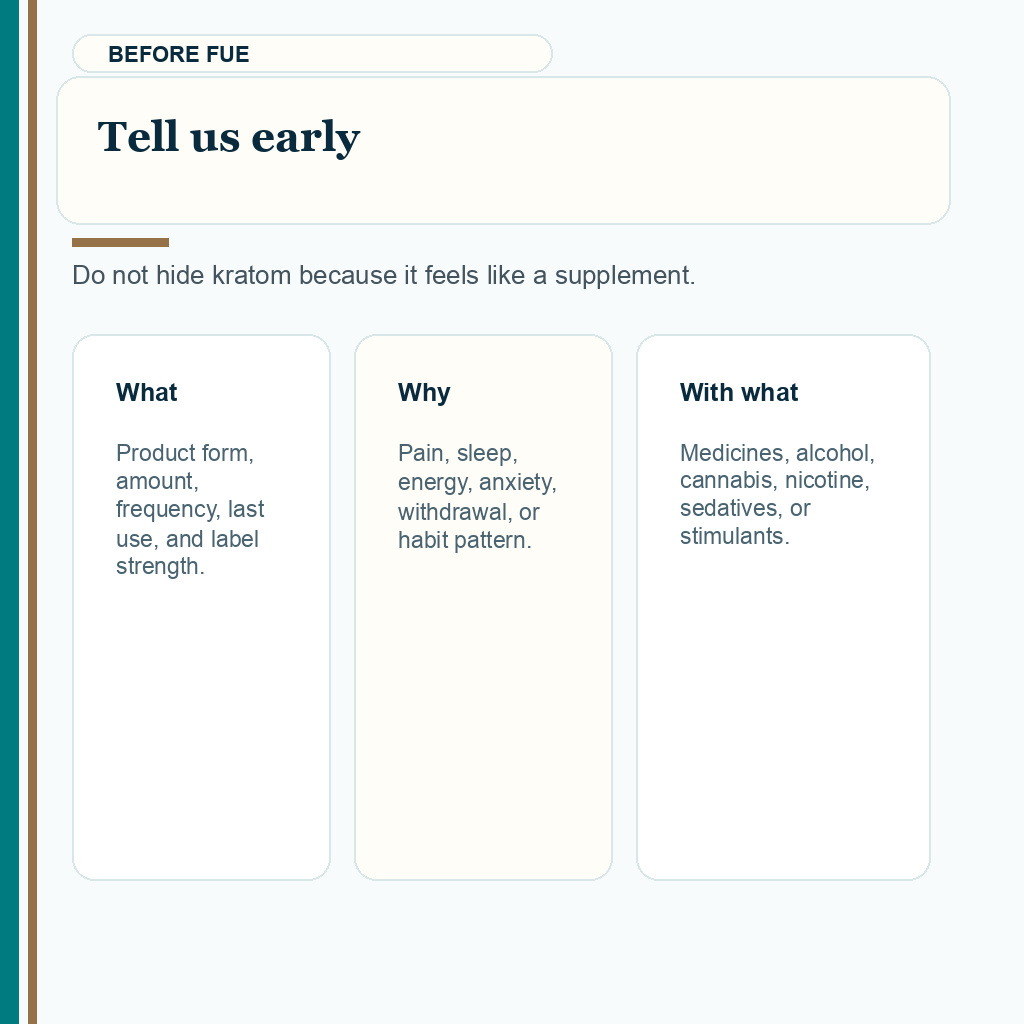
Many patients put kratom in the same mental category as vitamins, protein powder, or herbal tea. That is the wrong category for surgical planning. Kratom products may be capsules, powders, extracts, drinks, or stronger concentrated products. Some patients use them for pain, sleep, energy, anxiety, mood, or withdrawal. Those reasons matter because they tell us what may happen if the product is continued, mixed, hidden, or suddenly stopped.
I separate kratom from a normal supplement list before surgery for that reason. A vitamin question is often about bleeding, stomach upset, or product quality. A kratom question can also include sedation, stimulation, nausea, vomiting, constipation, alertness, blood pressure, liver warning signs, withdrawal, and interactions with other medicines or substances.
The same disclosure first logic applies to psychoactive substance disclosure before surgery. The issue is not whether the patient is being judged. The issue is whether the clinic has the full history before designing a hairline, confirming consent, starting local anesthesia, and planning recovery medicines.
I do not want to create the opposite mistake either. I cannot say from the word kratom alone that every patient must be cancelled, or that every patient is safe. A person who tried a small amount once is different from a person who uses a concentrated extract every day, wakes up with withdrawal symptoms, mixes it with alcohol or sedatives, or feels unwell before surgery.
What to tell the clinic before FUE?
If kratom is part of your routine, send the details before travel or as soon as you remember. Do not write only, “I take kratom.” That is not enough to judge the situation. A useful message names the product form, the approximate amount, how often you use it, when you last used it, why you use it, and whether stopping it causes symptoms.
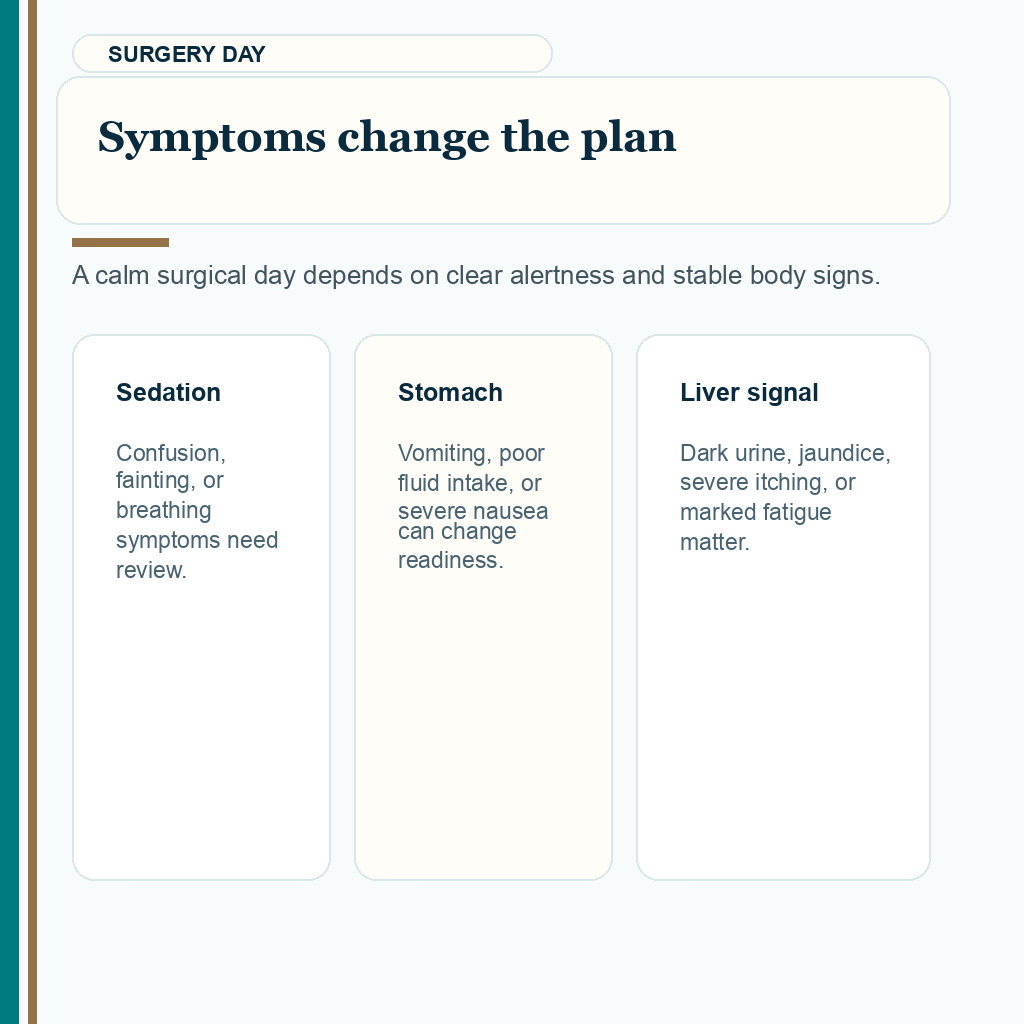
If you used kratom the night before surgery or on the morning of FUE, contact the clinic immediately. Do not hide it and do not assume the plan can continue unchanged, especially if you feel sedated, nauseated, agitated, unwell, or different from usual.
Kratom belongs in the planning conversation for any uncertain medication before a hair transplant. Tell the clinic what you use before you change it. Stopping secretly because you fear cancellation can create a different problem. If you use kratom daily and suddenly stop before a long flight or the surgery morning, withdrawal, pain, poor sleep, anxiety, or agitation can become part of the surgical day.
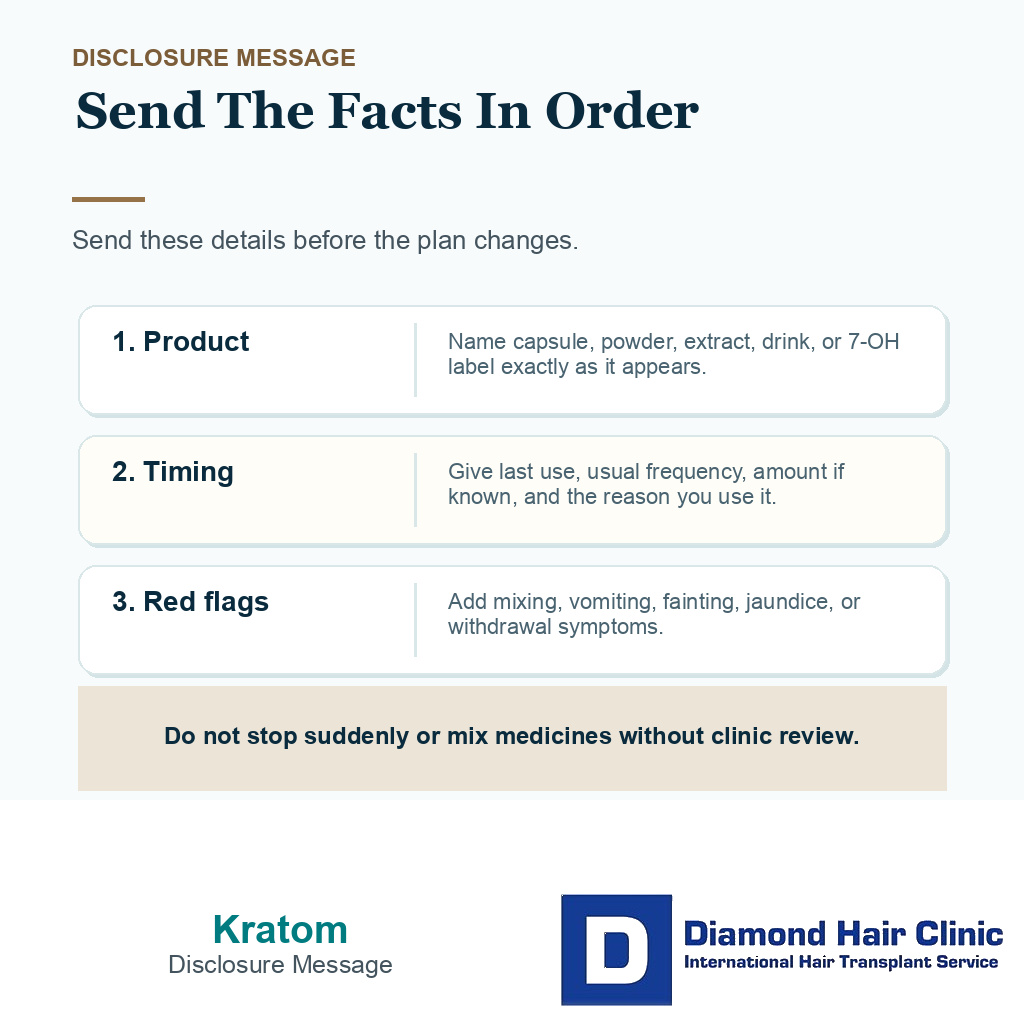
Kratom disclosure is useful when the clinic can see the product, timing, reason, mixing, and symptoms.
Also say what else is in the picture. Alcohol, cannabis, opioids, benzodiazepines, sleeping tablets, sedating pain medicines, and some anxiety medicines matter because alertness, breathing, nausea, balance, and judgment can change. Stimulants, decongestants, ADHD medicines, heavy caffeine, and pre workout products matter in a different way because pulse and blood pressure can change. Nicotine and dehydration add separate recovery concerns. Even if none of these applies, saying that clearly is useful.
Product type matters as well. A plain leaf capsule, a strong extract, and a product promoted as an enhanced extract are not the same planning question. Labels can be unclear, products can vary, and patients may not know exactly what concentration they used. That uncertainty is another reason to send a photo of the bottle or label privately to the clinic, rather than trying to translate it into a guess.
After the operation, kratom still needs review
After FUE, the question shifts from “Can I get through surgery?” to “Can I keep recovery predictable?” The first days after a hair transplant already include swelling, sleep changes, donor discomfort, recipient area protection, washing instructions, and prescribed medicines. Adding kratom on top of that can make symptoms harder to interpret.
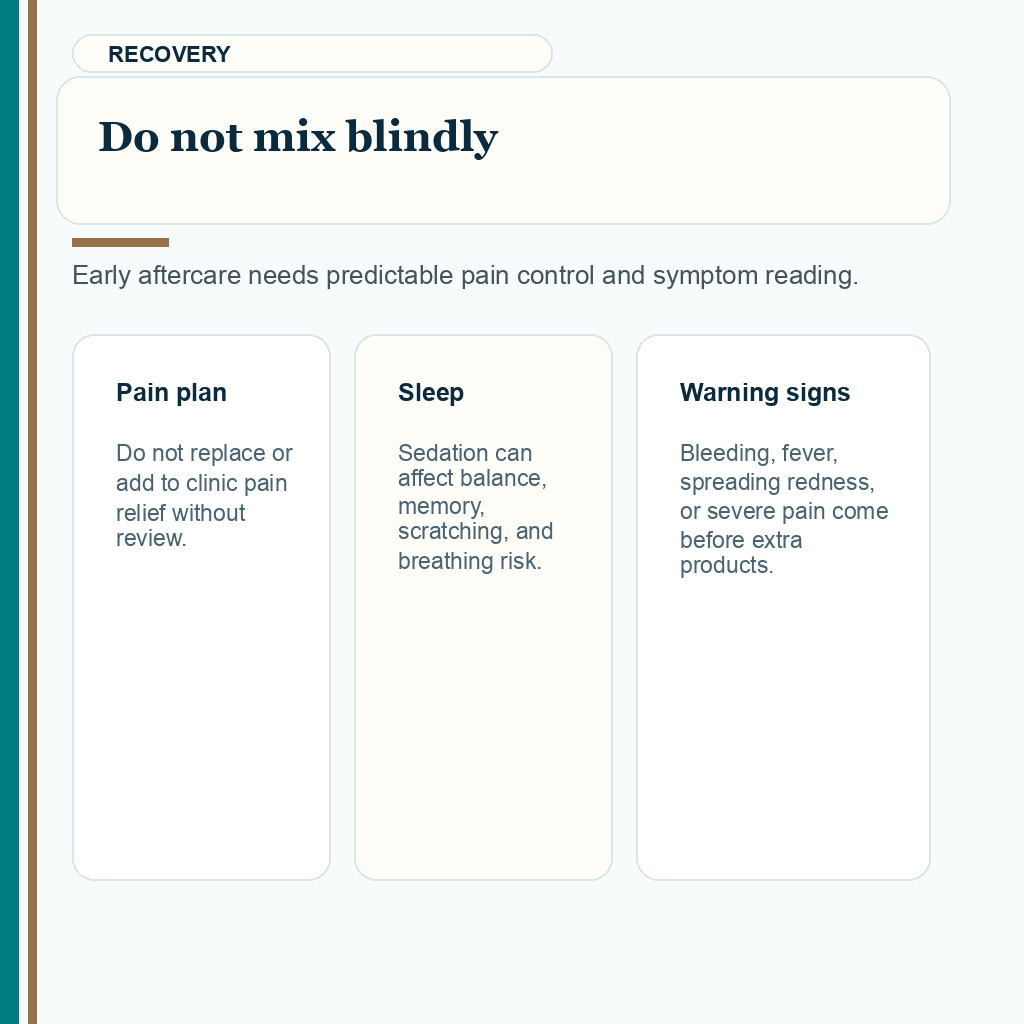
Do not restart or add kratom after FUE for pain, sleep, anxiety, or withdrawal symptoms without review. The reason is not punishment. It is that pain, sleep, nausea, alertness, scratching, infection signs, and medicine effects all need to be read clearly in the first recovery days.
If you are thinking about kratom for pain, start with the painkiller plan approved by the clinic. Do not replace it or add to it without review. Pain after FUE should usually become easier to manage, not more chaotic. If pain is severe, worse on one side, worsening, associated with fever, spreading redness, pus, or uncontrolled bleeding, the answer is not an extra product. The answer is medical review.
If you use kratom for sleep or anxiety, discuss it with the clinic before adding a sleep aid after FUE. Strong drowsiness can affect balance, memory, scratching, rolling in sleep, and judgment. If a patient is also using alcohol, sedatives, opioids, or other sleep products, breathing and alertness become more important.
Recovery medicines need a clear order. The medication plan after surgery is not a list where you can mix things freely. Before adding kratom beside antibiotics, pain relief, medicines for inflammation, sleep tablets, or chronic medical medicines, read the principle behind medications after a hair transplant. Name the purpose first, then confirm whether it can be combined. Early hair transplant aftercare works best when the clinic can tell which symptom came from surgery, medicine, sleep, infection, dehydration, or another product.
The risk changes when kratom is mixed with other substances
A single product question is already worth disclosing. A mixed product question is more urgent. Sedating combinations can increase confusion, falls, vomiting, slow breathing, or poor judgment. Stimulant combinations can make pulse, blood pressure, anxiety, and dehydration harder to read. If there is a seizure, breathing difficulty, fainting, severe palpitations, chest symptoms, or very high blood pressure if known, the next step is medical care, not a private recovery experiment.
This does not mean kratom is the same as cocaine, MDMA, or speed. It means the same safety logic behind mixed substances after FUE applies when products are stacked, because the clinic needs the full list, the timing, and the symptoms before giving advice. If cannabis is also involved after surgery, keep the separate concerns in mind from cannabis after a hair transplant, especially alertness, sleep, coughing, anxiety, and medication disclosure.
Patients often blur four situations together. Kratom before surgery, symptoms on surgery day, recovery mixing, and fear about hair shedding are not the same question. The answer is not the same in each situation.
Hair loss fears need a careful answer
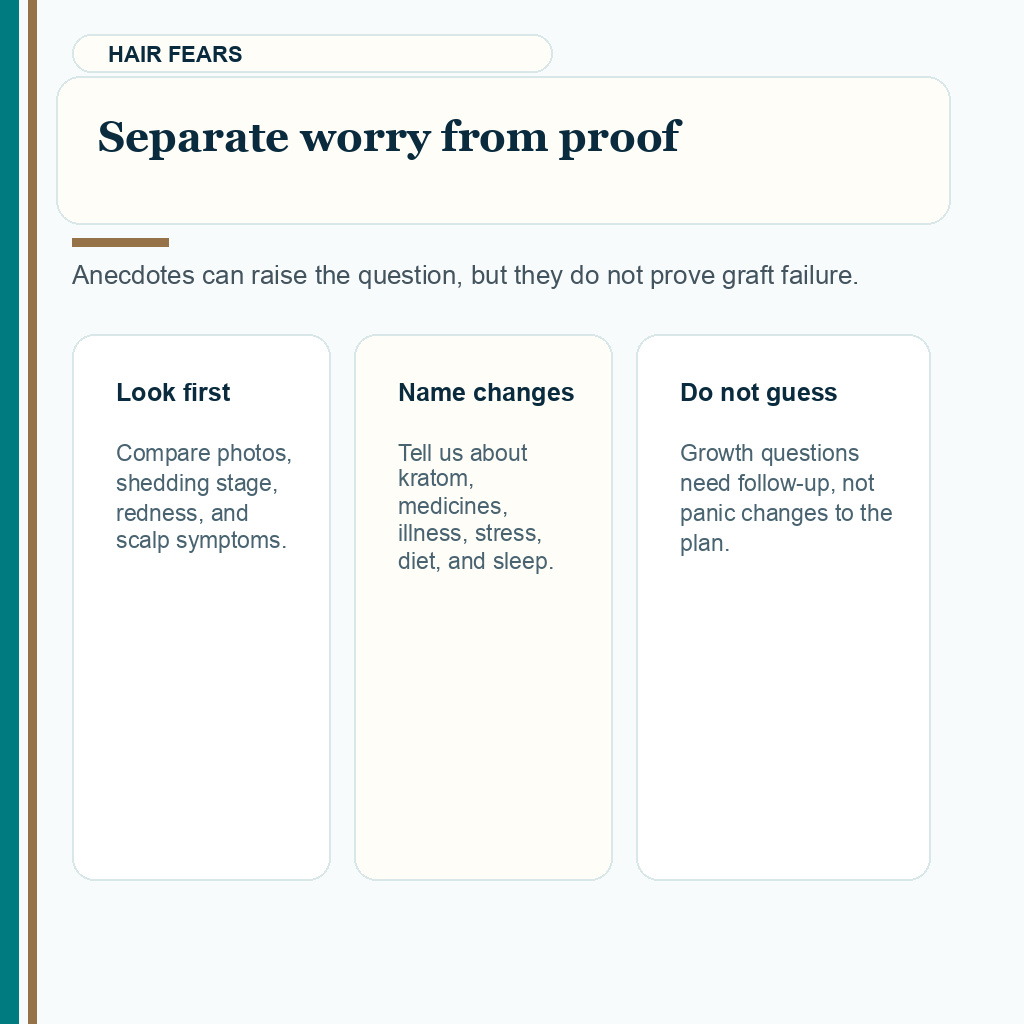
Patients sometimes ask whether kratom causes hair loss or graft failure. I take the fear seriously, but I do not treat one online story as proof. Hair growth after FUE has many moving parts, including normal shedding, shock loss, ongoing native hair loss, medication changes, illness, stress, nutrition, sleep, scalp inflammation, infection, and the original surgical plan. Before deciding that the transplant has failed, organize the timeline so the surgeon can review the pattern instead of starting from one suspected cause.
So the safe answer is balanced. Do not assume kratom destroyed your grafts because you read one story. Also do not hide kratom use when we are reviewing a confusing recovery. If you are still losing hair while on medication, the review should separate transplanted graft behavior, native hair progression, medicine consistency, scalp symptoms, and anything new in your routine.
Photos help here. Send photos from the same room, same light, and same distance if you are worried about growth. Include front, top, donor area, or crown views when those areas are relevant. Tell us when the change began, whether there is redness, pain, itching, scaling, pus, bleeding, fever, or swelling, and whether you changed kratom, medications, sleep, diet, or alcohol. That does not prove kratom is the cause. It gives the surgeon a cleaner timeline to review.
Your kratom message should name the pattern
Use this decision box to decide what kind of message the clinic needs. It is not a safe date calculator. A calculator would create false precision. The important issue is the pattern of use, what else is involved, and whether the body is stable enough for elective surgery or early recovery decisions.
Choose the closest kratom situation
The review starts with why, when, how often, what else is being used, and whether stopping causes symptoms. Choose the closest pattern before changing anything.
- Send product form, last use, usual amount, and reason.
- Do not assume a natural product is invisible to local anesthesia, adrenaline response, sedation decisions, or recovery medicine planning.
- Wait for review before using it to manage early discomfort.
- Say whether stopping causes withdrawal, agitation, pain, insomnia, or cravings.
- Do not stop suddenly from something online if dependence is possible.
- The clinic may need a medical review before elective surgery timing is confirmed.
- Name painkillers, sleeping tablets, anxiety medicine, alcohol, cannabis, nicotine, stimulants, or other supplements.
- Strong extracts or enhanced products should be named separately if known.
- Do not create your own recovery mixture while grafts and the donor area are healing.
- Strong drowsiness, confusion, fainting, seizure, severe vomiting, breathing difficulty, severe palpitations, dark urine, jaundice, severe itching, unusual fatigue, or upper abdominal pain need medical attention.
- For FUE planning, body readiness comes before the graft schedule.
- Send clear details and ask for review before travel, surgery, or extra products.
This is for disclosure, not dosing or tapering advice.
Kratom changes the anesthesia and recovery conversation
Kratom belongs in the medication and substance use history because dose, frequency, product form, last use, withdrawal, sleep, anxiety, stomach symptoms, blood pressure, and other medicines can all change the risk picture.
Do not hide use because you are embarrassed, and do not suddenly stop heavy daily use because something you read scared you. Around FUE, disclosure, coordination, and medical care come before hair growth reassurance if serious symptoms appear.
Strong drowsiness, confusion, fainting, seizure, chest symptoms, breathing difficulty, severe vomiting, jaundice, unusual bleeding, fever, spreading redness, pus, or uncontrolled pain belong outside ordinary hair growth reassurance. The transplant plan has to fit the patient’s whole recovery, not only the grafts.

Read this review excerpt
Every single one of my questions was answered and they made sure I had all the details I needed to make an informed decision.