- Written by Dr.Mehmet Demircioglu
- Estimated Reading Time 7 Minutes
TH07 for Hair Loss: Is This Really a Major Step Forward?
Recently, I have seen TH07 discussed far more aggressively online than the current level of evidence really justifies. I keep seeing its name circulating across Reddit hair loss forums, online hair transplant forum discussions, and YouTube videos, which always gets my attention because in the hair loss field, treatments often become famous long before they are properly understood.
This is not the first time I have seen that pattern. Over the last 3 to 4 years, other names such as pyrilutamide (KX-826), PP405, HMI-115, and clascoterone/Breezula have also made headlines and sparked strong excitement online. Some of them are still in clinical development, some are still moving through trials or regulatory steps, and some have shown encouraging signals, but none have yet become the ordinary, routine backbone of everyday anti-hair-loss medical treatment in the way many early headlines seemed to suggest.
When patients encounter phrases like “breakthrough,” “game-changing treatment,” or “the next cure,” many begin to question everything they already know. They start wondering whether it would be smarter to wait, whether the treatments we have relied on for years are suddenly no longer enough, or whether this new option is finally going to succeed where so many other promises have disappointed them. I do not find that reaction strange at all. Hair loss carries emotional weight, and once emotion enters the picture, even a headline can start to feel deeply personal.
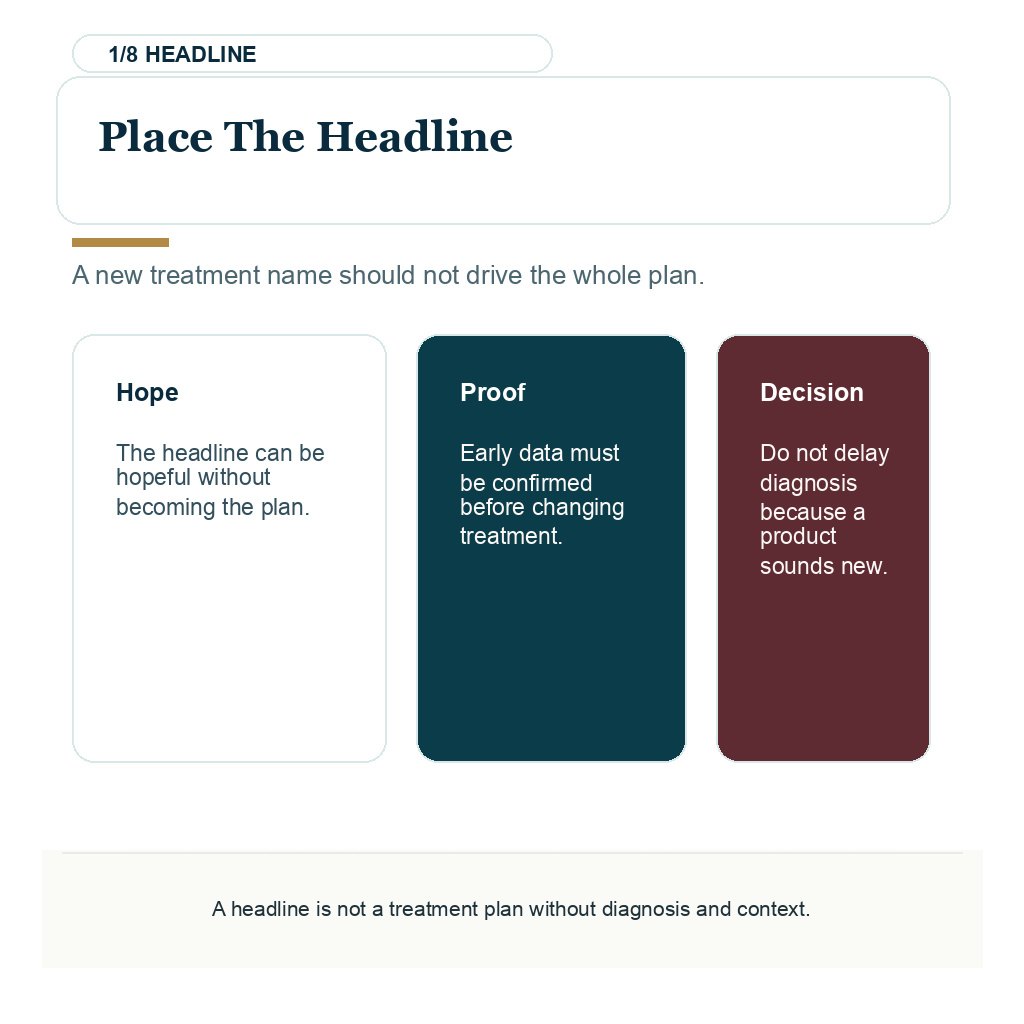
But hope and proof are not the same thing.
I wanted to write about TH07 more calmly. It is interesting, worth following, and may eventually be useful for patients whose case fits. But at this stage, I do not think it should be spoken about as though male pattern hair loss has suddenly been conquered.
What Is TH07 In Plain Language?
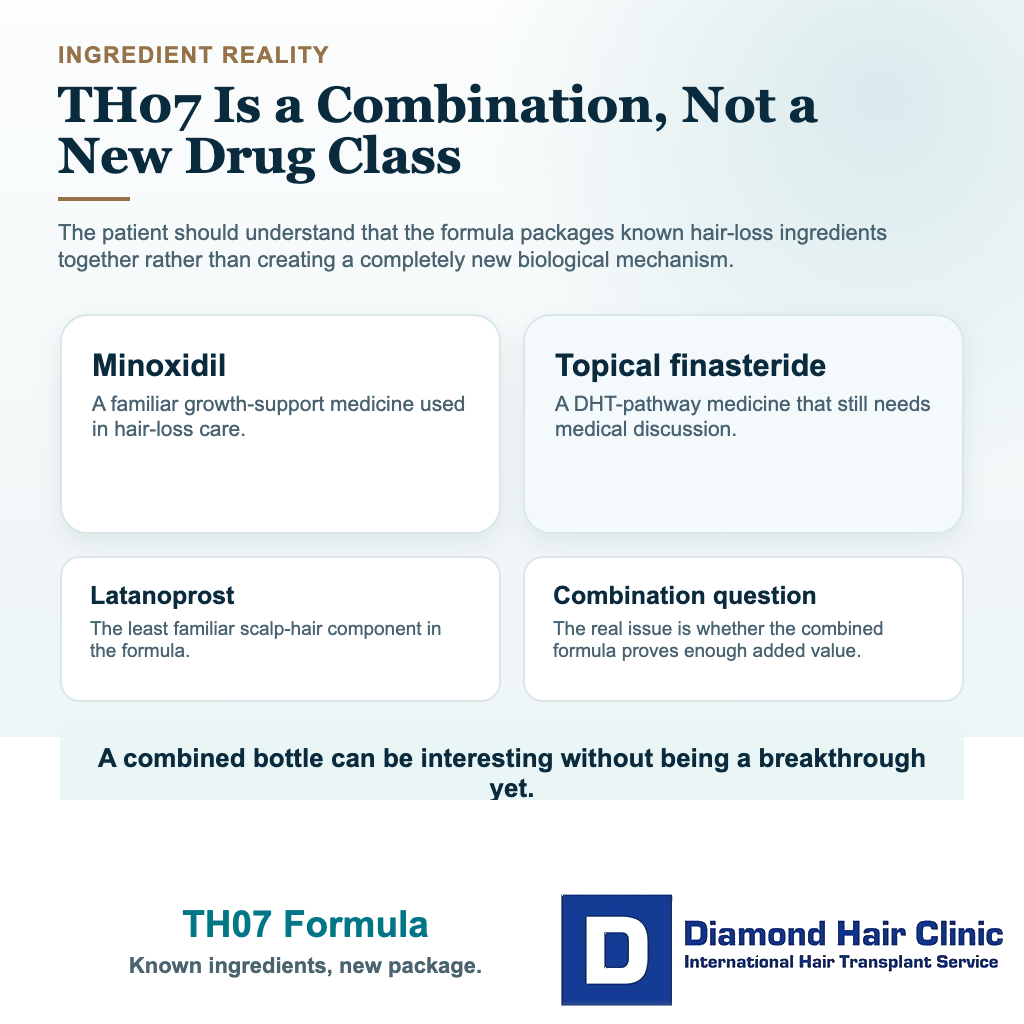
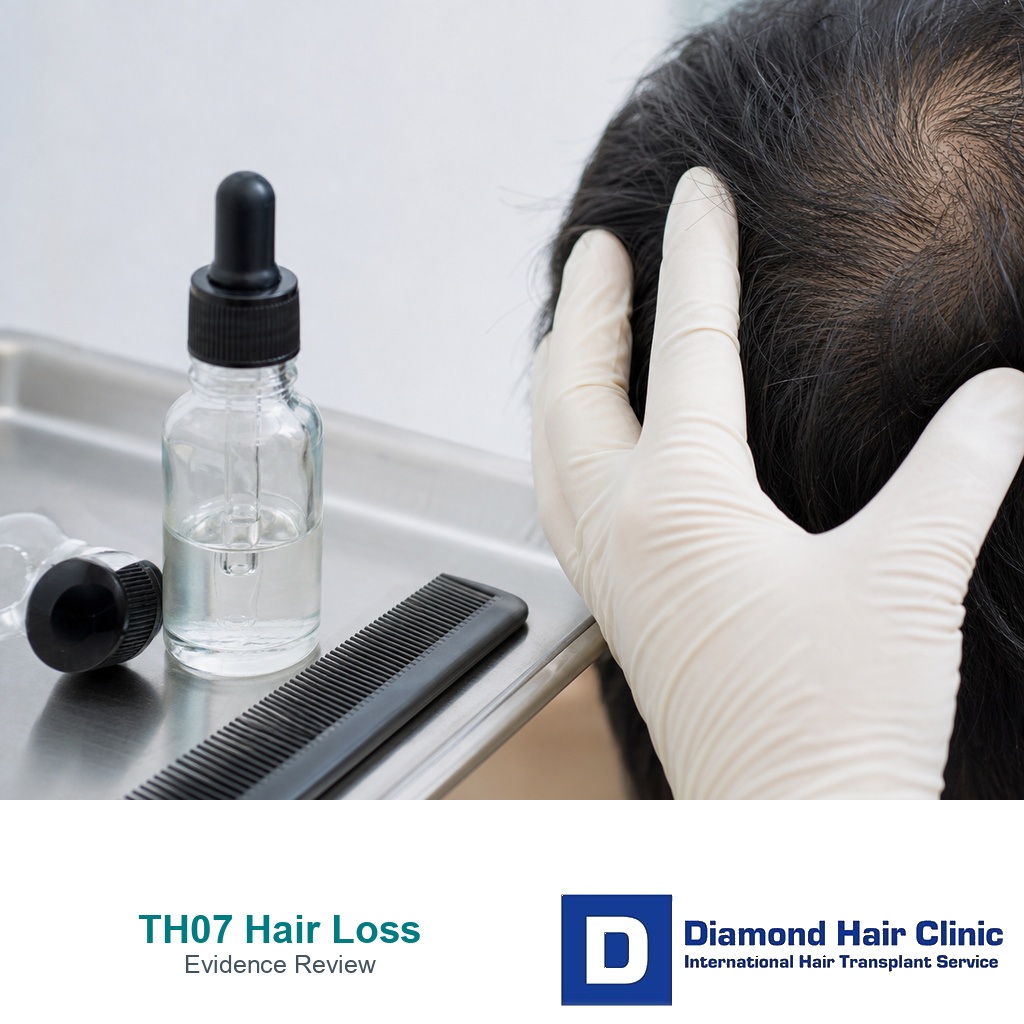
In plain language, TH07 is a topical hair loss treatment for the scalp that combines three ingredients in one formula: 5% Minoxidil, 0.1% Finasteride, and 0.03% Latanoprost. Instead of asking a patient to consider these substances separately, the product packages them into a single routine and presents them as a combined approach.
That matters because many patients immediately assume that a treatment like this must represent some kind of new scientific era. It does not. TH07 is not built around a brand-new molecule. It is not a new drug class. It is not based on a newly discovered biological mechanism that suddenly changed the field. What it really represents is something much more straightforward: an effort to combine several already known ingredients into one scalp-based treatment and then evaluate whether the combined formula works better than each part on its own.
To be clear, that does not make it pointless. A combined formula is not inherently gimmicky or irrational. In real life, many hair loss patients do not rely on only one approach anyway. The treatment plan may aim to slow further thinning, improve the appearance of weakened hair, and support the overall cosmetic picture. So the basic thinking behind a combination product is easy to understand. It reflects a practical idea: instead of using a single ingredient and expecting too much of it, bring together several agents that may contribute in different ways.
But even so, the real issue is not whether the idea sounds neat. The real issue is whether this specific combination, in this specific form, truly produces results strong enough to justify the attention it has attracted. That is where caution becomes important. A reasonable formulation strategy should be described as exactly that: reasonable. The problem starts when something scientifically understandable is spoken about as if it is a medical revolution.
Why Does TH07 Sound More Exciting Than It Really Is?
Because the language surrounding hair loss treatments is often much louder than the biology behind them.
The moment a treatment is described as working through multiple mechanisms at once, it immediately starts sounding more powerful, more advanced, and more complete than older options. Even before a patient understands the actual evidence, the wording itself begins doing part of the work. It creates the feeling that this treatment must be operating at a higher level than those that came before it.
Most patients do not hear the combined formulation and respond to it in a technical way. They hear something much more emotional. They hear the possibility that this might finally be the treatment that is broader, smarter, and stronger than the usual options. They hear the possibility of escape from disappointment. In a field like hair loss, where many people already feel frustrated, impatient, or tired of half-measures, that kind of message lands very easily.
But medicine does not reward excitement simply because the wording sounds impressive.
A treatment can make perfect theoretical sense and still prove only modestly useful in practice. It can sound sophisticated and still produce only incremental results. It can look impressive in a small early paper and then look much less impressive once it is tested in larger, better-controlled studies. This is part of the oldest patterns in medicine: the first version of the story is often cleaner, bolder, and more dramatic than the truth that appears later.
There is another issue: patients do not always notice it at first. Sometimes what looks like a major therapeutic advance is partly a presentation advance. A product may feel more modern not because it has transformed what is medically possible, but because it has been packaged more effectively, named more effectively, and described more aggressively. I would not conclude that the product is misleading or useless. It simply means the emotional impact of the presentation may outweigh the actual clinical gap between that product and existing options.
I think it is important to separate three distinct ideas that patients often conflate: scientific logic, marketing force, and clinical proof. These are not interchangeable. A product may have solid logic behind it. It may also be marketed very effectively. But neither of those automatically means it has already earned a strong clinical status.
In other words, a treatment may deserve attention without deserving hype.
What Did The First TH07 Study Actually Suggest?
The reason TH07 began attracting attention is straightforward, the first published paper suggested that the combined formula produced an encouraging early signal in men with androgenetic alopecia.
In that study, patients used a once-daily topical regimen for 6 months, and the combination arm appeared more favorable than the groups using 0.1% finasteride, 0.03% latanoprost, or 5% minoxidil individually. That is not something I think should be dismissed carelessly. When an early study suggests that a treatment may be doing something meaningful, that deserves to be noticed.
I also keep this in mind. noticing a signal is very different from treating that signal as a settled conclusion. The paper was a proof-of-concept study, which in medicine means an early-stage study designed to answer a limited question: Does this treatment show enough initial promise to justify deeper and more serious research? That kind of study can tell us that an idea is worth following further. It cannot tell us that the treatment has already earned a high place in routine practice, that it has clearly outgrown existing options, or that the final clinical argument has already been won.
And that is really the correct way to understand what the first TH07 paper suggested. It suggested that the combination may be more interesting than the individual ingredients used separately in that early trial setting. That is enough to justify attention. It is enough to justify further research. But it is still not enough to justify certainty.
Why Do I Still Consider The Evidence Early?
Because there are several very good reasons to remain careful.
The first is scale. The original study was not large, and in medicine, small early studies can easily look more convincing than they ultimately prove to be. I would not conclude that they are useless. It simply means they should be interpreted with restraint. When the number of patients is limited, it becomes harder to know whether the result reflects a genuinely strong treatment effect or is still too early to separate signal from noise.
The second is time. In male pattern hair loss, an important questions is not only whether hair appears to improve over a short period, but also whether the treatment actually helps hold the line against ongoing miniaturization and progression over time. Hair loss is not a short-term event. It is a process. Because of that, a treatment that looks encouraging over a few months still has to answer a much harder question later: Does it continue to matter as time passes and the biology of androgenetic alopecia keeps progressing?
That is one reason I am very cautious with dramatic language. The word “cure” should be used extremely carefully in this field, if at all. Androgenetic alopecia is not the kind of condition where a brief early study should tempt people into speaking as though the whole problem has suddenly been solved. That kind of language may attract attention, but it does not reflect the discipline that serious hair loss medicine requires.
Another important issue is how the results are measured. Standardized photography can be helpful, but it is not the same as a deep, objective evaluation over time. A treatment can look promising in neat categories or attractive wording while still leaving uncertainty about durability, everyday visibility, different hair loss patterns, and tolerance in real patients outside a controlled early setting.
I would describe TH07 as promising but still unproven. I think it has shown enough to deserve attention. But I do not think it has shown enough to justify the kind of certainty that some people are already trying to attach to it. At this stage, the evidence is still early, not because the idea is irrational, but because the harder and more important questions have not yet been answered well enough.
Why Is Latanoprost The Most Uncertain Part Of TH07?
This is an important questions in the discussion, because not all three ingredients in TH07 are at the same level of familiarity or clinical maturity.
The more familiar parts are minoxidil and finasteride. Those are the names most doctors and most patients already recognize when the topic is androgenetic alopecia. Latanoprost is different. It is not a classic hair-loss medicine in the way those other two are. It is better known as an ophthalmic drug, a prostaglandin analog used to lower intraocular pressure in conditions such as ocular hypertension and open-angle glaucoma. That is where latanoprost first established its medical identity, not in scalp hair treatment.
Interest in latanoprost for hair growth increased for a fairly understandable reason. Drugs in this prostaglandin-analog family became associated with eyelash growth, and that naturally led researchers to ask whether a similar biologic effect might be useful on the scalp as well. That is not a foolish question. In fact, it is the kind of observation that often starts new lines of medical research: a side effect is noticed in one setting, and then people begin to ask whether it might be useful in another.
And to be fair, there is at least some human evidence behind that curiosity. The most cited scalp study is a randomized, double-blind, placebo-controlled pilot study published in 2012, involving 16 men with mild androgenetic alopecia. In that study, topical latanoprost 0.1% increased hair density at 24 weeks in the treated scalp area compared with placebo. So I do not think it is correct to speak about latanoprost as if it has no signal at all. It does have a signal. The difficulty is not the total absence of evidence. The difficulty is the depth, scale, and maturity of the evidence.
Patients should be very careful not to overread what that means. A small positive pilot study does not place a treatment on equal footing with the core therapies that have been studied far more extensively. The latanoprost scalp literature remains narrow and less clinically settled than the literature on finasteride and minoxidil. By contrast, minoxidil and finasteride are supported by a much broader evidence base, including randomized trials, systematic reviews, and meta-analyses, that supports their role in androgenetic alopecia.
That difference matters more than many people realize. It means that when someone talks about TH07 as though all three ingredients are contributing from equally solid scientific ground, the presentation becomes misleading. Minoxidil and finasteride are the more established pillars in that formula. Latanoprost is the more exploratory component. It is the ingredient that adds intrigue, but it is also the ingredient carrying the greater burden of uncertainty.
So my concern is not that latanoprost is absurd. My concern is that it is often spoken about with more confidence than the current scalp-hair literature can comfortably support. At this stage, the most accurate way to describe it is this biologically interesting, not biologically ridiculous, but still much less proven in scalp androgenetic alopecia than the other better-known components around it.
What Does The Topical Finasteride Part Of TH07 Really Mean?
Here, the discussion becomes more nuanced, because topical finasteride sits in an awkward place between two kinds of oversimplification. One group of patients hears the word topical and assumes they have now entered an almost risk-free category. Another group hears the word finasteride and dismisses the idea immediately, as if changing the route of delivery changes nothing meaningful. Both reactions are too shallow. A medication applied to the scalp is still a real medication. It can still be biologically active. It can still enter the bloodstream to some degree. And it still deserves a serious medical discussion rather than wishful thinking.
I also keep this in mind. I do not think topical finasteride should be waved away carelessly. It already has a legitimate and growing evidence base in male androgenetic alopecia. A phase III trial of topical finasteride spray solution found significantly better hair-count improvement than placebo at 24 weeks, with results numerically similar to oral finasteride in that study, while showing markedly lower plasma finasteride exposure and a smaller reduction in serum DHT than the oral tablet. That is not the profile of a nonsense treatment. It is the profile of a treatment category that has to be interpreted carefully and used responsibly.
I think patients should be more careful with the phrase topical means safer. Safer is not the same as harmless, and lower systemic exposure is not the same as no systemic exposure. In the pharmacokinetic study of topical finasteride 0.25%, plasma levels were far lower than with oral finasteride, but they were not zero, and DHT suppression still occurred. So the clearer message is not that topical finasteride magically escapes biology. The clearer message is that it may offer a different balance between scalp-directed treatment and systemic exposure, which matters in real decision making but still should not be treated casually.
Another practical reason to speak carefully here. In April 2025, the FDA warned about potential risks associated with compounded topical finasteride products and stated that there is currently no FDA-approved topical finasteride formulation in the United States. The agency’s concern was not that topical finasteride can never be useful, but that compounded products may be marketed in an overly reassuring way despite real risks, including systemic adverse events, local irritation, and concerns about transfer exposure. I think that warning supports the same middle position I take myself: this is a legitimate treatment category, but it should not be surrounded by magical language.
So when I look at the topical finasteride part of TH07, I do not see anything trivial or miraculous. I see a meaningful component inside the formula that already belongs to a serious treatment conversation. But TH07 does not rise above that broader conversation. It sits inside it. The right way to think about it is not “topical finasteride changes everything,” but rather, “topical finasteride is one credible part of a larger maintenance strategy, and it still has to be prescribed, monitored, and understood with maturity.”
For men trying to think more seriously about maintenance after surgery, I have also written about what medications are essential after a hair transplant and, for men comparing DHT blockers more closely, dutasteride vs. finasteride. TH07 belongs inside that larger maintenance conversation. It does not stand above it.
Why Does Convenience Matter, But Not Settle The Argument?
One possible advantage of TH07 is not only its pharmacology. It is simplicity.
This should not be underestimated. In real life, consistency matters. A treatment that looks excellent on paper becomes weak in real life if the patient does not use it regularly enough for long enough. So if a combined product eventually allows some men to follow a simpler daily routine more consistently, that may become one of its practical strengths.
But convenience is not the same thing as superiority.
A single bottle may be easier to use, yet still not be the strongest or most appropriate plan for every patient. Here, online discussions often become shallow. People hear “all in one” and assume the argument is over. It is not. The question remains whether the convenience is accompanied by sufficient efficacy, tolerability, and long-term value to justify greater enthusiasm.
What Would TH07 Actually Need To Prove Before I Take It More Seriously?
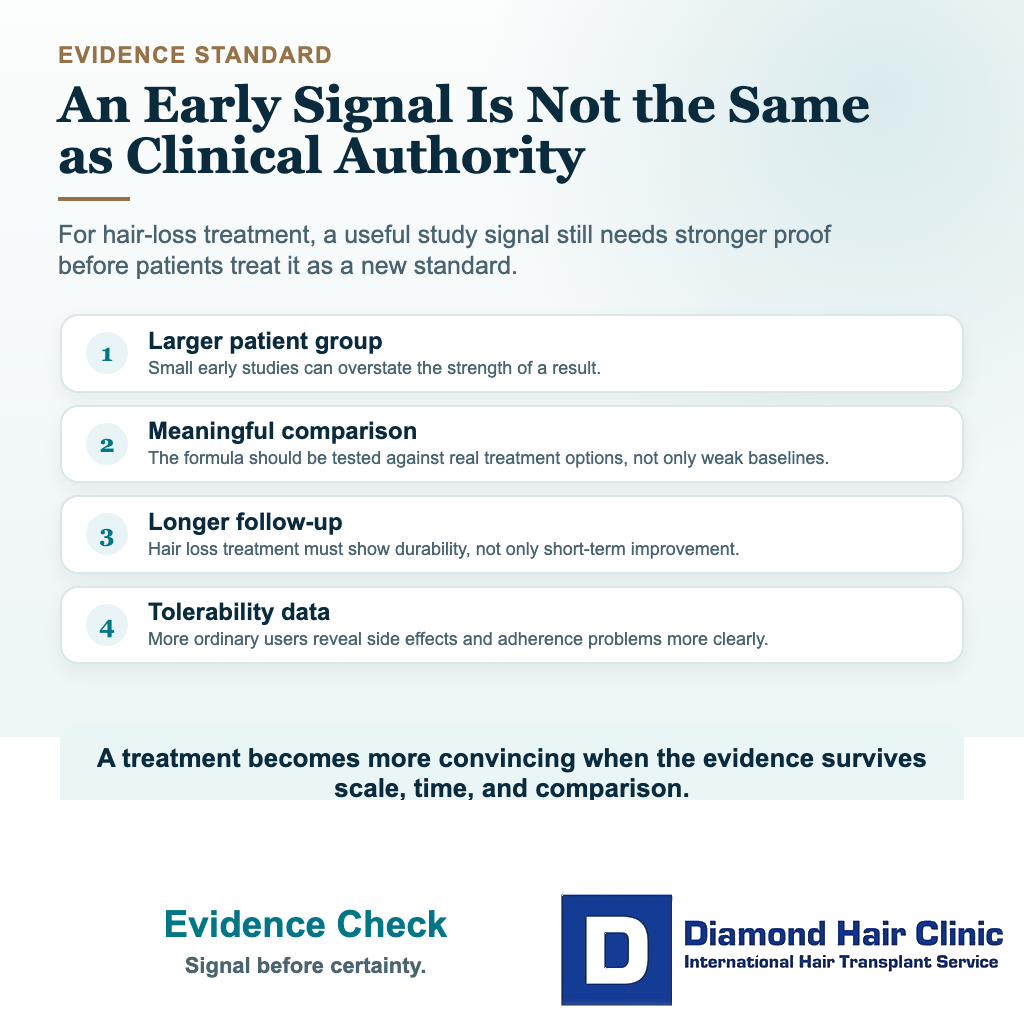
TH07 needs to do much more than simply produce another wave of attractive headlines. It needs to prove itself in larger, better-controlled, and more clinically meaningful studies. The current Phase III program is therefore much more important than the media attention itself.
What do I want to see? I want to see how convincingly TH07 performs in a larger population. I want to see objective endpoints that go beyond broad cosmetic impressions. I want to see whether the benefit is truly meaningful when compared not only with placebo but with a real standard treatment arm. I want to see how durable the effect looks over time. And I want to see how tolerability behaves when more patients use the product under more ordinary conditions.
Could TH07 Become Useful For Men Who Do Not Want Oral Therapy?
This is part of the more reasonable clinical angles for TH07. There are men who are uncomfortable with oral finasteride. There are men who prefer scalp-based routines. There are also men who want a more consolidated regimen rather than combining separate products by themselves.
For that type of patient, a validated multi-ingredient topical treatment could eventually become attractive.
A possible future role is not the same thing as present clinical authority. I think patients must learn to separate those two ideas. The hair loss field repeatedly confuses “I can imagine where this might fit” with “this already deserves high confidence.” Those are not the same sentence.
Why Does This Matter So Much For Hair Transplant Patients?
Because hair transplantation and medical therapy should never be mentally separated.
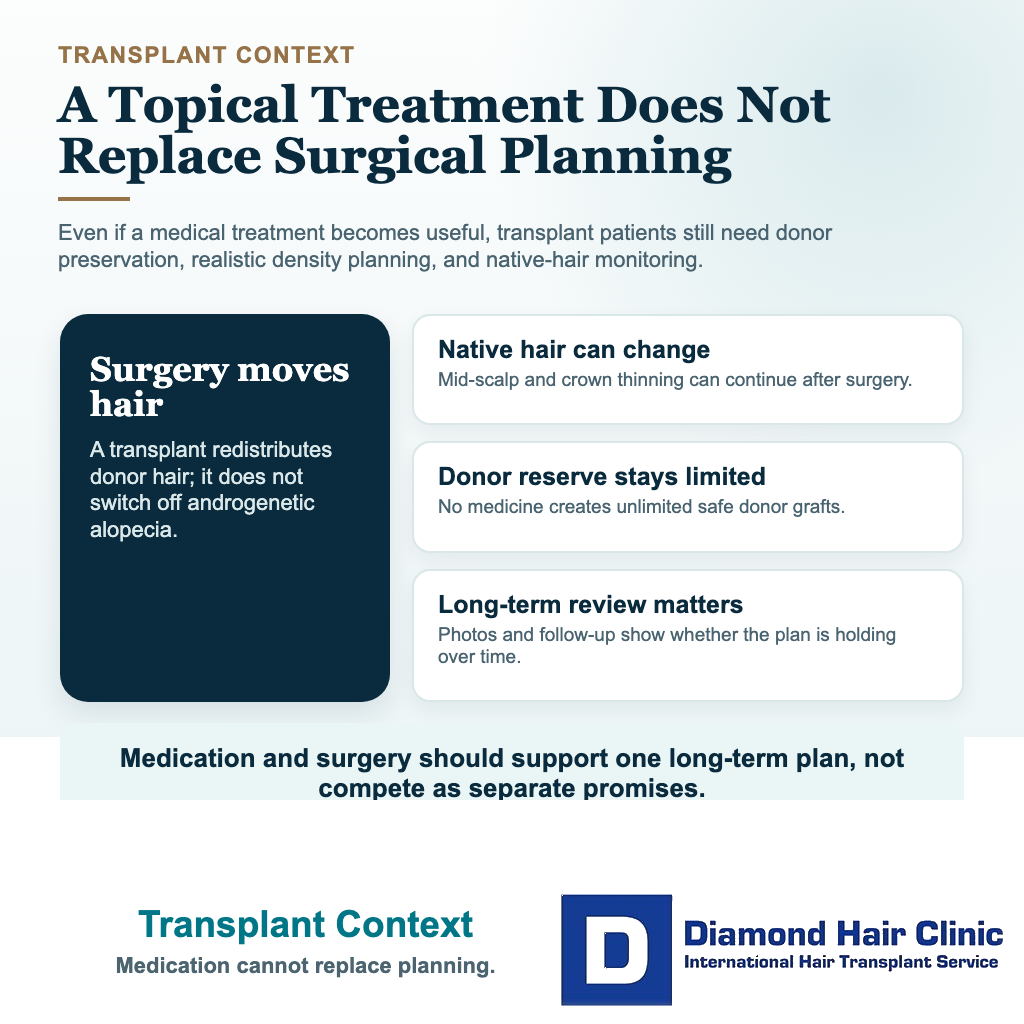
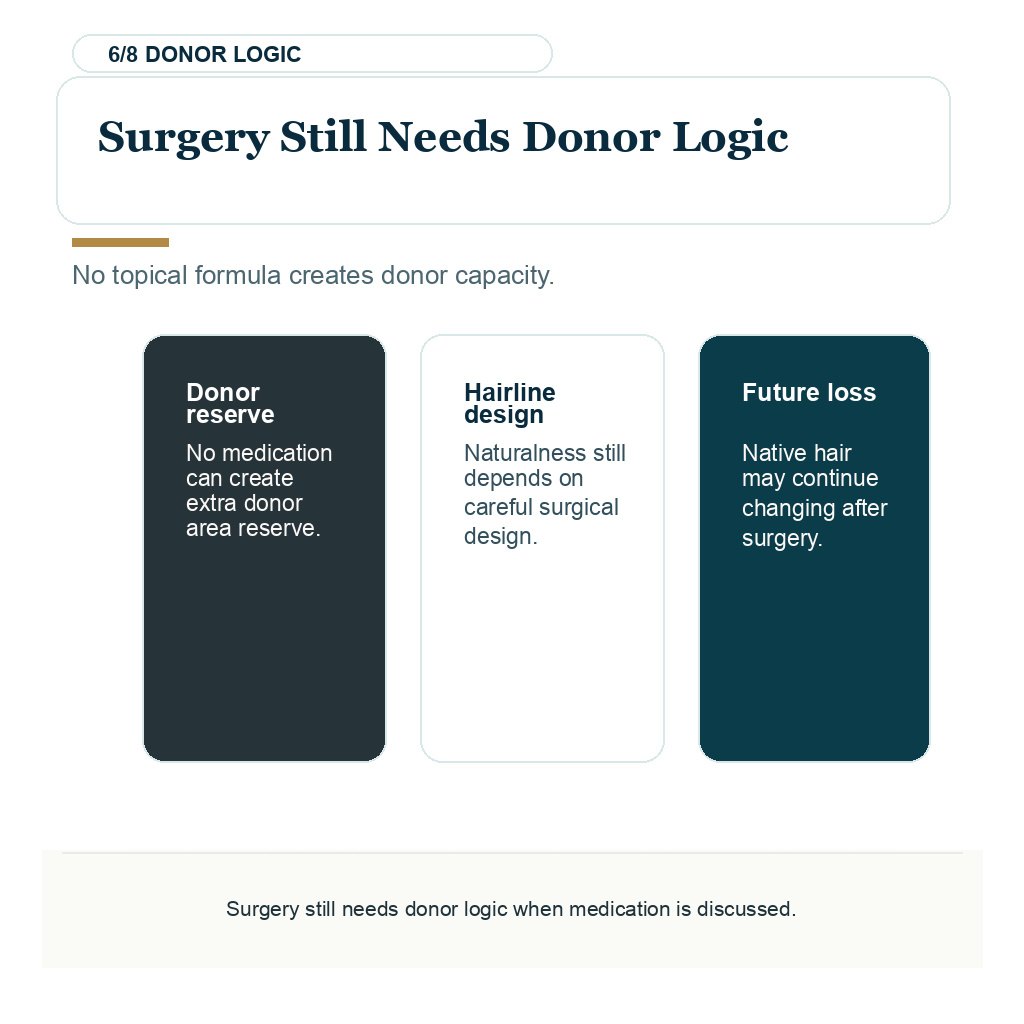
A transplant can redistribute hair and transform the visual frame of the face when it is done properly. But a transplant does not switch off the biology of androgenetic alopecia. The native hair can continue to miniaturize. The crown can continue to thin. The mid-scalp can continue to change. I always think in terms of a long-term plan, not just a procedure date.
This is also where patients must learn to respect the donor area. Hair restoration is not only about what can be added to the front. It is also about what must be preserved, protected, and managed responsibly over time. Anyone who wants to understand why donor management matters so much can read my article on the donor area.
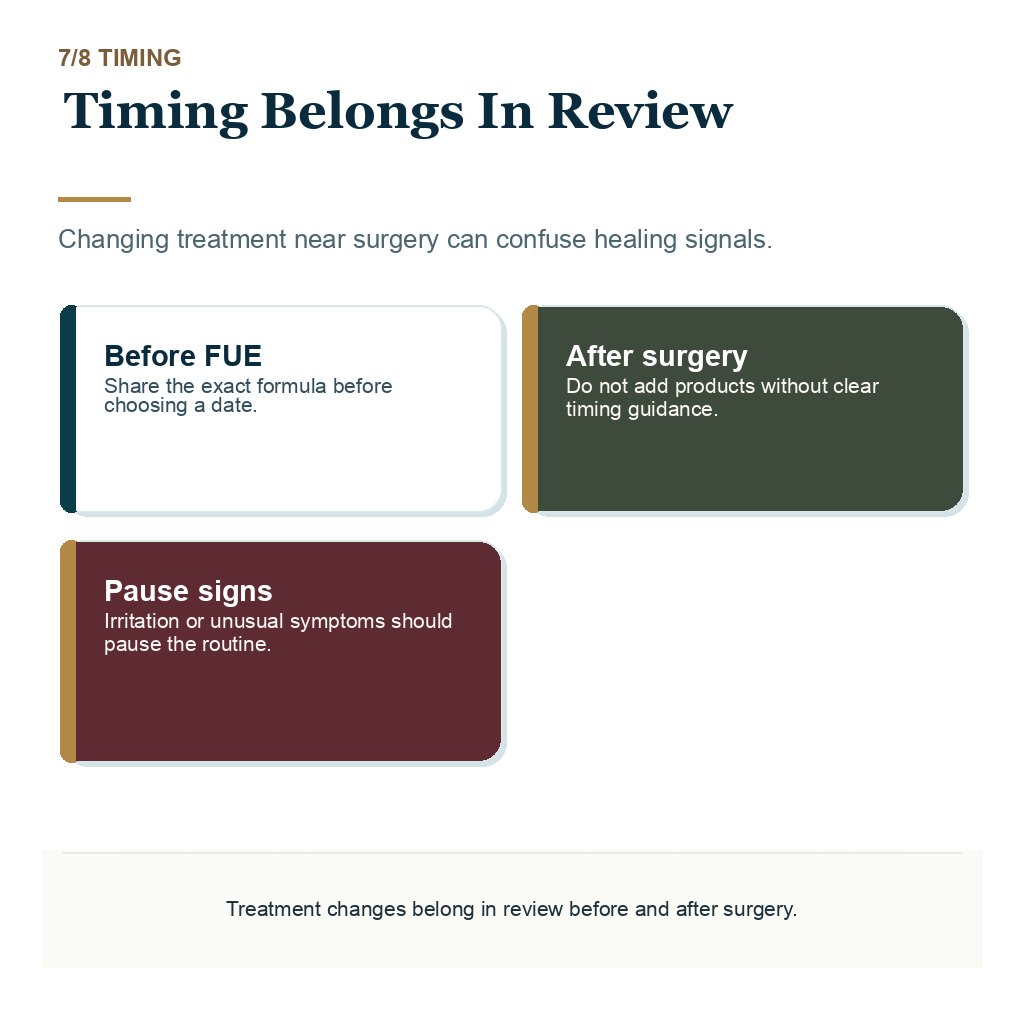
In that broader picture, treatments like TH07 matter because they belong to the maintenance discussion. Could a future topical combination help certain men stabilize better before surgery, or support the overall plan after surgery? Possibly yes. But no medication, old or new, replaces sound surgical judgment. It cannot redesign a natural hairline. It cannot rescue irresponsible planning. For patients whose main concern is a receding hairline, medical support and surgical design needs review as different tools. And it certainly cannot fix the damage created by hair mill clinics, which is why I also encourage patients to understand the warning signs described in my article on red flags of Turkish hair transplant clinics.
How Should Patients Read The Next Hair Loss Headline They See?
I think every patient should learn to ask a few simple questions.
When I read the next hair loss headline, I look for the substance behind the excitement. I look at whether the treatment is genuinely new, whether the evidence is large enough, whether follow-up is long enough, whether the measurement is objective, and whether the comparison is meaningful. A story can be emotionally attractive before the evidence is strong enough.
That same discipline is useful in surgery as well. The same patient who gets carried away by a medication headline can also get carried away by clinic marketing. I always encourage people researching this field to read my article on how to choose a hair transplant clinic in Turkey. In both situations, the real task is the same: separating evidence from sales language.
Where Do I Stand On TH07 Today?
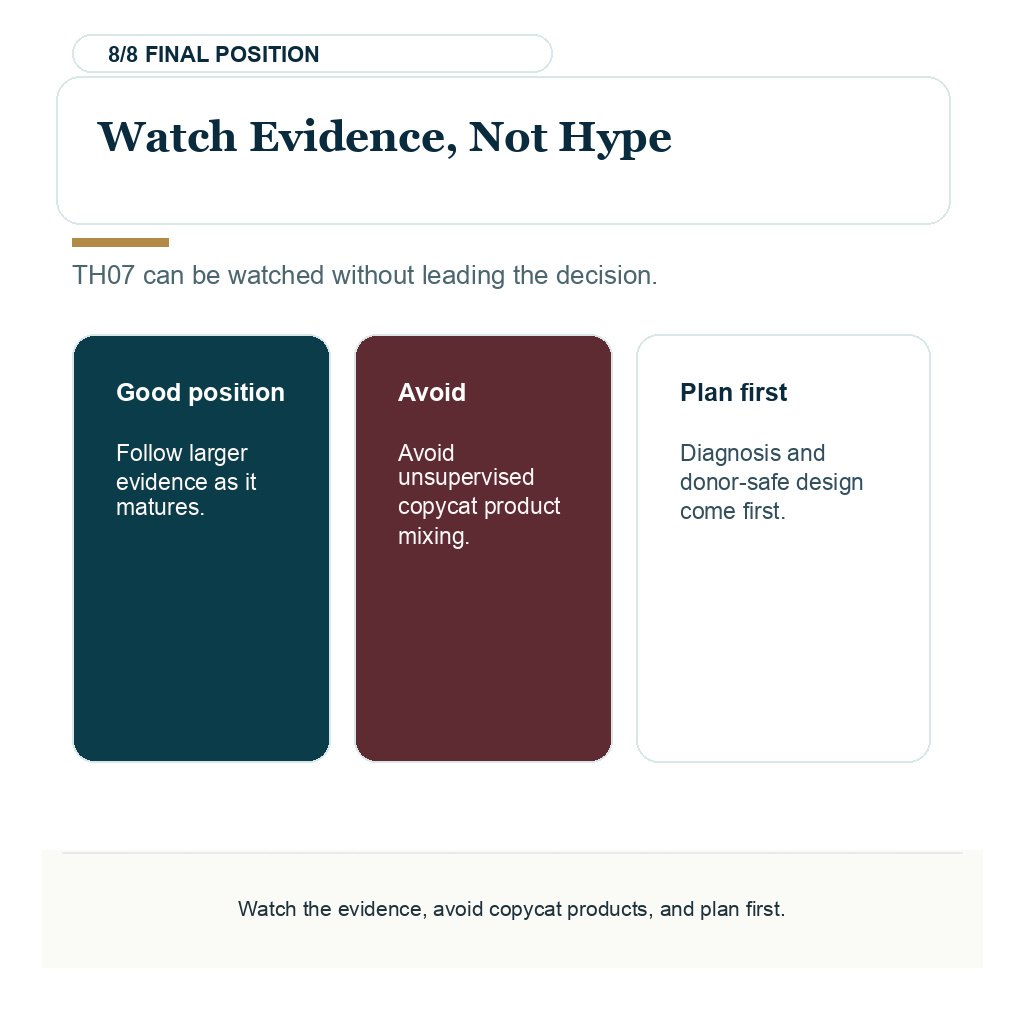
TH07 is a legitimate developing treatment, but it is still early. I do not think it should be described as a cure, and I do not think it has earned the right to stand above the established core options we already understand much better.
TH07 is worth watching, but it has not changed the standard of care. The most accurate description is simple: TH07 is worth watching, but it is still waiting to prove how important it truly is.