


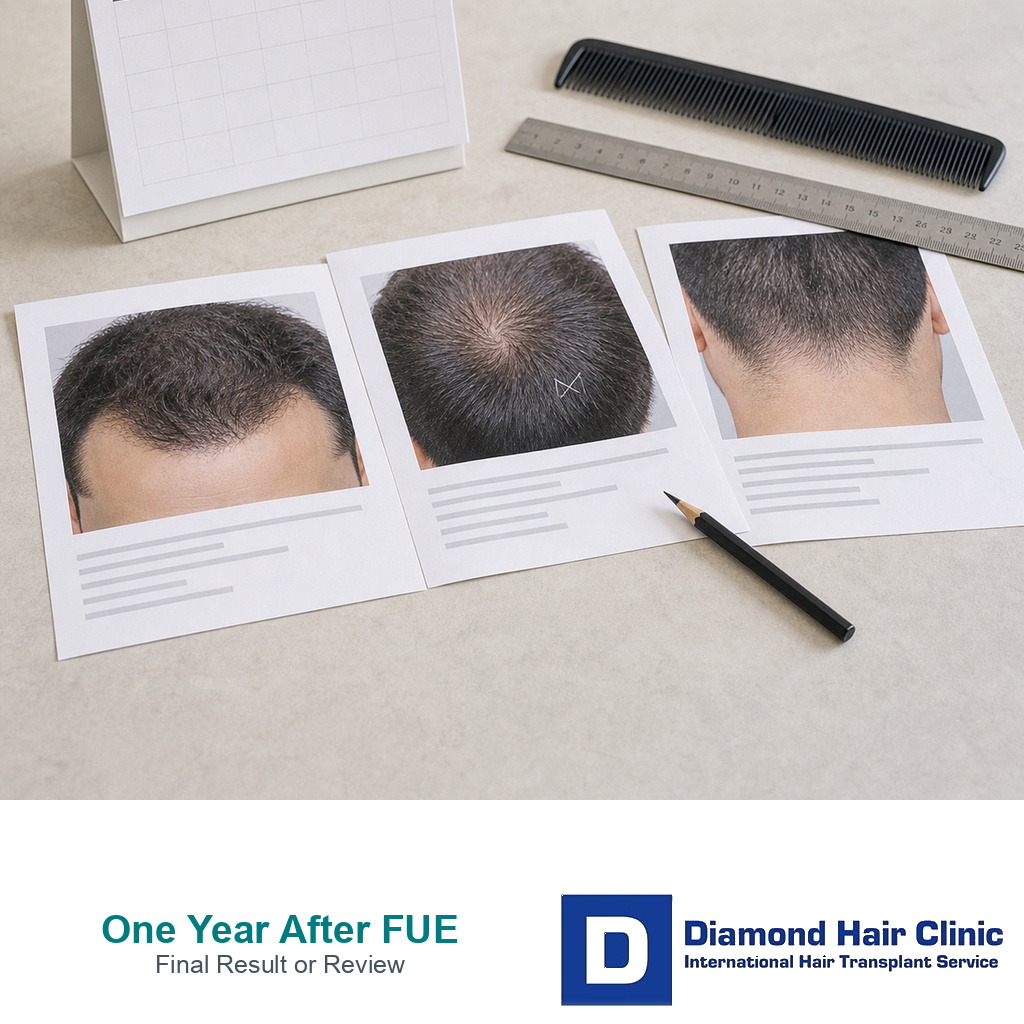
One Year Results Still Need Crown and Donor Review
If you are one year after FUE and still studying your hair in every mirror, I understand the feeling. Twelve months sounds like a finish line, so any thin area can feel like proof that something failed.
At one year, I no longer answer only with “wait and see.” For most frontal and hairline FUE results, this is usually serious enough for a structured review. It is not always the last word for crown work, shaft thickening, texture, or ongoing native hair loss, but a clearly weak pattern should not be hidden behind vague reassurance.
A weaker looking phase after earlier improvement should not be waved away with a label alone. At this visit I check whether the change is in transplanted hair, native hair, hair caliber, product use, crown timing, or a wider shedding trigger before discussing repair. The wider check decides whether the next step is observation, styling change, medical review, or repair planning.
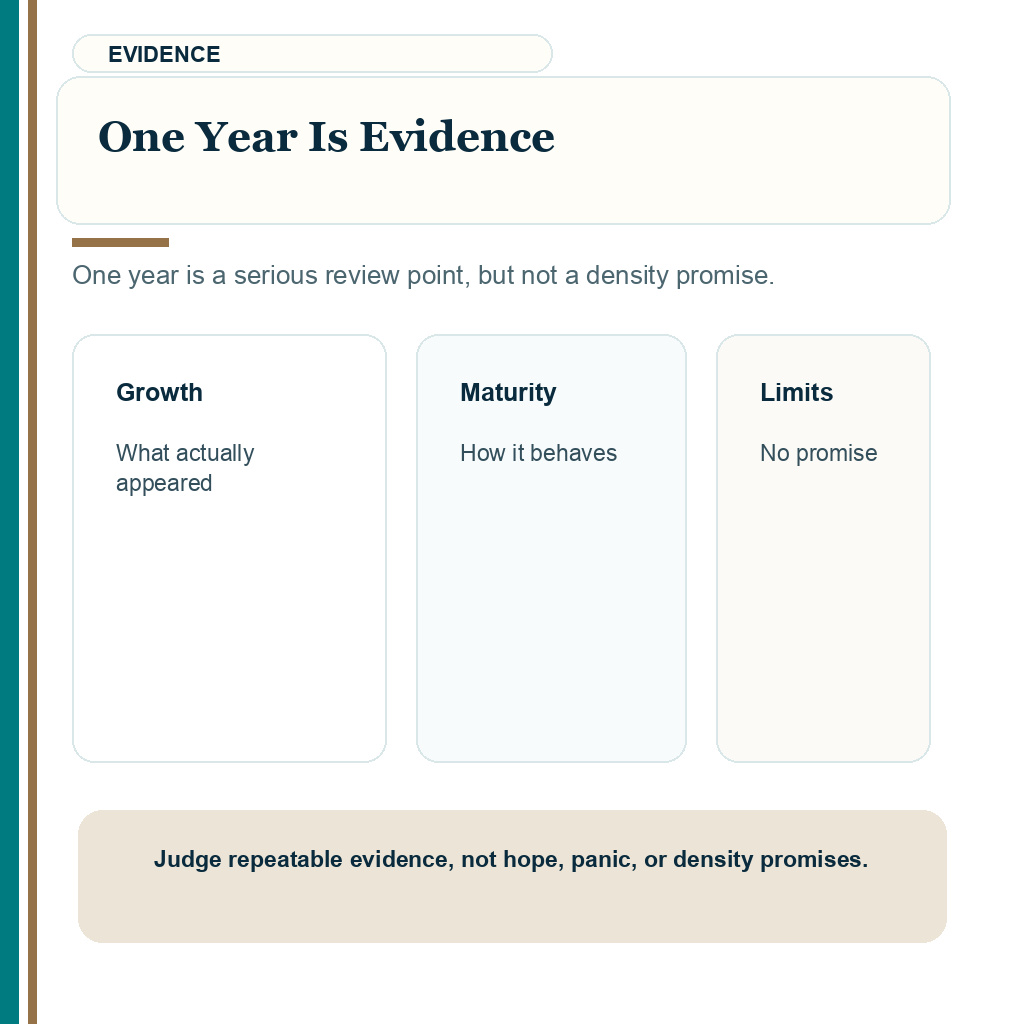
At the one year visit, I do not treat the appointment as only a celebration or a complaint. I check what grew, what matured, what native hair may have changed, how the result behaves in normal light, and whether the donor area still gives us safe options. By one year, I stop judging the transplant by hope and start judging it by comparable evidence.
At one year, compare the result with its own starting point before comparing it with another patient. Hair caliber, graft distribution, native hair loss, styling, and donor reserve can make two good results look very different.
Bring your styling routine to the review. A result can look different with product, longer hair, a fresh cut, or the way the crown is parted.
One year mark matters after FUE
By one year after FUE, most transplanted hairs that are going to become visible have already appeared. The early shock loss stage is over, the uneven month by month growth phase has mostly passed, and the hair should be long enough to judge style, direction, and coverage. If you are comparing your current state with the early milestones, it helps to look back at the 10 month hair transplant reality check, because month 10 is often close to the one year picture but not always identical.
The one year point gives enough time for the main growth cycle to declare itself. Before that, a thin area may be delayed rather than failed. After that, the review needs more discipline. We can still allow for some refinement, especially in the crown or in coarse to fine maturation, but we should not keep postponing a proper assessment without looking at the evidence. If the answer is still “wait,” it should be tied to a specific reason and a review date, not used as a way to avoid classification.
Details to clarify by twelve months
The basic outline should be visible. The hairline shape, the main zones of growth, the direction of the transplanted hair, and the broad density difference between strong and weak areas should be clear. If the frontal hairline was planned well, it should now frame the face naturally. If the graft angles were wrong, the direction problem is often apparent by this stage.
Texture can still soften. Hair that looked wiry at first may settle. Styling may improve as length increases. But if a large zone has very little visible growth at twelve months, I do not call that normal just to reassure you. I document it, compare it with the original plan, and decide whether the issue is growth, density planning, ongoing native loss, or expectation. The operative map matters at one year. A thin area that was never treated is different from a treated area that did not grow as planned.
At this review, I score growth and naturalness separately. Good growth means the planned zone has produced visible hair. It does not prove that the hairline height, edge softness, graft grouping, angle, direction, and blend are natural. A dense result can still look surgical, while a natural design cannot make up for weak growth. Name which part succeeded before deciding what, if anything, needs correction.
Hair can still thicken after one year
But the word “thicken” needs careful use. Some patients see cosmetic improvement between twelve and eighteen months because the shafts mature, hair length improves, and styling becomes easier. Crown areas may also appear slower than frontal hairline areas. That is different from expecting a nearly empty zone at twelve months to suddenly become dense without explanation. Late change should be described as refinement, crown maturation, or styling improvement. It should not be used to blur a clear growth problem.
Late thickening is mainly refinement, not a rescue of an empty zone. A weak 12 month result should not be ignored. Instead of asking only “Can anything still change?”, I look at how much change is realistic and what we would do differently if the result stays the same. That keeps the review grounded without rushing into unnecessary repair.

A one year review should compare the result under repeatable conditions, not from one flattering or harsh photo.
Thin one year result does not always mean graft failure
The sentence “My transplant failed” needs a slower review. Failure is one possible explanation, but it is not the only one. A thin looking one year result can come from low graft numbers for the area, fine hair caliber, high scalp to hair contrast, wide spacing, crown demand, ongoing native hair loss, or a result that looks good dry but weak when wet or buzzed. I also separate poor growth from poor coverage. Grafts may have grown, yet the original density plan may have been too thin for the area treated. That distinction changes the next step, because poor growth, under planning, and ongoing native loss are not repaired in the same way.
The earlier growth checkpoints matter here. If you looked empty at month five, the picture may be very different by month ten. I use staged expectations such as the month five hair growth check, the thin hair transplant at 7 months review, and the month eight hairline check so the review follows the actual pattern. If shedding started the worry, I also separate it from shedding at month 6 to 8 after FUE before labeling the one year result as poor growth. At one year, however, we have enough history to stop guessing and start separating the causes. A clear six month density check can show whether the case was already improving before the later review points.
Comparing photos before judging density
You may judge your result from the most painful photo. Wet hair under a bathroom light, hair pulled back, a camera close to the scalp, or a buzz cut can all remove the illusion of layering. Those photos are useful, but only if we also compare them with fair conditions. Fair comparison means same hair length, same angle, same lighting, same styling product status, no fibers or concealer, and a similar distance from the camera.
I value repeatable documentation such as hair transplant comb through videos. A comb through does not hide density behind one perfect angle. It shows whether the result holds up when hair moves. It also helps separate low density from poor styling, strong lighting, or unrealistic comparison with someone who has thicker native hair.
Never plan repair from one flattering photo or one harsh bathroom photo. A repair decision should come from a set of repeatable photos and a clinical review of the surgical record, including the graft number, treated zones, day one placement pattern, donor condition, and whether the weak area was intended for the first session.
This matters when the first worry started before the six month review. Early thinness can create a repair story in the patient’s mind, but a mature review still needs the original plan, comparable photos, native hair behavior, and donor reserve before another operation makes sense.
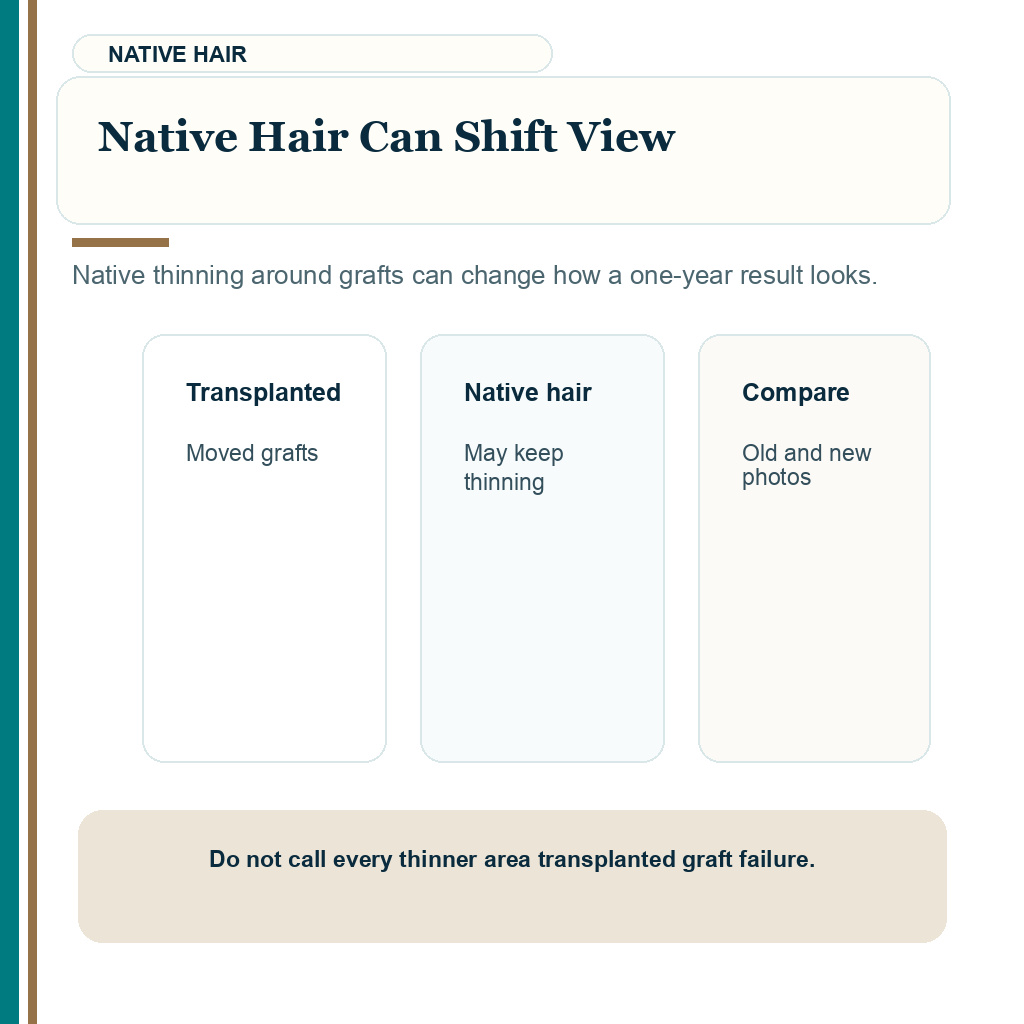
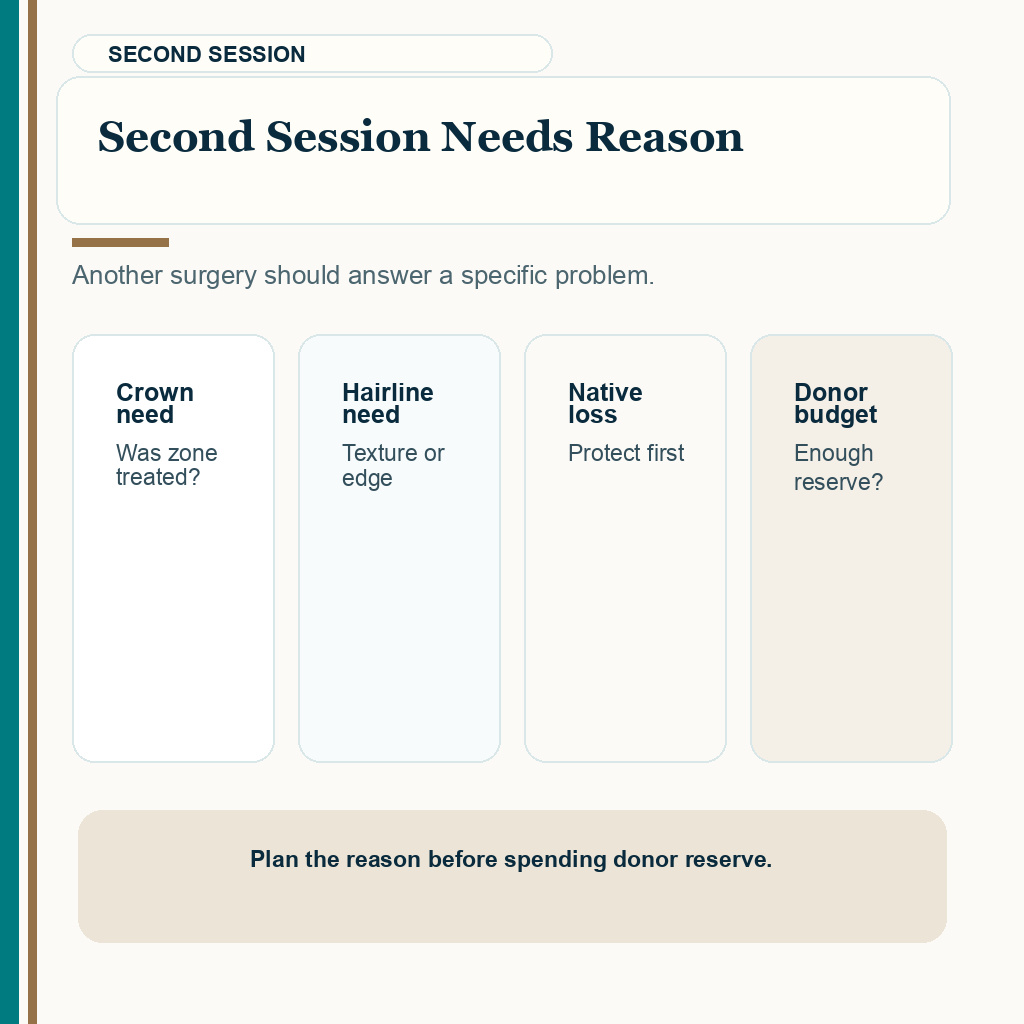
These 10 one year result review slides separate final evidence, crown versus hairline timing, density limits, native hair changes, donor reserve, repeatable photos, comb through proof, second session reasoning, refinement caution, and long-term planning. Swipe sideways, use the arrows one slide at a time, or choose a number below the image.





Crown and hairline can mature differently
The frontal hairline is judged immediately because it frames the face. The crown is judged differently because hair whorl direction, lower visual density, wider scalp exposure, and progressive native loss can all make it look slower or thinner. A crown can improve late, but it also consumes grafts quickly if the plan is aggressive.
At one year, the crown review checks whether it was part of the original plan, whether it received enough grafts, and whether you expected frontal density in an area that cannot safely receive the same density. A staged crown plan can be reasonable, but only if the donor supply and future hair loss pattern make sense.
Photo only crown decisions are weak when the whorl direction, hair caliber, miniaturization, and donor reserve have not been checked. A crown touch up may be reasonable after a mature review, but the plan should explain why the weak area is truly graftable instead of simply offering another session because the photo looks thin.
Native hair loss can confuse the one year result
Transplanted hair and native hair are not the same problem. You can have good graft growth and still look thinner because the surrounding native hair continued to miniaturize. This matters most when the area behind the hairline was already weak before surgery, when medication was stopped or inconsistent, or when you had diffuse thinning.
Hair loss can continue after a hair transplant because surgery moves resistant donor hairs into a weak area, but it does not freeze every surrounding native hair. Graft growth matters, but the whole scalp plan still has to make sense. A widening part behind the hairline, visible scalp in the crown, or medication interruption can change the one year picture even when transplanted hairs survived.
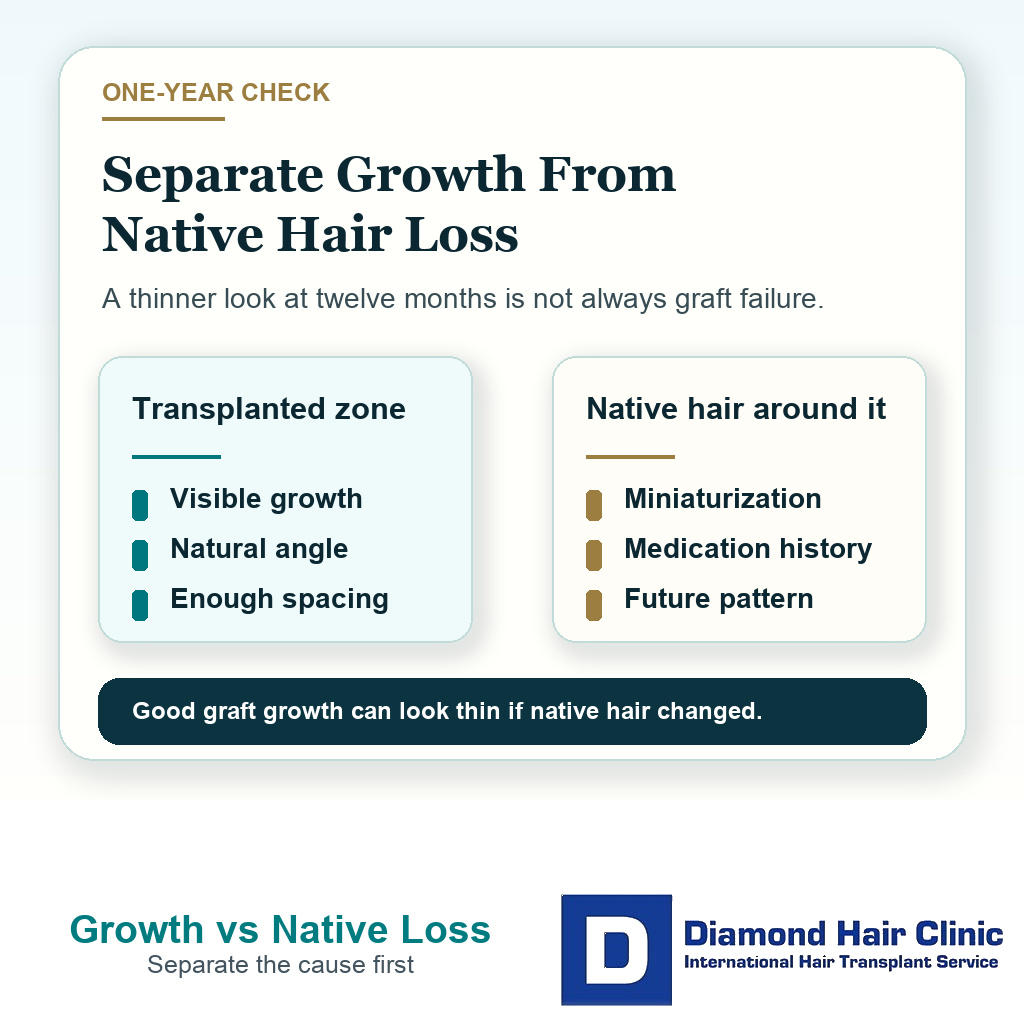
At one year, a thin looking result may come from graft growth, native hair loss, or both, so the review should separate the causes before repair planning.
Late thickening questions are easier to answer after the review separates treated zones, untreated zones, and native hair that may have changed around the transplant.
Repair review can be reasonable
A repair review is reasonable when the one year result shows clear low density in the transplanted zone, poor graft direction, an unnatural hairline edge, visible gaps, pluggy grouping, overharvested donor signs, or a mismatch between the surgical promise and the visible result. It is also reasonable when you cannot style the hair in ordinary light despite adequate healing time. Persistent redness, scaling, tenderness, pimples, or itching at one year should be assessed as a scalp or healing issue, not dismissed as normal waiting.
Many one year concerns still do not lead to surgery. The next step may be more time, medical stabilization, different hair length, better documentation, or accepting the limit of what the original graft number could achieve. A review is not a promise of another operation. It is where we decide whether surgery would improve the problem or only spend more donor reserve. A healthy cosmetic result is not the same thing as maximum density.

At one year, the next decision should be based on pattern, donor reserve, and evidence from comparable photos.
Second session and repair are different decisions
A second session can be part of the original plan. For example, you may restore the frontal third first and leave the crown for later. Repair is different. Repair means something about the first result needs correction. That may be unnatural design, poor growth, wrong angles, visible scarring, or density that does not match the documented plan.
The emotional pressure is different in these two situations. A planned second session should feel like the next stage of a conservative strategy. A repair plan should begin with records, photos, donor assessment, and a clear discussion of what can realistically be improved. It should also name whether the correction is density top up, hairline softening, angle correction, crown staging, donor area management, or medical stabilization. If the result is poor enough to raise a dispute, the poor hair transplant result review should come before another surgery.
Donor area still leads the plan
At one year, many people look only at the recipient area. I look at the donor area first. If the donor was overused, patchy, scarred, or depleted, the plan may need to be more conservative than you want. Donor review should include short enough hair, bright light, and both side and back views, because long hair can hide an uneven extraction pattern. If the donor remains strong and the first result is stable, a small density session may be possible. If future hair loss is still moving, we must protect grafts for later.
A second session should protect the donor area before it improves coverage. The one year review belongs to long term planning, including lifetime hair transplant grafts and smaller hair transplant sessions. A result that looks slightly better today but wastes donor supply can become a worse result five years later.
To send before asking for an opinion
If you ask for a one year review, send clean information. Include dry hair and wet hair photos, front, temples, midscalp, crown, donor area, and the same angles from before surgery if possible. A consistent photo record makes this review much more useful. Also include graft count, date of surgery, zones treated, medication history, any shock loss or shedding episodes, current haircut length, whether fibers or concealer were used, and whether the hair was shaved or partially shaved during surgery. If you have a surgical summary, marked recipient area photo, or day one placement photo, include it so the review compares the result with the actual plan rather than with memory.
Also send what bothers you most in normal life. Is it the hairline edge, the see through midscalp, the crown, the donor area, or the way the result looks under light? That helps the surgeon answer the real question instead of giving a generic timeline response.
My frame for the one year visit
At Diamond Hair Clinic, I treat the one year point as a medical and aesthetic review. The review should prevent panic without leaving you in a vague waiting period forever. We compare the current result with the original diagnosis, donor capacity, graft count, hair caliber, hairline design, and future loss risk.
At the one year review, I also look backward at what was documented before surgery. The original photos, graft map, donor estimate, density goal, crown decision, and native hair risk should explain why the plan was chosen. Before choosing a clinic, this is the kind of evidence to ask for, not a promise of perfection but a plan that can be reviewed if healing, biology, or future hair loss changes the result. It is the same evidence patients should use to judge hair transplant results before choosing a clinic.
The decision may be another photo review, medical stabilization because native hair is still changing, acceptance of a good but not teenage dense result, repair review, or a staged second session.
If you are one year after FUE and unsure what you are seeing, do not judge the result only from hope or disappointment. Build the evidence first. Then the decision becomes clearer. It may be a stable result, late review, medical stabilization, second session, or repair planning.