Regretting a Shaved Head Before Booking a Hair Transplant
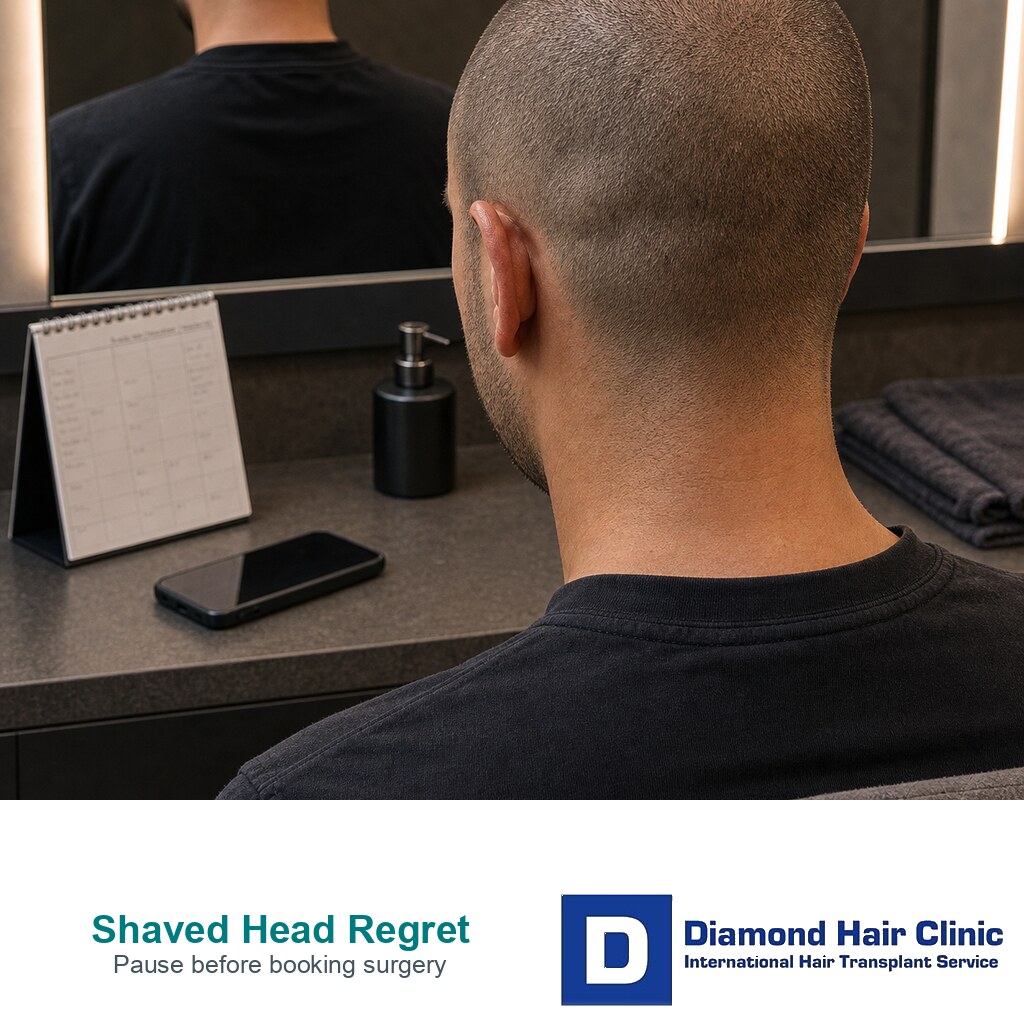
Trying a shaved head can be useful, but it can also be emotionally rough. Some men shave down, see more scalp than they expected, feel their face looks different, and start looking for a clinic within the same day.
If that happened to you, do not treat the first mirror shock as a diagnosis. Do not choose a graft number, pay a deposit, or approve a low hairline while you are still reacting to the first shave. Let the haircut settle, take normal photos, and then ask whether surgery solves the real problem better than waiting, medical treatment, a different haircut, a hair system, scalp micropigmentation, or no procedure.
I understand the reaction. Hair loss is not only a technical problem on the scalp. It changes how you recognize yourself in the mirror. But a hair transplant uses a limited donor area, creates a hairline design that has to age well, and must still look natural as future hair loss continues. I do not book surgery from one frightening haircut alone.
The shaved haircut should be information, not an emergency. After a short pause, the conversation becomes more useful. We can separate the part a transplant may improve from the part that may need time, treatment, styling, or acceptance.
Shaved head regret feels urgent
A shaved or very short haircut removes the styling tricks that were helping you. Longer hair can cover a weak crown, soften temple recession, or make diffuse thinning look less obvious under the right light. When everything is cut short, the pattern becomes more visible.
That direct view can be useful, but the first 24 to 72 hours after a dramatic haircut are often the noisiest. You may be reacting to sudden contrast in face shape, a stronger forehead, a weaker frame around the eyes, scalp shine, beard balance, or comments from friends and family. That first shock can make a transplant feel like the only way back, even when the better decision is to wait until the image feels less new.
That shock is information, not a surgical plan. If the shaved look made you panic, we need to understand exactly what bothered you. Was it the hairline? The crown? The sides? The contrast between thick donor hair and weak top hair? Or was it the unfamiliarity of seeing yourself without styling?
Shaved look is a test, not a diagnosis
A shaved head test can show whether you are comfortable with short hair. It can also reveal whether the donor area looks dense enough to support a transplant plan. If the back and sides already look thin when shaved, that is a warning sign. The donor area may not give enough safe reserve for the result you want. If the top is thin but the donor area remains strong, surgery may be possible, but it still needs careful planning.
One mistake is to treat the shaved result as a final diagnosis. Lighting, clipper length, skin tone, hair color, beard shape, and even a few days of growth can change how the result looks. A zero guard, a number one, a number two, and a short textured cut are not the same visual result. If you dislike zero but feel acceptable at a slightly longer guard, that tells me something different from a concern that remains clear at every short length.
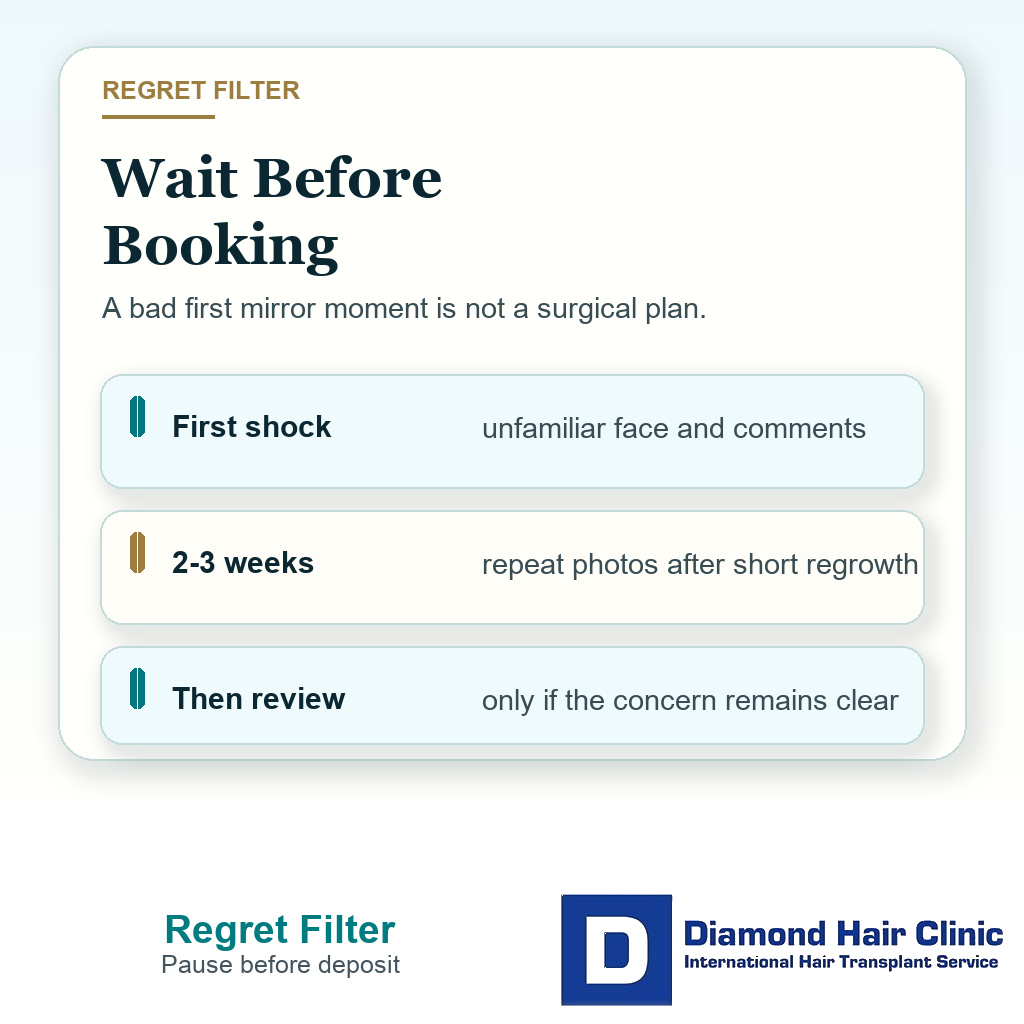
A short pause after shaving helps separate first mirror shock from a concern that still needs surgical assessment.
Before you book surgery, give the haircut some time. Let it grow for two to three weeks if you can. Take photos in normal daylight, indoor light, and from the back, sides, top, and front. Use the same distance and avoid filters so you are not comparing one harsh selfie with one flattering photo. Try to compare more than one guard length rather than judging only a zero shave. If the concern fades with short regrowth, the problem may be haircut tolerance. If the same concern about the hairline, crown, donor area, or density remains clear after regrowth, surgical assessment becomes more useful.
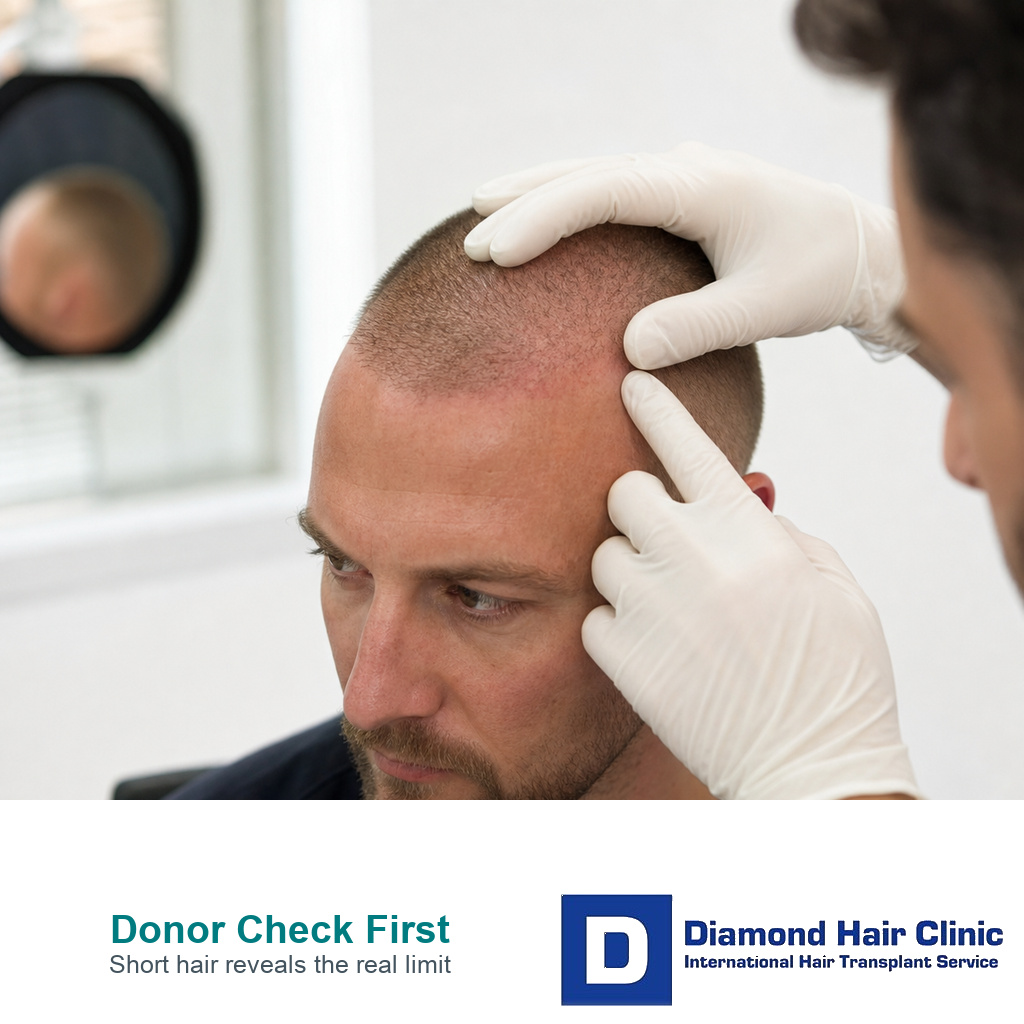
A short haircut can reveal the pattern, but it should lead to assessment rather than rushed booking.
Shaved head regret can sometimes support surgery
There are situations where the regret is not just a temporary reaction. If the hairline has clearly receded, the frontal frame is gone, the donor area is strong, and the hair loss pattern is stable enough to plan around, you may be a good candidate for a hair transplant.
It may also make sense when the main problem is a defined frontal zone rather than severe diffuse thinning across the entire scalp. A conservative hairline can restore facial framing without spending donor grafts as if the goal were teenage density. This is especially important for younger men, because future loss may still change the mid scalp and crown.
The strongest cases are not the ones with the loudest panic. They are the ones where the diagnosis, donor capacity, age, medication plan, family history, expectations, and hairline design all point in the same direction. The first surgery should protect the second decision, not spend donor grafts to escape one bad week.
Waiting can be the better medical decision
Waiting is not failure. Sometimes it is the most disciplined choice.
Surgery needs more caution when the main trigger is one bad haircut, when you are very young and still losing hair quickly, when the donor area is miniaturizing, or when the requested hairline is low, dense, and unlikely to age well. Appearance anxiety also matters when it feels stronger than the visible hair loss pattern.
If you are still actively thinning, it may be better to stabilize the situation first. That can mean medical treatment when appropriate, follow up photos, trichoscopy, blood work if the loss pattern suggests another cause, or a measured observation period. The aim is not to delay you for no reason. The aim is to avoid using grafts before the real pattern is visible.
If medication has only recently started, or shedding and stabilization are still unclear, I would review whether you are still losing hair on medication before setting the surgery date.
Hair systems, SMP, or accepting the shaved look
Surgery is not the only possible response to a shaved head regret. Some men are better served by a hair system, at least for a period of time. A hair system can give immediate coverage without spending donor grafts, but it requires maintenance, acceptance of the system itself, and realistic expectations about daily life.
For some patients, hair system or hair transplant decisions need a direct comparison. If the donor area is weak, the top is diffusely thin, or the desired density is beyond what surgery can safely provide, a system may be more realistic than a transplant promise.
Scalp micropigmentation can also help selected men who want the appearance of a close shaved style. It does not create hair, and it does not replace transplant planning, but it can reduce scalp contrast in the right candidate. The way scalp micropigmentation and hair transplant results fit together matters before you assume SMP will solve every density problem.
If your long term goal is to keep a very short or shaved style, discuss that before choosing FUE. Extraction dots, donor contrast, and transplanted hair direction can matter more at very short lengths. A transplant planned for a styled haircut is not always the same plan as one that must still look acceptable under a close shave.
And sometimes the shaved look needs more time. A beard change, a number one or two guard instead of zero, a better scalp routine, or a few weeks of adjustment can change the emotional response. Accepting the shaved look is not a failed transplant decision. It may be the right decision if surgery would spend donor grafts without giving a result that fits your long term pattern.
Consultation questions that matter
If you regret shaving your head and are now considering surgery, the consultation must go deeper than a graft quote. The surgeon should examine the donor area, the recipient area, the degree of miniaturization, your age, your family pattern, previous treatments, and the design that will still look sensible years later.
Ask what will happen if the crown becomes thinner later. Ask whether the proposed hairline leaves enough reserve for the future. Ask whether your donor area can tolerate the extraction pattern. Ask what result is realistic if you keep a short haircut after surgery.
A hair transplant consultation should do more than quote grafts. The fee or quote is not the main issue. The issue is whether the consultation protects you from a plan that looks attractive in a message but weak in real life.
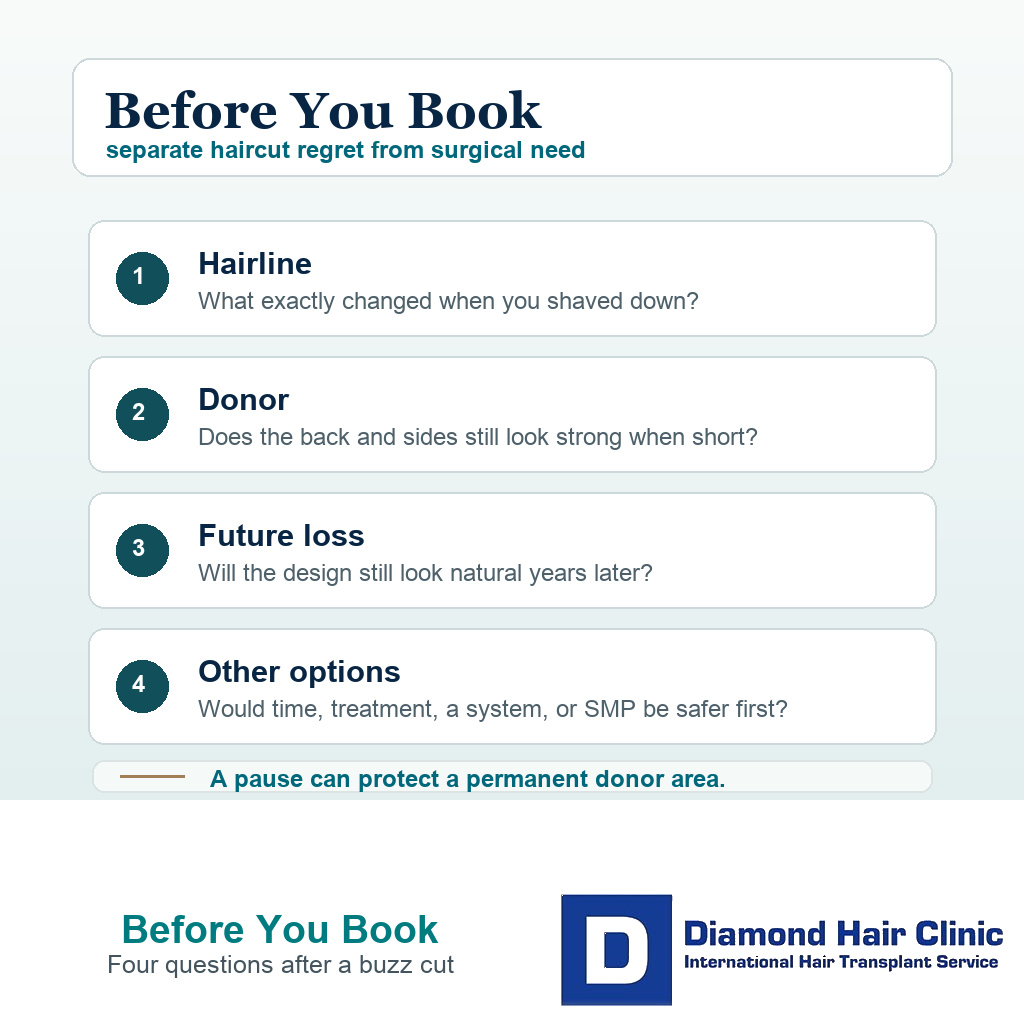
The decision should separate haircut regret from donor capacity, future loss, and realistic design.
Advanced baldness changes the decision
For a Norwood 6 or Norwood 7 pattern, the question is often different. A shaved head may look better than an incomplete transplant if the donor area cannot cover the visible balding area in a natural way. In advanced baldness, the priority is not to fill every empty area. It is to create the best possible frame while respecting donor limits.
If you are already in this category, Norwood 6 and Norwood 7 hair transplant planning has to be conservative and often staged. You may still be a candidate, but a single aggressive session can leave the donor area weak and the top still thin.
Surgery will not let every patient avoid shaving forever. Some men can achieve a strong improvement. Some can achieve framing rather than full coverage. Some should keep the shaved look and avoid surgery. The answer depends on the scalp in front of me, the donor reserve, and the haircut the patient is willing to live with, not only the photo that made the patient panic.
Shaving before surgery is not the same as a shaved lifestyle
Some clinics ask patients to shave before FUE. That is a technical preparation issue. It is different from asking whether a shaved or bald style is the right long term choice for you. If your question is how short to cut the hair before surgery, haircut before hair transplant surgery is a preparation topic, not a lifestyle decision.
After surgery, the question changes again. Shaving the head after a hair transplant depends on healing, graft safety, and how visible extraction marks may be with very short hair. Do not mix that recovery timeline with the decision you are making before surgery.
Appearance anxiety needs careful handling
Hair loss can make a man inspect every photo, every mirror, and every comment. A shaved haircut can intensify that. If the distress feels larger than the hair loss itself, the most protective move may be to slow down before making a permanent change. I also ask whether the problem is truly density, or whether the shaved head changed face shape, beard balance, scalp shine, or self image in a way surgery may not solve.
The concern may still be real. Surgery still has to be chosen for the right reason. A transplant can improve framing and density in the correct candidate, but it cannot guarantee constant satisfaction with every photo or every angle. I slow down when reassurance lasts only until the next mirror check, when the same photos are sent repeatedly for new graft numbers, or when the goal is to remove every bad angle from life. If the main issue is compulsive checking, fear of being seen, reassurance seeking, or a demand for perfection, body dysmorphia and hair transplant decisions may be more important than a graft count.
Emotional readiness matters as well. You can have real hair loss and still be in the wrong moment for surgery. The decision should feel steady enough that you can accept normal recovery, temporary shedding, uneven early growth, and the months of waiting before the result matures. Hair transplant emotional readiness belongs in the decision, not after the deposit.
Make the decision after the first panic settles
If you shaved your head and regret it, pause before you pay a deposit. Let the haircut grow slightly. Take clear photos. Look at the donor area, not only the front. Write down what exactly bothers you and what result you would still accept if perfect density is not possible. Then have a consultation that tests your assumptions instead of confirming them too quickly.
Use the consultation to answer questions like these.
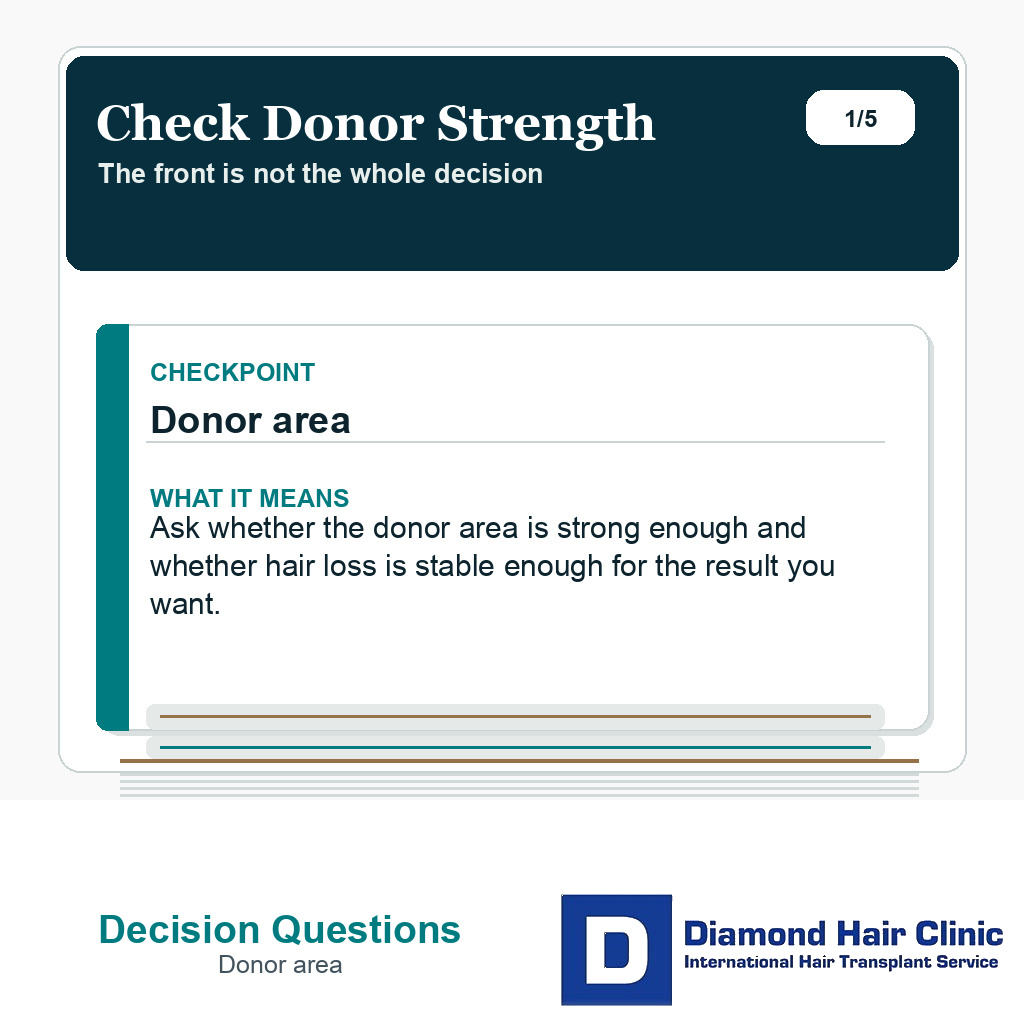
- Is my donor area strong enough, and is my hair loss stable enough, for the result I want?
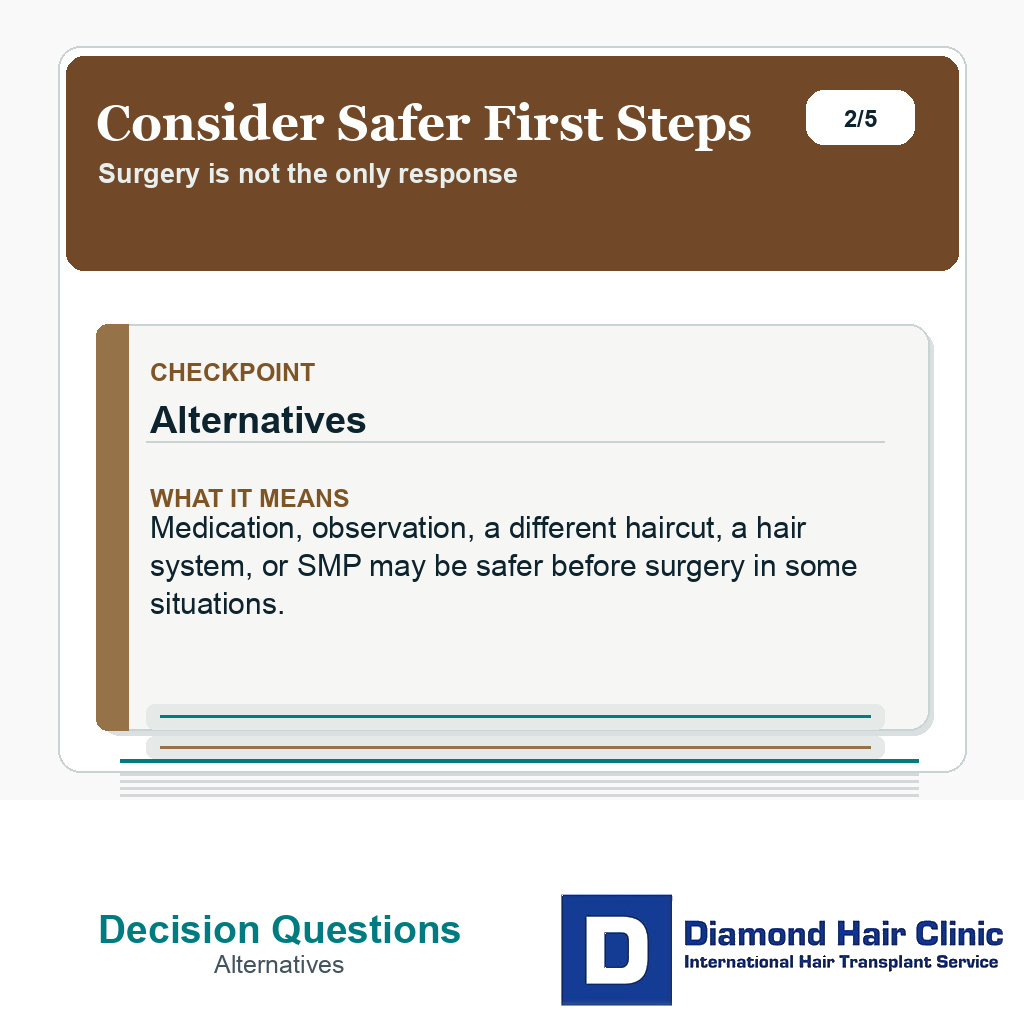
- Would medication, observation, a different haircut, a hair system, or SMP be safer first?
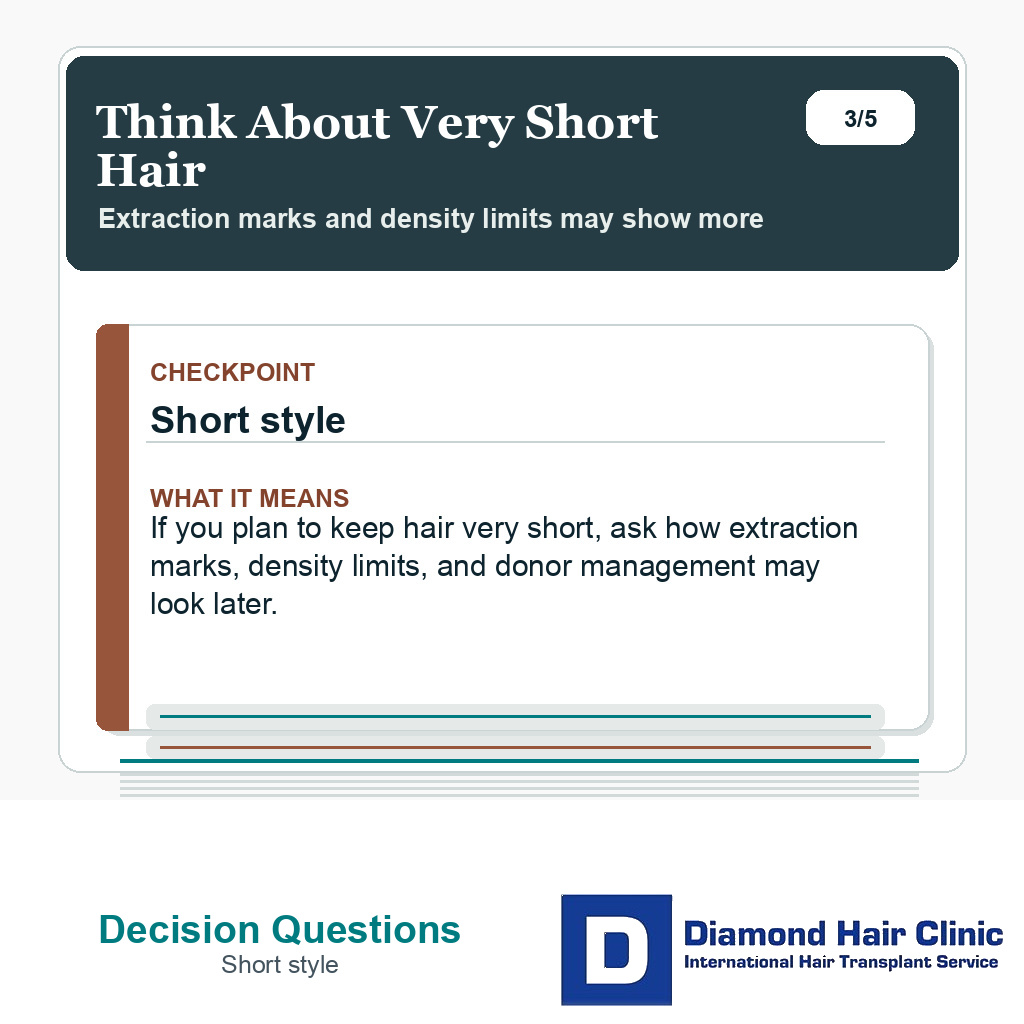
- If I keep my hair very short, will extraction marks or density limits become more visible?
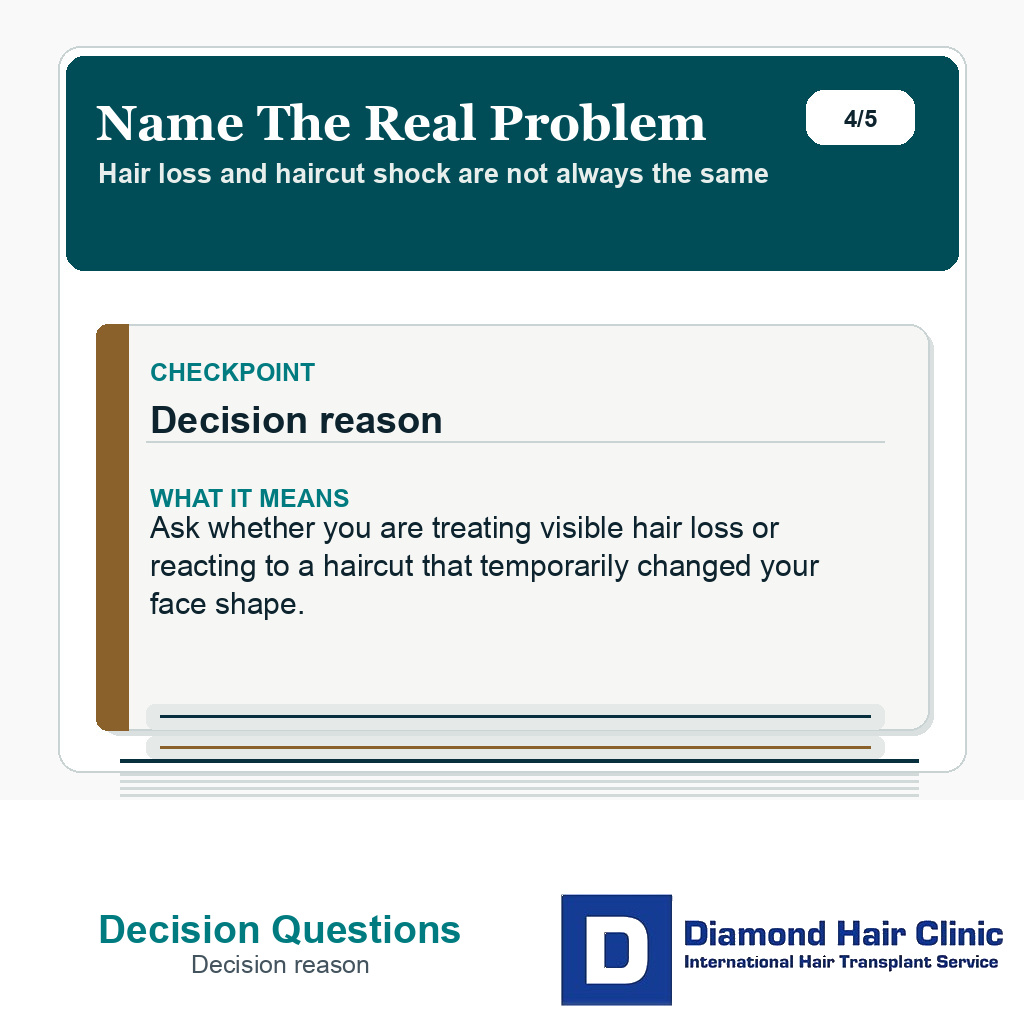
- Am I trying to solve visible hair loss, or the shock of a haircut that changed my face shape?
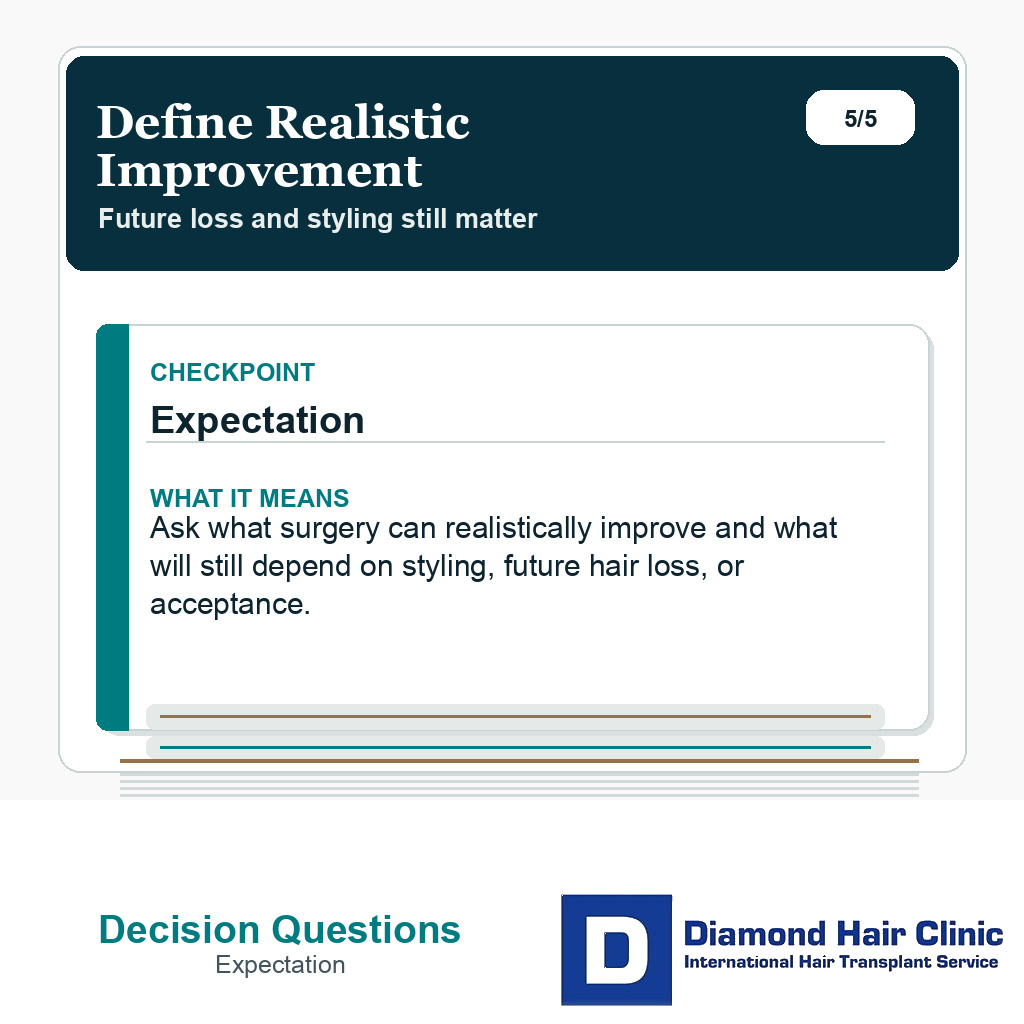
- What can surgery realistically improve, and what will still depend on styling, future loss, or acceptance?
The 5 shaved head decision slides below split the consultation questions into one image each. Swipe sideways, use the arrows to move one slide at a time, or use the numbered indicators under the image to jump to a specific slide.