Childcare Needs Extra Help in the First Week
Being near your children after FUE is usually possible, but the first week needs a plan before surgery. Being a parent is not the issue. The risk comes from sudden contact, repeated lifting, bending, bedtime movement, and small hands reaching for the grafts before anyone can stop them.
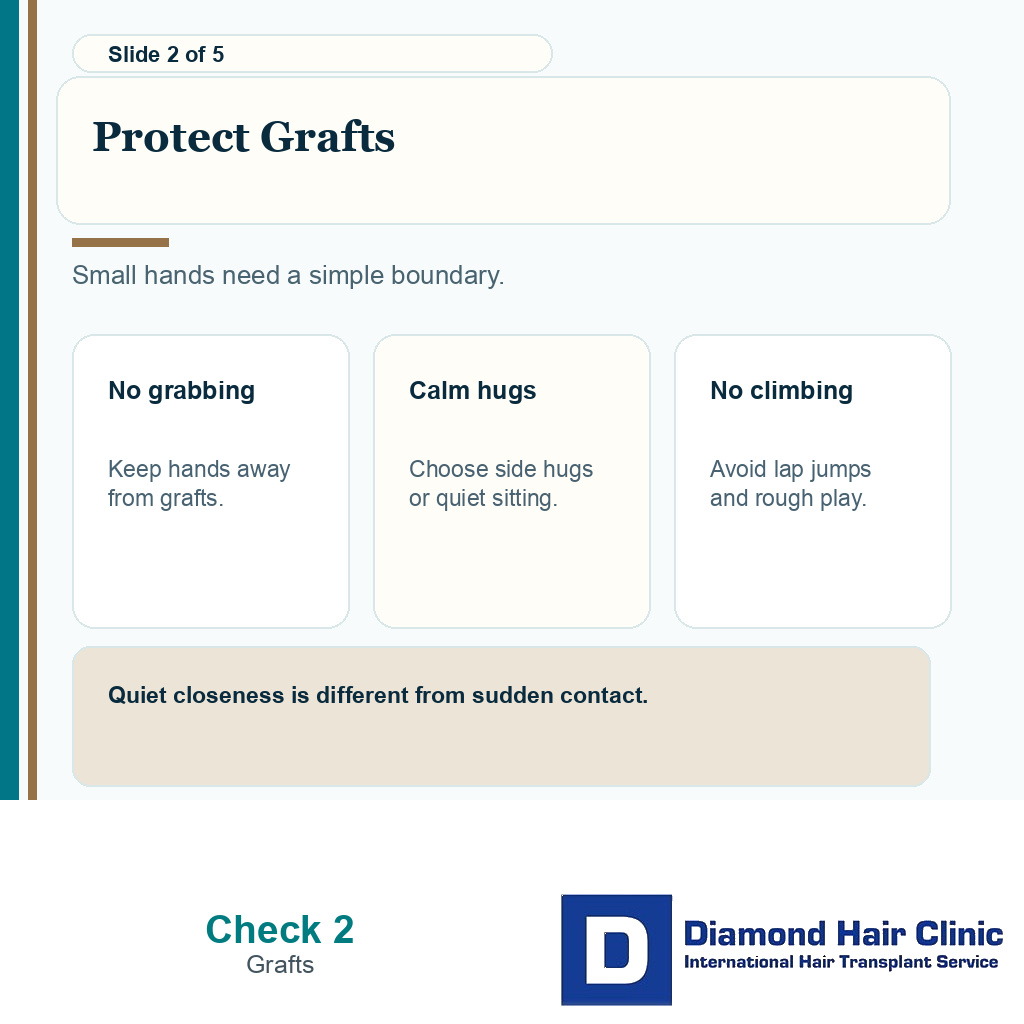
I separate quiet connection from physical childcare. Reading a story, sitting beside a child, or talking at the table can usually stay in the plan. Bath time, car seats, bedtime wrestling, school bags, toys on the floor, or a toddler climbing onto your lap should usually be handed to another adult in the first several days.
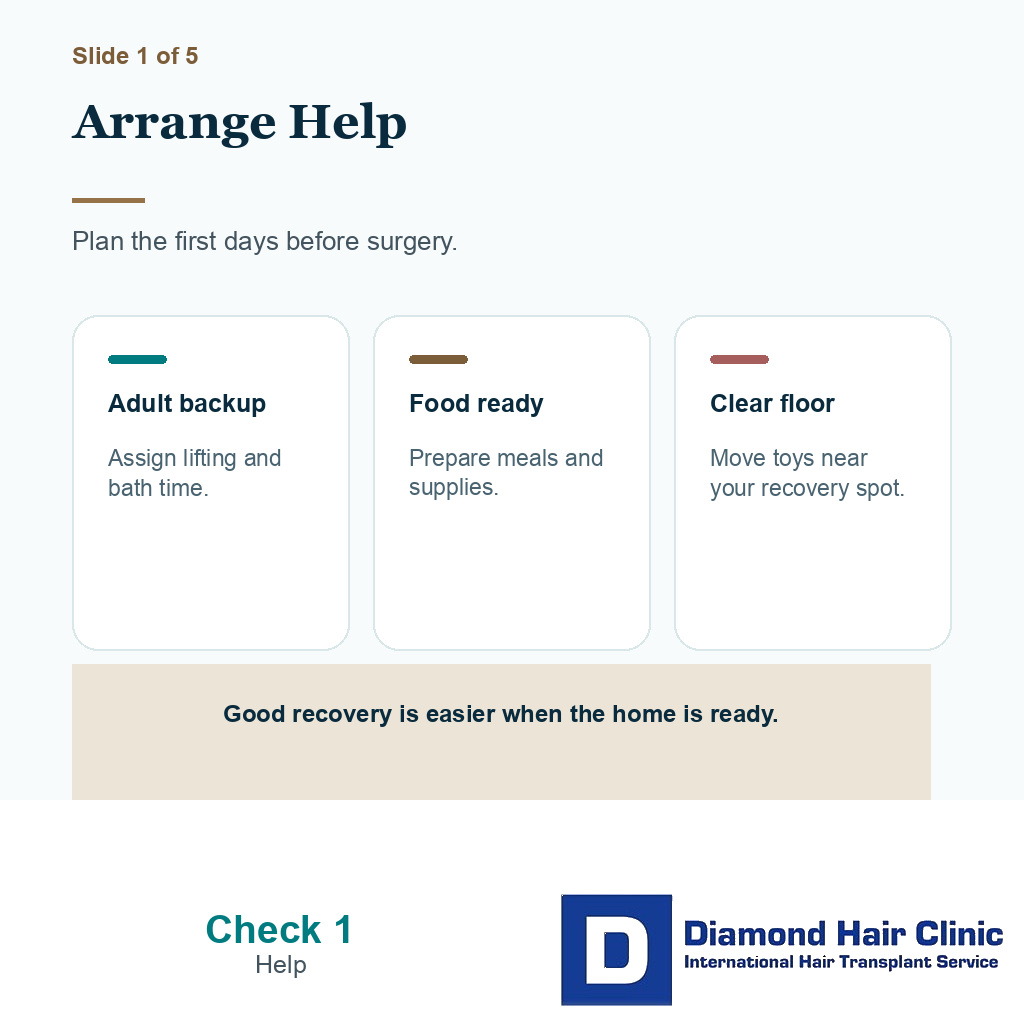
Arrange help for the routines that usually become physical before surgery day. Car seats, bath time, bedtime, and carrying a sleepy child are harder to improvise when the grafts are fresh. Treat the first greeting as part of recovery setup. Sit down before young children come close, and let another adult guide hands away from the grafted area.
Plan the first school run or nursery pickup before surgery, not on the morning you need it. The awkward part is often bending, buckling, bags, and sudden hugs in a busy doorway.
Young Children Change the Recovery Plan
A quiet adult can follow instructions. A baby, toddler, or tired child cannot be expected to protect fresh grafts reliably. Childcare after a hair transplant is therefore not only about rest. Contact risk and repetition change the plan.
The early recovery plan in hair transplant aftercare is built around controlled washing, protected sleep, swelling control, and avoiding friction. A young child adds movement that cannot always be predicted. A hug may become a head grab. A bedtime routine may become a forehead bump. A toy on the floor may make you bend again and again before you notice how much you are doing.
Love and closeness are not the problem. Uncontrolled contact is. A settled child sitting beside you is one situation. A child who throws the head back, reaches for your hair, asks to be carried, or climbs into bed is another. You can stay emotionally present while another adult handles the physical tasks most likely to disturb the scalp.
Help in the first week protects the grafts
The first few days after FUE should be as predictable as possible. The grafts should be left alone, the recipient area should not be rubbed, and the donor area should not be irritated by constant movement or pressure. Timing for when hair transplant grafts become secure explains why the risk changes with time, but it does not mean every family routine becomes sensible at the same speed.
A realistic plan is to arrange help for the first several days, and to keep help available through the first week for carrying, car seats, bath time, floor play, and bedtime if the child is young or active. If the scalp still has heavy crusts, bleeding, tenderness, swelling, or scabs that catch on objects, the plan stays cautious. The calendar matters, but the scalp matters more.
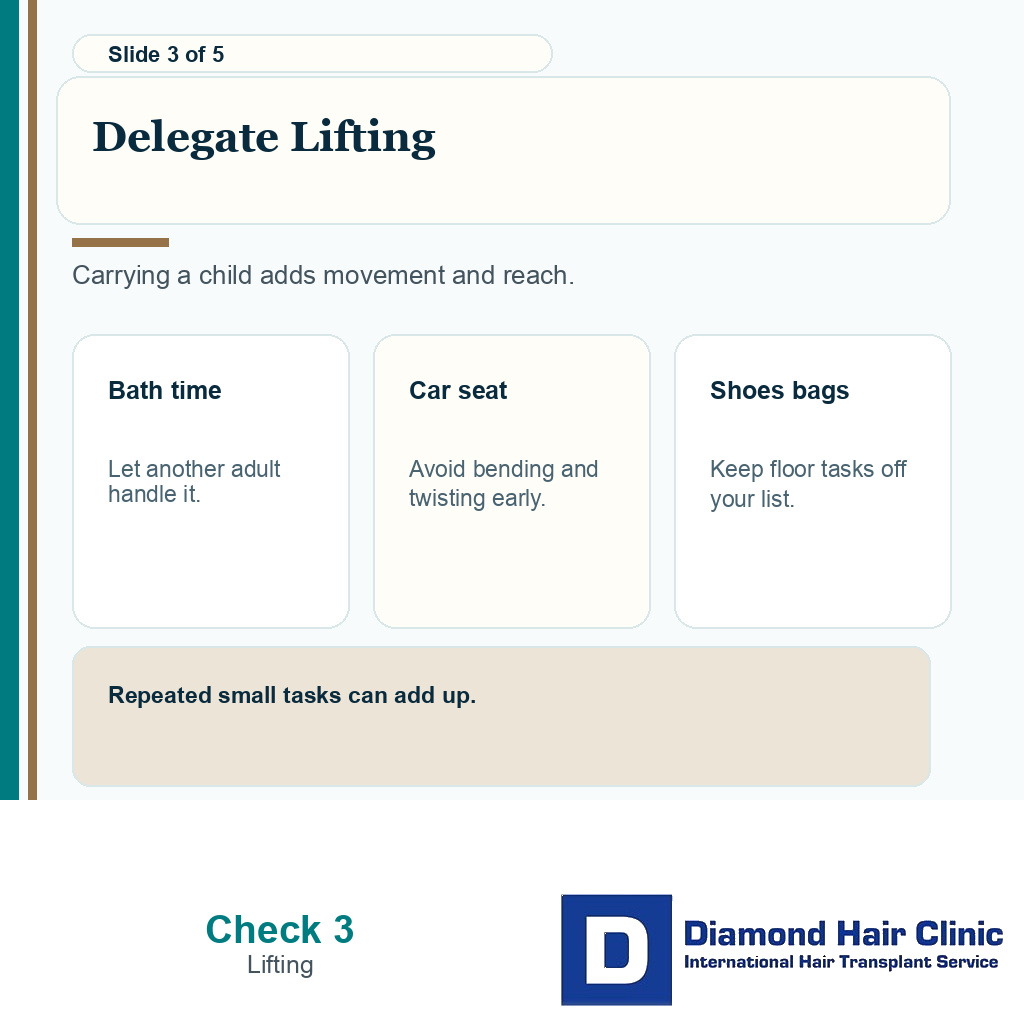
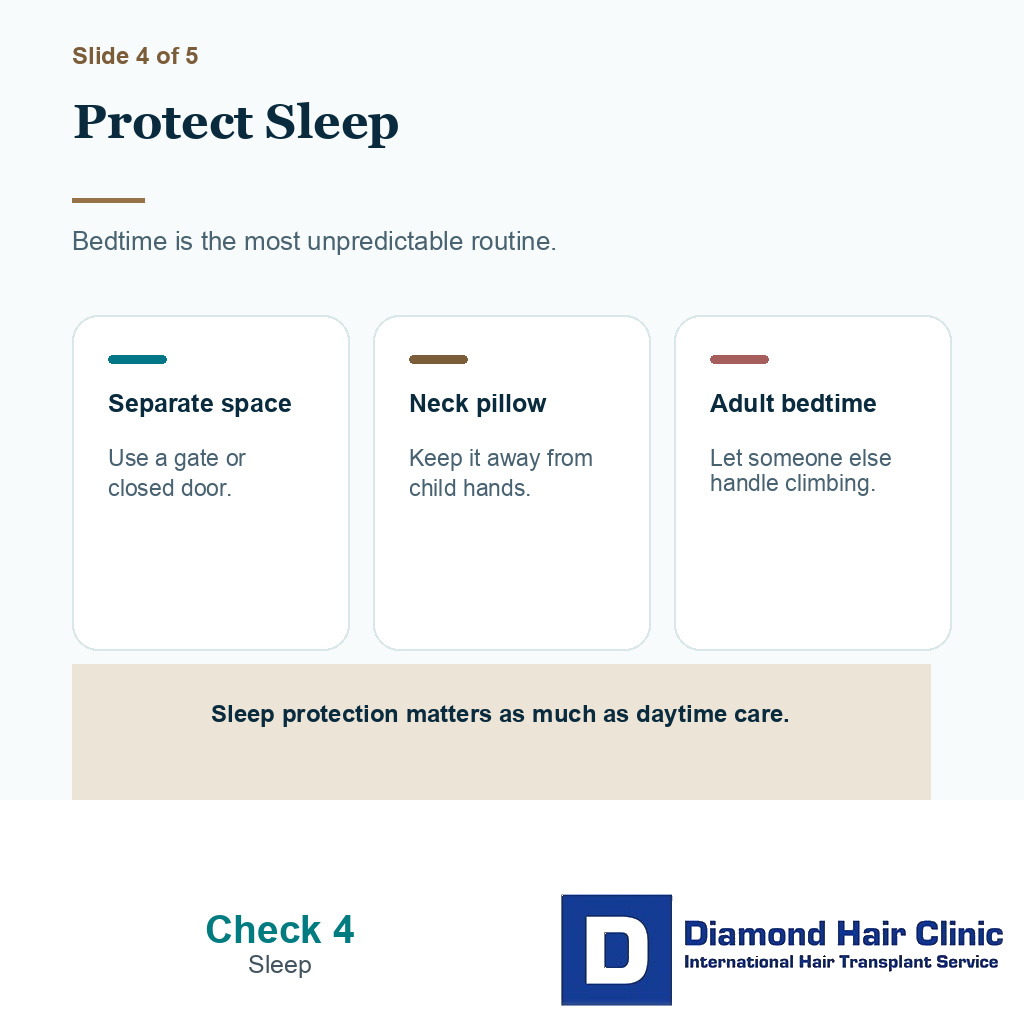
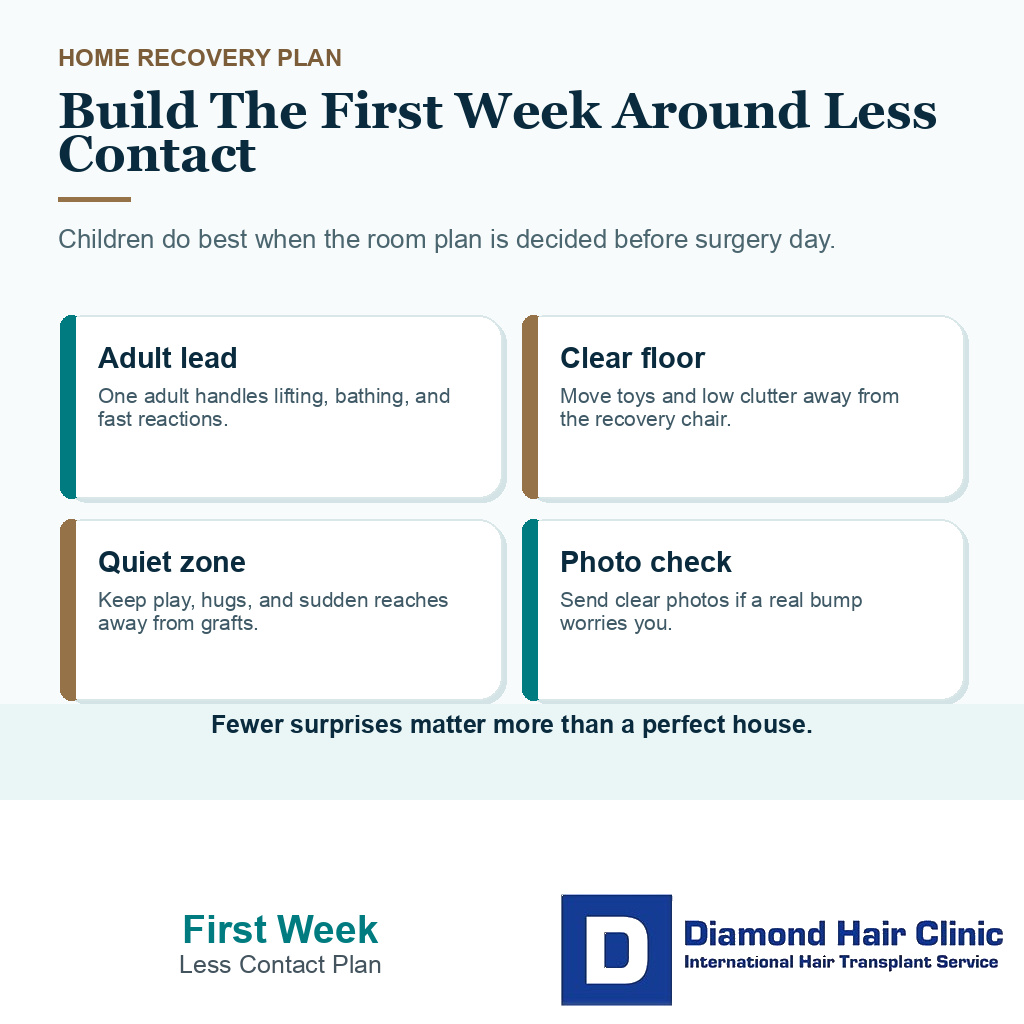
After sorting the contact risk, turn it into a real room plan. The card is meant to make that practical by clarifying who lifts, who handles bedtime, where the child sleeps, and how the graft area stays away from sudden hands during the first week.
The visual should turn the risk sorter into household decisions. The goal is to replace sudden contact with adult backup, quiet routines, and a safer sleep setup before the grafts are tested by daily family life.
Parents often ask whether they can still sit with a child, read a story, or watch a film together. Usually, yes, if the child can stay settled and another adult is nearby. Sitting beside a child is different from being jumped on by a tired toddler.
Lifting a Child Needs Careful Timing
Lifting a baby or toddler can raise pressure, increase swelling, and put the scalp close to small hands. It also usually comes with bending, twisting, and sudden correction if the child moves. That is different from lifting a fixed object in a controlled way, which I discuss separately in heavy lifting after a hair transplant.
Bending over after hair transplant is not the same as one careful movement. Parenting adds repetition. Picking up toys, reaching into a crib, fastening shoes, loading a car seat, and cleaning spills can turn one small movement into a full day of strain.
For the first days, another adult should handle carrying, bathing, car seats, and tasks at floor height. If you must lift, keep it brief, keep the child’s head away from the recipient area, and do not let the child rest hands on your scalp. A calm baby held away from the grafts is not the same as an active toddler who kicks, throws the head back, or reaches for your hair.
Bedtime Needs a Simple Safety Plan
Bedtime is often the hardest part for parents. Children become tired, clingy, and unpredictable. They may reach for your face, pull a pillow, bump your forehead, or climb into bed. I plan bedtime separately from daytime childcare for that reason.
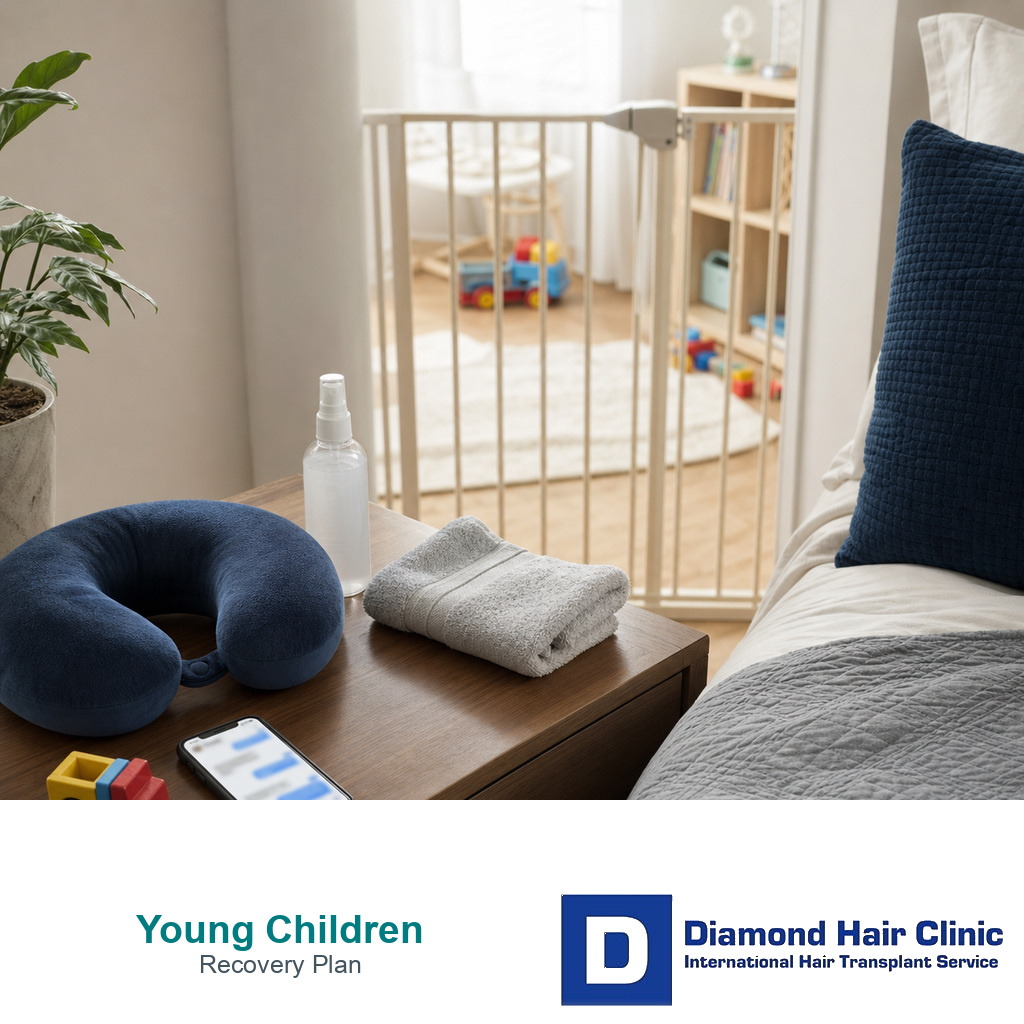
The setup for first night after hair transplant is designed to protect the scalp while you sleep. With young children at home, the room setup matters too. Keep the recovery sleeping area separate if possible. Use a closed door, a child gate, or another adult as the boundary. A neck pillow helps only if nobody pulls it away or climbs over it.
Sleep after hair transplant during the next nights still depends on a protected room, not only pillow position.
Do not rely on instructions given to a toddler. A child may understand for one minute and forget the next. If your child normally climbs into your bed, naps beside you, or touches your face to fall asleep, arrange a different routine before surgery night.

Accidental Touches and Bumps Need Clear Review
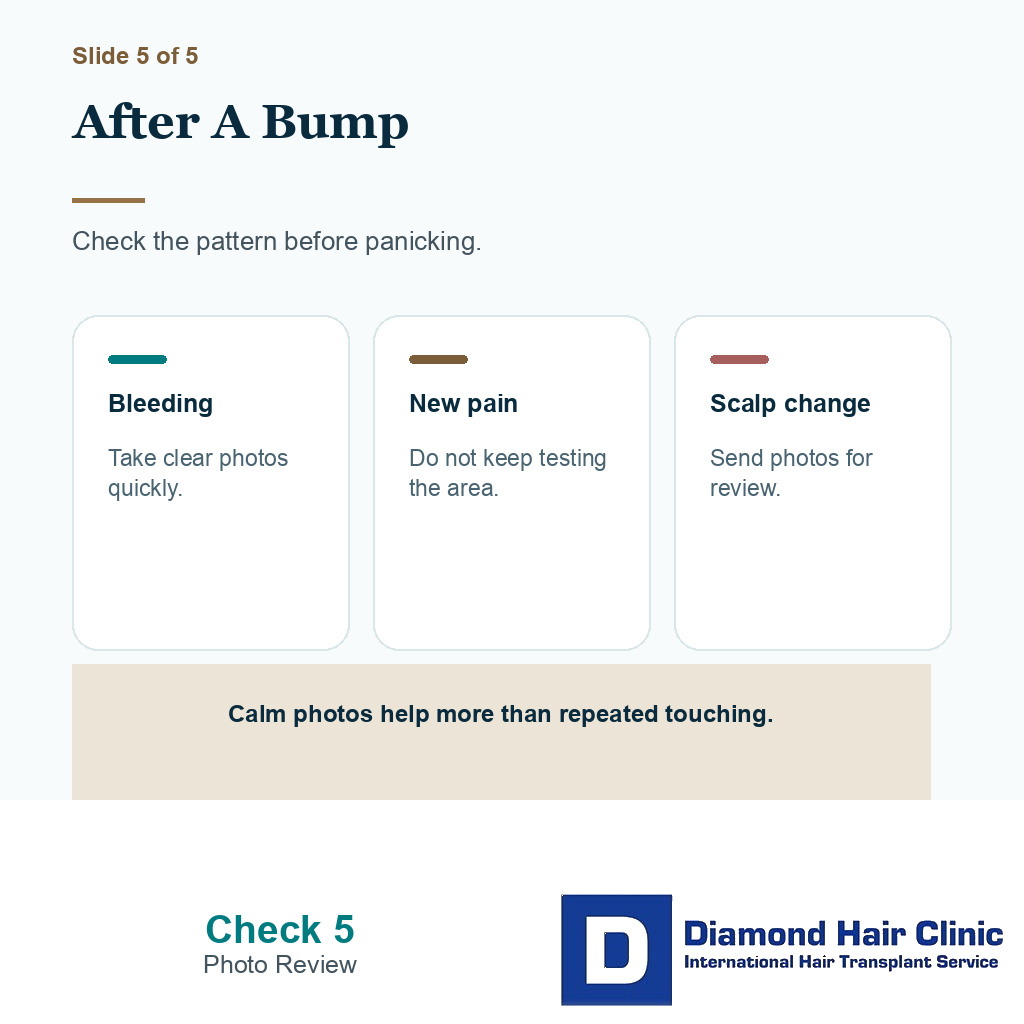
A child’s hand brushing the scalp is frightening, but not every light touch means graft loss. I first look for evidence. Was there bleeding? Is pain increasing? Did tissue come out with a hair? Is swelling getting worse? Does the area look different in a clear photo? After a light graft touch, panic can lead to more rubbing and checking, which is not helpful.
A real bump is different from a brief accidental brush. If a child hits the recipient area with force, jumps onto the head, pulls scabs, or causes bleeding, take clear photos and contact the clinic. After that kind of contact, check bleeding, graft movement, swelling, pain, and clear photo timing in the bumped head after hair transplant guidance.
If you see bleeding, a wet piece that looks like a graft, increasing pain, spreading redness, warmth, pus, or new swelling, do not hide it because you feel embarrassed. Send photos. Early advice is easier than guessing after the area has been touched many more times.
Explaining Recovery to a Child in Simple Terms
Children do better with a simple explanation than a mysterious rule. You do not need to describe surgery in detail. You can say that your head is healing and nobody should touch it for now. For a very young child, short repeated phrases work better than one long explanation.
Some parents worry that the visible recovery will upset a child. Redness, short hair, scabs, and swelling can look unusual. A straightforward tone from the adults helps. If adults keep checking the head in the mirror, the child may become more curious. Regular hair transplant follow-up after surgery photos give the clinic information without turning the home into constant inspection.
For older children, you can explain that the result takes time and that the first days are about healing, not appearance. For toddlers, the instruction can be simpler. Gentle hands. No touching the head. Ask another adult for hugs that involve climbing or rough play.
Practical Setup Before Surgery
Good childcare recovery is mostly arranged before the procedure. Put items you use often at waist height. Prepare meals, medication, sprays, clean towels, chargers, and bedtime items in advance. Move toys away from the floor near your recovery chair or bed. If you normally handle bath time, school bags, car seats, stroller lifting, or bedtime, assign those tasks before surgery day.
The logic is similar to planning a return to physical work after hair transplant. The home may not look like work, but repeated lifting, bending, and sudden movement can still affect early recovery. A parent who says they are resting may still be doing dozens of small physical tasks without counting them.

Read this review excerpt
Upon arriving home, I sent 4 photos (of each side of head) after every washing process to doctor for checking where I was given personal advice for how to take care of my healing head.