One Clinic Says Your Donor Is Weak. Others Quote 5,000 Grafts.
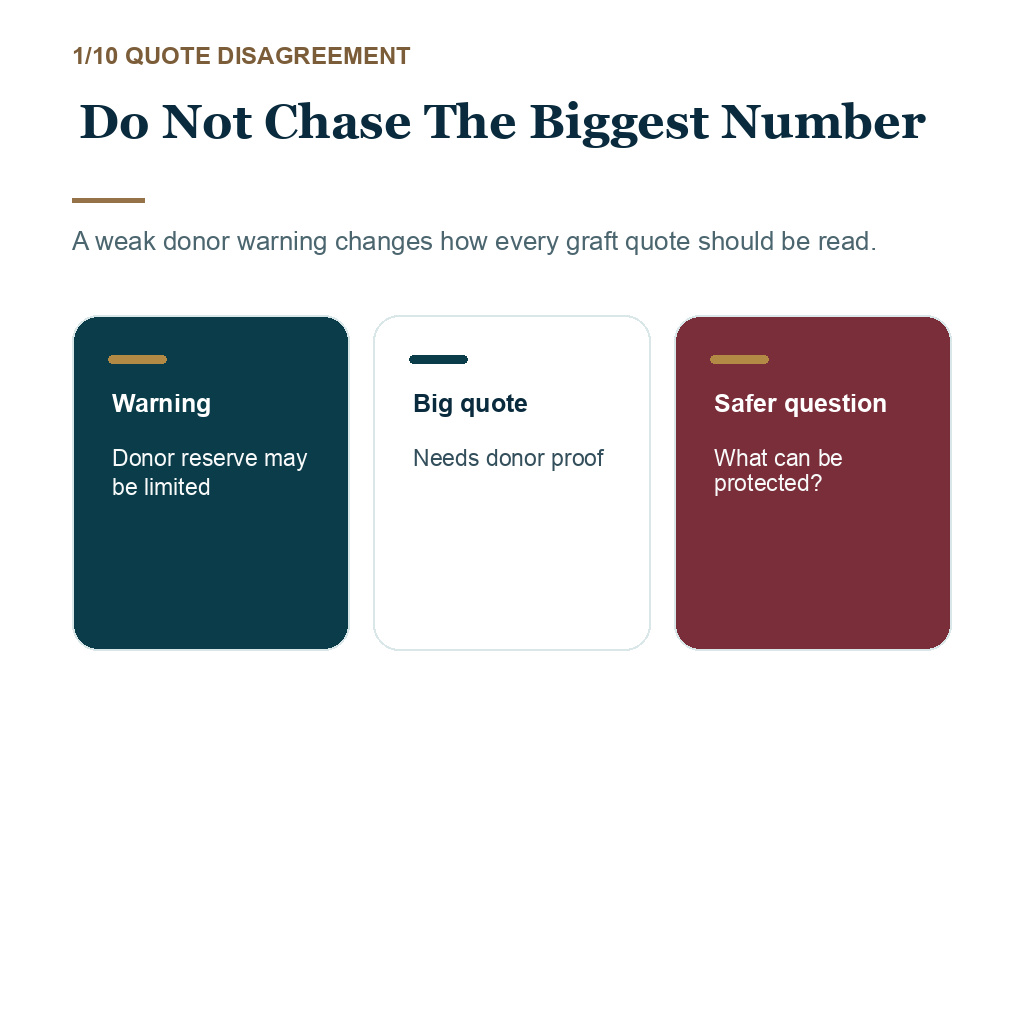
If one clinic warns that your donor is weak while others quote 5,000 grafts, do not treat the highest number as the most confident answer. Treat the disagreement as a reason to slow the plan down until donor density, miniaturization, future hair loss, and surgeon involvement are clear. A large quote can still be unsafe if the donor area cannot support it over decades.
Choosing the clinic that sounds most positive can be dangerous here. The real issue is protecting the only donor reserve you have. The useful question is whether the plan still makes sense later, if your hair loss continues and you need more options.
This disagreement is not only about price
Patients often compare clinics as if the answer is hidden in the package. One clinic says the donor is weak, another clinic says 3,500 grafts, and another gives a confident 5,000 graft plan with a quick surgery date. From the patient side, the bigger number can feel more serious because it promises visible change. Each quote should come with the tradeoff behind its number.
From the surgical side, the conflict is a warning that the assumptions may be different. One surgeon may be seeing miniaturization in the donor area. Another team may be looking only at the current hairline photo. One plan may be staged, while another tries to solve the front, middle scalp, and crown at once.
A real second opinion before a hair transplant should not simply ask whether surgery is possible. It should ask what each opinion measured, what each opinion ignored, and what the patient would lose if the aggressive plan is wrong.
Measurements behind a weak donor warning
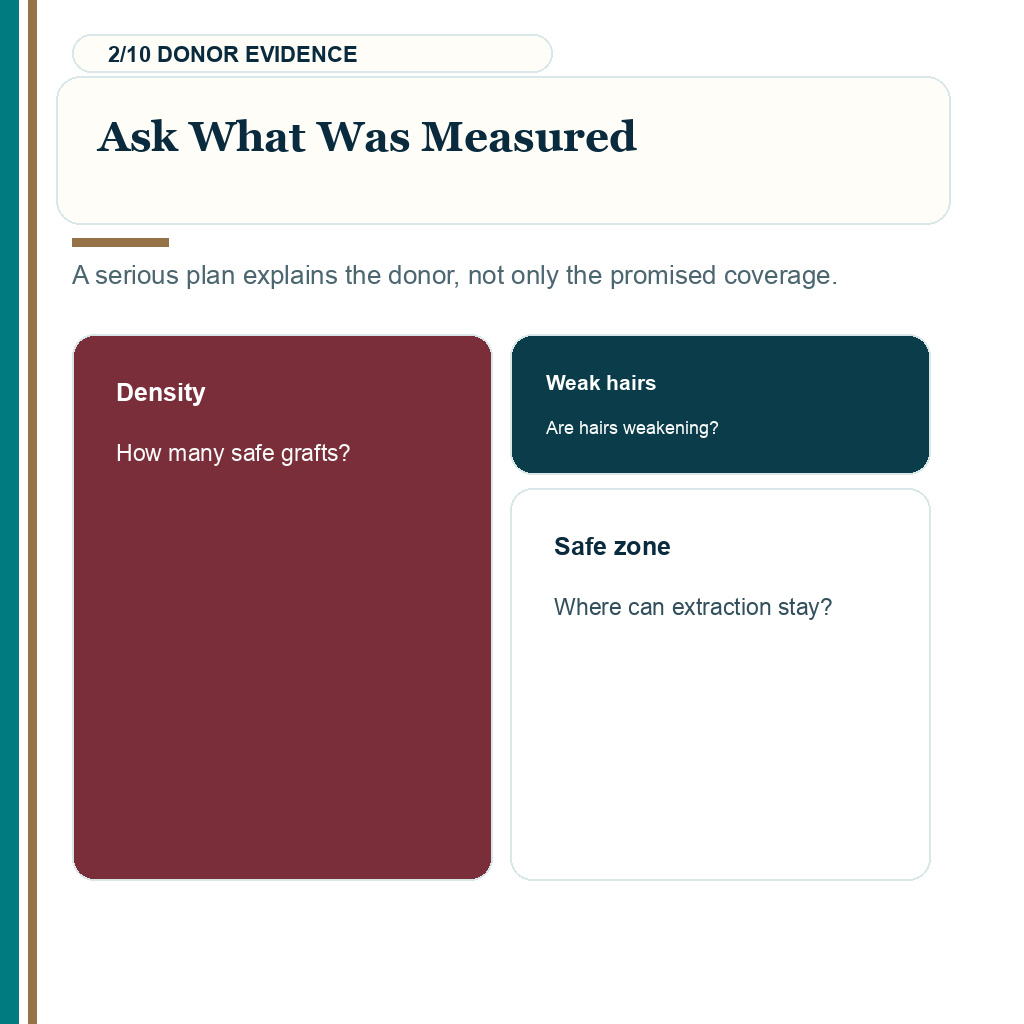
Weak donor is not a useful phrase unless somebody explains what made it weak. It may mean low density, fine hair shafts, miniaturization, patchy extraction history, scarring, diffuse thinning, or simply a donor area that cannot safely cover the area the patient wants treated.
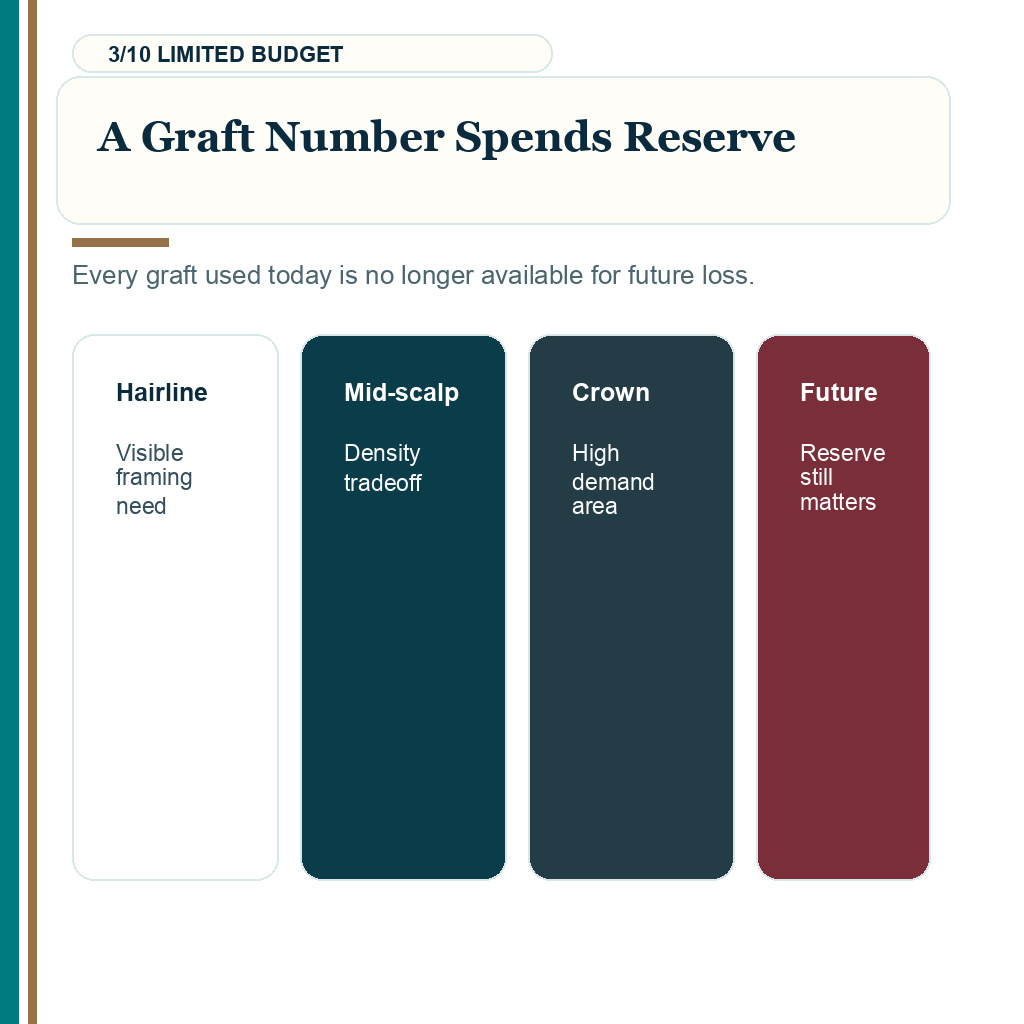
Donor supply is finite and cannot be reset after extraction. A warning about a weak donor area before hair transplant deserves a careful review instead of an emotional search for a clinic that says yes. If miniaturization is the concern, donor miniaturization and hair transplant planning becomes the closer topic because the donor itself may not behave like permanent hair.
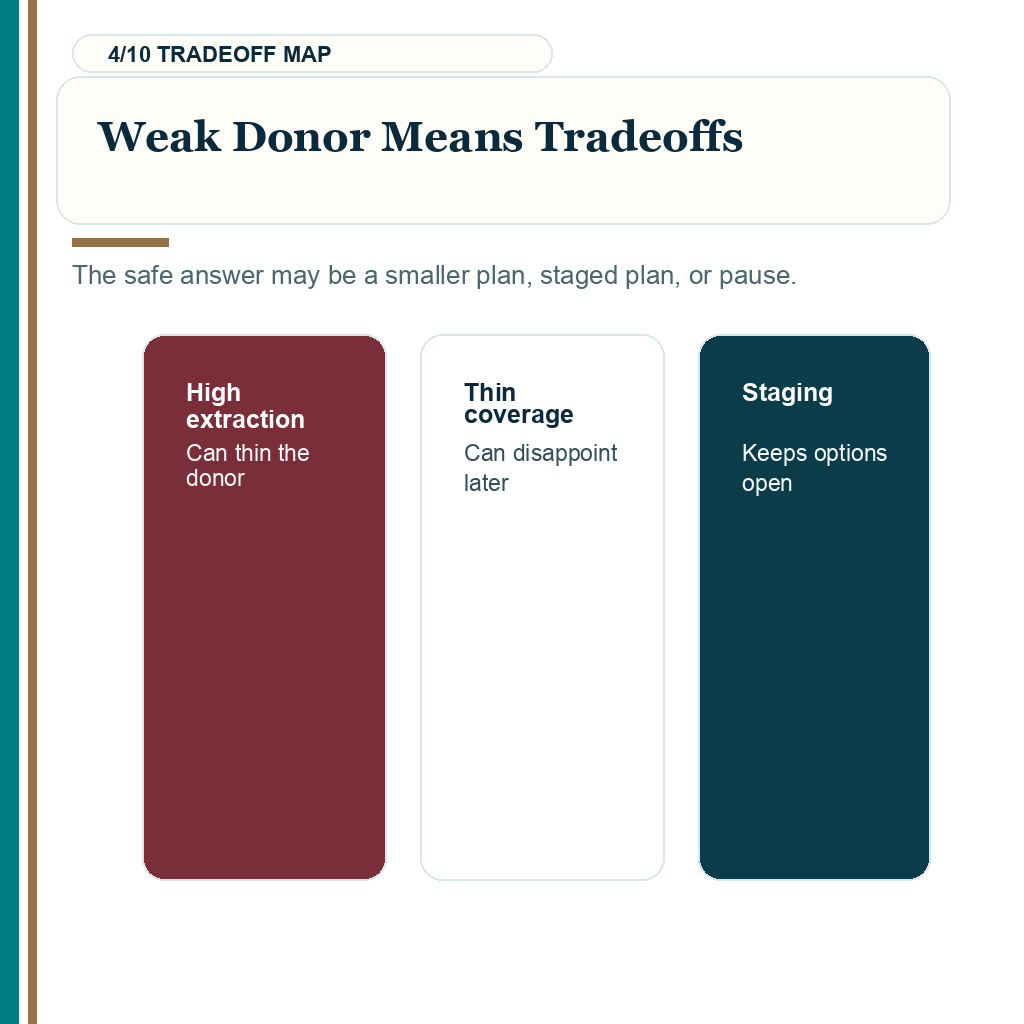
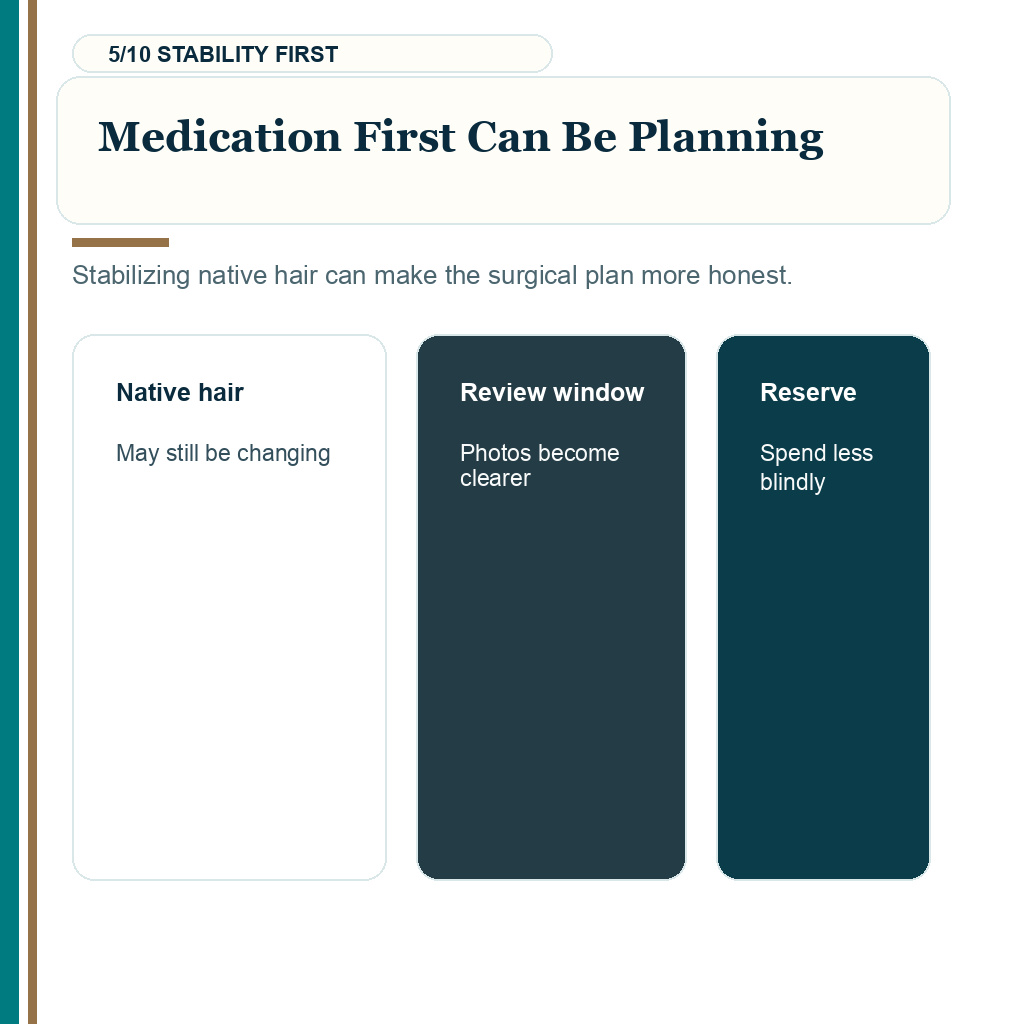
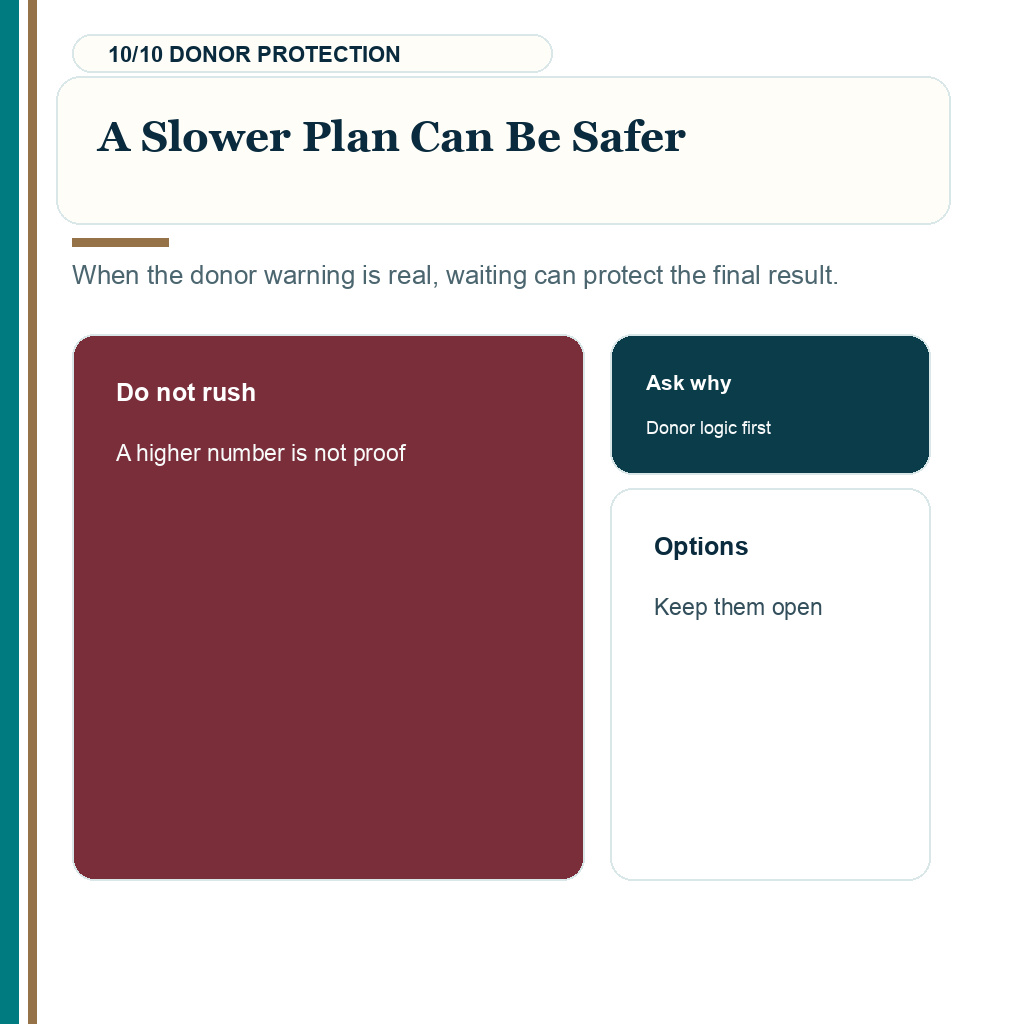
A weak donor finding does not always mean no surgery. It may mean a smaller hairline first plan, staged surgery, medical stabilization, or leaving the crown alone for now. Diffuse donor miniaturization, unstable loss, scarring, or very limited reserve can change the answer more seriously and may mean pausing or declining surgery.
The cautious clinic may be giving you information, not rejection. If its lower number protects the donor, that explanation deserves the same attention as a larger offer.
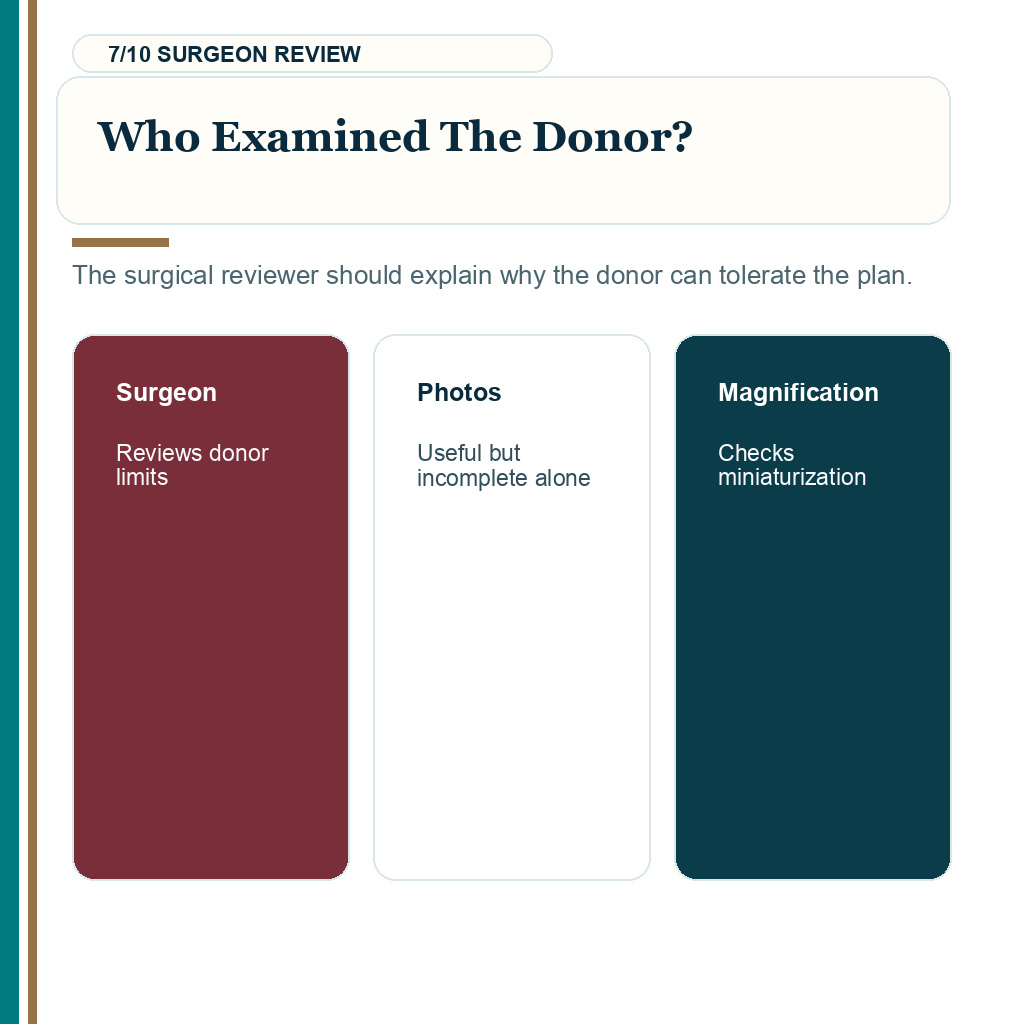
Direct examination can make a smaller graft number more protective than the first estimate. The explanation has to name the zones that can be treated, the zones that need to wait, and the donor that must remain untouched.
A dismissive no and an enthusiastic yes are both incomplete until they name the same donor facts. I want the disagreement reduced to density, miniaturization, safe zone borders, crown demand, and future reserve.
Translate the warning into visible facts before you ignore it or reject it. Is the donor density low? Are the hair shafts fine? Are many hairs miniaturized? Is the safe zone narrow? Is there previous extraction, scarring, or a crown that will need grafts later? A warning becomes useful only when it points to a measurable reason.
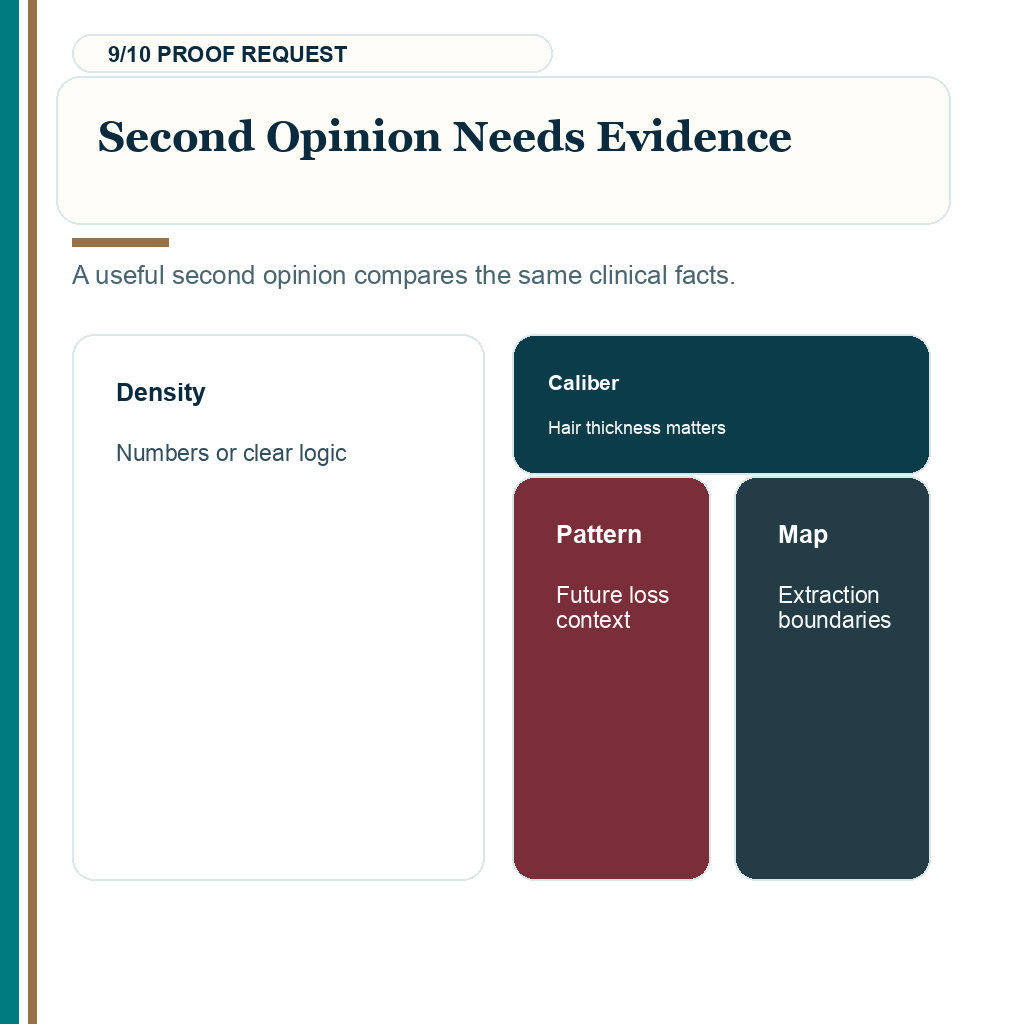
Another opinion is only useful when the evidence lets the surgeon check the warning. Clear front, top, crown, both sides, and donor photos in ordinary light, photos with the hair lifted, previous extraction or scarring history, medication history, family loss pattern, crown priority, and the exact graft numbers each clinic quoted all matter. The useful answer should explain the measurement behind the opinion, not only approve or reject the case.
Photos from before surgery also matter after a large operation. They show whether the donor started naturally sparse, fine, or miniaturizing, or whether the new thinning follows the extraction zones. Without that baseline, patients and clinics can argue about overharvesting while missing the evidence that separates weak donor anatomy from surgical overuse.
The 5,000 graft number needs context
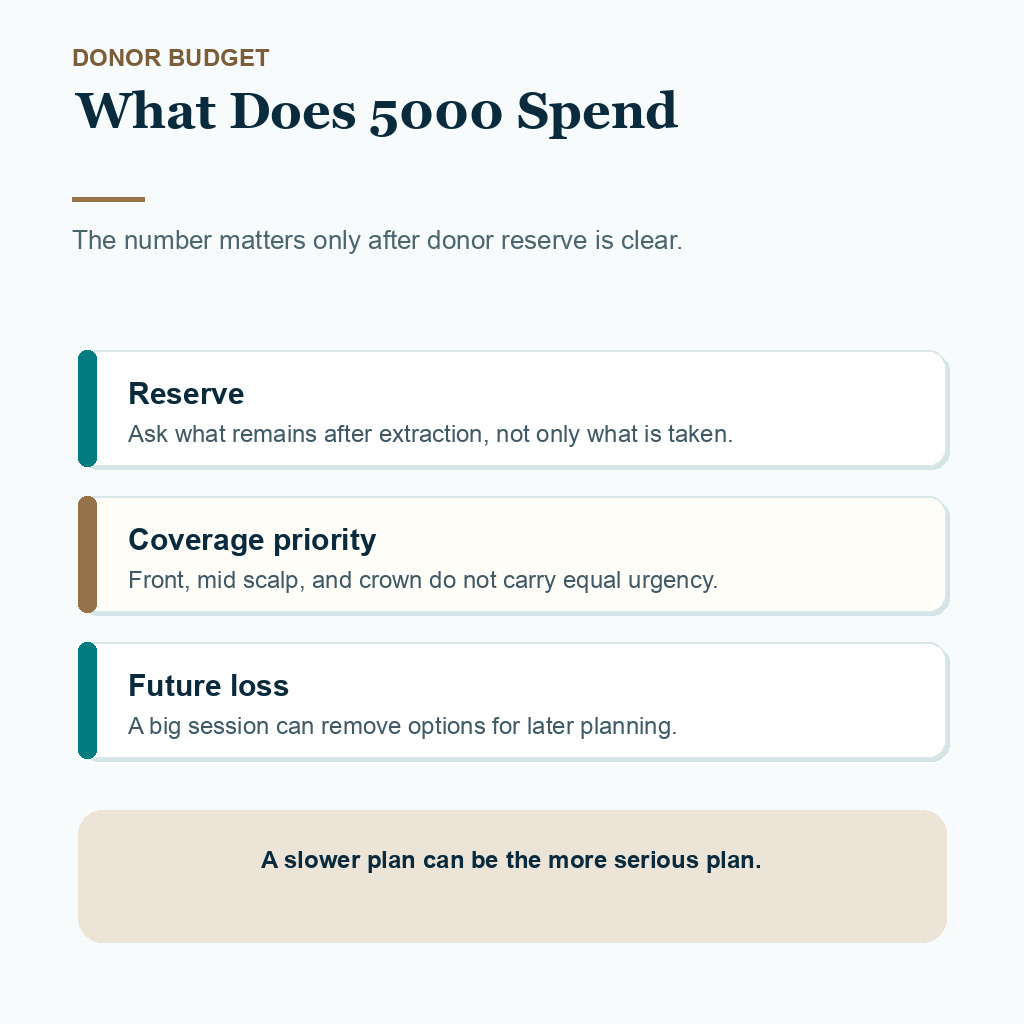
A large quote can sound precise. It gives the patient something to hold onto when he is worried about being rejected. But a number is not a surgical plan by itself. The same number can be reasonable for one patient, wasteful for another, and dangerous for a patient whose donor reserve is already limited. If the specific offer is a 5,000 graft session, the number deserves its own donor safety review.
Clinics may count the treated area, density goal, crown priority, donor quality, and future loss differently, so hair transplant graft numbers can differ even when photos look similar. The number can change because the plan changed. It can also change because the clinic is using the number as a sales promise.
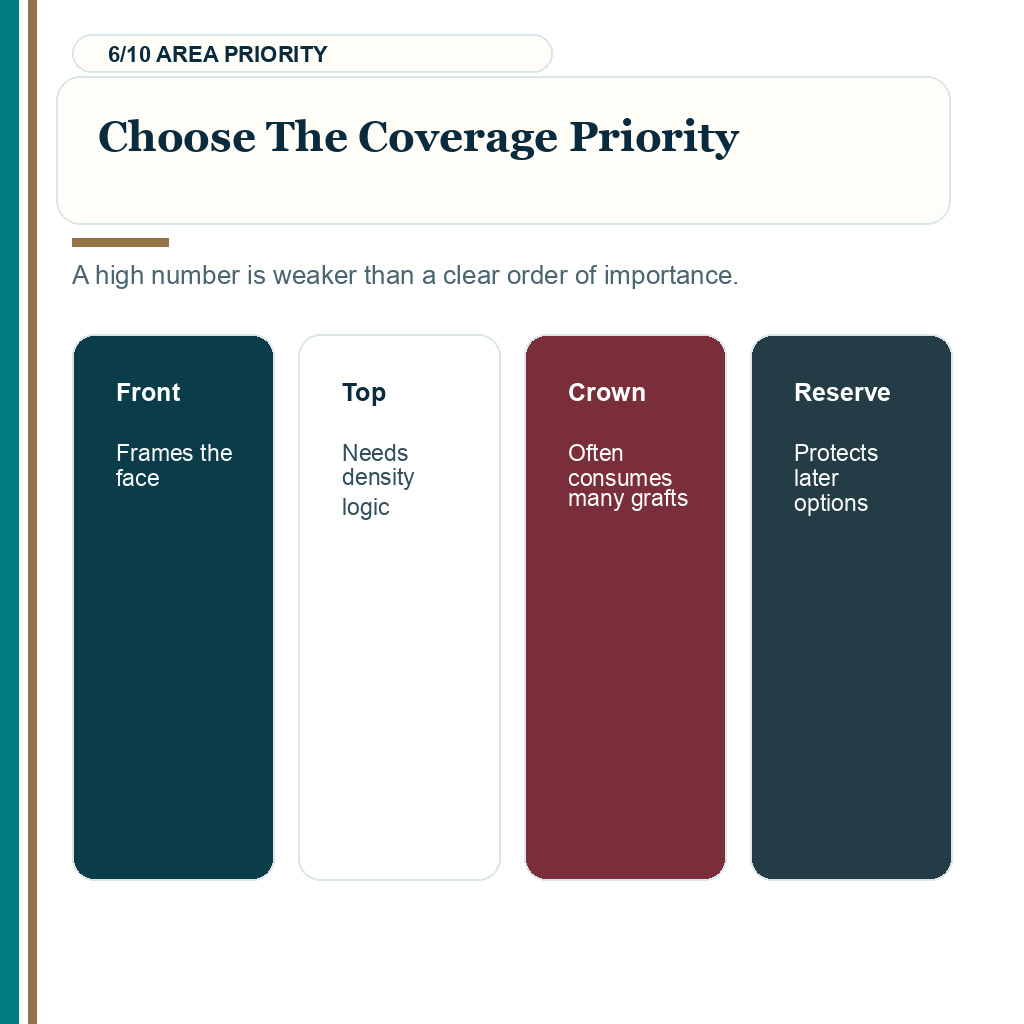
Before trusting a large quote, ask where those grafts will go. How many are for the hairline? How many are for the middle scalp? Is the crown included? What density is expected? What extraction pattern protects the back and sides? What donor reserve remains if future loss continues? A number without that map is not enough.
When a large quote includes beard or chest grafts, I separate the number by source before I judge it. Scalp grafts, beard grafts, and chest grafts do not have the same job. Extra donor hair can support selected middle scalp or crown areas, but it does not turn a weak scalp donor into safe full coverage or replace soft scalp grafts at the visible hairline.
If the large quote came from photos only, treat it as a screening estimate rather than donor clearance. Ask what cannot be measured from those photos, whether donor density, miniaturization, safe zone borders, and hair caliber will be checked in person, and how the graft number may change if that examination disagrees with the online offer.
Large quote gaps need donor evidence
If one clinic says 3,500 grafts and another says 7,000, the useful question is not which clinic is more ambitious. It is what each clinic counted. A 7,000 graft plan needs stronger donor evidence, stricter coverage priorities, and a clearer stopping point than a smaller staged plan.
When a high quote jumps from 5,000 toward 6,000 or 7,000 grafts, the number needs a stronger donor explanation, not more confidence. The written recommendation should name the priority zones, the donor reserve left behind, and the point where I would reduce the extraction. A weak donor warning cannot be solved by choosing the clinic with the biggest total.
Ask the high quote clinic what would make them stop early. If the answer is only that they can reach the number, you still have not heard how the donor area will be protected if the live examination is weaker than expected. That answer matters most when the live donor exam is weaker than the photos suggested.
The lower quote may be cautious, incomplete, or focused only on the front and middle scalp. The higher quote may be reasonable in a selected donor, but it may also become too many grafts if it tries to cover every zone before the donor area, crown pattern, and future hair loss are understood. The safest comparison is not the biggest number. It is the plan that explains what will be treated now and what must stay protected for later.
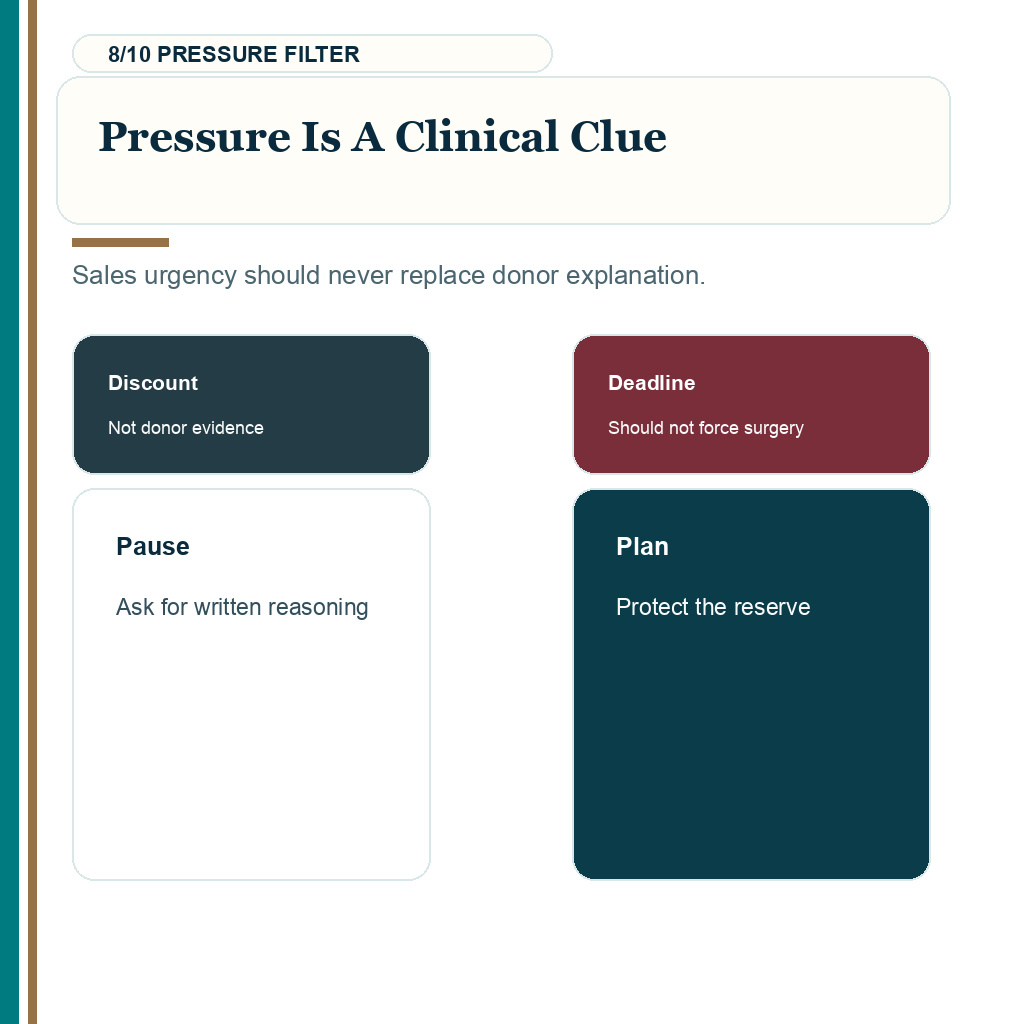
A famous destination, a confident coordinator, or a lower package price should not outweigh a specific weak donor warning. When donor evidence and the quoted range disagree, the medical measurements deserve more weight than country reputation or sales confidence.
These 10 donor budget slides explain why a weak donor warning, a high graft quote, safe zone limits, coverage priorities, future hair loss, stabilization, surgeon review, pressure signals, second opinions, and a slower plan all have to be compared before surgery. Swipe sideways, use the arrows one slide at a time, or choose a number below the image.