Pollen Season Can Complicate FUE Recovery
During pollen season, I am less worried about pollen touching grafts and more worried about what allergy symptoms make you do. Sneezing, watery eyes, a blocked nose, and itching can lead to rubbing, wiping, pressure near the hairline, poor sleep, and quick medicine changes.
That means FUE recovery is usually still possible in hay fever season, but the first week needs a controlled plan. Treat the allergy symptoms, keep hands away from the recipient area, and tell the clinic before changing tablets, sprays, drops, or decongestants.
If hay fever becomes severe every spring, tell the clinic before choosing the date or before you travel. Pollen season by itself does not mean FUE should be delayed, but uncontrolled sneezing, eye rubbing, wheezing, poor sleep, or the need for a new medicine close to surgery can change the timing or the recovery plan.
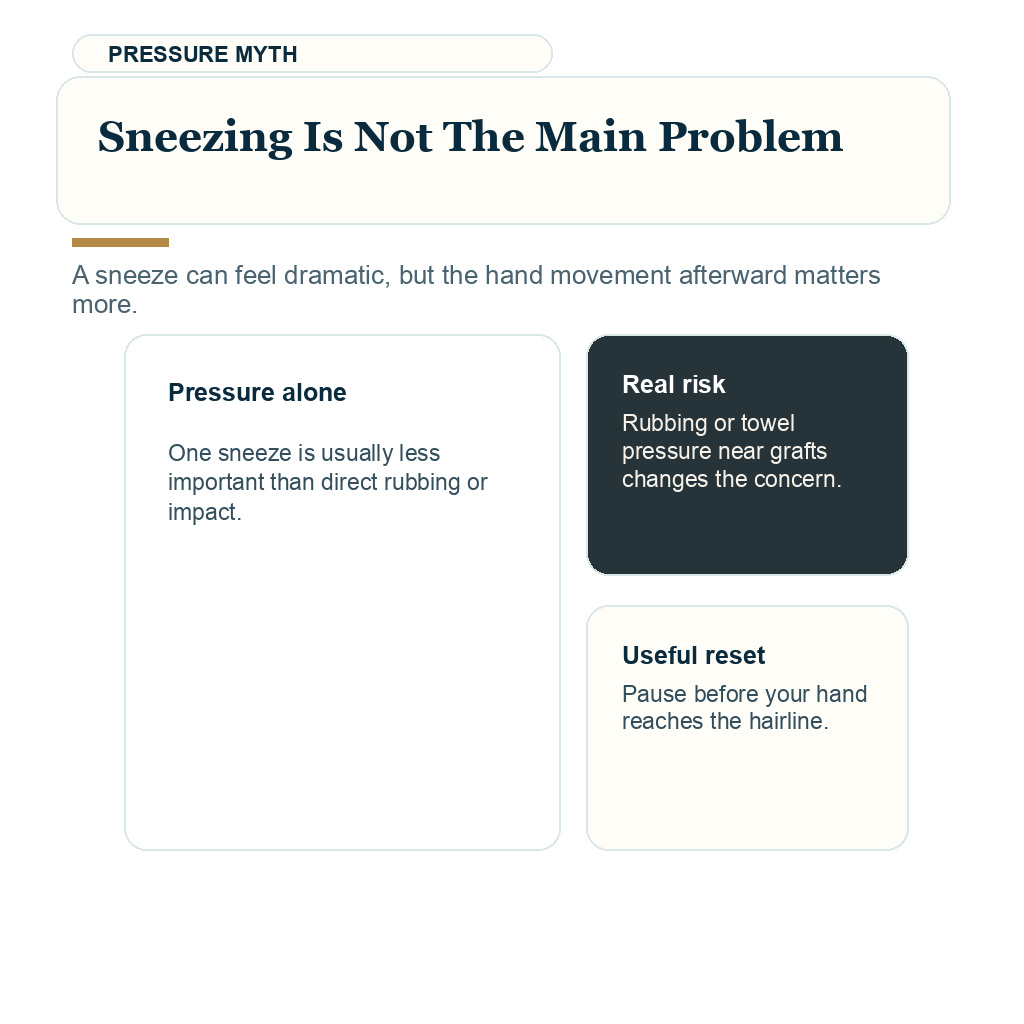
Sneezing itself is not the main danger
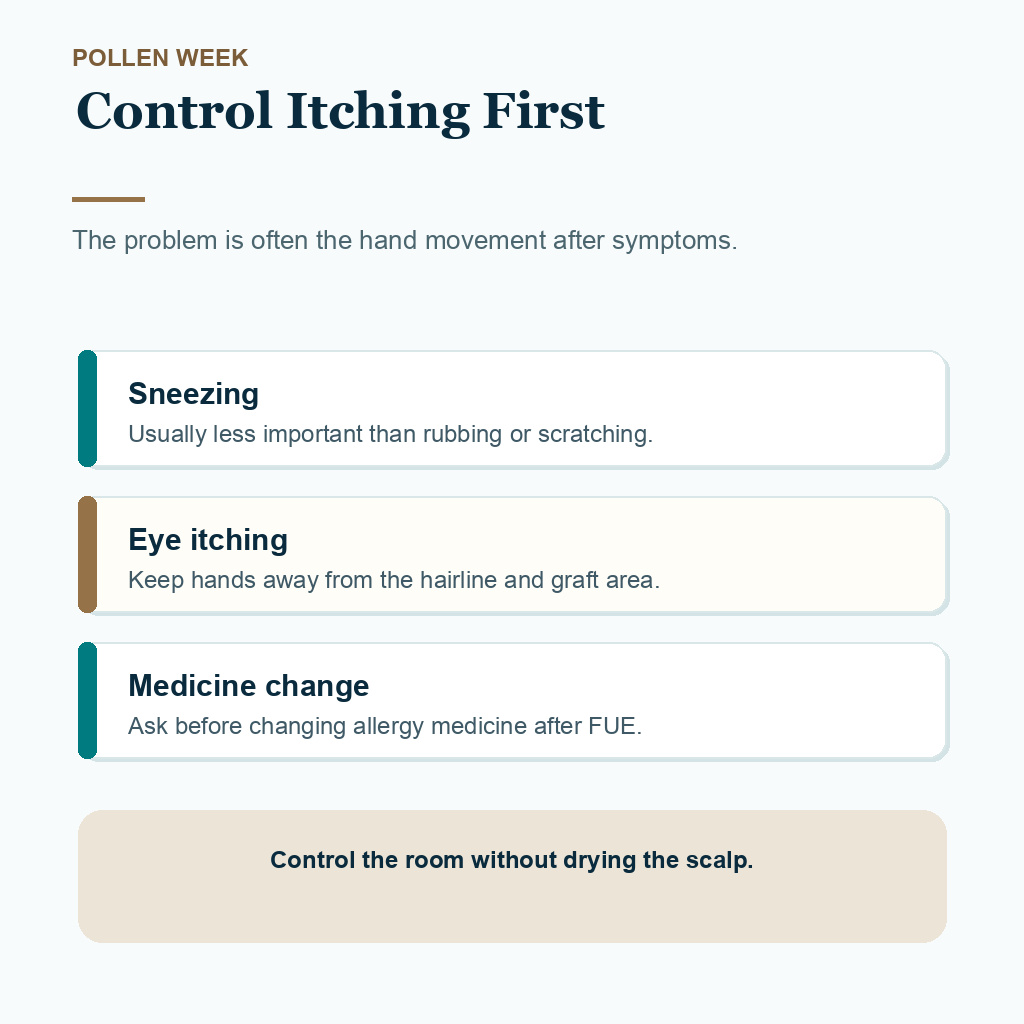
A normal sneeze does not usually dislodge properly placed grafts by force alone. It can feel as if the pressure of the sneeze is the danger, but the real risk is usually the movement that follows. A quick rub across the hairline, a towel pushed into the forehead, or a hand wiping sweat, tears, and nasal discharge too close to the recipient area matters more than the sneeze itself.
The mechanical part is covered in sneezing and coughing after hair transplant. This page adds the hay fever layer. One sneeze may be harmless, but a day of sneezing, rubbing, watering eyes, and poor sleep can make the recovery less controlled.
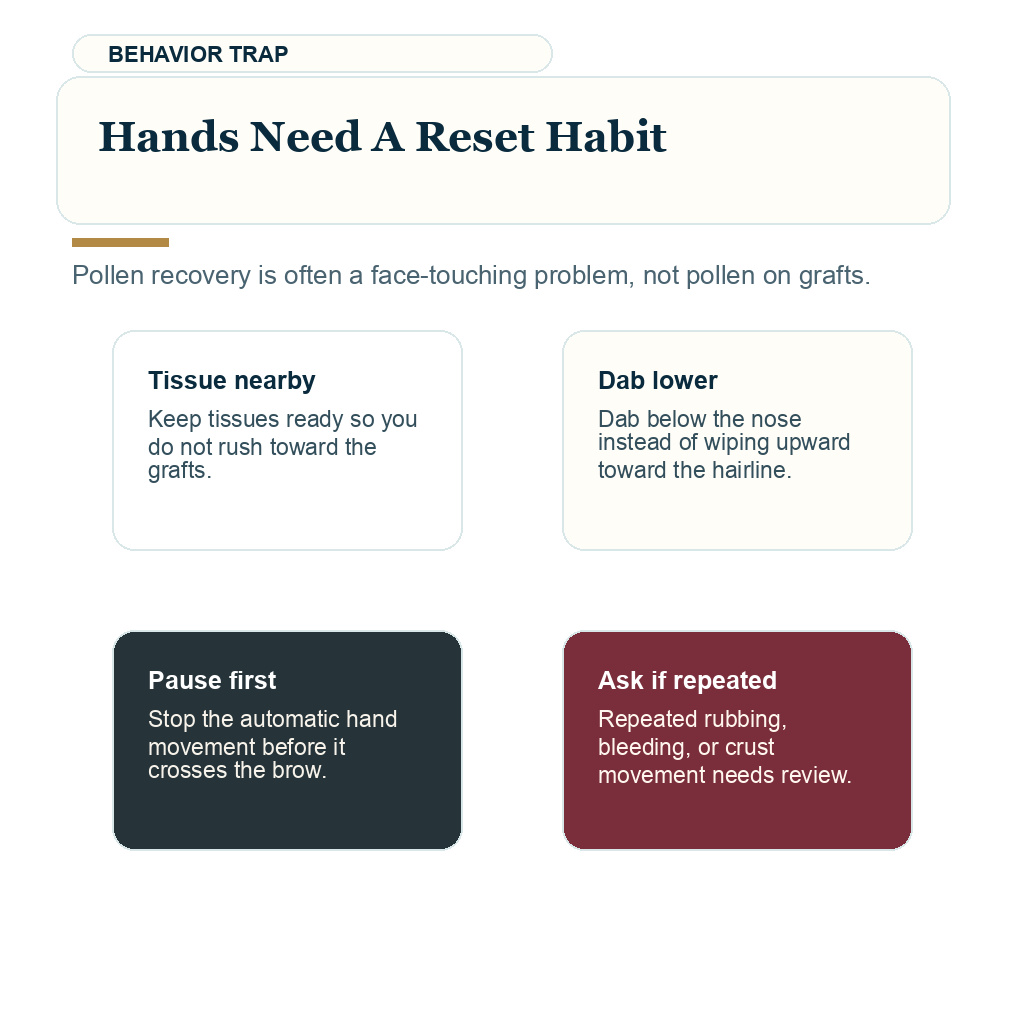
In the first days, keep clean tissues nearby, dab below the nose rather than wiping upward, and pause before touching the face. If your hand is moving toward the grafts, stop and reset. That small pause protects the work more than panic about the sneeze itself.
If allergy symptoms usually make you rub instead of just sneeze, make that the plan focus. Keep tissues ready, ask about allowed allergy medicine before surgery, and decide how you will handle itchy eyes without touching the hairline.
A flare after travel should be described before any routine changes. Tell the clinic the worst symptom, what usually controls it, any new spray or tablet, wheezing, eye rubbing, and the surgery or wash date.
Pollen symptoms that matter during the first week
Hay fever commonly brings sneezing, a runny or blocked nose, itchy or watery eyes, throat irritation, and sleep disruption. After FUE, those symptoms matter because the recipient area is healing at the same time. The grafts need stable care, gentle washing when instructed, and protection from friction. Pollen symptoms can make those simple tasks harder to follow.
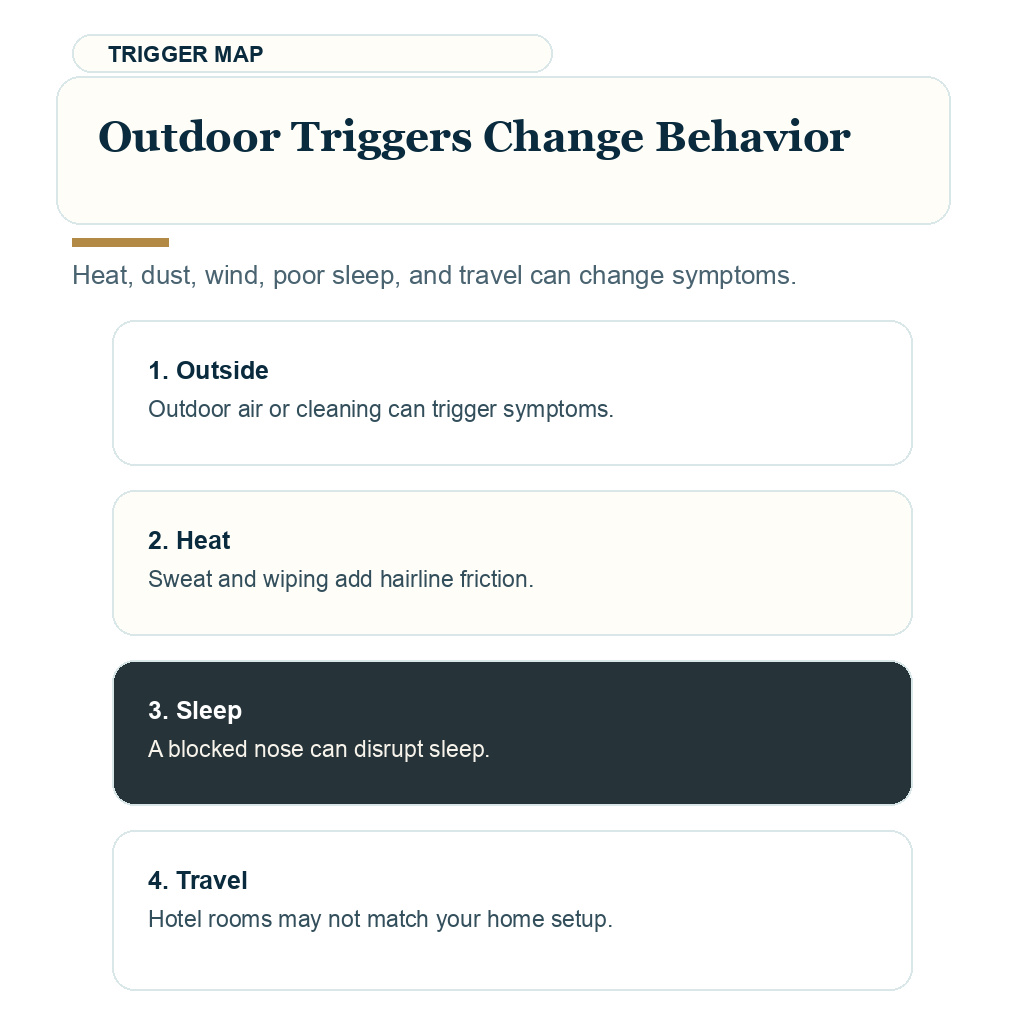
A blocked nose can disturb sleep. Watery eyes can pull your hands toward the temples. A runny nose can make you wipe without thinking. Dry air or strong airflow can irritate the nose and scalp. The broader hair transplant aftercare routine still comes first, but pollen season adds these small behavior traps.
When surgery overlaps with obvious seasonal allergies, I ask about symptoms before the operation. Strong spring symptoms may need medicine review, travel planning, and room setup before the operation, not after the first recovery night becomes uncomfortable. If you are still before surgery and already using tablets, sprays, or cold and allergy products, start with allergy medicine before FUE.
Allergy medicine changes need clinic review after FUE
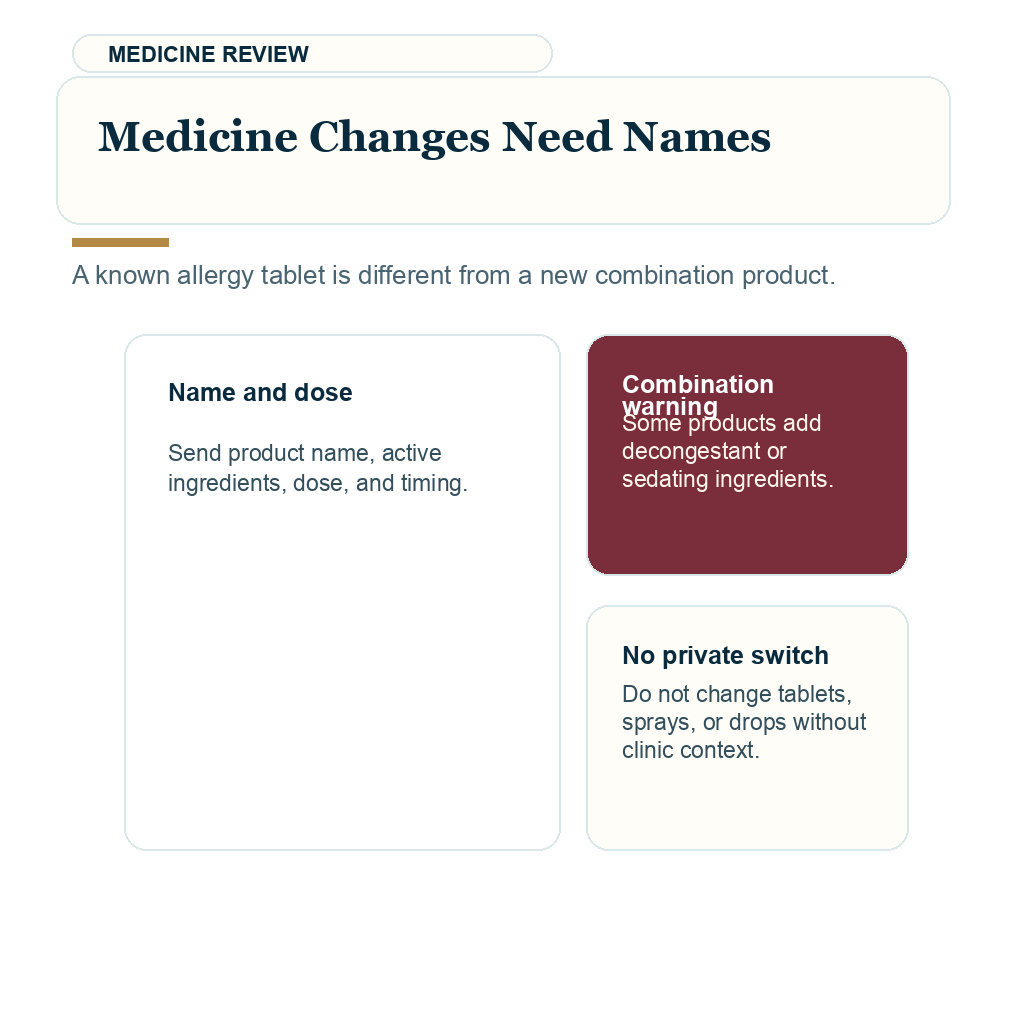
If you already use a familiar allergy medicine and the clinic knows about it, the decision is often straightforward. Starting a new tablet, spray, eye drop, or combination cold and allergy product after surgery is different. Do not add or change allergy medicine around surgery without telling the clinic.
The medication question belongs with antihistamines after hair transplant, but pollen season makes the information more urgent. Send the product name, active ingredients, dose, timing, reason for use, and whether it also contains a decongestant, painkiller, sedating ingredient, caffeine, or herbal component.
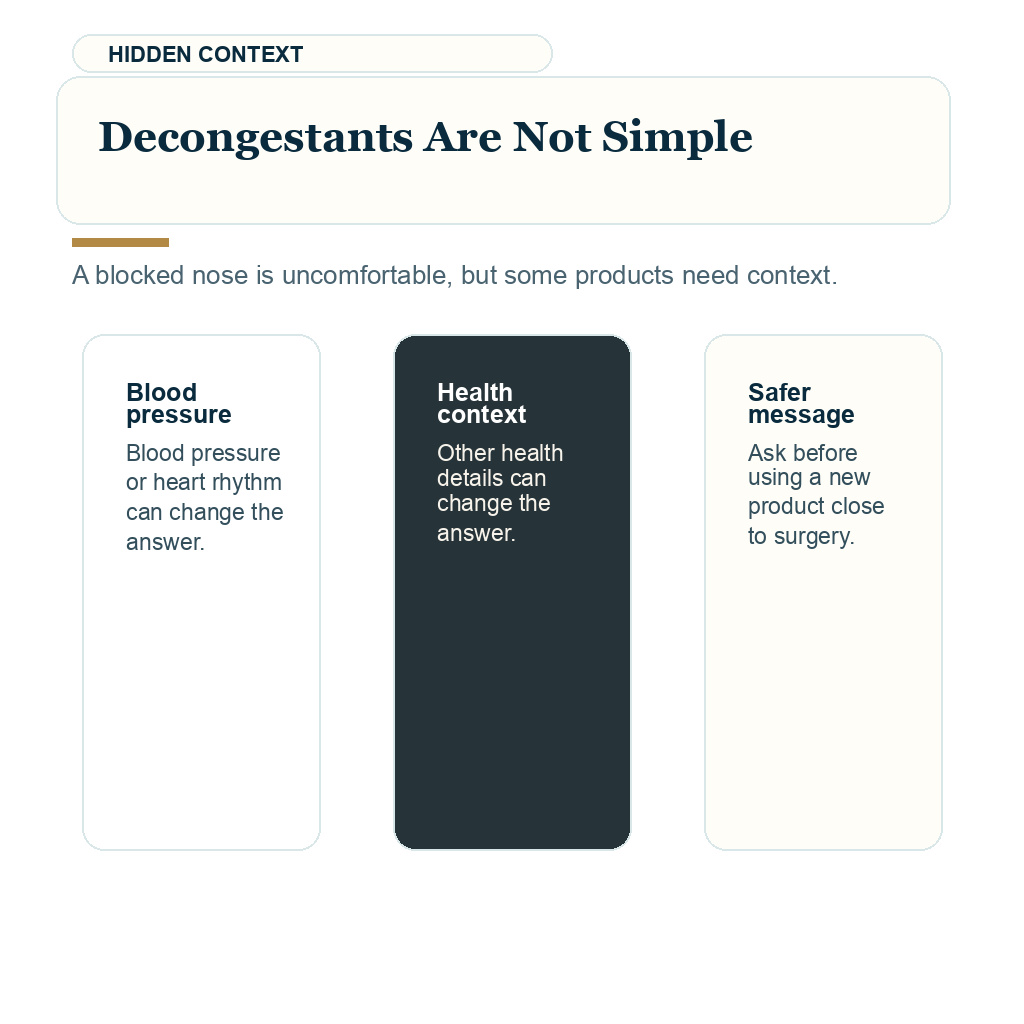
Decongestants show why this matters. They can be unsuitable when blood pressure, heart rhythm, glaucoma, urinary symptoms, stimulant use, or other medicines are part of the history. I do not want a patient to treat a combined cold and allergy product as harmless just because it is sold without a prescription.
Eye itching can pull the hand toward the hairline
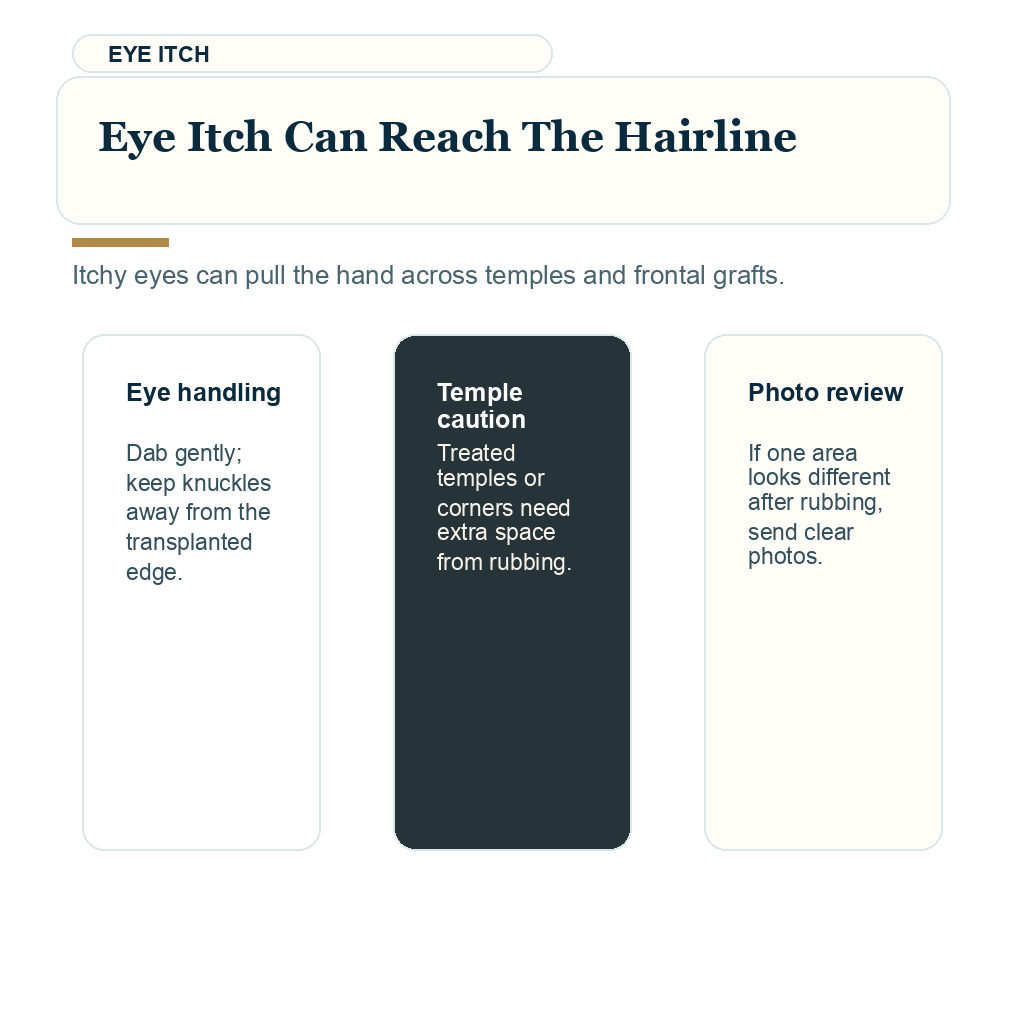
The nose gets most of the attention, but itchy eyes can be the bigger graft protection problem. When the eyes itch, the hand often moves across the brow and temples. A quick rub can catch the recipient edge before you realize it.
When the new hairline, temples, or frontal corners were treated, keep tissues and approved eye care items within reach, use gentle dabbing, and avoid leaning the palm or knuckles against the transplanted area. If you use lenses, the related contact lenses after hair transplant page explains why eye handling after surgery deserves care.
Scalp itch is a separate issue and has its own recovery pattern. If the itch is on the recipient area, read itching after hair transplant and ask for review if the itch is intense, asymmetric, or paired with worsening redness.
Accidental rubbing needs visible checking, not panic
One accidental touch is not the same as repeated rubbing, scratching, or inspecting the area every few minutes. Stop touching, do not scrub the area to fix it, and do not try to lift scabs or check individual grafts.
If there is bleeding, new pain, visible graft movement, increasing redness, or one patch looks different from the rest, take clear photos and send the timing to the clinic. Understanding when hair transplant grafts become secure helps explain why the first recovery days deserve extra discipline.
Control the room without drying the scalp
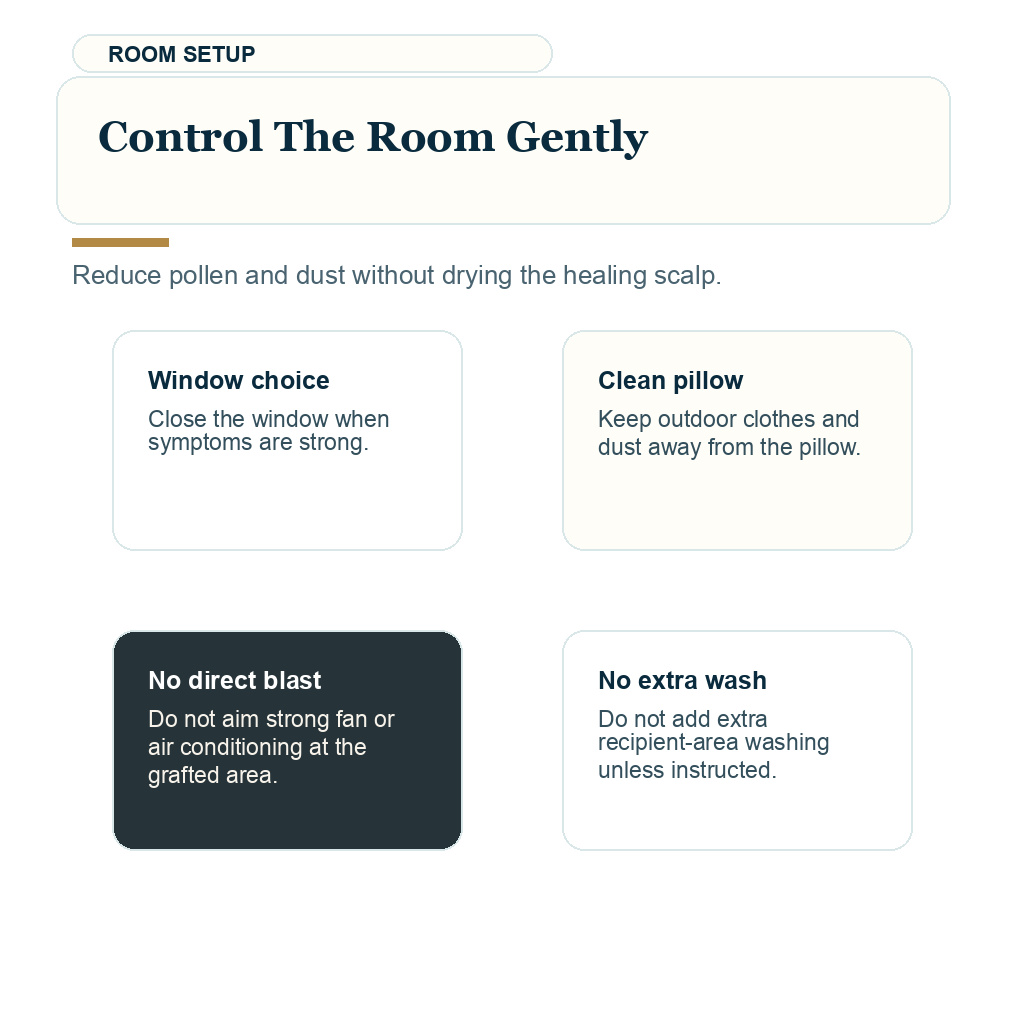
A closed window, clean bedding, and reduced dust can make recovery easier on high pollen days. If you come back from outside, keep outdoor clothes away from the pillow, wash your hands, and avoid rubbing the forehead while changing. Do not add extra washing to the recipient area unless your instructions say to.
That does not mean blasting strong airflow directly at the head. Direct fans or aggressive air conditioning can dry the nose, eyes, and scalp, which may increase rubbing and discomfort.
The goal is to reduce irritation without drying the healing recipient area. If a room choice makes the nose, eyes, or scalp feel worse, it is not helping the recovery plan.
I try to control the environment without turning it into another irritation. Keep the room clean, avoid an open window when symptoms are strong, and do not aim air directly at the grafted area. If dust, wind, or outdoor air is the main trigger rather than allergy symptoms, dust, wind, and pollution after FUE is the closer guide. For airflow, fan and air conditioning after hair transplant explains the room setup in more detail.
Sweat also belongs in this conversation. Pollen season can coincide with warm weather, travel, and poor sleep. Heat, sweating, and repeated wiping can create extra friction, so sweating after hair transplant is useful when symptoms flare on a warm day.
Hay fever can hide warning signs
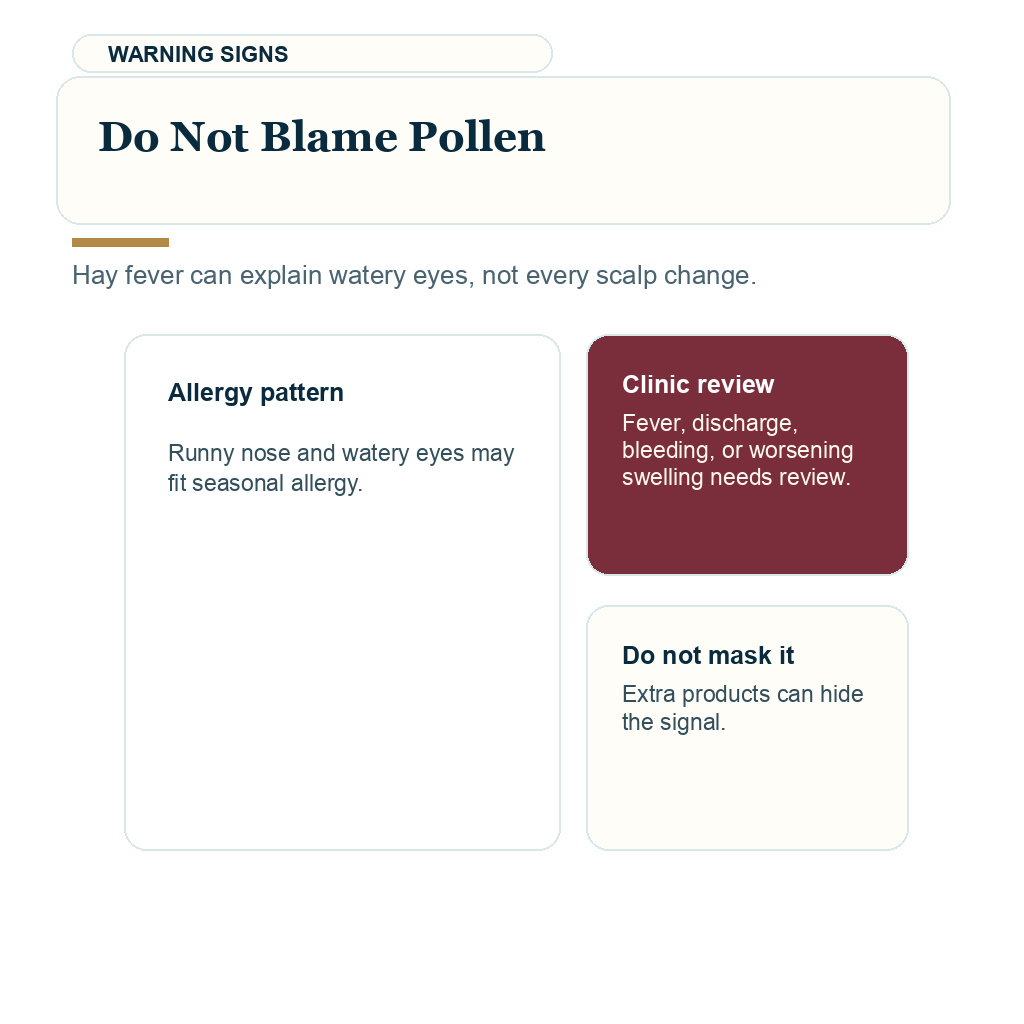
Hay fever should not be used to explain everything. Sneezing, watery eyes, itchy eyes, and a runny nose can fit seasonal allergy. Stronger redness, swelling that worsens instead of settling, increasing pain, discharge, fever, a hot area, or one patch that looks different from the rest needs clinic review. Pollen should not be used as an excuse to ignore a changing surgical site.
If the pattern looks systemic or the scalp is changing, allergy signs during hair transplant recovery is the better starting point.
If the concern is local to the surgery area, compare it with redness, scabs, and pimples after hair transplant and swelling after hair transplant. Those pages are closer to surgical warning signs than pollen discomfort.
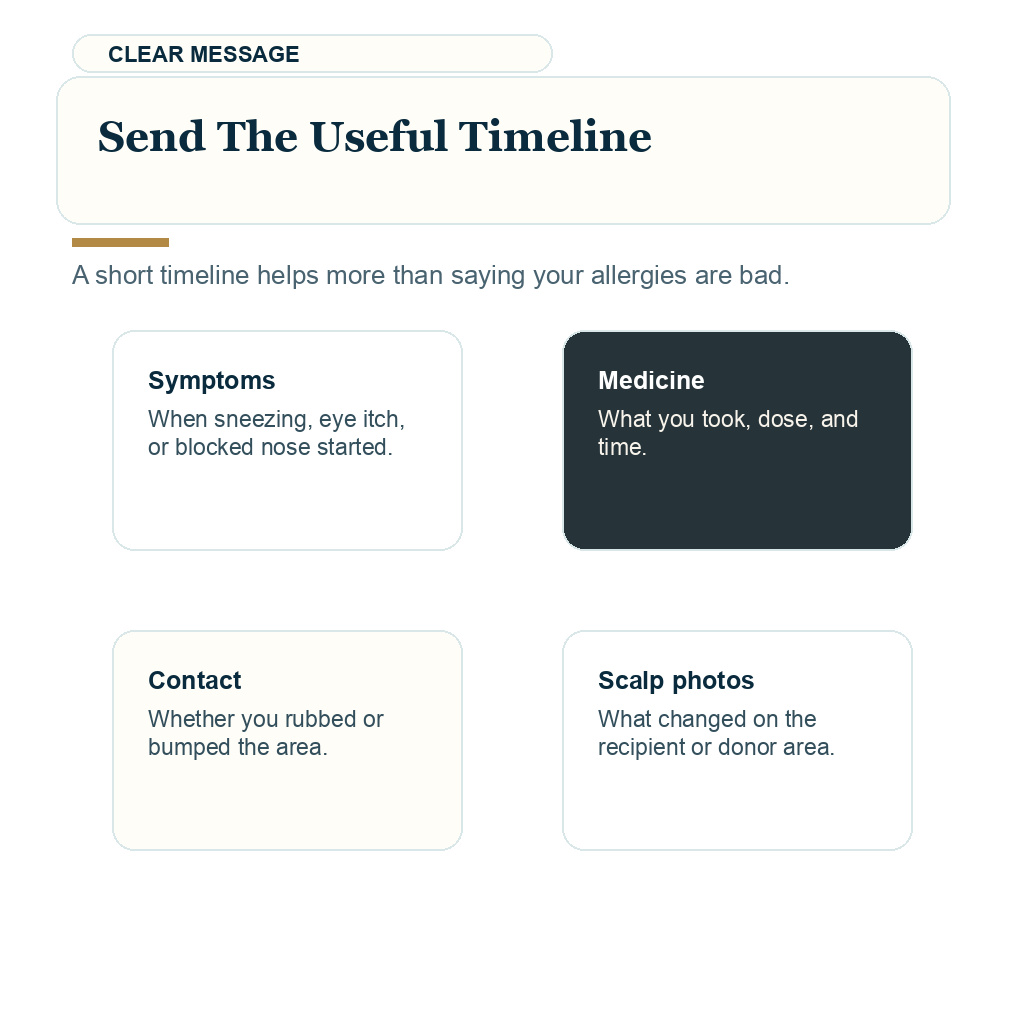
When in doubt, send clear photos in natural light and explain the timing. A message that says ‘my allergies are bad’ is less useful than a short timeline showing when sneezing started, what medicine you took, whether you rubbed the area, and what changed on the scalp.
Pollen moments to control first
These 9 recovery slides separate sneezing, hand movement, eye itch, medicine changes, room setup, warning signs, and when to send the clinic an update.